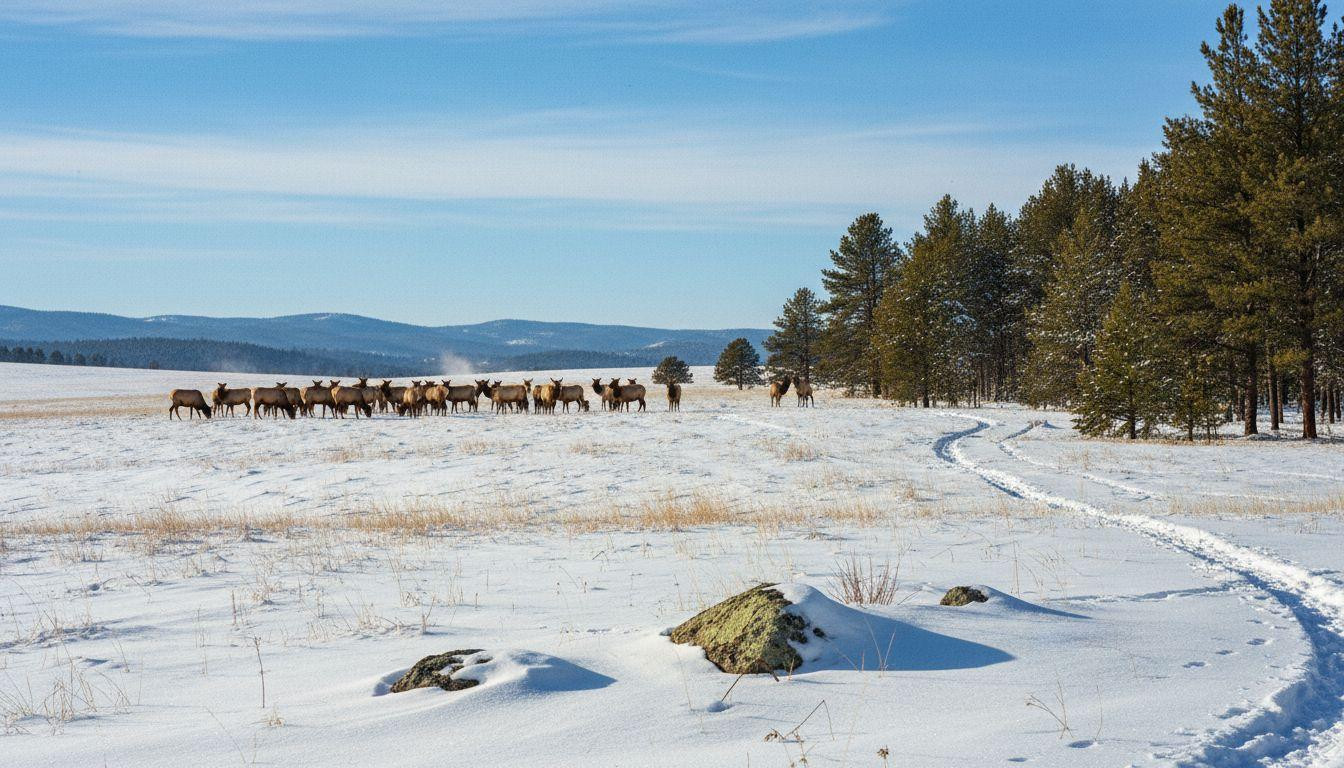
Wind Cave National Park receives 800,000 visitors each year. Most never leave the paved paths near the cave entrance. But 28,000 acres of backcountry prairie stretch north and west, empty under winter snow. Elk herds of 100 or more gather on white hillsides where their dark shapes become visible from a mile away. The park requires snowshoes beyond half a mile on most trails from January through March. A free backcountry permit from the visitor center opens access to routes where you might not see another person all day.
Hot Springs sits 11 miles south. The town of 3,400 offers lodging from $75 per night in winter and natural mineral pools at 87°F for post-snowshoe recovery. Most visitors arrive from Rapid City, 50 miles north on Highway 385.
Where rolling prairie meets winter silence
The northwest backcountry zone holds the park’s best winter routes. Highland Creek Trailhead marks the starting point for several loops through mixed-grass prairie and ponderosa pine forest. Snow depth reaches 18-24 inches by late January in open areas. Bison trails pack natural corridors through deeper drifts, creating easier passage for snowshoers following the same paths wildlife use.
The landscape alternates between golden prairie grass poking through snow and dark green pine stands. Elk prefer the transition zones where forest meets grassland. They bed down in wooded areas during midday and move to open prairie for feeding at dawn and dusk. Winter concentrates their movements into predictable patterns.
Temperature averages 15°F at night and 35°F during the day from December through February. The cave system below maintains 53°F year-round, creating temperature differentials that drive the wind phenomenon the park is named for. On calm winter mornings, you can hear faint whistling from natural openings where warmer cave air meets frozen surface conditions.
Nine routes where elk herds become visible
Highland Creek Trail and Centennial Trail section
Highland Creek Trail runs 5 miles through the heart of elk winter range. The route gains 400 feet elevation gradually, making it accessible for intermediate snowshoers. Park at the northwest trailhead where Highway 87 meets the park boundary. Elk herds of 50-150 animals gather in the valleys visible from ridge points along this trail.
The Centennial Trail crosses 6 miles of Wind Cave backcountry in its 111-mile route through the Black Hills. The park section traverses open prairie where elk visibility peaks between 9am and 11am as herds descend from overnight forest shelter. Audio silence dominates except for wind and occasional hawk calls. A resident who has snowshoed here for 15 years notes that mid-morning offers the most reliable wildlife viewing when fresh snow covers the ground.
Rankin Ridge and canyon routes
Rankin Ridge Trail climbs 1.2 miles to a former fire lookout tower at 5,013 feet elevation. The summit delivers 360-degree views across snow-covered Black Hills. The final 0.3 miles steepens significantly, requiring microspikes in addition to snowshoes when ice forms on the trail. Sunset snowshoe trips here capture alpenglow on distant peaks, though temperatures drop quickly after 4pm.
Wind Cave Canyon follows a drainage through ponderosa forest for 4 miles. Canyon walls create a microclimate 5-10 degrees warmer than exposed prairie. Moss patterns on north-facing rocks provide winter color against otherwise monochrome landscape. This route sees fewer elk but offers protected conditions on windy days. For more winter canyon exploration, this Colorado gorge drops 2,000 feet in winter silence without Grand Canyon crowds.
Backcountry camping and extended routes
Sanctuary Trail extends 8 miles into designated wilderness beyond maintained paths. Overnight winter camping requires a free permit from the visitor center and proper cold-weather gear rated to 0°F. Black bears den in the park but occasionally wake during warm spells. Proper food storage remains mandatory year-round.
Elk Mountain Campground serves as base camp for backcountry trips. The area sits at 7,500 feet where nighttime temperatures regularly hit 0°F in January. Elk sometimes visit camp perimeters at dusk, attracted by the scent of food or simply following established movement corridors through the area. Similar winter camping opportunities exist at this alpine cirque that holds 3 turquoise lakes where winter snowshoes reach silence at 4,800 feet.
What winter reveals about prairie ecosystems
Snow transforms visibility across the landscape. Golden prairie grass that blends into tan hillsides during summer becomes distinct against white ground cover. Elk, bison, and pronghorn antelope stand out as dark shapes visible from distances exceeding a mile on clear days. This visual clarity makes winter the best season for wildlife observation despite colder temperatures.
The park protects one of the last intact mixed-grass prairie ecosystems in North America. Winter dormancy reveals the underlying topography that summer vegetation obscures. Rolling hills, small drainages, and subtle elevation changes become apparent under snow. These features dictate where animals concentrate and where snowshoers find easier passage.
Boland Ridge Trail crosses 3.5 miles of transition zone where dark pine forest opens suddenly to white prairie expanse. The ecological contrast between these zones supports different wildlife species. Lichens on south-facing rocks provide unexpected winter color. This route attracts fewer visitors than Highland Creek but offers comparable solitude. Less elk activity occurs here, making it better for those prioritizing quiet over wildlife viewing.
Your questions about Wind Cave backcountry winter answered
When should I visit and what permits do I need?
January through March offers peak snow conditions. December shows variable coverage depending on early-season storms. Free backcountry permits are available at the visitor center with no reservation system or caps on winter use. The center operates limited hours during winter months, so call 605-745-4600 before your trip to confirm current schedules. Permits take 10 minutes to process and include a brief orientation on Leave No Trace practices and wildlife safety.
What gear is required and where can I rent equipment?
Snowshoes are mandatory beyond 0.5 miles on all backcountry trails from December through March. Microspikes help on icy sections, particularly on Rankin Ridge. Sleeping bags rated to 0°F minimum are required for overnight trips. Several shops in Rapid City rent snowshoes for $15-20 per day. Hot Springs has limited rental options, so securing gear before arrival is recommended. Layered clothing, insulated water bottles, and emergency bivvy gear remain essential even on day trips.
How does this compare to other Black Hills winter destinations?
Wind Cave offers free access and uncrowded conditions compared to developed ski areas. Custer State Park, 20 miles north, charges $20 per vehicle and sees higher winter visitation. Wind Cave’s prairie ecosystem provides better elk viewing than forested areas elsewhere in the Black Hills. The combination of backcountry access, wildlife concentration, and proximity to Hot Springs mineral pools creates a unique winter experience. For another winter hot springs destination, this Idaho trail leads to 104°F pools where winter steam rises through ancient cedars.
Planning your winter backcountry trip
Most visitors combine 2-3 days of snowshoeing with cave tours and Hot Springs relaxation. The Natural Entrance Tour costs $12 per adult and provides warm refuge from surface cold. Evans Plunge in Hot Springs charges $15 for day access to natural mineral pools. Budget lodging in Hot Springs starts at $75 per night in winter, with mid-range options around $120.
Gas stations in Hot Springs offer the last fuel before entering the park. Rapid City provides more dining and lodging variety but adds 100 miles of daily driving. Cell service works near park headquarters but disappears in backcountry areas. Download offline maps before your trip.
The park remains open 24 hours daily year-round. Winter storms can close Highway 87 temporarily. Check road conditions at 511 before driving. Sunrise occurs around 7:15am in January, with sunset near 5pm. Plan to be off trails by 4pm to avoid navigating in darkness.
Morning light hits the prairie at a low angle in winter. Elk move across white hillsides in single file, their breath visible in cold air. The silence holds weight. Hot Springs waits 20 minutes south when you are ready for warmth.