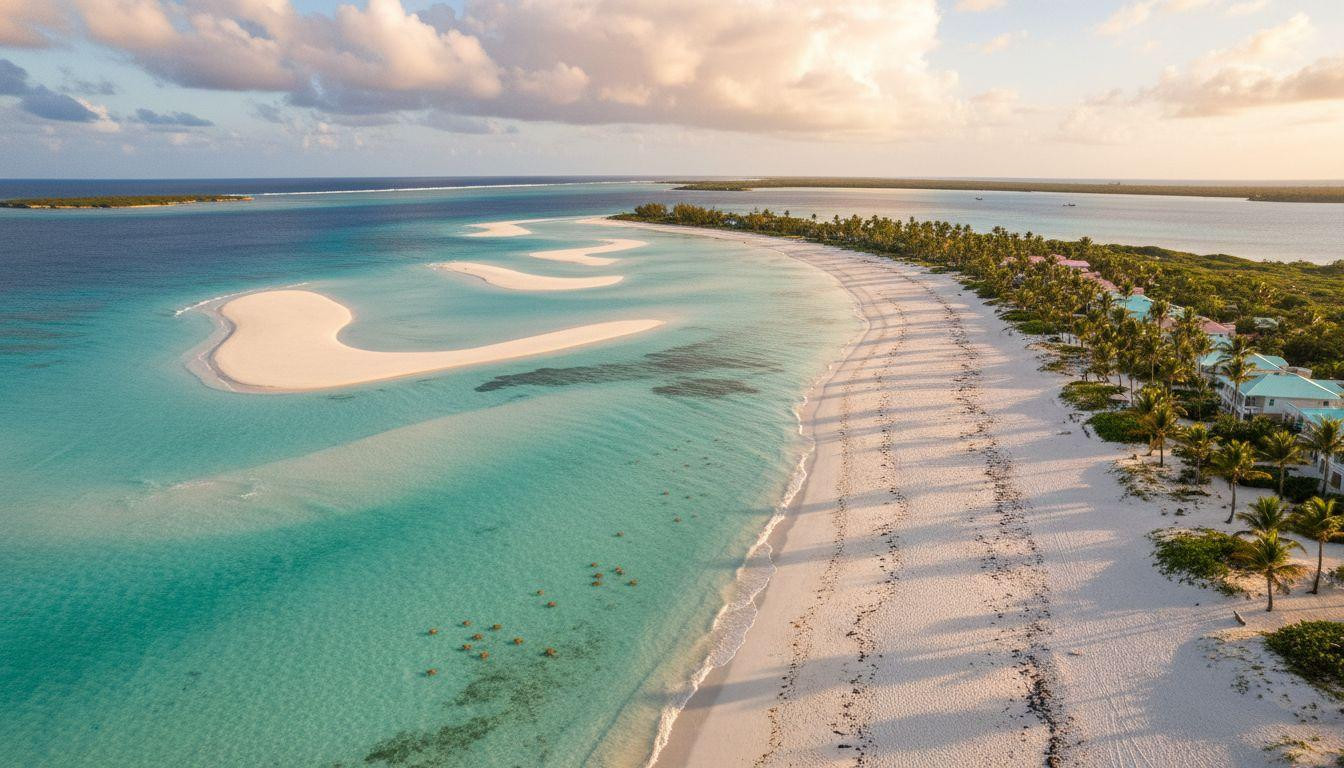
The seaplane from Nassau banks over emerald water, revealing a white curve stretching impossibly far below. Cape Santa Maria Beach unfolds like a geometric promise: four miles of talcum-powder sand where turquoise shallows stretch empty in every direction. While Nassau’s cruise terminals pack 12,000 daily passengers into crowded beaches, Long Island’s northwest tip hosts maybe 30 resort guests across eight distinct coastal zones. Each section offers its own rhythm of discovery.
December 2025 brings perfect timing for this Bahamian sanctuary. Water temperatures hold steady at 78°F while trade winds keep humidity low. The resort anchors zone two with just 40 rooms total, meaning vast stretches of pristine coastline remain virtually untouched.
Northern point where sandbars appear at dawn
The northernmost tip transforms at low tide into something magical. A half-mile sandbar emerges from shallow water, creating a walkable peninsula into turquoise depths. Cushion starfish dot the sandy bottom at densities reaching 10 per square meter, their orange arms creating natural art installations in crystal-clear shallows.
Sunrise arrives around 6:50am in late December, painting the eastern horizon gold while the sandbar reveals itself. Little Exuma’s quiet beaches offer similar solitude, but Cape Santa Maria’s walking sandbar creates an otherworldly experience impossible elsewhere in the Bahamas.
The phenomenon peaks between 6-8am when tides drop lowest. Visitors wade across ankle-deep water to claim their own private island platform, surrounded by fish-filled shallows and unobstructed horizons.
Main resort stretch with powder like talcum
Zone two curves along three-quarters of a mile where the Cape Santa Maria Resort’s 50 palm trees create natural shade. The sand texture feels supernatural: microscopic grains so fine they squeak underfoot like fresh snow. Gentle slopes descend into waist-deep swimming areas protected from Atlantic swells.
Beachfront luxury without crowds
Resort bungalows ($866/night in December) sit 50 feet from high-tide lines, offering floor-to-ceiling ocean views. Complimentary kayaks and paddleboards eliminate rental fees found at busier Caribbean destinations. The Beach House Restaurant serves conch fritters and grilled wahoo with meals averaging $30, well below Nassau’s $40 restaurant prices.
Activities that cost nothing
Free bicycle access opens miles of coastal exploration. Resort hammocks swing between palms while cabanas provide shade for afternoon reading. The absence of WiFi in beachfront bungalows encourages genuine disconnection, a deliberate choice that sets Cape Santa Maria apart from connectivity-obsessed resorts.
Shallow flats extending 300 yards offshore
Zone three creates the perfect family swimming environment. Clear water extends 300 yards at waist depth with visibility reaching 150 feet. The gradual slope and absence of strong currents make this section ideal for children and nervous swimmers.
Snorkeling without boat tours
Rock formations 200 yards offshore harbor 20+ fish species including barracuda, angelfish, and parrotfish. Healthy elkhorn coral provides habitat while remaining accessible via easy shore entry. Fortune Beach’s protected reef offers comparable snorkeling, but Cape Santa Maria’s rocks require no crowded boat transfers.
Marine life viewing schedule
Peak fish activity occurs during morning hours when larger species hunt in the shallows. December jellyfish encounters remain rare due to seasonal patterns. Snorkel gear rents for $15 daily at the resort, though many visitors bring personal equipment to avoid repeated fees.
Starfish shallows and sunset curves
Zones five and six showcase Cape Santa Maria’s most photogenic features. Starfish populations peak during 10am-2pm low tides when cushion stars become visible in mere inches of water. Conservation protocols prohibit touching, but underwater photography opportunities abound.
The western sunset curve offers unobstructed horizon views where golden hour begins around 5:15pm. Aitutaki’s mirror lagoons provide similar sunset drama, but Cape Santa Maria’s accessibility from the U.S. eliminates complex South Pacific logistics.
Beach House cocktail service delivers drinks directly to sunset viewing spots for $12 each. The ritual transforms simple beach time into unhurried ceremony as day transitions to night.
Bonefishing flats and empty southern reaches
Professional fishing guides lead half-day charters ($350) into zone seven’s renowned bonefishing flats. The 1-2 foot depths at dawn create perfect wading conditions for permit, tarpon, and the prized bonefish that give these waters international reputation.
Zone eight extends a mile south via firm sand trails. This section sees occasional local fishermen but virtually no resort guests. Seashells accumulate undisturbed while complete privacy becomes achievable luxury. The 15-20 minute walk from resort amenities creates natural filtering that keeps this area pristine.
Manzanillo’s free Caribbean snorkeling offers comparable marine access, but Cape Santa Maria’s bonefishing tradition adds sporting heritage dating to 1980s lodge origins.
Your questions about Cape Santa Maria answered
How do you reach this remote beach from the U.S.?
Makers Air operates three weekly flights from Fort Lauderdale Executive Airport to Deadman’s Cay (LGI), taking 1.5 hours at $400 one-way. The 36-mile taxi journey to Cape Santa Maria requires one hour and costs approximately $150. Total travel time from Miami: 4-5 hours including connections.
What makes the sand different from other Caribbean beaches?
The sand consists of microscopic crushed shells and coral creating talcum-powder texture unique among Bahamas beaches. Geological processes specific to Long Island’s northwest exposure produce grains so fine they appear almost white against turquoise water. The four-mile curve remains uninterrupted by development or erosion.
How does Cape Santa Maria compare to Grace Bay in Turks and Caicos?
Both feature world-class white sand and turquoise water, but Cape Santa Maria hosts under 40 resort rooms versus Grace Bay’s hundreds of hotel units. Crowd density remains dramatically lower while room rates average 40% below comparable Turks properties. The trade-off involves reduced dining options and nightlife in exchange for authentic solitude.
Morning mist rises from turquoise shallows as another day begins along the endless white curve. Starfish rest motionless in clear water while palm fronds whisper overhead. Here, time moves differently than in Nassau’s crowded terminals just 190 miles away.