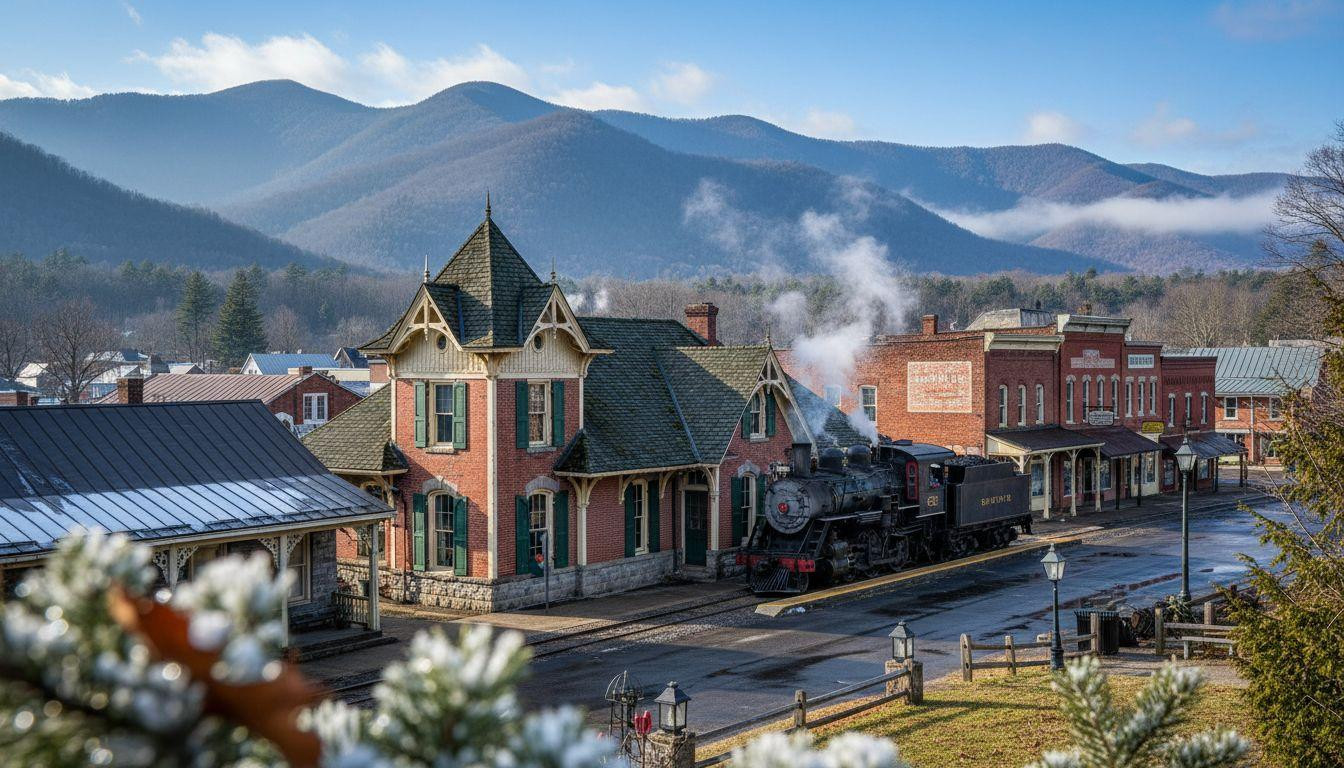
Steam rises from the Nantahala River as the morning Polar Express pulls into Bryson City Depot, its whistle echoing through fog-wrapped ridges. This peaceful mountain town sits 60 miles west of Asheville, where 1,500 residents keep Smoky Mountain authenticity alive without Gatlinburg’s crowds or prices. Winter transforms these valleys into quiet sanctuaries where families discover affordable escapes, heritage railways, and waterfall trails dusted with snow.
8 winter zones where mountain heritage meets affordable adventure
Bryson City divides into distinct winter experiences, each offering something different from commercialized Smokies destinations. Deep Creek waterfalls flow year-round while tourist tubes sit stored until spring. The Great Smoky Mountains Railroad operates vintage locomotives through gorges most visitors never see.
Downtown costs stay refreshingly low. Lodging averages $100-250 per night compared to Gatlinburg’s $200-350. Silver City’s empty Victorian streets share this affordability, though Bryson City adds active railway magic.
Deep Creek falls and railroad depot heritage
Tom Branch Falls drops 25 feet into rhododendron thickets where ice forms delicate sculptures by January. The 2.3-mile loop trail connects three waterfalls – Indian Creek Falls (20 feet) and Juney Whank Falls (20 feet) – with free parking that accommodates dozens of cars. Winter weekdays guarantee solitude.
Victorian depot architecture meets modern trains
The 1900 Queen Anne depot houses the Smoky Mountain Trains Museum, displaying 45 locomotives and 100+ model trains. Steam engine #1702 (built 1920s) pulls heritage coaches through the 44-mile Nantahala Gorge route. Polar Express tickets cost $44-62 depending on class, selling out 4-6 weeks ahead.
Cherokee heritage beneath mountain mist
Tsali Recreation Area honors a Cherokee leader who sacrificed for his people’s peace after the Trail of Tears. Four mountain bike loops (Thompson, Right, Left, Mousetrack) total 28 miles with Fontana Lake viewpoints. Winter conditions stay rideable 70% of days when morning frost clears by noon.
Nantahala Outdoor Center and forgotten highways
Founded in 1972, NOC transforms from summer rafting chaos to winter contemplation. River flow drops to 500-1000 cubic feet per second (versus summer’s 3000+ cfs), revealing boulder gardens usually hidden. Founders Bridge spans 480 feet above 40°F water where mist rises like mountain spirits.
Adventure base without summer crowds
The River’s End Restaurant serves trout and cornbread while gear shops offer 20-30% winter discounts. Idaho’s hot springs provide similar off-season bargains, though NOC’s Appalachian setting feels more accessible from eastern cities.
Road to Nowhere’s eerie beauty
Lakeview Drive ends abruptly at a 5,085-foot tunnel, abandoned in the 1960s when Fontana Lake flooding displaced communities. The 2.6-mile trail leads to six visible homesite foundations. Winter fog appears 60% of mornings, creating cinematic atmosphere for photographers willing to brave 28°F dawn temperatures.
Fontana Lake and ski area connections
This TVA-created lake covers 29,000 acres with 238 miles of shoreline, nearly empty November through March. Winter water levels drop 10-15 feet below summer marks, exposing gravel beaches perfect for sunrise photography. Cable Cove boat launch stays accessible year-round for fishing smallmouth bass and walleye.
Cataloochee Ski Area sits 45 minutes away, offering $50 day passes (versus Colorado’s $150+ at Vail). Base elevation climbs from Bryson City’s 1,900 feet to Cataloochee’s 3,500-foot base and 5,400-foot summit. Railroad depot towns across America share this mountain access advantage.
Downtown walkability and winter rhythms
Six blocks of historic core provide free street parking in 200+ spaces while Gatlinburg charges $10-20 daily. Cork & Bean opens 7am-6pm, serving local brews to residents who’ve watched tourism evolve since NOC’s establishment. Eight antique shops operate year-round, selling mountain crafts and railroad memorabilia.
According to local tourism boards, winter visitors represent only 20% of summer totals. Breakfast costs $8, lunch averages $12, dinner runs $20 – significantly less than Asheville’s $180-280 nightly lodging rates. Florida’s manatee springs offer warm-weather alternatives, but Bryson City’s winter solitude creates different magic.
Your Questions About Bryson City Answered
When does Polar Express run and how far ahead should I book?
The Polar Express operates November 6-December 31 with multiple evening departures (5pm, 6:40pm, 8:20pm on peak dates). Tickets sell out 4-6 weeks in advance, especially weekends. Coach tickets start at $44 adults/$39 children, while First Class reaches $62/$57.
What makes Bryson City different from Gatlinburg or Asheville?
Bryson City maintains authentic mountain culture without theme park commercialization. Population stays at 1,500 versus Gatlinburg’s 14 million annual visitors. Free parking throughout downtown contrasts with Gatlinburg’s paid lots. Lodging costs 30-40% less than comparable Asheville accommodations.
Are winter trails accessible for families with children?
Deep Creek’s waterfall loop accommodates all skill levels with minimal elevation gain. Micro-spikes help on icy days (needed 20-30% of winter). Downtown stays completely walkable with heated visitor center, museum, and restaurants within four blocks of depot.
Morning fog lifts from Fontana Dam as the last stars fade over Cataloochee peaks. Train whistles echo through valleys where Cherokee once walked, where loggers built railways, where families now discover mountain peace without mountain prices. Steam and mist blend into memory.