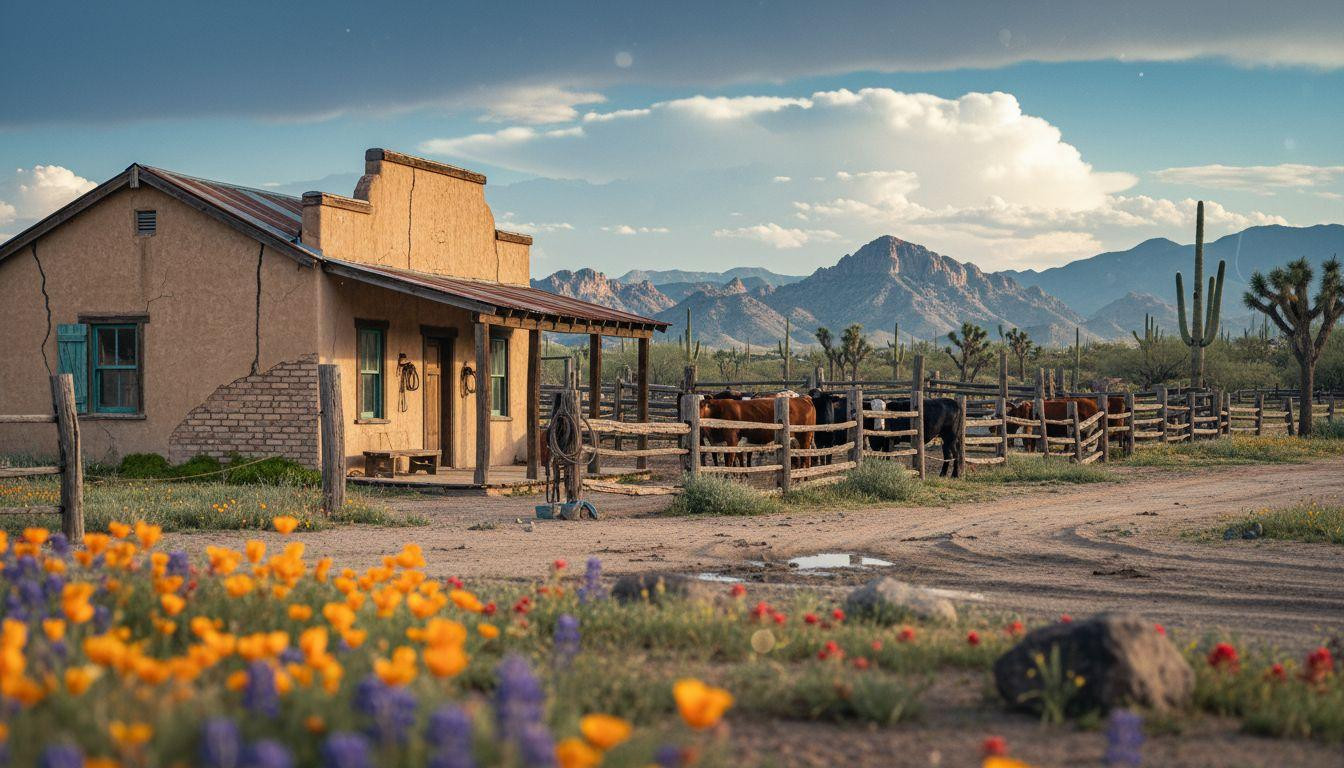
Wickenburg sits 60 miles northwest of Phoenix, population 8,300. The drive takes an hour on US-60. No chain hotels line the main street. Dude ranches still operate as working cattle operations, not spas with horses.
This desert town produced $200 million in gold between 1863 and 1942. The mines closed. The ranches stayed. Today, eight destinations within a 15-mile radius offer authentic Western experiences at prices 40-60% below Sedona’s tourist rates.
Vulture Mine ghost town preserves 18 saloons and dynamite scars
The Vulture Mine sits 8 miles southwest of downtown. Guided tours run weekends, 10am to 2pm, $25-30 per person. The assay office still stands. So does the stamp mill where ore was crushed.
Walk the half-mile loop through ruins. Cyanide vats rust in the sun. The superintendent’s house shows bullet holes from an 1880s dispute. Wind through broken windows creates the only sound.
Tours explain how 4,000 ounces of gold left here monthly during peak years. No gift shop sells souvenirs. The parking lot holds maybe 20 cars. Compare this to Jerome near Sedona, where tour buses idle and shops outnumber historic buildings.
Hassayampa River Preserve hides 280 bird species in cottonwood shade
Five miles southeast, the Hassayampa River Preserve protects 10 acres of riparian forest. Entry costs $10. Two trails loop through 100-year-old cottonwoods. The Nature Loop runs one mile. The River Trail extends two miles.
Desert oasis attracts rare migrants
Vermilion flycatchers nest here February through May. Zone-tailed hawks circle overhead. Lucifer hummingbirds appear during spring migration. The preserve records 280 species annually.
Boardwalks cross seasonal springs. Temperature drops 20 degrees under the canopy. Mesquite trees release a citrus scent after rain. Dawn brings the loudest bird chorus, around 6:30am in late March.
Quiet trails contrast canyon crowds
Daily visitor count averages 75 people. Sedona’s popular trails see 500. No reservations required. The preserve opens at dawn, closes at dusk. Bring binoculars and water.
Working dude ranches maintain 1930s cattle traditions
Rancho de los Caballeros operates 20,000 acres 5 miles west of town. Rooms run $246-716 per night, including breakfast and ranch activities. Three-night minimum applies. The Flying E Ranch hosts fewer overnight guests but offers day rides.
Daily schedule follows ranch work
Wake-up call comes at 7am. Breakfast ends by 8:30am. Morning rides leave at 9am, one hour for $75, half-day for $150. Afternoon options include cattle work, roping lessons, or shooting galleries with antique rifles at Flying E.
Chuckwagon dinners happen weekly. Steak cooks over mesquite. Dutch oven beans sit in coals. Guests eat around a desert firepit. This differs from Scottsdale resort ranches, where spa treatments replace cattle drives and nightly rates exceed $500.
Authentic work balances tourist activities
Ranch hands check fences daily. Guests can join or observe. The ratio runs 60% working ranch, 40% guest activities. Leather creaks. Horses snort. Boots gather dust. These sensations define the experience.
For more authentic Western heritage, this Arkansas town stacks Victorian stone on hillsides where springs bubble at 62°F preserves similar 19th-century roots.
Desert Caballeros Western Museum displays 51 years of frontier art
Downtown Wickenburg, the Desert Caballeros Western Museum occupies a 1940s adobe building. Entry costs $12-15. The collection includes 3,000 pieces. Charles M. Russell bronzes anchor the main gallery. Cowgirl saddles and Taos founders’ oils fill adjoining rooms.
The Cowgirl Up exhibit opens each April. Interactive roping demonstrations run hourly. Rotating displays focus on Western women’s contributions to frontier life. Average visit lasts 90 minutes.
Polished wood and leather scents fill the galleries. Soft lighting protects delicate textiles. Compare this to Sedona’s crystal shops and New Age galleries, where Western heritage takes second place to spiritual tourism.
Jail Tree marks 1860s frontier justice with mesquite chains
A 200-year-old mesquite tree stands downtown, 10 feet in circumference. Prisoners chained to this tree in the 1860s when the town lacked a jail. Bark shows scars from iron shackles. Stagecoach robber Buckey O’Neill spent time here in 1865.
Arizona designated this tree among its Magnificent 7 Heritage Trees in 2016. A bronze plaque details the history. Golden hour light, 6-7pm in late March, creates the best photographs. The site sits on the main walking route through downtown.
Similar small-town heritage appears in this Tennessee town that froze in 1779 where 5,500 locals still share porch tales, preserving 18th-century stories.
Vulture Peak trail climbs 1,200 feet to Sonoran Desert panoramas
The trailhead sits 12 miles southwest, 20 minutes by car. The round-trip measures 3.5 miles with 1,200 feet of elevation gain. Rocky and sandy sections alternate. Summit elevation reaches 3,400 feet.
Start by 7am in March and April. The climb takes 90 minutes up, 75 minutes down. Saguaro cacti cluster mid-trail. Coyotes appear commonly. Bighorn sheep sightings happen rarely. Summit views span 360 degrees, including Date Creek Mountains and Harquahala Peak.
Bring 3 liters of water per person. No shade exists. The trail surface demands sturdy boots. This solitude contrasts with Sedona’s Bell Rock, where parking lots fill by 8am and hikers queue for photos.
Joshua Tree forest blooms cream stalks along Highway 93
Fifteen miles north on US-93, a 200-acre Joshua Tree stand covers both sides of the highway near mile marker 170. Trees reach 10-30 feet tall, density of 50 per acre. Bloom season runs mid-March through early April, cream-colored stalks rising from spiky crowns.
Free parking pullouts allow photography. Dawn silhouettes work best, 6:30-7:30am. Subtle sweet fragrance carries on wind. This stand requires no fees or reservations, unlike California’s Joshua Tree National Park where advance booking became mandatory in 2024.
The landscape feels otherworldly. Dr. Seuss comparisons fit. Ochre desert contrasts with creamy blooms. Wind whips branches into motion. Twenty minutes here provides sufficient time for photos and observation.
Downtown bronze statues tell pioneer stories on saloon streets
Seven bronze statues mark downtown Wickenburg. Themes include pioneers, rodeo riders, and cattle drives. The 1895 Santa Fe Railroad depot now houses a museum. Three saloons operate: Horseshoe Cafe opened in the 1940s, serving breakfast biscuits and gravy for $12.
A one-mile walking tour takes 45 minutes. Ten antique shops sell Western wear and ranch equipment. Gold Rush Days Rodeo happens each February, drawing 5,000 attendees. The event includes bull riding, barrel racing, and a street parade.
Sun-heated bronze warms to touch by noon. Weathered wood facades show authentic age, not theme park construction. Saloon chatter and beer foam create the soundtrack. This differs from Scottsdale’s fake Western storefronts where air conditioning and gift shops dominate.
Budget-conscious travelers find similar value in 9 Durango spots where Victorian brick costs $150 and Aspen charges $500, another Southwest alternative to luxury resorts.
Your questions about Wickenburg answered
When should I visit for best weather and lowest crowds?
October through April offers 60-80°F days and low humidity. March and April bring Joshua Tree blooms and bird migrations. February sees Gold Rush Days crowds (5,000 visitors). October and November provide the quietest experience with identical weather. Summer exceeds 100°F daily, making outdoor activities uncomfortable.
How does Wickenburg compare to Sedona for authentic Western culture?
Wickenburg maintains working ranches and mining heritage without tourist overlay. Sedona shifted to spiritual tourism and luxury resorts. Wickenburg receives 200,000 annual visitors versus Sedona’s 3-5 million. Lodging costs 40-60% less. Drive time from Phoenix is half. Ranch activities focus on cattle work, not spa treatments.
What’s the total daily budget for two people?
Midrange dude ranch: $500-700 per night including meals. Budget motel: $200-300. Breakfast $25-30 for two. Lunch $20-30. Dinner $40-60. Activities: Vulture Mine tour $50-60, museum entry $24-30, horseback ride $150-300. Daily total ranges $300-500 budget option, $700-1,000 ranch stay. Car rental from Phoenix Sky Harbor runs $60-80 daily.
Morning light touches the Hassayampa River at 6:30am. Cottonwood shadows stretch across the boardwalk. Birds begin their chorus. Tourists sleep. Locals walk their dogs. This quiet lasts maybe 20 minutes before the day begins.