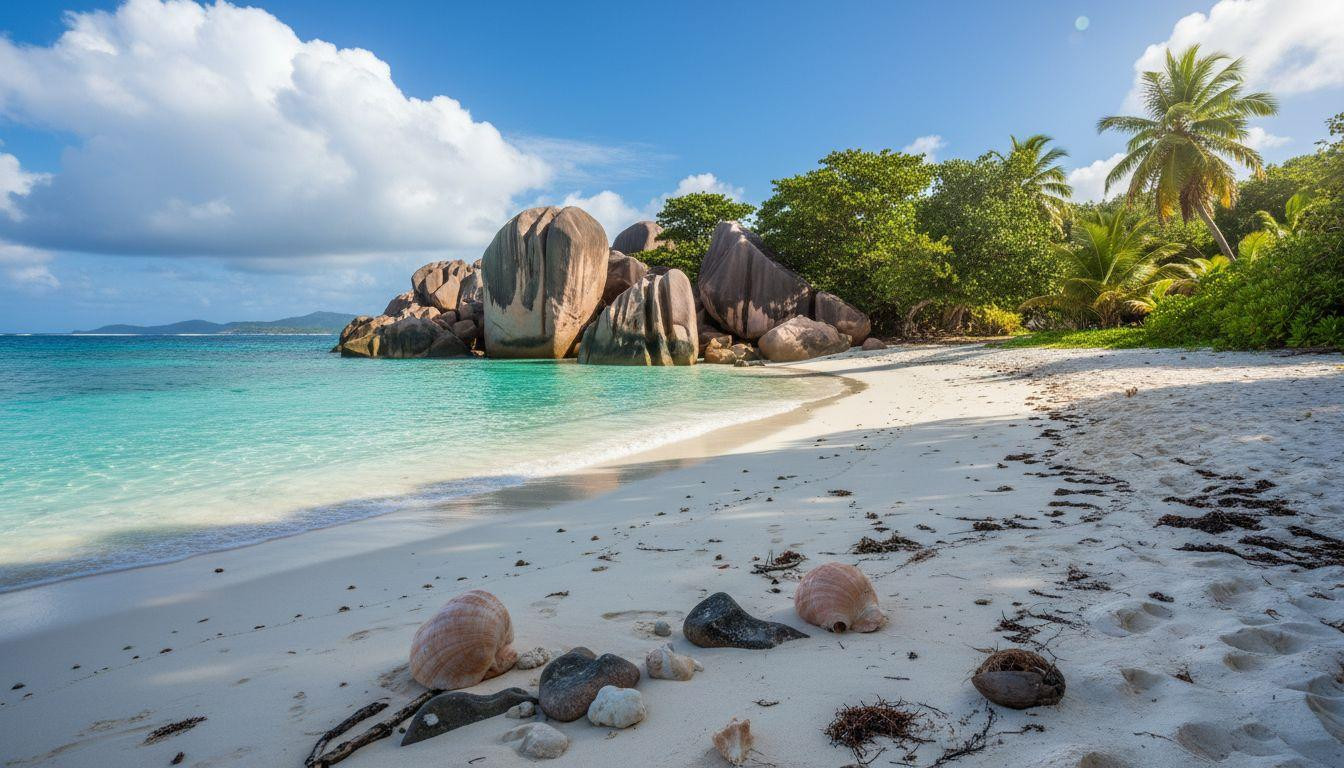
Praslin Island floats in the Indian Ocean like a geological dream made real. This 15-square-mile paradise holds something no other tropical destination can claim: beaches where house-sized granite boulders blend seamlessly with powder-white sand and turquoise water. December 2025 brings perfect conditions to explore these eight otherworldly coastal phenomena, each carved by 750 million years of oceanic forces.
Anse Lazio: The crown jewel of granite artistry
Anse Lazio stretches for nearly 2 miles along Praslin’s northwest coast. Pink-tinged granite monoliths rise 40 feet above pristine sand, creating natural swimming pools between the formations. The largest boulder, locally called “The Guardian,” measures 50 feet wide by 30 feet deep.
Morning light transforms these granite giants into living sculptures. Water temperature holds steady at 82°F in December, with visibility reaching 80 feet for snorkeling. The beach welcomes 400 daily visitors during peak season but stays peaceful in December’s shoulder period.
Local tourism boards confirm Anse Lazio draws photographers worldwide for its signature granite-sand contrasts. This Caribbean island where sand softer than silk stretches for morning walks offers similar powder texture, yet lacks Praslin’s unique geological drama.
Anse Georgette: The exclusive hideaway
Access requires permission through Constance Lemuria Resort or a challenging 45-minute forest hike. This 850-foot crescent holds only 120 visitors daily by conservation design. December brings just 80-100 daily guests compared to 180 in peak season.
Natural architecture at its finest
Granite formations here display perfect symmetry, as if architects planned each placement. Boulders average 20-25 feet in height, creating intimate coves between rock walls. The sand contains 98% pure quartz, explaining its brilliant whiteness.
Marine sanctuary status
Protected waters harbor hawksbill turtles and reef sharks in complete safety. Snorkeling reveals coral gardens thriving around granite bases. The resort maintains this beach’s pristine condition through strict visitor limits and environmental monitoring.
Anse Volbert: Family paradise with granite guardians
This 1.6-mile stretch accommodates families perfectly while maintaining geological wonder. Offshore granite outcrops create calm lagoons ideal for children. December sees 550 daily visitors, primarily European families seeking winter warmth.
Village life meets natural beauty
Fourteen restaurants line the western end, serving fresh octopus curry for $15 and grilled red snapper for $12. Local vendors offer coconut water at $3 and handmade shell jewelry from $8-25. The village of Baie Sainte Anne provides authentic Creole culture just steps from geological marvels.
Snorkeling among titans
Underwater granite formations continue 20 feet below surface level. Butterflyfish and angelfish cluster around submerged boulders, while moray eels inhabit crevices between rocks. Water clarity averages 60 feet in December’s calm conditions.
The hidden gems: Five more granite wonders
Anse Consolation offers solitude among 35-foot granite walls on Praslin’s south coast. Natural shade from takamaka trees covers 70% of this 720-foot beach. December temperatures here run 5°F cooler than north-coast locations due to prevailing currents.
Petite Anse requires a 20-minute forest walk but rewards hikers with complete isolation. Only 25-30 visitors find this 490-foot cove daily. Granite formations create natural tide pools perfect for sunset exploration. Beau Vallon’s turquoise swimming on nearby Mahé offers easier access but lacks this intimate scale.
Anse Kerlan shares space with Lemuria Resort’s golf course while maintaining public access. Eight granite monoliths frame the 720-foot beach, with the largest reaching 35 feet high. Resort staff mark safe swimming zones during high tide, when depth increases to 10 feet.
Anse Possession holds historical significance as the French settlement landing site from 1768. Traditional Creole homes sit behind 1,150 feet of protected coastline. Twelve local families maintain authentic island life here, fishing from traditional boats launched between granite formations.
Anse Petite Cour hides behind L’Archipel Hotel, offering granite intimacy on a smaller scale. This 295-foot beach features perfectly rounded boulders averaging 12 feet in diameter. Natural rock pools reveal small tropical fish during low tide.
Your questions about Praslin’s granite beaches answered
How do these granite formations actually form?
Praslin’s granite originated 750 million years ago as part of the supercontinent Gondwana. Tectonic forces separated these islands, while constant wave action carved and polished the formations. The unique pink-gray coloration comes from high feldspar content mixed with quartz and mica crystals.
What makes December ideal for visiting?
December marks the start of the wet season but brings only brief afternoon showers. Average temperatures reach 84°F with water at 82°F. Tourist crowds drop 35% from peak season, while marine visibility stays excellent. Budelli’s pink sand protected by Italian conservation faces winter closures, making Praslin’s year-round accessibility valuable.
How does Praslin compare to other granite coastlines?
Praslin’s oceanic granite differs from continental formations found in Maine or Scotland. These boulders display unique spherical weathering from saltwater exposure. The combination of granite, white sand, and tropical setting exists nowhere else on Earth. This Albanian basilica where ancient mosaics reveal summer secrets offers seasonal timing benefits, but Praslin’s geological wonders remain constant.
Evening light casts long shadows across these granite titans, turning Praslin’s beaches into natural cathedrals. The gentle lapping of waves against 750-million-year-old stone creates a soundtrack older than life itself, reminding visitors they’re witnessing Earth’s most ancient artistry.