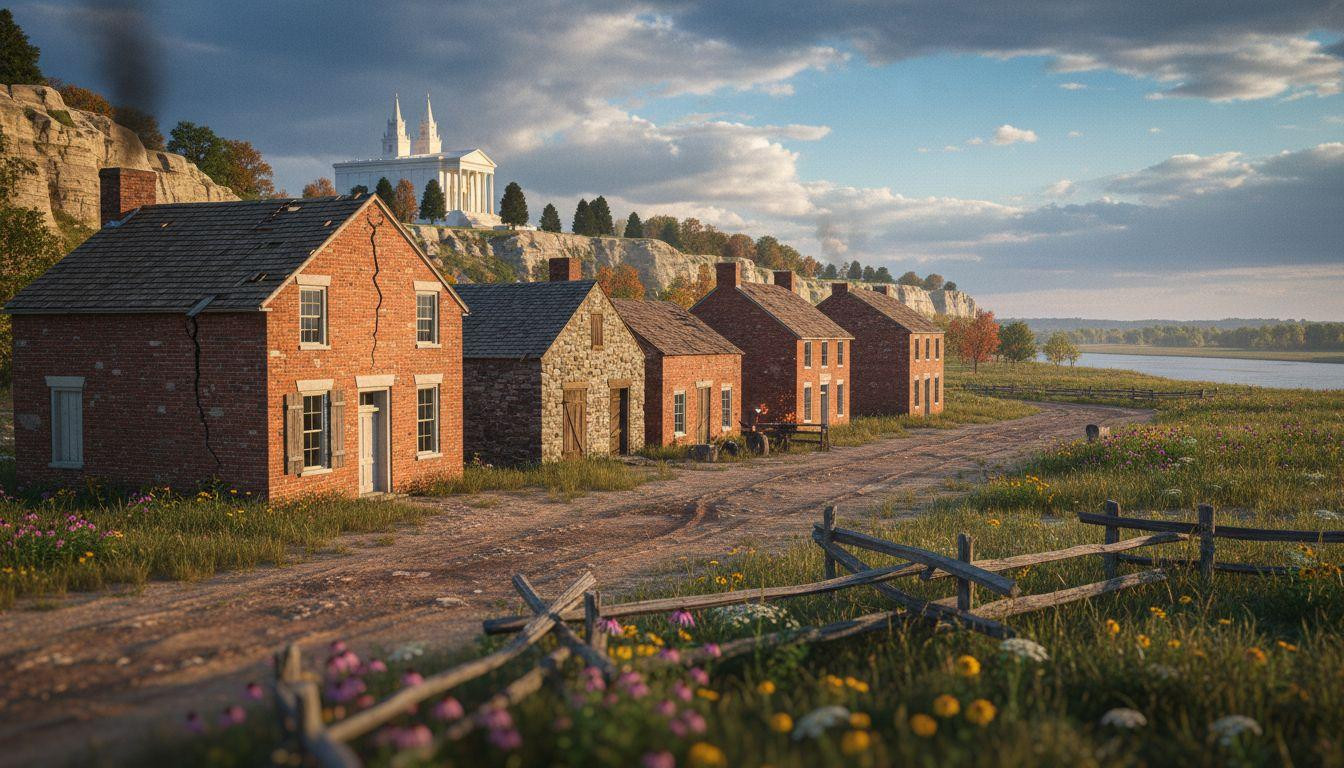
Nauvoo sits on a Mississippi River bend where 30,000 people once built America’s largest utopian community. That was 1846. Today 950 residents maintain red brick buildings and dirt roads where Mormon pioneers forged a city bigger than Chicago. You walk streets without velvet ropes. Blacksmiths work actual forges. Bakers pull bread from 1840s ovens. This isn’t Colonial Williamsburg with $45 tickets. Most sites cost nothing. Burlington, Iowa sits 30 minutes east if you need a hotel.
The town empties by 6pm most evenings. That’s when you see what preservation means here. No actors in costume. No gift shops selling replica candles. Just brick Federal buildings standing where they stood in 1839, maintained by people who choose to live inside history rather than perform it.
Historic Nauvoo Village where wagon wheels roll on dirt roads
Twenty-five restored buildings line Main Street and Parley Street. The blacksmith shop smells like coal smoke and hot iron. A tinsmith demonstrates how pioneers shaped metal sheets into lanterns. The print shop runs an 1840s press that still works. Bread bakes in brick ovens at the bakery. You smell it from two blocks away.
Park at the Visitor Center on 290 North Main Street. Free wagon rides leave every 30 minutes April through October. The wagons follow dirt roads past Joseph Smith’s homestead, the Browning Gun Shop, and the Scovil Bakery. No admission fees. No time limits. You walk into buildings and watch artisans work.
The village operates on volunteer labor and church funding. Most demonstrators are retirees who learned pioneer crafts specifically for this work. They answer questions between hammer strikes and bread pulls. Plan 2-3 hours minimum. Bring water. Summer heat hits hard with limited shade.
Nauvoo Temple grounds overlook the Mississippi from limestone bluffs
The original temple burned in 1848. The 2002 reconstruction stands 169 feet tall on the same foundation. Limestone blocks match the 1846 design exactly. The grounds open dawn to dusk year-round. Temple interior tours require LDS membership. Most visitors photograph the exterior and walk the bluff paths.
Sunset hits the temple’s west face around 7pm in summer. The Mississippi stretches half a mile wide here. You see Iowa farmland across the water. Original foundation stones sit exposed behind glass panels near the entrance. Historical markers explain the 1839-1846 construction timeline and the forced exodus that followed.
The view pioneers saw before leaving
Stand at the bluff edge where the temple overlooks the river. This is what 30,000 residents saw in 1846 before crossing to Iowa. The water runs brown with silt. Barges push grain downstream. The landscape hasn’t changed much. That’s the point. You see what they saw, minus the tent cities that covered these bluffs during the exodus.
Nauvoo State Park marks where pioneers embarked for Utah
The 150-acre park sits at the south end of town where Main Street meets the riverfront. This was the embarkation point in 1846. Museum exhibits show wagon construction, trail supplies, and mortality rates. Admission costs $2 for adults. The building stays cool even in July heat.
Hiking trails wind through bottomland forest to river overlooks. Camping costs $25 per night for sites with electric hookups. The park stays quiet except during Labor Day weekend when the Grape Festival brings crowds. Most campers are retirees in RVs. Kayak access points let you launch into the Mississippi backwaters.
What the museum shows
Original pioneer tools fill glass cases. You see the actual items families carried west: cast iron skillets, wooden yokes, leather harnesses. One exhibit displays a handcart that weighed 60 pounds empty. Families pulled these 1,300 miles to Salt Lake City. The museum doesn’t romanticize the journey. Mortality rates and burial records get equal display space with success stories.
Baxter’s Vineyards has pressed grapes since 1857
Illinois’ oldest winery survived the Mormon exodus and kept producing. The Baxter family has run it for five generations. Original wine cellars from 1857 stay cool year-round without electricity. Free tastings run daily April through October. Five wines cost $5 to sample.
The tasting room sells Nauvoo Blue cheese made 3 miles away. Pair it with their Concord wine. The combination works. Labor Day weekend brings the Grape Festival with 30,000 visitors. Book rooms months ahead if you’re coming then. Otherwise the winery stays peaceful. Most days you share the tasting bar with maybe four other people.
For more quiet Midwest river towns, this Iowa river runs so clear you see limestone through 8 feet of water just 30 minutes north.
Carthage Jail sits 25 minutes east where history turned violent
The 1839 jail building stands unchanged at 307 Walnut Street in Carthage. Joseph Smith died here in 1844 when a mob stormed the second floor. Bullet holes remain in the door. Free guided tours run Monday through Saturday. Reservations help during summer but aren’t required.
Tours last 45 minutes. Guides explain the events of June 27, 1844 without dramatization. You see the actual cell, the window Smith fell from, and the room where his brother Hyrum died. The tour feels heavy. This isn’t entertainment. It’s the site where a religious movement’s founder was killed by vigilantes.
The jail closes Sundays. Plan accordingly. Most visitors combine this with Nauvoo in a single day trip. The emotional weight of the site contrasts sharply with Nauvoo’s peaceful restoration work. That contrast matters for understanding why the exodus happened.
The Mississippi Riverfront Trail connects temple to state park
Three miles of unpaved trail follow the bluff line. You walk the same route pioneers walked between the temple and embarkation point. Bald eagles nest here November through March. Bring binoculars. The trail surface stays uneven. Hiking boots help more than running shoes.
Trailheads start at temple grounds or state park. Access stays free always. Sunrise light hits the river best. Morning fog lifts around 7am in fall. You get the trail mostly to yourself before 9am. Afternoon brings more foot traffic but never crowds. The path offers constant river views through gaps in the trees.
If you want more preserved 19th-century towns, 9 town squares where 1880s storefronts still sell nails from wooden bins shows similar authenticity across the Midwest.
Old Nauvoo Cemetery holds 1,200 pioneer graves on river bluffs
The cemetery sits at the south end of Wells Street. Burials date from 1839 to 1849. Many headstones are illegible now. Weather and time erased the names. Most graves belong to women and children. Pioneer life killed them young. The cemetery overlooks the Mississippi. That view cost them everything.
Walk quietly. Residents still bury family here. Some graves go unmarked. The cemetery stays open always with free access. Sunset through the headstones creates stark silhouettes. Photography feels appropriate if done respectfully. This place tells the cost of utopian dreams better than any museum exhibit.
Cultural Hall hosted Shakespeare when most frontier towns had saloons
The reconstructed 1842 theater stands at Main and Kimball. Original performances included Shakespeare, operas, and musical concerts. Mormon pioneers valued culture as much as agriculture. The hall proves it. Self-guided tours run 9am to 5pm daily. Air conditioning makes it a summer refuge.
The interior seats maybe 200 in original-style wooden pews. Modern community theater groups still perform here occasionally. Summer brings a few shows. Check the schedule. The building demonstrates how sophisticated this community was. They built a performance hall before they finished the temple. That priority says something about their values.
For more alternatives to mainstream historic sites, Better than Old Sacramento where parking costs $25 and Coloma pans gold for free offers similar budget-friendly history.
Your questions about Nauvoo answered
When should I visit Nauvoo?
April through October when most sites open. September offers the best weather with mild temperatures around 70°F and fall colors starting. Avoid Labor Day weekend unless you want Grape Festival crowds. Summer heat hits 90°F regularly with limited shade downtown. Spring brings rain but fewer visitors. Most sites close or reduce hours November through March.
How much does a Nauvoo visit cost?
Most attractions cost nothing. State park museum charges $2. Wine tasting runs $5. Camping costs $25 per night. Hotel Nauvoo rooms start at $89 off-season. Meals run $10-15 at limited local restaurants. A full day trip costs under $40 per person if you skip lodging. That’s 40% cheaper than Colonial Williamsburg’s $45 admission alone.
Is Nauvoo worth visiting if I’m not Mormon?
Yes. The historical significance transcends religion. This was America’s largest utopian experiment. The architecture, craftsmanship, and preservation work matter regardless of faith. Sites don’t proselytize. Guides explain history factually. Non-LDS visitors outnumber church members during summer months. The story of 30,000 people building a city then abandoning it fascinates anyone interested in American history.
If you want more frozen-in-time Main Streets, 15 towns where building codes froze Main Street in 1925 explores similar preservation efforts nationwide.
The blacksmith’s hammer rings against the anvil at 4pm. Bread cools on wooden racks in the bakery. Wagon wheels creak on dirt roads. The 950 people who live here now don’t perform history. They maintain it. You walk where 30,000 once walked, touch buildings they built, and stand on bluffs where they looked west before leaving everything behind. History here isn’t behind glass. It’s under your feet.