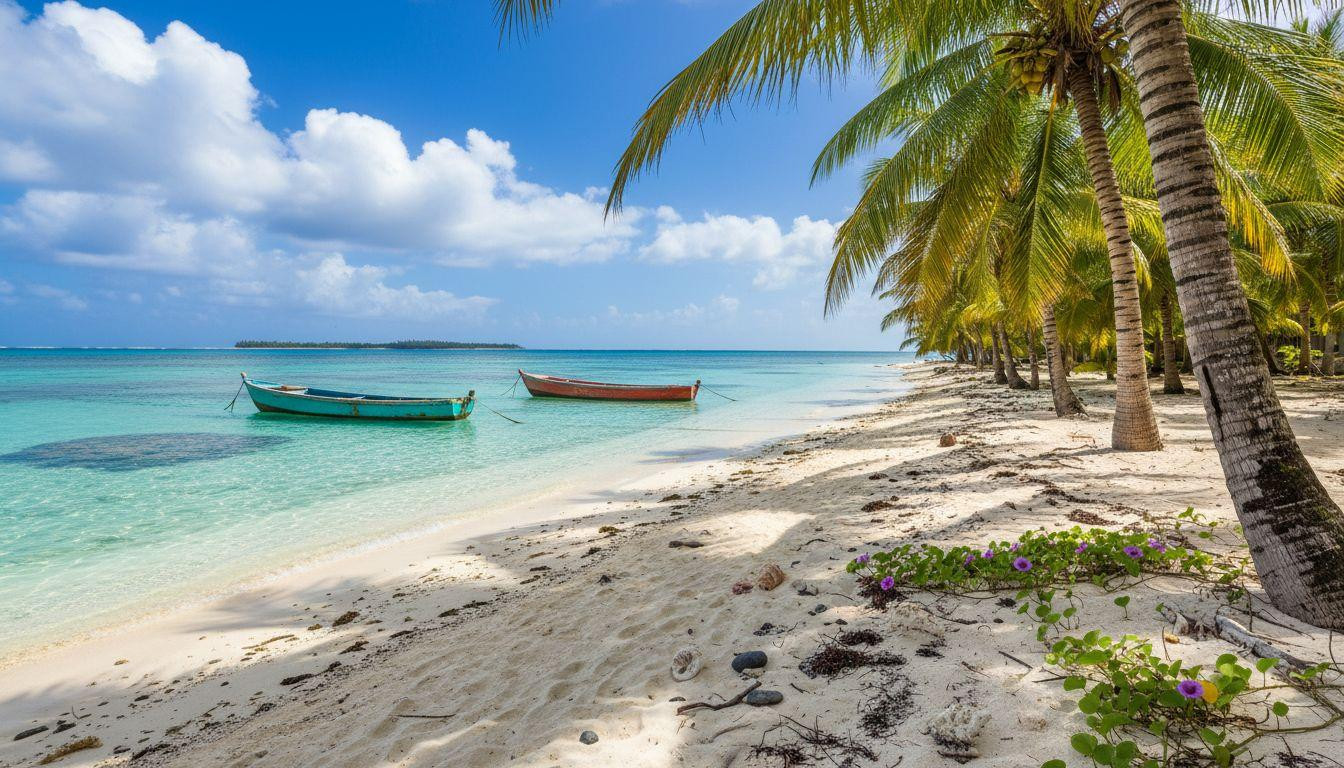
Morning light filters through coconut palms onto glass-clear water where parrotfish drift over coral gardens. Trou d’Eau Douce village on Mauritius’ east coast keeps eight snorkel zones hidden beneath swaying palm canopies. While day-trippers crowd nearby Île aux Cerfs, these lagoons stay quietly beautiful.
The village name means “sweet water hole” in French Creole. Underground springs bubble through the lagoon floor, creating natural freshwater pockets mid-sea. Local fishermen have protected these palm-shaded zones for generations.
Trou d’Eau Douce village beach: where fishing boats drift past coral
The main village beach stretches 800 yards beneath towering coconut palms. Water temperature holds steady at 81°F in December, perfect for extended snorkel sessions. Visibility reaches 80 feet on calm mornings before tour boats arrive.
Parrotfish schools glide over coral patches just 15 feet from shore. Local boat operators charge $8 for snorkel gear rental. Free parking lines the coastal road where five Caribbean islands offer similar palm-fringed lagoons.
What makes the water so clear
Freshwater springs create unique brackish zones where marine life thrives. Coral polyps filter particles constantly, maintaining exceptional clarity. The palm forest blocks wind, keeping surface chop minimal.
When to snorkel here
Visit between 7-9am before boat tours launch. Afternoon sessions work best after 4pm when winds calm. Avoid full moon periods when tides stir sediment.
Île aux Cerfs west shore: protected coves away from crowds
A 15-minute boat ride ($55 round-trip) reaches the island’s quiet western coves. While cruise ships dock on the eastern beaches, western palm groves stay empty. Water depth ranges 10-25 feet over thriving coral gardens.
Butterflyfish and angelfish populate the northern cove where takamaka trees shade white sand. Local fishermen offer direct transport for $40, half the resort price. Bring reef-safe sunscreen as this turquoise bay protects sensitive coral.
Swimming through coral arches
Natural coral formations create underwater tunnels 12 feet down. Sergeant major damselfish guard nesting sites in rocky crevices. Snorkelers can swim through three distinct arch formations.
Palm forest trails above water
Interior walking paths connect secluded beaches through native palm species. Fruit bats hang from coconut fronds during day hours. Path markers lead to viewpoints overlooking the lagoon.
Pointe Maurice reef: volcanic rocks meet living coral
North of the village, ancient lava flows created underwater rock formations where coral now thrives. Swim-through channels range 12-20 feet deep. Green sea turtles frequent this zone during morning hours.
The rocky coastline provides tide pool exploration at low water. Octopus hide in crevices while hermit crabs scuttle across exposed coral. Evening snorkel sessions offer the calmest conditions as better snorkeling than Hawaii costs less here.
Spotting larger marine life
Reef sharks patrol outer edges during early morning hours. Stingrays rest in sandy patches between coral heads. Eagle rays glide past during incoming tides.
Accessing the point safely
Walk north from village beach along coastal rocks for 12 minutes. Check tide charts before entering water. Local guides recommend buddy system for safety.
Bambous Virieux lagoon: freshwater springs underwater
Two miles south of Trou d’Eau Douce, underground springs create cool pockets within salt water. This unique ecosystem supports different fish species than typical reef zones. Taxi fare from village costs $12 each way.
The brackish environment attracts juvenile fish seeking nursery protection. Mangrove snappers school near spring outlets. No facilities exist here, maintaining pristine natural conditions where tiny islands worldwide offer similar untouched beauty.
Planning your snorkel adventure
May through October provides optimal conditions with 78°F water and minimal rainfall. Village guesthouses charge $65-$85 nightly for authentic Creole hospitality. Rental cars cost $45 daily for exploring multiple zones.
Pack reef-safe sunscreen and underwater camera. Morning sessions offer best visibility before afternoon winds. Local restaurants serve fresh grilled parrotfish for $18, caught daily by village fishermen.
Your questions about Mauritius’ east coast snorkeling answered
How does visibility compare to other destinations?
Trou d’Eau Douce lagoons offer 65-80 feet visibility, rivaling Maldives clarity at one-third the cost. Freshwater springs naturally filter particles. December through March provides clearest conditions.
What marine life will I encounter?
Parrotfish, angelfish, butterflyfish, and sergeant majors populate shallow reefs. Green sea turtles visit morning hours. Reef sharks patrol deeper outer edges safely.
How crowded do these zones get?
Village beaches see fewer than 150 daily visitors compared to 2,000 at nearby resort areas. Western Île aux Cerfs coves stay nearly empty. Bambous Virieux receives maybe 20 snorkelers weekly.
Evening light turns the lagoon golden as palm fronds sway overhead. Village fishing boats return with day’s catch while bioluminescent plankton begin their nightly dance in warm shallows.