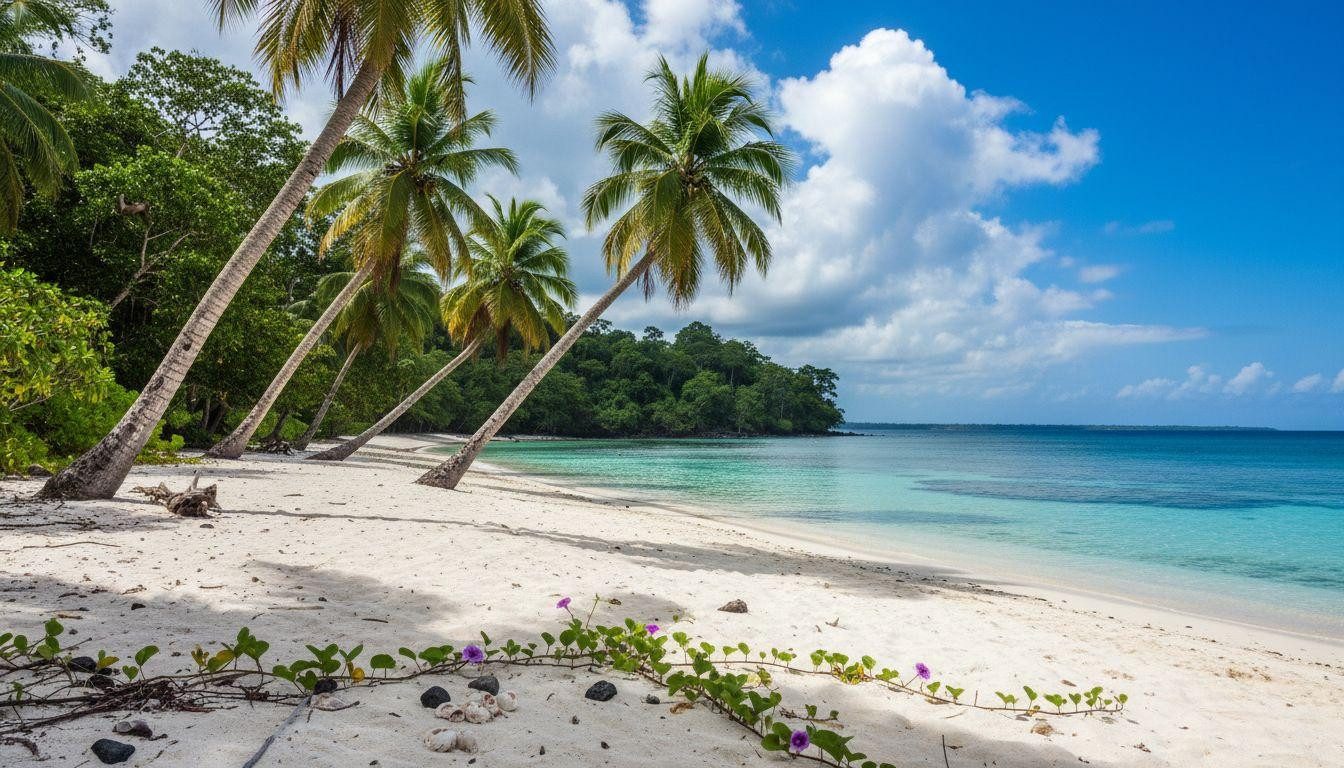
The donation box sits at the Kelly Creek entrance to Cahuita National Park. No fixed price. No ticket booth. Just a wooden slot and a handwritten sign: “Suggested $5.” Behind it, 10 kilometers of white sand stretch along turquoise water where coral reefs grow 20 yards from shore. This is Playa Blanca, where Caribbean beach paradise costs whatever your conscience decides.
Most visitors to Costa Rica’s Caribbean coast miss this. They fly into San José, drive three hours west to Manuel Antonio, pay $16 entry, and share three kilometers of beach with 2,000 other tourists. Cahuita sits 140 miles east of the capital in Limón Province. The park protects 24 square kilometers of living reef and 1,067 hectares of coastal rainforest. Population of the village: 5,000. Annual visitors: 50,000. That’s one-twentieth of Manuel Antonio’s crowds.
Where white sand meets free coral gardens
Playa Blanca begins at Kelly Creek and runs north for two kilometers. The sand is powder-fine, bone-white against water that shifts from pale turquoise in the shallows to deep blue 50 yards out. Palm trees lean over the beach at angles that look impossible. Their fronds create natural shade in patches along the entire stretch.
The coral reef runs parallel to shore. You can see it from the beach. Dark patches in the turquoise mark where brain coral formations rise five meters from the sandy bottom. Snorkel masks rent for $5 in Cahuita village. Swim straight out 20 yards and you’re floating above 400-year-old coral structures. Parrotfish the size of dinner plates drift past. Sergeant majors swim in schools of 50. Green sea turtles feed on seagrass beds every morning from December through March.
The first kilometer of trail from Kelly Creek entrance stays within sight of the beach. Three-toed sloths hang in the canopy 15 meters up. Park rangers report 90% sighting rates before 9am. Howler monkeys pass overhead in troops of 12 to 20. Their calls carry across the water. For a similar experience in the Bahamas, these Caribbean sandbars offer comparable turquoise waters but require island-hopping logistics.
The 5-meter snorkel highway
Kelly Creek reef runs like an underwater highway for 200 meters north toward Punta Cahuita. Maximum depth: five meters. The water stays calm here. Trade winds from the northeast create gentle surface ripples but rarely disturb visibility below. Mornings between 8am and 11am offer the clearest conditions before afternoon breezes pick up.
What lives in the reef
The park protects 35 coral species. Brain coral dominates, some formations measuring three meters across. Elkhorn coral grows in the shallower sections. Fire coral clusters near the rocks at Punta Cahuita. Fish counts exceed 500 species. Blue tang, queen angelfish, and spotted drum are common. Barracuda patrol the deeper edges. Nurse sharks rest in sandy patches between coral heads.
Green sea turtles arrive December through March to feed. They prefer the seagrass beds between Kelly Creek and Punta Cahuita. Swim parallel to shore and you’ll likely spot two or three on any morning dive. Touch nothing. Park rules enforce strict no-contact policies. Rangers patrol daily. Fines start at $100 for coral damage.
How the reef compares
Tortuguero National Park charges $15 entry and requires boat access. No beach swimming allowed. Manuel Antonio’s reef sits 100 yards offshore in rougher Pacific waters. Entry costs $16. Crowds peak at 3,000 visitors daily during high season. Cahuita’s donation-based system and Caribbean calm make it the better snorkel option for budget travelers. Similar Caribbean reef experiences in Roatán’s West End require $50 boat dives versus Cahuita’s shore access.
The palm-point peninsula
Punta Cahuita marks the northern end of Playa Blanca. Rocky outcrops replace sand here. Coconut palms grow at 45-degree angles over tide pools. The point divides the beach into two sections. Wind from the east means calm water on the west side. Wind from the west means calm on the east. One side always offers protected snorkeling.
Local legend mentions pirate shipwrecks from the 1700s. Wooden remnants supposedly rest eight meters down off the point. Park rangers confirm ballast stones and anchor fragments in the area but no verified treasure. The story persists. Snorkelers search anyway.
Tide pools form at low tide between 11am and 2pm. Starfish cling to rocks. Sea anemones wave tentacles in shallow water. Hermit crabs scuttle across exposed coral. Bring water shoes. The rocks are sharp. No facilities exist past Kelly Creek entrance. Plan bathroom stops accordingly.
Puerto Vargas and the jungle trail
Puerto Vargas entrance sits three kilometers south of Kelly Creek by road. Entry here costs $5.65 for foreigners. The beach runs one kilometer of unbroken golden sand. Darker than Playa Blanca. Coarser grain. Fewer palms. More sea grape trees providing natural shade.
The seven-kilometer trail connects both entrances through coastal rainforest. Wooden boardwalks protect the first two kilometers from Puerto Vargas. Mud and roots dominate the middle sections. Howler monkey troops patrol the canopy. Sloth sightings average one every 500 meters. Bird counts exceed 240 species. Toucans, parrots, and motmots are common.
Start at Kelly Creek at 7am. Finish at Puerto Vargas by 11am. The hike takes three to four hours with wildlife stops. Bring water. No vendors operate inside the park. Buses run hourly from Puerto Vargas back to Cahuita village for $2. For similar coastal rainforest trails, Costa Rica’s interior waterfalls offer comparable biodiversity.
Rondón stew and calypso rhythms
Cahuita village sits 500 meters from Kelly Creek entrance. Afro-Caribbean culture dominates. Rondón is the signature dish: coconut milk, fish, yucca, plantains, and peppers slow-cooked for hours. Sobre Las Olas restaurant serves it for $12. Miss Edith’s charges $10. Both sit on the main road through town.
Patí pastries sell for $2 at roadside stands. Spicy beef or fish wrapped in flaky dough. Breadfruit appears in most meals. Fried, boiled, or mashed. The texture resembles potato but sweeter. Rice and beans cook in coconut milk here, not plain water like the Pacific coast.
Cahuita Carnival runs late February through early March. Calypso music fills the streets. Dancers in bright costumes parade from the park entrance to the village center. Food stalls sell jerk chicken, coconut bread, and ginger beer. The event draws 10,000 visitors over four days. Hotel prices double. Book three months ahead or stay in Puerto Viejo 15 kilometers south.
Your questions about Cahuita answered
When should I visit for the best weather?
December through March offers the driest conditions. Average high temperature: 86°F. Rainfall drops to six inches monthly versus 25 inches in September. Seas stay calm. Snorkel visibility peaks at 30 feet. April and May are shoulder season with occasional afternoon rain. June through November brings heavy daily downpours. Many lodges close. Trails turn to mud. But hotel rates drop to $20 per night and you’ll have the beach to yourself.
How does Cahuita compare to other Costa Rica beaches?
Manuel Antonio on the Pacific coast charges $16 entry and hosts 1 million annual visitors. Three kilometers of beach. Monkeys on the sand but crowded conditions. Cahuita offers 10 kilometers of beach, 50,000 annual visitors, and donation-based entry. Tortuguero focuses on canal tours and turtle nesting. No beach access. Costs $60 for guided boat trips. Cahuita provides the best combination of Caribbean reef snorkeling, wildlife viewing, and budget access. Similar value propositions exist at affordable Gulf Coast alternatives in Texas.
What’s the total daily budget for visiting?
Park entry: $0 to $10 donation at Kelly Creek or $5.65 at Puerto Vargas. Snorkel mask rental: $5. Breakfast at village café: $5. Rondón stew lunch: $12. Dinner at local soda: $8. Hostel bed: $25. Total: $55 to $65 per person daily. Mid-range travelers staying at eco-lodges ($65 per night) with restaurant meals ($15 each) spend $110 to $130 daily. Luxury beachfront rooms start at $150 nightly.
Planning your visit
Fly into Limón Airport (LIO), 140 kilometers north. Three-hour drive. Rental cars cost $40 daily. Shared shuttles run $50 per person. Or fly to San José (SJO) and take a four-hour bus for $8. Direct buses leave daily at 6am, 10am, and 2pm. Return buses depart Cahuita at 8am, noon, and 4pm.
Stay at Cabinas Arrecife for $25 per night. Five-minute walk to Kelly Creek entrance. Or Alby Lodge at $65 nightly with pool and breakfast included. Playa Negra Guesthouse charges $120 for beachfront rooms. All accept cash. Few take cards. ATM in village center charges $5 withdrawal fee.
The park opens at 6am at Kelly Creek. Locals walk the beach before official hours. Join them. Watch sunrise over palm silhouettes. Collect shells at low tide. Leave them on the sand. The coffee shop on the main road opens at 6:30am. Two dollars for coffee. Five for gallo pinto breakfast. Return to the park by 8am when rangers arrive. Or stay all day. The donation box doesn’t judge.
Afternoon light hits Punta Cahuita around 4pm. The water turns gold. Pelicans dive for fish. Howler monkeys call from the forest. The last tour groups leave by 3pm. You’ll have the point to yourself. That’s when the place makes sense. Not because it’s hidden or secret. Because it’s simply there. Turquoise water. White sand. Palm trees. No entrance fee required.