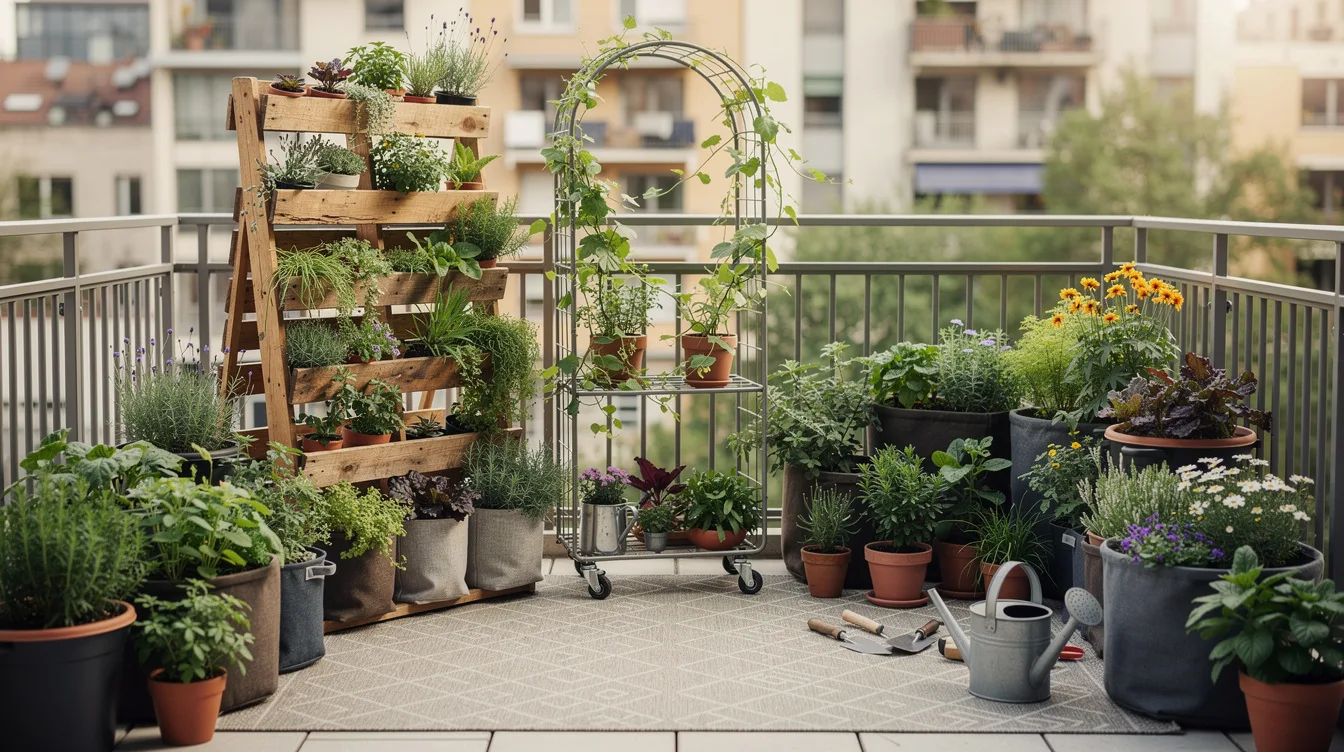
My last rental balcony had the usual problems: hot concrete, a flimsy railing, and a lease that made me nervous about every mark. I wanted actual greenery, not two apologetic pots shoved in a corner.
The only setup that made sense was fully portable. No drilling, no digging, no paint, no permanent adhesive, just pieces that sit, lean, roll, or clamp on and disappear cleanly when the lease ends.
Build a leaning pallet herb wall
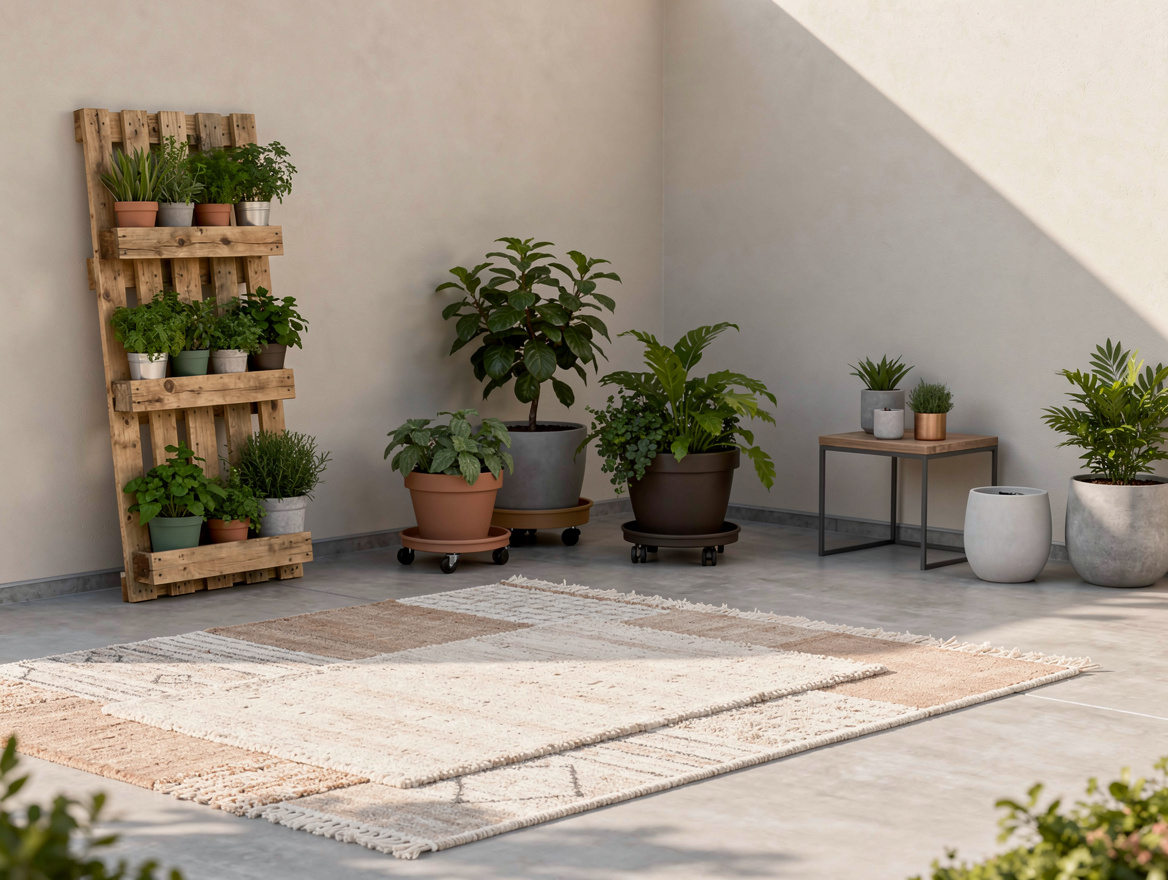
I like this one because it looks custom, but it still leaves with you in ten minutes. A single Home Depot heat-treated pallet can lean against a fence or exterior wall and become a vertical herb station without one screw going into the property.
A typical pallet is about 48 by 40 inches, and once you add fabric and soil, the depth lands around 10 to 12 inches. Line the back with landscape fabric, fill each slot with potting mix, and plant basil, thyme, oregano, or mint one pocket at a time.
The smart move is protecting the surface below it. Set the pallet on rubber pot feet or a pair of pavers, then use removable straps or bungee cords around the frame so it stays upright without leaving marks.
Expect a used pallet to cost free to about $10, a roll of landscape fabric from Lowe’s to run about $10 to $20, and an all-purpose potting mix bag from Walmart to cost about $8 to $12. For a renter setup, that is cheap, portable, and honestly better looking than a row of tiny plastic pots.
Stack 5-gallon buckets into self-watering planters
Tomatoes are where most renter gardens fall apart, because one missed hot day can cook them fast on a balcony. A self-watering bucket planter fixes that without asking you to install anything permanent.
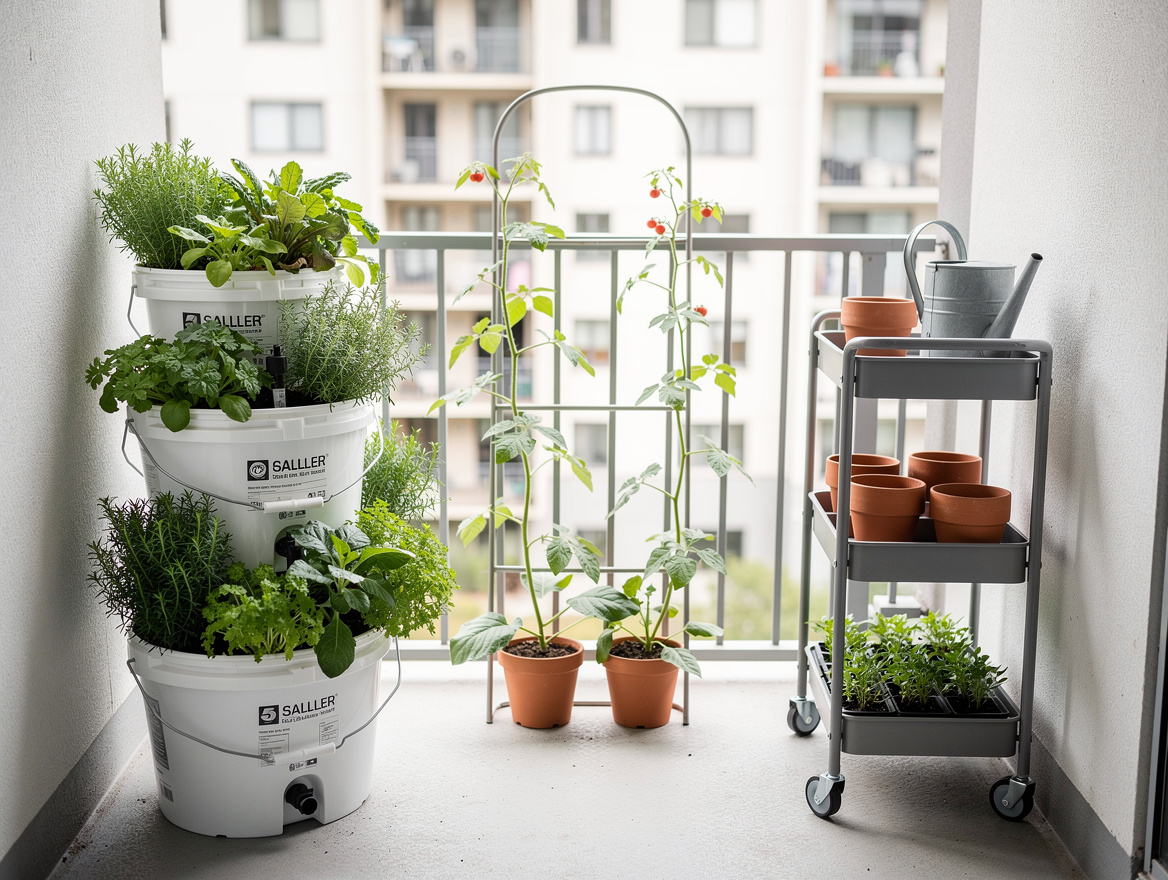
Use two Home Depot 5-gallon buckets, one nested above the other, with the lower bucket acting as a water reservoir. A typical 5-gallon bucket is about 12 to 12.5 inches across and roughly 14 to 15 inches tall, so three of them can sit in a narrow 3-foot strip without making the space feel blocked.
You fill the soil chamber once, top-water at the start, then refill through a simple tube as needed. The best part is the footprint: each unit stays compact, heavy enough to feel stable, but still moveable when it is time to clean or move out.
A typical bucket costs about $5 to $8 each, and a short PVC off-cut from Ace Hardware is usually just a few dollars. Put each one on a deep saucer or rolling caddy so the concrete or decking underneath stays clean, because water rings are the thing landlords actually notice.
Use fabric grow bags for a soft, movable mini patch
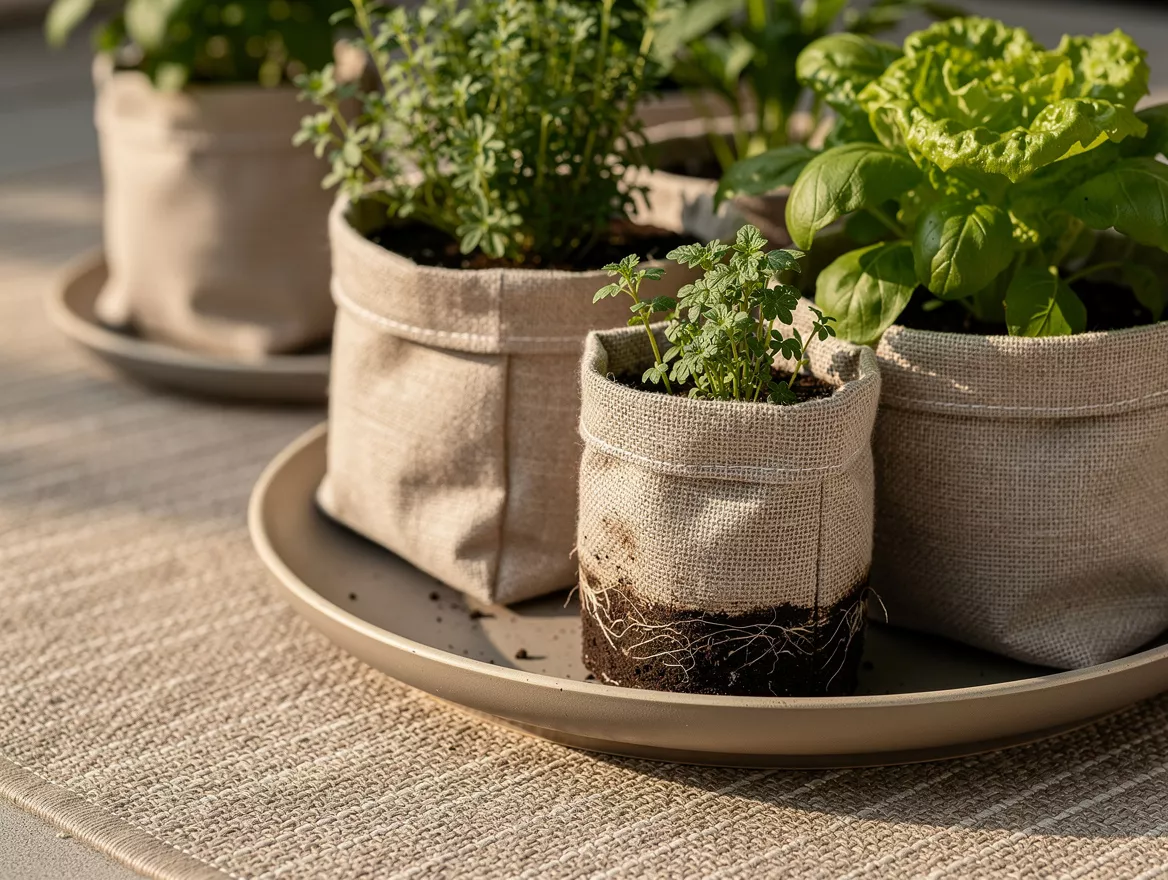
Grow bags are my favorite answer for renters who want more plants without more risk. They are light when empty, easy to store, and they do not trap moisture against the floor the way some hard planters do.
A typical set from Amazon gives you 5- or 10-gallon fabric bags for herbs, lettuces, peppers, or even dwarf tomatoes. A 10-gallon bag is usually around 16 to 18 inches wide and about 12 inches tall, which is big enough to feel productive but not so huge that moving it becomes a two-person job.
The zero-trace version is simple: put every bag on a saucer, tray, or outdoor rug. That little barrier matters on painted balconies and pale concrete, where damp soil can leave a shadow even if the plant itself never touches the surface.
Typical prices are friendly, about $15 to $30 for a multi-pack from Amazon or Target. I would choose grow bags over cheap decorative pots every time, because they are less likely to crack, less likely to stain, and far easier to pack.
Add height with a freestanding trellis, not a wall mount
Climbing plants make a small rental garden feel finished fast, but drilling a trellis into siding or masonry is a bad idea. A freestanding frame gives you the same vertical effect and leaves the property exactly as you found it.
Look for a slim metal or wood trellis from Wayfair, Target, or Lowe’s that can sit inside a planter or directly behind a grow bag. Typical balcony-friendly pieces are about 60 to 72 inches tall, which is enough for peas, cucumber, jasmine, or a light clematis without turning the area into a privacy wall.
What works best is pairing one tall planter with one trellis, rather than scattering several thin supports around the space. The garden reads cleaner, the setup feels intentional, and you can lift the whole unit out on moving day with no patched holes to explain.
Typical prices land around $25 to $60 depending on material. I would skip flimsy plastic here, because once a plant fills in, a weak trellis starts to lean and the whole setup looks temporary in the worst way.
Roll heavy pots instead of dragging them across the floor
This is the least glamorous hack, and it may be the most important. Big containers leave scratches when you drag them, and they leave mildew marks when they sit wet in one spot for months.
Put your largest planters on rolling caddies from IKEA, Amazon, or Home Depot. For renters, the sweet spot is a caddy that lets one person rotate a pot for sunlight, pull it away for sweeping, and move it indoors before a storm without scraping wood or tile.
Keep each planted module manageable, typically under about 55 to 65 pounds when wet if you expect to move it alone. That rule saves your back, and it also keeps you from building a container garden that feels permanent even though your lease is not.
Typical caddies run about $15 to $35 each. Add deep saucers under thirsty plants, and you cut down on staining, runoff, and the muddy half-moons that can make an otherwise neat patio look neglected.
Layer rugs, trays, and rail planters to protect every surface
A renter garden fails the moment water starts marking the floor or planter brackets start chewing up a railing. Surface protection is what makes the whole zero-trace promise real.
Start with an outdoor rug from Target or Costco, then place trays, saucers, or pot feet under every container that drains. A typical rug in the 4-by-6-foot range usually costs about $20 to $60, and it hides a plain concrete slab while catching loose soil before it spreads everywhere.
If you want railing planters, choose over-rail boxes with padded contact points and no drilling. Keep them light, check your lease first, and use them for herbs or trailing flowers rather than anything top-heavy that could shift in wind.
This is also where a small rolling cart from IKEA earns its keep. Use one shelf for tools, one for watering supplies, one for extra pots, and the floor instantly looks calmer because the clutter is contained instead of collecting around your feet.
Start with one moveable module, a grow bag or a self-watering bucket on a saucer, and see how your light behaves for a week. Once the floor stays clean and the watering routine feels easy, add height with a pallet or trellis instead of buying more random pots.
Mia Carter writes about small-space living and budget home makeovers. She has restyled three rentals and tests most ideas in her own 45 sqm flat.