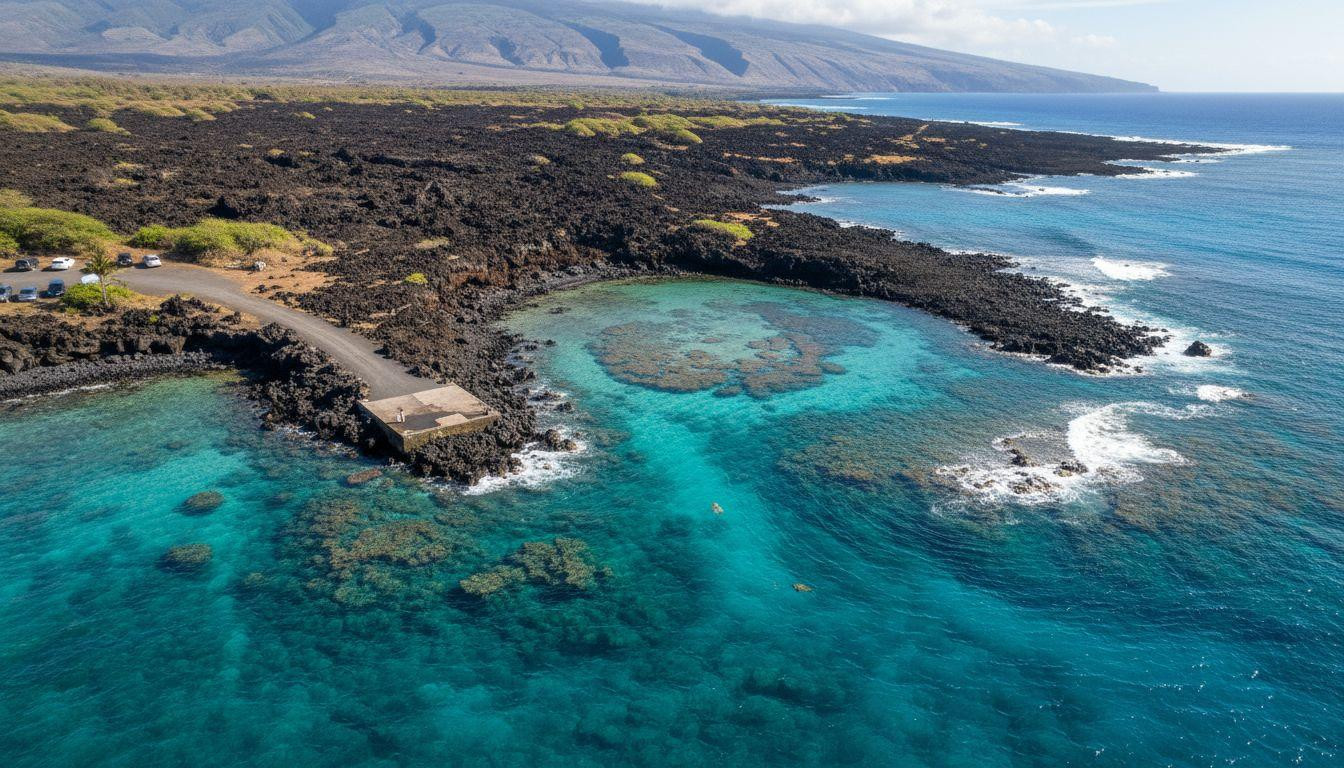
The rough dirt road to Ahihi Bay deters most tourists. That’s exactly why this Maui marine reserve holds some of Hawaii’s healthiest coral reefs. Where luxury resorts charge $400 per night just miles away, this volcanic coastline offers world-class snorkeling for free.
Ancient lava flows carved six distinct underwater zones here. Each reveals different marine life in crystal-clear water that reaches 100-foot visibility on calm mornings.
The concrete slab entry where beginners discover turtle highways
Waiala Cove’s northern entry offers the gentlest introduction to Ahihi’s underwater world. A concrete platform provides stable footing above sharp lava rocks. Most first-time visitors enter here.
Green sea turtles patrol these shallows like underwater traffic controllers. They follow predictable routes between feeding areas and resting spots. The protective horseshoe shape creates calm water even when outer areas turn choppy.
Water depth stays between 8-15 feet near the entry platform. Parrotfish graze on coral while bright yellow tangs dart between lava formations. This turquoise bay sits 10 minutes from shore where jungle meets crystal water captures similar crystal clarity in Caribbean settings.
The horseshoe reef where coral cities thrive untouched
Beyond the entry zone, Ahihi’s signature horseshoe formation reveals why marine biologists study this location. The curved lava walls create a natural aquarium 200 yards across. Protected from ocean swells, coral grows healthier here than most Hawaiian reefs.
The underwater architecture of ancient volcanism
Haleakala volcano’s last eruption 500 years ago created this unique topography. Lava flows entered the ocean while still molten, forming underwater caves and swim-through passages. The result resembles a natural cathedral with black pillars and turquoise light.
Visibility often exceeds 80 feet on windless mornings. Trumpetfish hover vertically among coral branches. Eagle rays glide through sand channels between reef sections.
The marine sanctuary success story
Established in 1973, Ahihi-Kinau became Hawaii’s first Natural Area Reserve. Strict fishing regulations allowed depleted species to recover. Today, fish populations here exceed those at popular snorkel destinations by 40%.
Unicorn fish, once rare, now school in groups of 20 or more. Moorish idols patrol territorial boundaries with distinctive grace.
The deep trenches where advanced snorkelers find hidden treasures
Southern sections of the bay drop to 35 feet between lava finger formations. These deeper channels require stronger swimming skills but reward visitors with Maui’s most pristine coral gardens.
The marine life that thrives in crystal depths
Deeper waters host species rarely seen in shallow tourist areas. Octopuses hide in lava crevices during daylight hours. Green moray eels patrol cave systems with surprising grace.
Winter months bring humpback whale songs audible underwater. The haunting melodies echo through lava formations like a natural concert hall. Forget Lahaina where parking costs $20 and Honokohau Bay keeps boulder coves free offers similar whale encounters on Maui’s western shore.
The local tradition of respectful exploration
Hawaiian cultural protocol emphasizes “malama ‘aina” (caring for the land). Locals demonstrate this by never standing on coral or chasing marine life. The phrase “please don’t stand up” becomes a respectful mantra here.
Sea urchins cover much of the lava bottom. Locals call them “wana” and treat their presence as a sign of ecosystem health.
The morning magic that transforms volcanic rock into aquamarine paradise
Dawn at Ahihi reveals why photographers arrive before sunrise. Golden light illuminates black lava formations while crystal water creates perfect mirror reflections. Trade winds stay calm until 10am most days.
Tourist surveys conducted in 2025 confirm Ahihi Bay receives 90% fewer visitors than nearby Wailea Beach. The rough access road and rocky shoreline filter casual beachgoers. Those who make the effort discover what this Thai island where ocean water stays swimming pool clear 80 feet down offers in Southeast Asia.
Morning conditions often provide 9 out of 10 snorkeling quality ratings. Afternoon winds can reduce visibility and create choppy surface conditions.
Your questions about Ahihi Bay answered
What gear do I need for safe snorkeling here?
Water shoes are mandatory due to sharp lava rocks and sea urchins. Boss Frog’s rents complete snorkel sets for $25 per day. Reef-safe sunscreen is required by law to protect coral ecosystems.
How does Ahihi Bay compare to famous Molokini Crater?
Molokini tours cost $150 and carry 200 passengers per boat. Ahihi offers similar marine diversity for free with far fewer crowds. This Philippine island where sea turtles swim past coral on every snorkel demonstrates how marine reserves protect turtle populations worldwide.
What’s the best time to visit during 2025?
December through April offers calmest ocean conditions and whale song encounters. Summer south swells can create dangerous surf. Arrive before 8am year-round when parking fills and winds pick up.
The concrete entry platform emerges from early morning mist like a gateway to underwater gardens. Crystal water reveals every detail of coral cities thriving in volcanic silence.