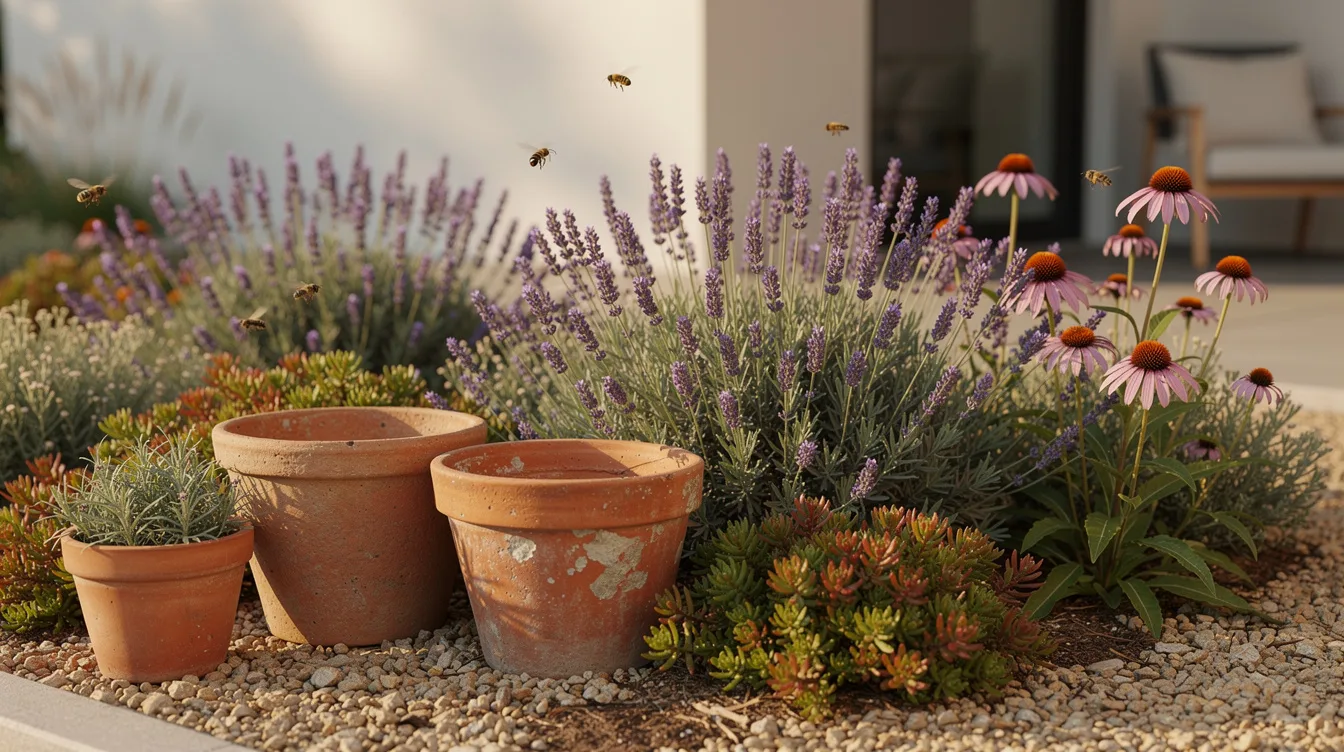
My south-facing foundation bed hit 118°F on a July afternoon last year. The hose bib was fifty feet away, and I’d stopped dragging it out by mid-June. Everything crispy died: the hydrangea, the hosta, the “low maintenance” groundcover I’d mail-ordered.
The gap sat there, bare dirt and good intentions, until I rebuilt with plants that actually want to bake.
Here are six that survived that summer, and the one after, with no supplemental water after establishment.
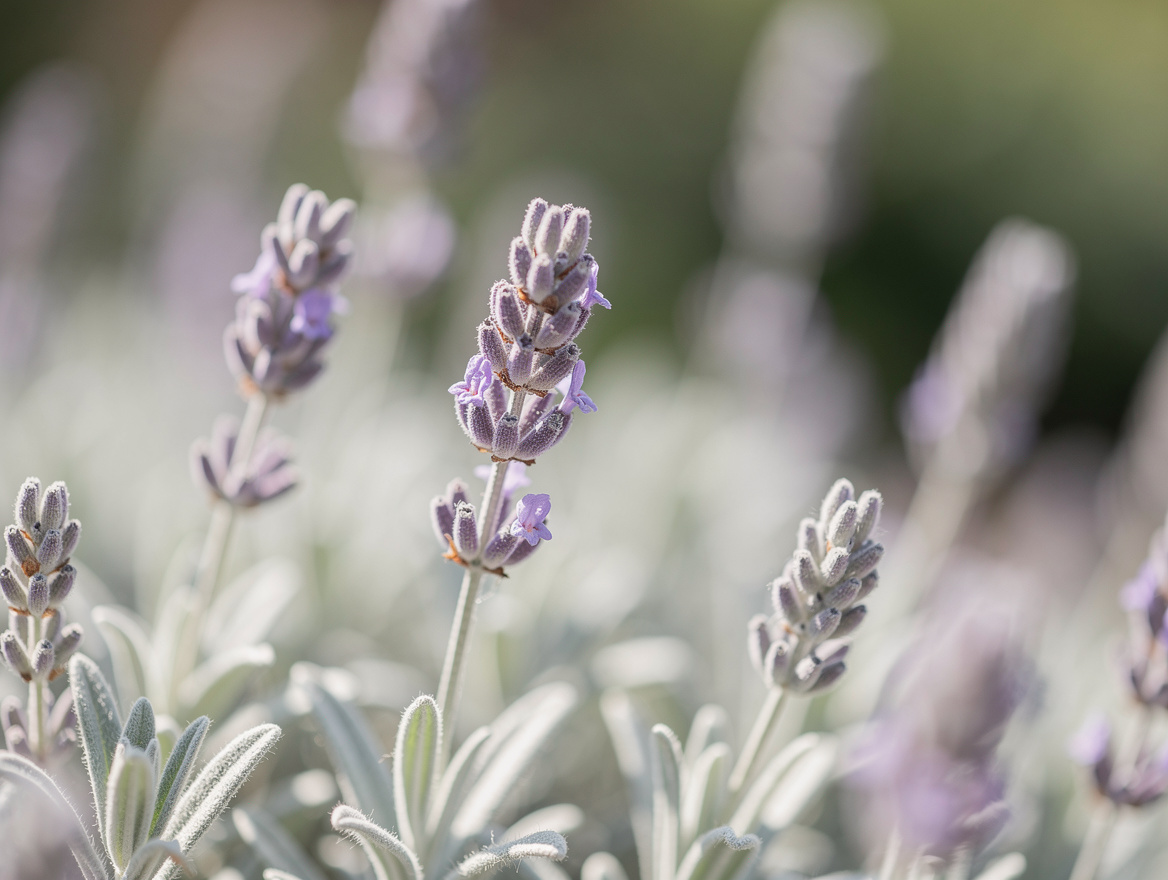
Pick Lavender That Actually Survives the Humidity
I killed three lavender plants before I learned the trick: it’s not the heat, it’s the drainage. Proven Winners ‘Phenomenal’ runs about $13, $17 in quart sizes or $35, $40 for a 1-gallon pot at online nurseries. It tops out around 18, 24 inches, so it won’t swallow your walkway.
Plant it in a raised bed or a Home Depot terracotta pot with cactus mix, not your backyard clay. Skip the mulch touching the crown. That one swap cut my replacement rate by eighty percent.
Grow Rosemary Like the Shrub It Wants to Be
We treat rosemary like a kitchen herb, but ‘Arp’ and ‘Tuscan Blue Upright’ want to be 3, 4 foot architectural shrubs. I bought a 1-gallon ‘Tuscan Blue’ for roughly $35 at Plants Express and stopped pruning it into a ball.
The payoff: zero supplemental water after year one, and it reads as a Lowe’s boxwood alternative at half the irrigation cost. The resinous smell when you brush past it beats any $50 candle.
Let Coneflowers Self-Sow and Call It a Design Choice
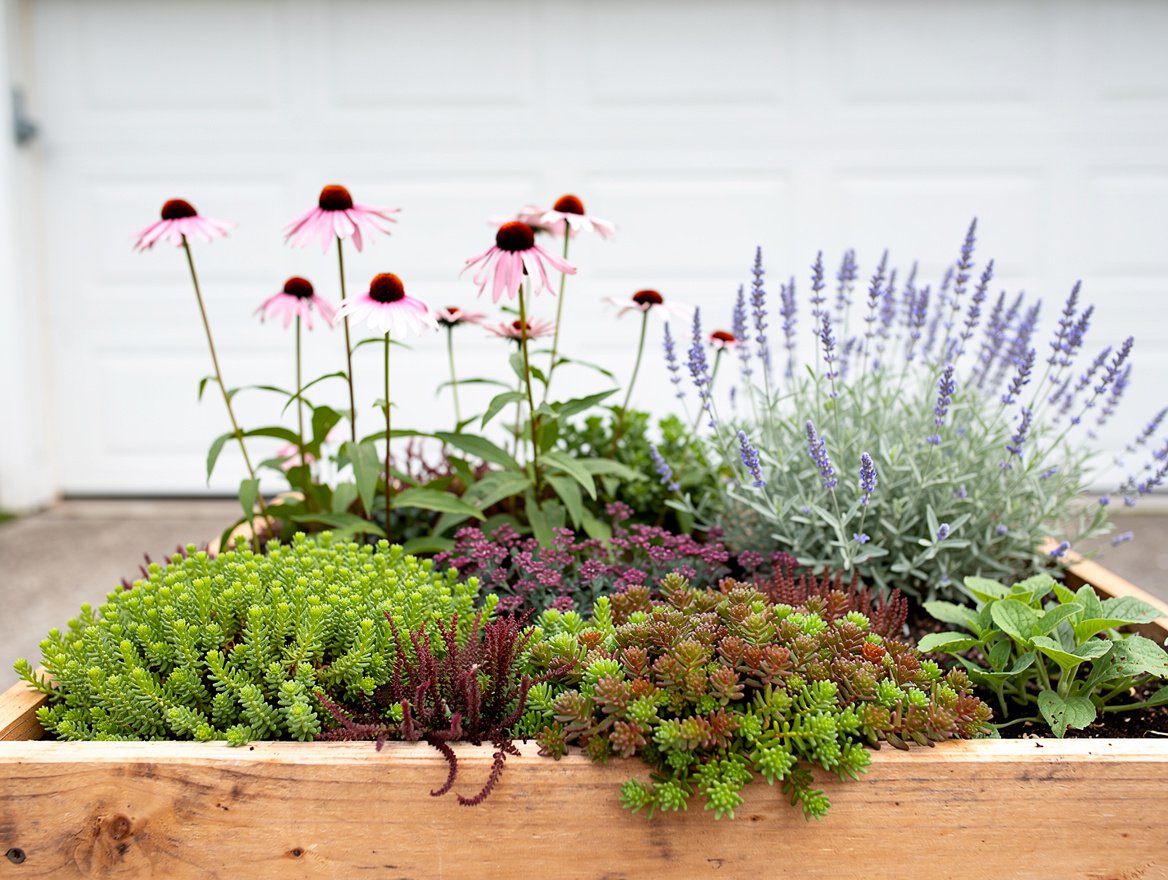
Echinacea ‘PowWow Wild Berry’ goes for about $10.99 in perennial catalogs. At 18, 30 inches tall, it hits the perfect middle layer between groundcover and shrub.
I planted a drift of five in a south-facing strip where my hose doesn’t reach. They baked through July, dropped seed, and came back thicker. The typical $8, $20 range for 1-gallon perennials makes this the cheapest structure you can add to a hellstrip.
Pack Sedum Into Every Cracked Corner
‘Autumn Joy’ and ‘Brilliant’ sedum run $8.95, $12.95 for small pots. The succulent leaves store water like camel humps. I stuff them into gaps between pavers, the strip against my garage, and a Target metal planter that cooks everything else.
Upright forms hit 18, 24 inches; spreaders stay under a foot and colonize fast. It’s the only plant I trust in a black pot on asphalt.
Use Russian Sage for Cheap Height Without Staking
Dwarf Russian sage varieties hit 2, 3 feet and cost roughly $12, $18 in perennial sizes. The silver stems read as structure from May through frost, not just a two-week flower event.
I swapped out a thirsty Wayfair faux-topiary for three of these in galvanized IKEA SOCKER pots. The bees arrived in hours. The fuzzy gray foliage hides dust and dog hair better than anything green.
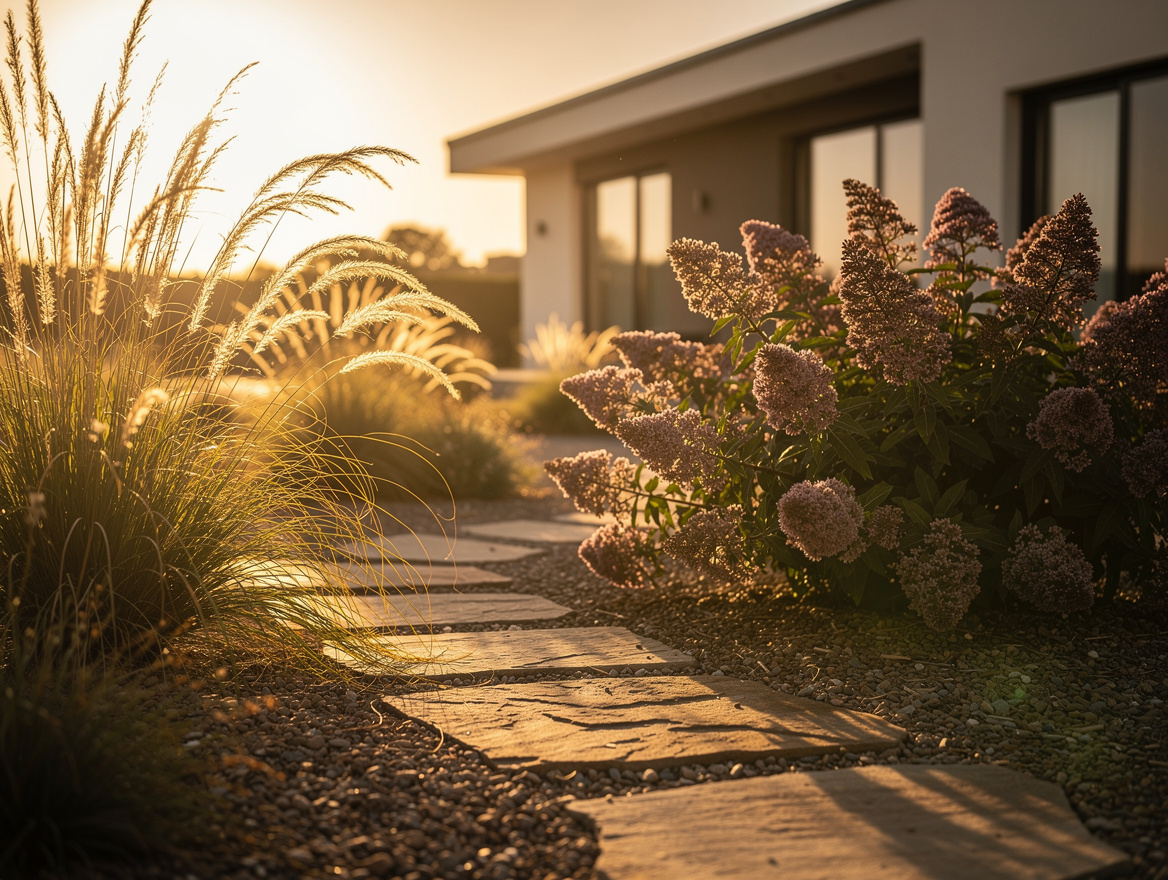
Anchor the Bed With Ornamental Grasses or a Tough Shrub
Texas sage and butterfly bush run $30, $50 for 2, 5 gallon shrubs at major online nurseries. That’s steep against a $10 perennial, but they give you winter presence and stop the bed from looking like a cutting garden exploded.
I planted a 2-gallon butterfly bush from a local Costco seasonal aisle for $29.99. It’s now the backbone that makes the lavender and sedum read as intentional, not desperate.
Start with sedum in your worst microclimate and one lavender in a pot you can control. Total outlay under $25 at most Ace Hardware garden centers. Get those two thriving before you drop $40 on a shrub.
Drought-tolerant doesn’t mean drought-proof in month one, and nothing dies faster than a $35 plant in soggy soil pretending to be desert.
Mia Carter writes about small-space living and budget home makeovers. She has restyled three rentals and tests most ideas in her own 45 sqm flat.