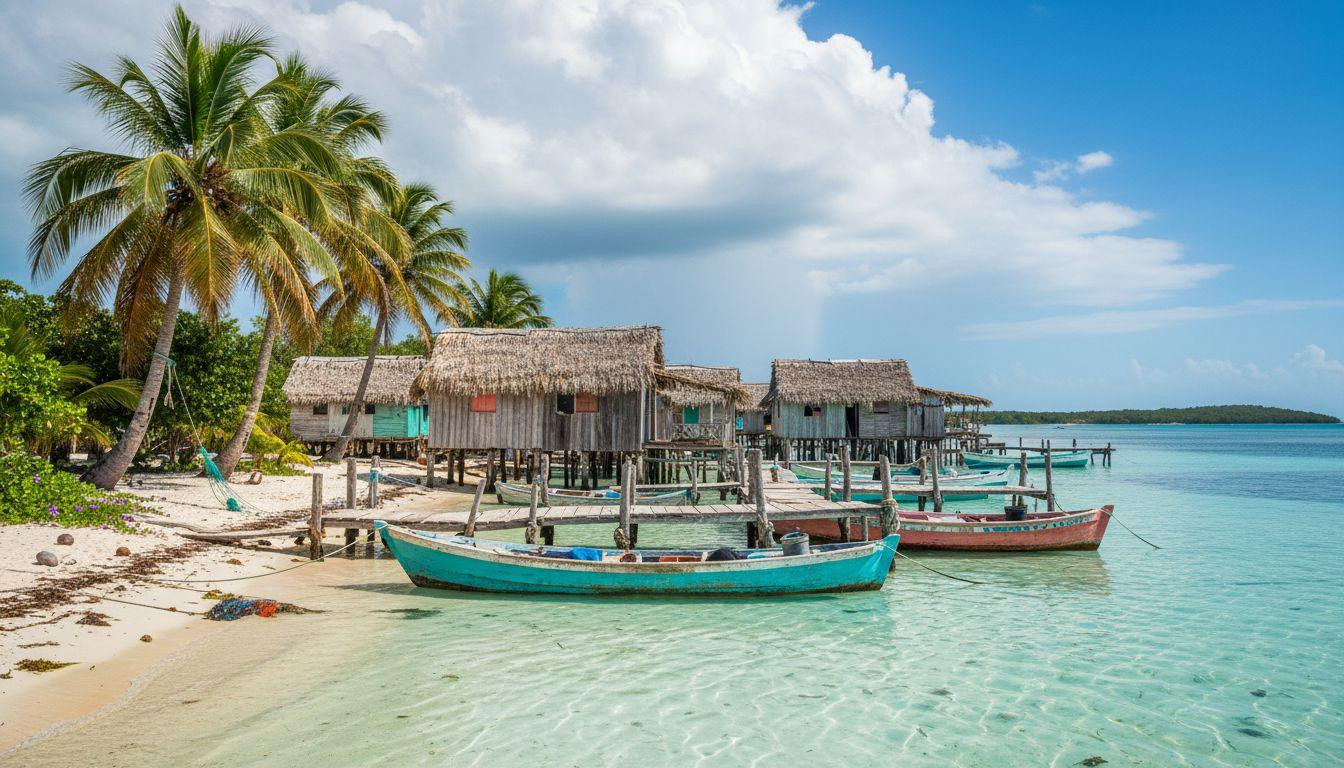
The charter boat slices through Caribbean waters, leaving La Ceiba’s bustling port behind. Ahead, 15 scattered islands emerge from turquoise depths. Welcome to Cayos Cochinos, where fewer than 100 Garifuna residents guard Honduras’s most pristine marine reserve.
This protected archipelago spans 460 square miles of strictly regulated waters. Commercial fishing remains forbidden since 1994. Only traditional hand-line methods survive here.
Chachahuate village life preserves centuries of Garifuna tradition
Chachahuate Cay measures just 250 feet by 50 feet. Yet 80 permanent residents call this sliver of sand home. Wooden houses topped with palm fronds line white beaches.
No electricity hums here. No running water flows from taps. Community life follows ancient rhythms unchanged since 1797.
Families welcome visitors into simple guesthouses. Hammocks sway between posts. Stars pierce darkness without light pollution. Morning arrives with fishing boat preparations at dawn.
Traditional architecture meets Caribbean reality
Houses rise on stilts above sand. Palm leaf roofs repel tropical rains. Wooden walls breathe with sea breezes.
Construction materials come from sustainable sources. Each home reflects generations of adaptation to island life. Remote Caribbean islands like these preserve building methods lost elsewhere.
Garifuna culture thrives through daily practice
Women prepare Machuca stew in communal kitchens. Men mend fishing nets by hand. Children speak three languages fluently.
Punta drums echo across water during evening gatherings. Traditional dances connect residents to ancestral memories. Visitors join these celebrations with respectful participation.
East End village balances conservation with livelihood
Cayo Mayor hosts the second Garifuna community. East End residents number approximately 75 people. This village focuses on sustainable fishing within marine reserve regulations.
Fishing boats depart before sunrise. Hand-lines replace prohibited nets. Lobster diving follows strict seasonal schedules determined by conservation scientists.
Marine reserve regulations shape daily life
Commercial fishing disappeared in 1994. Garifuna fishermen adapted traditional methods to conservation requirements. Hand-line fishing minimizes ecosystem disruption while providing community sustenance.
The Honduras Coral Reef Foundation monitors fishing activities. Marine reserve fees fund continued protection. Protected marine areas worldwide follow similar community-based models.
Pristine reefs reward careful stewardship
Coral formations thrive without commercial pressure. Fish populations exceed levels found in unprotected waters. Visibility reaches 60 feet on calm days.
Local guides lead snorkeling expeditions through underwater gardens. Colorful parrotfish graze coral surfaces. Schools of yellowtail snapper flash silver against blue depths.
Authentic Garifuna cuisine connects sea to table
Fresh-caught fish arrives daily from approved fishing zones. Women prepare traditional dishes using recipes passed through generations. Coconut milk features prominently in island cooking.
Hudut combines fish soup with mashed plantains. Tapado stew mixes seafood with yucca and coconut broth. Pan de yuca creates cassava bread through ancient techniques.
Traditional cooking methods preserve cultural identity
Wood-fired stoves heat communal kitchens. Clay pots season slowly over decades of use. Banana leaves serve as natural plates.
Meals bring families together around shared tables. Visitors eat alongside residents in authentic cultural exchange. Caribbean culinary traditions survive through community practice.
Giffity drink marks special celebrations
This fermented cassava beverage carries spiritual significance. Elders prepare Giffity for festivals and ceremonies. The drink connects community members to ancestral traditions.
Visitors taste small amounts during cultural workshops. The bitter flavor requires acquired appreciation. Community members explain ceremonial importance through shared stories.
Marine conservation partnerships protect underwater wilderness
The Smithsonian Institution conducts research from Cayo Menor. Scientists document coral health and fish populations. Data guides conservation decisions affecting local communities.
Garifuna residents serve as frontline marine guardians. Traditional ecological knowledge complements scientific research. Community-protected waters achieve better conservation outcomes than government-only management.
Marine reserve fees reach approximately $15 per visitor. Revenue supports conservation programs and community development. Tourism provides sustainable income while preserving cultural authenticity.
Your questions about Cayos Cochinos answered
How do you reach these protected islands?
Charter boats depart from La Ceiba or Roatan. Journey time ranges 1-2 hours depending on sea conditions. Costs average $50-100 one-way per person.
No commercial ferries serve the archipelago. Private charters ensure visitor numbers remain manageable. December offers ideal weather with calm seas and 77°F water temperatures.
Where can visitors stay overnight?
Garifuna families operate simple guesthouses in both villages. Accommodations range $20-50 nightly. Expect basic conditions without electricity or running water.
Hammocks and wooden huts provide authentic island sleeping experiences. Communal bathrooms serve multiple guests. Advance arrangements through community contacts ensure availability.
How does this compare to Roatan tourism?
Roatan receives over 1 million annual visitors. Cayos Cochinos limits access through boat-only transportation. Resort hotels cost $200-400 nightly on Roatan versus $20-50 here.
Cultural authenticity remains higher in Garifuna villages. Marine conservation succeeds through community stewardship. Visitors seeking genuine cultural immersion find unmatched experiences among these protected islands.
Sunset paints wooden houses gold against turquoise water. Garifuna drums fade into Caribbean silence. This archipelago rewards travelers choosing authenticity over luxury.