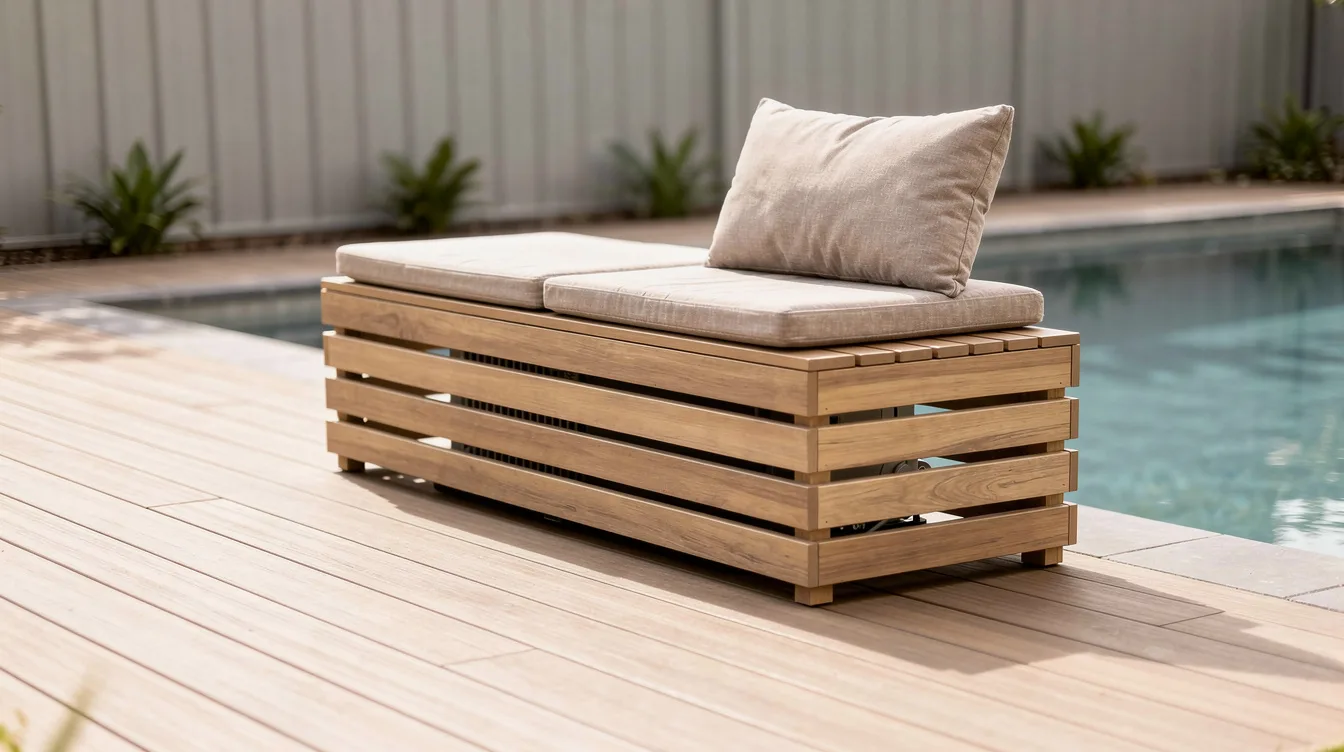
My least favorite poolside view is the one you cannot stop noticing: a beige filter tank, exposed pipes, and a pump humming next to chairs that cost more than the equipment hiding job ever did. Once I sat down with actual measurements, the fix was obvious.
A DIY pool pump cover can absolutely hide that mess and work as seating at the same time. The versions that hold up best are simple, vented, and built more like outdoor furniture than a sealed utility box.
Measure the Pad Before You Sketch Anything
I learned fast that a bench only looks smart when it clears every valve, pipe bend, and filter clamp. A typical residential equipment cluster often needs about 55 to 70 inches of length and 32 to 40 inches of depth once you add breathing room.
For a seat that feels normal, aim for a finished height around 18 to 20 inches. If your filter is taller than that, build the visual mass as a bench-like surround with a raised back section instead of forcing a low lid that will never fit.
Commercial equipment covers often land in the rough range of 52 to 67 inches long, 47 to 54 inches wide, and 24 to 33 inches high. That ballpark is useful because it shows how much bulk pool gear really takes once you stop guessing.
Build a Slatted Bench That Lets the Pump Breathe
The safest DIY version is a slatted box with a bench seat on top. Pressure-treated pine is the cheap, practical pick, and it still looks clean once you stain it a dark walnut or soft gray.
Leave gaps of roughly 3/8 to 3/4 inch between slats, plus a 2 to 3 inch gap near the base for drainage and airflow. I would not do a solid box here because heat and trapped moisture are exactly what your pool equipment does not need.
A basic wood build like this usually costs about $165 to $275 in materials, or roughly €150 to €250, depending on size and hardware in 2026. That price range makes this the best first project if you want function before polish.
Use a Lift-Up Seat Instead of Fighting Tight Access
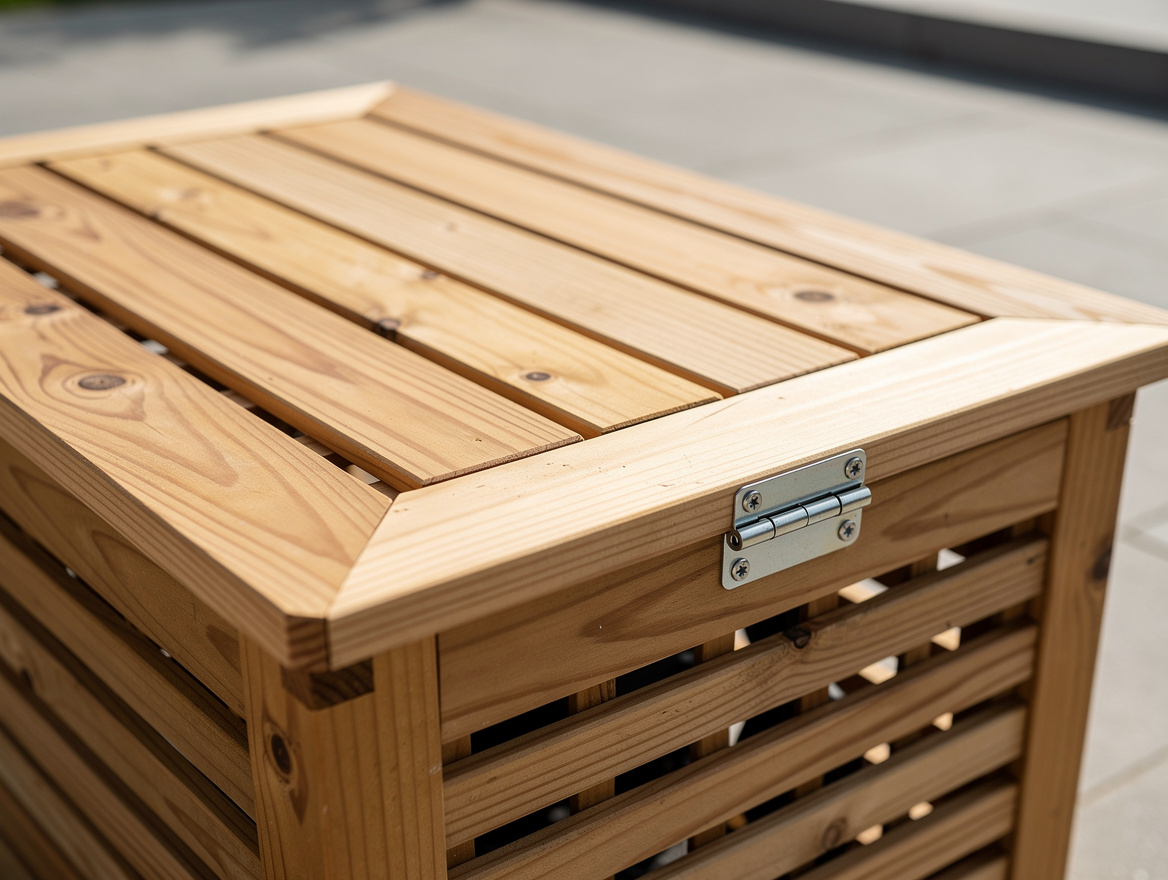
The smartest bench top is a hinged lid with two sections, not one giant heavy panel. A pair of Everbilt strap hinges from Home Depot keeps the cost down, and gas struts are worth adding if you open the cover often.
Most people regret tiny access doors because pool service is awkward enough already. I’d rather lift a seat from above and reach everything cleanly than crawl through a cute front panel that looked better on paper.
Budget around $25 to $80 for exterior hinges, lid supports, and coated screws. That is boring money to spend, but it matters more than a fancy stain color.
Choose Materials That Won’t Turn Into a Maintenance Chore
If you hate yearly refinishing, go straight to composite decking for the seat surface. Lowe’s and Home Depot both carry deck boards that hold up better around splash zones than cheap softwood caps.
Composite pushes the total build closer to about $330 to $650, or roughly €300 to €600, for a medium-size enclosure in 2026. It costs more upfront, but I think it earns that money back if your pool area gets hard sun and constant wet feet.
For the frame, treated lumber is still the sensible move. Cedar looks better on day one, but I would only splurge on it if the bench is in full view from your patio and you actually care about the furniture look.
Turn the Cover Into a Mini Lounge, Not Just a Box
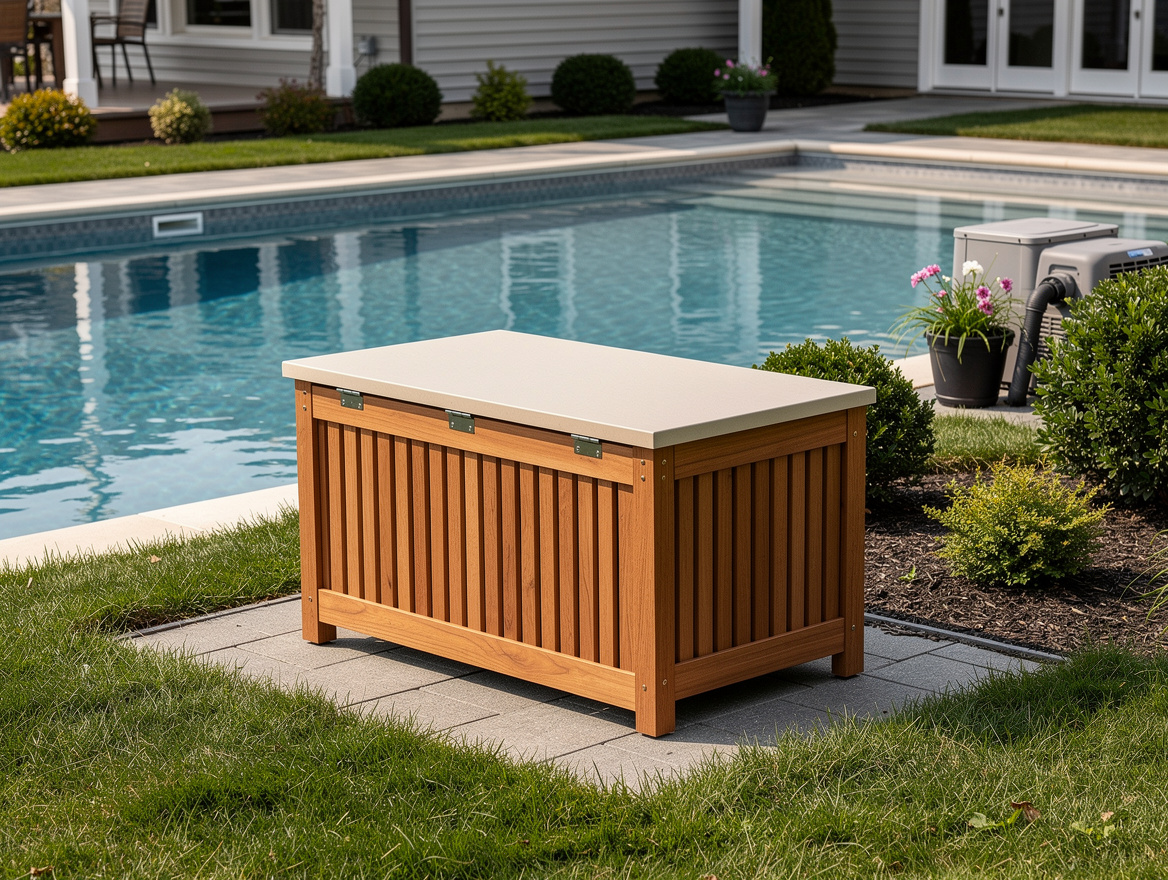
A plain bench works, but a shallow platform seat feels more intentional. Build a top that is deep enough for one cushion, then add a back rail or privacy screen in cedar slats so the equipment cover reads like outdoor seating, not a disguise.
Typical seat depth starts around 18 inches for upright sitting, while 24 inches feels better if you want a loungy perch with pillows. I like the middle ground because it hides more of the plumbing without eating the whole deck edge.
One weatherproof cushion. Two outdoor pillows. Done.
This is one of those projects where restraint looks more expensive than stuffing the bench with accessories.
Borrow Ready-Made Parts From Big-Box Stores
You do not have to mill every piece from scratch. A lot of people basically hack a storage bench or small deck module using Keter-style resin seating from Walmart or Amazon as visual inspiration, then rebuild it in stronger outdoor materials around the pool pad.
IKEA outdoor decking tiles can also help if you need the area around the equipment to feel finished fast. I would use them around the bench zone, not as the structural lid, because a pump cover needs a real frame underneath.
If you want the cleanest DIY shortcut, buy your framing lumber at Ace Hardware or Lowe’s, then copy the proportions of a ready-made patio bench you already know looks good. That approach saves time because you are designing from something proven instead of inventing every line.
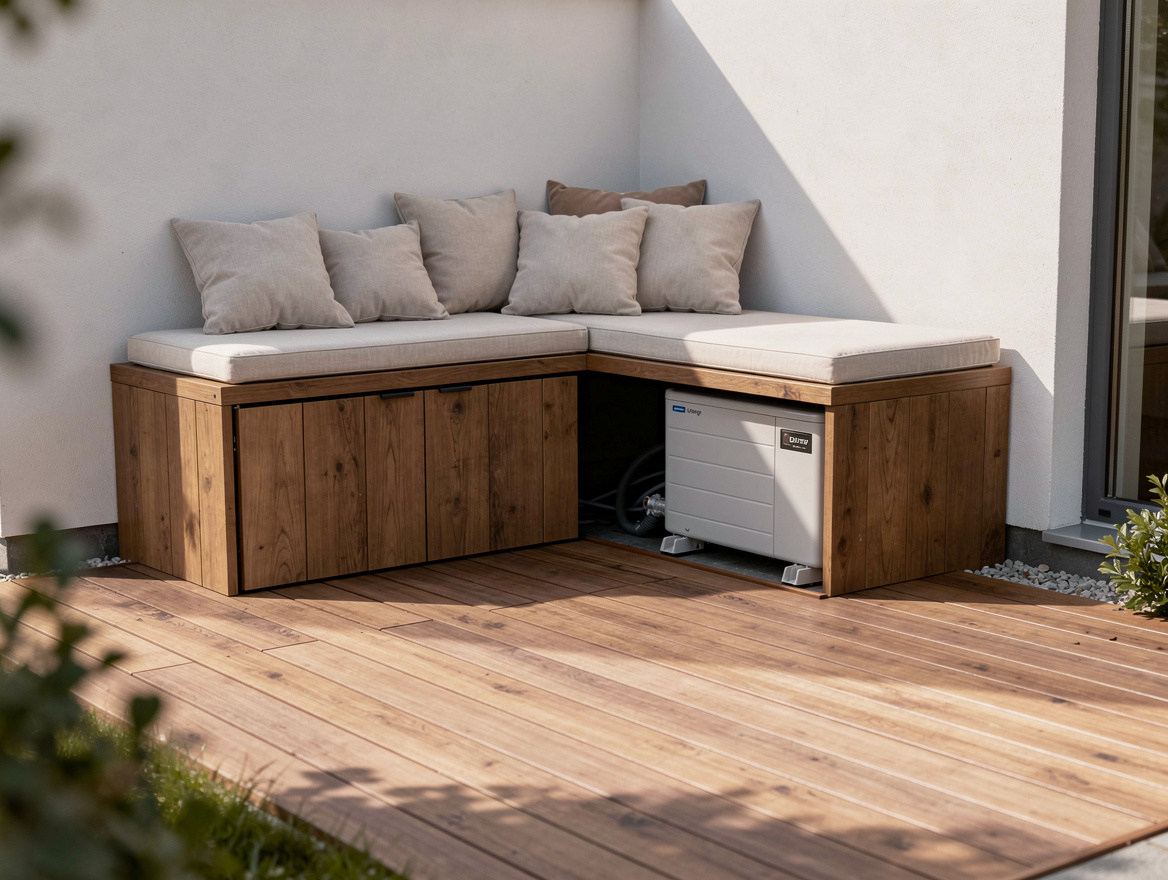
Start with the ugliest angle of your equipment pad and measure that side first. If the bench clears the plumbing, vents well, and opens without a fight, the finish details can come after.
Mia Carter writes about small-space living and budget home makeovers. She has restyled three rentals and tests most ideas in her own 45 sqm flat.