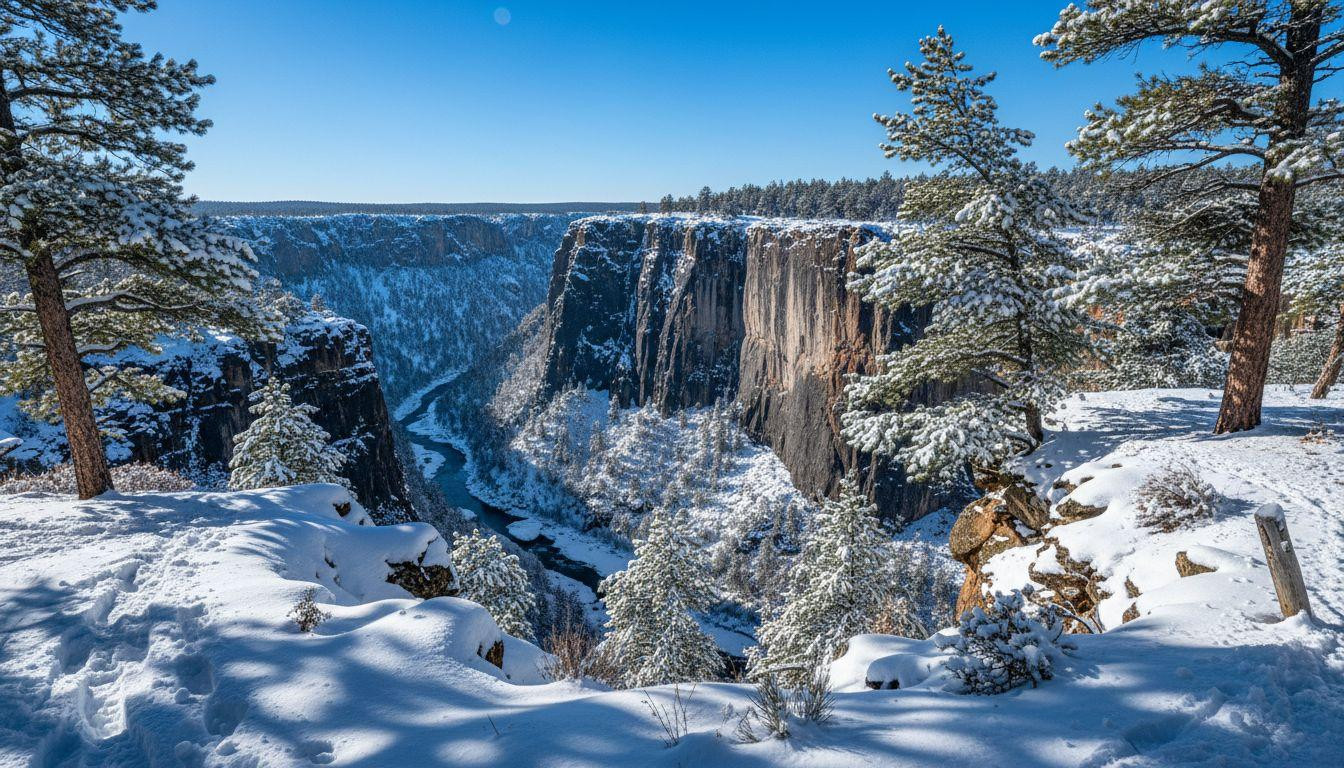
Snow transforms Black Canyon of the Gunnison from summer’s crowded overlooks into winter’s earned solitude. When South Rim Road closes to vehicles in late November, rangers groom the pavement into a 6-mile Nordic ski trail. Exclamation Point, the canyon’s most dramatic overlook, requires snowshoes and a 4-mile winter trek from the North Rim. Less than 1,000 visitors per month witness these 2,000-foot black cliffs dusted white, compared to summer’s 25,000 monthly crowds.
6 winter zones where snowshoes unlock Black Canyon’s quiet beauty
#1 South Rim groomed ski trail: where pavement becomes Nordic paradise
Rangers transform the closed South Rim Road into Colorado’s most unique cross-country ski trail. The 6-mile paved surface receives grooming for classic and skate skiing after each snowfall. Parking remains plowed at the visitor center, creating easy access to rim overlooks like Warner Point at the 2-mile mark.
Fat-tire bikes are banned to protect the groomed tracks. Snowshoers share the trail with skiers, following winter etiquette of staying to the right. The gradual grade makes this accessible for beginners, while experienced Nordic skiers can complete the full out-and-back in 3 hours.
#2 Free ranger-led snowshoes: 90-minute rim walks to sheer drops
National Park Service offers free snowshoe rentals during weekend programs from mid-January through early March. These 90-minute, 1-mile hikes accommodate all skill levels and reach overlooks like Gunnison Point and Chasm View. Groups meet at the visitor center at 10am and 1pm, weather permitting.
Equipment operates on a first-come basis, creating “snowshoe lotteries” during busy Presidents Day weekend. This Colorado glacial tarn offers similar winter solitude at higher elevation. Rangers provide microspikes when icy conditions make snowshoes unnecessary.
What makes these hikes special
Free gear eliminates the rental cost barrier for families. Rangers share geological insights about the 1.7-billion-year-old schist walls while pointing out bighorn sheep on distant ledges. The program emphasizes leave-no-trace principles crucial for preserving winter wildlife habitat.
Practical considerations
Visitor center hours run 9am-4pm with a noon lunch closure. No water is available October through April, requiring visitors to bring their own. Temperatures at 8,000 feet can drop to -10°F with wind chills reaching -30°F during storms.
#3 North Rim backcountry route: the 4-mile snowshoe to Exclamation Point
The North Vista Trail extends to an 8-mile roundtrip winter adventure when accessed from the closed North Rim gate. This backcountry route requires winter hiking experience and avalanche awareness. GPS coordinates 38.5792°N, 107.3581°W mark the overlook’s precise location above the Inner Canyon’s deepest sections.
Exclamation Point earned its name from the exclamatory views it provides. The panoramic overlook drops 2,250 feet to the Gunnison River below. This Oregon notch offers comparable winter access challenges in another national park setting.
Winter access challenges
North Rim roads close to vehicles from late November through mid-April. Accessing the trailhead requires either a multi-mile approach from the South Rim or a longer winter route from distant forest roads. Self-reliant winter camping skills become essential for overnight attempts.
Rewards of the journey
Total solitude awaits those who make the effort. The overlook faces directly into the canyon’s narrowest section, where the “black” walls create perpetual shadows. Direct sunlight reaches the Inner Canyon for only 30-40 minutes daily during winter months.
#4 Rim edge overlooks: where 2,250-foot drops meet winter silence
Painted Wall, Colorado’s tallest cliff, dominates views from multiple rim overlooks accessible via snowshoe. The 2,250-foot sheer drop creates vertigo-inducing perspectives when snow cornices overhang the edges. Warner Point and Pulpit Rock provide equally dramatic vantage points along the rim trail system.
Snow amplifies the canyon’s natural acoustic properties. The usual river sound from 2,000 feet below disappears when water freezes, creating an eerie quiet broken only by wind through snow-laden pines. This Arizona slot canyon offers different but equally dramatic cliff perspectives in the Southwest.
Safety considerations
Cornices form where wind deposits snow beyond cliff edges, creating unstable overhangs that can collapse without warning. Rangers recommend staying 10 feet back from any edge during winter conditions. Binoculars become essential for safely viewing bighorn sheep on distant ledges.
Photography opportunities
Morning light between 9-11am provides the best canyon illumination when low-angle sun penetrates the gorge. Telephoto lenses capture river detail from safe distances. The contrast between white snow and black schist creates dramatic monochrome compositions.
#5 Gunnison River frozen silence: the 1,750-foot echo below
Winter transforms the Gunnison River into a silver thread visible from rim overlooks. Partial freezing eliminates the water’s constant sound, creating an otherworldly quiet in the canyon depths. North-facing walls develop frozen waterfalls that remain visible through telephoto lenses from rim trails.
The river carved this canyon over 2 million years, cutting through some of Colorado’s oldest rock formations. Ice formations change daily as temperatures fluctuate, creating temporary sculptures that vanish with the next warm spell.
#6 After-dark astronomy zone: Milky Way above the abyss
Black Canyon holds International Dark Sky Park certification, providing exceptional winter stargazing when clear skies align with new moon phases. Rangers host astronomy programs during January and February, teaching constellation identification while temperatures drop below zero.
The canyon’s depth creates a unique viewing opportunity where stars appear to descend into the black void below. This Nevada trail provides similar dark sky conditions for winter astronomy enthusiasts. Chemical hand warmers become essential gear for extended viewing sessions.
Your questions about Black Canyon winter snowshoeing answered
How do I access Exclamation Point in winter conditions?
Exclamation Point requires a challenging 8-mile roundtrip snowshoe from either the South Rim approach or closed North Rim access roads. The North Vista Trail becomes a backcountry winter route requiring avalanche awareness and self-rescue skills. Most visitors choose the free ranger-led snowshoe programs to rim overlooks instead.
What winter wildlife might I encounter during snowshoe hikes?
Bighorn sheep frequent the canyon walls year-round, most visible through binoculars from rim overlooks. Ravens and Steller’s jays remain active in winter, while elk occasionally appear in meadows near the visitor center. Mountain lions inhabit the area but rarely encounter humans during daylight hours.
How does Black Canyon’s winter experience compare to other Colorado national parks?
Black Canyon receives fewer than 1,000 monthly winter visitors compared to Rocky Mountain National Park’s 50,000-plus. The canyon’s 8,000-foot elevation creates more predictable snow conditions than Mesa Verde’s variable southern exposure. Great Sand Dunes offers winter activities but lacks the dramatic cliff perspectives unique to Black Canyon.
Dawn light touches the rim while shadows still fill the canyon depths 2,000 feet below. Your snowshoe tracks mark fresh powder that few others will follow. The Gunnison River threads silver through black walls, and silence replaces summer’s crowds. This is Black Canyon’s winter secret: a national park that closes its roads to open its soul.