 and crowds stay home" itemprop="image" decoding="async" fetchpriority="high" data-lazy-srcset="https://www.journee-mondiale.com/en/wp-content/uploads/2026/02/2026-02-13-11-48-23_.jpg 1344w, https://www.journee-mondiale.com/en/wp-content/uploads/2026/02/2026-02-13-11-48-23_-300x171.jpg 300w, https://www.journee-mondiale.com/en/wp-content/uploads/2026/02/2026-02-13-11-48-23_-1024x585.jpg 1024w, https://www.journee-mondiale.com/en/wp-content/uploads/2026/02/2026-02-13-11-48-23_-768x439.jpg 768w" data-lazy-sizes="(max-width: 1344px) 100vw, 1344px" data-lazy-src="https://www.journee-mondiale.com/en/wp-content/uploads/2026/02/2026-02-13-11-48-23_.jpg">
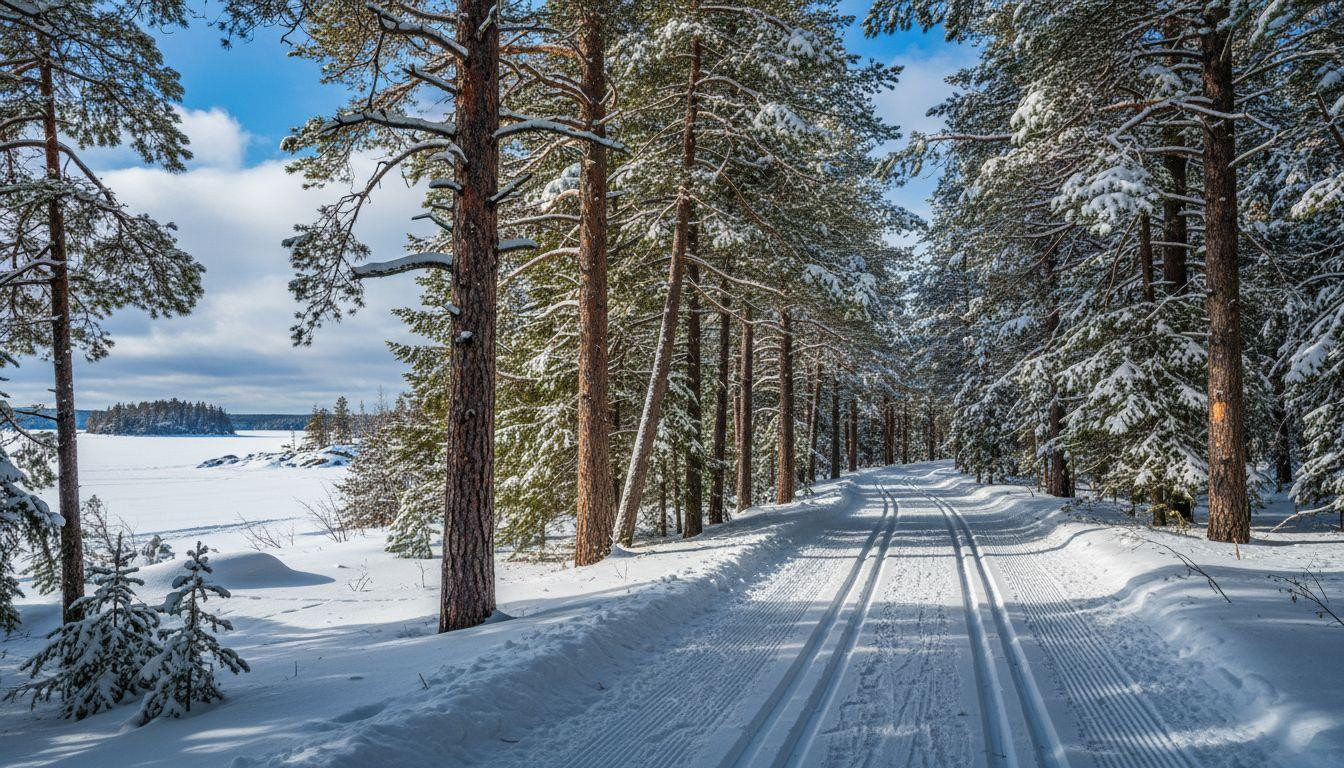
The Black Bay Trailhead sits 10 miles from Crane Lake, Minnesota, at the edge of Voyageurs National Park. In February 2026, groomed cross-country ski tracks cut through snow-laden pines where daily visitors number near zero. The boreal forest here feels Scandinavian: white silence, deep green boughs, frozen bays stretching to rocky horizons. Aurora odds climb 20-30% higher than summer nights. Free ski rentals appear at Valentine’s events. This is Minnesota’s overlooked winter secret, 300 miles from Minneapolis.
Crane Lake holds 150 year-round residents. The town exists as a gateway, not a destination. Gas station, general store, a few cabins charging $100-150 per night. By mid-January, ice roads open across Kabetogama and Rainy lakes. Snowmobiles haul gear to remote bays. The park spans 218,000 acres, but Black Bay trails stay quiet even during Boreal Stargazing Week.
Groomed ski loops through tunnel-like evergreens
Echo Bay Trail and Black Bay Trail combine into 3-5 mile loops. The path starts wide through aspens, narrows under pines, opens at rocky outcrops. Snow depth hits 10-12 inches in woods by mid-February. Grooming happens when conditions allow, with reports showing active operations as of January 17, 2026.
The Beaver Pond sits 1 mile from the trailhead. Morning light filters through iced branches. Steam rises where tracks cross. No crowds interrupt the view. A local fisherman who has worked these waters for 30 years says winter reveals what summer hides: the forest’s architecture, branch patterns, bark textures visible without leaves.
Free equipment at Valentine’s weekend events
February 14-15, 2026, the park offers free cross-country skis and snowshoes at Black Bay Trailhead. Supplies run limited. The Polar Polers Nordic Ski Club leads group outings. Rangers guide 1:00-8:30 p.m. sessions combining ski loops with indoor presentations and campfire stargazing. Telescope viewing follows at dusk. Jupiter appears sharp in scopes, its moons visible.
Rentals outside events cost $20-40 per day. Pets stay allowed on frozen lakes but not groomed trails. The park charges no entrance fee year-round. Camping permits run through recreation.gov for backcountry stays. This Michigan ski town gets 200 inches of lake-effect snow for $80, but Voyageurs offers solitude Michigan resorts lack.
Boreal forest silence under cosmic skies
February 9-15 marks Boreal Stargazing Week across the park. Clear nights and cold air increase aurora visibility. The Milky Way stretches unbroken on moonless evenings. Wind chill drops to -20°F on open ice, but forested trails stay calmer. Snow muffles sound. The quiet feels physical.
A resident who moved here from Brooklyn in 2019 describes winter as meditative. No cell service reaches remote bays. Self-reliance becomes routine. Ice fishing houses dot frozen expanses like ghost villages, staying 50 feet from snowmobile trails per park rules. The landscape rewards unhurried observation.
Tree identification walks in dormant woods
Voyageurs Conservancy hosts winter naturalist programs. Walks focus on bark patterns, bud scars, branching structure visible when leaves fall. Aspens transition to pines along Black Bay loops. Snow loads bend boughs. The forest teaches patience. Programs run free, listed on the conservancy calendar. Participants bring thermoses for warm drinks during stops.
Compared to 9 Nevada bristlecone groves where 4,000-year trees stand in winter silence, Voyageurs offers younger boreal species but similar contemplative stillness. The experience centers on sensory connection rather than ancient age.
Ice roads and snowmobile access to remote bays
The park maintains 126 miles of staked snowmobile trails January through March. Local clubs like Crane Lake Voyageurs Snowmobile Club handle grooming. Trails reach isolated bays beyond Black Bay: Rainy Lake, Kabetogama Lake, Namakan Lake. Rentals cost approximately $200 per day from Crane Lake and International Falls outfitters.
The Kab-Ash Trail runs 1 mile as a maintained ice road when conditions allow. Families drive cars onto frozen surfaces for sledding at designated hills. Small hills suit children, larger drops challenge adults. A maintained skating rink appears when ice thickness permits. Safety protocols require checking conditions daily. Park signage warns of pressure ridges and thin spots.
Icebox Days traditions and candlelight snowshoe hikes
January 23, 2026, Rainy Lake Visitor Center hosts a candlelight snowshoe hike during annual Icebox Days. Free snowshoe rentals come with the evening event. Crane Lake and International Falls celebrate with frozen turkey bowling, smoosh races (teams grip frozen shirts with faces for tug-of-war), and infamous gizzard runs where competitors race carrying chicken gizzards on spoons.
These quirky traditions date to the 1980s. Locals embrace the cold rather than flee it. Temperatures range -10°F to 20°F daytime, colder at night. Wind chills demand serious layers. Voyageur Brewing in International Falls offers warm-up stops. The humor softens the harshness.
Planning your frozen bay escape
Drive from Minneapolis takes 5 hours via I-35 and MN-53, covering 300 miles. Gas costs approximately $100 round-trip. Fly into International Falls (INL) for $300-500 winter round-trip, then rent a car for the 30-minute drive to Crane Lake. Thunder Bay, Canada (YQT) sits 1 hour away as an alternative airport.
Lodging in Crane Lake runs $100-150 per night for cabins and motels. Voyageur Park Lodge charges $200-300 for winter suites. International Falls provides backup options at $80-120. Book ahead for February events. Grocery and gas stations operate in Crane Lake, but selections stay limited. Stock supplies before arrival.
Rainy Lake Visitor Center opens 10:00 a.m. to 4:00 p.m. Friday through Monday, November through March. Trail condition updates post regularly. Ice safety remains personal responsibility. Rangers emphasize self-reliance in backcountry. Permits for overnight camping cost minimal fees through recreation.gov. Pets accompany owners on lakes but not maintained trails.
Your questions about Black Bay winter access answered
When does the ski season run and how crowded does it get?
Groomed trails operate January through March when snow depth allows. February offers peak conditions with 10-12 inches in woods. Daily visitor numbers stay very low year-round. Black Bay sees near-zero traffic outside organized events like Boreal Stargazing Week. Yellowstone requires $100+ snowcoach tours and draws crowds. Voyageurs costs less and stays emptier. 6 Smokies experiences that cost under $50 when Gatlinburg charges $200 shows similar value in national parks that avoid tourist traps.
What makes Voyageurs different from Boundary Waters in winter?
Both offer boreal wilderness, but Voyageurs provides groomed trails and ice roads for easier access. Boundary Waters requires portaging on foot or ski with no motorized help. Voyageurs allows snowmobiles on 126 miles of trails, reaching remote bays faster. Permits work similarly through recreation.gov for camping. Voyageurs draws fewer visitors overall, especially in winter. The experience feels less regulated, more exploratory.
How do aurora viewing odds compare to summer?
Clear winter nights and extended darkness increase aurora visibility by 20-30% compared to summer. Cold air reduces atmospheric interference. February offers long nights for viewing. Kp index thresholds at 48.4°N latitude favor winter displays. Moonless nights in February 2026 provide optimal Milky Way viewing. This alpine lake freezes into turquoise glass 50 miles from Seattle offers similar winter magic closer to West Coast cities, but Voyageurs delivers darker skies and higher aurora odds.
Pink light touches frozen Black Bay at dawn. Pine boughs release yesterday’s snow in soft thumps. Ski tracks carve through silence. The forest holds its breath. You glide forward, alone, unhurried. This is Minnesota’s gift: accessible remoteness, cosmic stillness, boreal peace 300 miles from home.