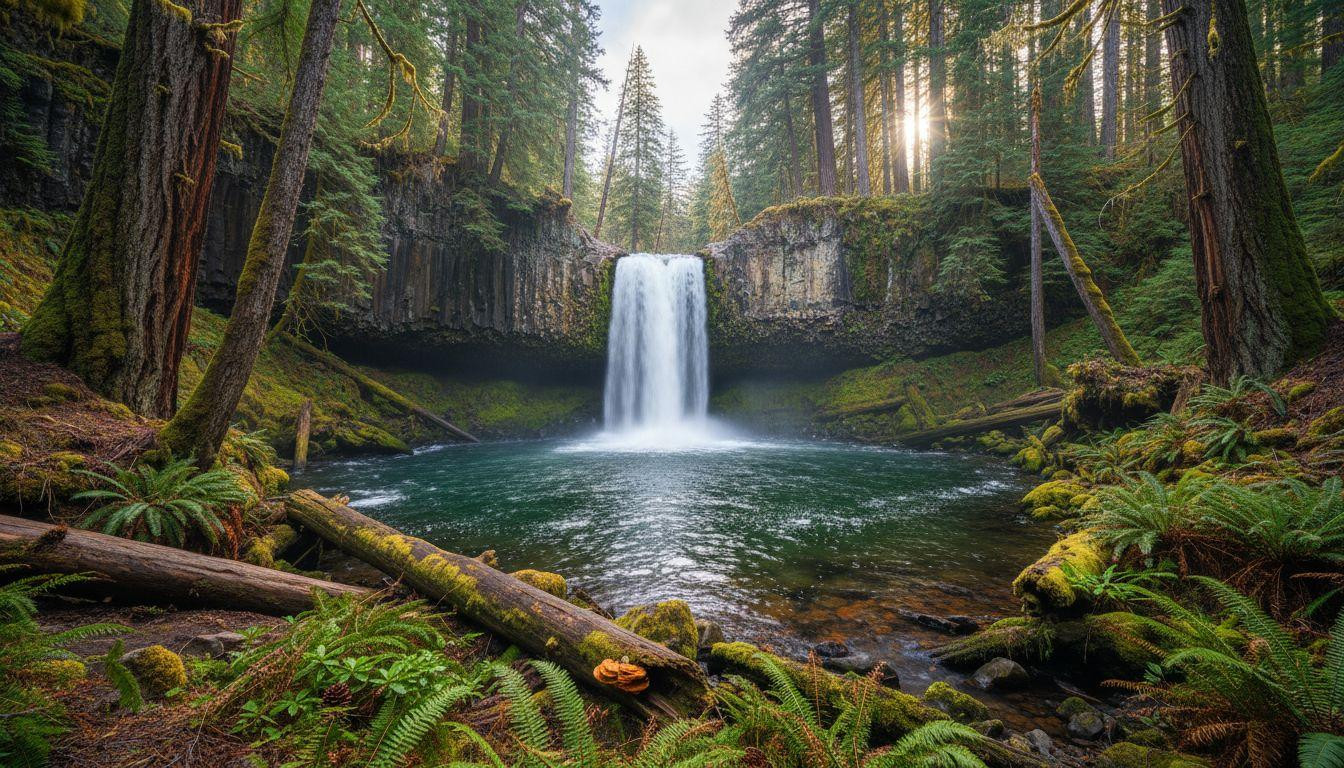
Forest Road 25 winds through Gifford Pinchot National Forest where most drivers speed toward Mount St. Helens overlooks. They miss the subtle trailhead sign at mile 16. Iron Creek Falls waits 500 feet down a moss-lined path.
This waterfall represents something rare in 2025: wilderness beauty without effort. While popular cascades demand multi-mile hikes and permit reservations, Iron Creek offers old-growth solitude in a 10-minute walk. The falls tumble 40 feet over erosion-resistant volcanic rock into a crystal-clear plunge pool.
Finding the hidden pullout on Forest Road 25
The trailhead sits 16 miles south of Randle, Washington, on the east side of gravel Forest Road 25. No signs announce this waterfall. Most visitors discover it by accident while driving to Windy Ridge viewpoints.
Park at the wide pullout near GPS coordinates 46.3305, -121.9705. The trail drops steeply through Douglas-fir and western red cedar. Wooden steps prevent erosion on the 100-foot descent. Moss blankets every surface in emerald velvet.
Recent visitor surveys conducted in 2025 reveal fewer than 50 people visit weekly during winter months. Summer weekends see perhaps 200 visitors. Compare this to Lewis River Falls, which hosts thousands monthly. This alpine cirque holds 3 turquoise lakes where winter snowshoes reach silence at 4,800 feet offers similar winter solitude at higher elevation.
What makes Iron Creek Falls special
The waterfall showcases geological resilience. Water pours over a ledge of rock more resistant to erosion than surrounding stone. This creates the dramatic drop into Iron Creek below.
The old-growth forest cathedral
Ancient trees frame the cascade. Some Douglas-firs exceed 200 years old. Western hemlock and red cedar complete the canopy. Thick moss covers fallen logs and rocky outcrops. Filtered sunlight creates shifting patterns on the forest floor.
The ecosystem remains largely undisturbed despite forest road access. Elk tracks appear regularly near the creek. Winter brings profound silence broken only by falling water and occasional bird calls.
Crystal-clear mountain water
Iron Creek originates from snowmelt and springs at 4,000-foot elevation. Water clarity rivals any mountain stream in Washington State. The plunge pool reflects surrounding forest like a natural mirror. Temperatures stay cold year-round, rarely exceeding 50°F even in summer.
Experiencing the waterfall through seasons
January 2026 offers prime visiting conditions. Snow may dust the forest but rarely blocks trail access at 2,800-foot elevation. This Wild West town sits 3 miles from Yellowstone where 200 frozen waterfalls glow turquoise blue shows how winter transforms western waterfalls.
Photography and peaceful moments
Morning light filters through old-growth canopy between 8-10am. This creates optimal conditions for waterfall photography. Wide-angle lenses capture the full cascade and surrounding forest. Avoid slippery rocks near the plunge pool edge.
Many visitors spend 30-45 minutes at the falls. The short trail allows multiple trips for different lighting conditions. Creek-side rocks provide natural seating for quiet contemplation.
Regional exploration opportunities
Packwood sits 20 miles north with lodging from $80-250 per night. Local restaurants serve Pacific Northwest specialties including huckleberry pancakes and smoked salmon. The town population of 1,300 supports outdoor recreation tourism.
Gas stations in Randle (16 miles north) provide the last fuel before forest roads. Five overlooks where Hurricane Helene emptied trails to North Carolina’s three tier falls demonstrates how natural events create unexpected opportunities for solitude.
Winter rewards for early visitors
Forest Road 25 stays accessible through winter with standard vehicles. Recent snow may require chains above 3,000 feet. Iron Creek Campground remains closed for 2026 due to windstorm damage, but the waterfall trail stays open.
Winter brings advantages beyond crowd avoidance. Deciduous understory plants disappear, opening forest views. Water volume stays consistent from snowmelt. Ice formations occasionally appear on shaded rock faces. This California canyon drops 8,200 feet where emerald pools hide beneath granite walls requires more challenging winter access.
Your questions about Iron Creek Falls answered
Do I need permits or fees for Iron Creek Falls?
No permits or fees apply. Northwest Forest Passes are not required at this trailhead. Park at the gravel pullout and hike freely. The trail crosses no private property or restricted areas.
What’s the best season for visiting?
Winter through early spring offers optimal experiences. January-March provides solitude and forest atmosphere. Summer brings higher water flow but more visitors. Fall features colorful understory plants but increasing rain. Spring snowmelt creates peak water volume by April.
How does Iron Creek compare to other Washington waterfalls?
Iron Creek offers the shortest access of any named waterfall in Gifford Pinchot National Forest. Snoqualmie Falls sees 1.5 million annual visitors. Multnomah Falls hosts tour buses daily. Iron Creek receives perhaps 2,000-5,000 visitors annually, making it 300 times less crowded than major cascades.
Moss-draped Douglas-firs lean over the cascade as afternoon light fades. Water continues its ancient conversation with stone. Another day ends at this overlooked corner of the Cascades where silence still outnumbers footsteps.