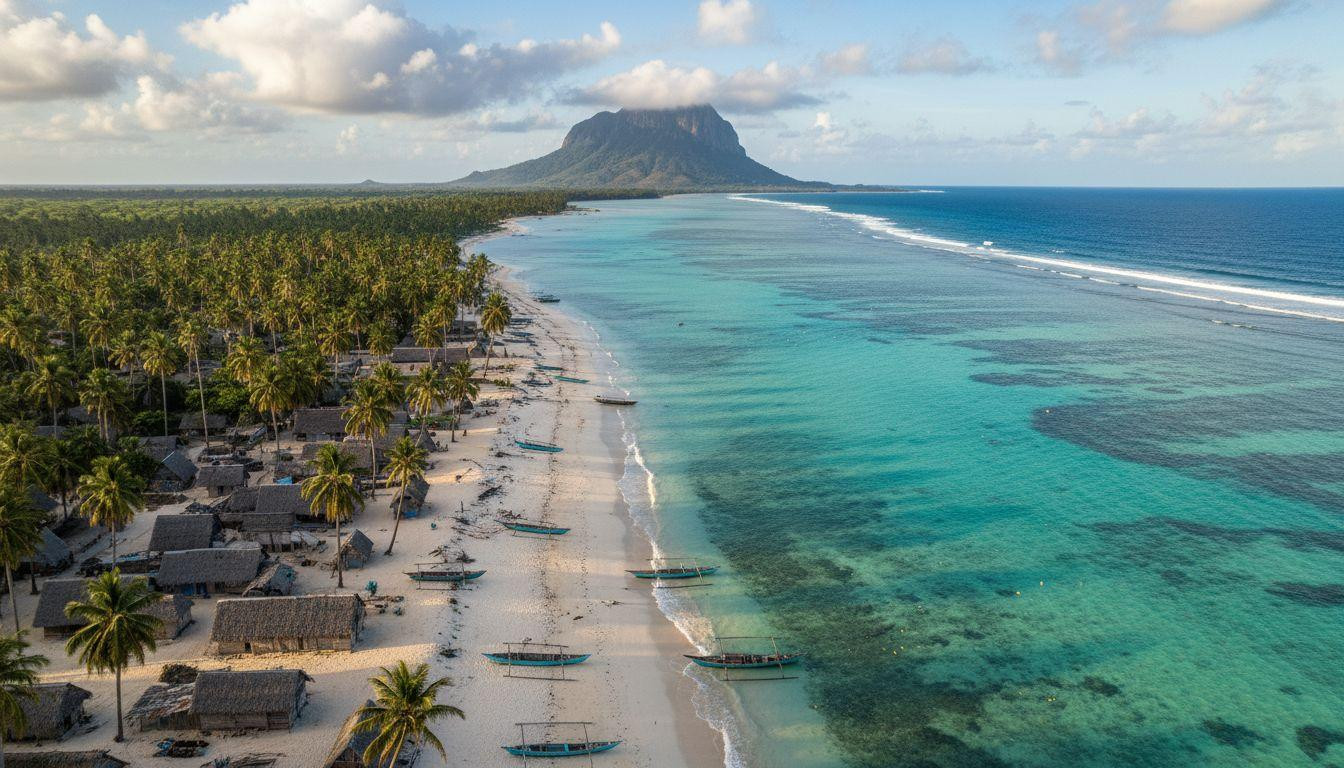
The ferry from Antsiranana cuts through morning mist. Twenty minutes later, Ramena Beach appears. Turquoise water so clear you see rays gliding three feet down. White sand curves under coconut palms. A fishing village of 2,000 where pirogues outnumber tourists. This is Madagascar’s Emerald Sea, 70% cheaper than Nosy Be and quieter than any resort island. February 2026 brings warm 84°F water and half the crowds of high season.
The Emerald Sea pirogue excursions cost $20-40 vs Nosy Be’s $60-100
Traditional pirogues hold six to eight passengers. Fishermen guide you through shallow lagoons sheltered by coral reefs. Water clarity reaches 20-30 meters in February. Turtles surface near the boats. Manta rays follow predictable paths locals call “highways.”
Half-day trips run four hours, departing at 7am when light turns the sea gold-green. Full-day excursions last six to ten hours, stopping at Suarez islet for grilled fish lunches. Snorkel gear and life jackets come included. Book through guesthouses the day before or negotiate directly with fishermen on the beach.
The limpidity reveals everything. Coral gardens in shallows. Schools of tropical fish. Rays that tilt sideways to inspect your shadow. One guide notes 50% of trips spot turtles. No guarantees, but the odds favor patient observers.
Reef snorkeling happens 100 meters from shore in 1-5 meter depths
Walk into the water opposite the village. Cleaner currents, better visibility. Reefs start where sand drops to coral. High tide offers easiest access. Dawn sessions catch calmest conditions before wind picks up around 10am.
Beach shacks rent snorkel sets for $5-10 per day. Kayak-snorkel combinations run $10-20. Self-guided exploration works fine in protected bays. Wear reef shoes. Watch for currents near channel entrances. February visibility stays strong between rain showers.
The reef holds large numbers of fish species, according to similar Indian Ocean destinations. Parrotfish graze coral. Angelfish dart through crevices. Occasional turtles cruise the deeper sections. No crowds. No boat noise. Just you and the reef.
Fishing village mornings start at 7am when pirogues return with catches
Dozens of wooden boats beach themselves as sun clears the palms. Fishermen sort the night’s haul. Fresh fish, lobster, ray. Buyers gather on sand. Prices negotiated in Malagasy. The market runs until afternoon.
Sakalava customs shape the rhythm. Greet elders first. Ask permission before photographing. “Mbola tsara?” opens conversations. Respect working routines. This is not a show. This is how 2,000 people feed themselves.
Grilled seafood appears by 9am. Lobster and ray cost $5-10 per kilogram. Coconut sauce adds sweetness. Heart-of-palm salads come fresh from inland groves. Zebu kalana (beef stew) simmers in pots behind village homes. Meals run $5-15, served on plastic tables under palm shade.
Beach lounging costs $20-40 per night in beachfront bungalows
Three to five kilometers of white sand stretch north from the village. Soft composition, tide-responsive. Coconut palms provide partial shade. The sand stays warm underfoot even in morning coolness.
Budget bungalows sit steps from water. Mid-range eco-lodges run $50-100. February occupancy drops 20-50% below high season. Weekends bring locals from Antsiranana for day trips. Weekdays stay quiet. No resort development. No beach clubs. Just sand, palms, and the Emerald Sea.
The bay view stretches to Sugarloaf Mountain. Morning light shifts water from turquoise to aquamarine. Waves stay gentle in protected coves. Swimming opposite the village avoids fishing boat traffic. Park free at beach access points. Bring your own shade or rent a palm-thatch umbrella for $3-5.
Local seafood comes grilled to order in 30-45 minutes
Beach shacks operate on caught-to-grill timing. Order morning’s catch for lunch. Ray fins in coconut sauce. Grilled lobster. Fresh fruit plates. Breakfast costs $3-5 (coffee, fruit). Dinner adds ravitoto (cassava leaves with pork) for $8-12.
Guesthouses serve similar quality at 20% higher prices. Beach shacks offer more authentic atmosphere. Cash only. No cards accepted. Village market supplies self-catering ingredients. Cooking demos happen at some lodges if you ask.
The taste difference comes from hours, not days. Fish pulled from nets at dawn, grilled by noon. Lobster caught yesterday, cooked today. This is what fresh means in a working fishing village. Nosy Be’s restaurants cannot match it, despite charging double for similar experiences.
Your questions about Ramena Beach answered
When should I visit and how do I get there?
May through November offers dry weather and 77-86°F temperatures. February works if you accept 13-18 rainy days and monitor cyclone forecasts (1-2 days average risk). Fly to Antsiranana’s Fascene Airport. Taxi or shared minibus costs $5-10 for the 20-40 minute drive. Roads get potholed in wet season. Consider 4×4 rental. No ferry service. ATM and fuel available in Antsiranana only.
How does Ramena compare to Nosy Be?
Ramena attracts roughly 15,000 annual visitors versus Nosy Be’s resort crowds. Daily costs run $50-100 here, $100-200 there. Excursions cost 50-70% less. Authenticity stays high. Fishing village life continues regardless of tourists. Nosy Be offers more infrastructure and easier international access. Ramena delivers unspoiled experience and real village culture.
What makes the Emerald Sea special?
Vibrant turquoise water clarity reveals marine life from shore. Protected coral reefs shelter calm bays. Turtles and rays follow predictable routes. Shallow depths (1-5 meters) make snorkeling accessible. The name “Mer d’Émeraude” comes from the color shift between turquoise and aquamarine depending on light and tide. Similar to Caribbean clarity but with Indian Ocean biodiversity.
Sunset hits around 6:15pm in February. Golden light filters through palm fronds. Pirogues bob in glass-calm water. Village sounds carry across sand. Fishermen mend nets. Children chase waves. The Emerald Sea turns copper-green. This is Ramena. Twelve kilometers from Antsiranana. A world away from resort tourism. Still affordable. Still authentic. Still overlooked.