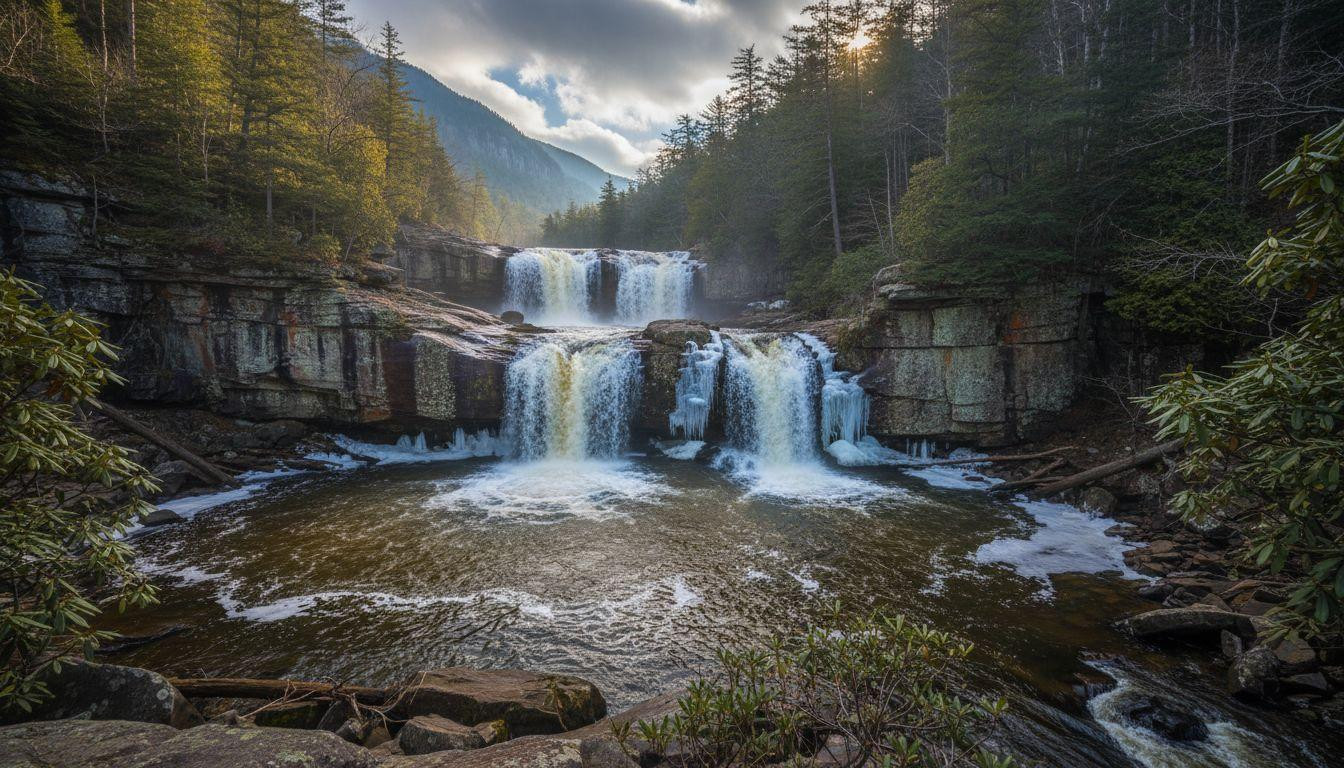
Hurricane Helene carved an unexpected gift into North Carolina’s Blue Ridge Mountains. Where 100,000 annual visitors once crowded Linville Falls, winter silence now amplifies the thunder of three-tiered cascades plunging 45 feet into the “Grand Canyon of the East.” The storm that destroyed visitor centers accidentally created what overcrowded waterfalls dream of: solitude amid spectacular beauty.
Five overlooks reveal different faces of this resilient cascade. Each trail tells a story of recovery, where nature’s violence transformed into quiet triumph.
Erwins View: The gentle giant overlook
The shortest trail leads to the biggest revelation. Just 0.8 miles round-trip from the US Forest Service gravel lot, Erwins View offers panoramic theater without the crowds that once choked summer weekends. Minimal elevation gain makes this the choice for 40-50% of visitors, though post-Helene numbers drop to peaceful levels.
Winter transforms the experience entirely. Clear air reveals ice formations on distant cliffs, while the gorge’s 1,400-2,000 foot depth creates dramatic shadows at sunrise. Golden light hits the overlook best between 7-9 AM, when mist from the falls catches morning rays.
The destroyed visitor center means portable toilets at the parking area, but this free alternative to costly New Hampshire gorges maintains its authentic wilderness character.
Chimney View: Where mist meets stone
The 1.2-mile trail to Chimney View delivers the closest encounter with Linville Falls’ raw power. Named for narrow rock formations that channel wind and spray, this overlook places visitors in the mist zone where water meets stone in eternal combat.
The chimney formation’s ancient drama
Geological forces shaped these rock chimneys over 10-12 million years, creating natural frames for the cascading water. Winter amplifies the drama as spray freezes into crystalline patterns visible at dawn, transforming the overlook into an ice gallery.
Recovery reveals new perspectives
Post-Helene access via the USFS lot actually improves the experience, eliminating the crowds that once made photography impossible. Microspikes become essential for January visits, but the reward justifies preparation: thundering lower falls framed by ancient stone, with solitude that feels prehistoric.
Gorge View: Confronting the abyss
The 1.6-mile Gorge View trail delivers the full revelation of why locals call this the “Grand Canyon of the East.” Standing at the overlook, visitors confront a 1,400-2,000 foot chasm that dwarfs many eastern canyons, though it remains modest compared to the Grand Canyon’s 6,093-foot depth.
Geological time made visible
Rhododendrons and Eastern Hemlock frame the gorge rim, some trees over 100 years old and resilient enough to survive September 2024’s record flooding. The Linville River carved this canyon over millions of years, creating cliff faces that winter strips bare for optimal ice viewing.
The overlooked advantage
While California’s dramatic canyons require expensive entry fees and battling crowds, Gorge View offers free access to geological drama. Winter’s stark beauty reveals cliff textures invisible during leaf season, creating photography opportunities impossible in busy months.
Plunge Basin: The hemlock cathedral
The steepest descent leads to the most intimate encounter. Plunge Basin Trail drops 300 feet through virgin hemlock forest to the base of the 45-foot cascade, where swimming remains strictly prohibited due to deadly currents that intensified after Hurricane Helene.
Eastern Hemlock groves create cathedral silence broken only by rushing water. These ancient trees survived the storm that reshaped everything else, their resilience matching the falls’ eternal persistence. Winter hiking requires microspikes for icy sections, but the 2.0-mile round-trip rewards with misty solitude.
Local folklore whispers of past drowning victims in the plunge pool, adding ghostly atmosphere to an already dramatic setting. Like Utah’s protected canyons, winter access creates exclusive experiences unavailable during peak seasons.
Upper Falls Trail: The comeback story
Hurricane Helene’s 12-foot floodwaters destroyed the visitor center, comfort station, and footbridge that once provided access to Upper Falls Trail. This 1.0-mile route remains closed as of August 2025, creating anticipation for its eventual reopening.
The closure represents both loss and opportunity. Pre-storm, this trail offered the closest river views and easiest access to waterfall mist. National Park Service reports suggest potential partial reopening by winter 2026, making early visitors pioneers of the recovery story.
Phase 3 planning continues, but hurricane recovery sites often reveal new beauty in their rebuilt incarnations.
Your questions about Linville Falls answered
What are the current costs for visiting?
Trail access remains free via the US Forest Service gravel lot at Milepost 316.4. Camping at nearby facilities costs $20-30 per night, 30% below national averages. Local cabins range from $150-250 nightly, while Appalachian meals cost $15-25 at community diners featuring smoked trout and cornbread.
How does winter hiking compare to other seasons?
January temperatures range from 25-45°F, requiring layers and microspikes for icy sections. Winter offers the lowest crowds since Hurricane Helene reset visitor patterns, creating opportunities for solitude impossible during peak May-October seasons that once brought overwhelming numbers.
How does Linville Falls compare to famous waterfalls?
At 45 feet across three tiers, Linville Falls stands shorter than Niagara’s 167 feet but offers free access and wilderness authenticity. The surrounding gorge depth of 1,400-2,000 feet exceeds many eastern canyons, while Blue Ridge Parkway access eliminates the expensive fees required at Yosemite or Grand Canyon National Parks.
Morning mist rises from the plunge basin as winter light touches hemlock branches. The falls thunder unchanged, but Hurricane Helene’s accidental gift means fewer witness this ancient drama. For now, solitude amplifies every cascade, every echo, every moment of quiet awe in the Grand Canyon of the East.