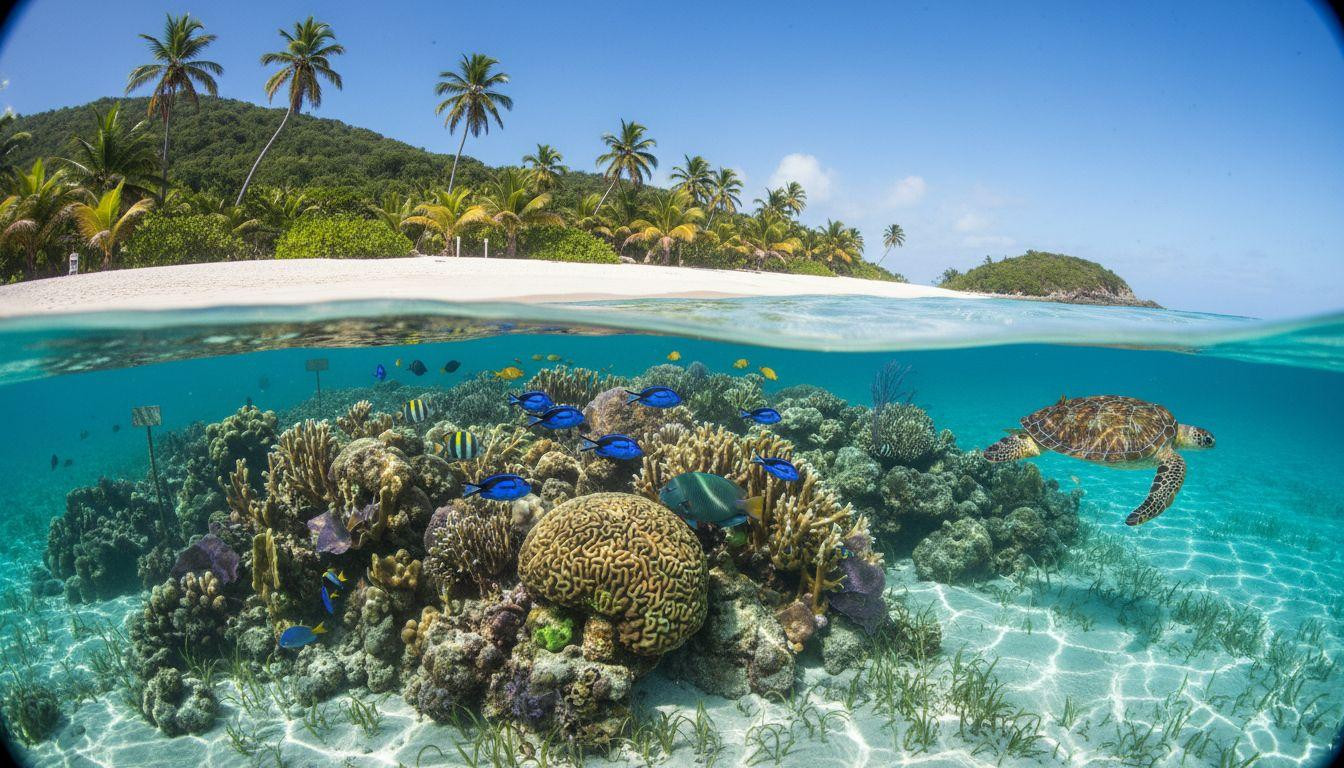
Boat tours to coral reefs cost $80-150 and pack 40 snorkelers onto crowded sites miles offshore. Walk into turquoise water from your beach towel instead. These five islands keep fringing reefs so close you hear waves break on coral from the sand. No boats required.
The world’s best shore-access coral ridges sit 30-650 feet from beaches where you can leave your towel and mask up. Water temperatures hold steady at 78-86°F year-round. Visibility reaches 100 feet on calm mornings.
Trunk Bay drops you into history 650 feet from shore
St. John’s Trunk Bay Beach sits inside Virgin Islands National Park. The reef trail starts 650 feet offshore where underwater plaques mark the world’s first snorkel path from 1962. Brain coral and elkhorn formations rise 5-20 feet from the seafloor.
Entry costs $30 per adult in 2026. Lifeguards watch from towers. Gear rents for $15-20 daily at the beach shop. The trail runs 225-650 feet through marked stations explaining coral types and fish behavior.
What the ridge looks like underwater
Visibility reaches 50-100 feet from December through May. Water glows turquoise over white coral sand before dropping to deep blue at the reef wall. Elkhorn coral creates vertical structures where parrotfish graze and angelfish circle. Turtles cruise the 20-foot depths near the outer markers.
February and March offer peak clarity. Hurricane season from September through October brings reduced visibility and rougher conditions. Water temperature stays 78-82°F in winter and climbs to 82-86°F by summer.
The morning routine locals know
Arrive before 9am when fewer than 50 people share the beach. Park rangers enforce reef-safe sunscreen rules. The bay stays calm with minimal current. Waves break gently on the outer reef creating steady background sound.
A fisherman who works this coast says early light makes the coral glow gold before crowds arrive. The beach empties again after 4pm when day-trippers catch ferries back to St. Thomas. Small Caribbean islands like St. John protect their reefs through strict park regulations.
Roatán puts you on the Mesoamerican Barrier Reef for $15
West Bay Beach on Roatán Island in Honduras faces the second-largest barrier reef system in the world. The coral ridge starts 100-300 feet offshore. Staghorn and brain coral cover more than 50% of the seafloor at depths from 6-30 feet.
Public beach access stays free. Snorkel gear rents for $10-15 daily from beach shacks. The reef creates natural channels called Blue Channel and areas like Starfish Alley where you drift with mild current between coral walls.
Why the ridge structure matters
Visibility holds at 60-100 feet from February through May. The ridge drops in steps creating different depth zones. At 10 feet you see schools of tangs and parrotfish. At 20 feet the coral walls rise vertically. At 30 feet channels open where nurse sharks rest in sand patches.
Water temperature ranges from 79-83°F in winter to 83-86°F by August. March and April offer the clearest conditions. October brings the highest chance of storms and reduced visibility.
What the beach feels like at dawn
White sand mixed with coral fragments stretches a mile. Waves crash on the outer reef creating constant low rumble. Fewer than 30 people visit daily compared to hundreds at cruise ship beaches. Water glows azure blue over the sand before darkening at the reef drop.
A local dive operator who grew up here mentions Garifuna fishermen still use traditional methods along this coast. The town of West Bay holds 100,000 residents but keeps development low near the reef. Roatán International Airport sits 20 minutes away by taxi.
St. Lucia’s black sand beach hides coral in 5 feet of water
Anse Chastanet Beach on St. Lucia’s southwest coast puts coral ridges 5 feet from shore. Volcanic black sand slopes into turquoise water where brain coral and fire coral create walls reaching 40 feet deep. The beach charges $5-10 entry with gear rental at $20 daily.
The fringing reef system protects 150 fish species. Visibility runs 50-80 feet from January through April. Water stays calm with no strong currents. A resort pier marks the main entry point where you can swim directly to coral formations.
The instant access advantage
Step into water from volcanic sand and coral appears within arm’s reach. At 10 feet you swim over brain coral clusters. At 20 feet angelfish and parrotfish feed on algae. At 30 feet the wall drops vertically where octopuses hide in crevices and turtles glide past.
Water temperature holds 78-82°F in winter and 82-85°F by summer. The protected southwest location keeps waves minimal year-round. Green-black sand creates dramatic contrast against deep blue water at the reef edge.
Why locals protect this spot
Hurricane Beryl caused minor damage in 2024 but restoration work completed by 2025 brought coral cover back above 60%. The beach stays quiet with fewer than 40 daily visitors. Budget-friendly Caribbean alternatives like St. Lucia offer premium reef access without resort pricing.
Hewanorra International Airport sits one hour south by car. Mid-range accommodations run $120-250 nightly. Reef-safe sunscreen requirements protect the coral from chemical damage. Early morning temperatures hit 75°F with golden light hitting the Pitons volcanic peaks visible from the beach.
Bonaire enforces reef freedom at Klein Bonaire
Klein Bonaire sits offshore from the main island of Bonaire. No Name Beach offers shore access to reef slopes starting at the waterline and dropping to 40 feet. The entire coastline functions as a marine park with more than 60% coral cover and 100-foot visibility.
Gear rents for $15 on the main island. Water temperature stays 80-84°F year-round. Minimal currents make solo snorkeling safe. The island keeps basic facilities with no development beyond a few picnic shelters.
What makes Bonaire different
Bonaire enforces some of the strictest marine protection in the Caribbean. Touching coral brings immediate fines. All visitors must complete a reef orientation and pay a $45 annual marine park fee. The policy keeps coral healthy and fish populations high.
White sand transitions to blue water within steps. Gentle reef slopes let you control your depth easily. Turtles, eagle rays, and octopuses appear regularly at 20-30 feet. The absence of boat traffic keeps the reef quiet.
The uncrowded reality
Bonaire’s population sits at 20,000 with tourism focused on diving rather than beach crowds. Shore-accessible reefs throughout the Caribbean offer similar experiences but Bonaire combines visibility, protection, and freedom. Flamingo International Airport sits 10 minutes from dive shops. Accommodations run $100-220 nightly.
A resident who moved here from California in 2019 says the reef looks better now than five years ago thanks to restoration projects. Morning snorkels at 7am find you alone on the reef with water temperature at 80°F and visibility exceeding 100 feet.
Moalboal’s sardine run happens 50 feet from the beach
Panagsama Beach on Cebu Island in the Philippines keeps a coral wall 50-150 feet offshore where millions of sardines school year-round. The wall drops from 10-30 feet with staghorn and table coral covering the slope. Pescador Island sits visible offshore creating a protected bay.
Public beach access stays free. Gear rents for $10 daily from beachfront shops. Rocky shore entry requires water shoes but the reef appears immediately. Water temperature holds 82-86°F throughout the year with 50-80 feet visibility.
Why sardines matter
The sardine run attracts turtles, reef sharks, and large schools of jacks that feed on the baitfish. The spectacle happens daily from dawn through mid-morning when the school moves closer to shore. At 20 feet you swim through millions of sardines creating a silver cloud that blocks the sun.
Mild currents let you drift along the wall. White coral sand creates powder-fine texture. Water glows turquoise before dropping to deep blue at the wall edge. The reef roar from waves breaking on outer formations carries to the beach.
The local fishing connection
Moalboal holds 30,000 residents with fishing heritage dating back centuries. The town promotes reef-safe sunscreen and conservation education. Pacific coral reefs face different pressures than Caribbean systems but Moalboal maintains strong protection.
Mactan-Cebu International Airport sits three hours north by bus. Accommodations run $80-150 nightly. Quiet dawn snorkels at 6am find fewer than 10 people on the beach with water temperature at 82°F. Recent tourism data shows the sardine run draws visitors but crowds stay manageable with most people arriving after 9am.
Your questions about shore-access coral reefs answered
Do I need dive certification for these reefs?
No certification required. All five locations work for basic snorkeling with mask, fins, and snorkel. Maximum depths range from 20-40 feet but you control how deep you go. Trunk Bay and West Bay offer the shallowest options at 5-20 feet. Strong swimming ability helps but calm conditions and minimal currents make these reefs accessible for beginners.
What if I have never snorkeled before?
Start at Trunk Bay where lifeguards monitor the beach and the marked underwater trail guides you through the reef. Anse Chastanet offers calm protected water with instant shallow access. All locations rent gear and most have staff who provide basic instruction. Practice breathing through the snorkel in shallow water before swimming to deeper sections. Early mornings bring calmer conditions and better visibility for first attempts.
How do shore reefs compare to boat tours?
Shore reefs save $60-100 per person compared to boat excursions. You control your schedule and avoid crowded tour groups of 30-40 people. Visibility matches boat sites at 50-100 feet. Coral health often exceeds boat destinations because shore reefs receive less anchor damage and diver traffic. The main difference is convenience versus variety. Boats access multiple sites but shore reefs let you return repeatedly to learn one location deeply.
Morning light hits the water at Trunk Bay around 7am. The reef glows gold for maybe ten minutes before the sun climbs higher. Parrotfish wake up and start grazing. Turtles cruise the outer markers. The beach stays empty except for a few locals walking the sand. This is what shore-access reefs offer. No boats. No crowds. Just you and the coral 650 feet from your towel.