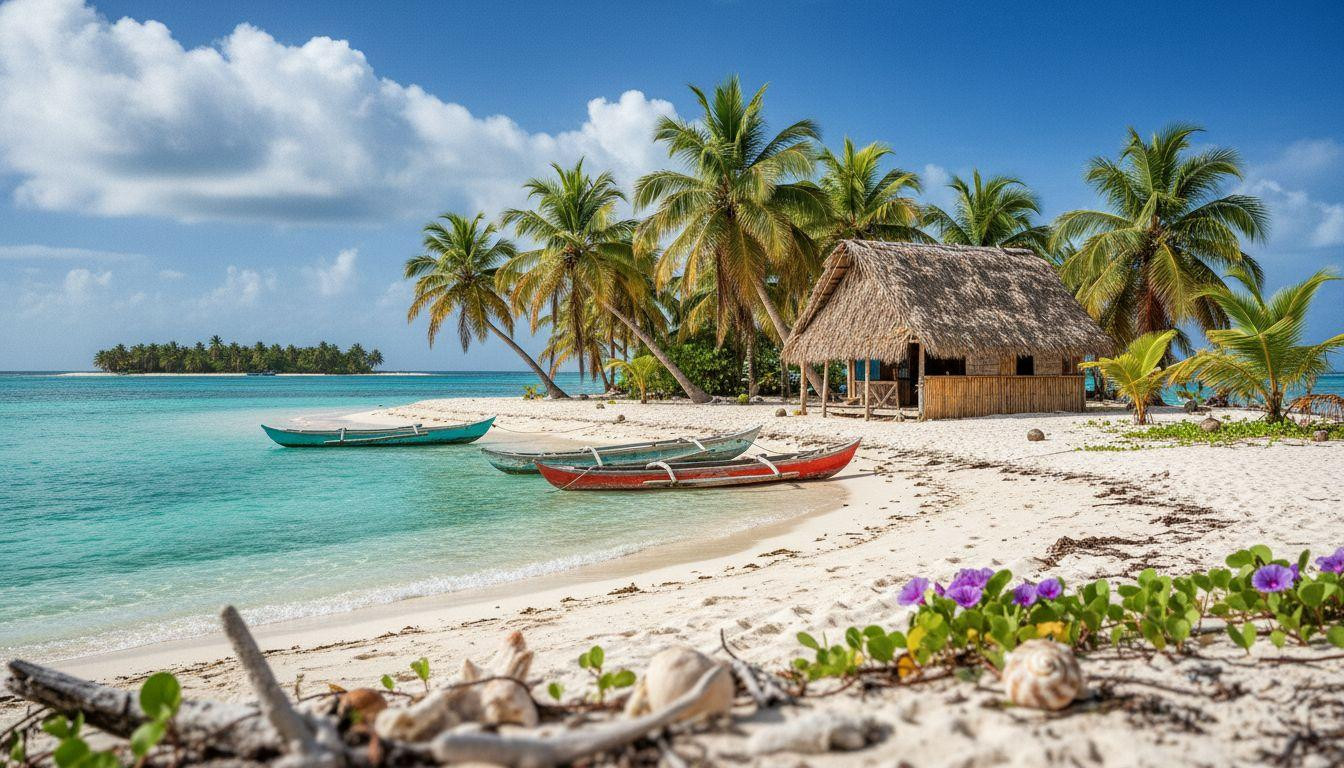
The 4×4 bounces through jungle roads for three hours before reaching Cartí port. Then a 45-minute boat ride reveals what Panama has kept quiet: 378 islands where indigenous governance creates Caribbean authenticity without resort prices. San Blas Islands (Guna Yala) operate under 1938 comarca laws, meaning tourism dollars flow directly to Guna families who control every lodge, tour, and cultural experience.
December 2025 brings perfect conditions for bioluminescent waters and white-sand isolation. Water temperatures hold steady at 82°F while dry season ensures calm seas for night paddling through glowing plankton.
Mola textile workshops where cultural immersion costs less than city hotels
Yandup Island hosts traditional textile workshops in palm-thatch structures overlooking turquoise shallows. Guna women demonstrate reverse appliqué techniques passed down through generations. Each mola tells stories through geometric patterns and animal motifs.
Workshop sessions last three hours and cost $25 including materials. Traditional cabañas rent for $55 per night with three daily meals included. The total experience costs $95 for two days, compared to Panama City’s average hotel rate of $128 per night without cultural programming.
After sunset, guides lead night paddles where each stroke creates blue-green light trails. December’s new moon phases offer optimal bioluminescence viewing when Noctiluca scintillans plankton concentrate in shallow waters.
Isla Diablo sunrise camping on uninhabited white sand
This 1.2-kilometer crescent of powdery white sand remains completely uninhabited. Only eight visitors receive daily permits from the Guna General Congress. December mornings deliver 6:20am sunrises over mirror-calm waters with 360-degree views.
Pure calcium carbonate beaches from parrotfish digestion
The sand measures 99.2% pure calcium carbonate created by parrotfish processing coral. December’s dry season creates powder-fine texture that stays cool underfoot even at midday. Trade winds average 8-12 knots from the northeast.
Indigenous protection protocols for sea turtle nesting
Guna “Guardian of the Sand” certification limits access to protect nesting hawksbill turtles. Camping requires biodegradable soap and red-light headlamps to minimize ecosystem disruption. Local guides explain traditional turtle protection practices dating to pre-Columbian times.
Total costs reach $115 for two days including camping permits and boat transfers. Equivalent private island experiences in other Caribbean destinations cost $1,200 per night.
Guna family homestays on Narganá Island
Narganá supports 1,500 residents and welcomes visitors into family compounds. Private cabañas cost $65 per night through the community-owned Cabanas Tubasenika operation. Cultural dinners with storytelling add $30 per person.
Revenue distribution through traditional wealth-sharing systems
Tourism income follows the Dule Nega community wealth model: 60% to hosting families, 25% to island councils, 15% to environmental protection funds. December 2025 introduces solar-powered boat transfers reducing diesel consumption by 70%.
Bioluminescence access in protected coves
Narganá’s sheltered cove creates reliable bioluminescence conditions year-round. The “Night Guardian” program costs $20 and includes traditional ulua canoe paddling while Guna youth explain plankton science. December offers 22 visible nights per month compared to 15 during summer months.
Total homestay costs reach $95 for one night. Similar cultural immersion programs elsewhere charge $200-300 without indigenous governance benefits.
Shipwreck snorkeling and night kayaking from Isla Perro
A 1940s cargo ship rests in 15 feet of crystalline water near Isla Perro. December visibility reaches 120 feet with water temperatures holding at 80-82°F. The wreck hosts 12 coral species and 50+ fish species per snorkel session.
All-inclusive day tours cost $110 plus $22 mandatory Guna entrance fees. Equipment, boat transfers, lunch, and certified guides are included. Night kayaking through the wreck creates bioluminescent light trails as dinoflagellates react to paddle movement.
Guna-enforced no-touch policies have increased coral cover by 22% since 2020. Comparable snorkel tours in British Virgin Islands cost $285 without cultural components or conservation education.
Sustainable eco-lodge living on Chichime cays
Three small cays connected at low tide create the Chichime complex. San Blas Dreams eco-lodge operates under Guna ownership with composting toilets, rainwater collection, and zero single-use plastics. Rooms cost $85 per night with sunset bioluminescence paddles for $45.
December’s shallow lagoon concentrates plankton for intense light displays. Guna guides measure bioluminescence intensity on a five-point scale. December consistently rates 4+ compared to summer’s 2-3 average intensity.
The Guna Green Certification launched in December 2025 requires 100% solar power and sustainable building materials. Similar eco-luxury experiences in Tulum average $295 per night without indigenous cultural programming.
Your questions about San Blas indigenous tourism answered
How do I book directly with Guna families instead of outside tour companies?
Contact San Blas Frontera (sanblasfrontera.com) or San Blas Experience (sanblasexperience.com) for Guna-operated bookings. Both websites list community-owned lodges with transparent revenue sharing. Book 30-60 days ahead for December dates. All transactions require US cash as no ATMs operate in the islands.
What cultural protocols should visitors follow when staying with Guna families?
Dress modestly with knees covered, especially for women visiting villages. Always request permission before photographing people or traditional activities. Learn basic Guna phrases: Mama dut (thank you) and Nana? (How are you?). Participate respectfully in community meals and storytelling sessions when invited.
How does San Blas compare to mainstream Caribbean destinations for budget travelers?
Three-day San Blas packages average $260 total compared to $450 for British Virgin Islands and $700 for Tulum equivalents. However, accommodations remain basic with composting toilets, cold-water showers, and no air conditioning. Transportation requires 4×4 vehicles and boat transfers adding $150-200 to total costs.
Bioluminescent plankton creates blue-green fire trails behind every paddle stroke. Morning sun illuminates empty white crescents where hawksbill turtles nest undisturbed. Guna voices carry across protected waters as dugout canoes navigate between palm-covered cays where tourism strengthens rather than exploits indigenous culture.