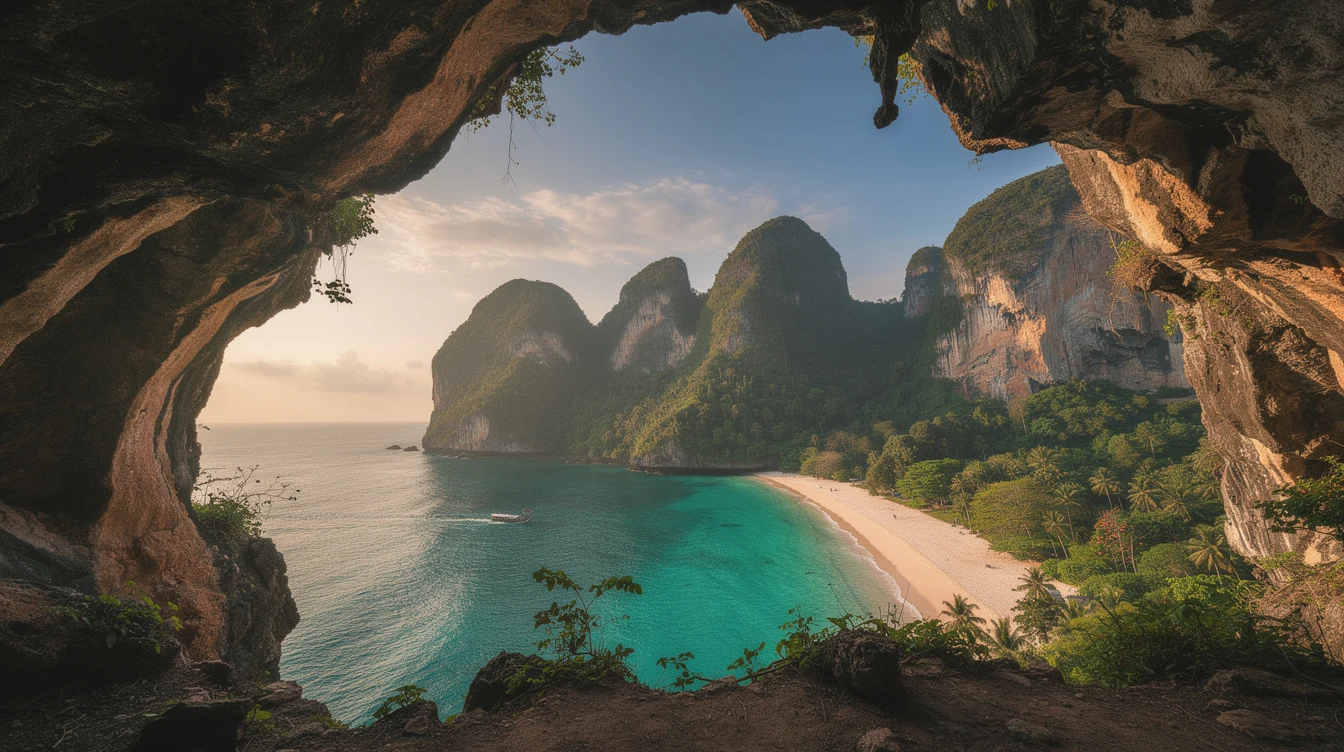
Phi Phi sits 46 km southeast of Phuket, and that distance is the whole point. The ferry takes two hours, which is just long enough to shed the mainland’s noise. But the island’s real story isn’t the turquoise water or the limestone cliffs. It’s what happened when Thailand finally said enough.
Maya Bay was drowning in 200 boats a day, so they shut the whole thing down
Before 2018, 5,000 tourists and 200 boats hit Maya Bay daily. The coral was dying, the beach was eroding, and the fish had vanished. In June 2018, Thailand closed the bay completely. No exceptions. No day trips. Nothing.
And the ecosystem did what ecosystems do when you leave them alone. The coral started recovering. After three and a half years, Maya Bay reopened in January 2022 with strict limits. Boats now anchor offshore. The bay gets a fraction of its old load.
But here’s the trade-off. The closure worked, and it also proved how badly the island was overloaded. Phi Phi Don, the main island where you sleep, is just 10.27 km². It was handling over 1,000 tourists daily by 2016, generating 25-40 tonnes of waste. 83% of wastewater went straight into the ocean untreated. The numbers are ugly, and they’re the reason the place feels different now.
The island runs on ferries, not cars, and that changes everything
There are no cars on Phi Phi Don. The only motors belong to emergency services. Everyone walks, or pushes a cart, or rides a bicycle. The main pier at Ton Sai Bay handles ferries from Phuket, Krabi, and Koh Lanta. Speedboats cut the trip to 45 minutes, but they cost more and ride rougher.
The ferry schedule shapes your day. Morning arrivals mean fighting for longtail boats. Afternoon ferries leave you just enough time to find your hotel and watch the sun drop behind the limestone. The island’s rhythm is fixed. You don’t pop over for dinner. You commit.
The resident population is only 2,000-3,000, though that swells with transient workers. The place was Muslim-majority once, but the workforce tilted Buddhist. You’ll hear the call to prayer at dawn, then reggae bars by nightfall. It’s a strange mix, and it works because neither side tries to own the island.
Where to stay depends on which Phi Phi you want
Ton Sai Bay and Loh Dalum Bay are the center. They’re loud, dense, and convenient. The beach bars run until 2 AM. The smell of diesel from longtail boats mixes with sunscreen and frying garlic. If you’re under 30 and traveling light, this is your zone.
But the east coast changes everything. Long Beach and the smaller coves face the open sea. The water is cleaner, the noise drops, and you reach them by walking a jungle path or hiring a boat. The cafe before the trailhead opens at 7 AM and closes when the fish runs out.
Hat Yao on the southern tip is quieter still. Less developed, fewer boats, no beach bar scene. The trade-off is simple. You’ll walk more, you’ll eat simpler, and you’ll sleep earlier. But the water at dawn is glassy, and the only sound is the longtails firing up for the morning run.
Can you still see the damage from the 2004 tsunami?
Mostly, no. The island rebuilt fast, and the scars are buried under new concrete and fresh paint. But the geography remembers. Ton Sai village sits on an isthmus less than 6.6 feet above sea level. The wave from Ton Sai Bay was 9.8 feet high. The wave from Loh Dalum Bay hit 21 feet. They met in the middle.
At the time, roughly 10,000 people were on the island, including tourists. The death toll was devastating, and the recovery was chaotic. A Dutch resident organized a volunteer group that cleared 23,000 tonnes of debris, 7,000 tonnes by hand. The tsunami memorial was removed in 2015 to make way for a hotel. That’s the kind of detail that tells you where Phi Phi’s priorities have been.
When to go, and what to expect
November through April is the window. The monsoon eases, the sea flattens, and the rain drops to its lowest. Average temperatures run 63-99°F, though the humidity stays thick. July is the wettest month. February is the driest. Plan around that.
The national park covers 95,852 acres, and the entrance fee is built into your ferry ticket. The park status is what keeps the limestone cliffs untouched and the coral theoretically protected. Enforcement is uneven, but the designation matters. Without it, Phi Phi would look like Phuket’s overbuilt coastline.
The best move is a private longtail for sunrise. You leave Ton Sai at 6 AM, before the speedboat tours arrive. Maya Bay is empty at 7:30. The water is cool, the light is sideways, and the beach belongs to whoever got there first. By 10 AM, the first big boats arrive, and the bay shifts from sanctuary to checkpoint.
The reefs came back, but the crowds are creeping in again
The post-closure limits are real, and they’re also under pressure. Maya Bay’s daily cap exists on paper. Whether it holds depends on enforcement, and enforcement in Thailand follows the money. The coral recovery is fragile. One anchor dragged through the wrong channel undoes years of closure.
Phi Phi is not a hidden anything. It’s famous, it’s small, and it’s crowded by design. But the three-and-a-half-year shutdown proved something rare. An ecosystem can recover if you actually stop touching it. The question is whether Thailand will keep the limits tight enough, or whether 200 boats a day becomes the normal again.
Ton Sai Bay empties fast. The longtail captains tie up their boats, the beach bars switch to lower volume, and the smell of diesel fades. For a few hours, the island feels like the size it actually is. That’s the Phi Phi worth catching, and it’s the one that’s hardest to hold onto.