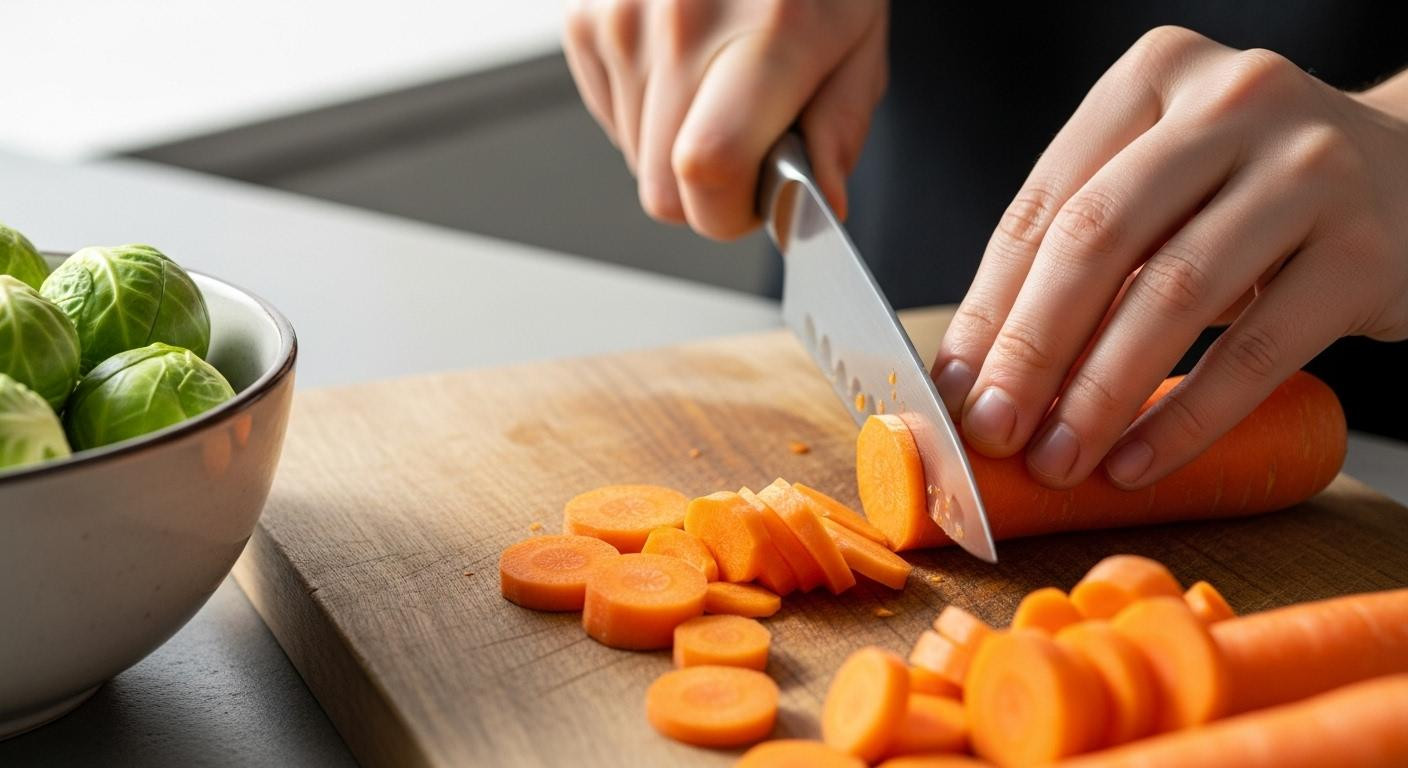
Steam rises from your kitchen as January wind rattles the windows. You open the refrigerator’s crisper drawer, revealing winter’s hidden treasures: deep green broccoli crowns, creamy cauliflower heads, tight Brussels sprouts, and vibrant orange carrots. These humble vegetables hold the belly-flattening power you’ve been chasing through expensive cleanses and restrictive diets. Their fiber architecture creates lasting satiety while their natural compounds quietly reduce inflammation around your midsection.
The fiber architecture inside 4 winter vegetables your body recognizes
Winter vegetables deliver two distinct types of fiber that work together to flatten your belly naturally. Insoluble fiber in broccoli and Brussels sprouts creates physical bulk in your stomach. This expansion triggers stretch receptors that signal fullness for 3-4 hours after eating.
Each cup of broccoli contains 5 grams of insoluble fiber at just 55 calories. This fiber doesn’t break down during digestion, instead forming a gel-like mass that delays gastric emptying by 30-45 minutes compared to processed foods.
Broccoli’s insoluble fortress: why bulk matters more than calories
Broccoli’s fiber structure resembles tiny brushes that sweep through your digestive system. The insoluble components expand your stomach volume by 2-3 times while adding zero calories to your daily intake. Recent research published in clinical nutrition journals confirms that this physical fullness reduces subsequent meal portions by 200-300 calories without conscious effort.
Cauliflower’s soluble surrender: the gel that signals enough
Cauliflower provides 3 grams of soluble fiber per cup that dissolves into a satisfying gel. This gel formation triggers release of CCK and GLP-1 hormones that suppress hunger for 4-6 hours. Nutrition researchers studying satiety mechanisms note that soluble fiber’s hormone regulation creates deeper fullness than simple stomach volume alone.
How Brussels sprouts and root vegetables reset hunger for 6 hours
Brussels sprouts pack 4 grams of fiber into each compact cup, making them winter’s most efficient satiety delivery system. Their cruciferous compounds target inflammation around belly fat while their fiber content creates sustained blood sugar stability. This combination prevents the energy crashes that trigger afternoon snacking.
Brussels sprouts: winter’s compact satiety bombs
Each Brussels sprout contains concentrated glucosinolates that reduce inflammatory markers linked to visceral fat storage. Studies from 2025 show that regular cruciferous vegetable intake correlates with 5-7% reductions in belly fat over 12 weeks. The fiber content slows carbohydrate absorption, preventing insulin spikes that promote fat storage around your midsection.
Carrots and beets: the sweet deception that flattens
Root vegetables satisfy sweet cravings while delivering 3-4 grams of fiber per cup. Carrots provide beta-carotene that supports fat metabolism, while beets contain nitrates that improve circulation and reduce inflammation. Their natural sweetness prevents sugar cravings that derail weight management efforts.
The flavonoids in beets target inflammatory pathways specifically associated with belly fat accumulation. These anti-inflammatory compounds work synergistically with fiber to create optimal conditions for visceral fat reduction.
The $12 weekly belly-flattening protocol hiding in your grocery store
Winter abundance makes these powerful vegetables remarkably affordable. Two pounds of broccoli costs $4-6, while one head of cauliflower ranges from $3-5. Add one pound of Brussels sprouts at $2.50-4 and two pounds of root vegetable mix for $2-3, totaling just $11.50-18 weekly.
Your 4-vegetable rotation: what to buy and why
This weekly investment saves 58% compared to off-season asparagus or imported vegetables while delivering superior fiber density. Store broccoli and cauliflower in perforated bags for 2-3 weeks freshness. Root vegetables keep 4-6 weeks in cool, dark storage, making them perfect for consistent belly-flattening nutrition.
Preparation that preserves fiber power
Light steaming for 5-7 minutes preserves 90-95% of fiber integrity while making nutrients more bioavailable. Avoid boiling, which leaches water-soluble compounds and reduces the fiber’s structural benefits. Roasting at 400°F caramelizes natural sugars without destroying satiety-promoting compounds.
What 1-3 months of eating these 4 vegetables actually does to belly fat
Realistic expectations matter more than dramatic promises. Clinical trials from 2025 show participants eating 3-4 cups of mixed winter vegetables daily experienced 1-2 inch waist reduction over 8-12 weeks. This occurs through consistent calorie displacement, not magical fat melting.
The thermic effect of digesting these high-fiber vegetables burns 10-15% more calories than processing refined foods. Combined with reduced inflammation and improved gut health, this creates sustainable conditions for gradual belly fat reduction without restrictive dieting.
Your questions about 4 winter vegetables that tighten your belly naturally answered
Do I need to eat them raw to get the belly-flattening benefits?
No, light cooking actually increases bioavailability of certain compounds by 20-40%. Steaming or roasting breaks down cell walls, making fiber more accessible while preserving satiety benefits. Balance raw preparations like salads with cooked vegetables for optimal nutrient absorption and digestive comfort.
How do these compare to trendy weight-loss supplements?
These vegetables provide fiber matrix that supplements cannot replicate. Whole foods deliver synergistic compounds that work together, while isolated fiber pills often cause digestive distress. Your weekly $12 investment outperforms $45+ supplement costs while providing real nutrition your body recognizes.
Can I still lose belly fat if I add butter or olive oil?
Yes, in moderation. One tablespoon of olive oil adds 120 calories but enhances absorption of fat-soluble vitamins A and K. The vegetables’ fiber and volume still drive satiety effects that promote natural portion control and belly fat reduction over time.
Steam rises from golden-edged Brussels sprouts on your dinner plate. Tender broccoli florets glisten with a light coating of olive oil. The satisfying crunch of roasted carrots mingles with the earthy sweetness of caramelized beets. Your belly gradually flattens not through deprivation, but through winter’s fiber-rich abundance working quietly with every satisfying bite.