
Double front entry doors either look like a million bucks or a builder-grade afterthought. There’s no middle ground. And the difference? It’s almost never the price tag.
Whitewashed Timber That Doesn’t Read Beachy
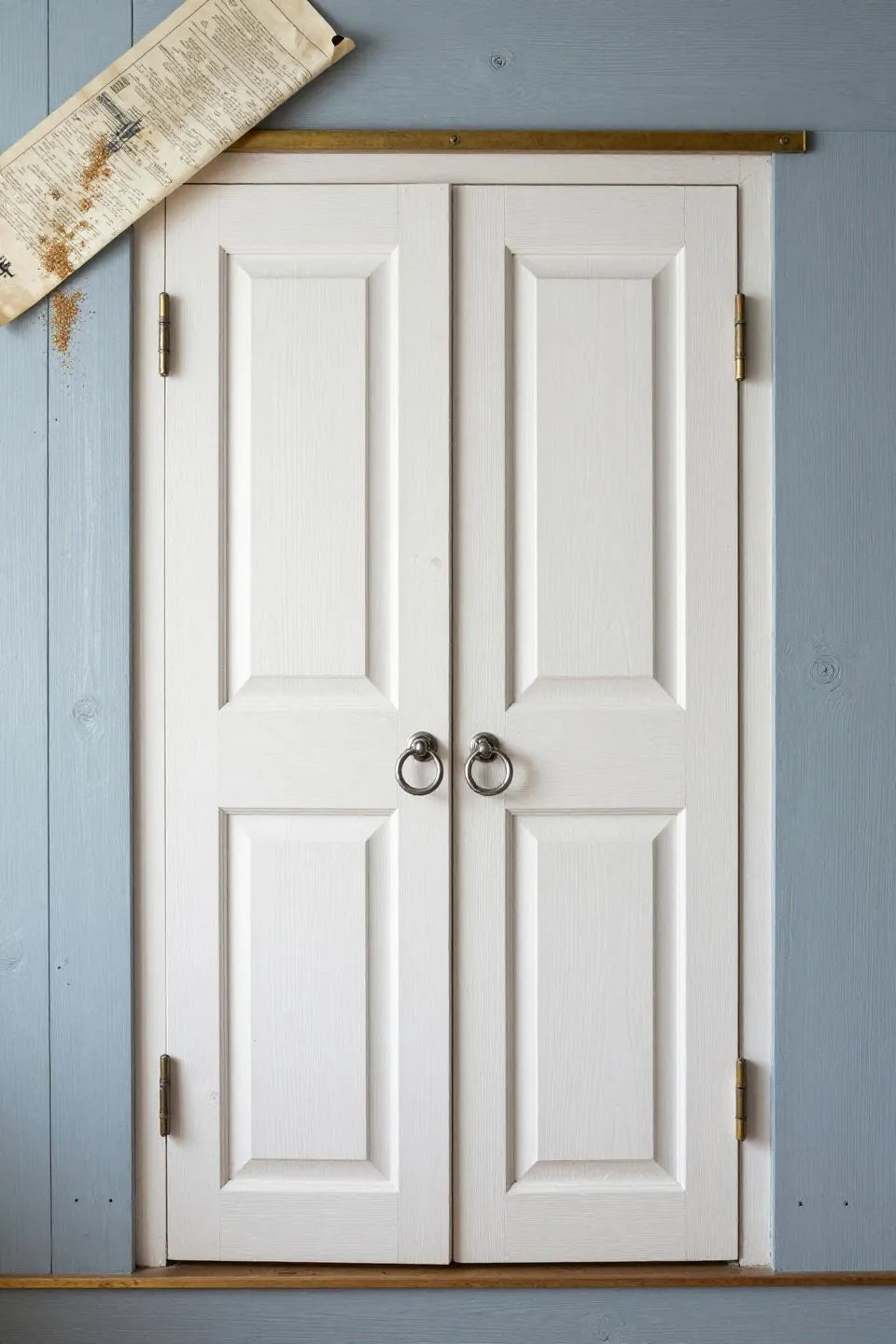
Whitewashed timber with galvanized steel rings feels collected, not themed. The grain shows through just enough to keep texture visible. Those asymmetric pull rings? They’re doing all the heavy lifting here. This works when you want coastal but refuse to commit to anchors and rope.
Pale Oak With Transparency Built In

Horizontal slats cut through solid oak create this shadow-grid thing that’s part sculpture, part door. Light moves through it differently all day. The minimal Scandinavian approach means no hardware screaming for attention—just recessed pulls and clean lines. I’d pick this for a modern build where you still want warmth.
Victorian Etched Glass Without the Clutter

Deep burgundy mahogany and etched sunburst glass shouldn’t work this well, but the geometric pattern keeps it from tipping into fussy. Brass lion-head knockers feel substantial without camp. This is for historic homes where stripping all the character would be a crime. Just skip the modern farmhouse if you’re going this route.
Blackened Steel Goes Full Industrial
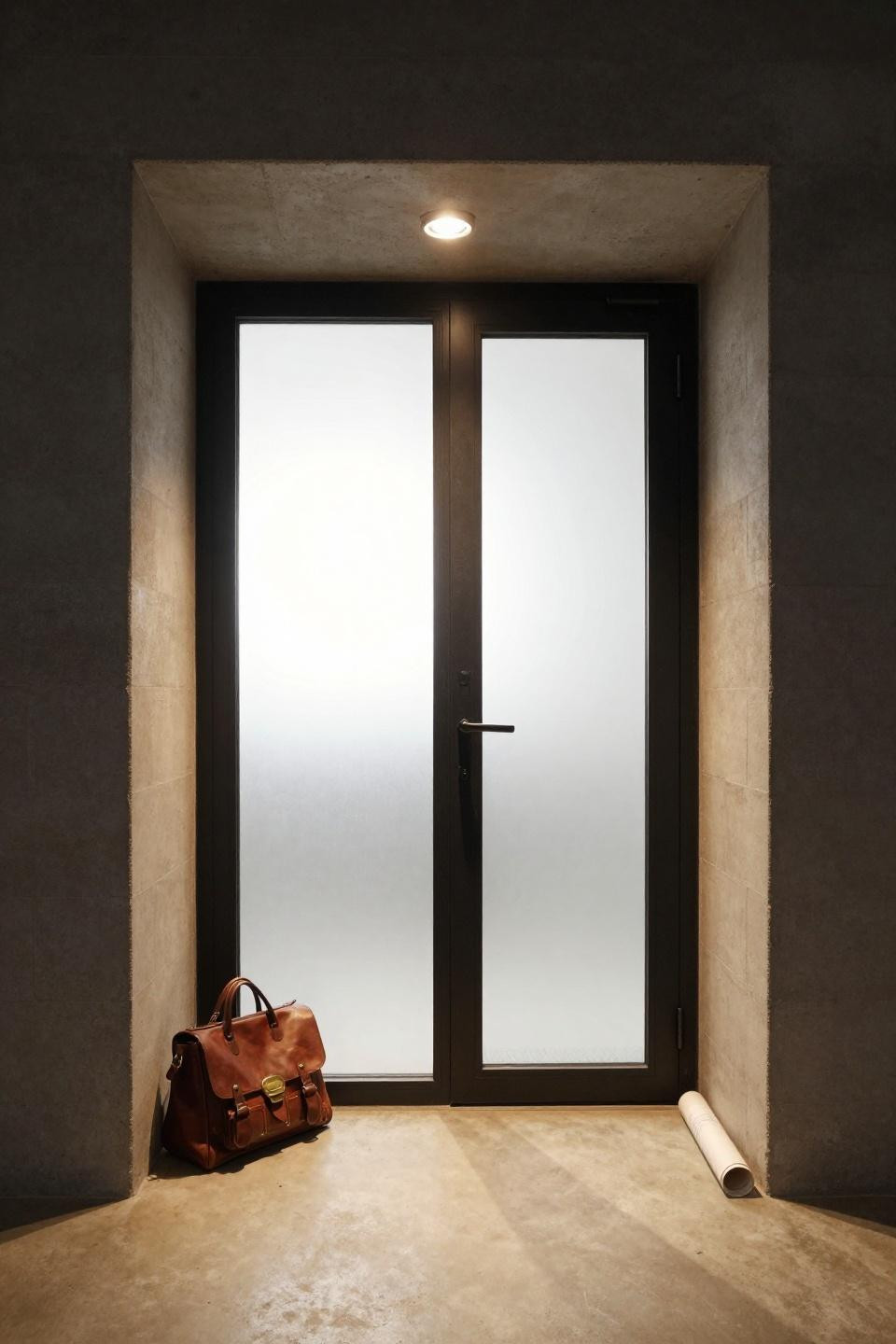
Frosted glass in blackened steel frames with recessed pulls—it’s the loft entry every converted warehouse wishes it had. That concrete surround? Not negotiable. You need raw texture to balance the sleek metal. And honestly, the tungsten lamp casting that shadow stripe is doing more design work than most people’s entire lighting plan.
Why This Burgundy Actually Feels Fresh
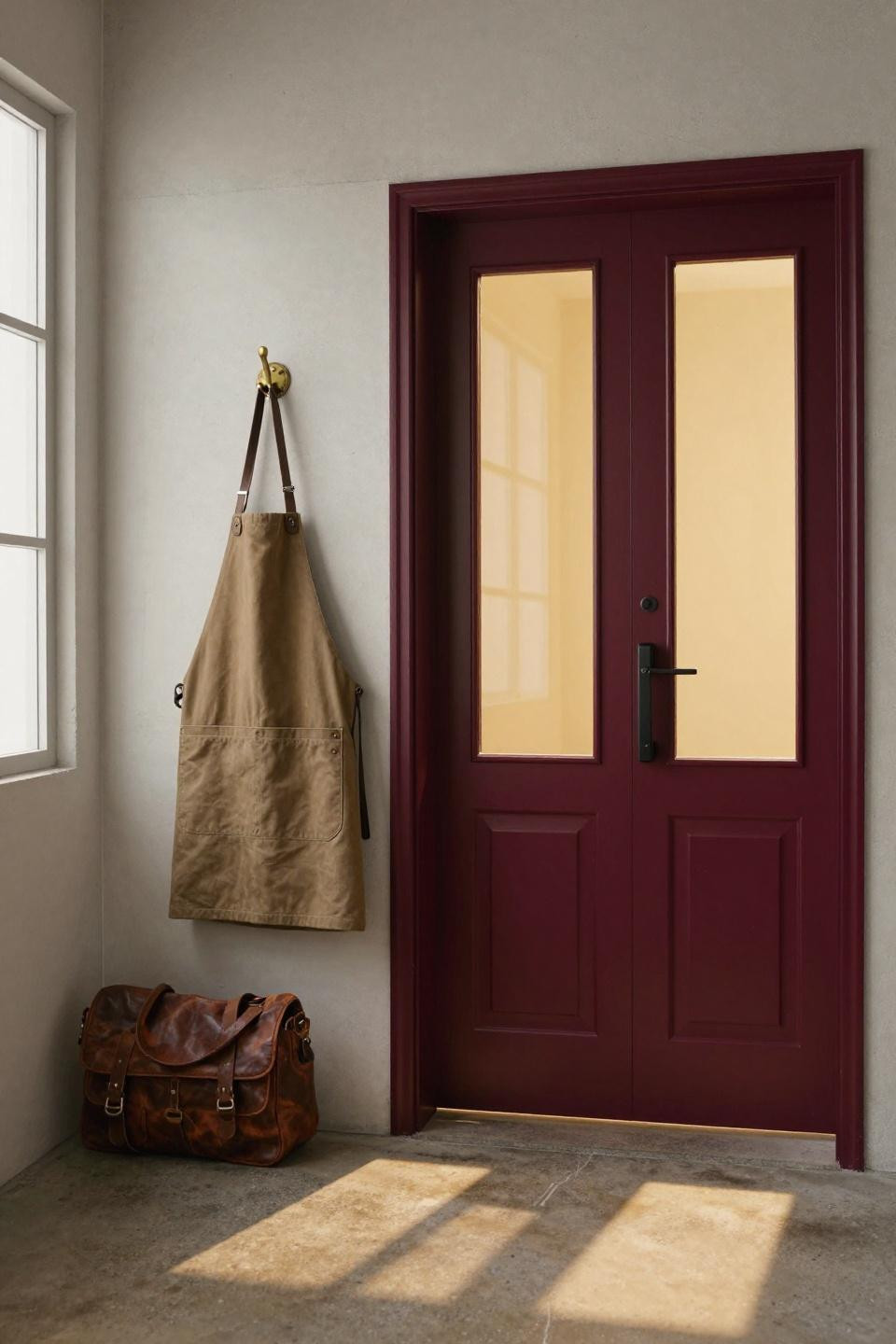
Burgundy could go Victorian fast, but the matte black hardware and glass sidelites pull it current. It’s warm without leaning traditional. The concrete loft setting helps—this color needs industrial bones or it reads Christmas. Those bar pulls? Way better than round knobs here.
Mahogany That Justifies the Premium
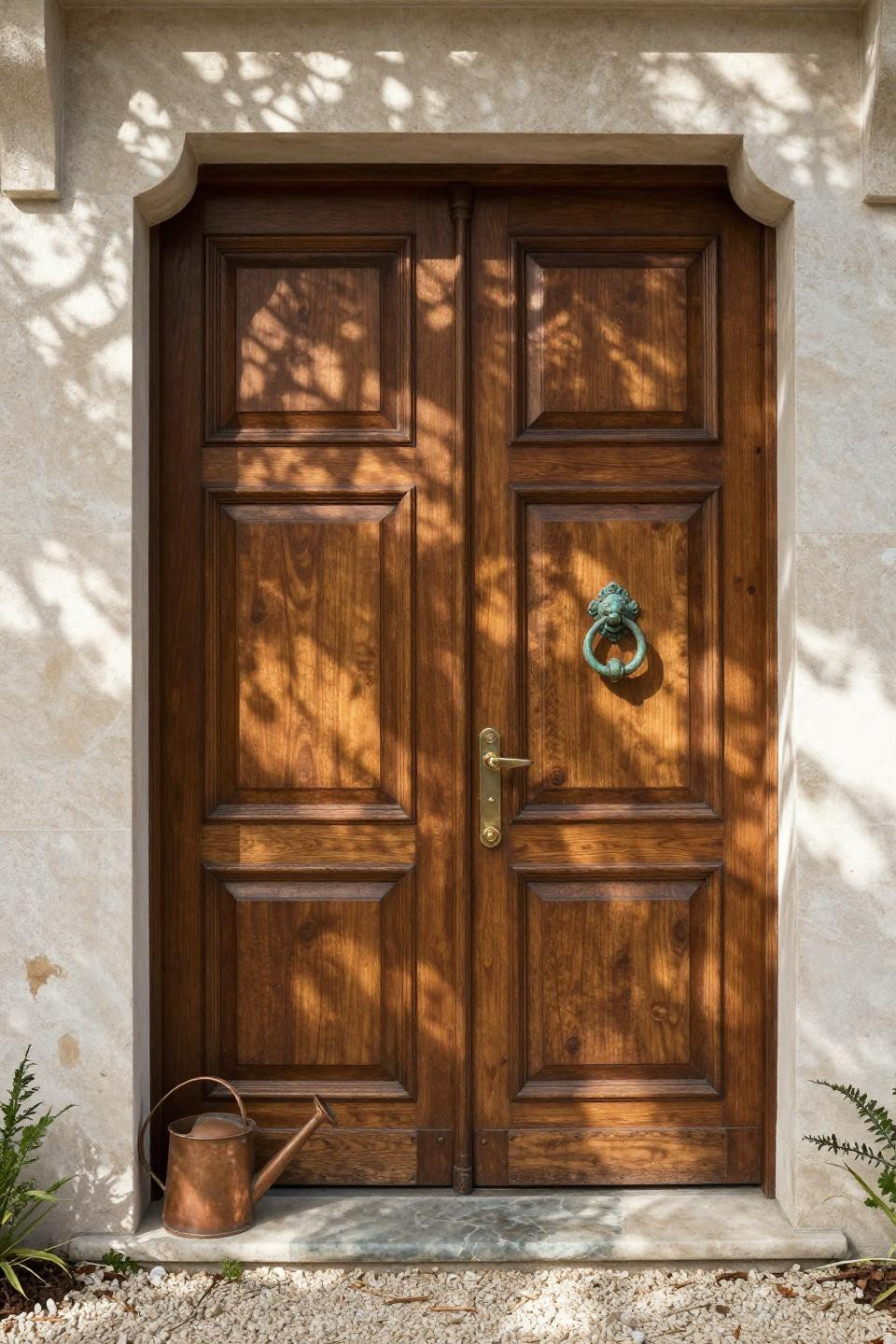
Raised-panel mahogany with unlacquered brass will patina over time, and that’s the whole point. The limestone archway surround gives it architecture to lean into. Best for traditional homes where you’re committing to quality materials for the next 50 years. That weathered copper watering can? Completely optional but doing wonders for the shot.
The Sidelite Trick That Changes Everything
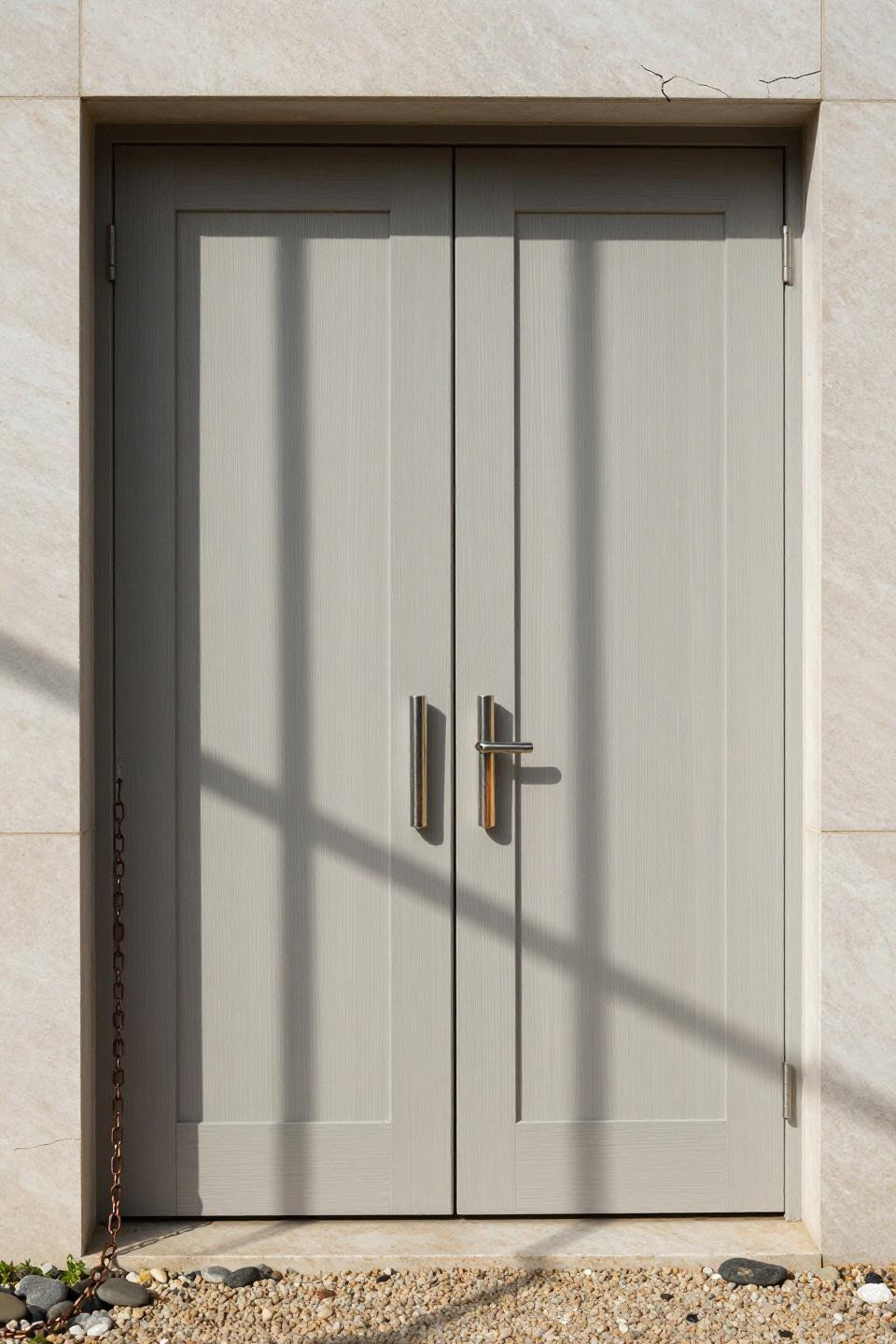
Full-height glass sidelites make narrow entries feel twice as wide. Pale ash timber keeps the wood presence without going dark and heavy. That limestone surround? It’s the luxury detail people miss. The stainless steel cylindrical pull catches light in a way round hardware never does.
Charcoal Horizontal Slats Without the Bulk
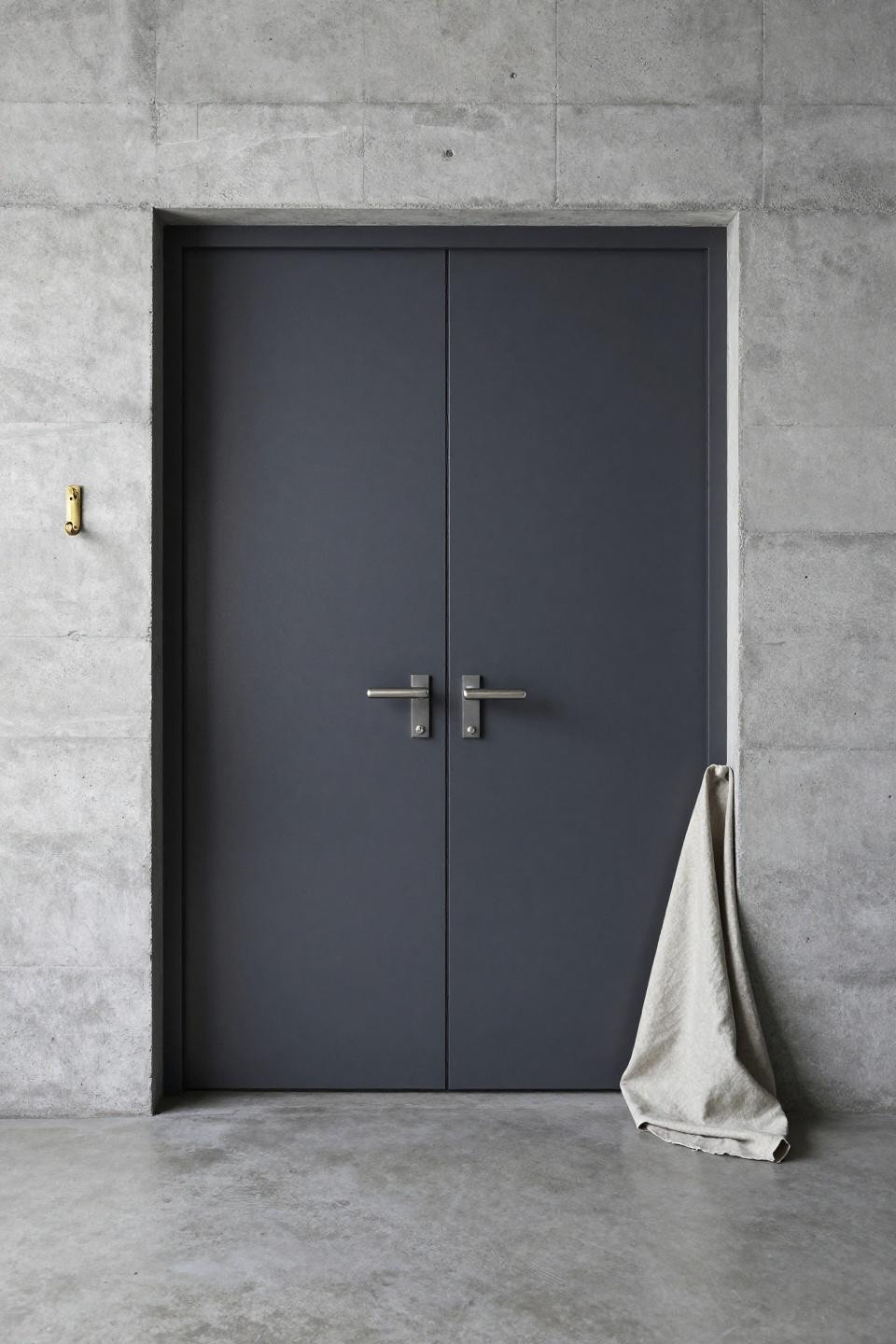
Aluminum slats in charcoal create this floating transparency that feels high-tech but livable. Push-to-open mechanism means no hardware interrupting the facade. This works in lofts where you need privacy without solid walls. That raw concrete surround is non-negotiable—softening it would kill the whole vibe.
White Oak Peg Rail Saves the Small Entry
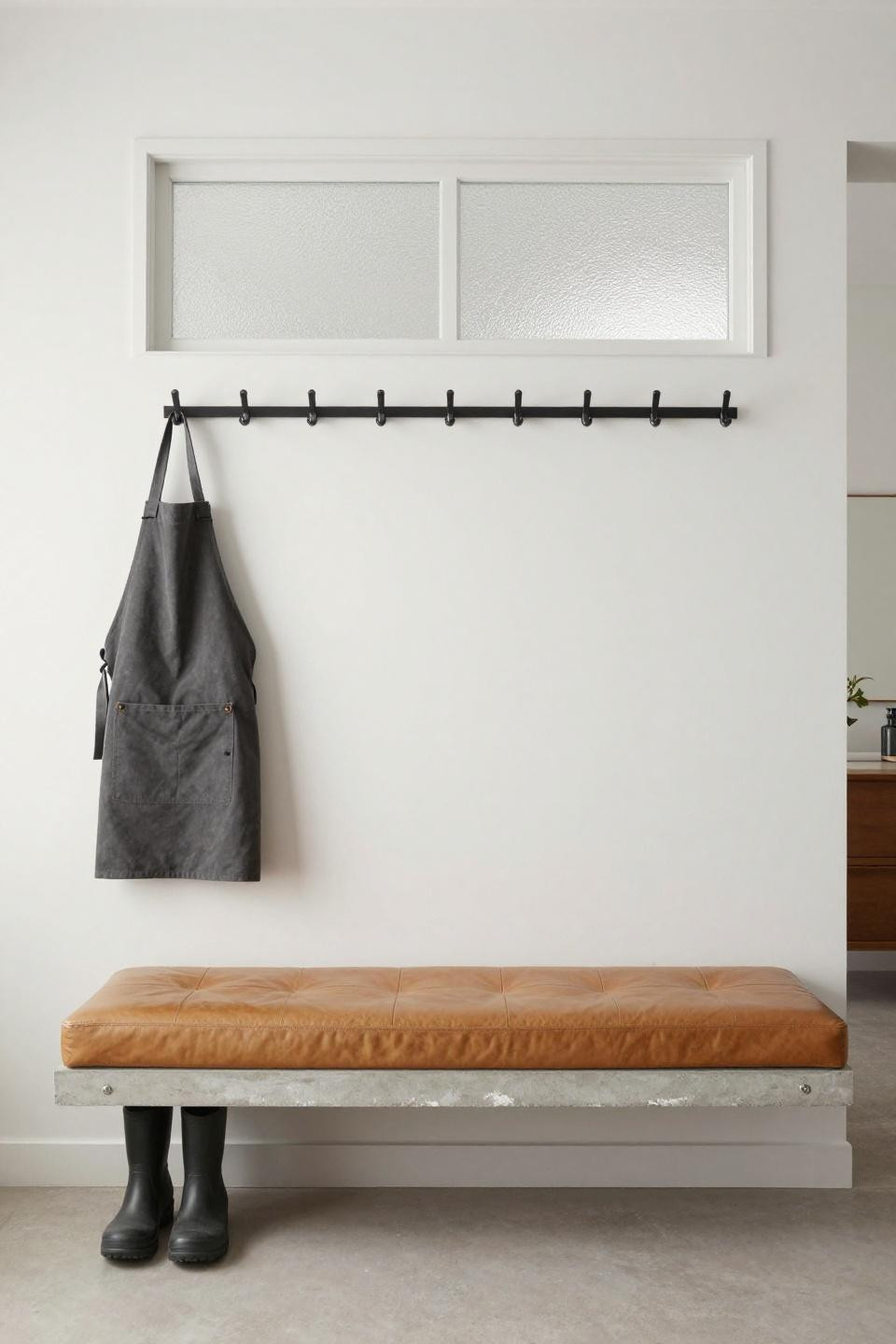
Wall-mounted white oak peg rail with matte black hooks above a floating concrete bench—it’s the compact entry solution that actually functions. Frosted glass upper sections let light through without exposing your mail pile. Great when you need a drop zone that doesn’t read mudroom.
Arched Transom Glass Done Right
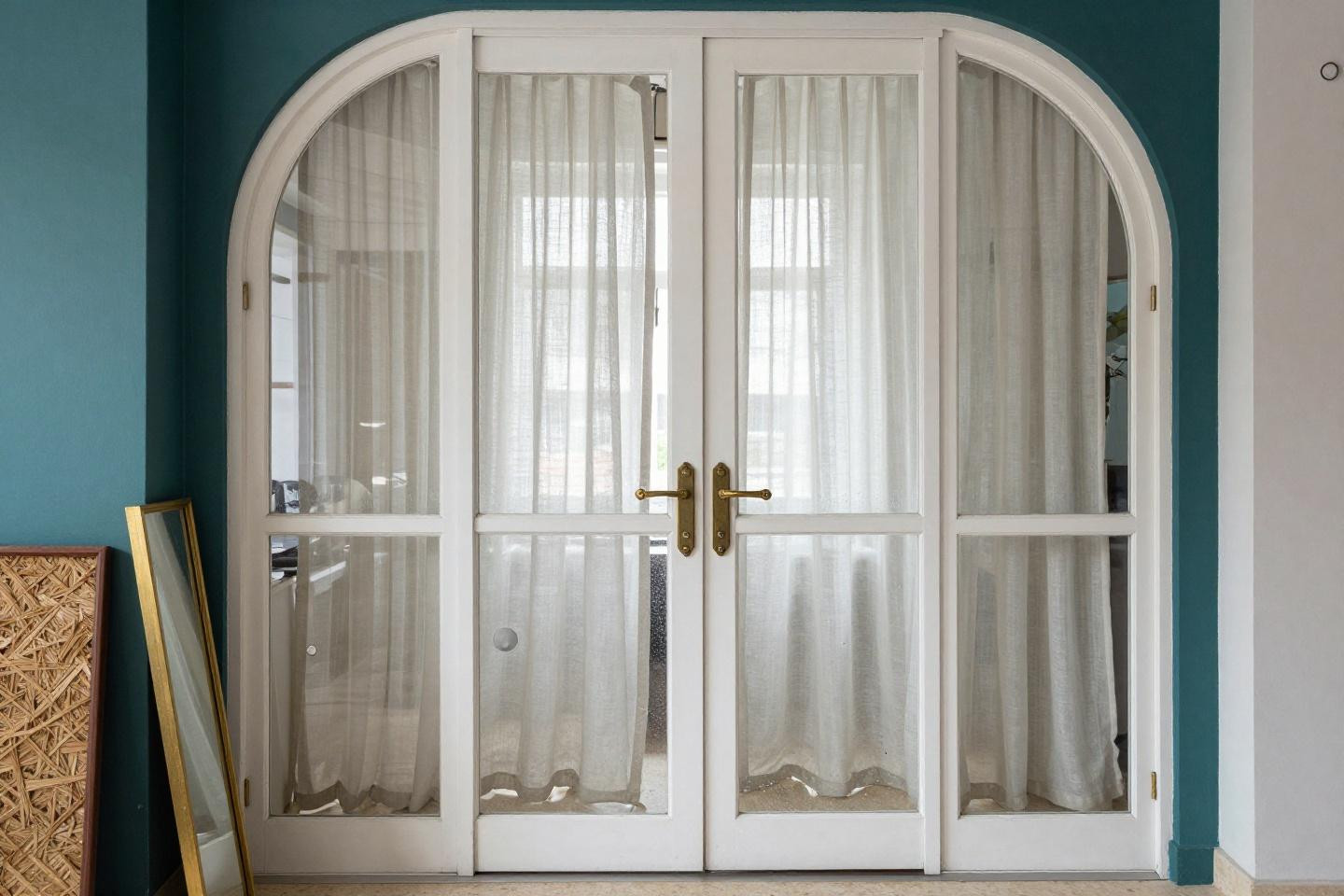
Frameless glass with arched transom panels and hand-painted astragal divisions—it’s formal without feeling stiff. The white steel frame keeps it from going too traditional. I’d use this for a converted space where you’re blending old architecture with contemporary interiors. That cream travertine threshold adds warmth the glass alone wouldn’t deliver.
Farmhouse Six-Panel That Skips the Trends
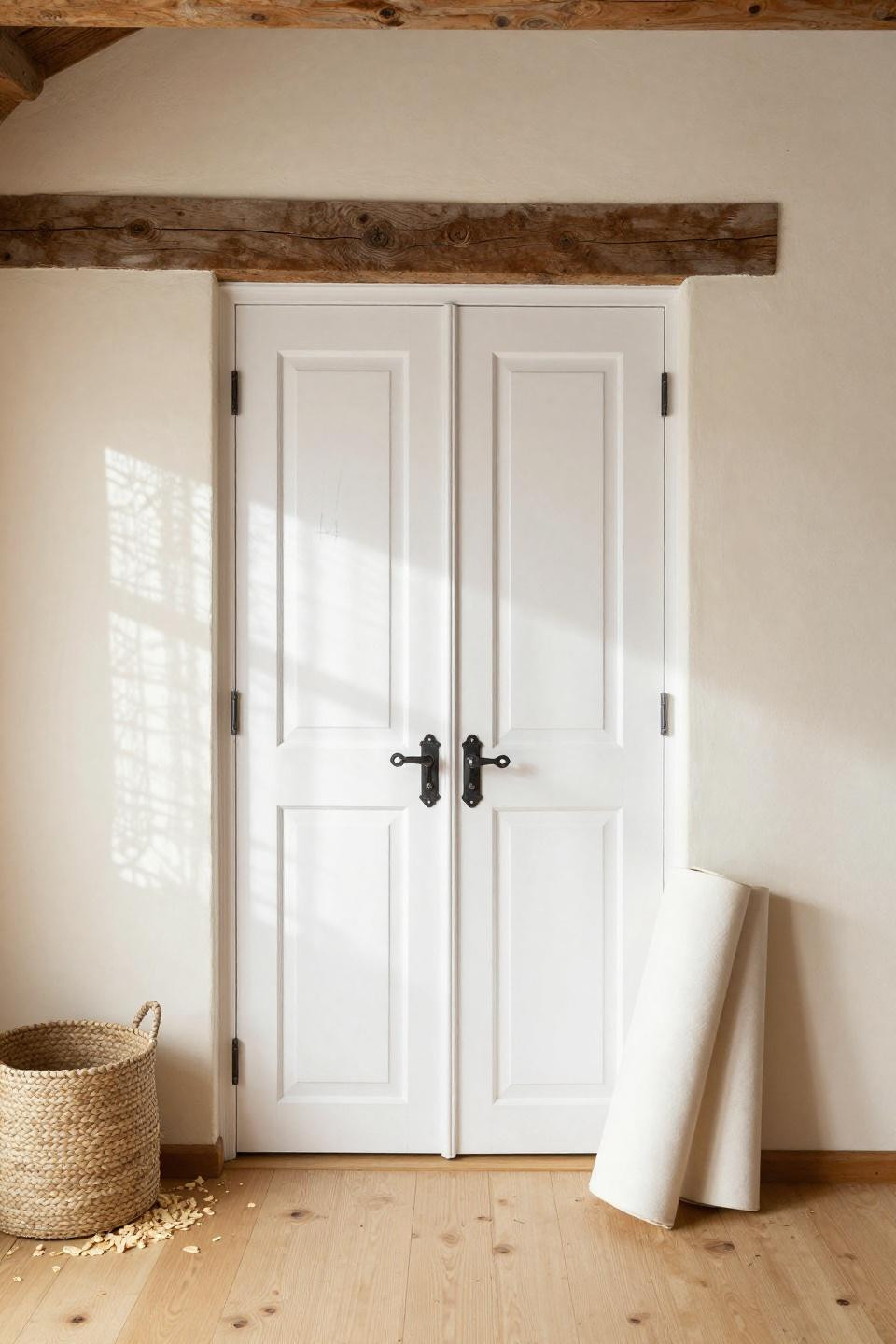
White-painted six-panel with wrought-iron thumb latches—classic farmhouse without the shiplap overload. The post-and-beam timber frame gives it the architecture these doors need to shine. Limewash walls and honey pine flooring keep it warm instead of stark. This is for cottages where you’re leaning into period details, not fighting them.
Beveled Glass That Reads Mediterranean
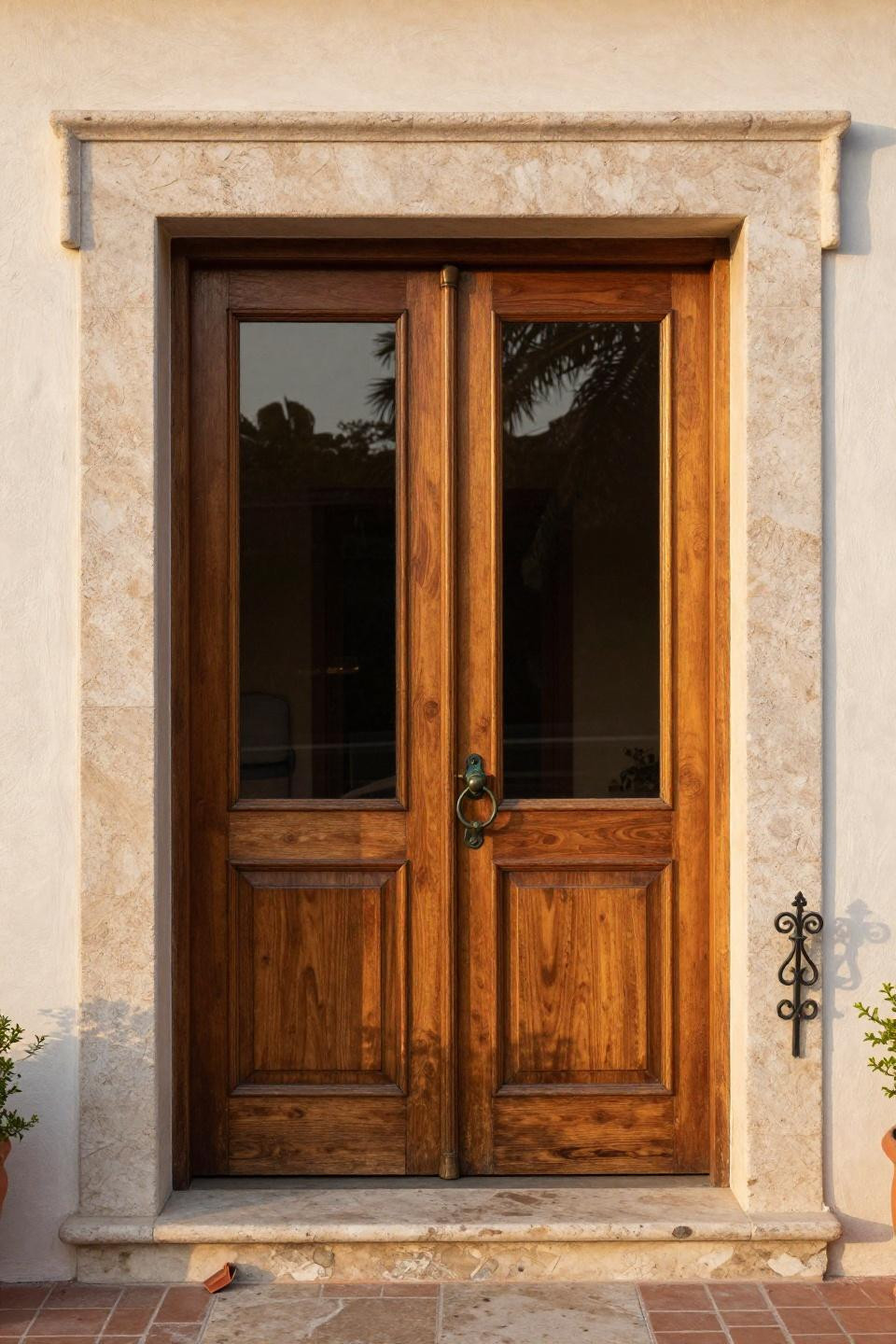
Oversized mahogany with beveled-edge glass and oil-rubbed bronze hardware feels expensive because it is. The stone portico and textured stucco surround give it the scale these doors demand. That aged limestone threshold with natural veining? It’s the detail that separates custom from catalog. Best for Mediterranean or Spanish Colonial where you’re committing to the style fully.
Flat-Panel White That Doesn’t Read Builder
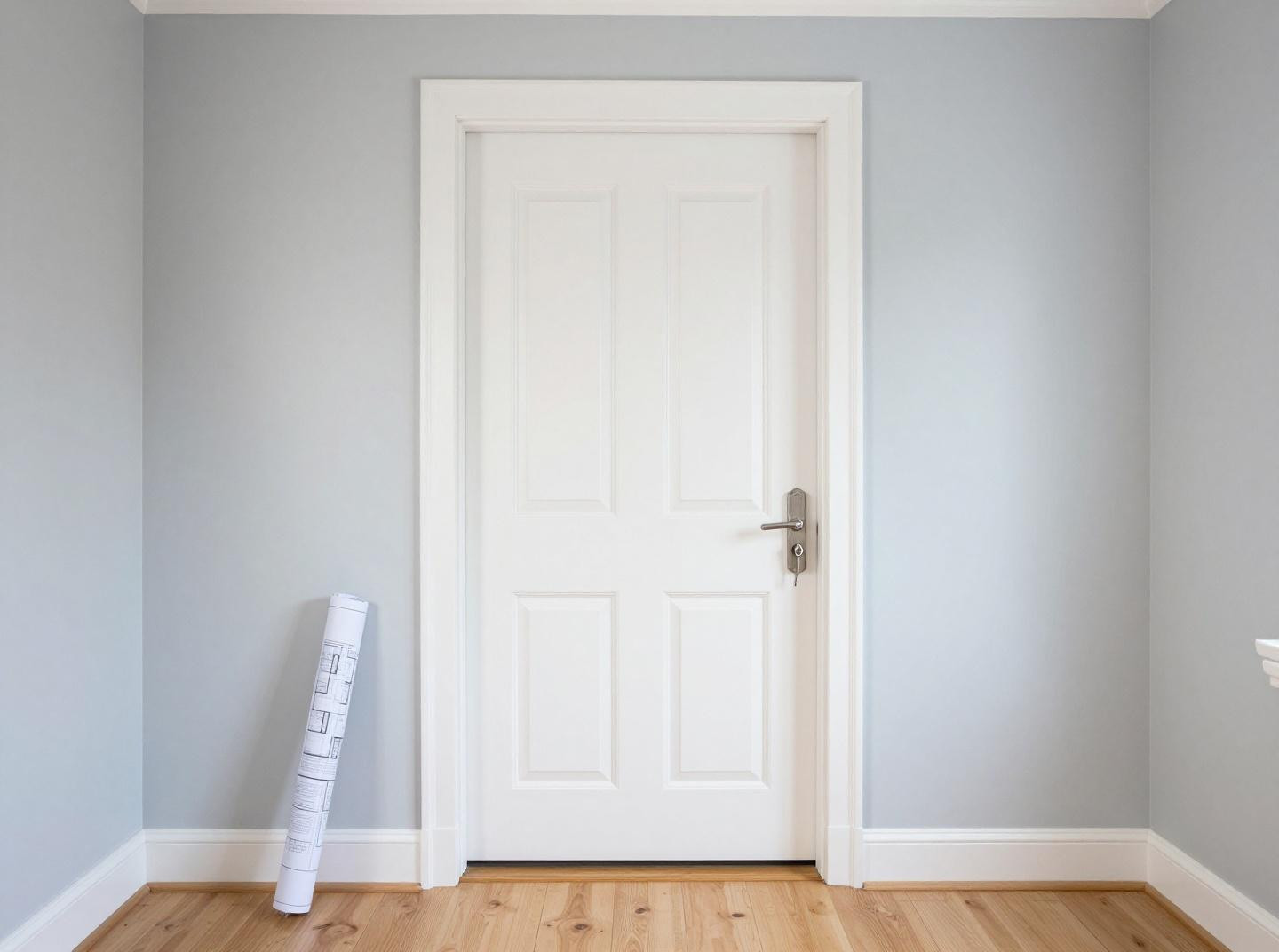
Flat-panel white composite with matte black shadow-line reveal—it’s the suburban upgrade that actually looks intentional. Tall sidelights flood the foyer without sacrificing privacy. The reveal detail keeps it from reading flat and cheap. This works when you need low-maintenance but refuse to look low-budget.
Emerald That Stops the Scroll
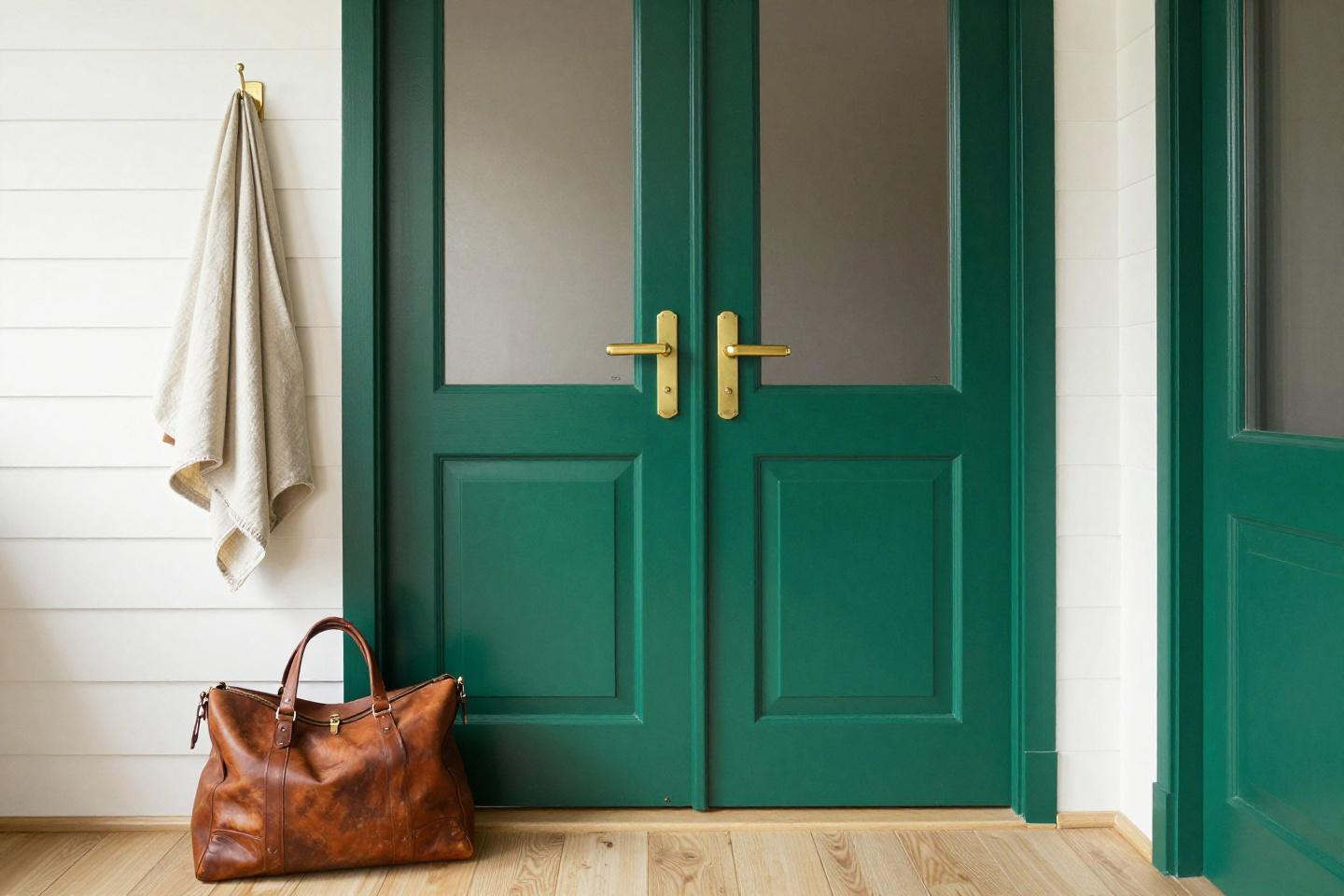
Saturated emerald with satin brass bar pulls—bold color that doesn’t read loud. The Scandinavian white shiplap walls give it breathing room. And those high sidelights? They’re preventing the dark color from feeling heavy. I’d use this when you want the door to be the statement without adding more furniture or art.
Sage Green With the Right Hardware
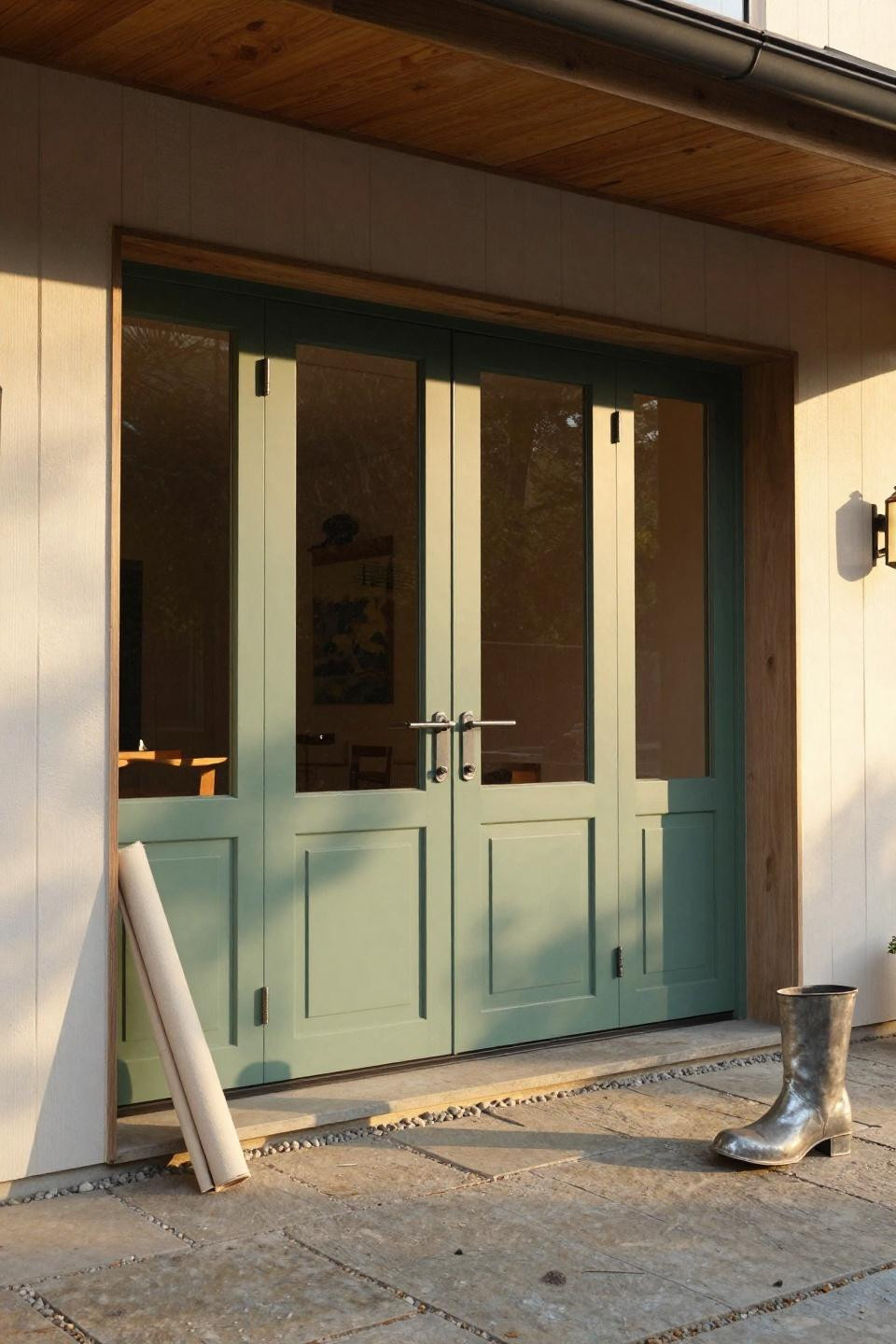
Powder-coated sage green with full-height beveled-glass side panels and stainless steel bar pulls—modern farmhouse that skips the rustic clichés. The board-and-batten surround anchors the color without fighting it. Bluestone courtyard and pea gravel approach keep it grounded instead of precious. This is for new builds where you want warmth but not nostalgia.
Walnut Grain That Needs No Stain
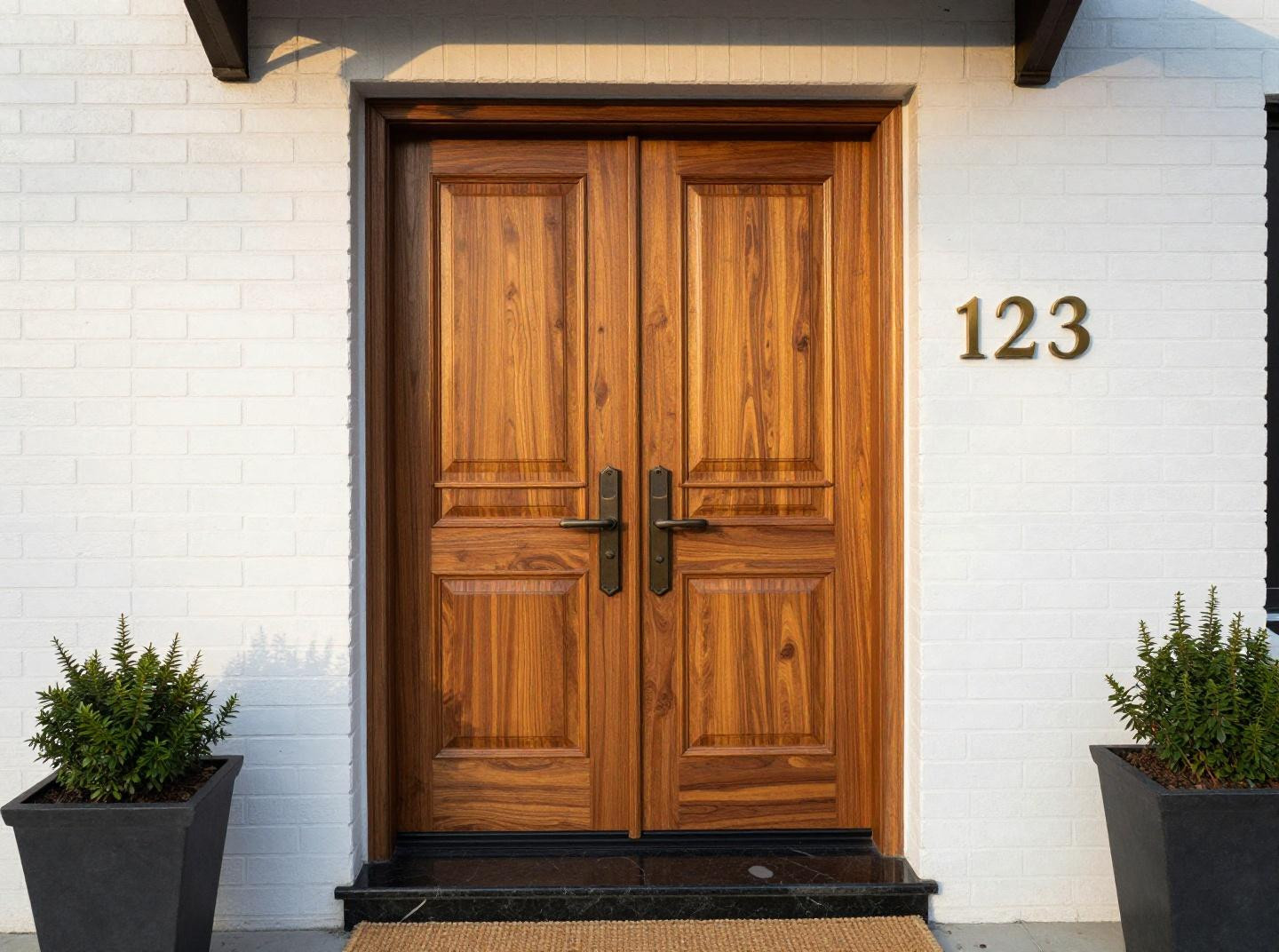
Natural walnut with raised panel geometry and oil-rubbed bronze hardware—the grain does all the talking. White brick surround keeps the dark wood from feeling heavy. That polished black granite threshold adds a luxury layer most people miss. Golden hour light makes the panels three-dimensional in a way flat doors never achieve.
Blackened Steel Pivot That Floats
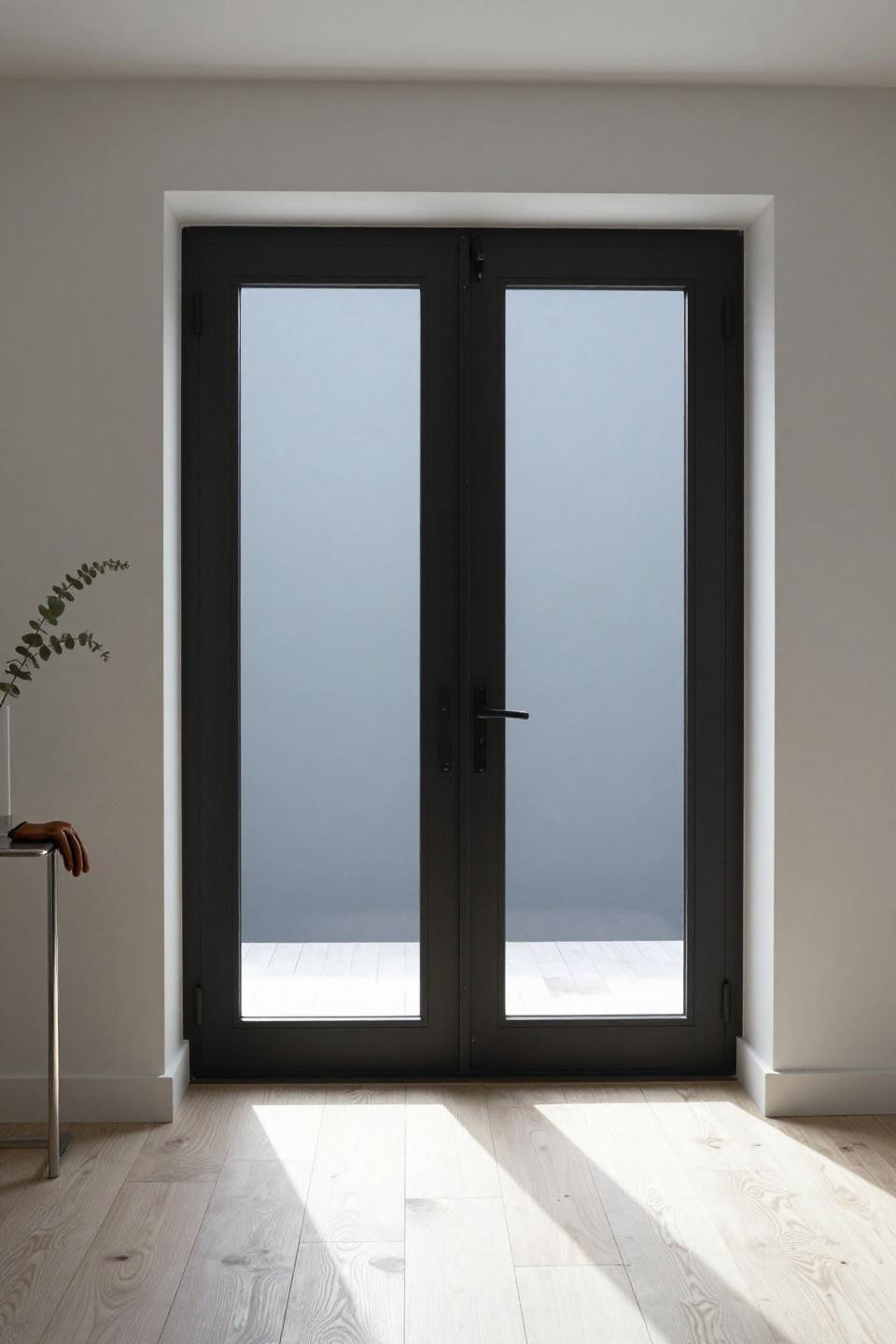
Concealed pivot hardware creates this frameless floating illusion that’s pure drama. Blackened steel and translucent glass—minimal but not cold. The mullion grid shadow across the threshold is doing more design work than most people’s entire entry. This is for modern builds where you’re going all-in on contemporary details.
Frosted Aluminum Slats That Diffuse Perfectly
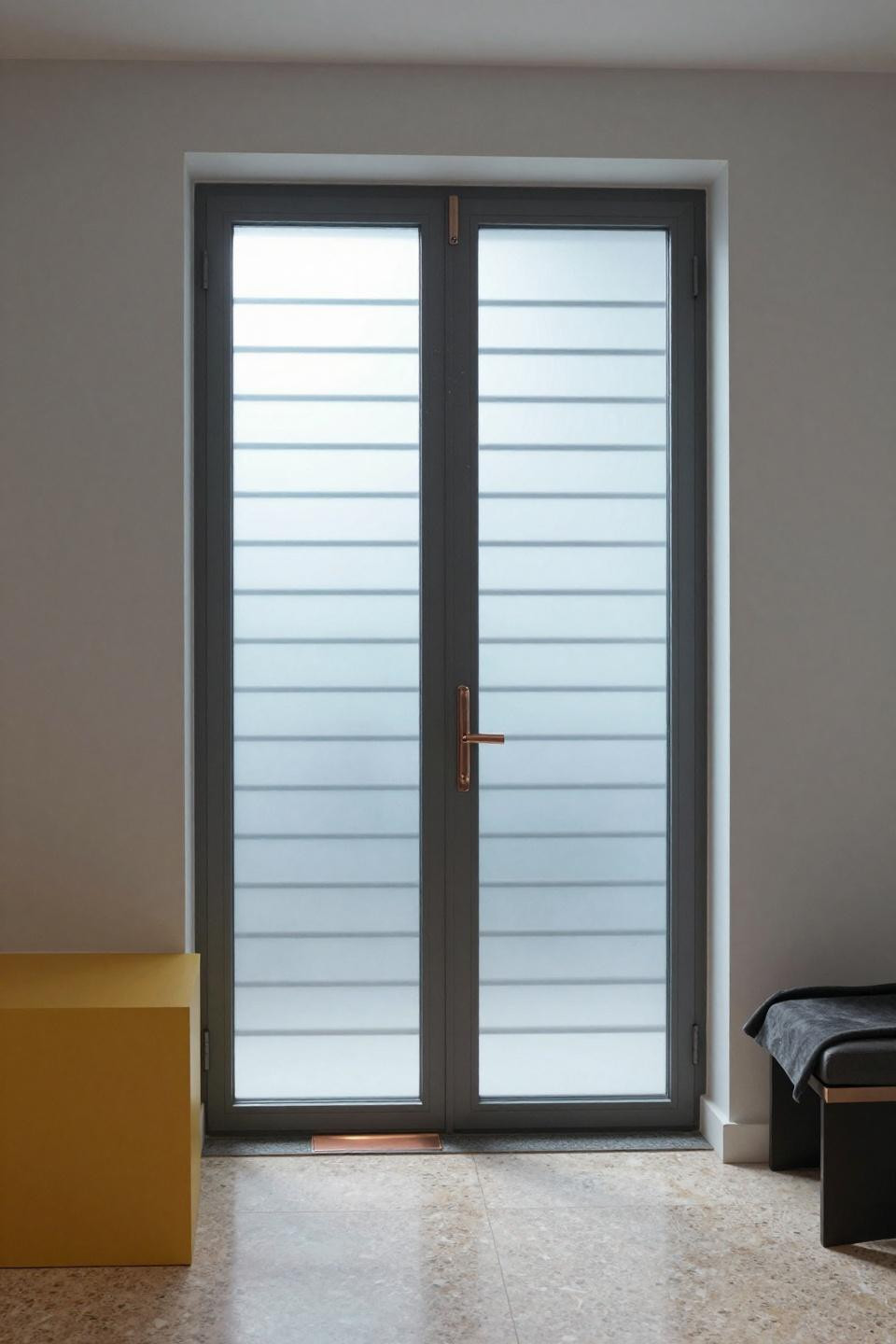
Frameless aluminum with horizontal slat pattern—the frosted panels diffuse light without losing it completely. Polished travertine threshold adds warmth the metal alone wouldn’t deliver. That sculptural white plaster bulkhead above? It’s framing the doors like art. Great when you need privacy in a glass-forward design.
Reclaimed Oak With Hand-Forged Hardware
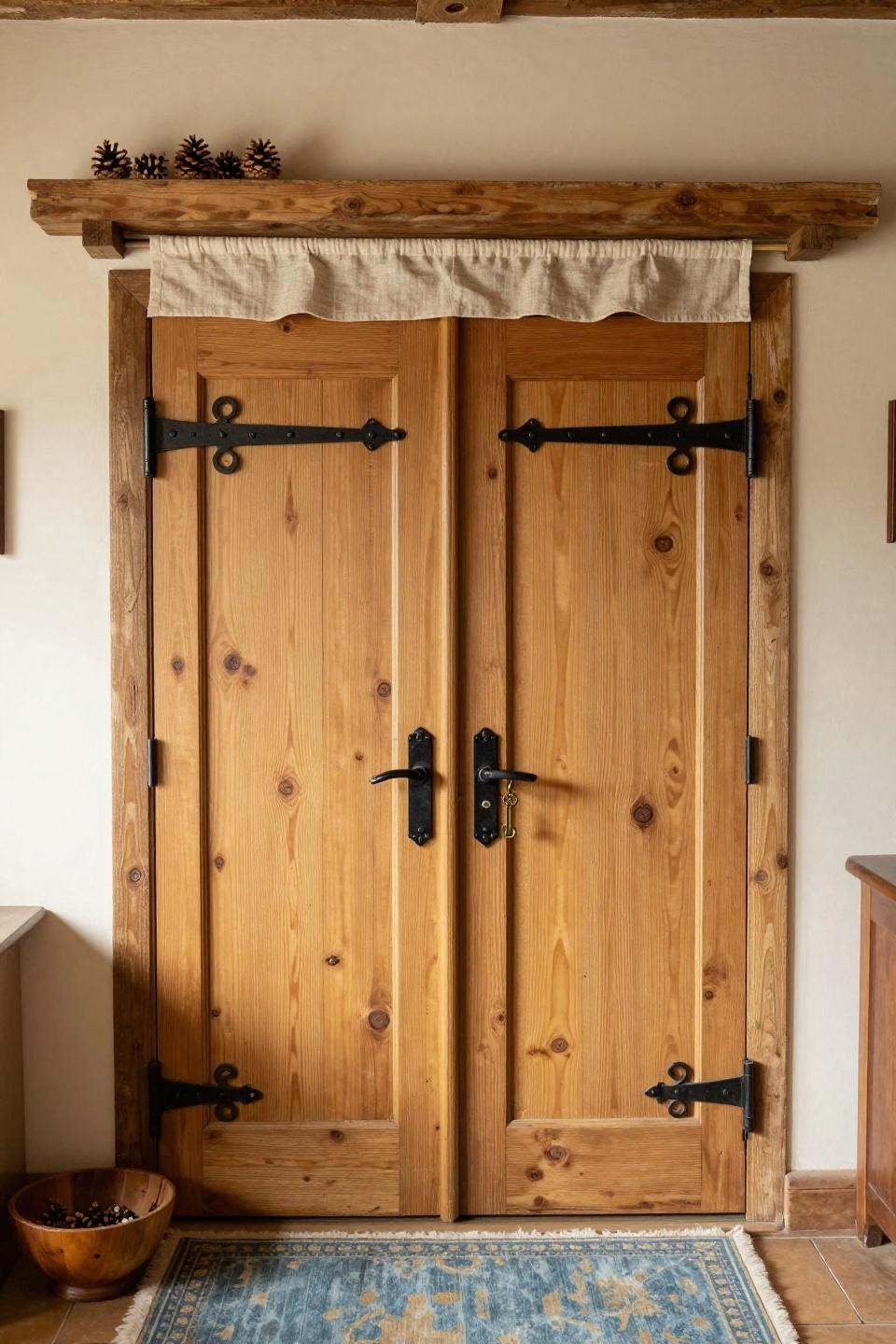
Black hand-forged wrought-iron strap hinges spanning full width across reclaimed oak—it’s country cottage without the twee factor. Natural knots and honey-toned grain keep it authentic instead of distressed on purpose. The timber-frame surround gives these doors the architecture they need. Best for historic renovations where you’re honoring original craftsmanship.
Matte Black Muntin Grid Gets It Right
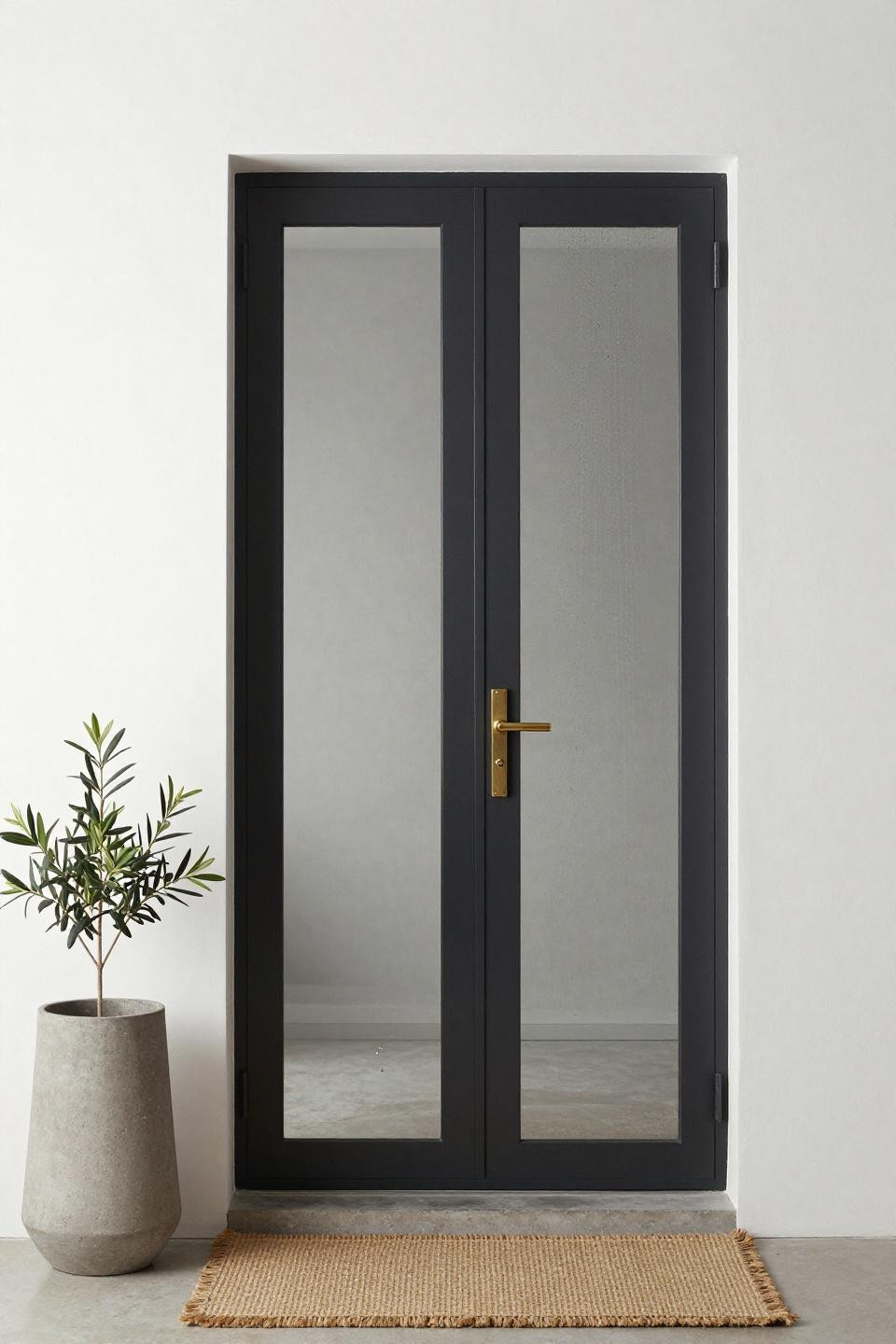
Flush-mounted matte-black steel frame with ultra-thin muntin grid—geometric minimalism that doesn’t feel sterile. White plaster opening and polished concrete threshold let the doors be the only detail. That single brass handle gleam? It’s the warm touch the composition needs. This works when you want modern without going cold or industrial.
Palladian Transom That Commands Attention
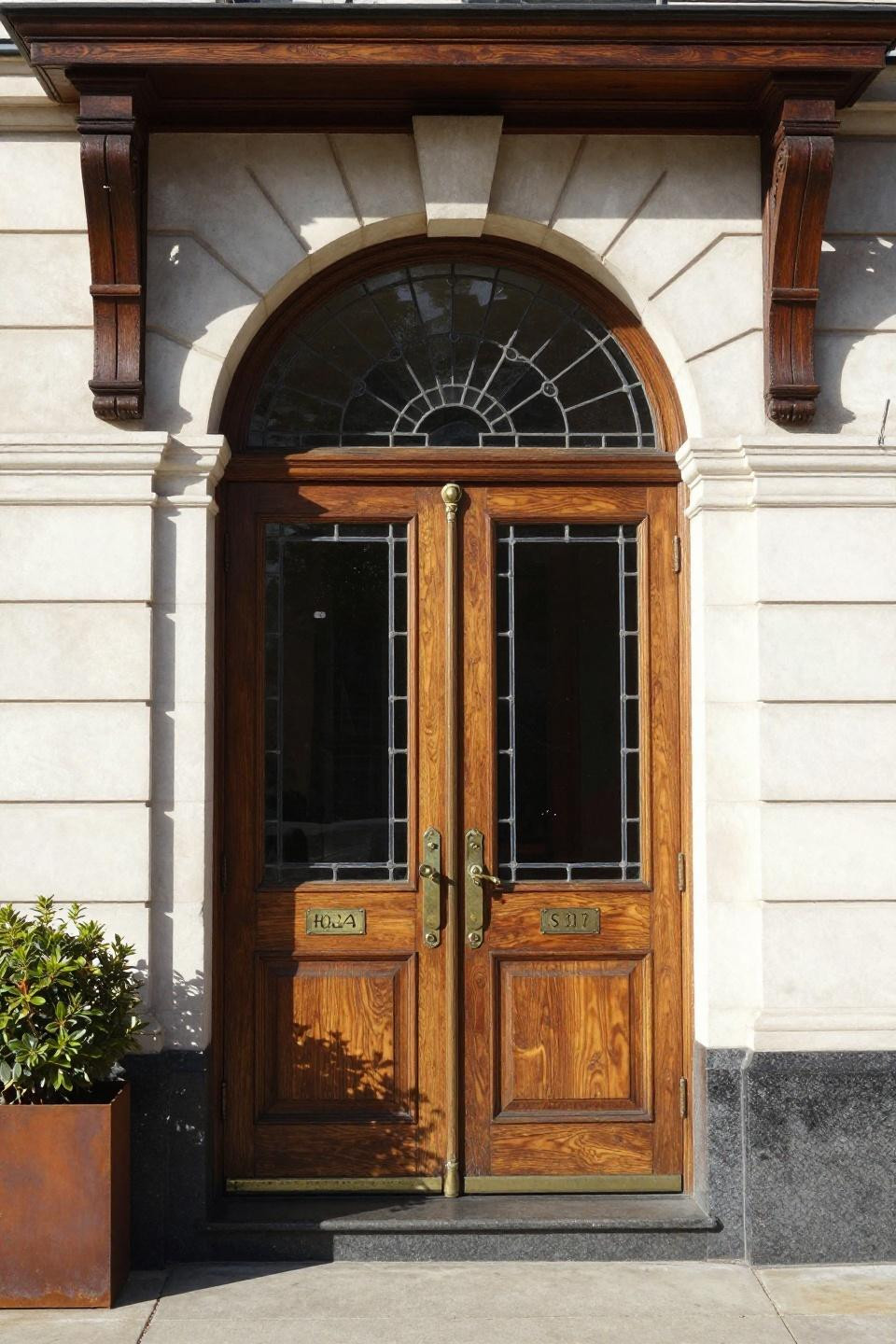
Georgian colonial walnut with arched Palladian transom and leaded glass radiating segments—traditional done right. Heavy aged brass with verdigris patina feels collected over decades, not installed last week. The pale limestone surround with visible quoins gives it the architecture these doors demand. This is for historic properties where anything less formal would look wrong.