
Garage workshop layouts don’t have to look like disaster zones. Most people treat their garage like a dumping ground, then wonder why they never actually build anything. Here’s what actually works.
Steel Pipe Shelving That Doesn’t Look DIY
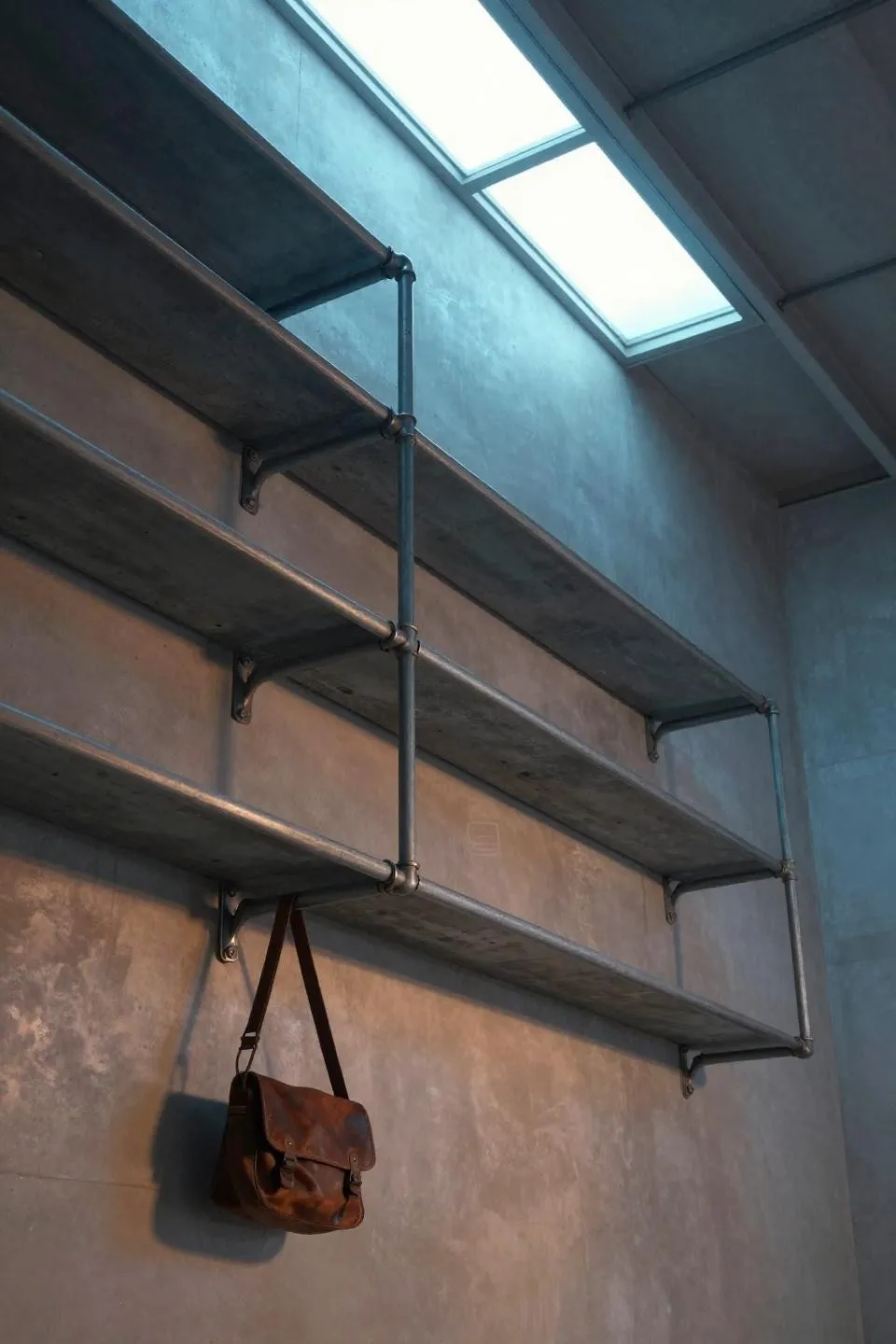
Navy powder-coated brackets make all the difference here. Most pipe shelving screams “I watched one YouTube video,” but the curved brackets and concrete-embedded planks? That’s intentional. The copper epoxy floor ties it together without trying too hard. And honestly, leaving the ghost outline from the old shelf mount visible is a choice I respect.
Mobile Tool Chest Islands You Can Actually Move

The walnut butcher-block top isn’t just pretty. It takes abuse better than steel. Copper pipe bracing with brass gussets looks expensive but costs maybe $80 to replicate. That felt-lined drawer? West Elm sells similar drawer dividers for $12. The key is the casters—get locking ones rated for 200+ pounds or you’ll regret it every time you lean on the thing.
Pegboard Systems That Don’t Sag After Six Months
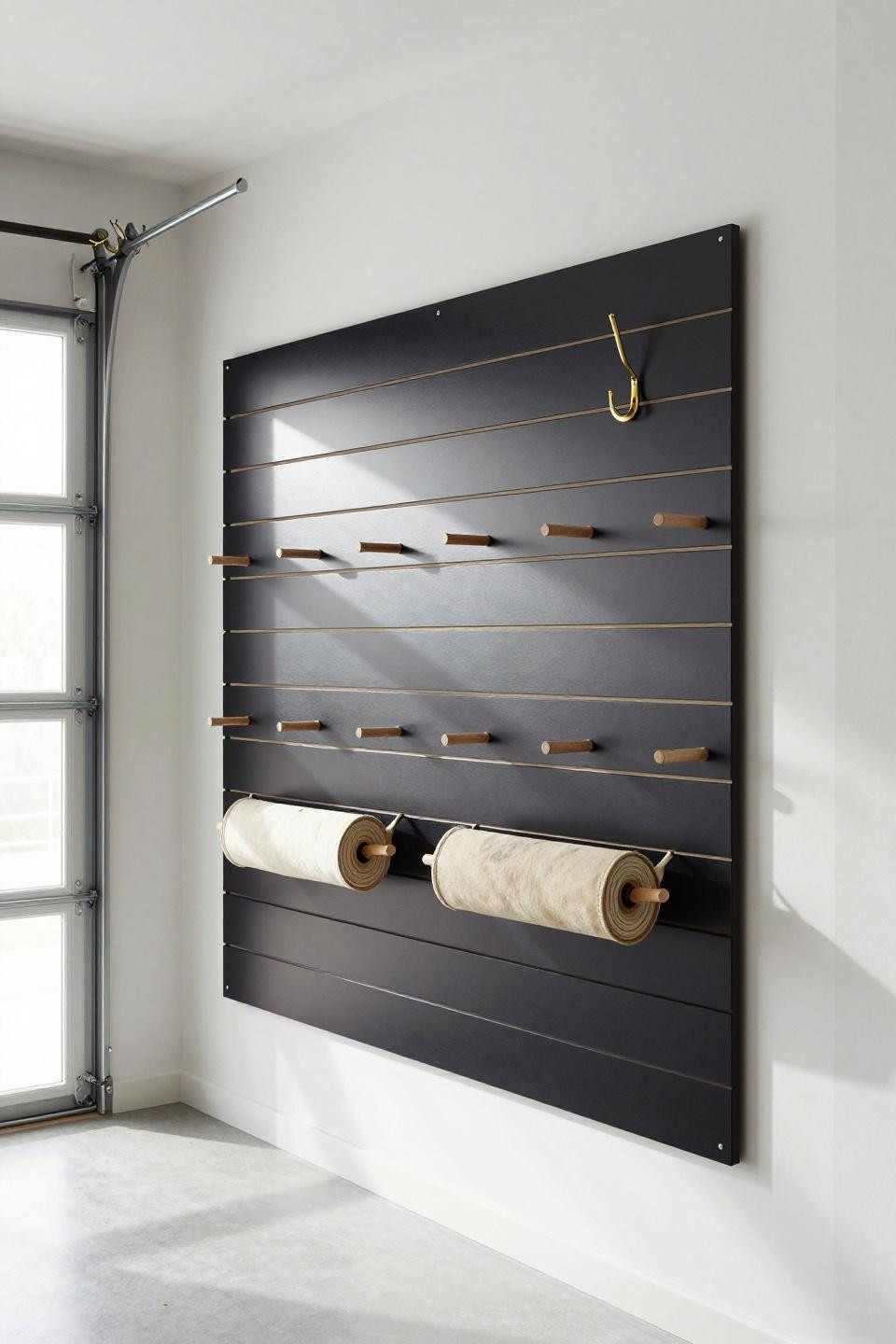
Aluminum slat pegboard beats traditional pegboard every time. Heavier tools don’t pull the pegs out. The integrated hardwood dowel holders mean your clamps and levels have actual homes instead of falling every three days. Mount it to studs at 16-inch intervals and it’ll outlive your garage door opener.
When Chartreuse Actually Works
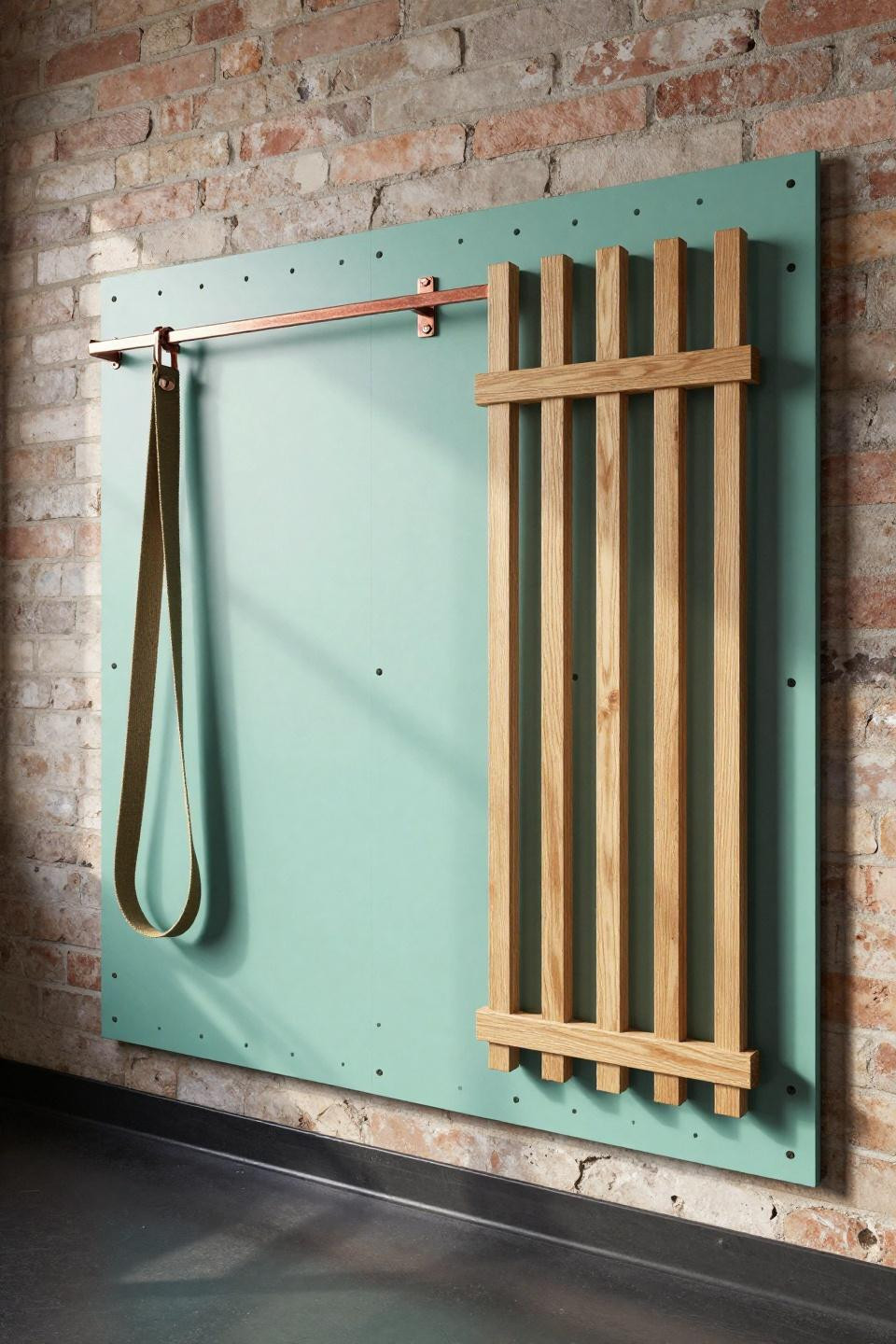
This only works if everything else stays neutral. Raw brick, black epoxy floor, salvaged oak—then hit them with that chartreuse. The ghost pencil outline proves someone actually planned this instead of winging it. I’d pick this for a small space where you need tools to be immediately visible. Dark pegboard makes everything disappear.
The Rope-Wrapped Pipe Trick
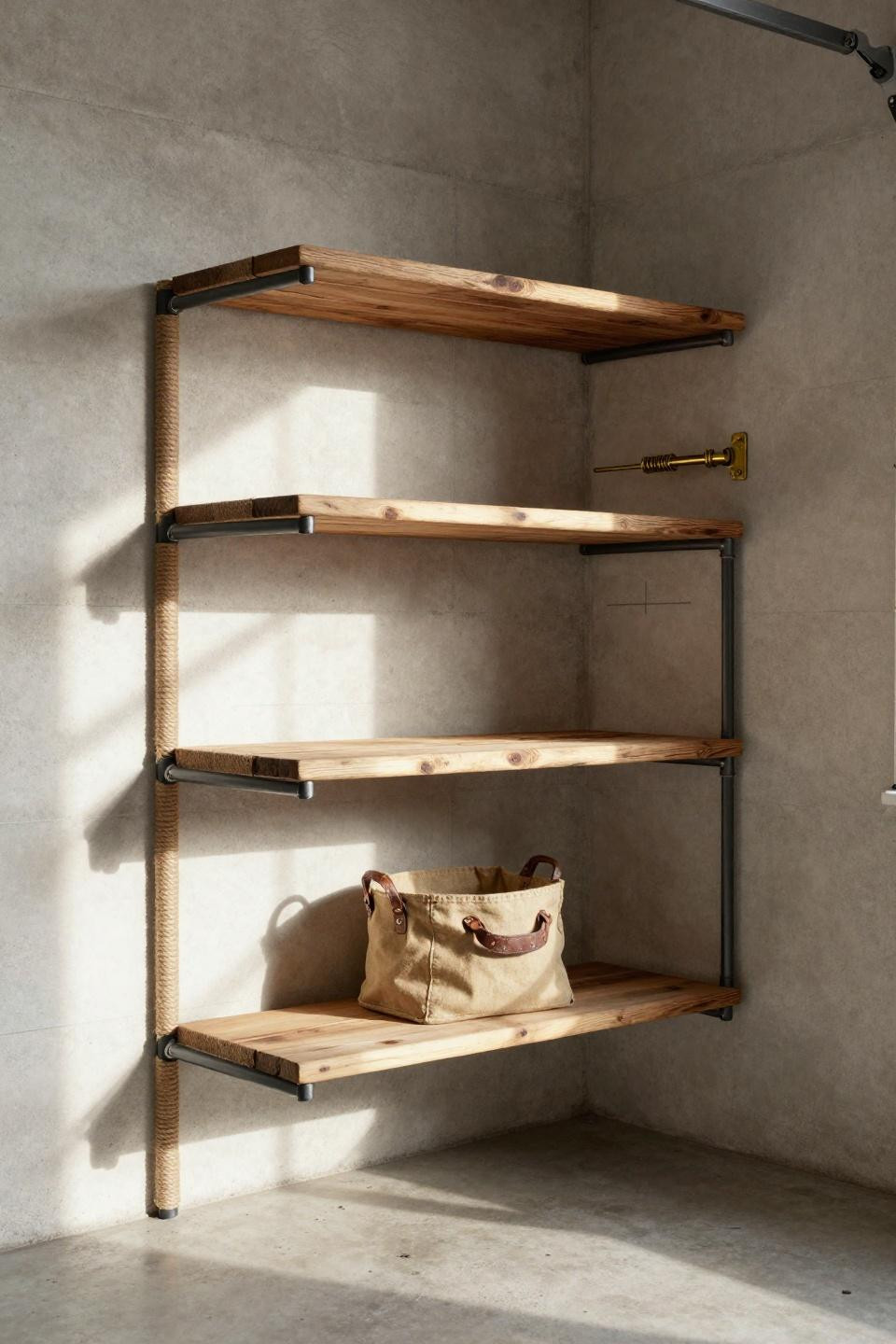
Jute rope around vertical supports isn’t decorative—it’s grip. When you’re hauling lumber or sheet goods, you lean against these supports. Bare steel pipe is slippery and cold. Wrapped rope gives you something to brace against. Plus reclaimed barn wood costs less than new plywood if you know where to look. (Habitat ReStore, always.)
Rolling Carts Built to Last Through Actual Projects
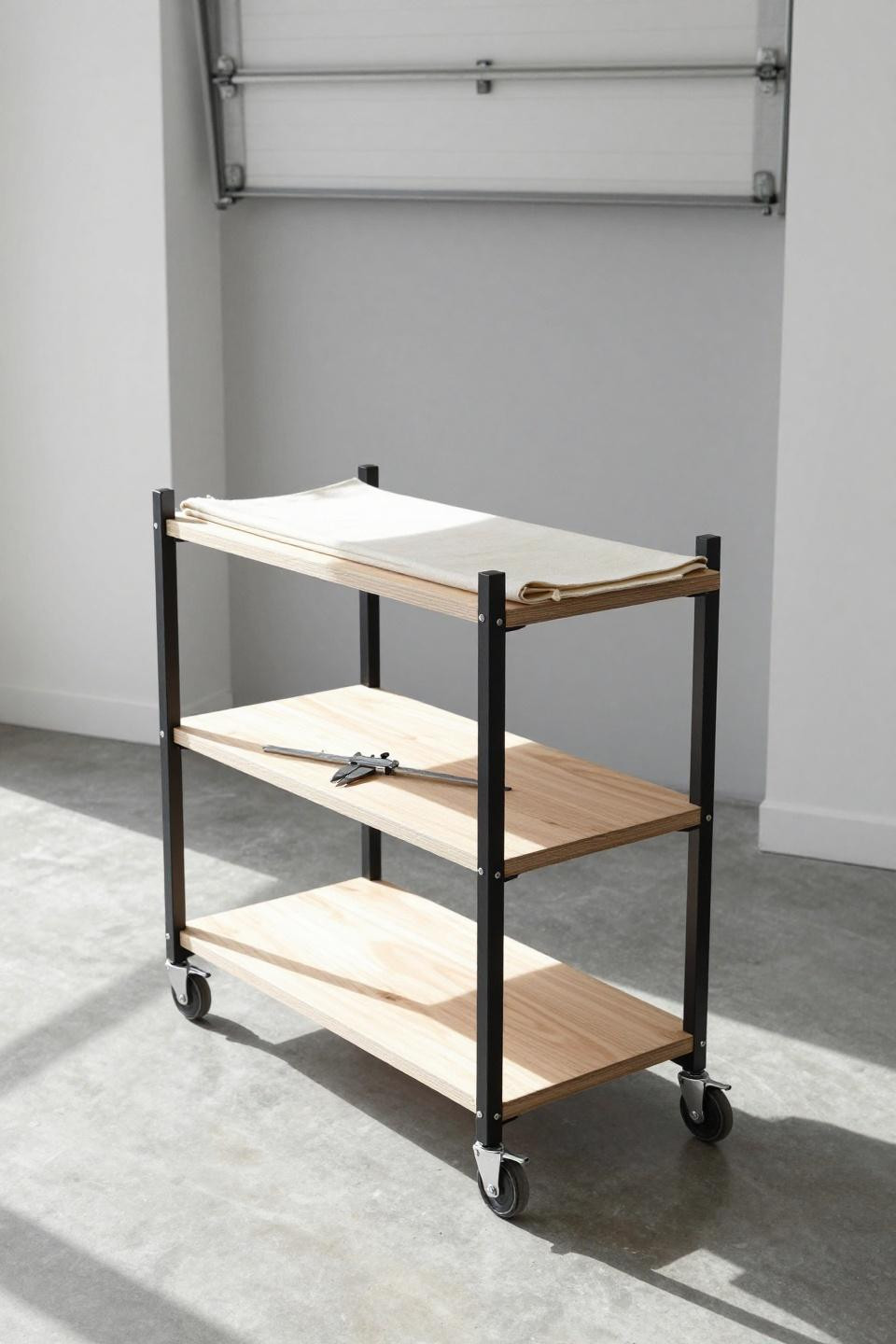
Honey-stained plywood. Blackened steel frame. That’s it. The missing caster bolt is real life—you lose one, you replace it, you keep building. Best for tight spaces where fixed workbenches eat too much floor. Stack your project supplies on top, roll it next to your saw, done.
Modular Cabinet Systems Worth the Upfront Cost
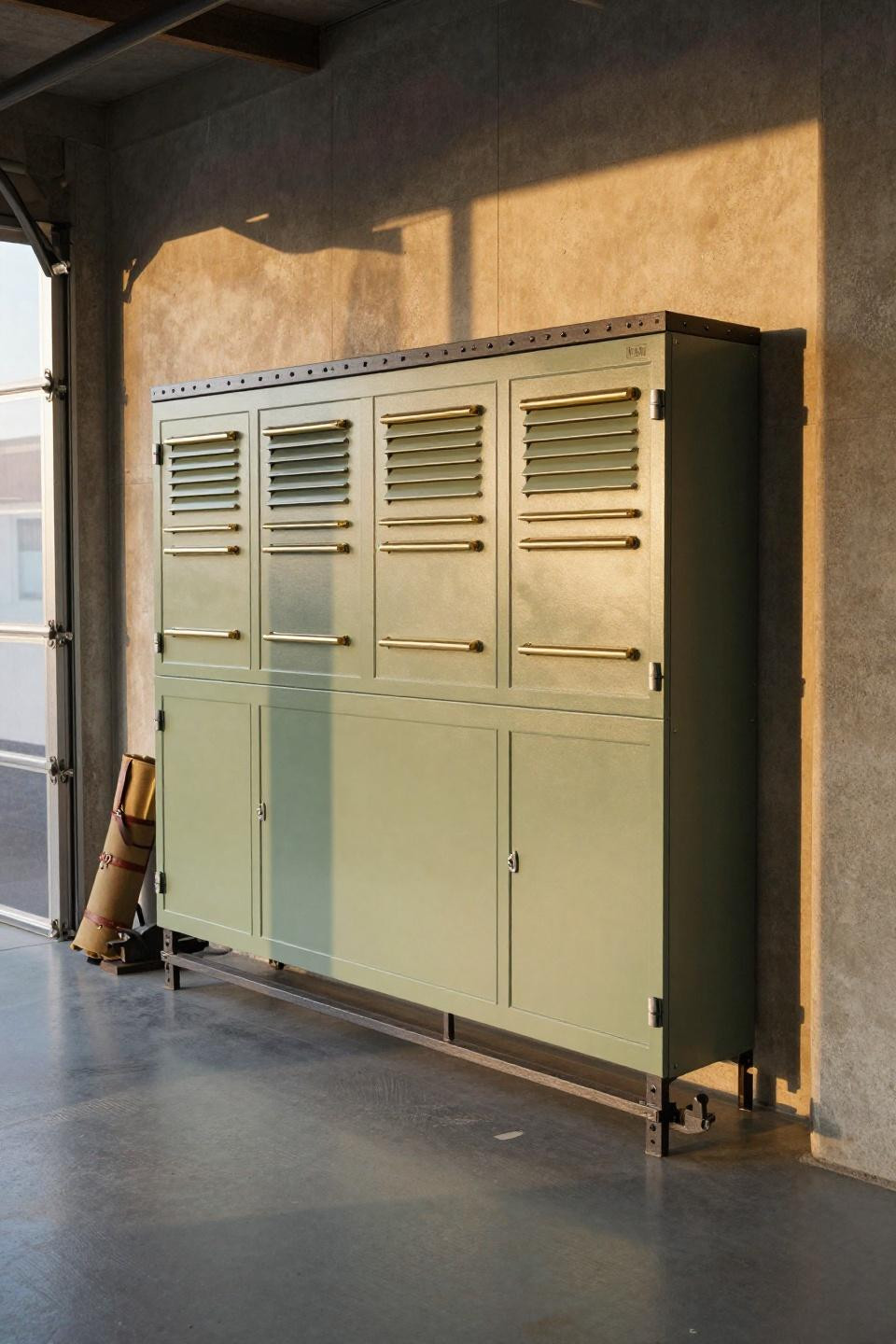
Sage green powder coat on steel cabinets looks clean for years. Paint chips. Powder coat doesn’t. The unlacquered brass pulls will patina, which actually looks better over time (weird but true). Modular means you add sections as your tool collection grows instead of rebuilding everything. That antique bench vise mounted on the corner? Keep your eyes open at estate sales.
Magnetic Rails That Change Everything
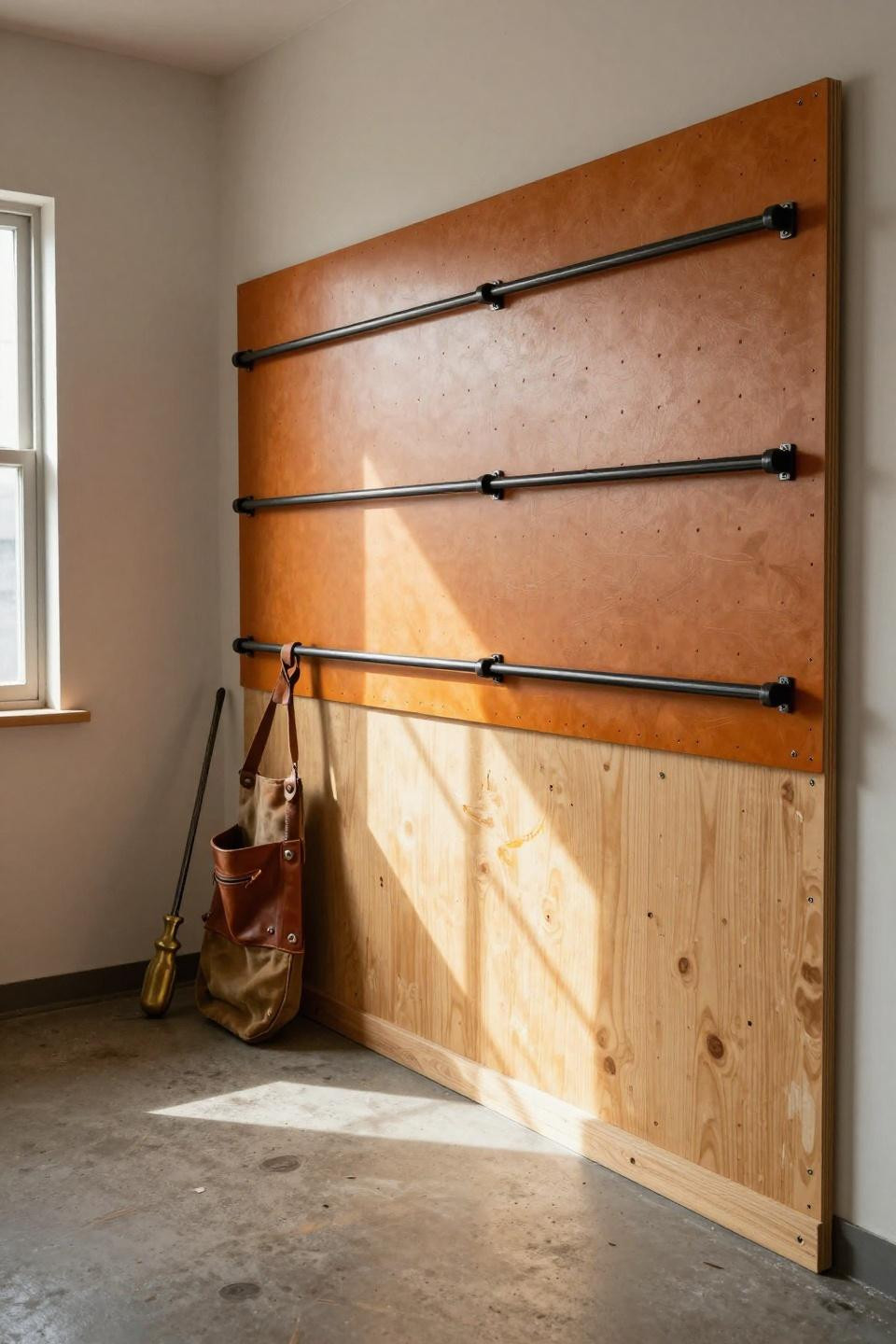
Burnt orange aluminum pegboard with a blackened steel magnetic rail beneath it. Your screwdrivers, wrenches, scissors—anything steel—just stick. No hunting for the right peg size. No hooks falling out. The dried paint smear on the wall stud? That’s called actually using your workshop.
Drawer Towers You Can Roll to the Job
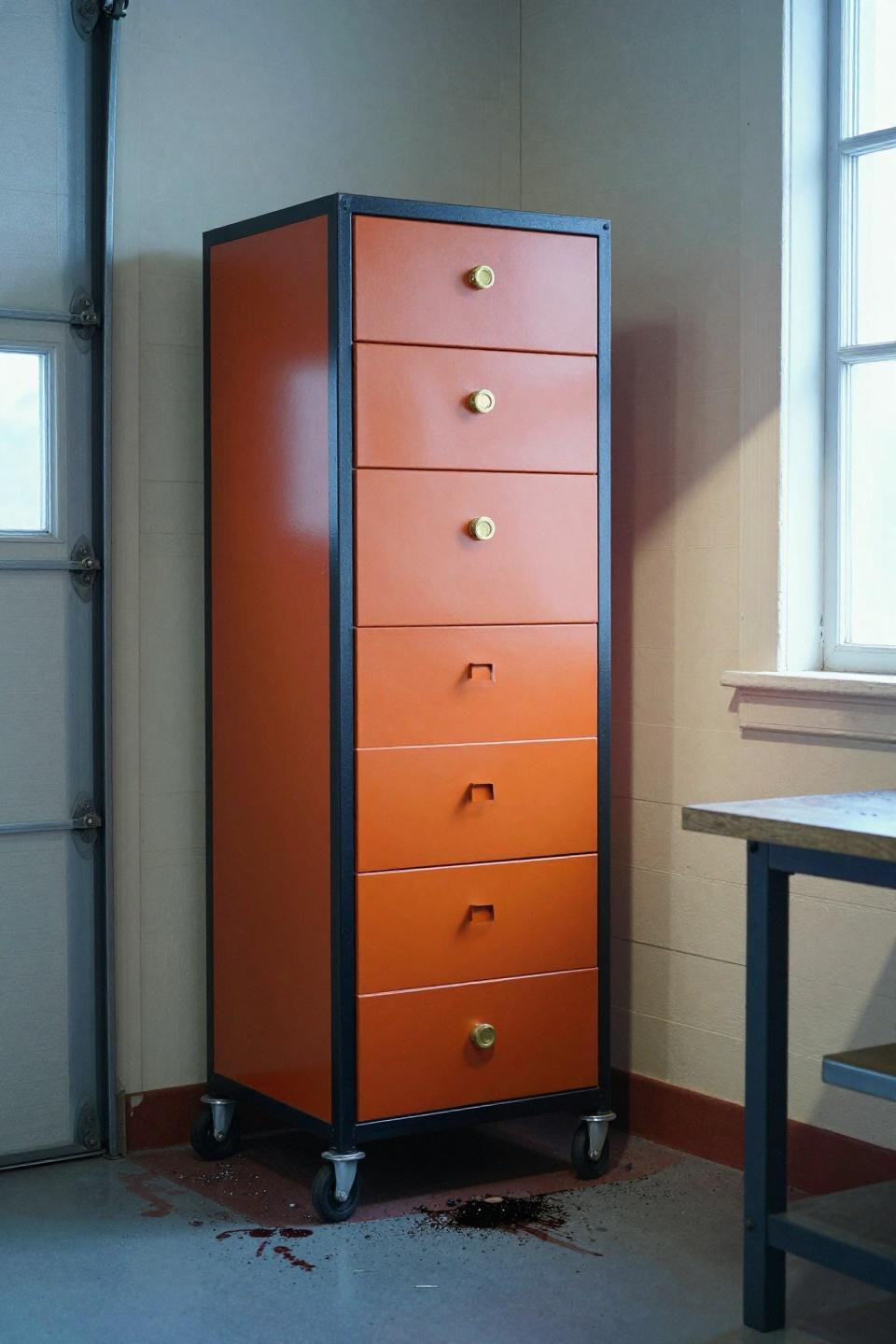
Multi-drawer rolling towers beat toolboxes if you work on bigger projects. Bring your hardware to the assembly area instead of walking back and forth 40 times. The brass cylindrical lock is overkill unless you have kids or nosy neighbors. That oil stain bleeding at the base? Seal your epoxy floor properly or this will happen to you too.
Walnut Lockers for People Who Lose Everything
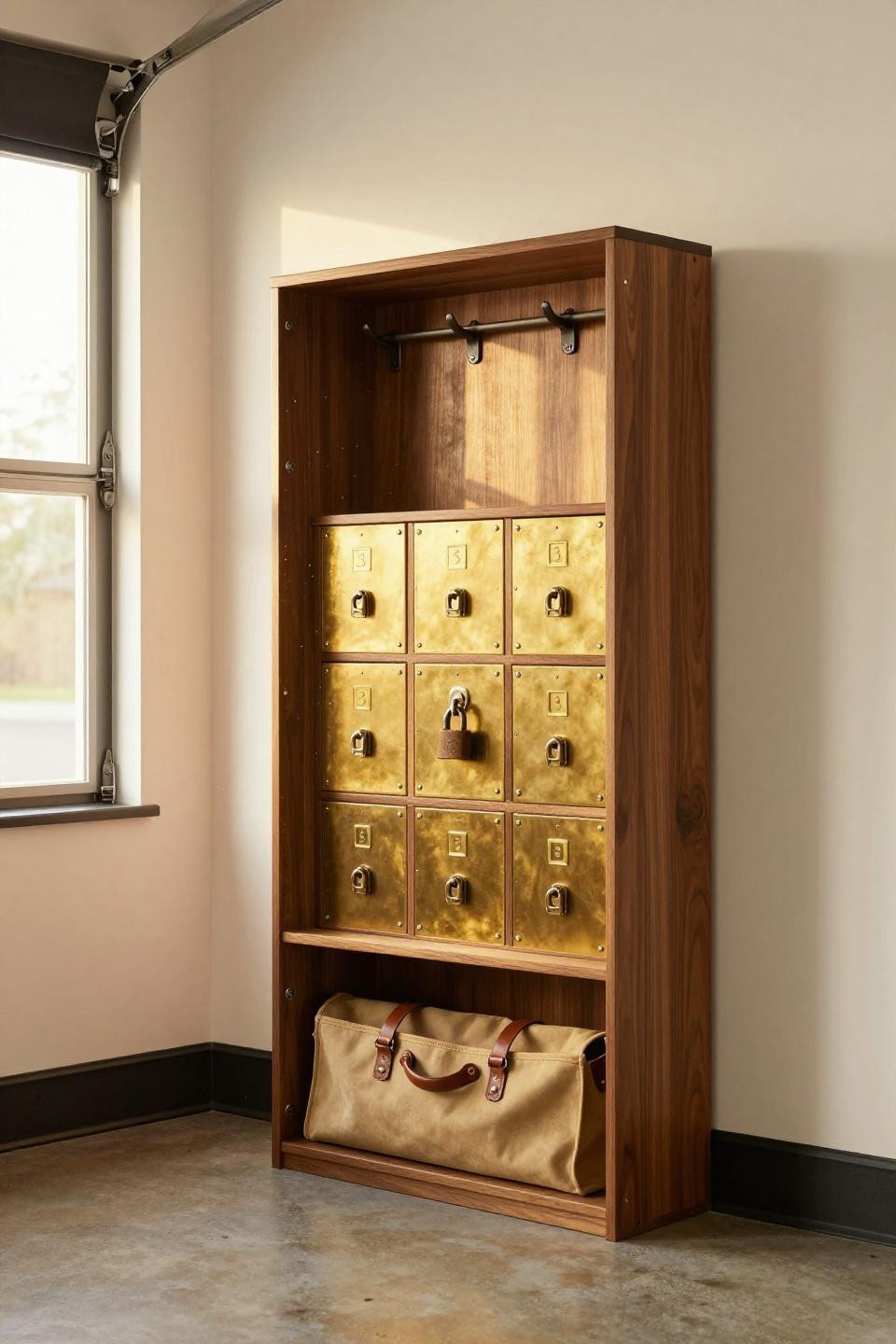
Hand-stamped numbers above each compartment means you can actually remember where you put the finish nails. Great when you’re juggling multiple projects and need dedicated storage per job. The vintage rusted padlock on the middle compartment is someone’s “don’t touch my good sandpaper” solution. I get it.
Start with one zone. Get your pegboard or shelving anchored properly. Add storage as you figure out what you actually use. Most people overbuild and then can’t find anything.