
Scandinavian bathroom design has quietly taken over. And honestly? The minimalist approach actually works better than the cluttered spa aesthetic ever did.
The Clawfoot Tub That Belongs in Every Loft
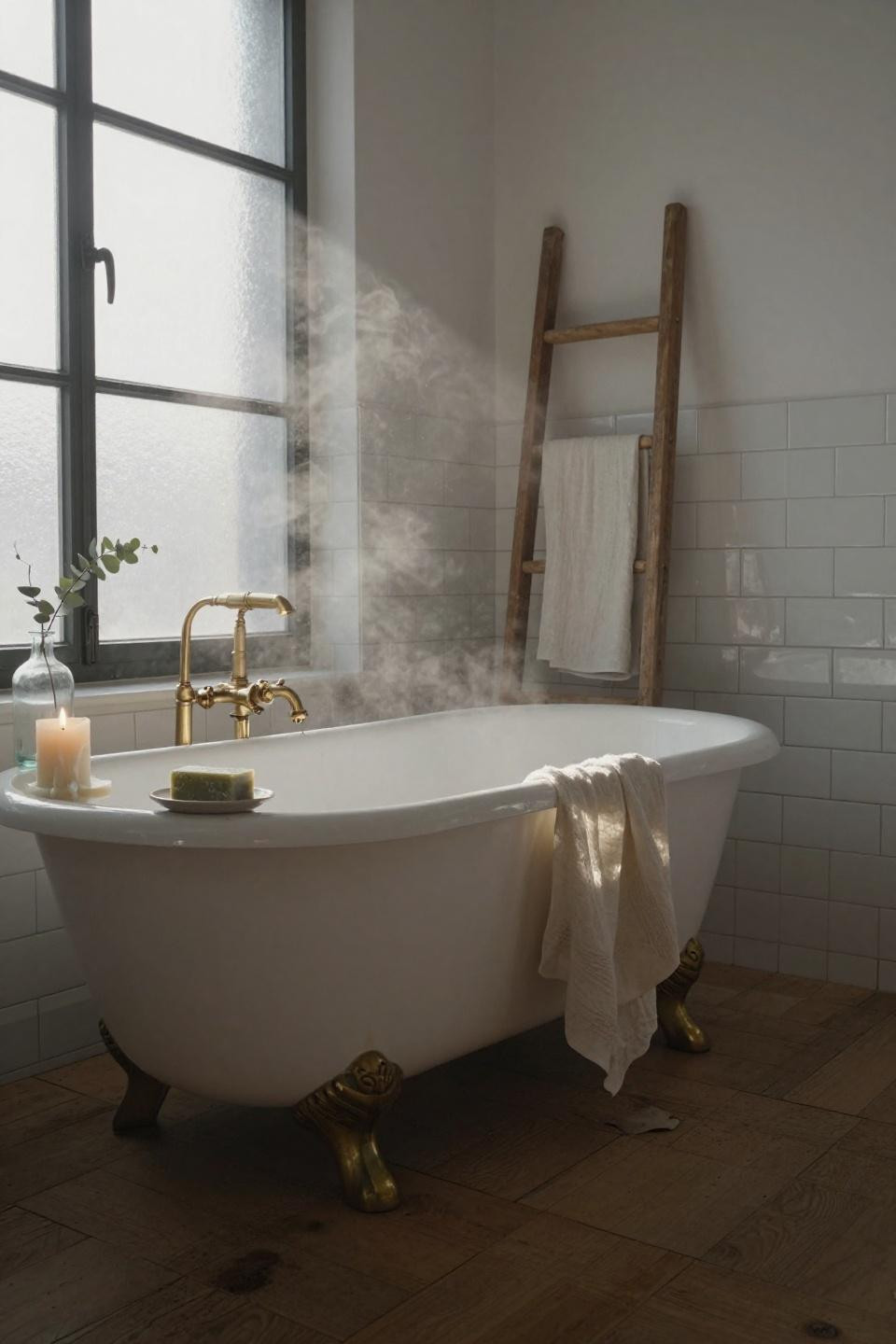
Vintage clawfoot tubs with aged brass fixtures bring instant character without trying too hard. This Copenhagen setup pairs one with reclaimed oak floors and white subway tile—the kind of combination that looks expensive but isn’t complicated. The secret? Let the patina show. Those verdigris spots and natural aging on the brass are what make it feel collected, not catalog. Drape a linen towel asymmetrically over the edge, add a half-burned candle, and you’re done. This works especially well in warehouse conversions where you need warmth against all those hard surfaces.
When White Marble Meets Warm Oak (And Why It Always Wins)
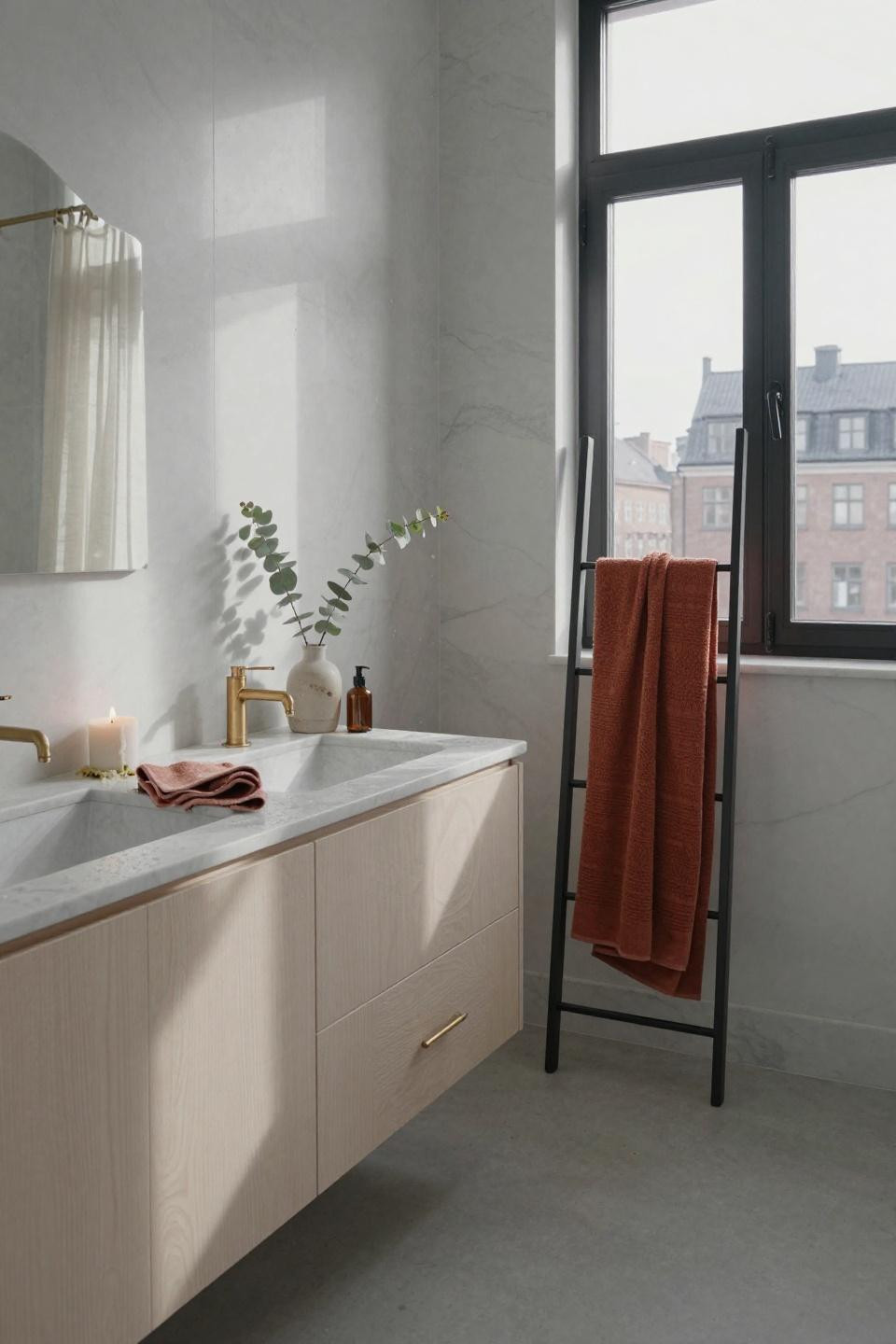
Carrara marble walls plus a honey-oak floating vanity is the Nordic bathroom formula. The cool veining in the marble plays against the warm wood grain—that tension is what makes these spaces feel balanced instead of sterile. Throw in unlacquered brass hardware (it’ll patina naturally) and a terracotta towel for one punch of color. The penthouse in Nordhavn does this with floor-to-ceiling windows, but you can pull it off in 50 square feet. Just keep the palette tight and let the materials do the talking.
The Vessel Sink Move Nobody Regrets
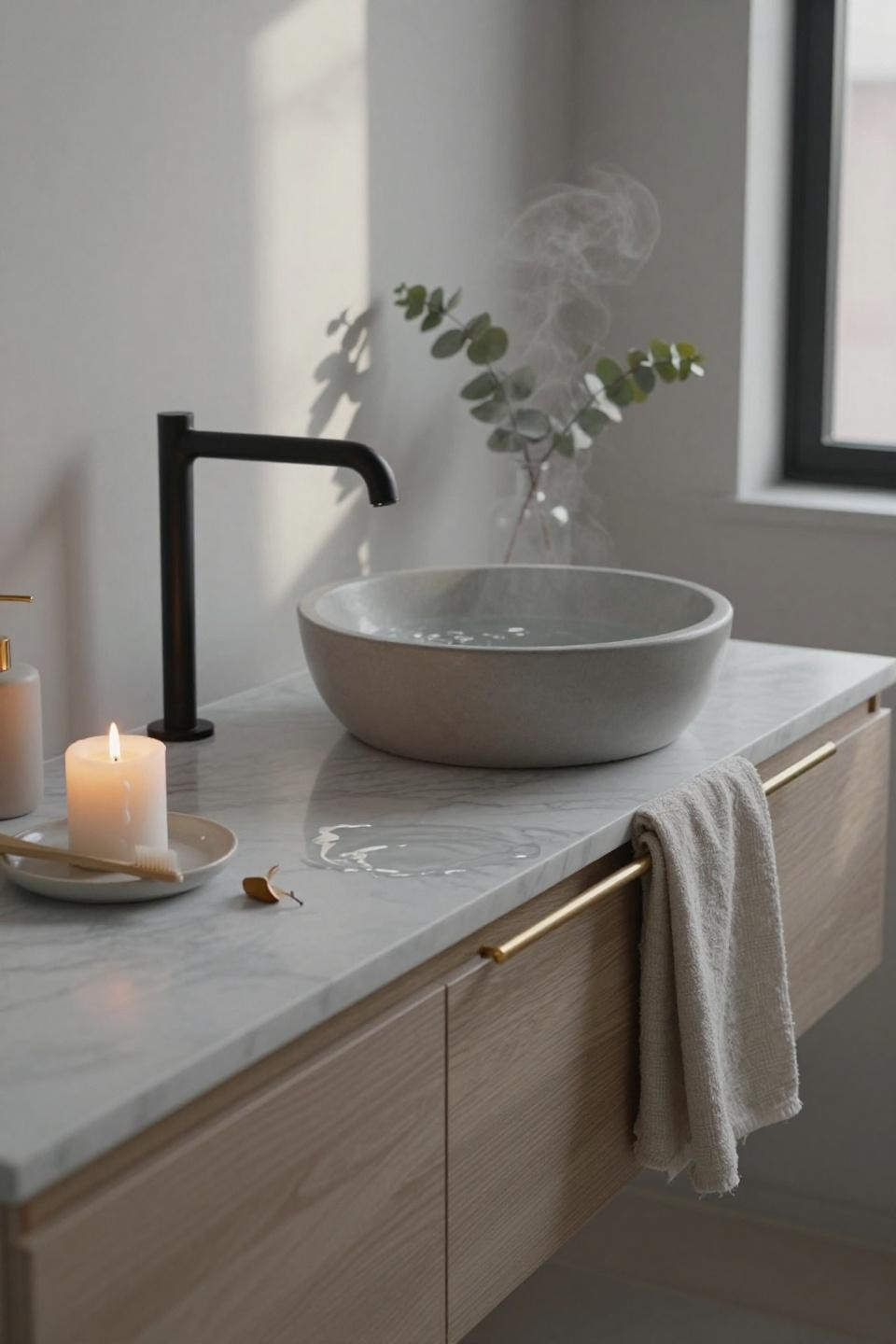
A concrete vessel sink on a marble countertop creates that sculptural moment every minimalist bathroom needs. This Stockholm loft does it with pale gray concrete against Carrara marble, matte black brass fittings, and an ash wood vanity. The detail that sells it? The sink sits slightly off-center. That asymmetry keeps it from feeling too precious. Add a eucalyptus stem in a slim vase and maybe a fallen leaf on the counter (yes, on purpose). These little “imperfections” are what separate real design from showroom staging.
Why Lion’s Paw Feet Still Work in 2025
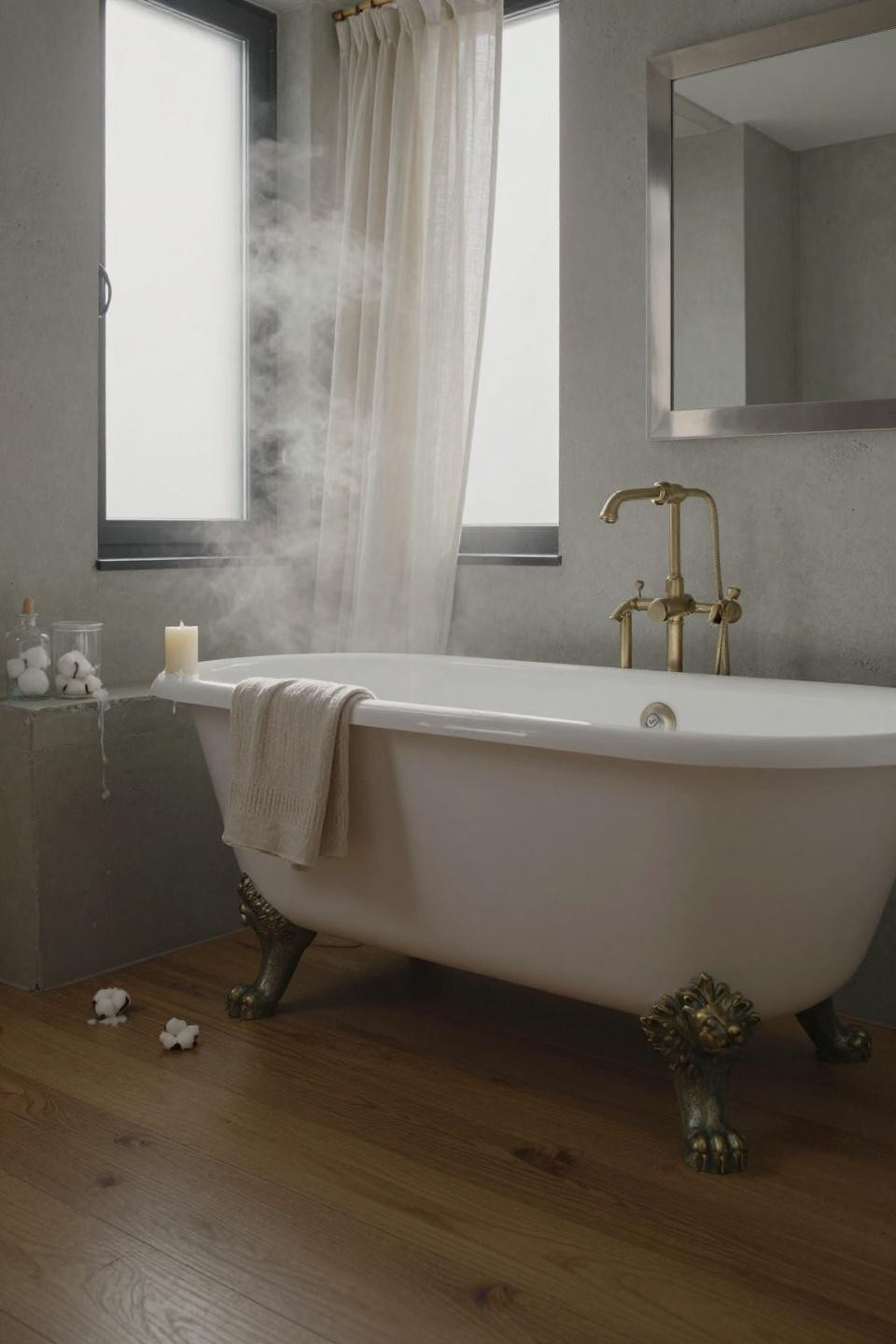
Original cast-iron tubs with lion’s paw feet bring gravitas to converted apartments. This 1920s Copenhagen space proves you don’t need to rip out vintage fixtures—just work with them. The rough concrete walls and honey oak floors ground the ornate tub without competing. Honestly, if you’re renovating an old building and the tub’s in decent shape, keep it. Refinish the porcelain if needed, but those brass legs with natural patina can’t be faked. It’s the kind of detail that makes people ask, “Where’d you find that?”
Unlacquered Brass Gets Better With Age
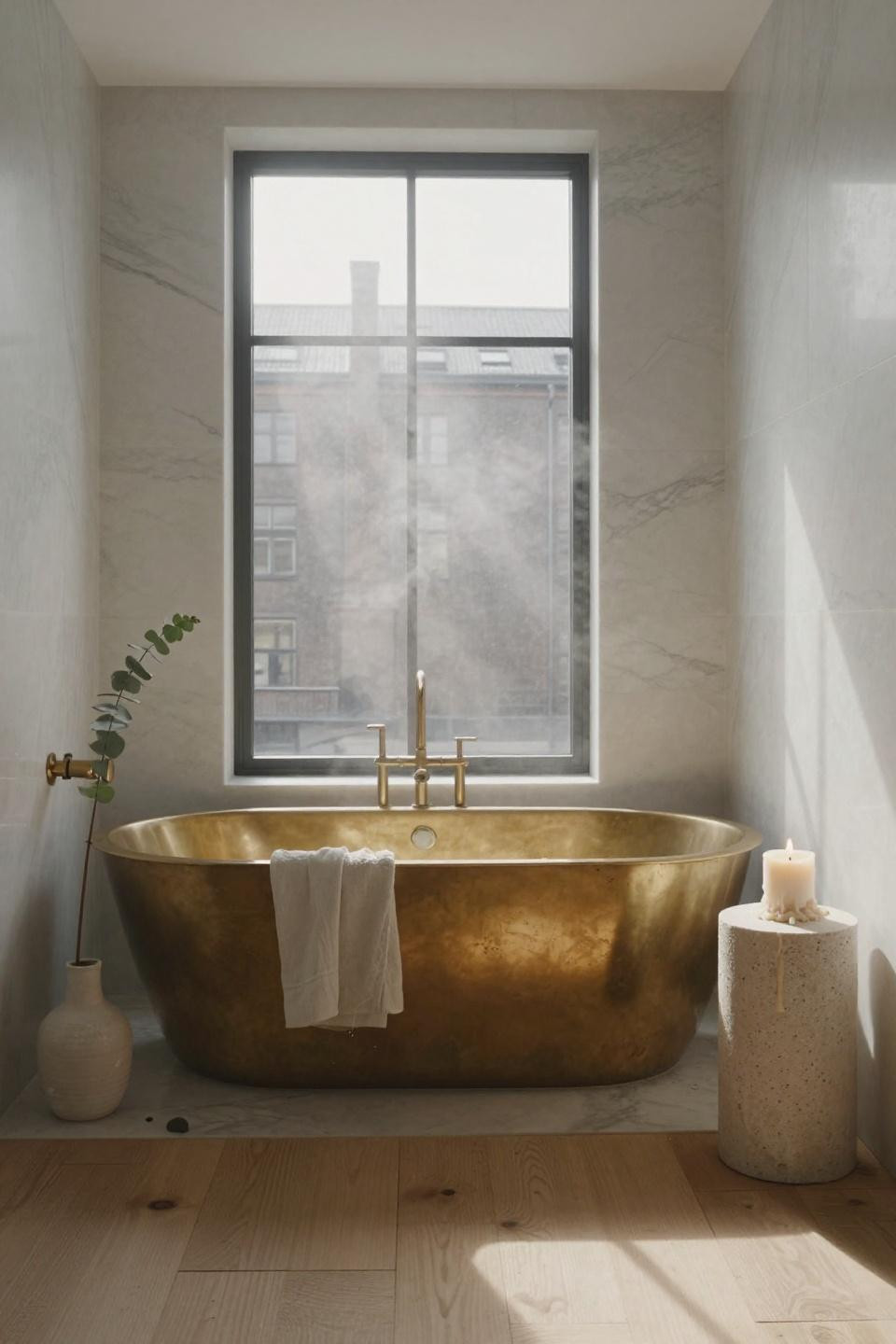
Freestanding brass tubs develop character over time—that’s the whole point. This Nordhavn loft pairs an oval soaking tub in unlacquered brass with honed marble walls and pale oak floors. The brass reflects window light differently as it ages, creating soft caustics that change throughout the day. I’d skip polished brass here. The patinated surface feels warmer and less formal. Best for people who want high-end without high-maintenance. Just let it age naturally and embrace the changing finish.
Floor-to-Ceiling Windows Change Everything
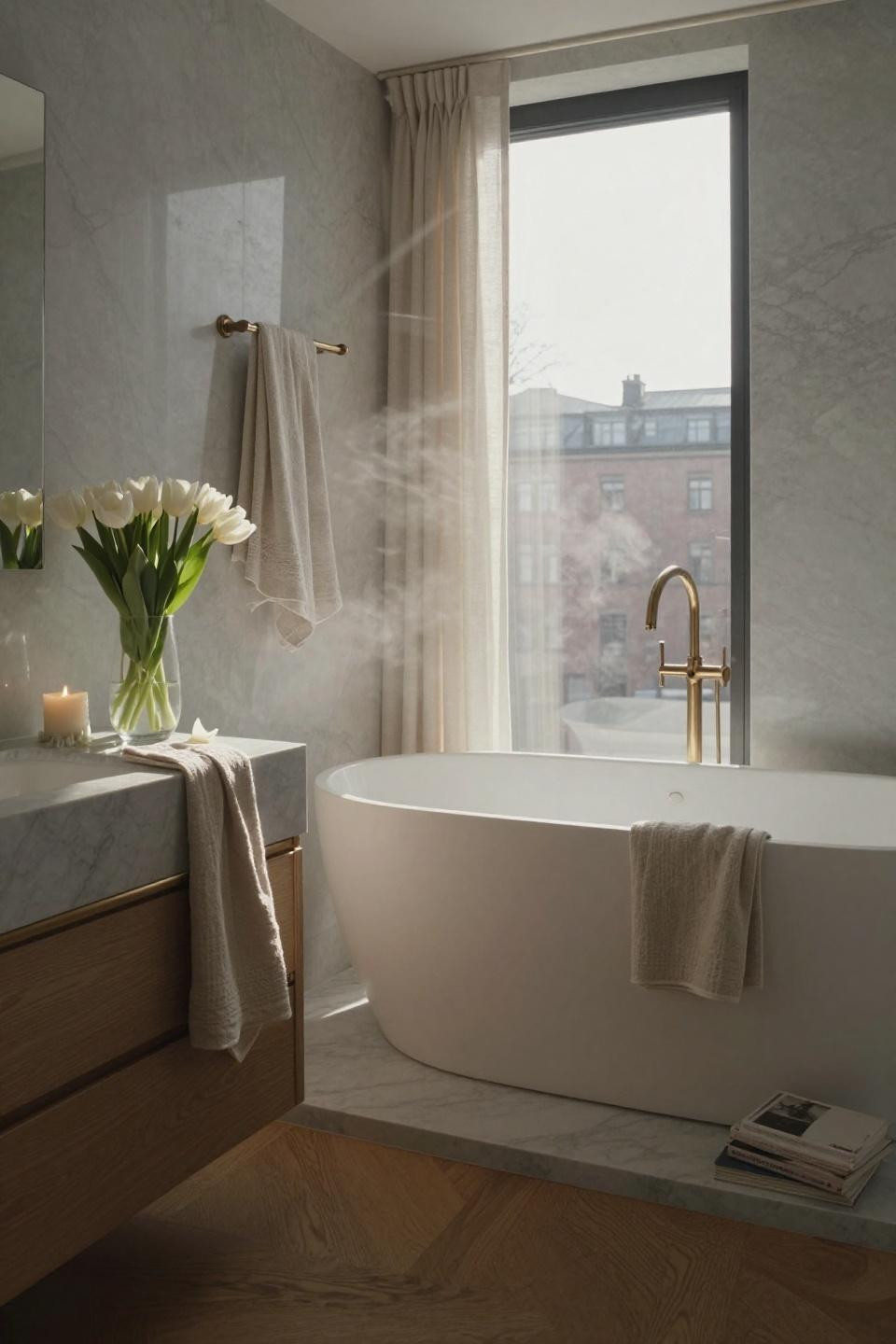
If you can swing floor-to-ceiling windows, do it. This Copenhagen penthouse positions a matte white sculptural tub right against the glass—the kind of move that only works when you have good light and better views. Sheer linen curtains soften the whole thing without blocking brightness. The marble and oak combo keeps it grounded, while the brass towel rail adds warmth. Great when you need your bathroom to feel like an actual retreat instead of just a functional space. The fallen tulip petal on the vanity? That’s the kind of styling detail that makes photos look lived-in.
The Compact Layout That Feels Twice Its Size
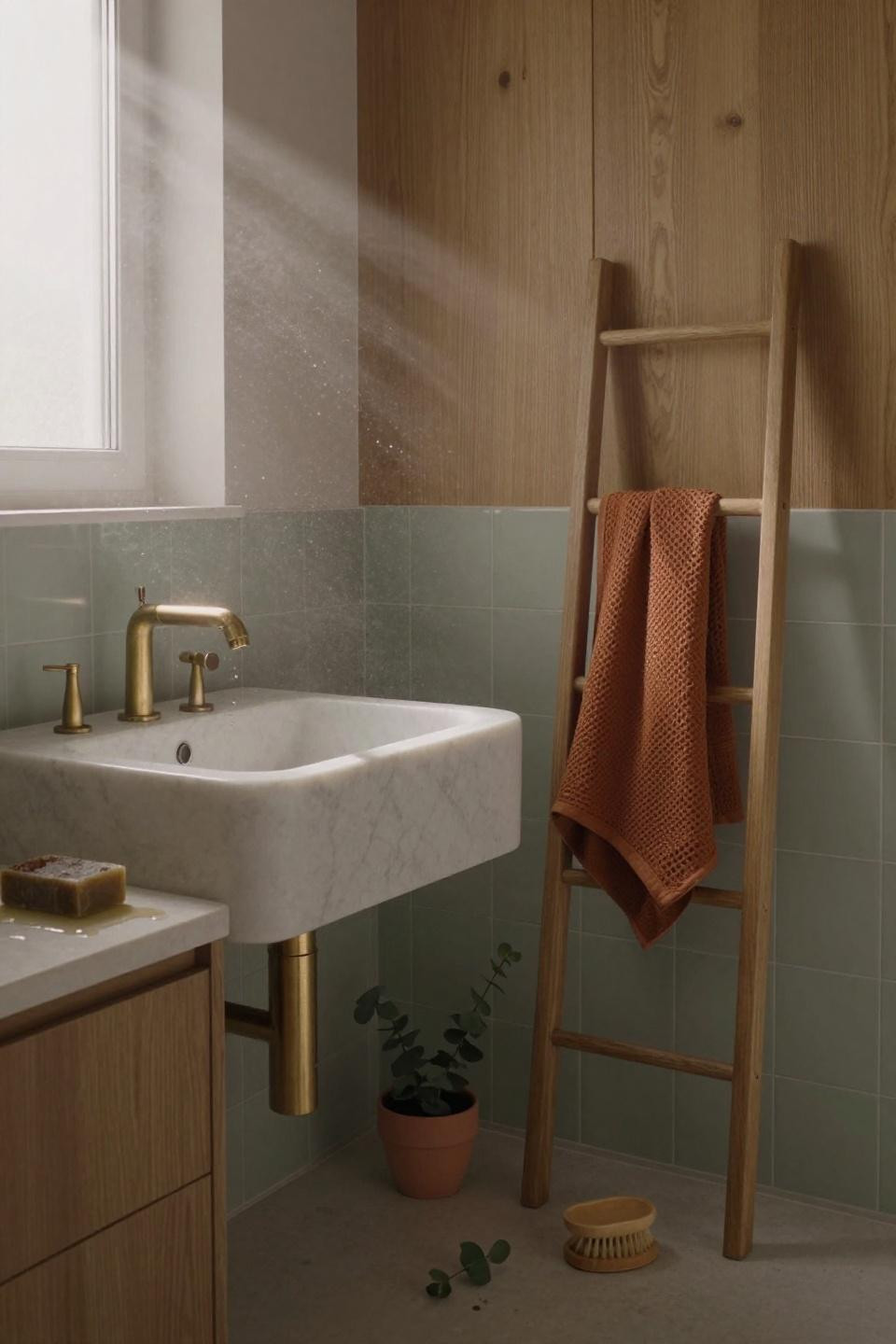
Small bathrooms need smart proportions more than they need clever storage hacks. This canal-side townhouse uses sage green tiles as an accent (25% of the space) against warm oak and white stone. The wall-mounted brass faucet saves counter space while looking intentional. Carved marble sink, teak ladder rail, terracotta soap dish—every element earns its place. When you’re working with 40 square feet, each material choice matters. The key is layering textures (smooth stone, nubby linen, honey-grain wood) without adding visual clutter.
Concrete Tubs That Don’t Feel Cold
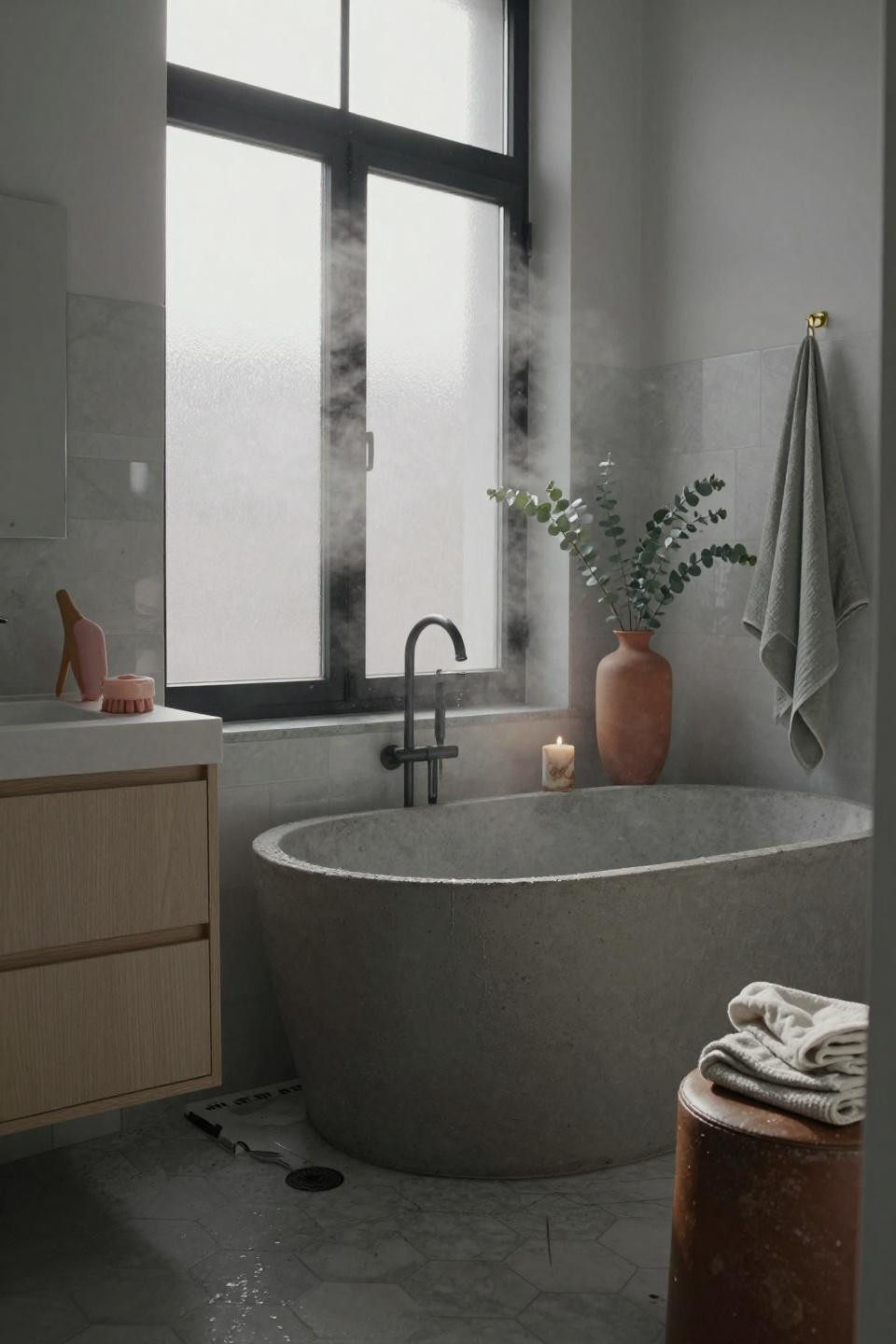
Hand-troweled concrete tubs have texture that makes them feel warmer than you’d expect. This warehouse conversion positions one beneath industrial windows with hexagonal marble tiles underfoot. The oak vanity and matte black fixtures keep it from skewing too cold. Eucalyptus stems, a sage linen towel, and that terracotta vase add just enough color. I’d pick concrete over acrylic in small spaces—the weight and texture give it presence. Plus, the hand-finished surface means each one looks slightly different.
The Floating Console That Actually Floats
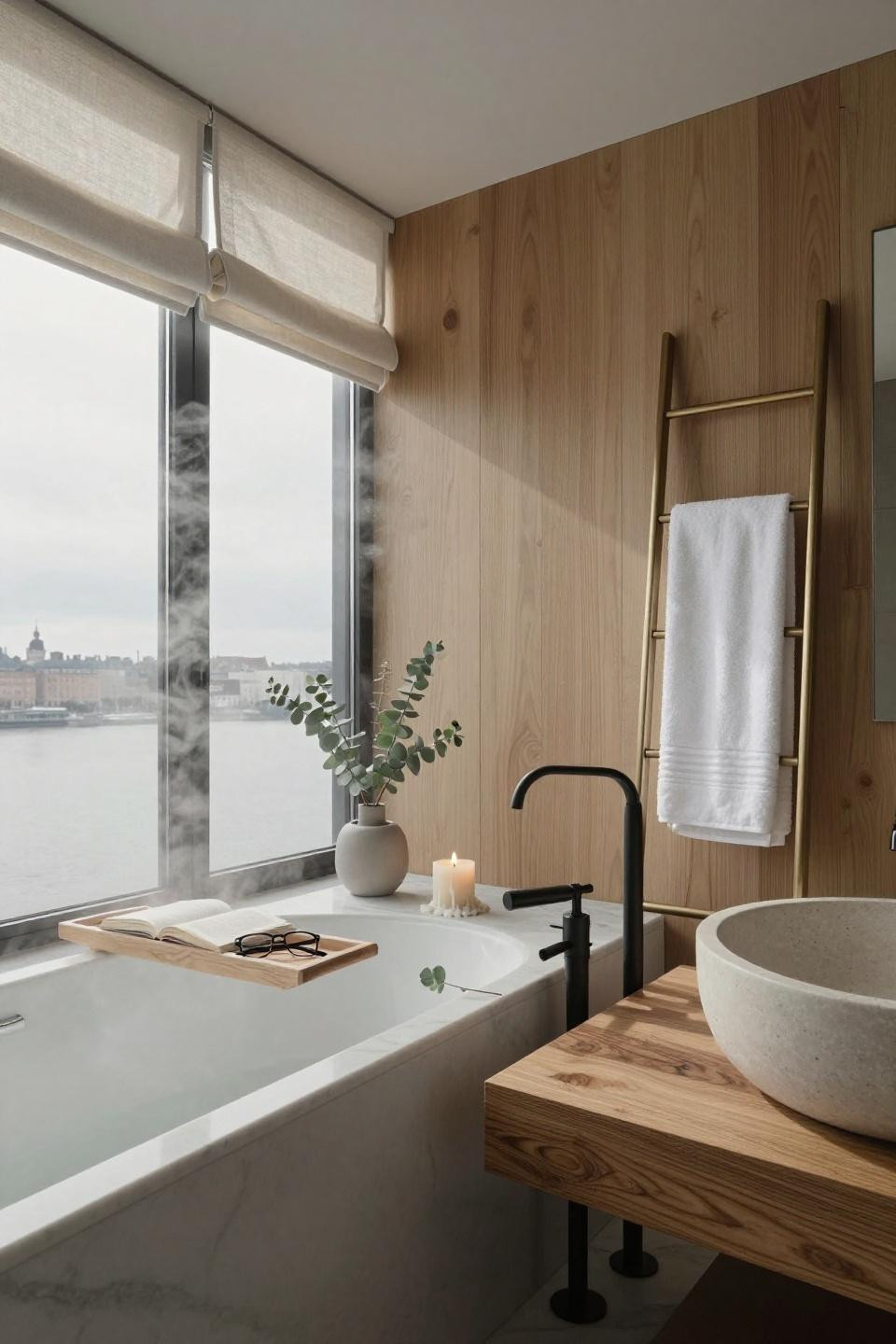
Floating oak vanities create visual lightness even when you’re using heavy materials. This Nordhavn penthouse does blonde oak planks with honed Carrara marble—the grain texture and live edge make it feel custom. Matte black fixtures provide contrast without competing. The cotton towel draped over the brass ladder rack, the beeswax candle, the fallen eucalyptus leaf—those are the details that make it feel human. When you wall-mount the vanity, suddenly your bathroom feels like it has breathing room. Works best in tight spaces where floor area is premium.
Lime-Washed Walls Beat Paint Every Time
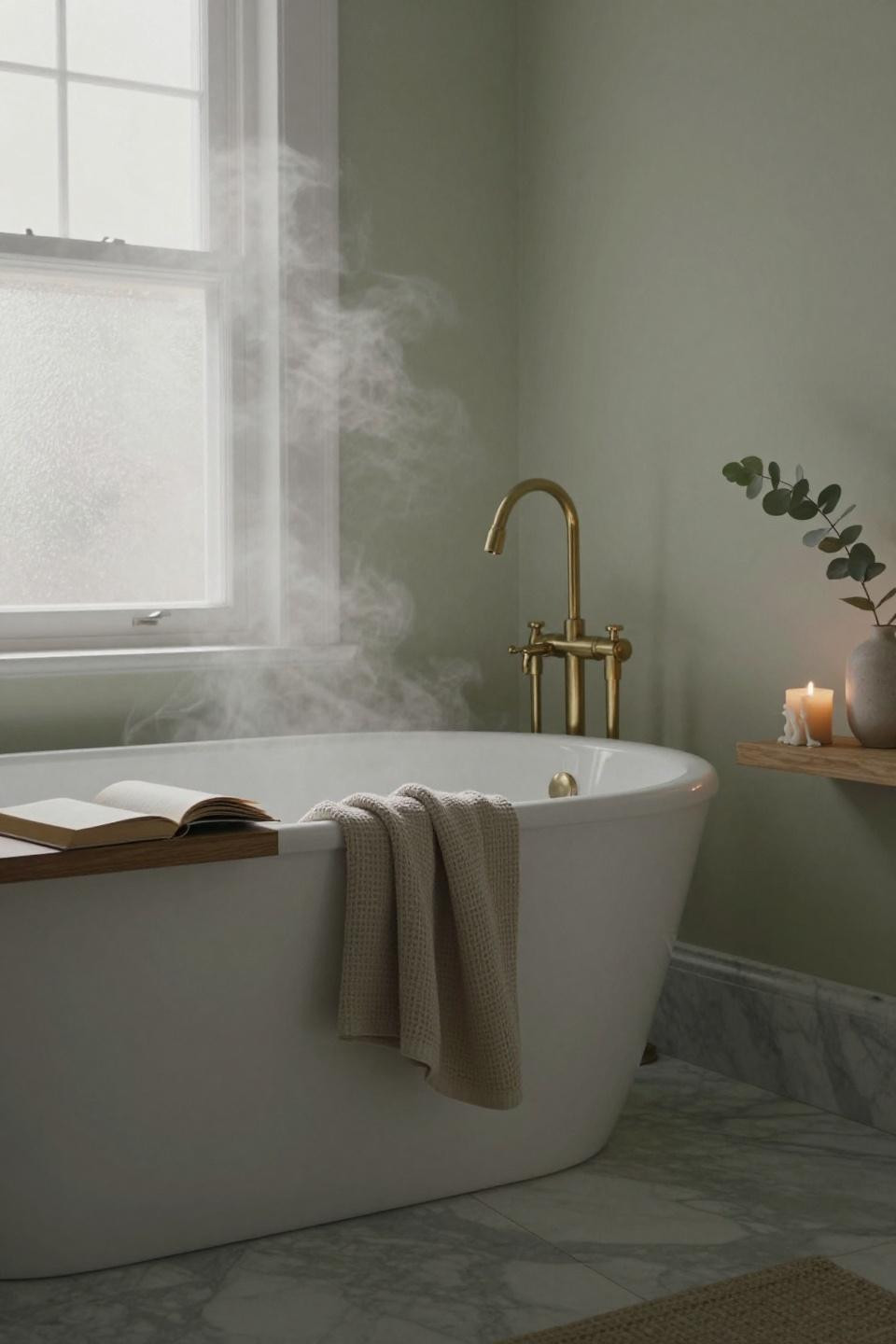
Lime-washed plaster in pale greige has depth that flat paint can’t touch. This 1920s Copenhagen apartment uses it on rough walls against a clawfoot tub with brass fixtures. The texture catches light differently throughout the day—you get soft shadows and highlights that change. Zellige tiles underfoot add another layer of texture. Great for anyone renovating old apartments where you want to honor the bones. The limewash technique works with imperfect walls (actually looks better on them), and you can do it yourself if you’re patient.
When Vintage Brass Mirrors Lean Instead of Hang
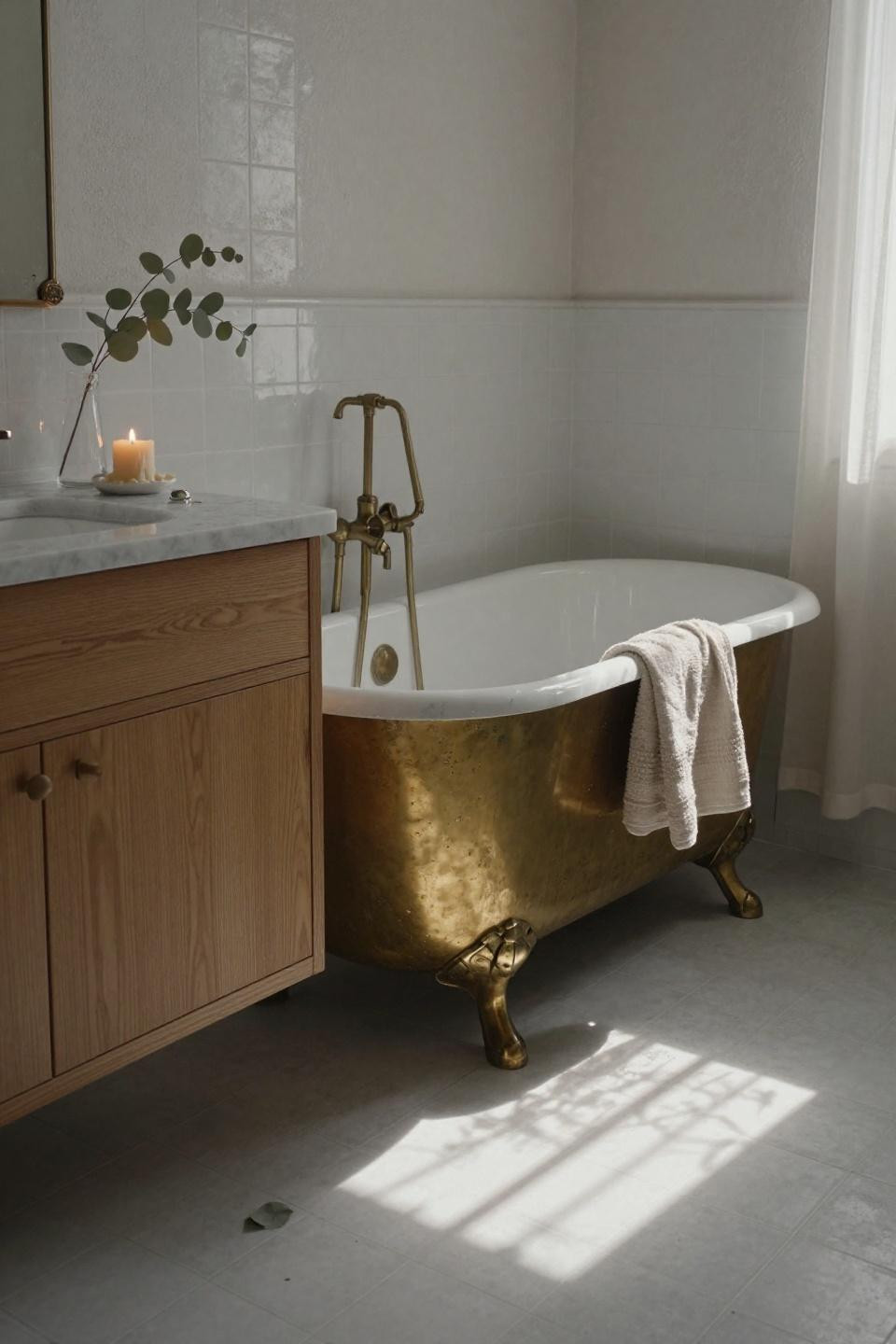
Leaning a brass mirror casually against the wall instead of mounting it adds instant personality. This setup pairs it with a freestanding brass tub that’s developed serious patina—verdigris and all. The limewashed walls and Carrara countertop keep everything soft. I love this for people who want the high-end materials but hate overly styled spaces. The damp linen towel draped over the tub, the half-burned candle, the fallen eucalyptus leaf—it looks like someone actually lives here. That foxed silvering on the mirror? Don’t replace it. That’s character you can’t buy new.
Open Shelving That Doesn’t Look Messy
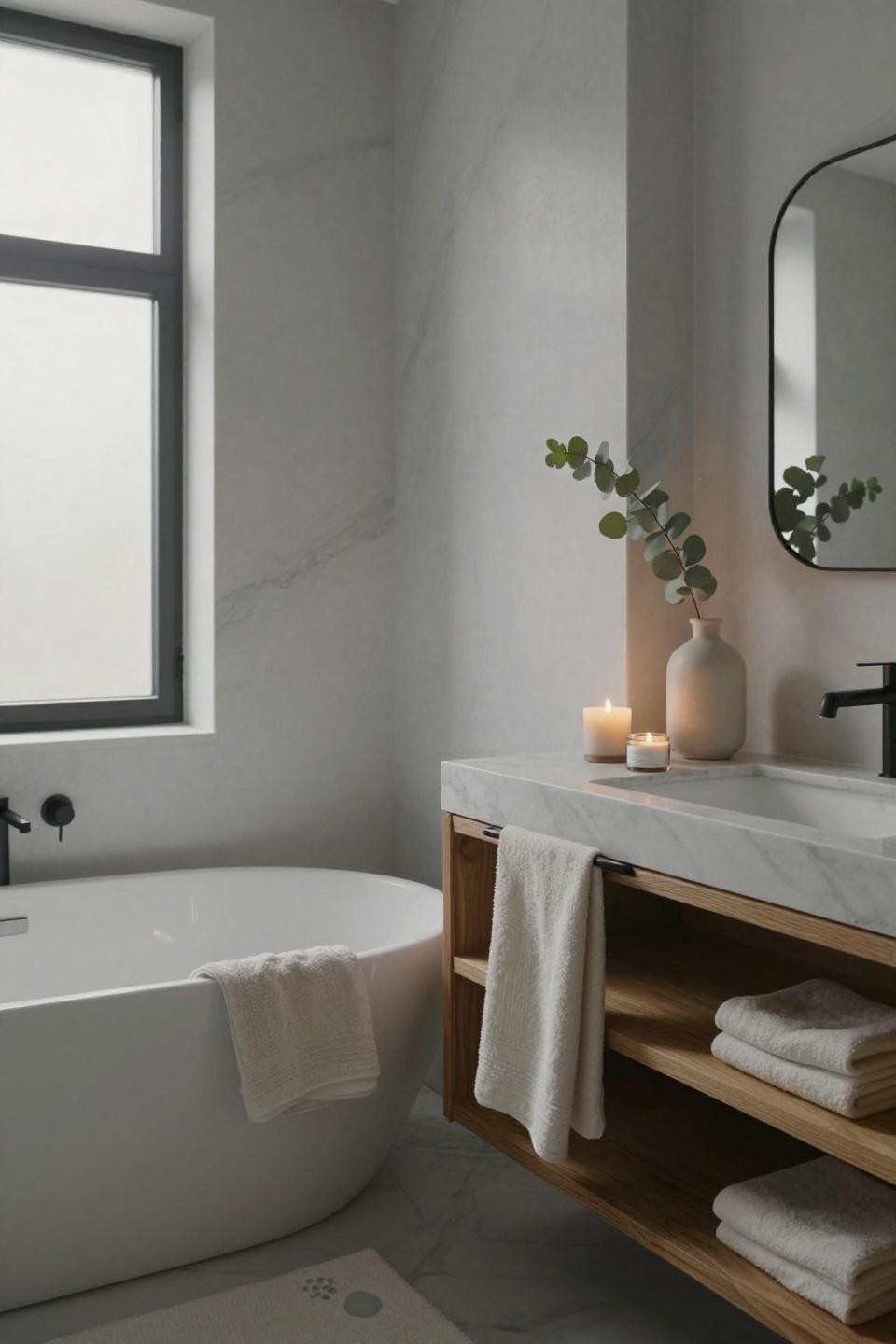
Open oak shelving works when you edit ruthlessly. This warehouse conversion displays linen towels draped asymmetrically (one corner touching the floor—on purpose), a beeswax candle, an open skincare jar. That’s it. The key is keeping your color palette tight and your items few. Rough-hewn oak against smooth marble and matte black fixtures creates enough contrast without needing decorative objects. Works great if you actually use what’s displayed daily. But if you’re someone who accumulates products, maybe skip this and go with closed storage.
The Sage Accent Wall That Doesn’t Date
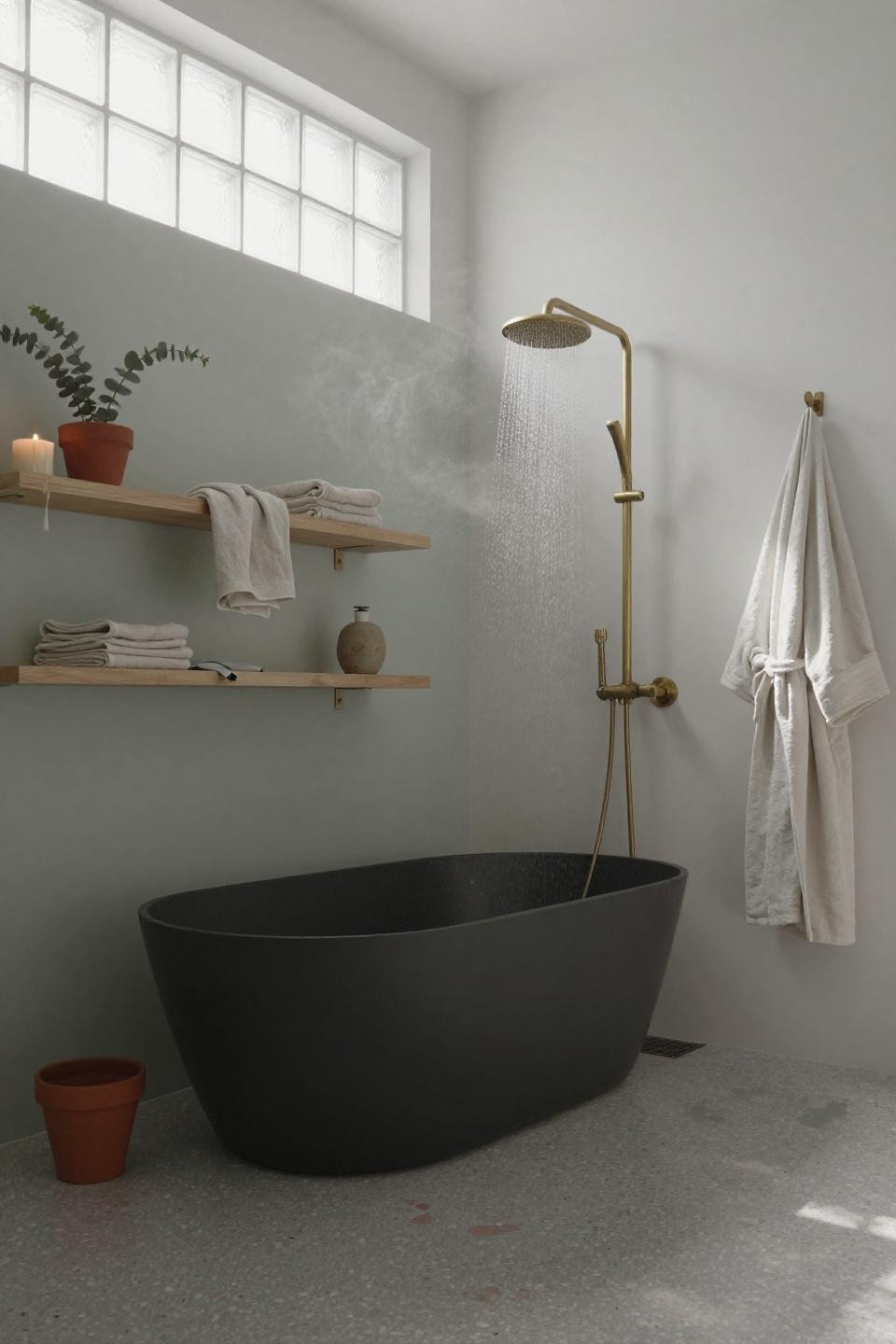
Soft sage green as an accent (30% of the wall space) against warm white and terracotta stays timeless. This Copenhagen loft uses it on one wall with terrazzo flooring and honey oak shelves. The matte black tub and unlacquered brass shower fixture keep it grounded. Sage reads neutral enough to work long-term but adds warmth that pure white can’t. I’d pick this over trendy colors that’ll feel dated in two years. The terrazzo with blush aggregate ties everything together—another detail worth investing in if you’re renovating from scratch.
Terrazzo Aggregate as the Hero Element
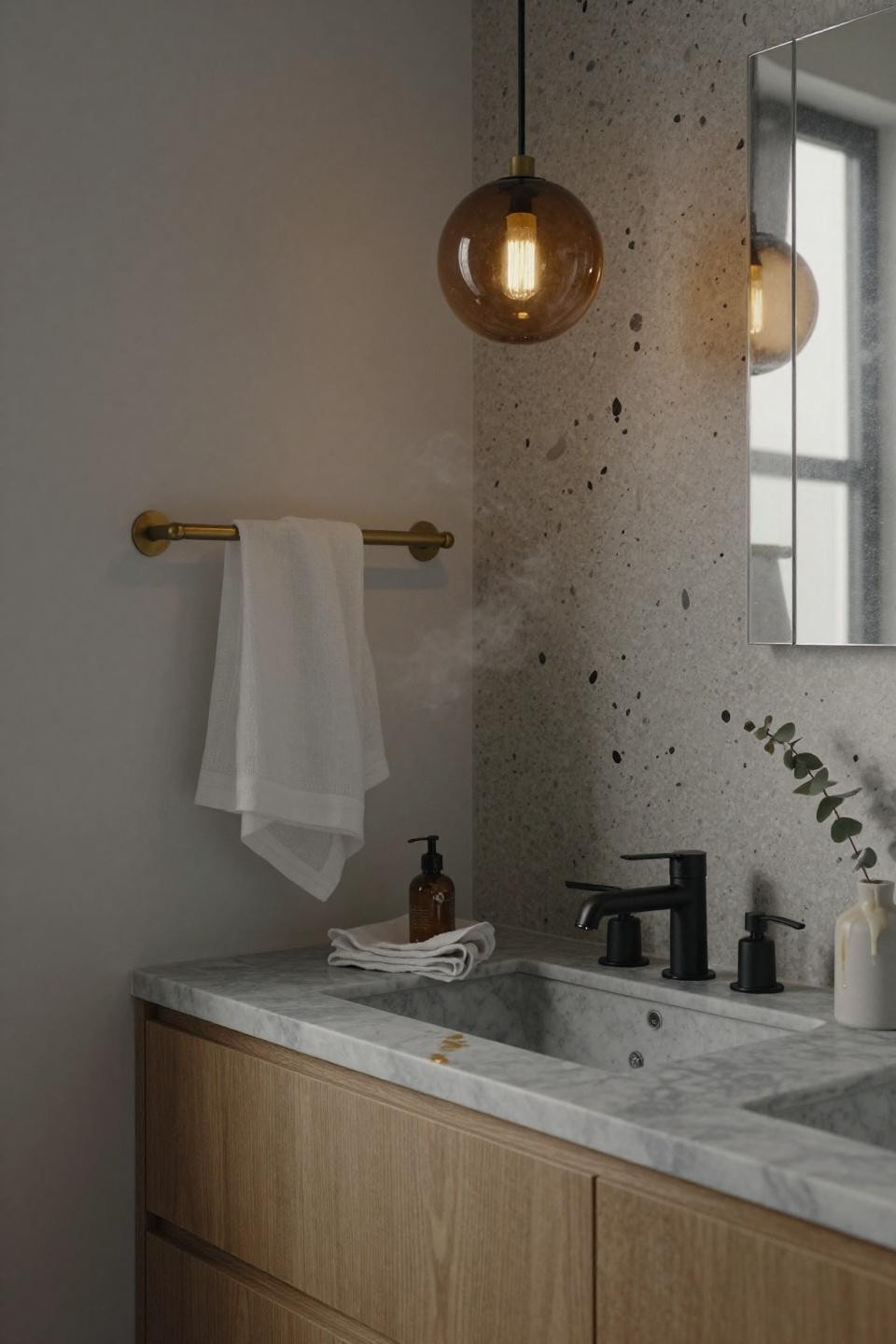
A massive terrazzo panel in cream and charcoal flecks can anchor an entire bathroom. This Copenhagen warehouse uses it as the statement wall behind an oak vanity with honed Carrara marble. The amber glass pendant creates warm light pools at night. Honestly, if you’re going to splurge on one material, make it terrazzo. It’s durable, timeless, and the aggregate adds visual interest without pattern. Plus it hides water spots better than solid stone. This works especially well when you keep everything else minimal—let the terrazzo do the talking.
The Through-Frame Shot Every Designer Loves
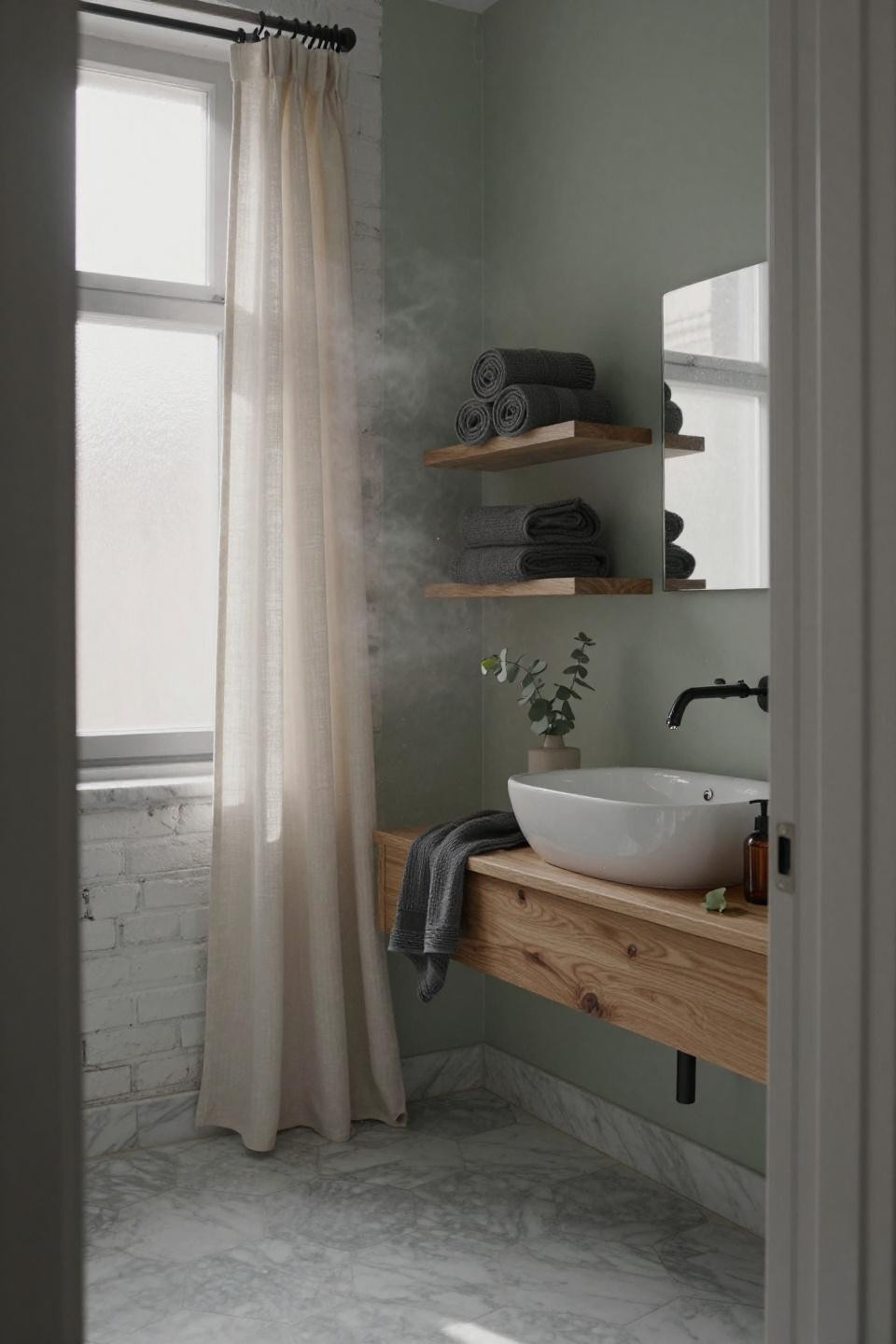
Framing your bathroom view through doorways creates instant depth. This warehouse conversion shows exposed whitewashed brick, marble hex tiles, and an ivory linen shower curtain that diffuses morning light. The floating walnut vanity with raw edge sits below open oak shelves—waffle-weave towels stacked imperfectly, one corner draped over. That sage green accent wall (15% of the space) keeps it from reading too cold. Great for lofts or open-plan homes where the bathroom is part of the visual flow. The key is making sure what’s visible through that frame actually looks good from every angle.
Overhead Angles That Show the Whole Story
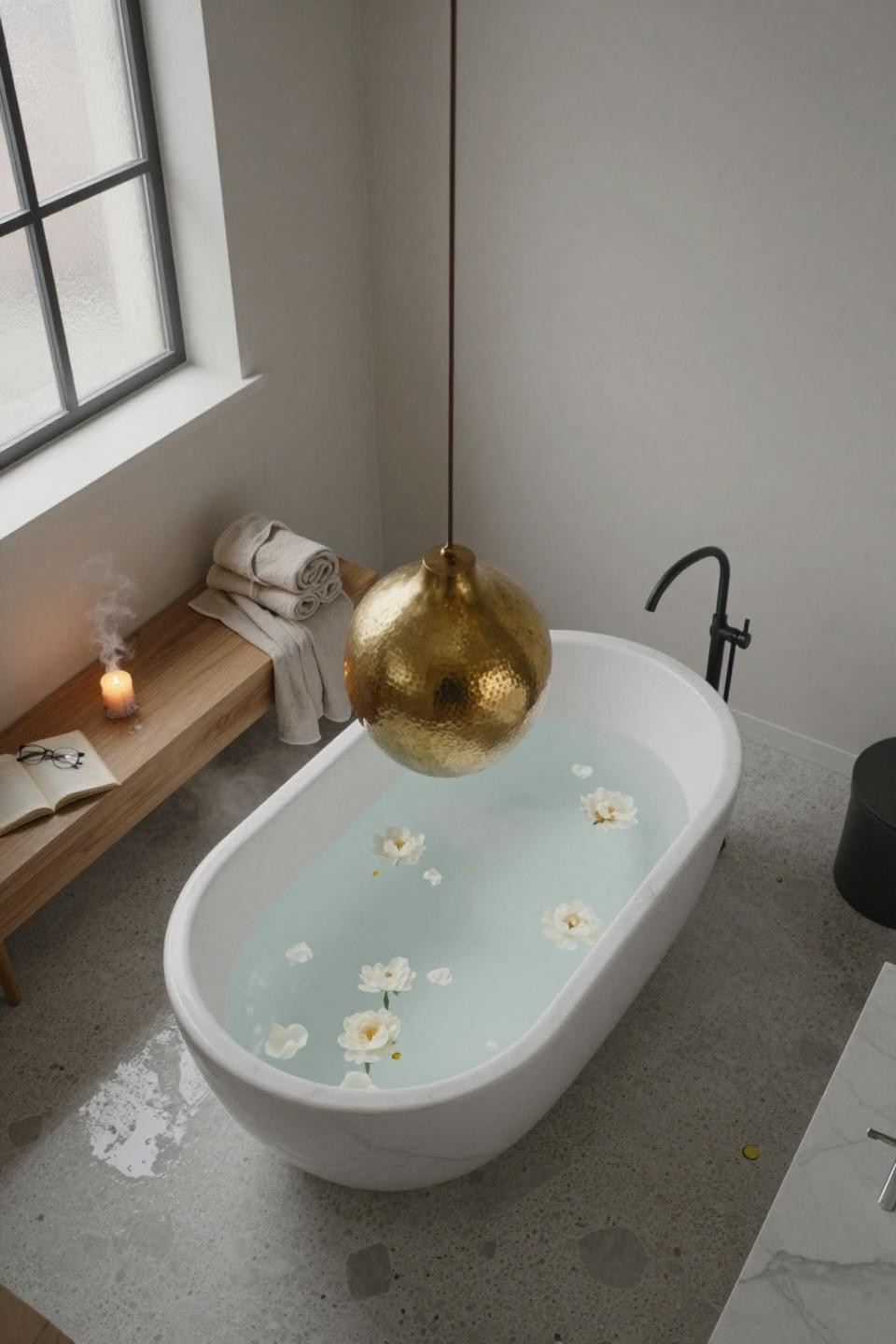
Looking down into a bathroom reveals proportions and flow that eye-level shots miss. This Copenhagen loft shows a hand-hammered brass pendant hanging low over a soaking tub with scattered peony petals. Terrazzo flooring in soft gray, Carrara vanity, honey oak shelves—everything reads calm from above. The pendant’s asymmetrical form catches light beautifully. This angle works when you have interesting flooring and good lighting. Not for everyone (you need height to shoot it), but when it works, it really shows how a space flows. That open book with steam-curled pages? Perfect styling.
The 50-Square-Foot Layout That Breathes
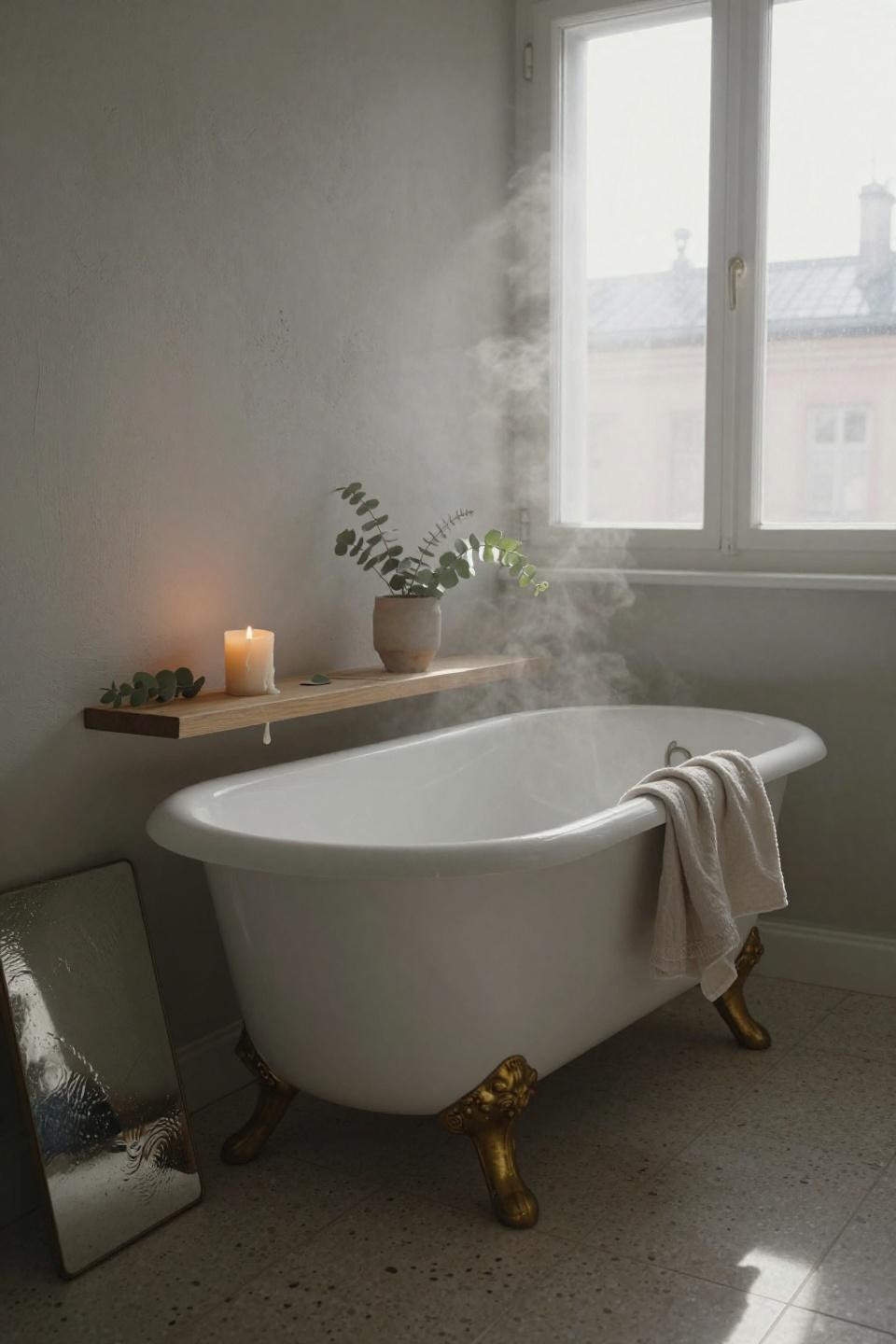
Small bathrooms need smart editing more than they need storage solutions. This 1920s Frederiksberg apartment fits a freestanding tub with brass clawfoot legs, a floating oak shelf, and terrazzo flooring in under 50 square feet. The lime-washed greige walls have visible trowel marks that add texture. Everything earns its place—the candle, the eucalyptus, the linen towel. The vintage brass mirror leans instead of hangs, saving wall space while adding character. When you’re working this compact, each material choice and placement matters. But done right, small bathrooms can feel more intentional than sprawling ones.