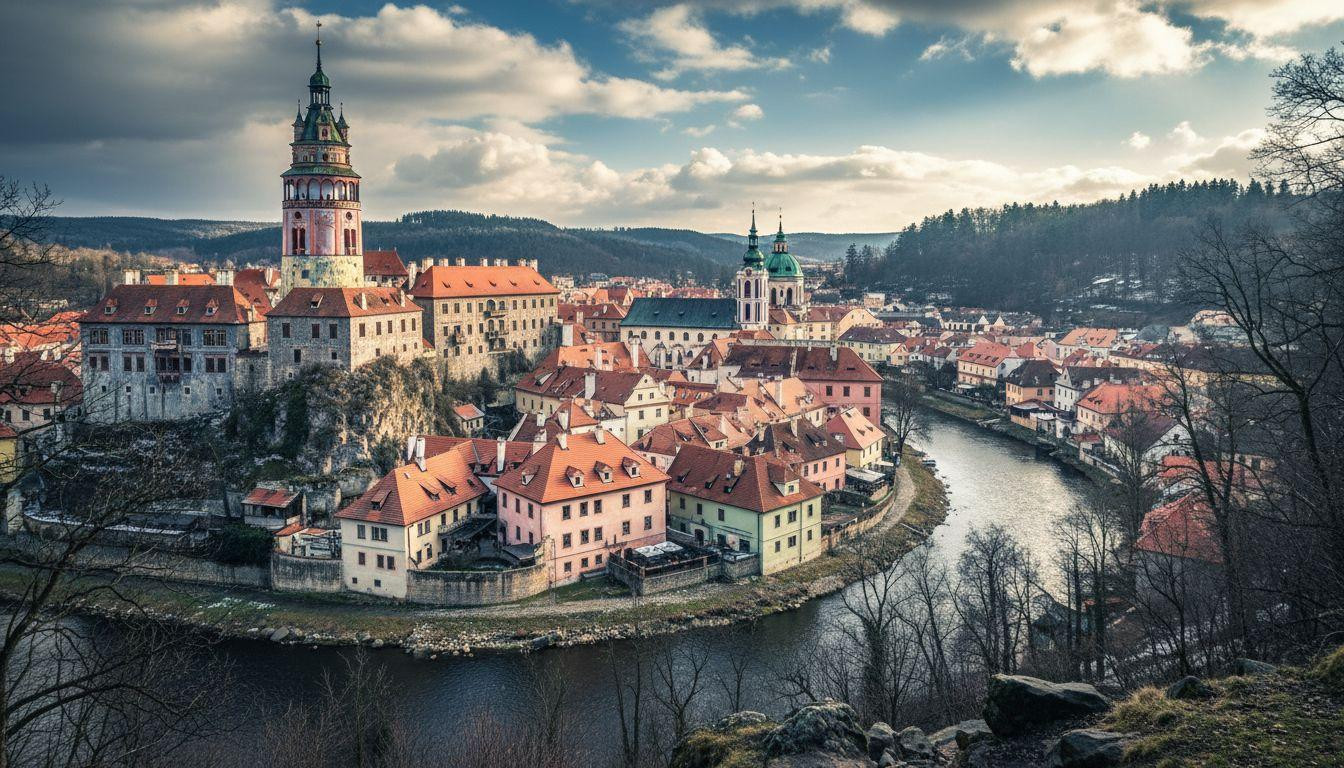
Winter mist clings to medieval towers rising above cobblestone streets across Central Europe. These 15 villages preserve the vertical fairytale architecture where stone castles dominate rooflines by ratios of 4:1 to 8:1. January 2026 brings snow-dusted turrets without summer crowds, transforming these destinations into living storybooks where Gothic spires pierce cold air above half-timbered houses.
The towering drama of European castle villages
Hallstatt’s church tower climbs 120 feet above 30-foot houses along Austria’s alpine lake. The 4:1 ratio creates immediate visual hierarchy where limestone spires command respect. Winter temperatures drop to 23°F, dusting towers in snow while lake reflections double the magic.
Český Krumlov pushes this drama further. Castle towers soar 230 feet above 40-foot Renaissance houses, yielding a commanding 5.75:1 ratio. Six towers pierce the skyline above the Vltava River, where Rothenberg maintains medieval walls for $182 per night compared to $275 elsewhere.
Where castle towers create fairytale silhouettes
Sintra delivers the most dramatic vertical contrast. Pena Palace towers reach 200 feet above 25-foot village houses, creating an 8:1 dominance ratio. Colorful Romantic turrets pierce Portuguese mists 40 minutes from Lisbon Airport, accessible by $3 train rides.
Architectural hierarchy in stone
Rothenburg’s sandstone towers stretch 150 feet above 35-foot medieval houses. The 13th-century walls survived World War II intact, preserving original Gothic proportions. Plönlein Tower marks the town’s distinctive silhouette, visible from 4 minutes’ walk through cobblestone streets.
Mont Saint-Michel achieves the ultimate castle-village ratio. Abbey towers climb 300+ feet above 50-foot houses, creating a 6:1 vertical drama against Normandy tides. Three million visitors annually discover this UNESCO site, though winter brings 60% fewer crowds.
Medieval power made visible
These ratios weren’t accidental. Castle builders deliberately towered above civilian houses to project authority through architecture. Monemvasia’s Byzantine towers rise 160 feet above 30-foot stone houses on a Greek sea rock, embodying 6th-century defensive strategy where height meant survival.
Sighișoara preserves this hierarchy perfectly. Nine Saxon towers climb 180 feet above 35-foot merchant houses in Transylvania, where medieval walls still protect 2,800 residents in Catalonia’s preserved villages.
Experiencing castle village life in winter 2026
Winter transforms these destinations into snow-globe scenes. Bojnice’s fairy-tale towers rise 165 feet above Slovak spa houses, while 165 rooms house ghost stories of the White Lady. Entry costs just $6, with budget hotels from $55 nightly.
Climbing to castle heights
Most castles open interiors despite winter weather. Český Krumlov’s throne room displays Renaissance tapestries with rooftop views over red-brick towers. Photography costs $2 extra, while multilingual tours run 10am-5pm through March.
Neuschwanstein delivers the ultimate castle experience. Towers soar 295 feet above 40-foot Bavarian houses, creating a 7.4:1 ratio that inspired Disney’s Sleeping Beauty Castle. Interior tours reveal Wagner-inspired grottos and throne rooms, though advance booking is mandatory.
Local flavors beneath castle walls
Village specialties reflect centuries of tradition. Gruyères produces its famous cheese beneath 115-foot castle towers, where cobblestone streets capture amber evening light in England’s preserved medieval quarters.
Rothenburg’s Schneeballen pastries warm winter visitors while Hallstatt’s salted pretzels pair with Grüner Veltliner tastings. Castle cellars in Český Krumlov serve local beer where recent visitor surveys reveal tourists bring economic life but overwhelm summer seasons.
The quiet magic of off-season castle villages
January 2026 offers these villages at their most authentic. Crowds drop 60-85% from summer peaks, revealing village life beneath tourist layers. Morning bells echo off stone towers at 8am while bakery scents drift through medieval streets.
Moszna showcases this winter tranquility best. Neo-Gothic towers climb 200 feet above 40-foot Polish houses, while 99 turrets create Europe’s most elaborate castle silhouette. Seven minutes’ walk from village center, burned palace ruins cost just $49 compared to $146 in popular Portuguese destinations.
Your questions about European fairytale villages with towering castles answered
Which villages offer the best castle-to-house ratios?
Sintra leads with 8:1, followed by Neuschwanstein at 7.4:1 and Mont Saint-Michel at 6:1. Český Krumlov delivers 5.75:1 drama while remaining accessible by budget flights to Prague. Winter rates drop 20-30% below summer pricing across all destinations.
How do these villages preserve medieval atmosphere?
UNESCO protections cover Hallstatt, Český Krumlov, Sintra, and Mont Saint-Michel. Local tourism boards implement visitor caps and timed entries during peak seasons. Family-run inns maintain traditional hospitality while preservation societies fund ongoing castle restorations completed in 2024-2025.
What makes winter the ideal visiting season?
Snow enhances castle silhouettes while eliminating summer crowds. Temperatures range from 14-39°F across destinations, perfect for mulled wine and hearty local cuisine. Hotel rates drop significantly: Hallstatt from $330 to $220, Rothenburg from $310 to $197, with parking and dining costs following similar patterns.
Dawn light touches castle towers at 8am across Central Europe, illuminating stone spires above sleeping villages. Church bells mark hours while wood smoke rises from medieval chimneys, creating scenes unchanged since Grimm Brothers first recorded fairy tales in these very landscapes.