
The first time I pinned a cozy green bedroom, I was sitting in a white box apartment wondering why nothing felt right. Green fixed it. Not just as a color but as a mood.
These 15 attic bedrooms prove the point. Low ceilings, sloped walls, warm wood, and a green that goes somewhere between forest and field. Every single one feels like a place you’d actually want to sleep.
The Attic Room That Feels Like Coming Home



This one stopped me. The combination of indigo-green walls and a pale oak slatted feature wall shouldn’t feel this settled, but it does.
Why it holds together: The vertical timber slats catch raking light in a way that makes the wall feel alive, which balances the depth of dark matte walls on three sides.
Steal this move: Lay a rust linen throw at the foot over oatmeal cotton bedding. Warm against warm. The herringbone parquet does the rest.
When the Board-and-Batten Wall Actually Earns Its Keep
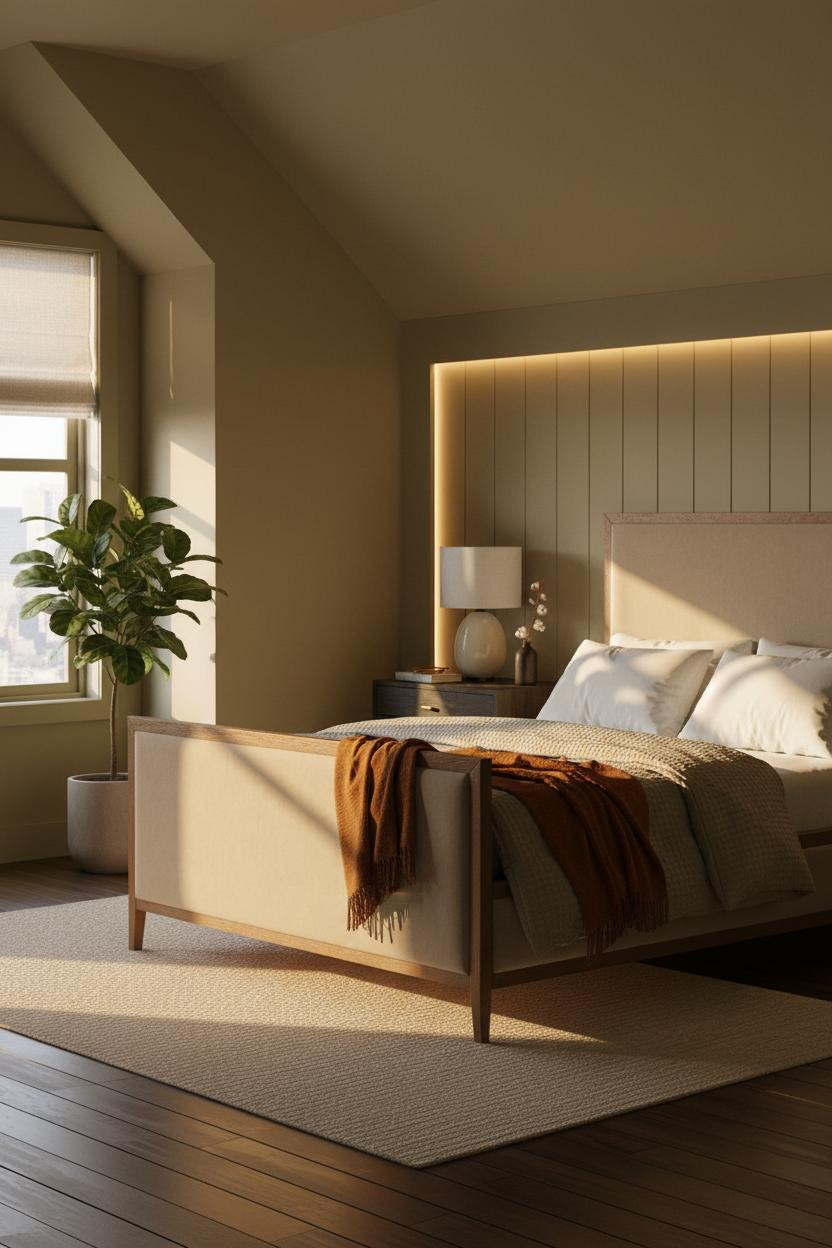


Honest opinion: most board-and-batten bedrooms are forgettable. This one isn’t.
The chalky matte finish on the full-width feature wall catches the shadow lines between each batten, giving the sloped attic space a quiet geometric rhythm. It’s a small architectural move that makes the room feel considered.
What to borrow: Pair sage-olive walls with a burnt orange mohair throw. The contrast is warm without being heavy, especially under amber evening light.
Where people go wrong: Choosing a gloss finish on the batten wall. Matte only. Gloss kills the shadow detail entirely.
Raw Plaster and the Quiet Weight of a Sloped Ceiling
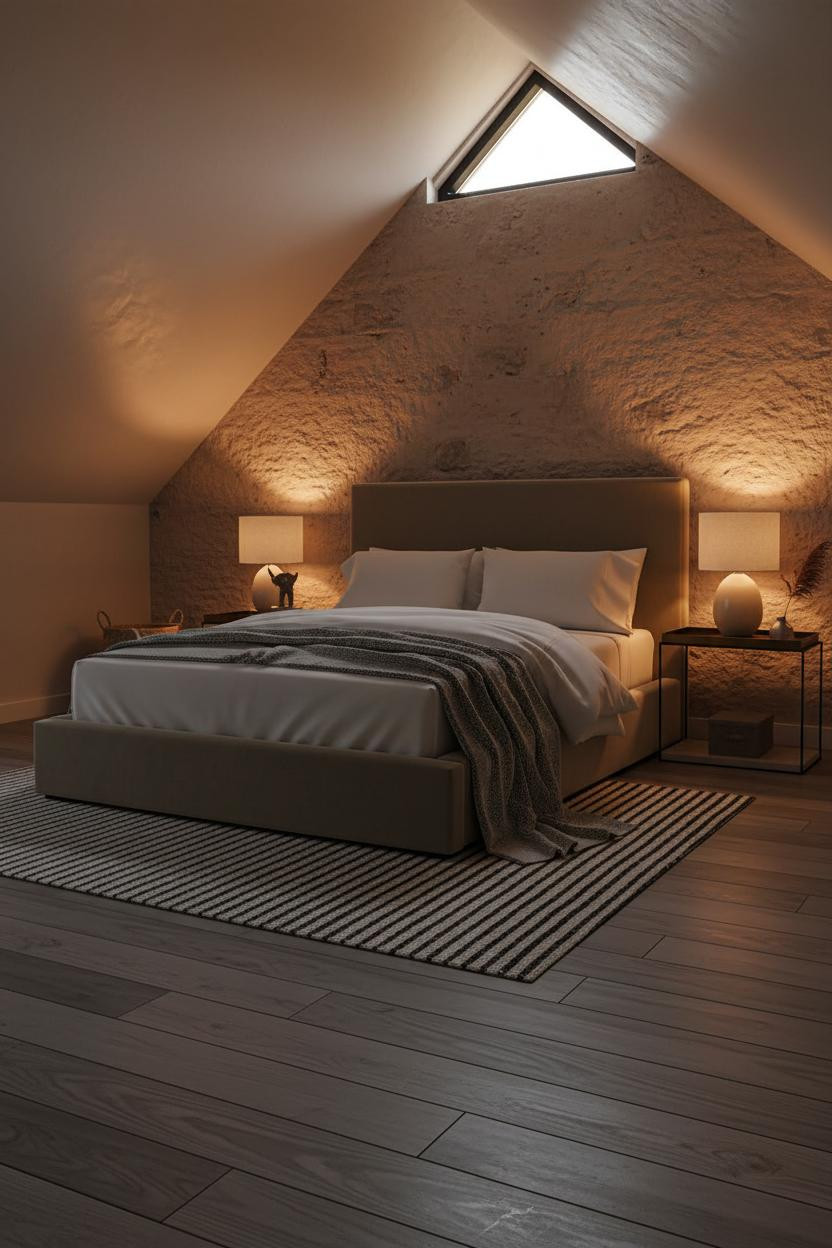

Nothing precious about this room. That’s exactly why it works.
What gives it presence: The stone-textured plaster wall under the eave absorbs light unevenly, so shadows pool differently all day. That unpredictability is what makes it feel lived-in rather than staged.
The easy win: A graphic flat-weave rug under the bed gives the pale reclaimed wood floor some contrast. Skip soft pastels here. The room already has enough warmth from the clay walls.
Hunter Green Walls and the Rooms That Commit
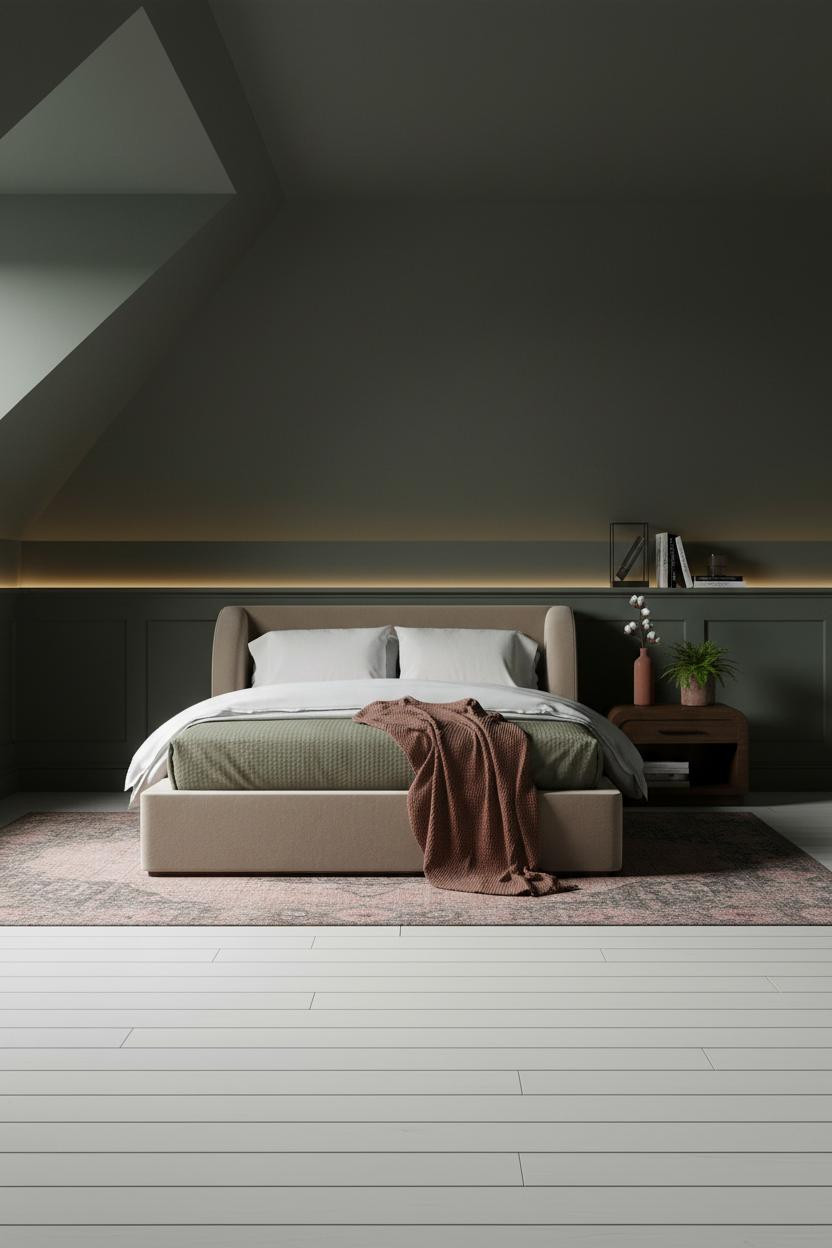


This is the most divisive green on this list. I love it anyway.
Why it feels intentional: The muted khaki wainscoting divided by a slim timber rail creates a horizontal break that keeps the deep hunter green from swallowing the room. Two tones, one surface, one cohesive wall.
Don’t ruin it with: Bright white accents. They’ll fight the whole palette. Stick to olive, cream, and rust. Let the room stay in its own world.
I Keep Coming Back to This Herringbone Wall
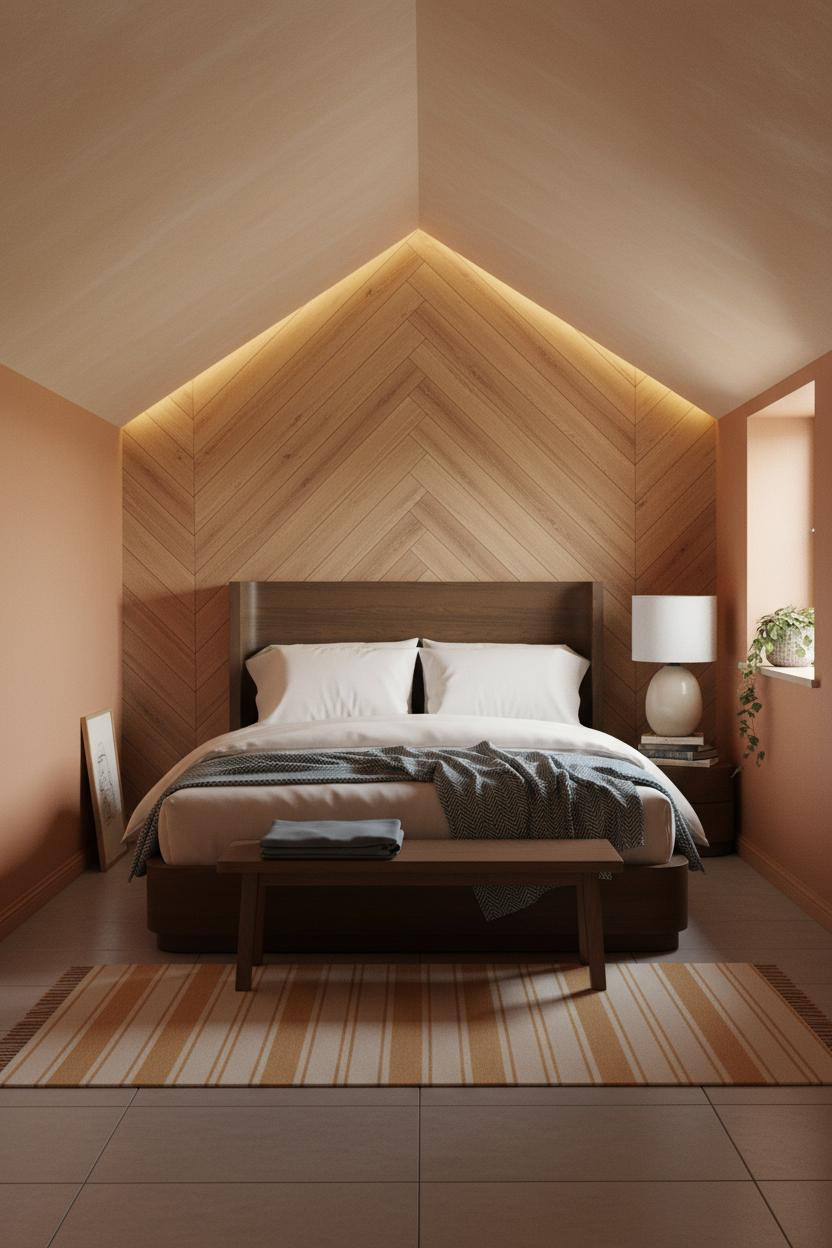

The honey-brown herringbone wood panel wall behind the bed does something flat paint simply can’t: it makes the wall feel warm before the light even hits it.
Why it looks custom: Diagonal chevron grain catches raking light and throws fine shadow lines across the plaster ceiling above, which helps the sloped attic geometry feel like a feature rather than a constraint. A cozy bedroom this compact needs that kind of visual anchoring.
Pro move: A low wooden bench at the foot of the bed grounds the whole composition. It’s a small move, but it changes the scale of everything around it.
The Aged Verdigris Wall You Haven’t Tried Yet
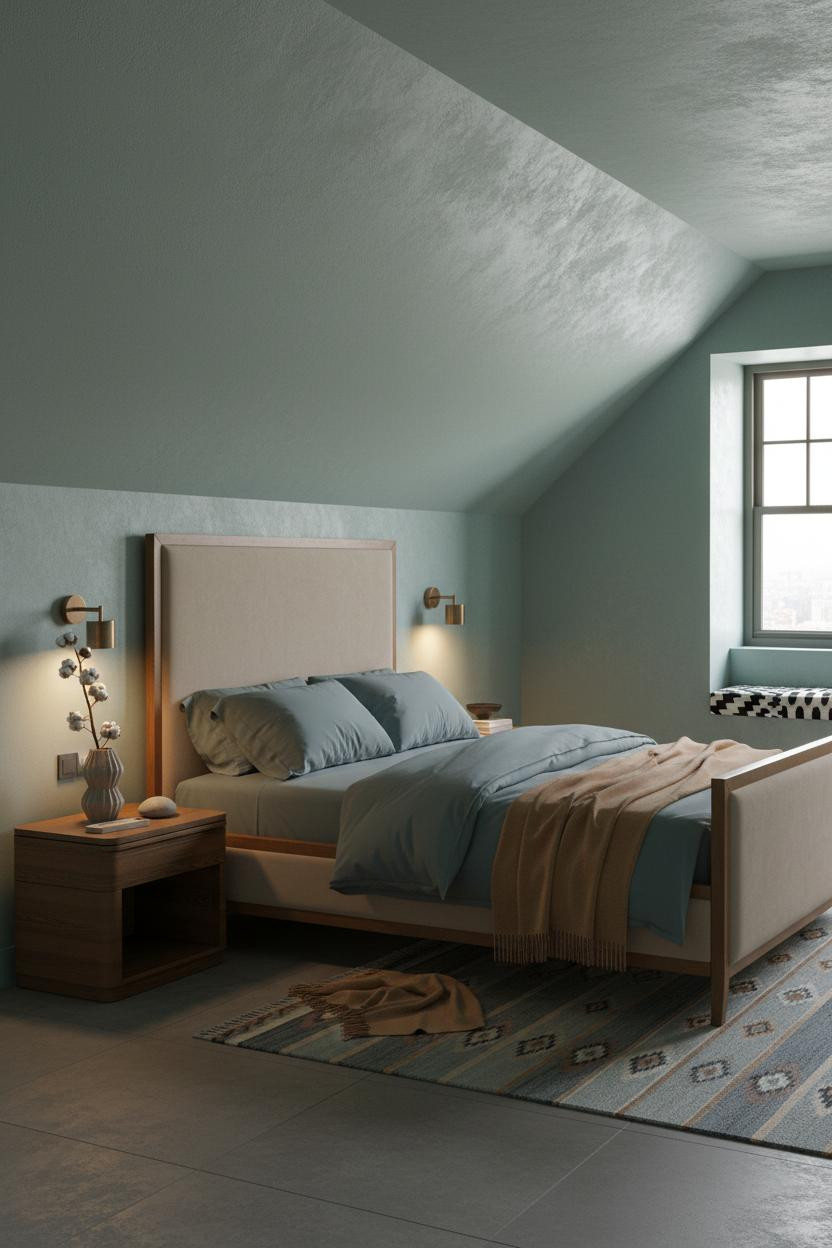
Not sage. Not teal. Something closer to aged verdigris, and the difference matters more than you’d think.
What creates the mood: The matte textured plaster wall under the sloped eave catches grey light in slow horizontal waves, so the room feels hushed and complete rather than simply painted green. Paired sconces at bedside reinforce that warmth.
The smarter choice: Lay a slate and ochre kilim runner on matte grey tile instead of a plush rug. The hard floor keeps the Scandi-modern edge. Just enough texture to stay interesting.
White Collar Ties Are Doing More Work Than You Think
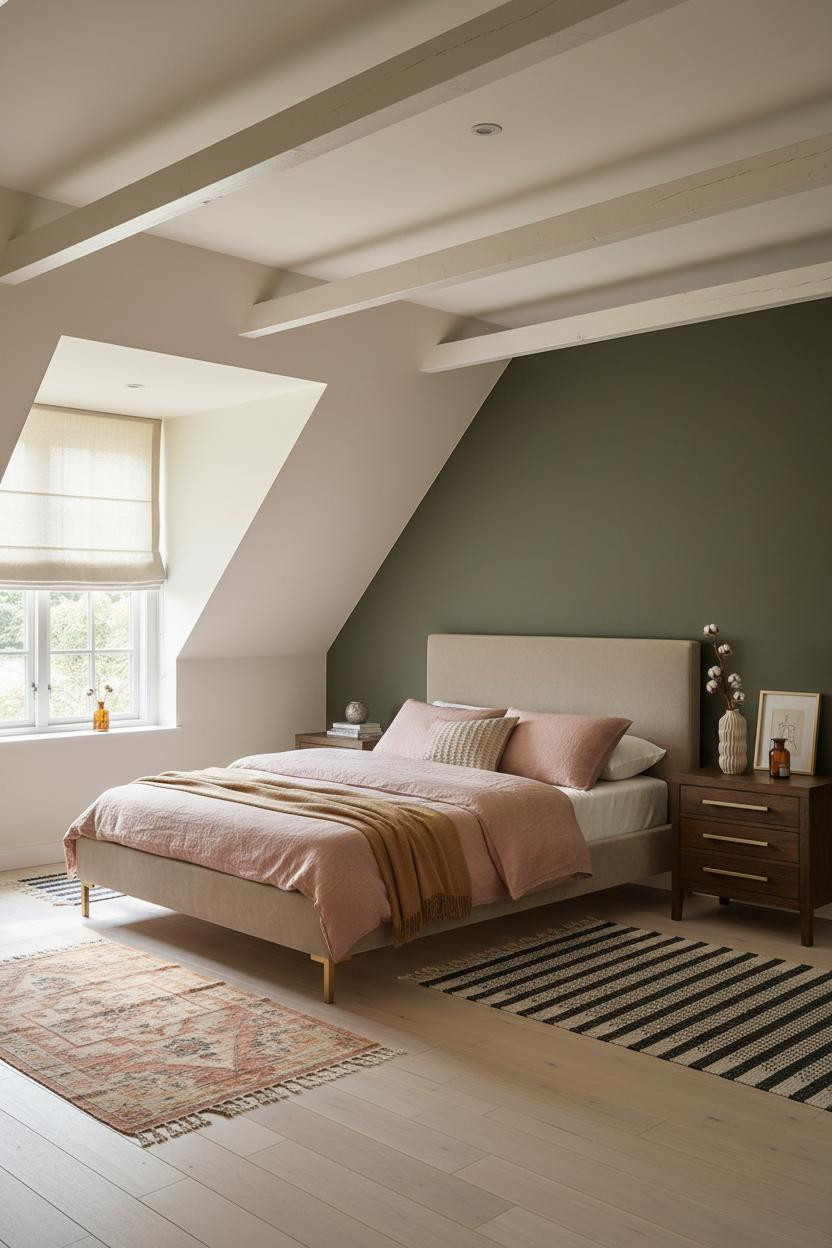


I almost wrote this one off as too boho. But the structural logic here is actually sharp.
White-painted timber collar ties running horizontally across the full sloped ceiling compress the attic volume into something sheltered. The room feels like a nest, not a compromise. And one deep olive green accent wall behind the bed anchors the whole thing without touching the cream on three sides.
Worth copying: Dusty pink linen bedding against olive reads warmer than it sounds, especially with a camel wool throw at the foot. Nothing too matchy. That’s the point.
Forest Green with a Cream Plaster Break in the Middle
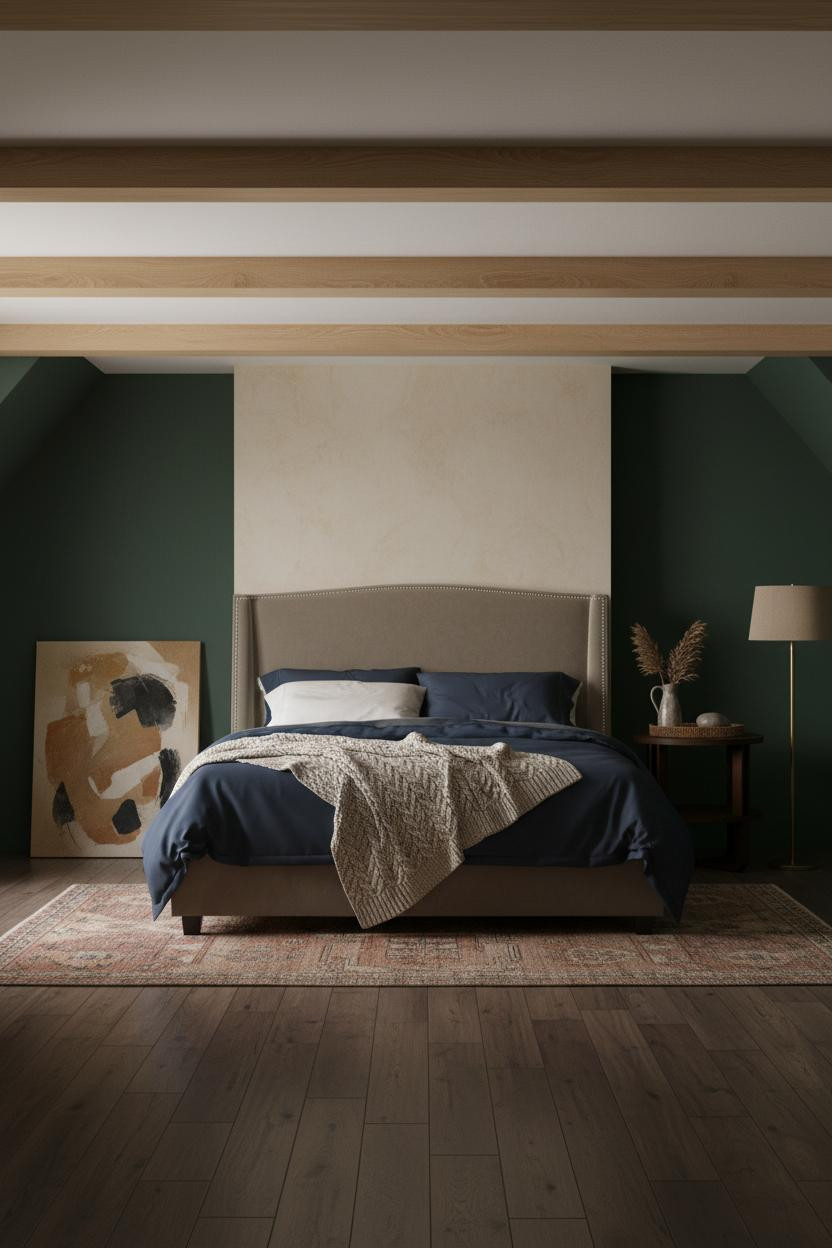

The reason this room feels earthy instead of heavy is the warm cream plaster centered on the wall behind the bed. It breaks the forest green without splitting the room into two competing colors.
Design logic: Pale raw-finish oak collar ties overhead add a horizontal counterpoint to all that vertical wall drama, which keeps the sloped ceiling from pressing down. Collected rather than decorated.
The finishing layer: Lean an oversized abstract canvas in muted ochre against the wall beside the bed rather than hanging it. It feels more lived-in that way, and you can move it without committing to hardware.
Fern Green and Shiplap Are a Better Pair Than You’d Expect
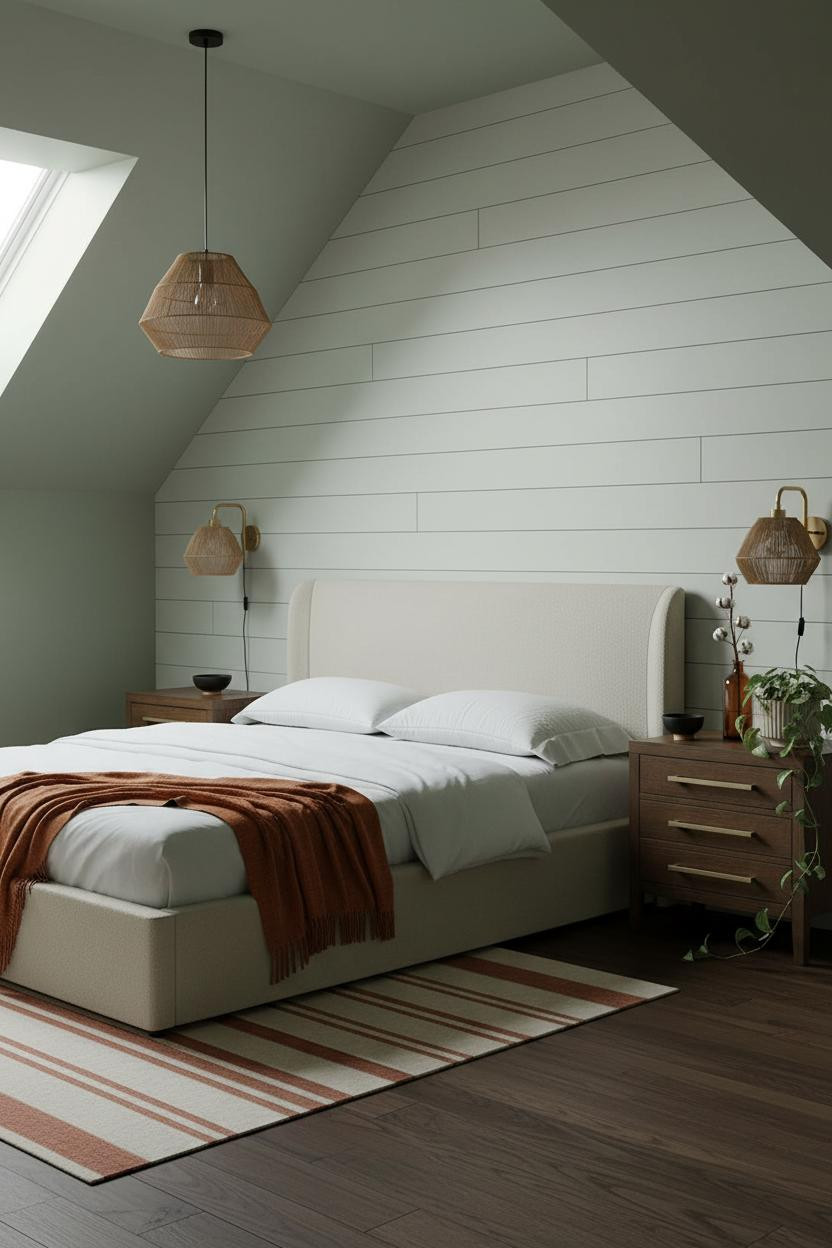

Fair warning. Shiplap gets overused. But on a sloped attic eave wall painted fern green, it earns its place.
What makes it work: Each horizontal plank catches diffused window light and casts a shallow shadow line, so the texture reads as architectural detail rather than farmhouse cliché. The matte finish does most of the heavy lifting here.
One smart swap: Replace any centered overhead fixture with a sculptural pendant hung low from the ceiling peak. It draws the eye upward while still feeling intimate. Paired sconces at the bed keep the warmth close where you actually need it.
Eucalyptus Walls Are the New Sage — Honestly
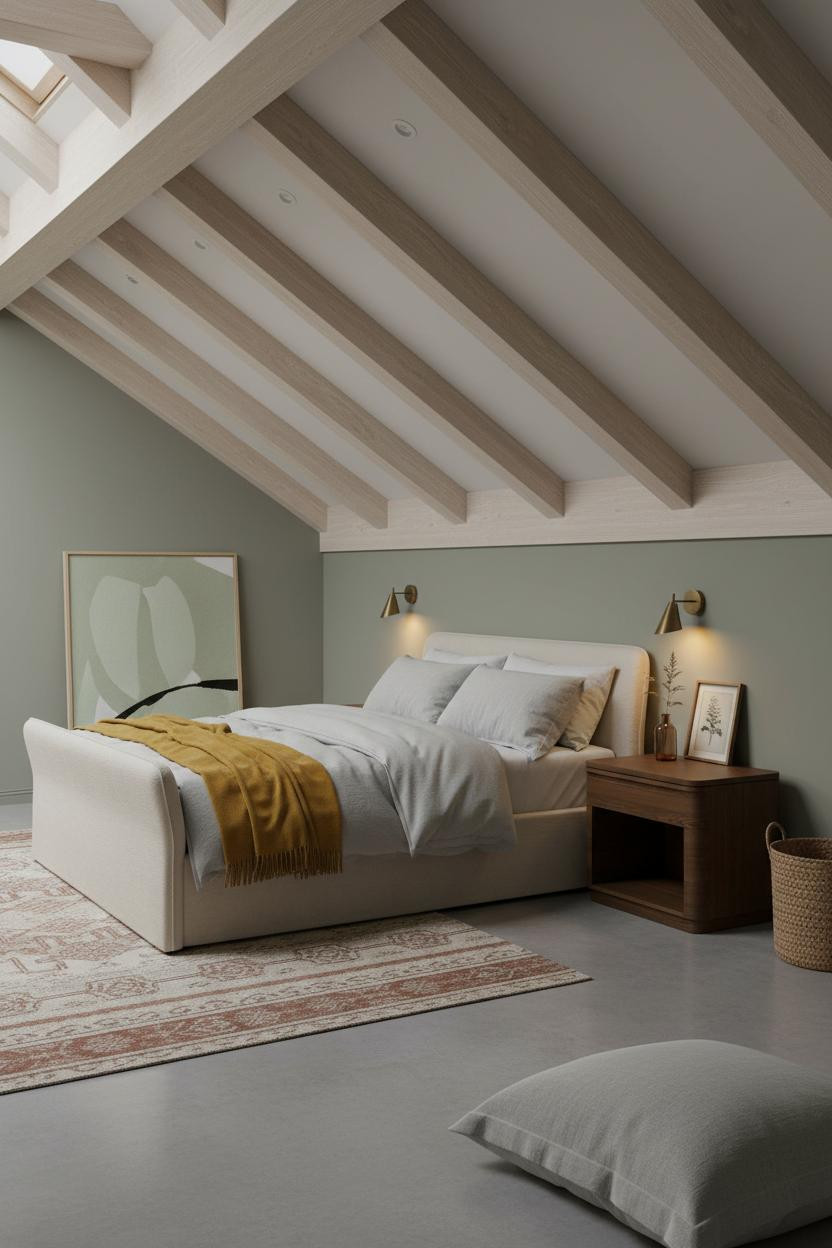

Sage gets all the attention. But faded eucalyptus on an attic wall has a muted quality that sage doesn’t quite reach, especially under grey diffused light. The room feels like a Sunday that has nowhere to be.
Why the palette works: Unpainted raw linen-toned collar ties overhead absorb cool grey light and cast barely-there shadows that turn the ceiling into a restful geometric rhythm. The warm bedroom aesthetic here comes from layering a mustard wool blanket on stone-washed grey linen rather than from any single statement piece.
The detail to keep: Lean large abstract art against the eave wall rather than centering it above the bed. Scale matters more than placement in a low-ceilinged room like this.
The Coastal-Modern Take on Attic Bedroom Ideas
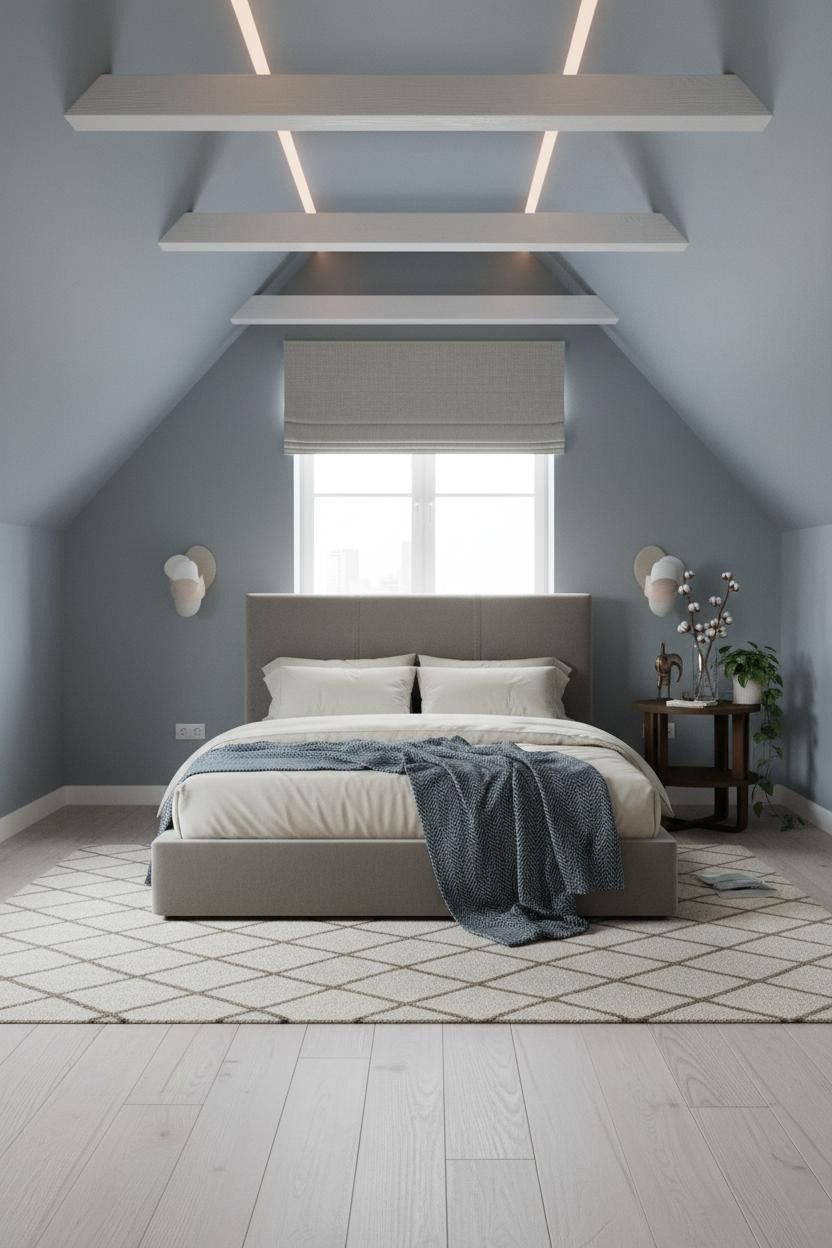
Dusty blue-grey walls. White-painted collar ties. Bleached oak floors. This room has a coastal calm that somehow avoids feeling like a beach rental.
What softens the room: Paired sculptural ceramic sconces flank the bed and pool warm amber light across the bedding, while still feeling cool enough to match the wall color. The Moroccan diamond-pattern rug in cream and stone ties the pale tones together without anything feeling matchy.
Skip this: Don’t add driftwood or rope accents. The room’s restraint is its whole identity. One small green bedroom detail that gets overcrowded loses the whole mood.
Pistachio Walls Feel Lighter Than You Think They Will
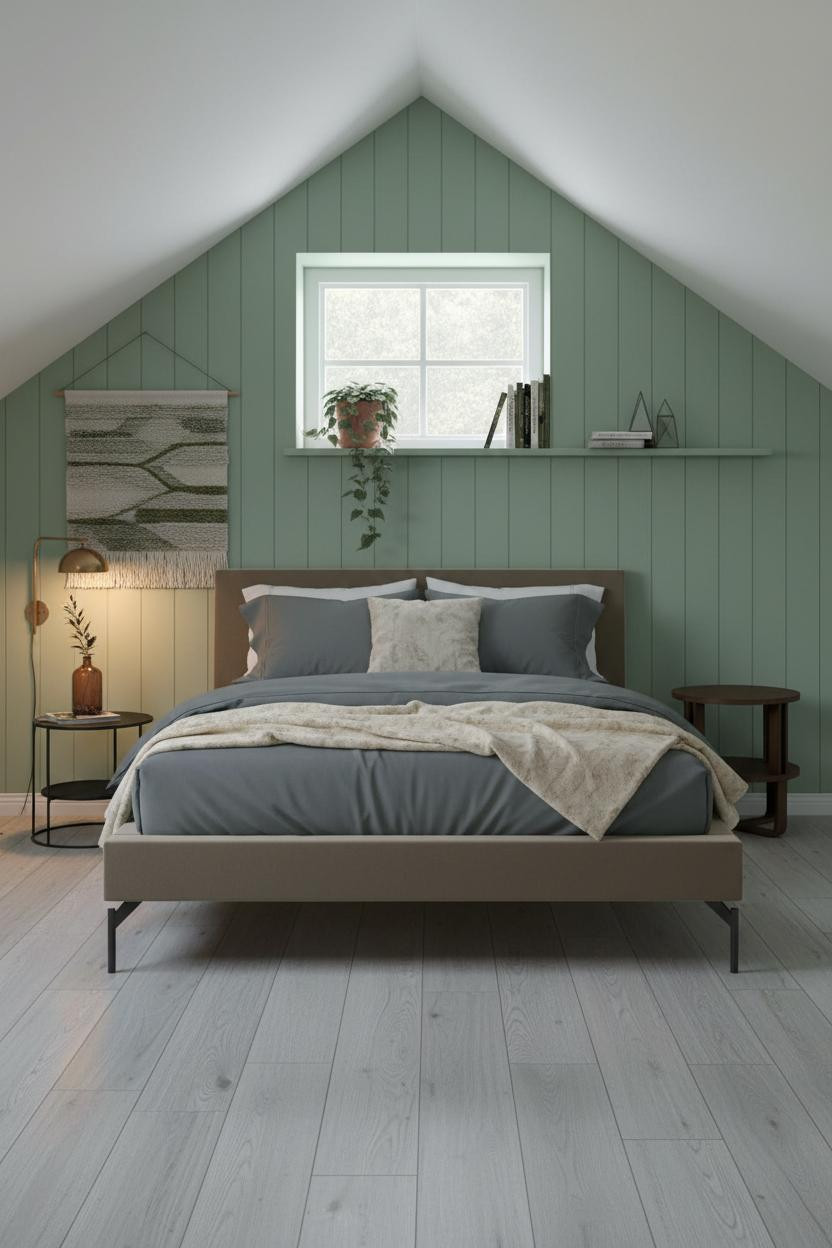

I had low expectations for pistachio in an attic. I was wrong.
Why it lands: The board-and-batten wall in pistachio catches grey daylight differently than a flat wall would. Fine shadow ridges between each batten give the surface depth, making the color feel layered rather than flat. A warm cream accent wall behind the bed pulls it back from feeling too minty.
The key piece: A woven wall hanging above the bed anchors the composition in a way a framed print wouldn’t. In a room this textured, fabric adds the last layer the space actually needs.
Moss Green, Dark Rafters, and Linen That Pools on the Floor
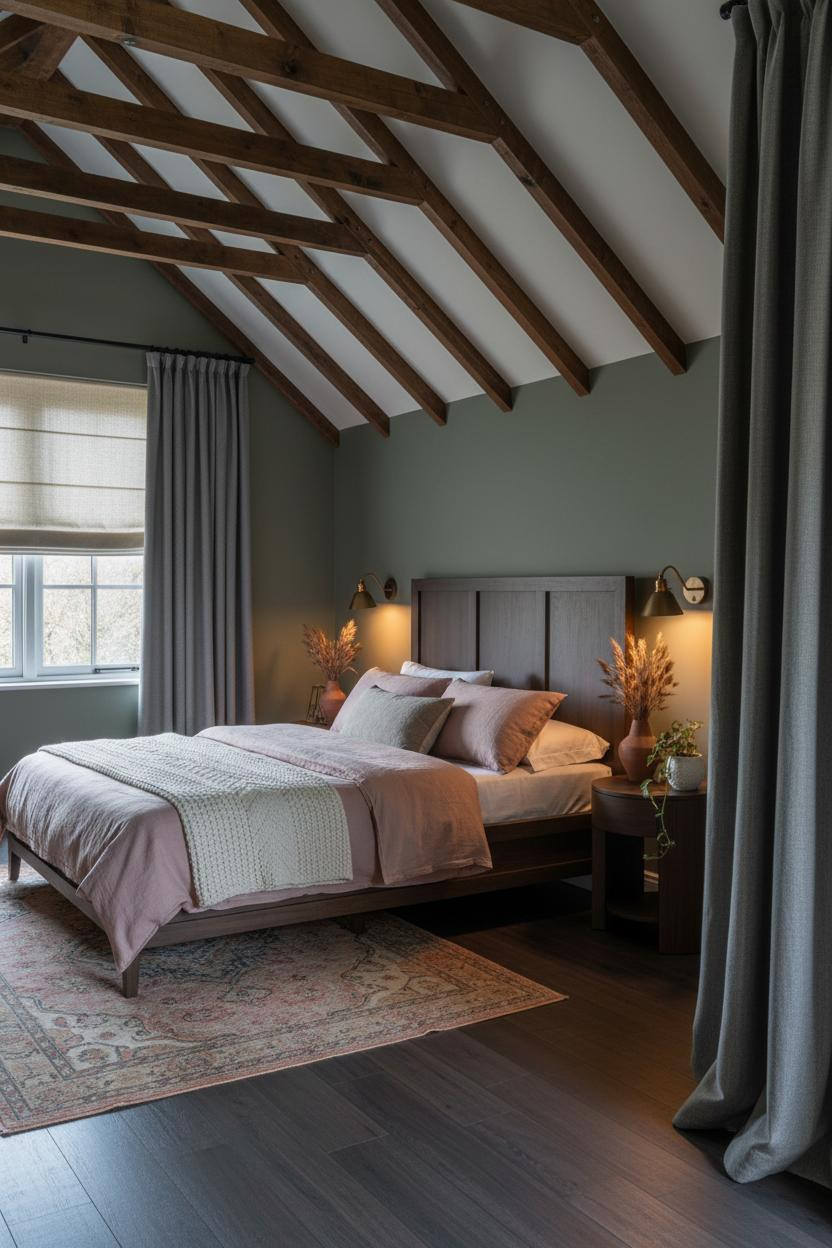


This is the moodiest room on the list. Admittedly, it’s not for everyone. But moss green matte walls against dark-stained narrow timber rafters running diagonally overhead creates something close to a forest canopy, and the room feels genuinely sheltered because of it.
What carries the look: Floor-to-ceiling slate grey linen curtains work as a statement piece while still feeling calm. They give the room height and drama in a way that doesn’t compete with the moss green. Warm sconces at the bed keep things from going fully cold.
Celadon and Whitewashed Rafters: The Unexpected Pairing
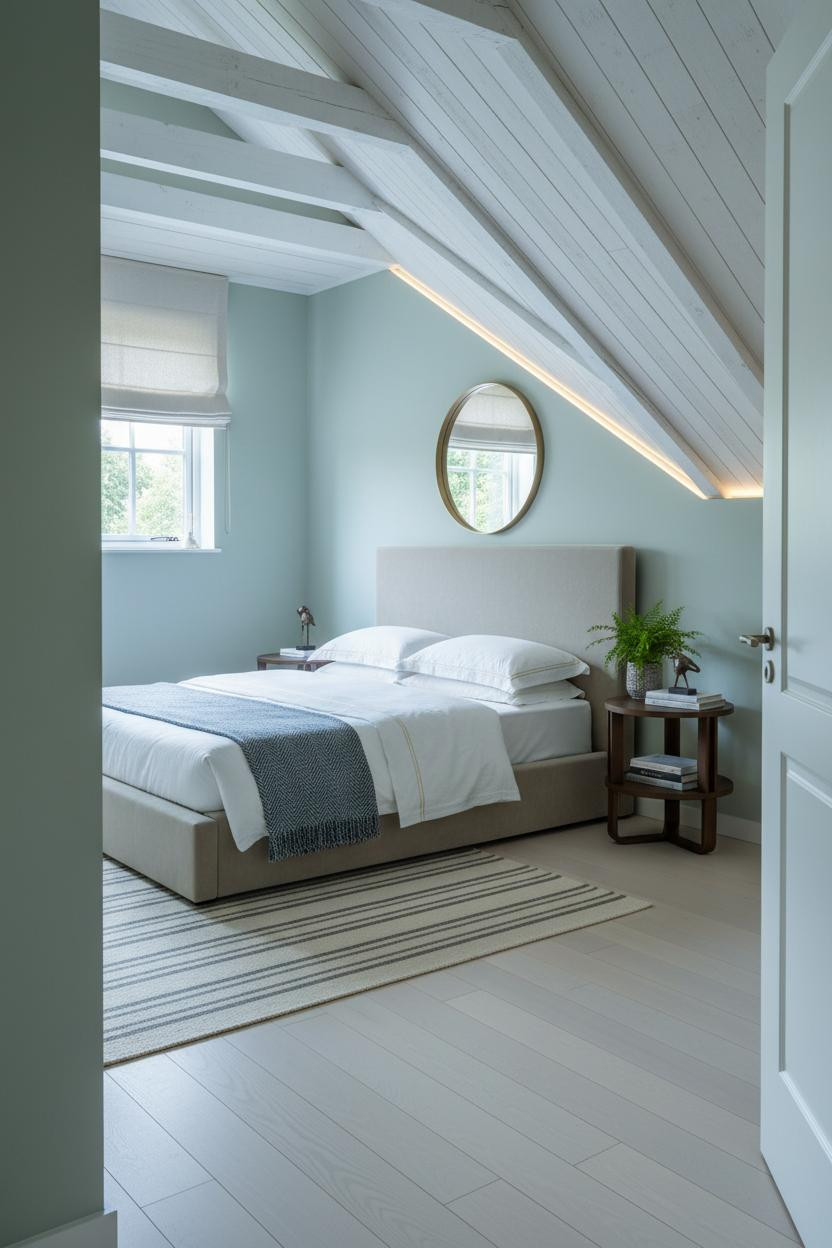
Soft celadon is the lightest green on this list, and it works specifically because the whitewashed timber rafters slope from peak to eave in clean parallel diagonals overhead. The two cool tones share enough in common that the room feels cohesive while still feeling open.
The real strength: A round mirror above the bed reflects the rafter geometry back into the room, making the attic ceiling into the feature it actually is. In a small attic bedroom, the smarter choice is always to use the architecture rather than fight it. And a steel blue herringbone throw at the foot ties back to the cool wall tone without matching it exactly.
Warm Sage Walls and the Room That Earns Its Quiet
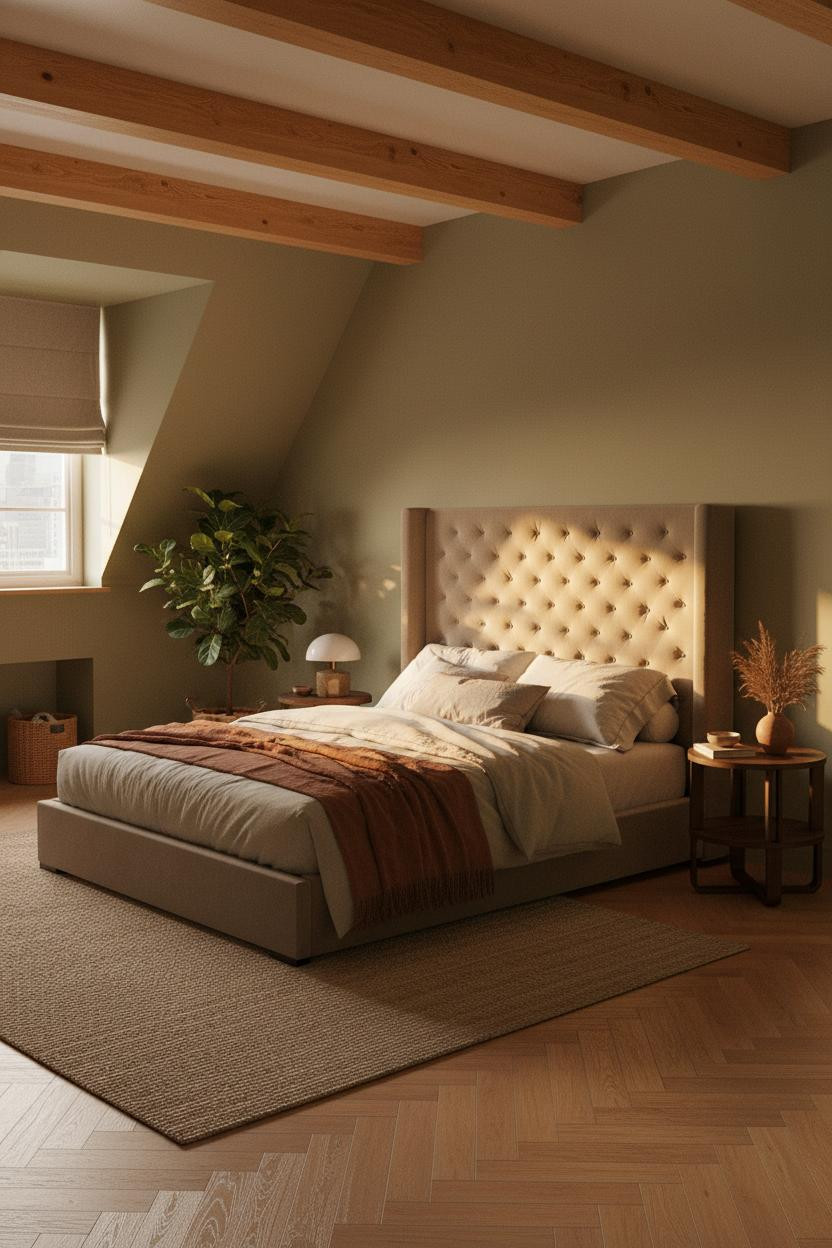

This is the version of a warm green bedroom I’d actually build. Exposed honey-brown timber beams running low overhead, warm sage walls, and a herringbone parquet floor in oak create a palette that feels like it grew there rather than got chosen.
Where the luxury comes from: The beams catch raking golden light along their raw edges, making the ceiling feel warm rather than heavy. A large potted fig tree in the corner adds scale and a living quality that dried arrangements alone can’t replicate. Oatmeal cotton bedding with a rust linen throw keeps the whole thing grounded.
The part to get right: Use a natural jute rug under the bed rather than a printed kilim. In a room this warm and textured, green and neutral bedroom tones stay calmer with raw materials than with pattern.

Our #1 Pick
Saatva Classic Mattress
America’s best-selling online luxury innerspring. 365-night trial, lifetime warranty, free white glove delivery.
Shop Saatva Classic
The Foundation Of Every Beautiful Bedroom
Every room on this list gets the walls right, the textures right, the lighting right. But the one thing you actually feel every single night is the mattress. And that part deserves the same thought.
The Saatva Classic is what I’d put in any of these rooms. Dual-coil support that holds without going rigid, a cotton cover that breathes through the night, and a Euro pillow top that’s soft in the way a good hotel bed is soft: there’s structure underneath, not just cushioning on top.
Walls get repainted. Linen gets swapped out. The mattress stays. Start with the bed. The rest figures itself out.

The rooms people save are the ones where nothing looks accidental. But the rooms people actually sleep well in? Those start somewhere underneath the beautiful bedding.