
The first thing you notice in the best luxury wardrobe design bedroom setups isn’t the bed. It’s the wall behind it.
Floor-to-ceiling built-ins in a saturated lacquer finish can do more for a room than any gallery wall ever could. These 14 ideas prove it.
Teal Lacquer That Earns Every Inch of the Wall
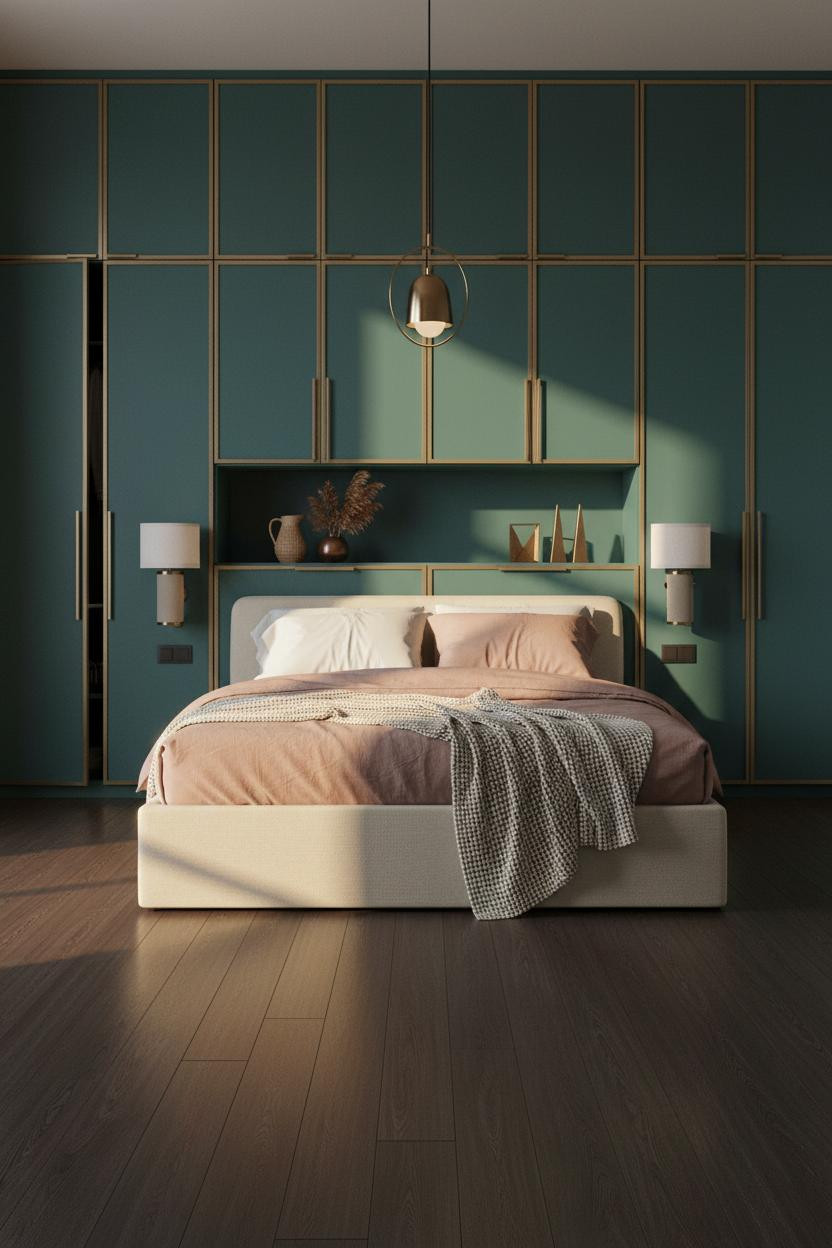

This one commits fully and it pays off.
Why it holds together: The matte teal lacquer pulls enough depth into the room that the brass hardware reads as warm rather than flashy, which keeps the whole thing from tipping into loud.
Steal this move: Match your wall color to the cabinetry tone, not to your bedding. The continuity is what makes it feel intentional.
Indigo Built-Ins That Make Morning Light Do the Work
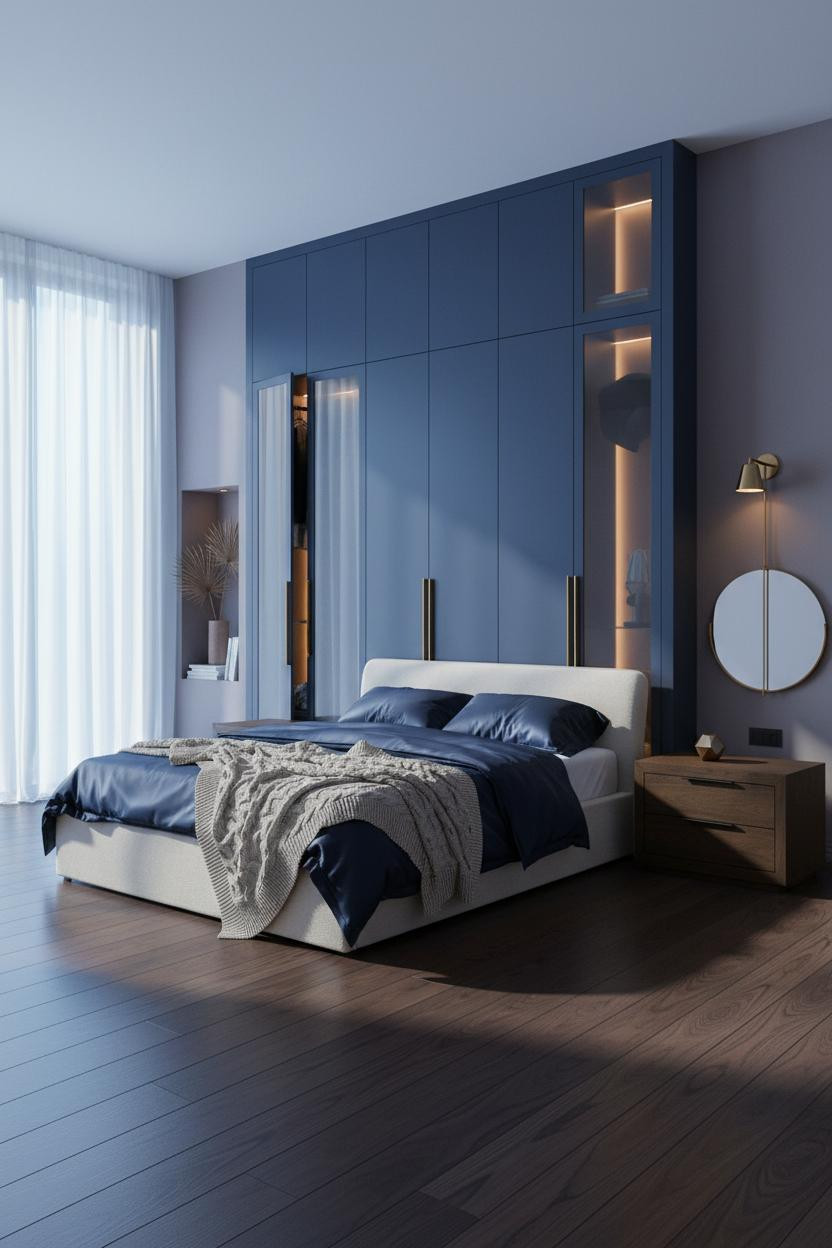
Cool morning light through sheer panels is honestly the best thing that can happen to a deep indigo wardrobe.
What gives it depth: Alternating solid panels and backlit frosted glass inserts break up the monolith while still feeling cohesive, which is harder to pull off than it looks.
Pro move: A sculptural round mirror near the nightstand bounces that early light back across the cabinetry face. Small addition, big return.
Charcoal-Teal and Concrete: The Minimalist Case
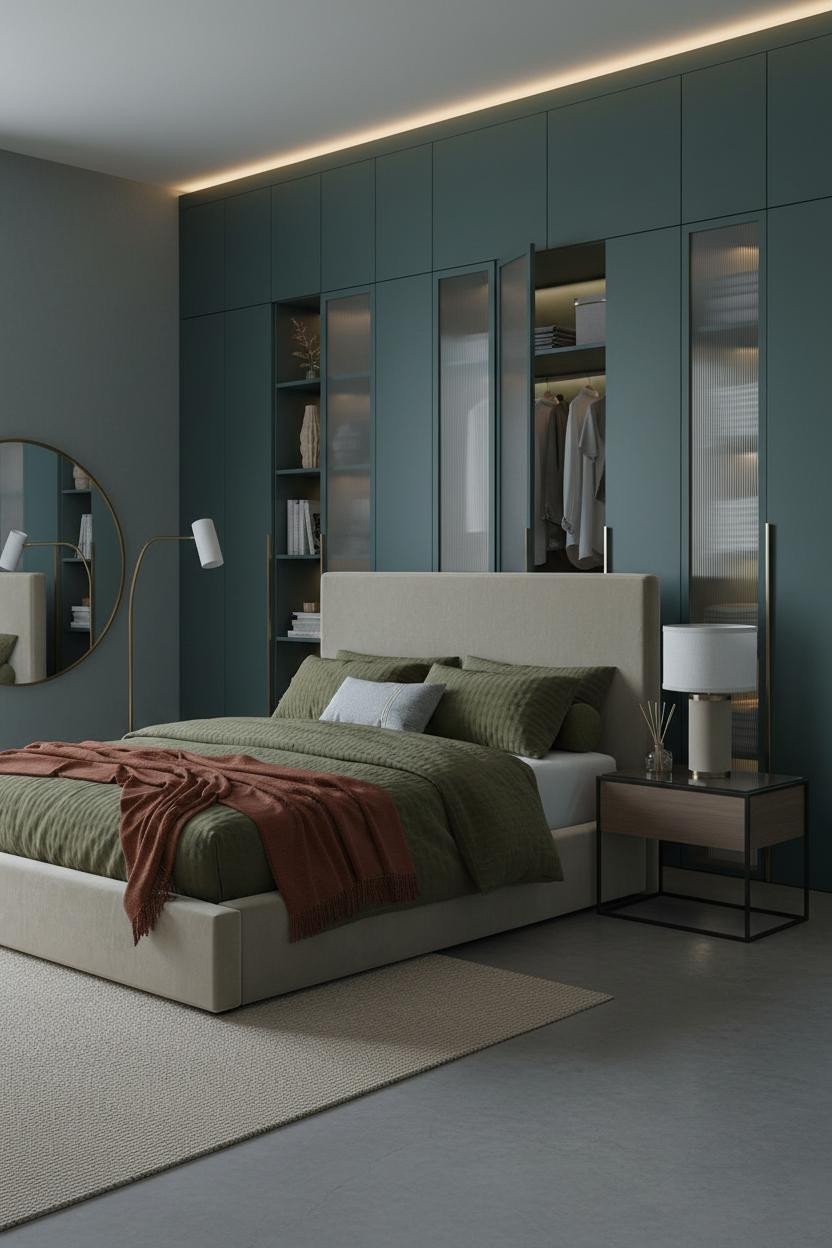
Nothing precious here. That’s entirely the point.
But the polished concrete floor paired against reeded frosted glass panels creates a tension that somehow keeps the room from feeling cold or clinical.
What to borrow: An oatmeal wool rug anchoring the bed zone is the one soft element that earns its place. Don’t skip it just because the aesthetic is hard-edged.
Slate Cabinetry With the Kind of Calm You Can’t Fake
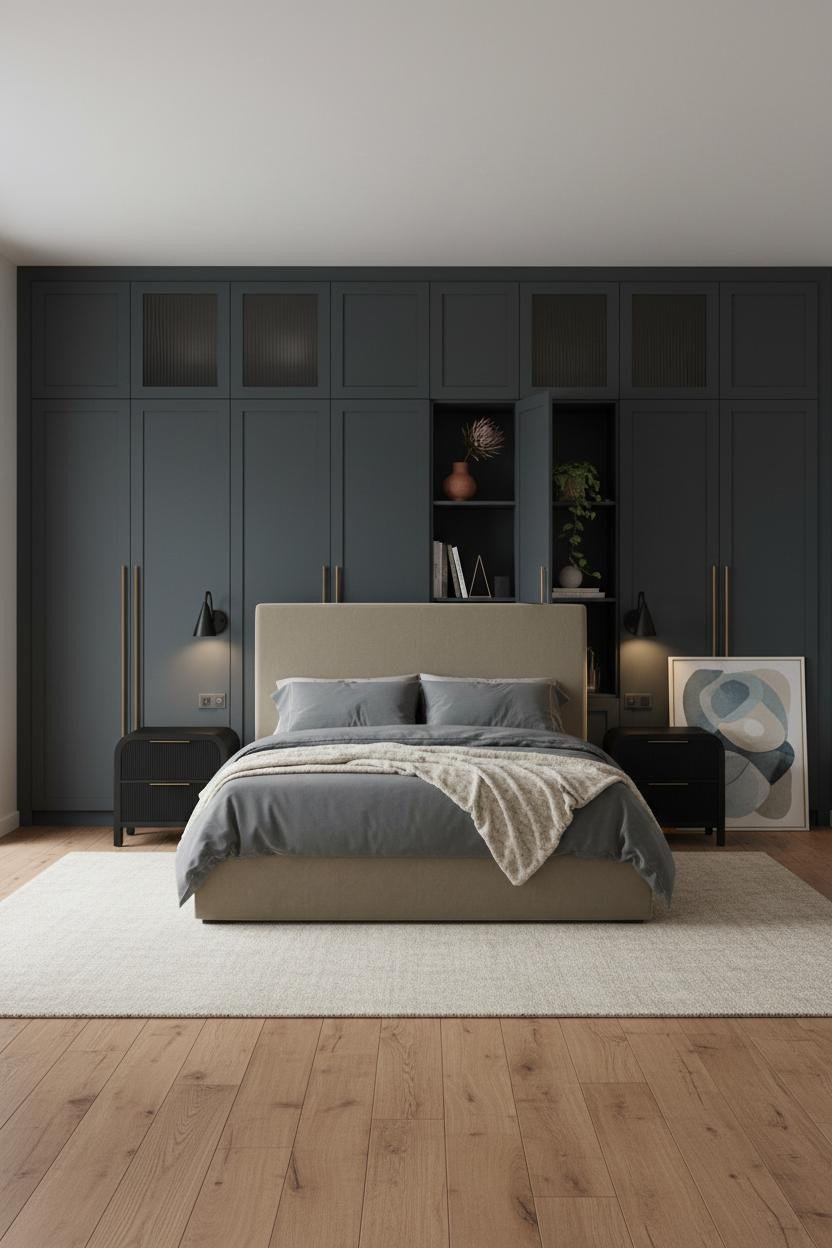
I keep coming back to this one. The proportions feel settled in a way that most rooms never reach.
Why it feels balanced: Ribbed fluted glass inserts in the door panels add texture without competing with the burnished bronze hardware, so the eye moves across the facade rather than getting stuck.
The smarter choice: Lean an oversized canvas against the wardrobe base instead of hanging it. It reads as collected rather than decorated.
Bronze Lacquer With Built-In Alcoves That Beg to Be Styled
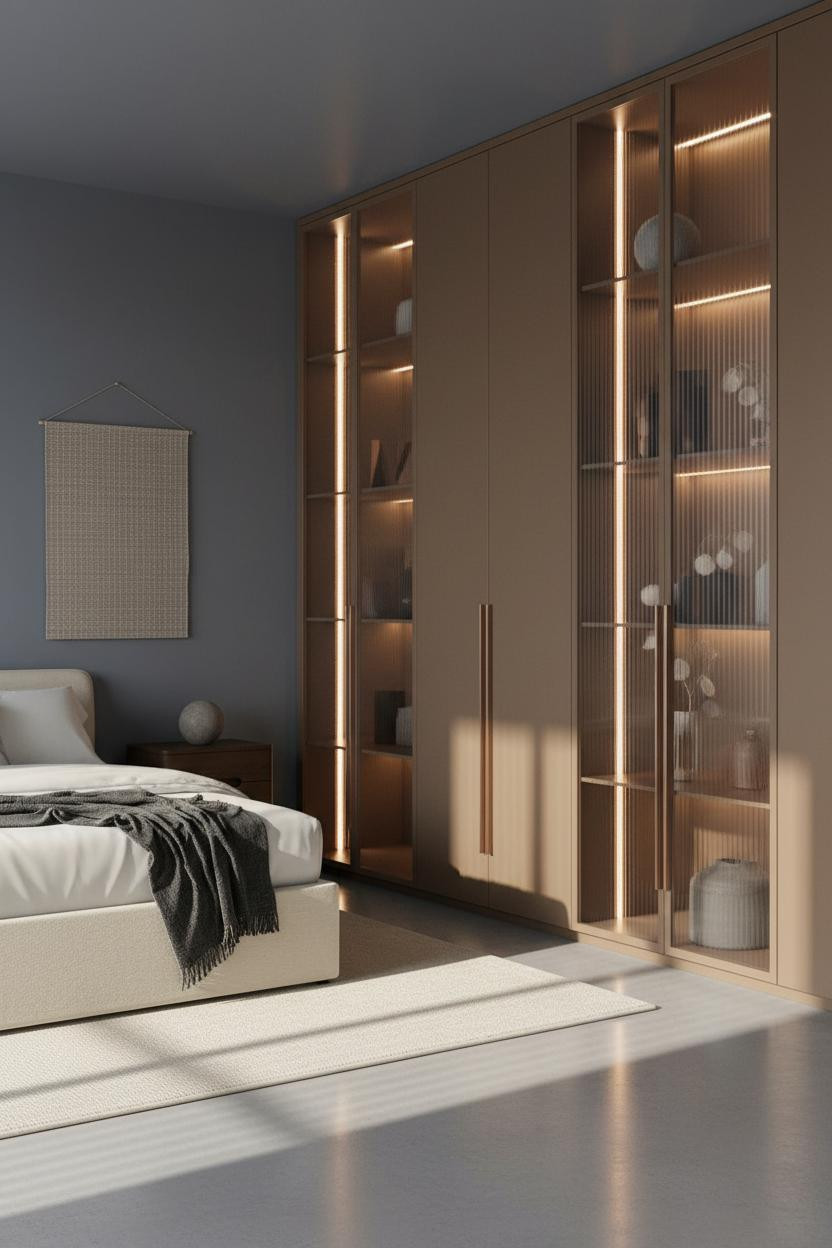
The warm bronze lacquer is a bigger commitment than most people are willing to make. I think that’s exactly why it works so well.
What makes this one different: Each recessed alcove is lit from within, which means the display objects glow rather than just sit there. It turns a storage wall into something closer to a gallery.
For the shelf objects, edit ruthlessly. Two things, maybe three. Negative space is part of the composition.
I Didn’t Expect Plum to Work This Well
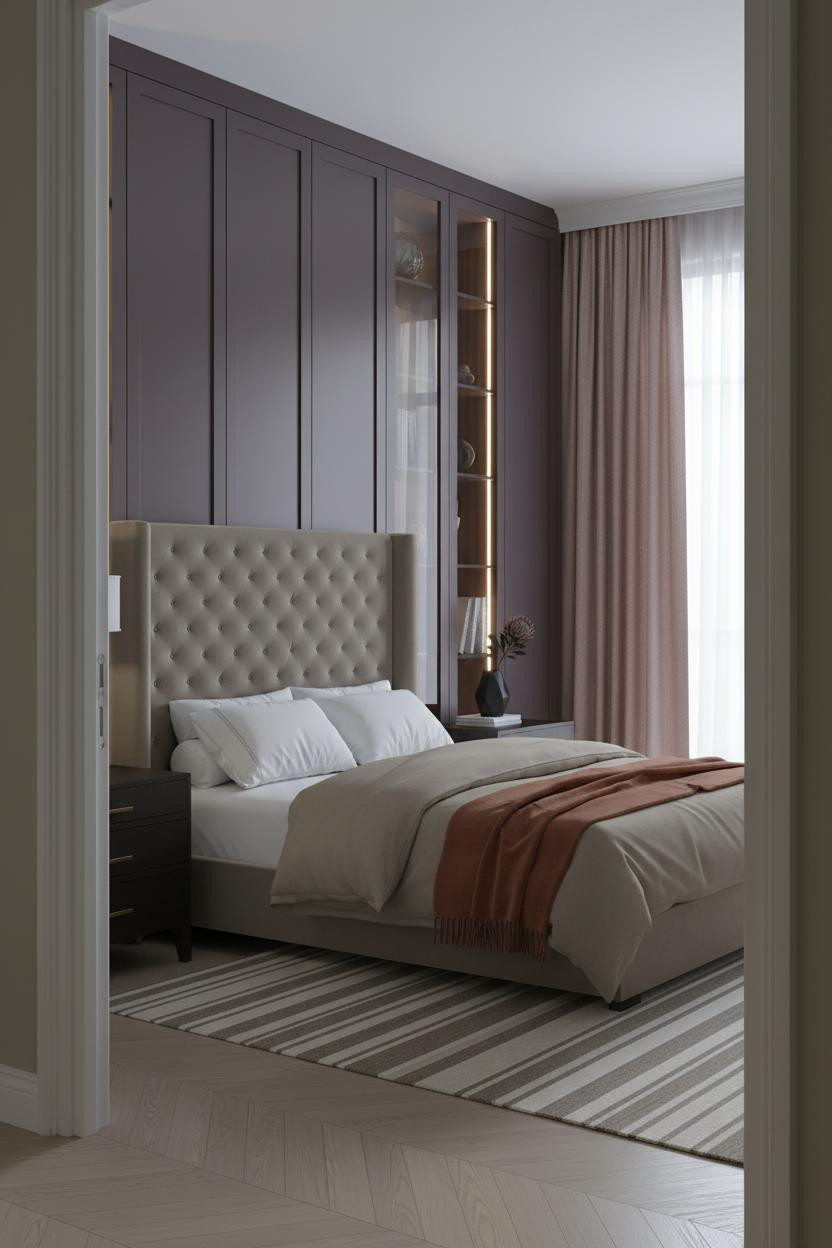

Deep plum is divisive. Fair warning.
But against sage-greige walls and bleached ash herringbone flooring, the matte plum lacquer reads as moody without becoming oppressive. The brushed nickel hardware cools it just enough. And the room feels composed and intimate all at once, which isn’t easy to pull off with a saturated palette.
Taupe Lacquer: The One Everyone Keeps Getting Wrong
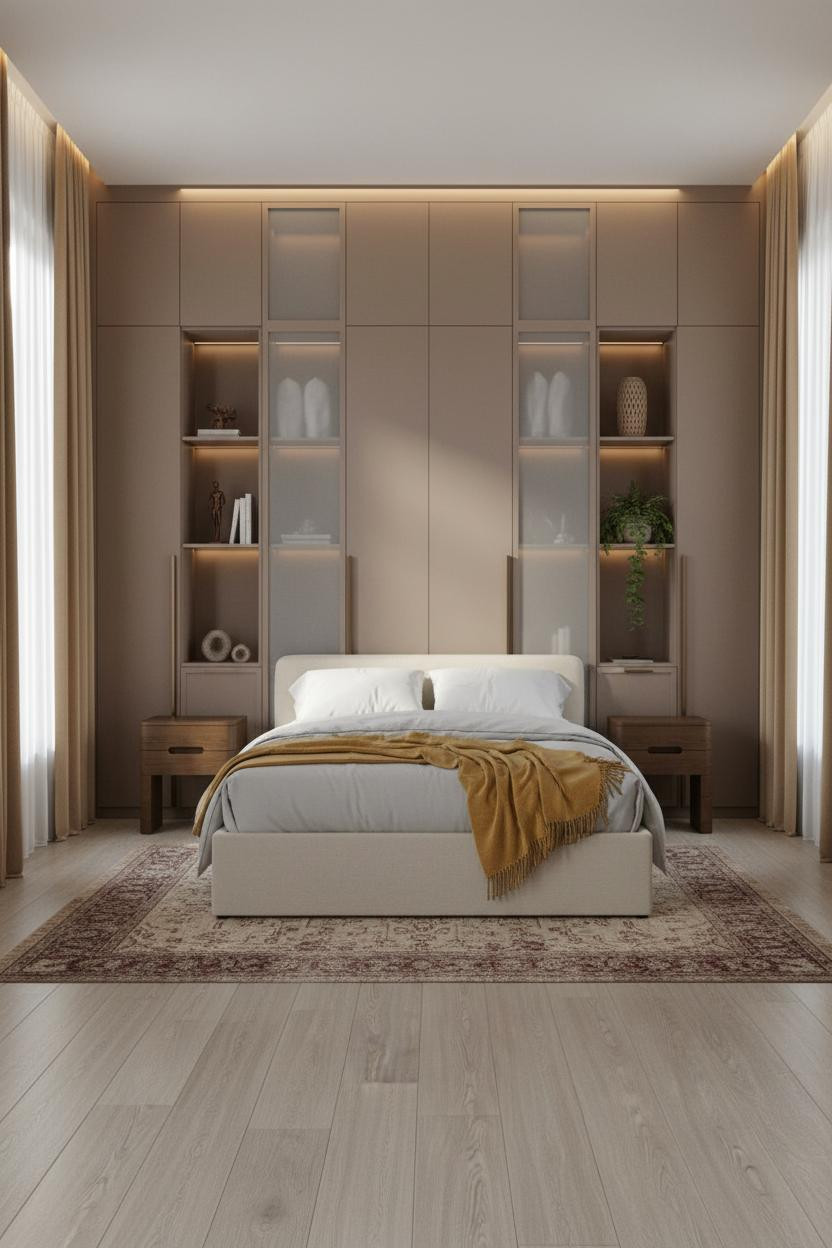
Taupe lacquer is not a safe choice. It’s a precise one. Get it wrong and the room looks beige. Get it right and it looks like this.
Why it lands: The frosted glass door panels keep the wall-to-wall facade from going flat, while the brushed bronze handles add a material contrast that makes the whole thing feel considered, in a way that feels effortless but clearly isn’t.
Avoid this mistake: Don’t pair warm taupe cabinetry with cool grey bedding. Stay in the same temperature family or the room will fight itself.
Sand Lacquer and Noon Light: A Mediterranean Argument
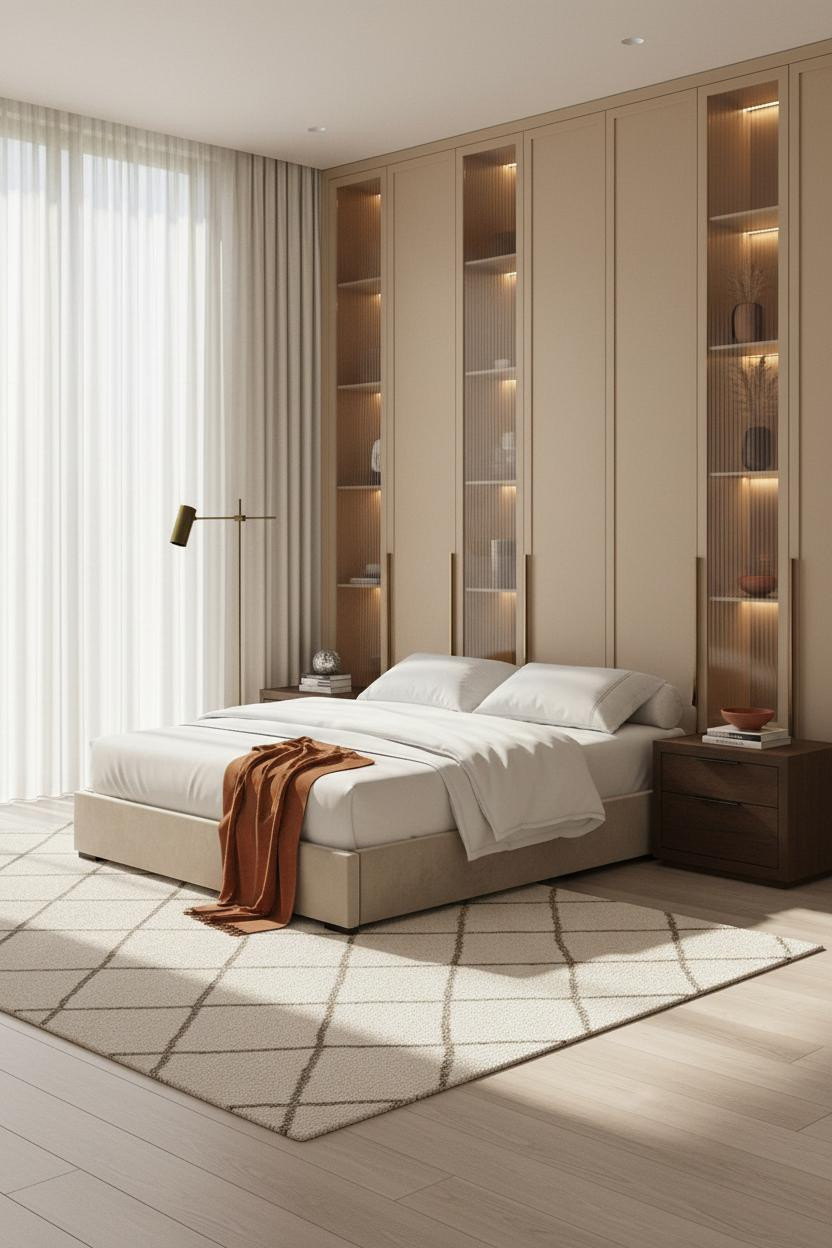

This is the kind of room that makes you want to slow down and stay in it.
The real strength: Warm sand plaster walls flanking the cabinetry create a tonal wrap that makes the fluted glass door panels look like they were always part of the architecture, not added in after.
The finishing layer: Ivory linen curtains pooling at the floor. They soften the noon light and keep the room from feeling too hard-edged, while still feeling airy.
Ivory Built-Ins That Glow at Dusk
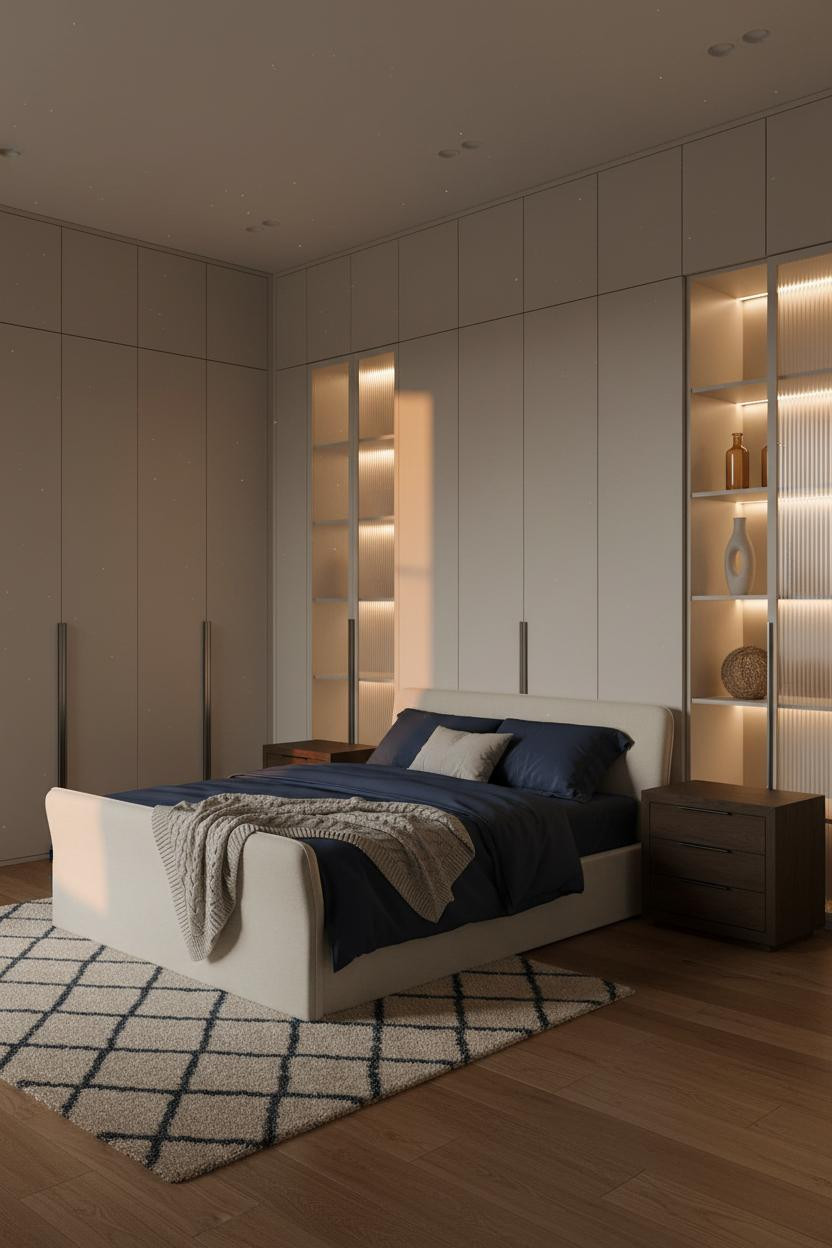
Admittedly, I was skeptical about ivory cabinetry at first. It can read as flat or forgettable in the wrong light.
Why it looks custom: Integrated LED strips glowing behind open display niches at dusk turn the ivory lacquer facade into something architectural. The warmth from inside the cabinetry plays against the evening window light in a way that feels genuinely luxurious.
The easy win: Style one niche with a single sculptural ceramic form and leave the rest quiet. The restraint is what makes the whole wall feel like a curated master bedroom.
Clay Lacquer and Art Deco Hardware: Ordered Elegance
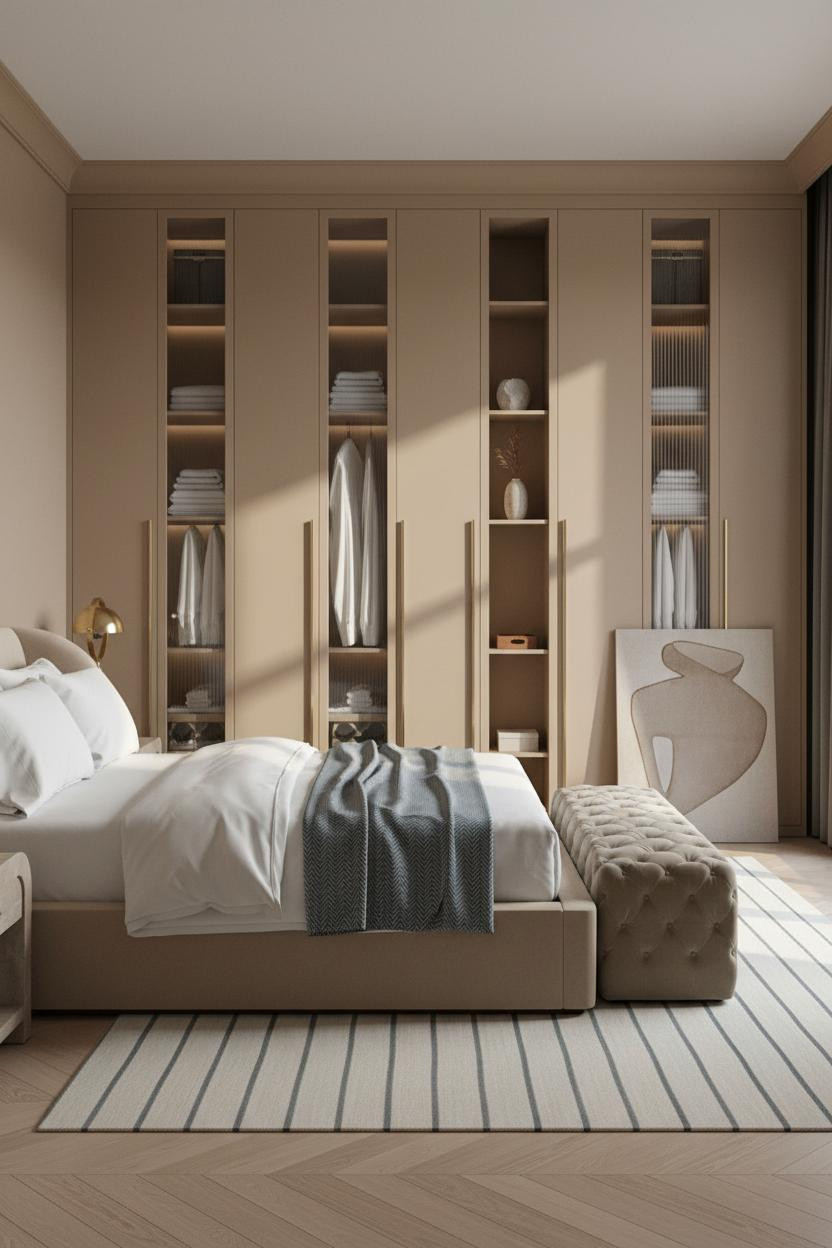
The full-height brass bar handles running the length of each door are the kind of detail that makes guests ask who did the room.
Design logic: In an art deco-leaning scheme, warm clay lacquer works because it keeps the geometry from feeling cold. The palette is warm, the lines are strict, and that contrast is exactly what gives the room its tension.
Where to start: A tufted ottoman at the foot grounds the layout and gives the master bedroom a finishing layer that pure storage walls can’t provide on their own.
Navy Built-Ins With a Display Shelf That Actually Works
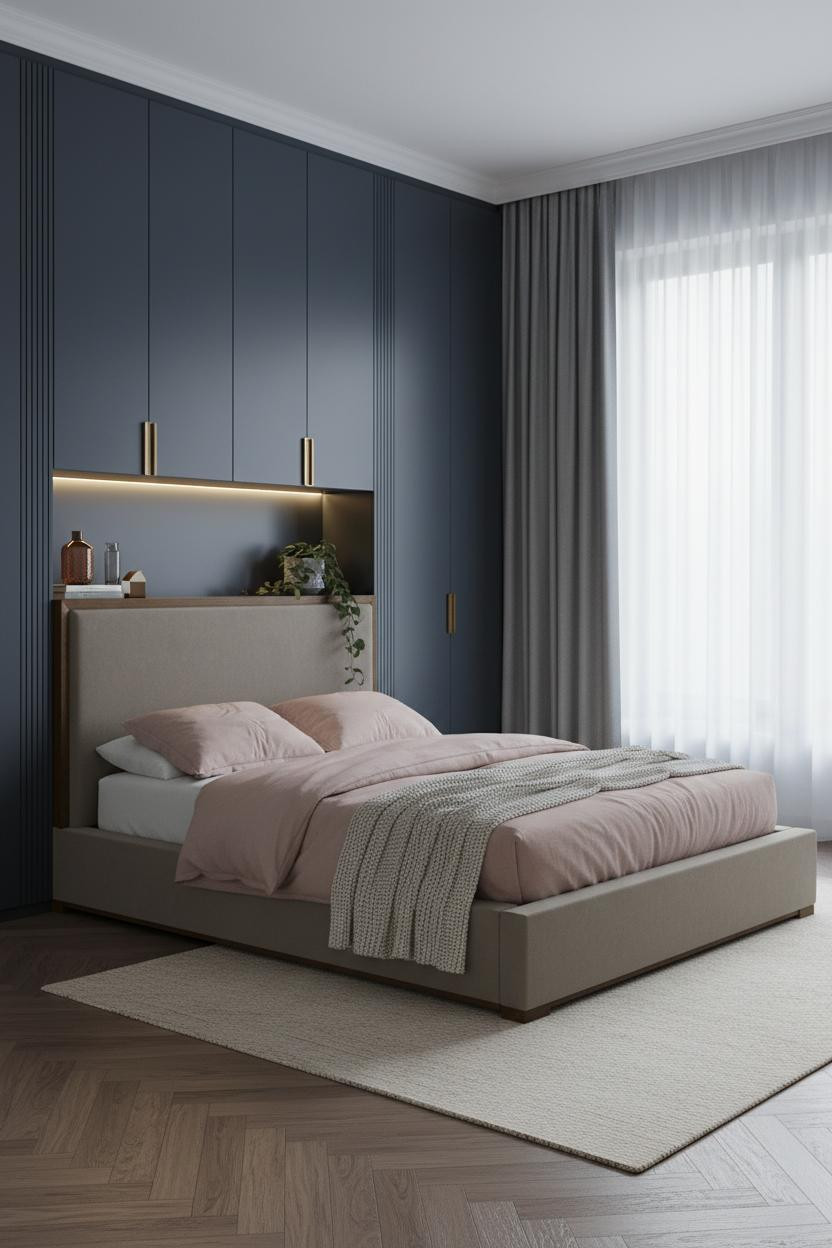
I’ve seen a lot of navy built-ins that feel heavy and unfinished. This one doesn’t.
What carries the look: A floating open display shelf at eye height with warm LED light pooling upward breaks the deep navy lacquer facade at exactly the right point. It keeps the room warm and cohesive rather than just dark.
The common miss: Overcrowding that shelf. Three objects at most. An amber glass bottle, a brass bookend, one trailing plant stem. Done.
Forest Green and Amber Light: This One Is Worth the Commitment
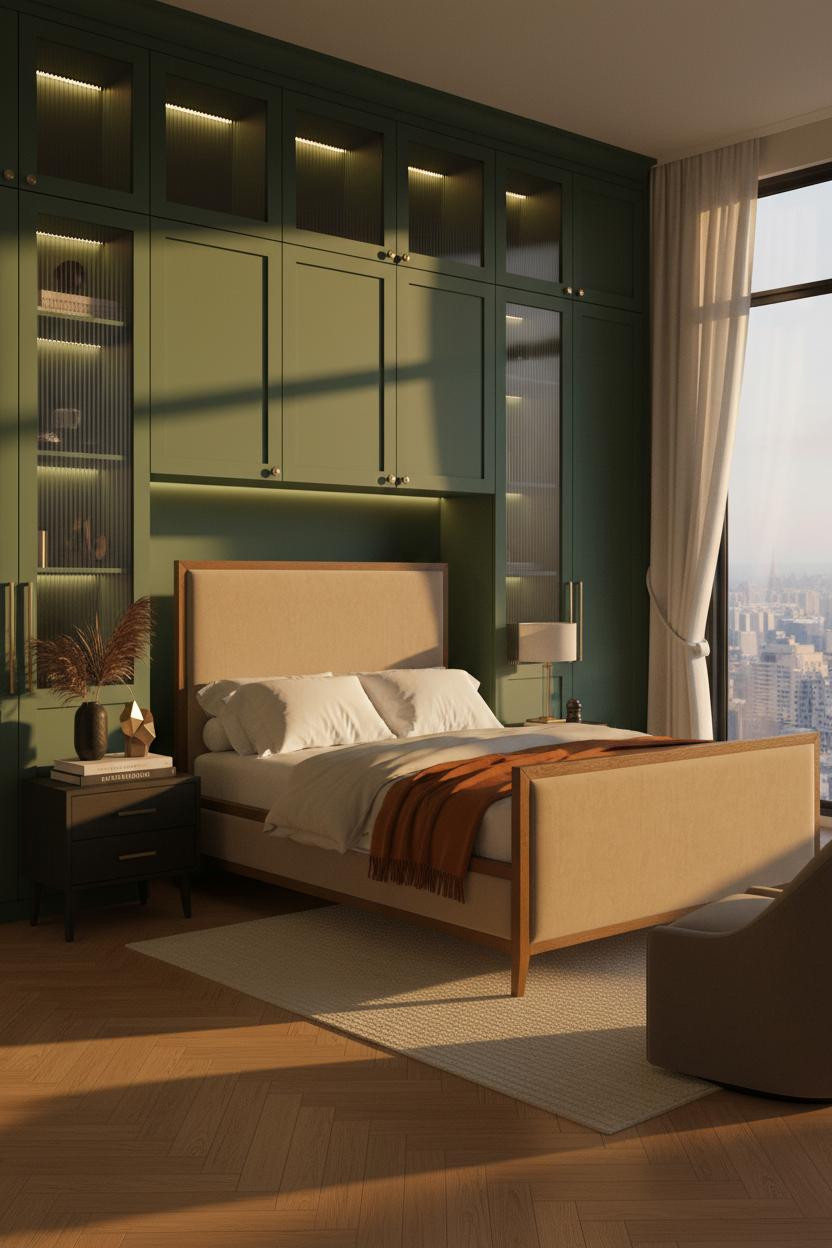

Forest green lacquer at sunset. It shouldn’t be as good as it is.
But amber light raking across fluted glass panels in forest green turns a storage wall into something that feels closer to architecture than furniture. The warm oak herringbone floor pulls the whole palette down to earth, which is exactly what stops it from feeling theatrical. And the room feels lived-in and warm rather than like a showroom.
Champagne Lacquer in Afternoon Light
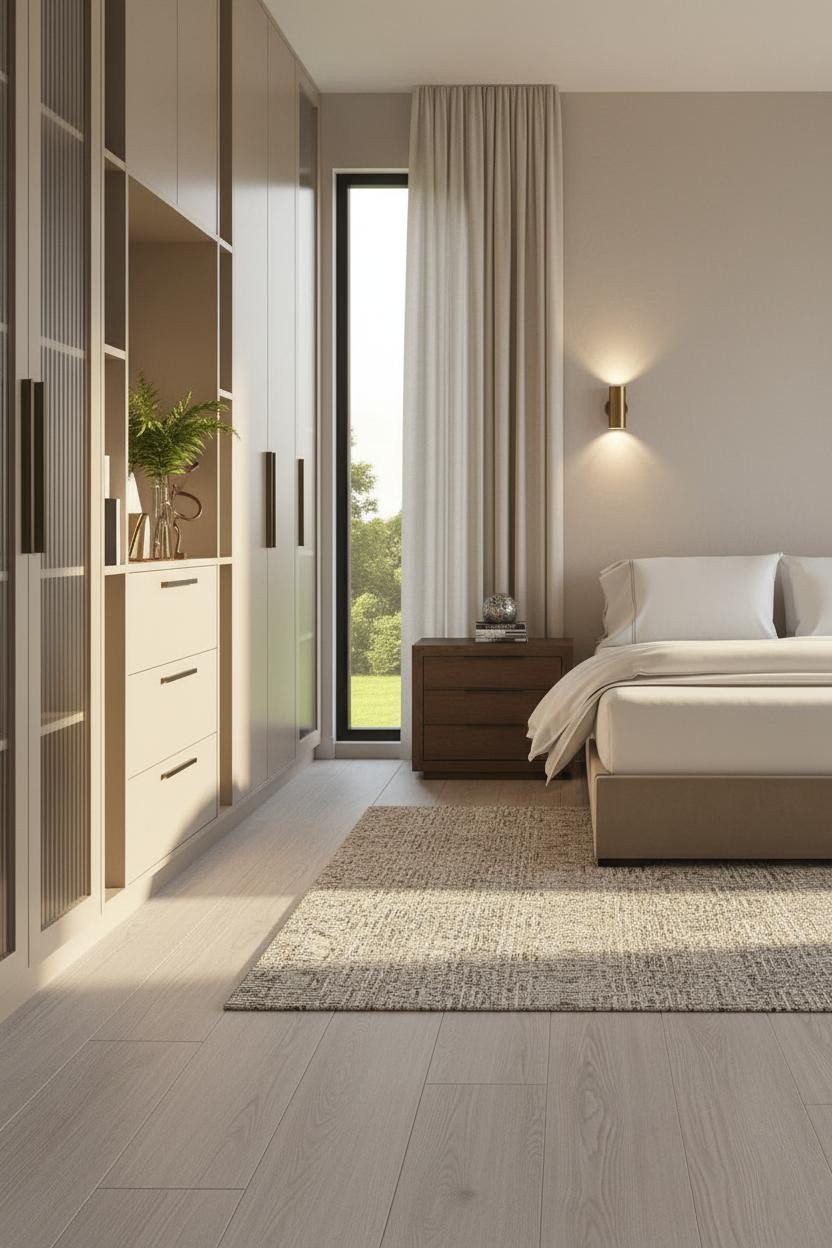
Champagne lacquer is the answer to every person who wants something warmer than white but lighter than taupe.
Why it feels expensive: The brass push-latch hardware disappears into the cabinetry face until the light catches it, which makes the wall read as one clean plane from across the room. That’s the whole trick with modern wardrobe design ideas at this level: the hardware should surprise you, not announce itself.
What to copy first: Pair sconces flanking the bed with a kilim runner at the floor. The layering keeps the all-warm palette from going flat.
Charcoal Cabinetry With Walnut Shelving: The One That Ages Best
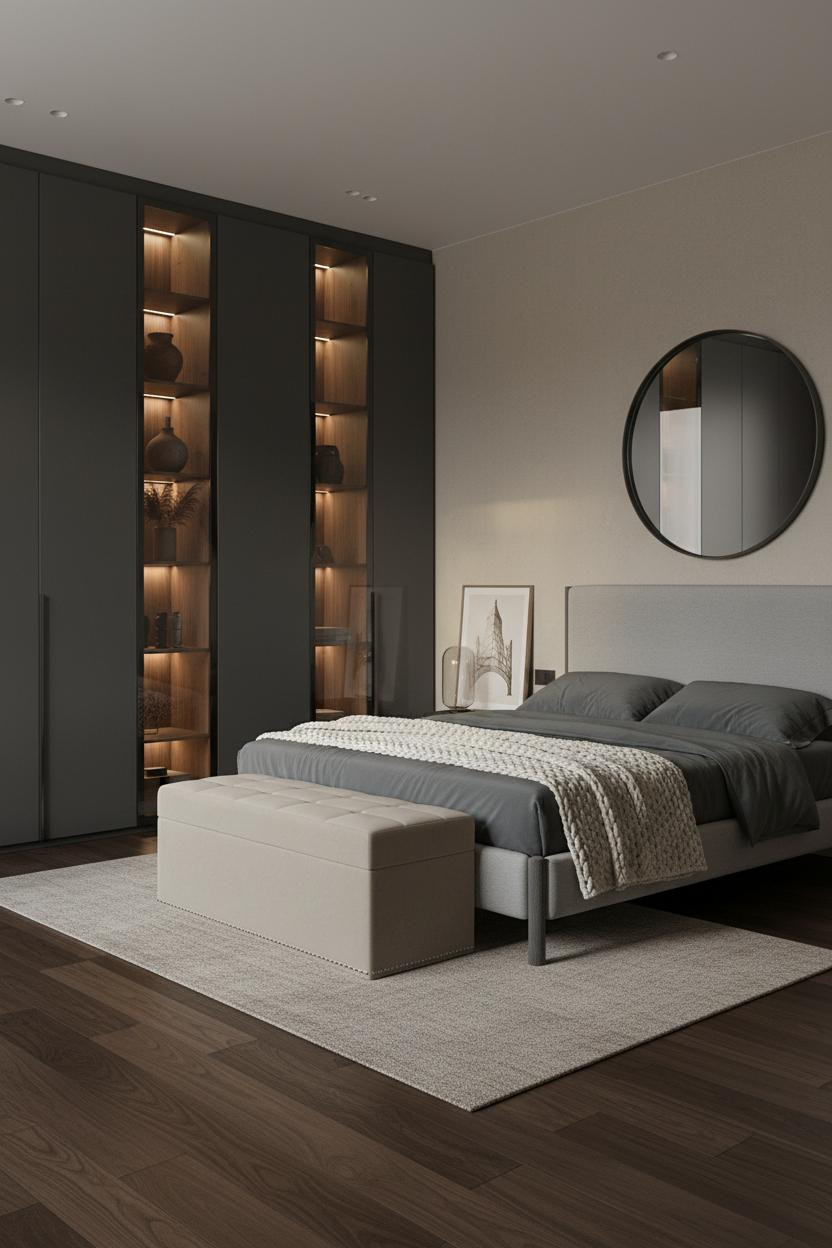
This is the one I’d actually build. No drama. Just a room that works.
Why the materials matter: Warm LED strips glowing behind recessed walnut shelving inside matte charcoal cabinetry creates a contrast that makes the whole wall feel three-dimensional. The dark shell, the warm interior. It’s a small detail that reads as genuinely considered bedroom design.
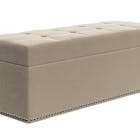
A storage bench at the foot of the bed solves morning chaos and finishes the room’s layout in one move. Practical. Precise. Done.

Our #1 Pick
Saatva Classic Mattress
America’s best-selling online luxury innerspring. 365-night trial, lifetime warranty, free white glove delivery.
Shop Saatva Classic
The Foundation Of Every Beautiful Bedroom
Walls get repainted. Cabinetry gets swapped out eventually. But the mattress stays, and it shapes how the whole room actually feels to be in. The Saatva Classic is built around dual-coil support that holds up the way good architecture does: without calling attention to itself.
The breathable organic cotton cover doesn’t trap heat, and the Euro pillow top lands in that exact zone between soft and structured that most mattresses miss in one direction or the other. It feels like the right call years later, not just on delivery day.

The rooms people return to aren’t the most decorated ones. They’re the ones where every choice, from the lacquer on the cabinetry to the mattress under the sheets, was actually thought through. Start with the bed. The rest figures itself out.