
Think your attic is too cramped for a real bedroom? Think again. The best cozy bedroom ideas lean into every slope, beam, and tucked corner instead of fighting them.
These 14 attic rooms prove that low ceilings and odd angles are the whole point. Pick one that feels like yours and start there.
Terracotta Walls and Exposed Beams That Actually Shelter You


I keep coming back to this one. There’s something about the combination of terracotta matte plaster and raw Douglas fir collar ties that makes the room feel like it’s been lived in for decades.
Why it shelters: The warm wall tone absorbs the raking light from exposed beams, which keeps the room from reading as a construction site and more like a cocoon.
Steal this move: Pair a mustard wool blanket with stone-washed grey linen. The contrast is quiet but it stops the bed from looking like a hotel.
Cedar Tongue-and-Groove Ceilings Are Doing All the Work
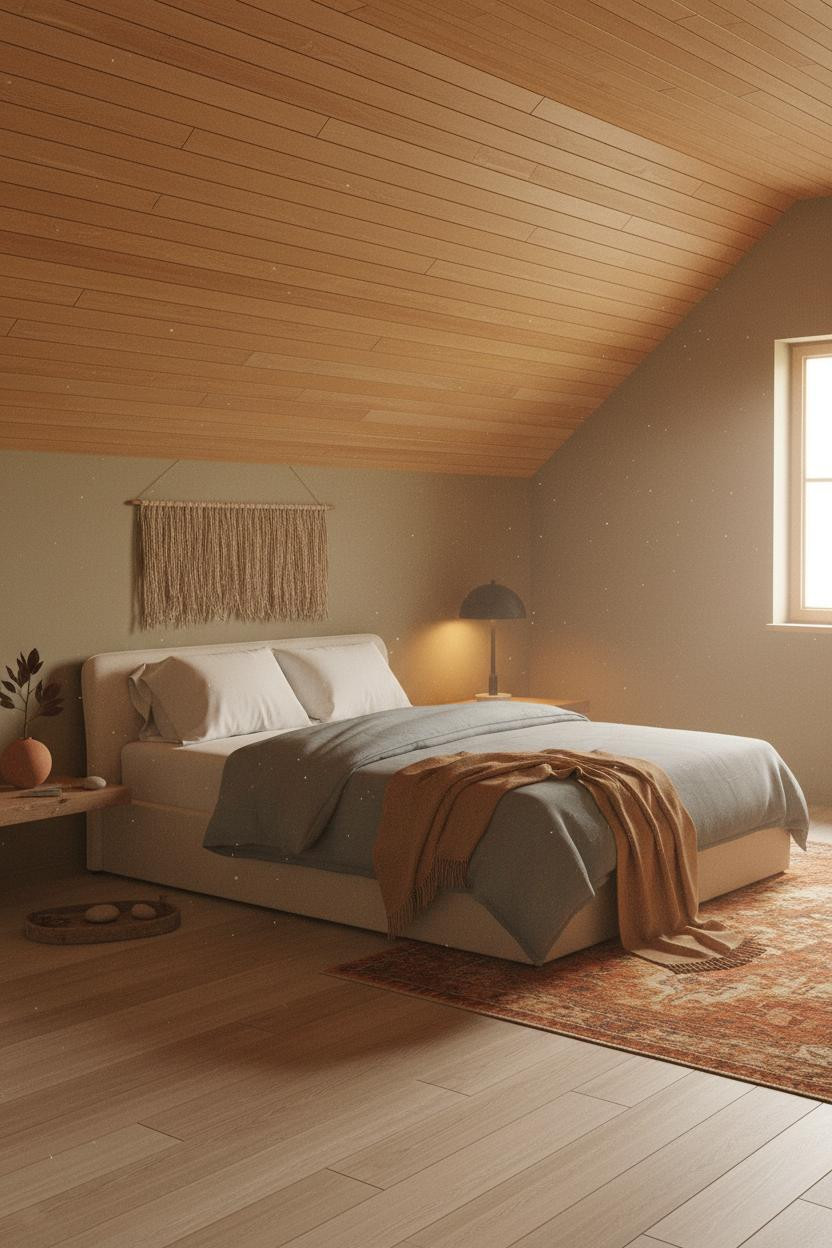


Honest confession: I used to think Japandi style ran cold. This room changed my mind.
The honey-amber cedar planks running up the full roof pitch pull warmth into an otherwise minimal palette, which means khaki walls and a slate linen duvet never tip into sterile.
What to borrow: A dried magnolia branch in a terracotta vessel costs almost nothing and grounds the floating shelf better than any purchased collection.
Whitewashed Pine and the Case for Going Pale Overhead
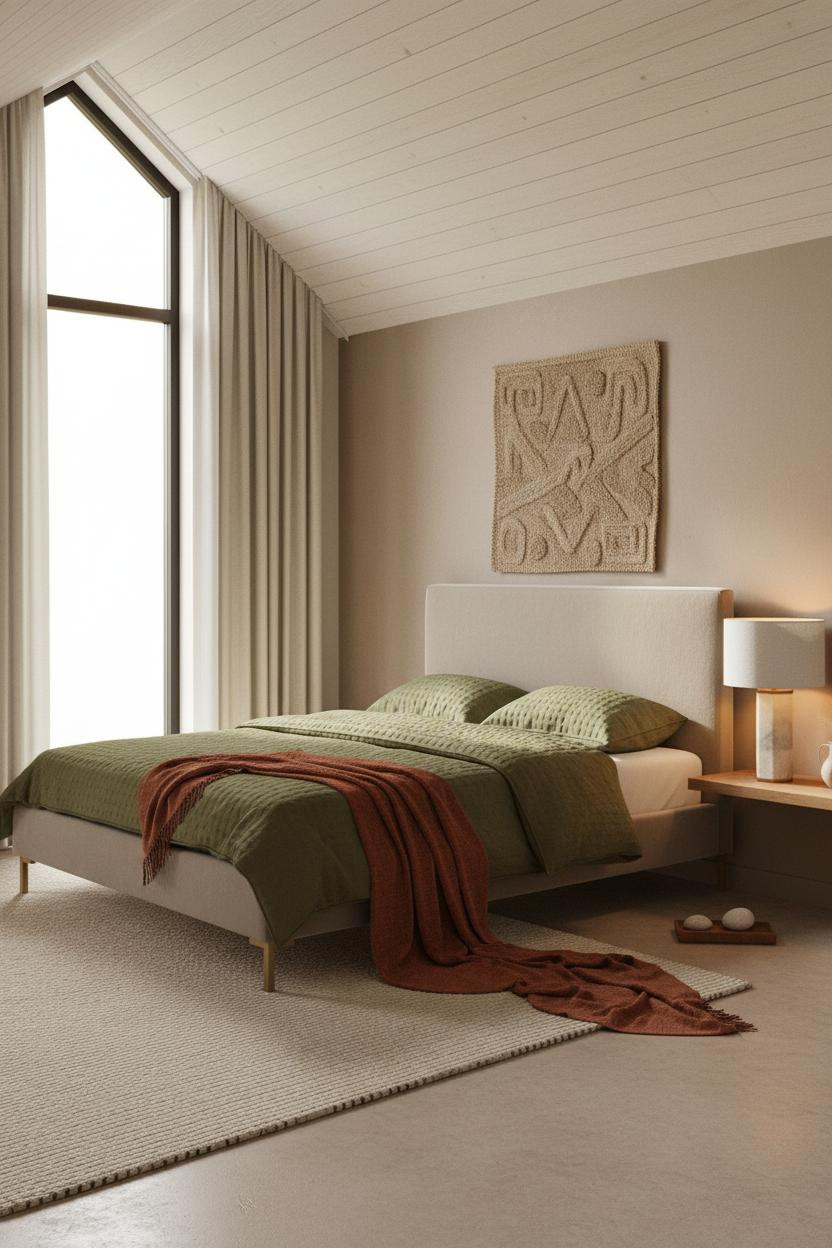

A whitewashed tongue-and-groove pine ceiling lifts an attic room in a way that flat paint never manages, because the grain still shows through and keeps it from feeling clinical.
Why it feels grounded: The warm stone-taupe walls below the pitch hold the brightness in check, while an olive duvet and rust linen throw keep the earthy thread running through the whole room.
The easy win: A floor-to-ceiling oatmeal linen curtain at the gable window is the single detail that makes a small bedroom layout feel considered rather than accidental.
An Arched Plaster Niche That Makes the Whole Bed Feel Framed
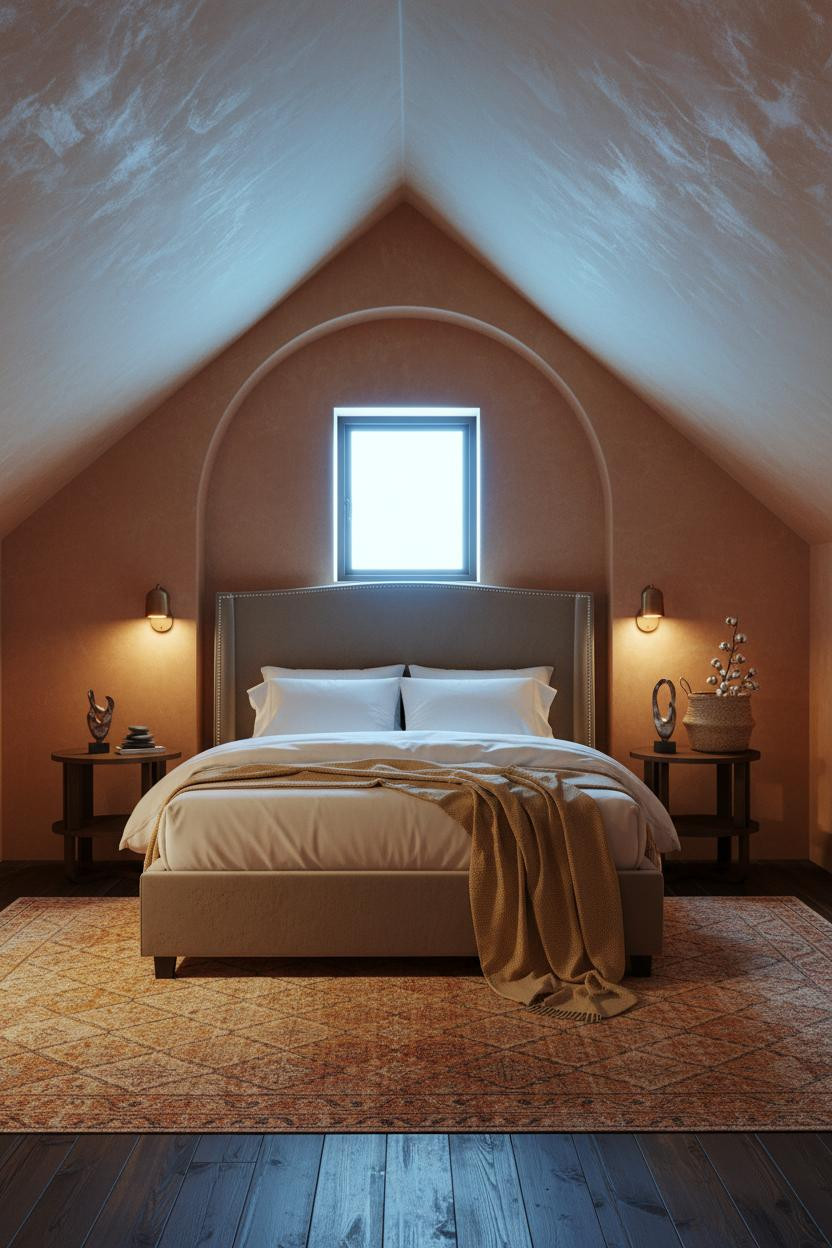


This is the kind of room that makes you want to close the door behind you and stay.
The hand-troweled lime-plaster arch does something a flat headboard wall simply cannot: it turns the whole gable into a frame, so the bed feels placed with intention rather than just pushed against a wall.
Worth copying: Rust-ochre walls paired with a mustard blanket and a Moroccan rug layer warmth in a way that feels collected rather than decorated. Nothing too matchy.
A Raw Linen Gallery Wall That Earns Its Place
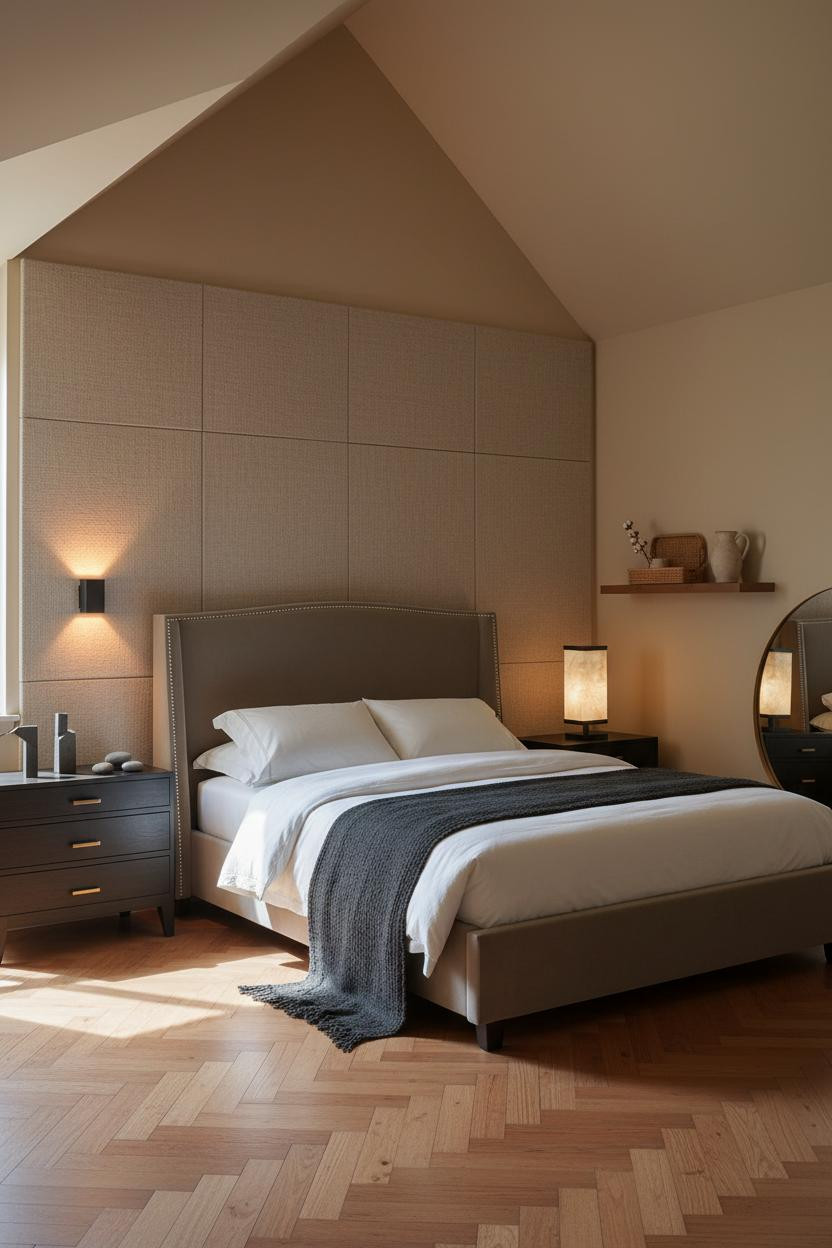

Full-width linen-wrapped panels covering the entire gable end. It sounds like too much. It’s not.
Because the uneven woven texture catches sidelight and creates soft relief across the surface, the wall reads as architecture rather than decoration, which helps balance the chestnut herringbone parquet below without competing with it.
Pro move: A charcoal cashmere throw at the foot of an ivory duvet is the fastest way to add weight to a pale bedroom without repainting anything.
Whitewashed Rafters and Why Ochre Walls Work Under Them
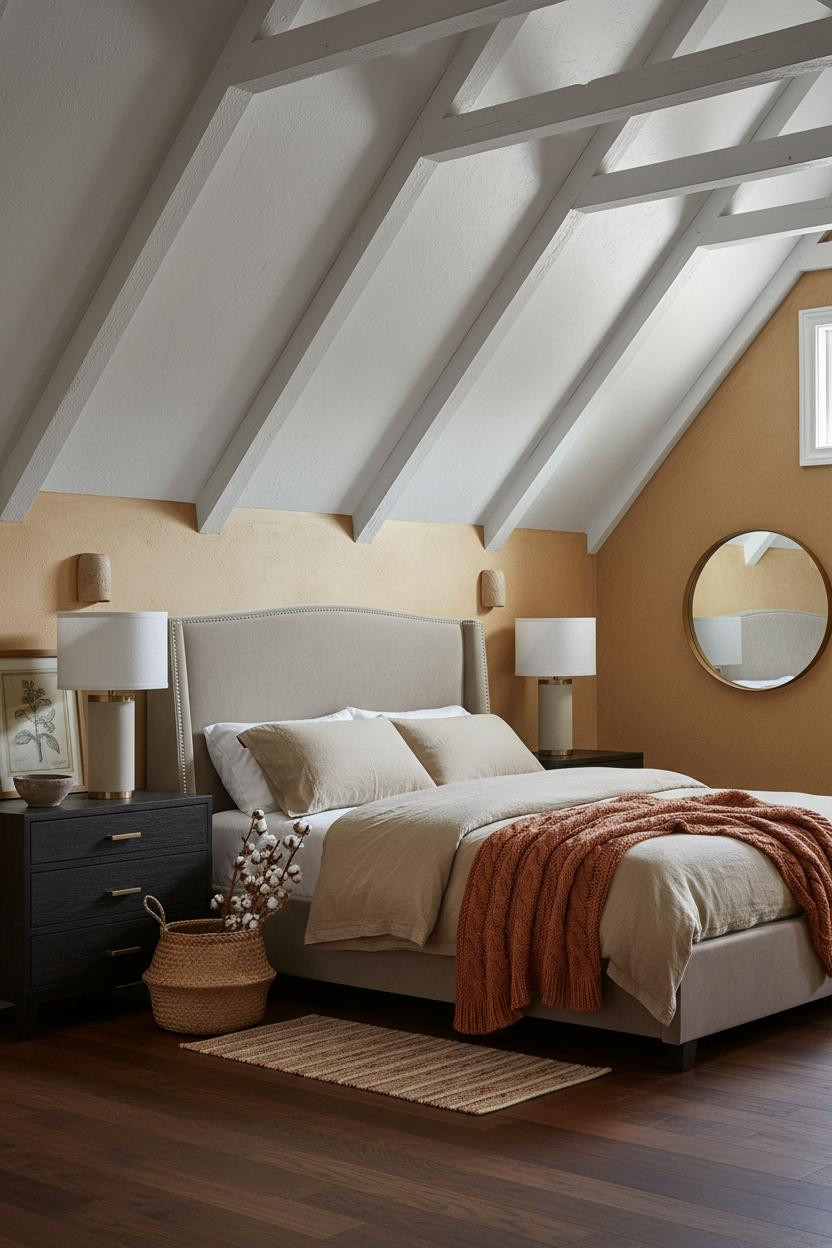
Whitewashed rafters against warm ochre plaster walls shouldn’t feel this calm, but the chalk finish on the timber pulls the heat out of the ochre just enough.
Design logic: The pale geometry overhead reflects cool morning light back down into the room, while the earthy walls keep things from going flat or cold. The room feels warm without being heavy.
The finishing layer: A burnt-sienna cable-knit throw and a rust-and-cream wool runner tie the floor to the ceiling in a way that feels like the room planned itself.
Muted Blue-Grey Walls Deserve More Attention Than They Get
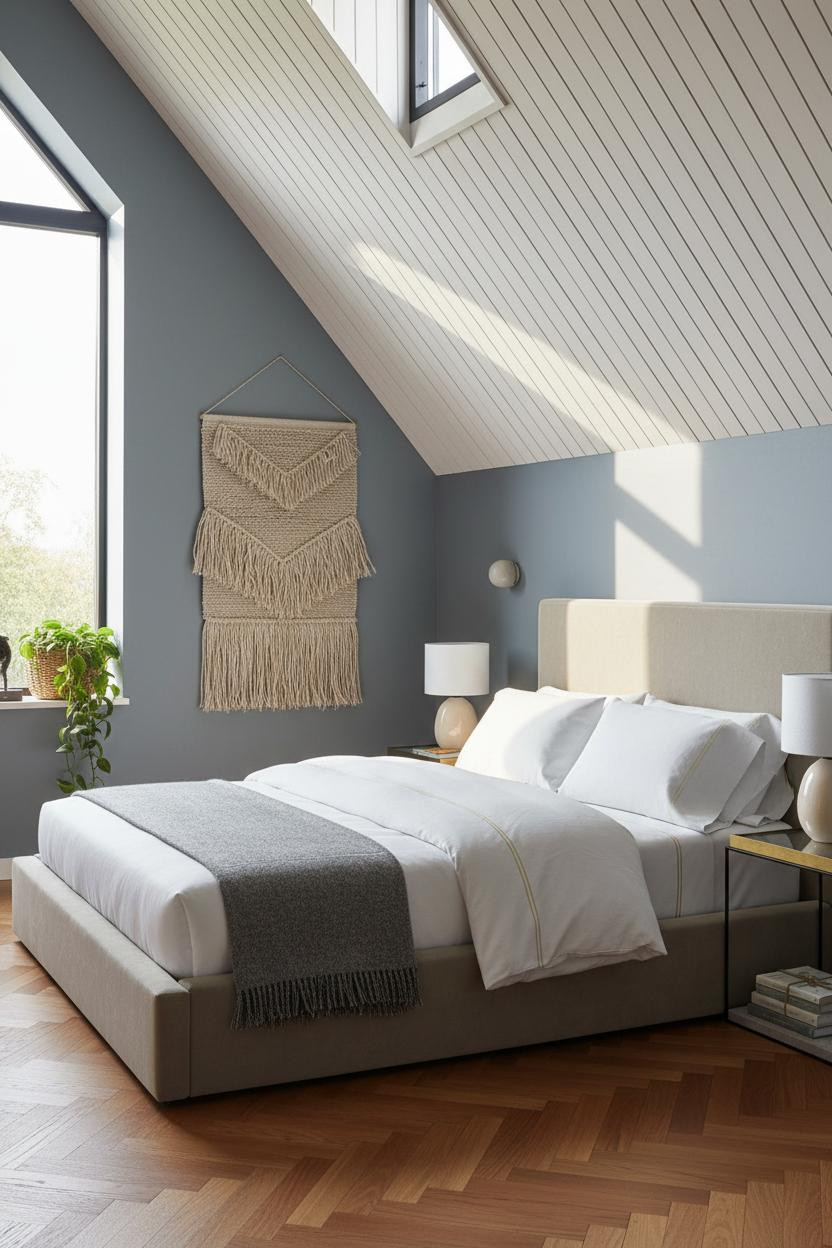


I almost scrolled past this one. Glad I didn’t.
Muted blue-grey plaster walls read cool on a paint swatch but feel intimate once the whitewashed fluted wood battens on the ceiling slope catch the morning sidelight and throw warm shadow lines across the surface. The room feels calm and cohesive, honestly more than you’d expect from a cool palette.
Where to start: A large undyed fibre wall hanging above the bed grounds the gable end without adding color. Just enough texture to keep things interesting.
Shiplap Walls That Make a Small Bedroom Feel Intentional
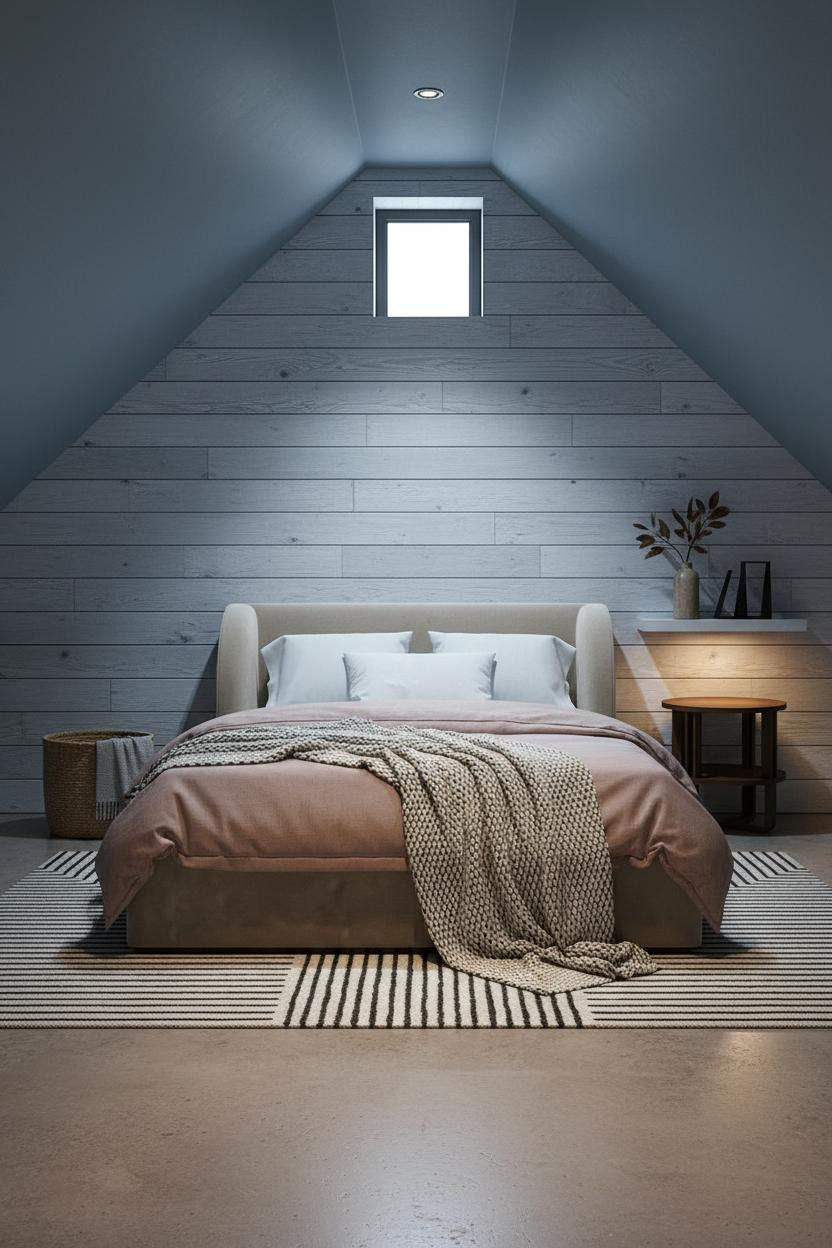

This is a small bedroom layout that earns every inch. The full-width stone-white shiplap on the gable wall creates horizontal rhythm that makes the room feel wider, while slate-blue sloped walls on the sides keep it from going too beachy.
Avoid this mistake: Don’t paint shiplap a bright white. A muted stone tone with visible wood grain pressed through is what gives it texture rather than just contrast.
One smart swap: A dusty pink linen duvet paired with a chunky cream knit throw is softer than it sounds. Mountain-minimal, not precious.
Honey Oak Collar Ties Against Dove Grey: The Quiet Contrast
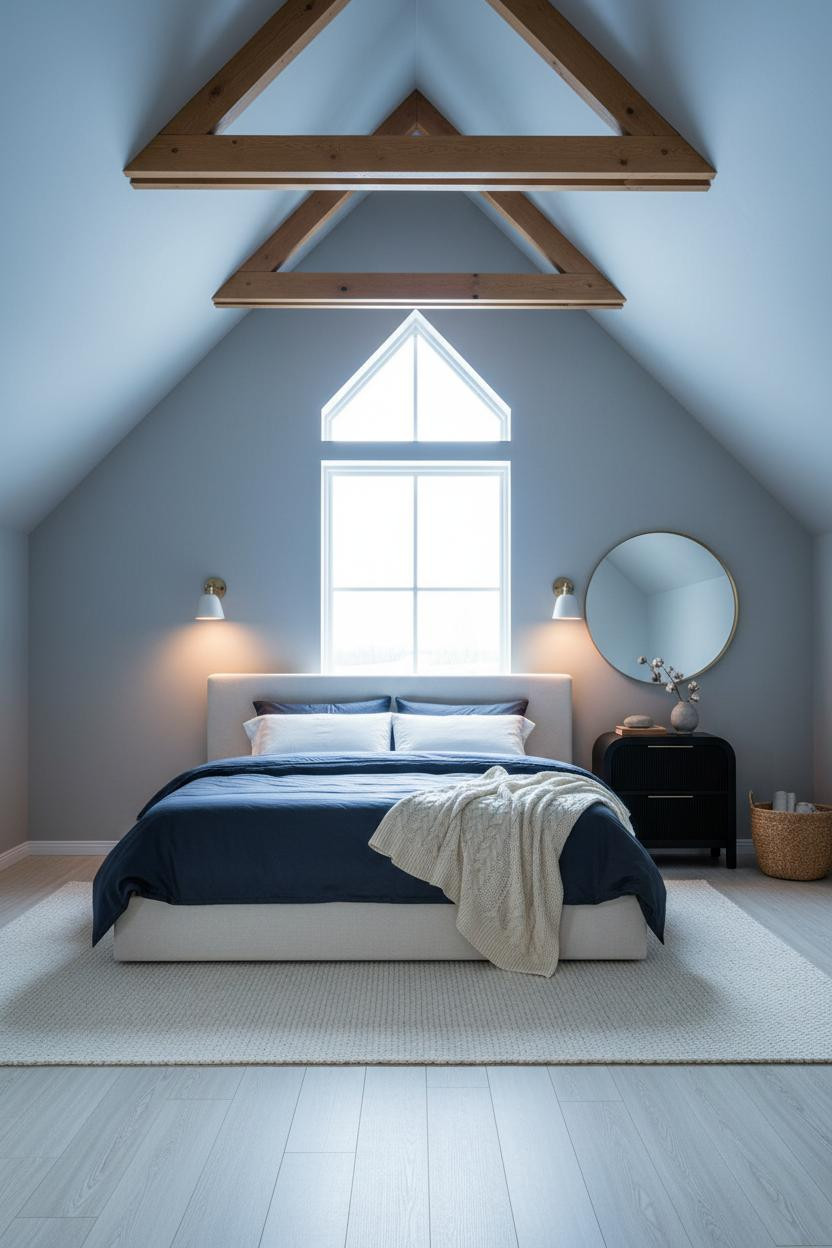

The reason this feels expensive instead of plain is the contrast between honey raw oak collar ties and dove grey matte plaster walls. Cool and warm, same room, no fight.
What gives it presence: Paired ceramic sconces flanking the headboard cast warm amber pools against the cooler grey, which pulls the eye to the bed first and lets the architecture settle into the background.
The smarter choice: A natural wool cream rug under the bed on pale ash flooring is a quieter move than a patterned rug here. The beams are already doing the decorating.
Terracotta and Dark Rafters: The Boho Layer That Actually Works
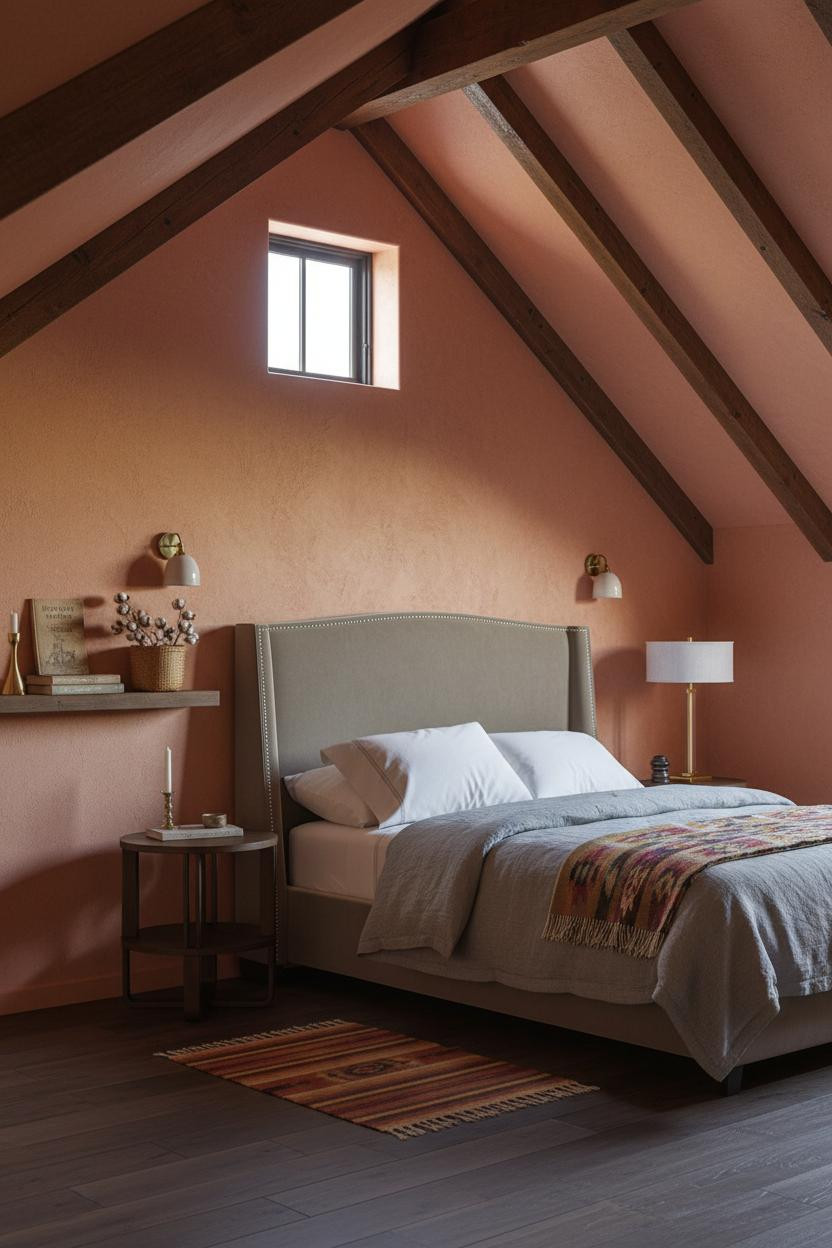
Fair warning. This is the most layered room in the roundup and the hardest to pull off without it looking chaotic.
But the rough-hewn dark timber rafters overhead provide enough structure that the kilim blanket, stone-washed linen, and rust-and-ochre wool runner read as collected rather than cluttered. The peaked geometry keeps it anchored.
Don’t ruin it with: Too many colors on the floating shelf. Brass, dried cotton stems, and a worn field guide. That’s the whole edit.
A Curved Plaster Vault That Wraps the Room Like a Shell
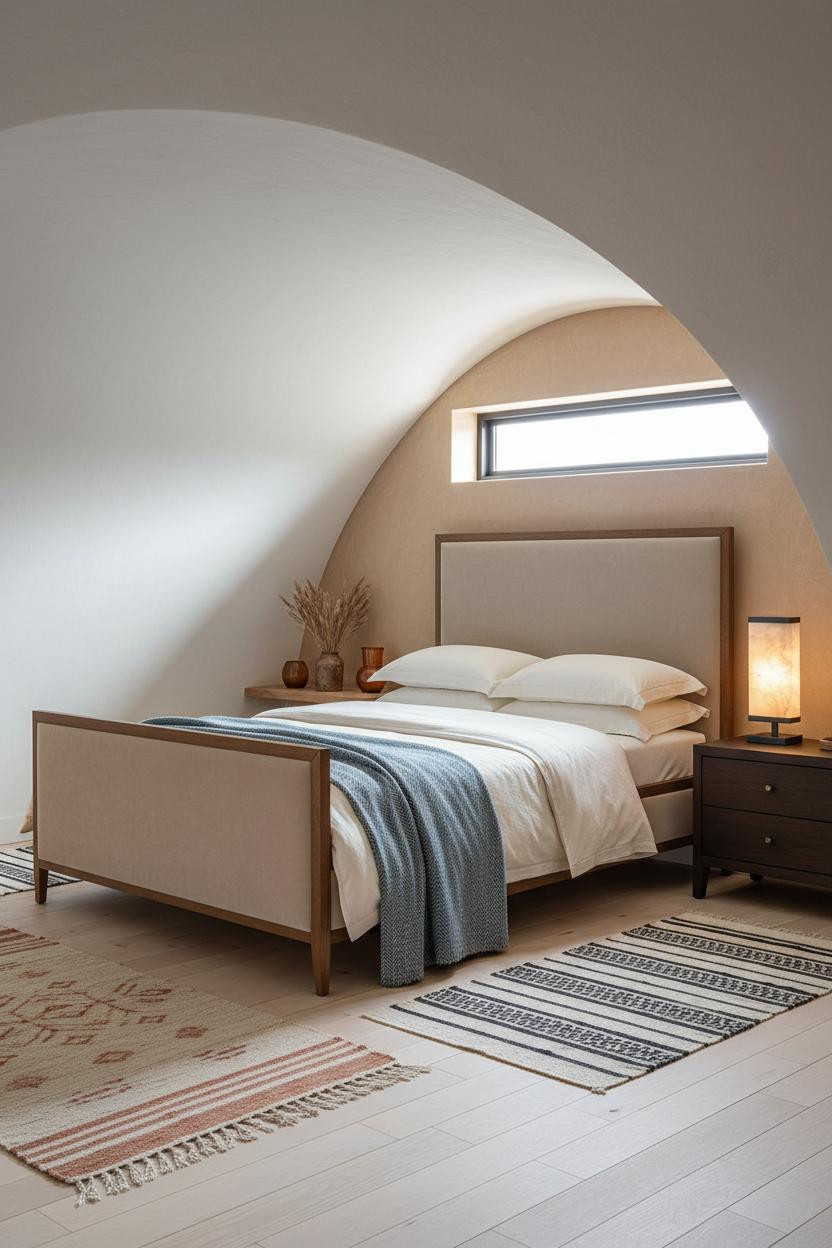

A smooth white-lime vault sweeping low over the sleeping area is the architectural equivalent of being tucked in. The arc narrows the world to just this room.
What creates the mood: Warm clay walls below the spring line and a faded rust kilim runner tie the floor to the curve while the pale vault keeps the whole thing from closing in. Lived-in and intimate, somehow both at once.
Try this: A steel-blue herringbone throw folded back on cream percale is a simple detail that stops the bed from reading as an afterthought.
Stone Accent Walls Are Back and They Look Nothing Like the 2000s
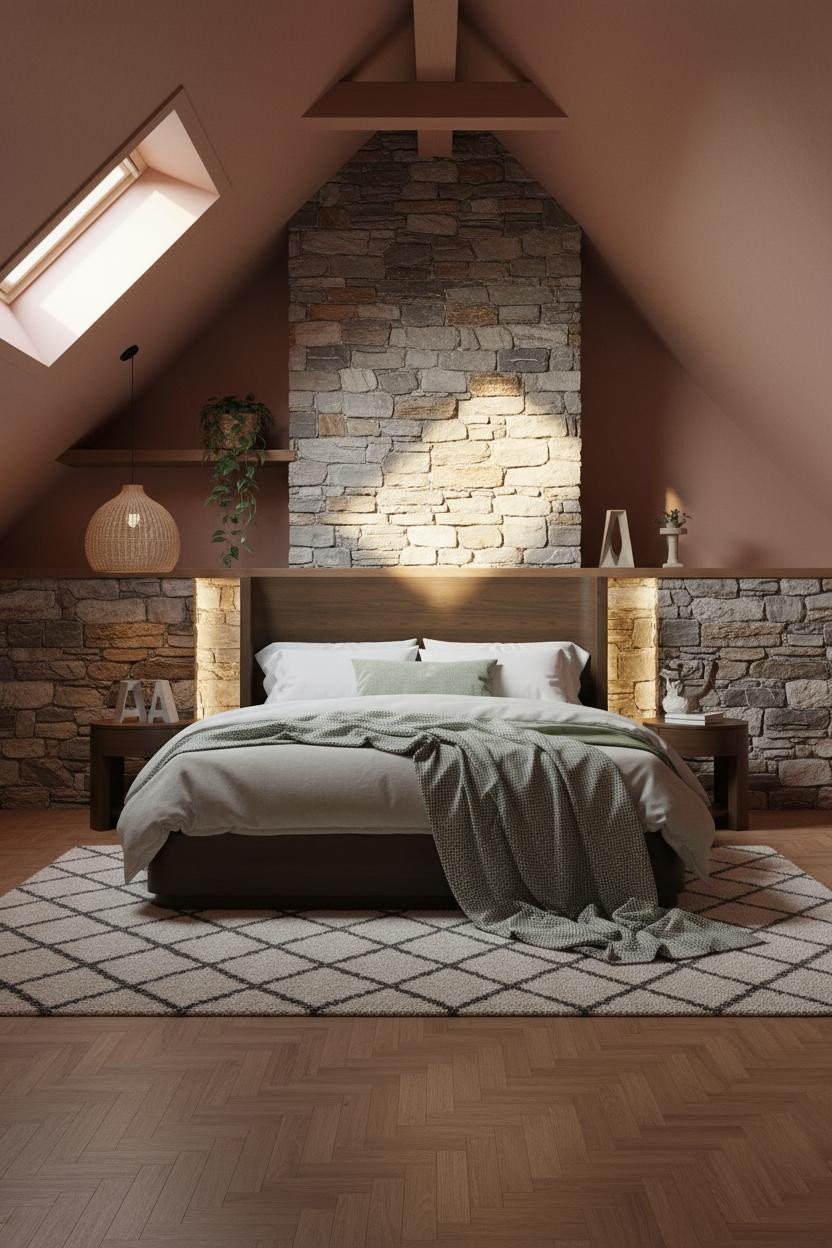

This one surprised me. Half-height rough-cut fieldstone on the sloped side wall paired with dusty rose plaster on the upper gable is a combination I’d never have predicted working.
Why the materials matter: The irregular fieldstone face catches raking morning light in every crevice, which means it changes character throughout the day while the chestnut herringbone parquet underfoot keeps the warmth consistent. The room feels like a warm bedroom aesthetic that grew naturally rather than was assembled.
What to copy first: A woven rattan pendant low-hung to the left of the bed adds organic contrast to the stone without competing with it. Just enough texture to keep things interesting.
Board-and-Batten Meets Moss Green and It Works Better Than It Should
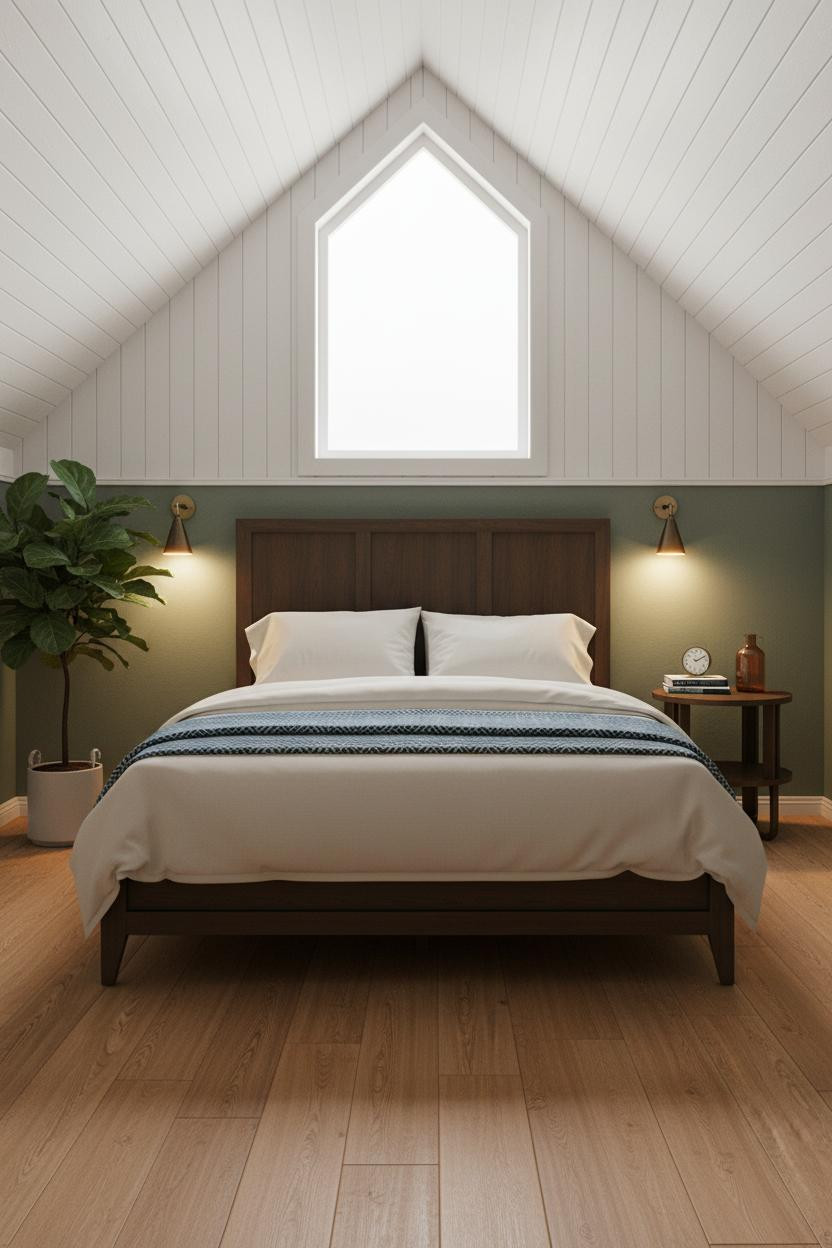

Admittedly, whitewashed board-and-batten paneling against moss green matte plaster sounds like it might conflict. But the painted ridges on the batten throw just enough faint vertical shadow to visually separate the two surfaces so they read as layers, not a mismatch.
And the reclaimed amber plank flooring below ties both tones together. A steel-blue herringbone throw on ivory cotton keeps the bedding from going too earthy or too cold.
Where people go wrong: Skipping the plant. A fiddle-leaf fig in the far corner is a cozy room decor detail that earns its square footage in any attic layout.
Golden Afternoon Light and Honey Pine Beams: The Japandi Way
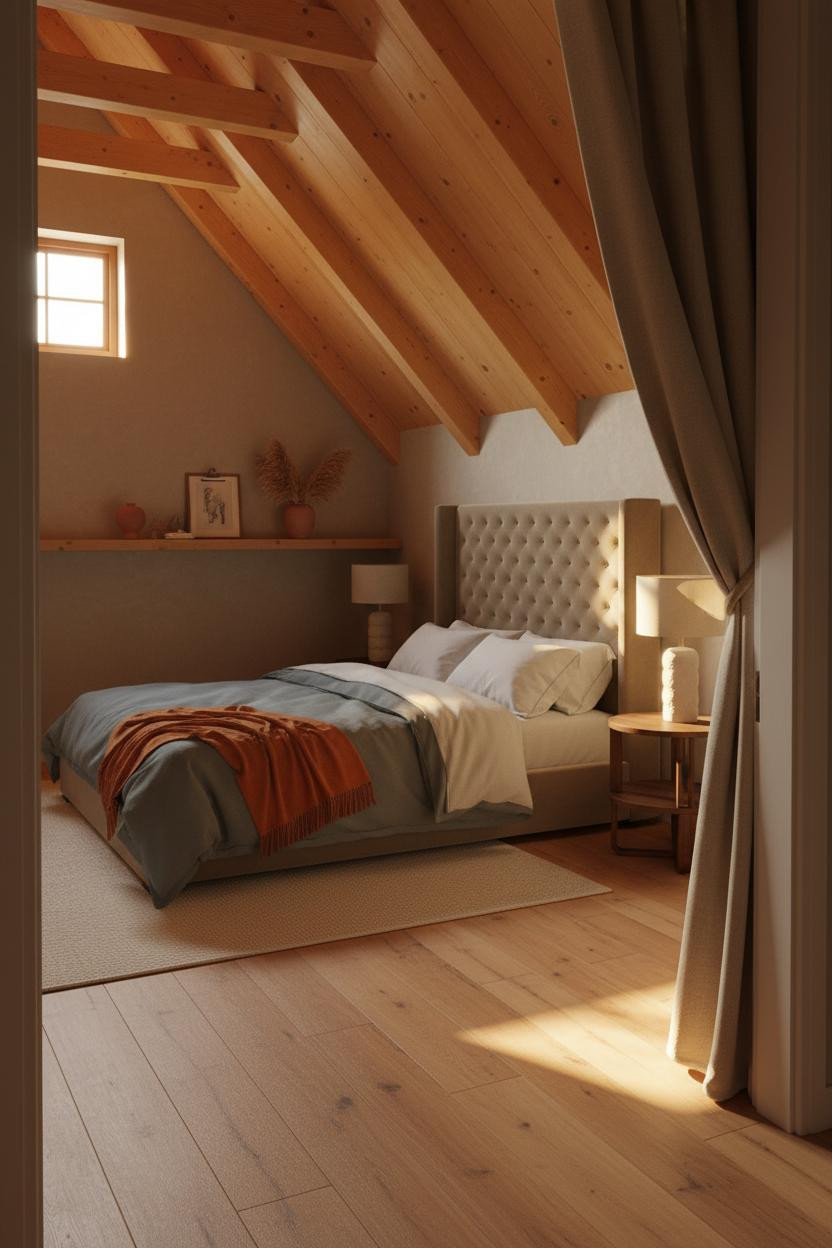

This is the one I’d actually build.
Late afternoon light catching raw grain on exposed honey-pine beams is something you can’t fake with paint or wallpaper. The warm greige plaster walls below hold the amber without amplifying it, which is why the room feels tucked-in rather than orange-lit.
The key piece: A floor-to-ceiling oatmeal linen curtain at the dormer makes the window feel significant in a small attic bedroom layout without taking up a single extra inch of floor space.
What cheapens the look: A burnt orange mohair throw reads rich here because everything else is restrained. Add pattern and the whole thing unravels.

Our #1 Pick
Saatva Classic Mattress
America’s best-selling online luxury innerspring. 365-night trial, lifetime warranty, free white glove delivery.
Shop Saatva Classic
The Foundation Of Every Beautiful Bedroom
Walls get repainted. Linen gets swapped. The beams stay and so does the mattress. And every cozy attic bedroom idea on this list only works if the thing you’re actually sleeping on is worth staying in.
The Saatva Classic is the piece that makes it feel complete. Dual-coil support that holds its shape, a breathable organic cotton cover that doesn’t trap heat under a low ceiling, and a Euro pillow top that’s soft without losing structure years in.
Start with the bed. The rest figures itself out.

The rooms people save are the ones where nothing looks accidental. But the rooms people actually sleep well in? Those start with what’s under the duvet, not what’s on the walls.