
Think your basement is too dark, too low, too far underground to feel like a real room? Cozy basement bedrooms prove otherwise, every single time. The best ones don’t fight the architecture. They use it.
These 14 rooms run the full range, from farmhouse board-and-batten ceilings to Japandi-minimal concrete floors, most of them done on a tight budget. Warm paint, layered light, the right rug. That’s honestly most of it.
Moss Green Walls That Make the Basement Feel Grounded


I keep coming back to this one. The color choice is so obvious in hindsight.
Why it works: Moss green walls pull the earthy tone of the dark walnut floor upward, so the room feels like one continuous material rather than a floor sitting under a box.
Steal this move: Pair a warm green with a greige plaster feature wall behind the bed, and the two tones stop competing while still feeling distinct.
A Warm Camel Wall That Solves the DIY Budget Problem
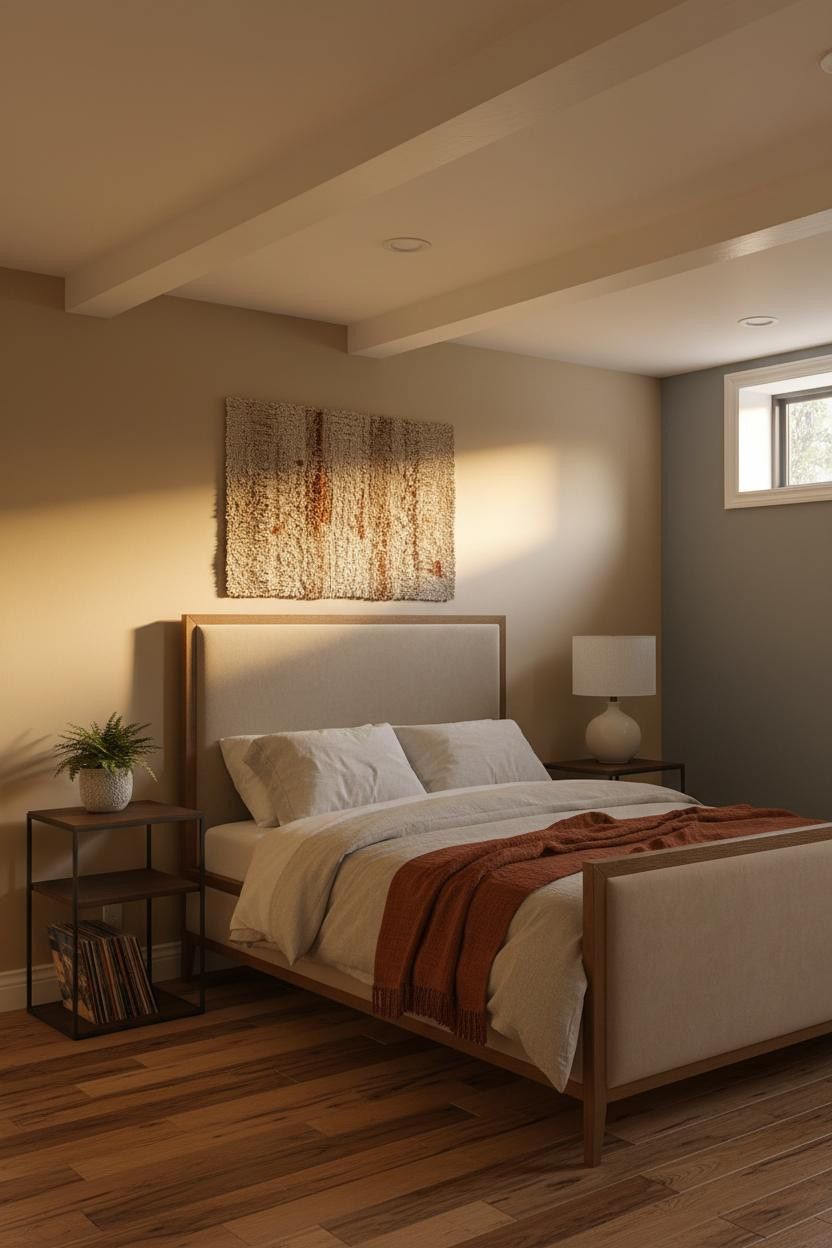

Paint and light. That’s the whole budget here, and it’s enough.
The real strength: A camel-painted wall behind the bed reads warm even under recessed light, which means you don’t need expensive fixtures to make the basement feel inviting.
Try this: Layer a woven wall hanging over the main wall and add a rust linen throw at the foot. The room feels collected rather than decorated, in a way that feels genuinely intentional.
Clay Walls and Birch Floors That Open a Low Ceiling
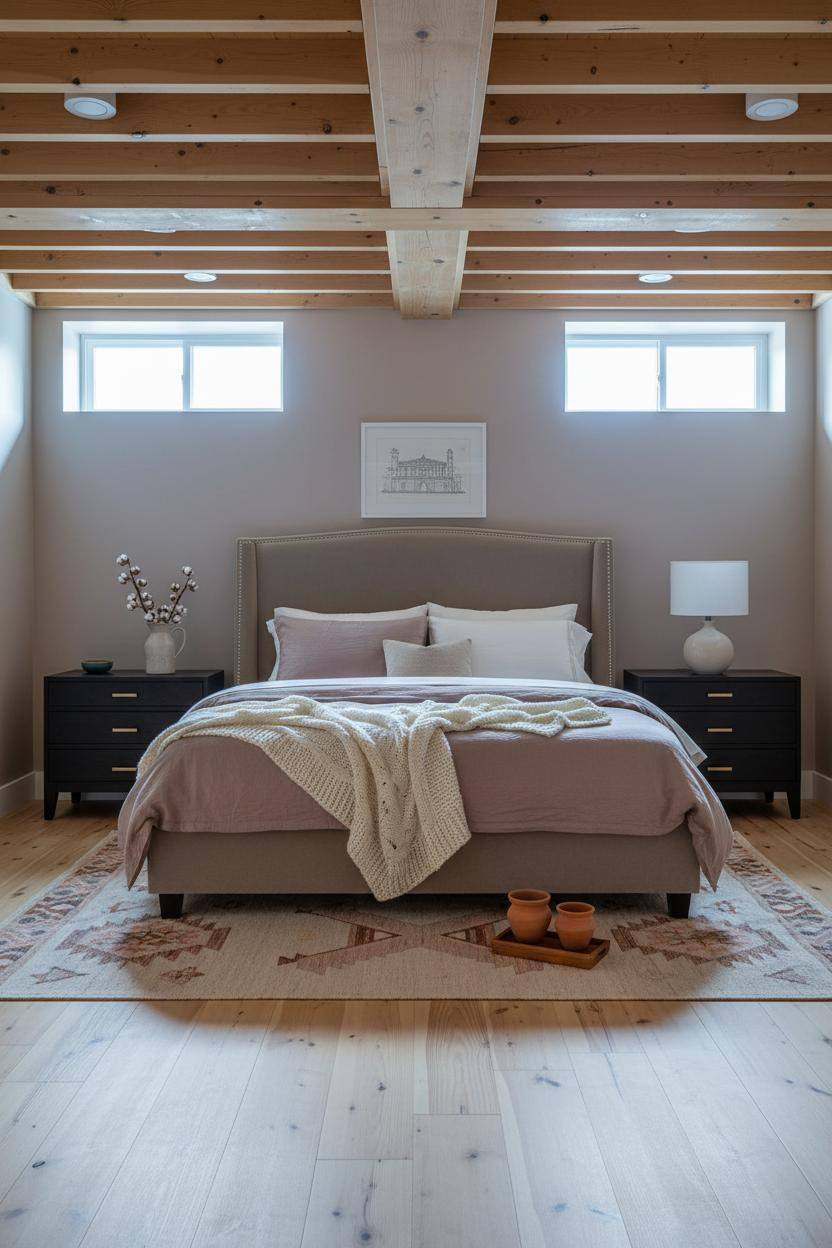
Light floors do more work than light walls. Most people get this backwards.
The pale birch wide-plank flooring bounces the window-well light back upward, which helps balance the low joist ceiling rather than letting it press down. What changes the room: it’s the floor color doing the lifting, not the paint.
The smarter choice: Match your wall clay tone to the warm plank undertone so they read as one thermal envelope rather than two competing surfaces.
DIY Wainscoting That Actually Looks Finished
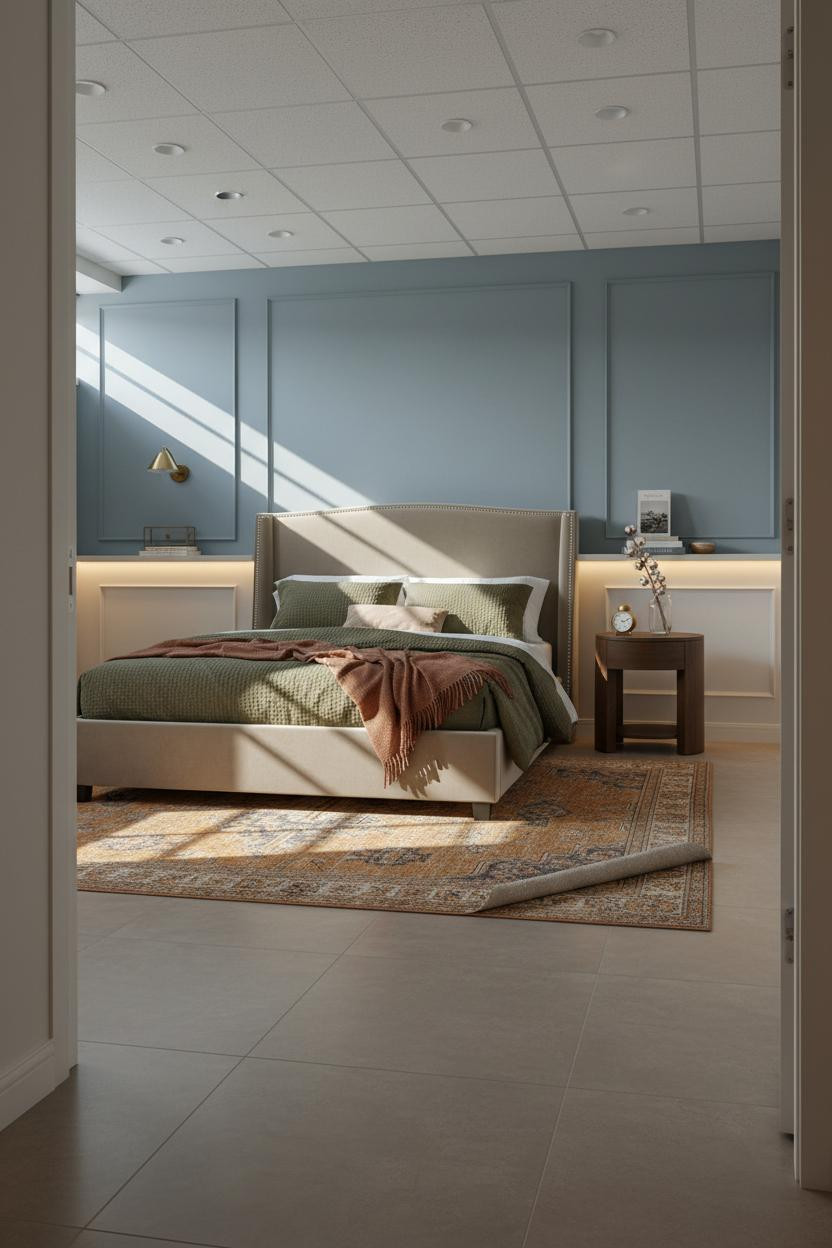
This is the one DIY move I’d actually recommend. And it costs less than a weekend of impulse shopping.
Half-height cream wainscoting panels divide the wall horizontally, which makes a low ceiling read taller by shifting the eye’s anchor point down rather than up.
Avoid this mistake: Don’t paint the panel field and the wall above the same dusty blue. You need that tonal contrast at the rail line or the whole effect disappears.
Where to start: Add an LED strip along the rail cap for an amber glow that pools at the lower wall and makes the wainscoting feel architectural, not flat.
Layered Amber Lighting for a Windowless Basement Room
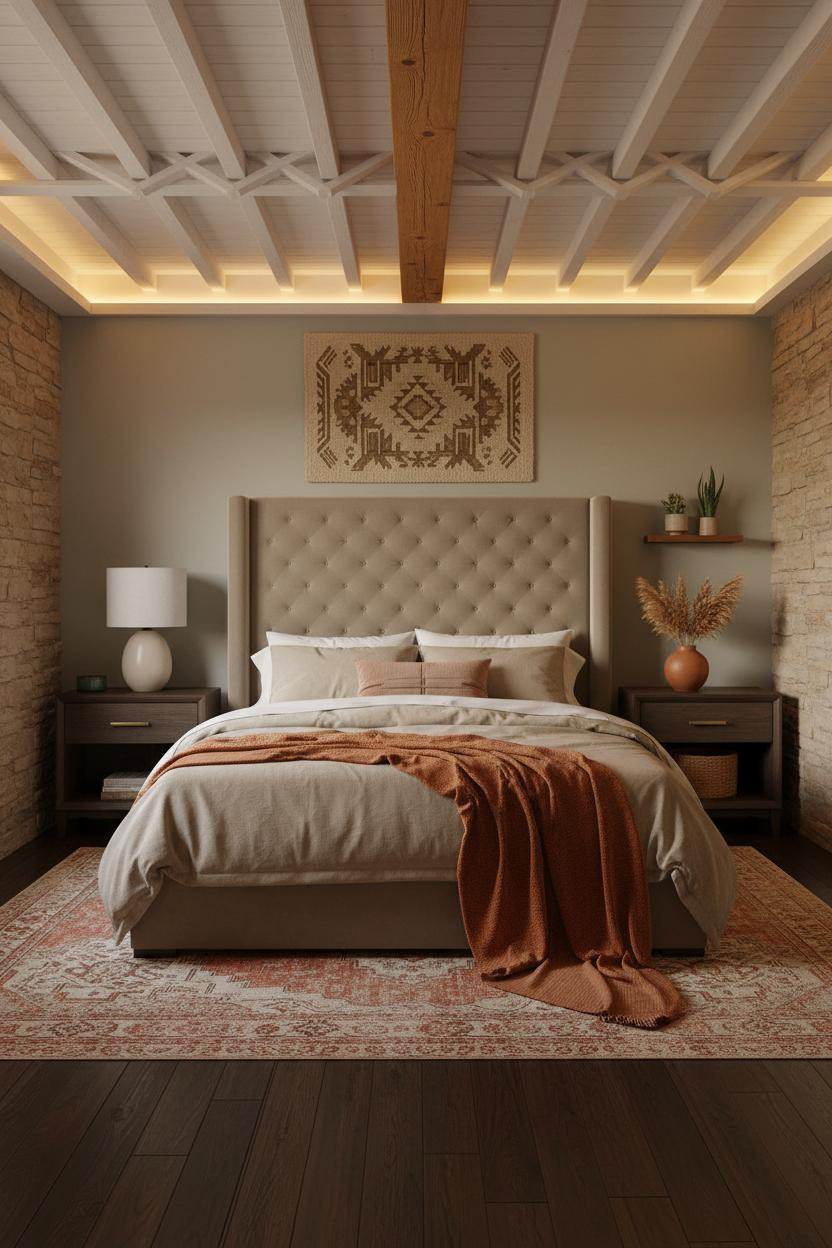


No windows. Not a problem. The room feels still and warm, which is honestly the point.
Why it holds together: A cove LED strip tracing the ceiling perimeter keeps the raw honey-stained beam from feeling like a structural leftover. It becomes the room’s focal point instead.
Layer at least two light sources at different heights. The easy win in a windowless basement is depth through lighting zones, not brightness.
Taupe and Blonde Oak That Reads Bright Underground
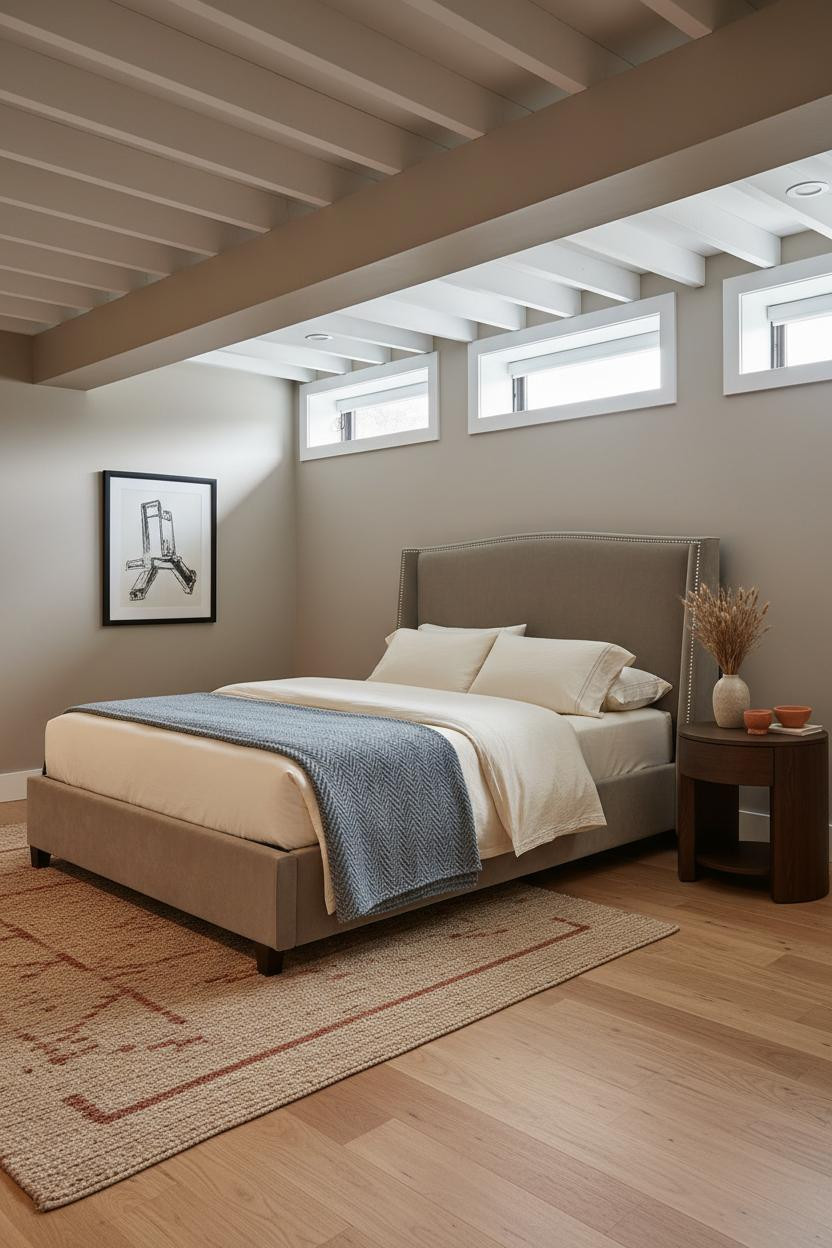
Nothing fancy. That’s the point.
What makes it work: Warm grey-taupe paint and blonde oak flooring create a tone-on-tone palette that reflects window-well light rather than absorbing it, so the overcast days don’t feel grim.
Pro move: Leave one framed sketch leaning unhung against the wall. It’s a small signal that the room is lived-in rather than staged, while still feeling pulled together.
Slate Blue Shiplap That Turns a Budget Basement Into a Retreat
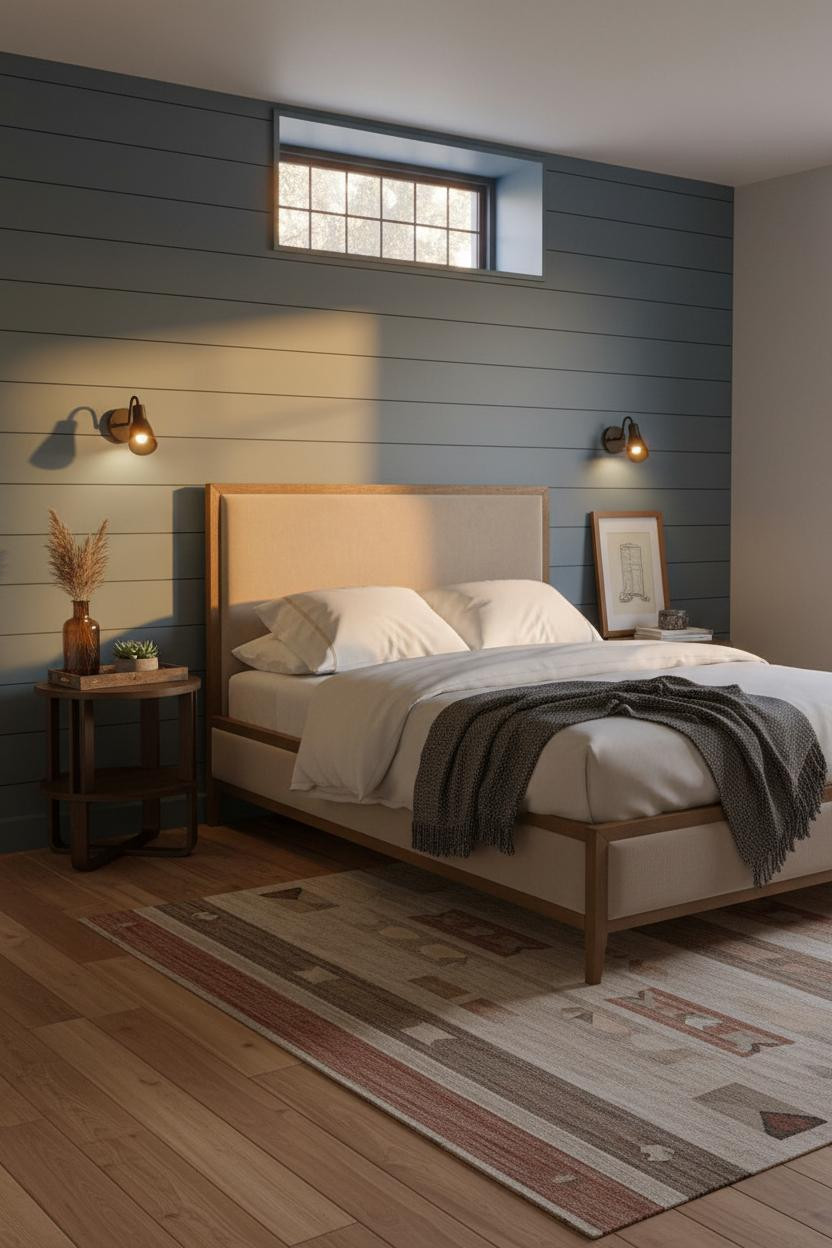

This is the kind of room that makes you want to close the door and stay in. And the shiplap is doing most of the work.
Why it looks custom: Full-height slate blue painted shiplap catches the raking afternoon window light along each board edge, creating horizontal shadow banding that makes the low ceiling feel deliberate rather than accidental.
What not to do: Don’t run shiplap only to chair-rail height underground. The impact comes from floor-to-ceiling commitment, especially in a cozy bedroom where every wall matters.
Mushroom Walls With a Sculptural Arc Floor Lamp
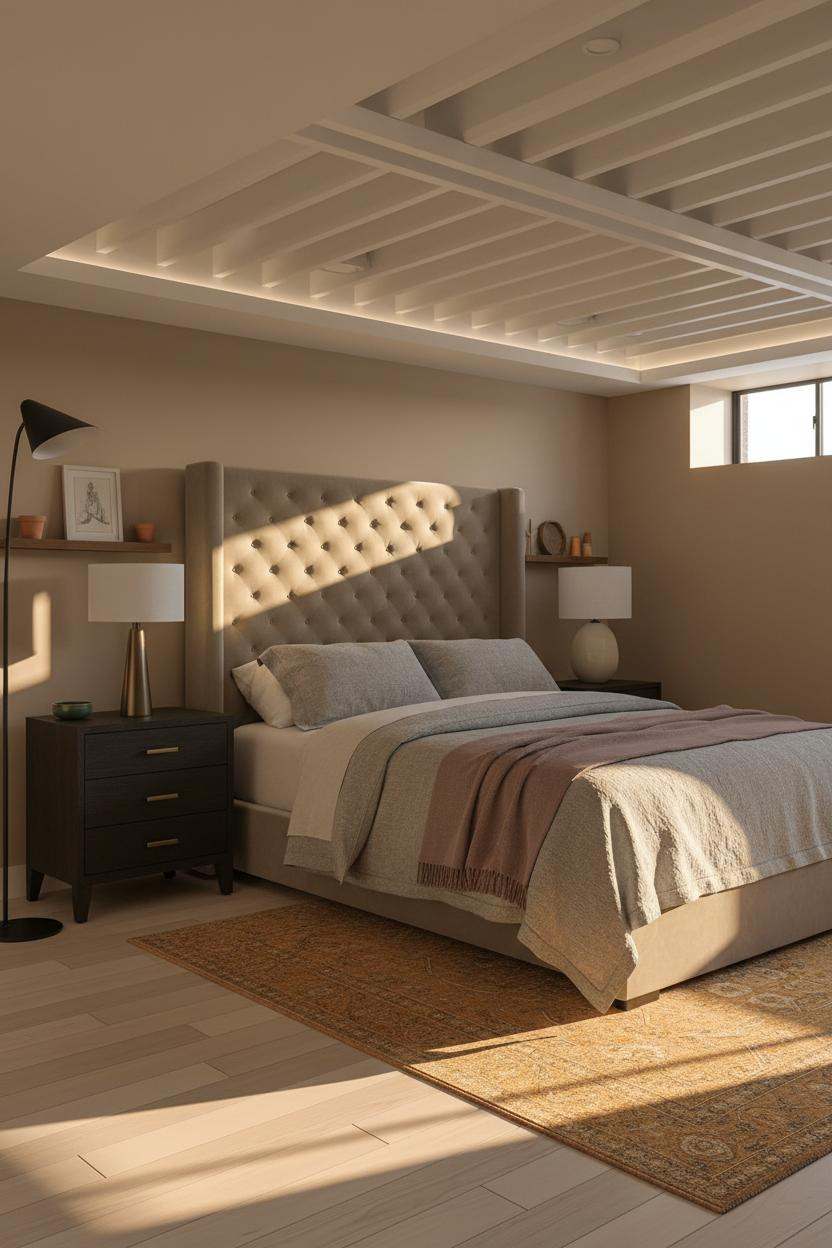
Admittedly, warm mushroom is not the most exciting wall color. But underground, it earns its place.
The bleached pine plank flooring keeps the mushroom walls from feeling heavy, and a hidden LED cove at the ceiling perimeter ties both surfaces into one warm envelope. Design logic: the floor and ceiling work together so the walls just hold the mood.
One smart swap: Replace a standard floor lamp with a sculptural arc style. It pulls the eye upward in a low-ceiling room, which is exactly what you need.
Board-and-Batten Ceilings That Earn Their Keep
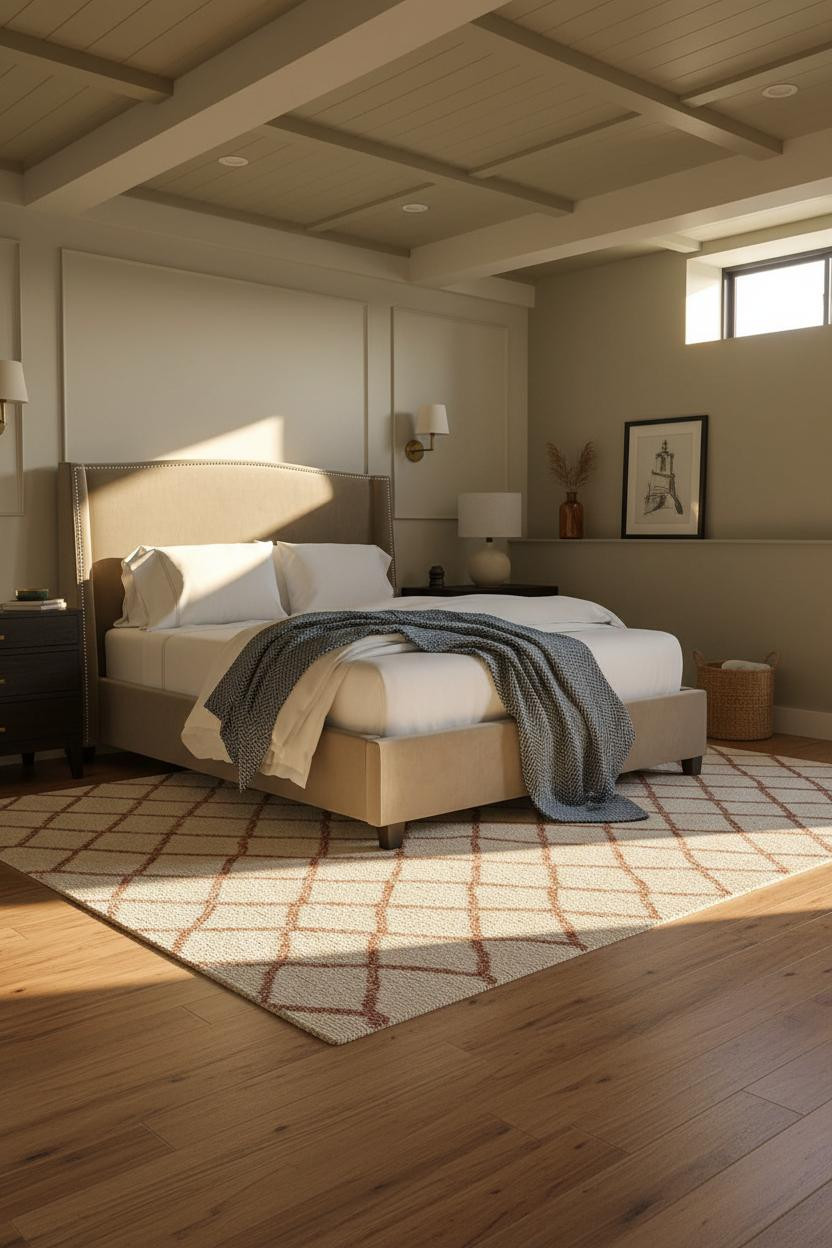
Most people paint the basement ceiling black and call it done. This is the opposite move, and it’s better.
Why it feels intentional: A board-and-batten ceiling treatment in warm cream turns the exposed joist grid into a design feature, so the low overhead reads as a cozy farmhouse detail rather than a structural limitation.
Worth copying: Keep the khaki wall tone close to the ceiling cream. The tonal closeness makes the room feel taller, while still feeling genuinely warm rather than washed out.
Dusty Olive Walls With a Boho Art Lean
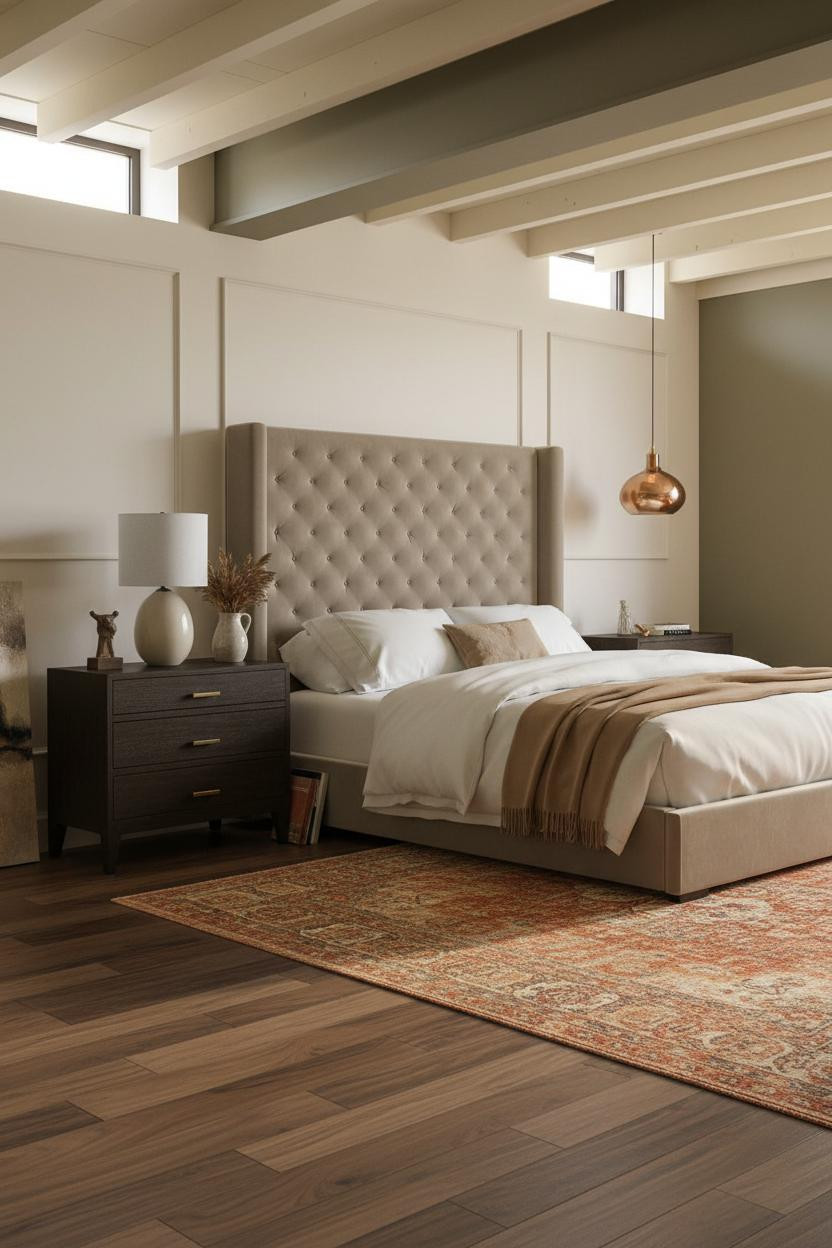
I almost scrolled past this one. Glad I didn’t.
What gives it presence: Dusty olive walls next to cream joists create enough contrast to make the ceiling pattern visible without needing any renovation. And an oversized canvas leaning against the wall adds scale in a way that hung art usually can’t.
The finishing layer: A camel wool throw at the foot and a ceramic pitcher on the nightstand keep the boho direction grounded. Nothing too precious. Just enough texture to keep things interesting.
Dusty Rose and Maple Herringbone for a Coastal Modern Basement
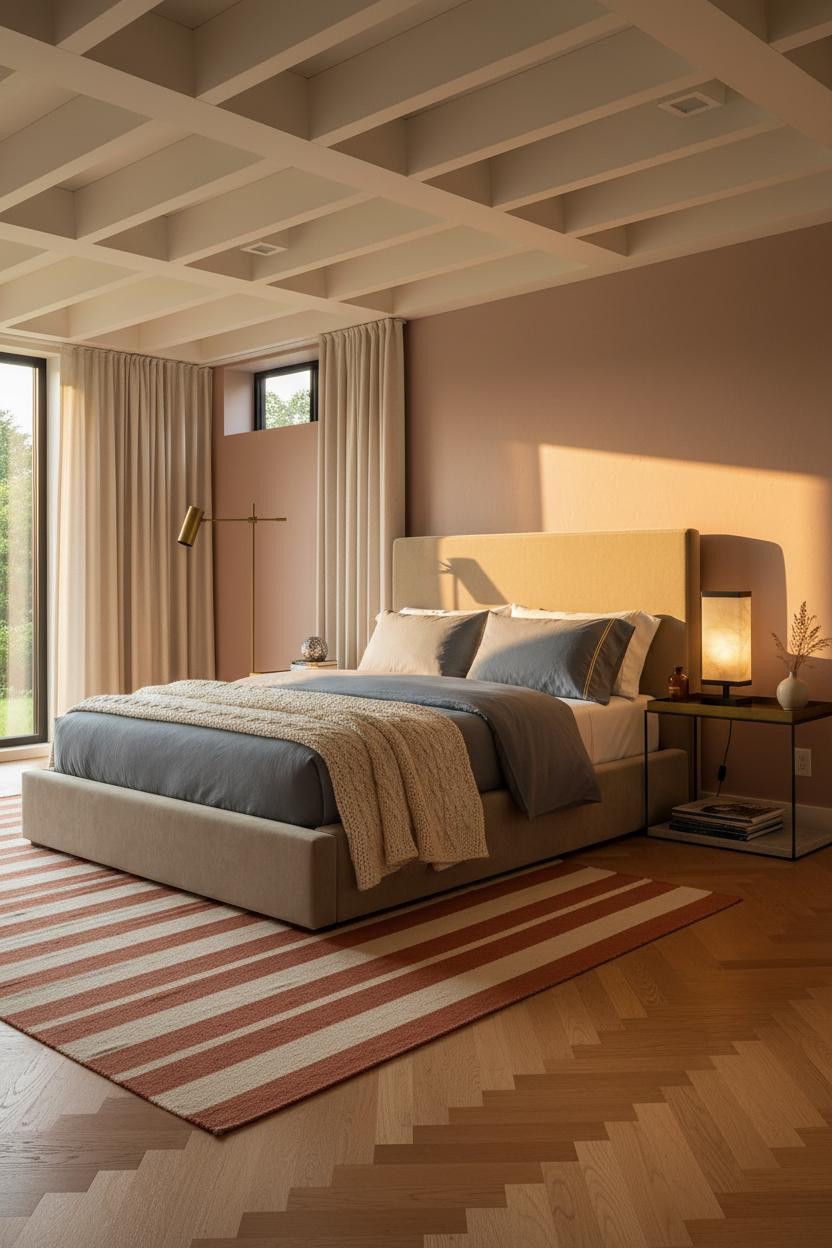

The floor pattern is the whole reason this works. Without it, it’s just a pink room.
Why the palette works: Warm maple herringbone parquet gives dusty rose walls a grounded, rustic contrast that keeps the color from reading as soft or insubstantial underground.
Floor-to-ceiling cream linen curtains beside the window well add height where the room most needs it. Best for a finished basement guest room where you want the palette to feel considered rather than accidental. See more basement guest bedroom ideas for additional layout and styling guidance.
Terracotta and Forest Green That Belong Underground
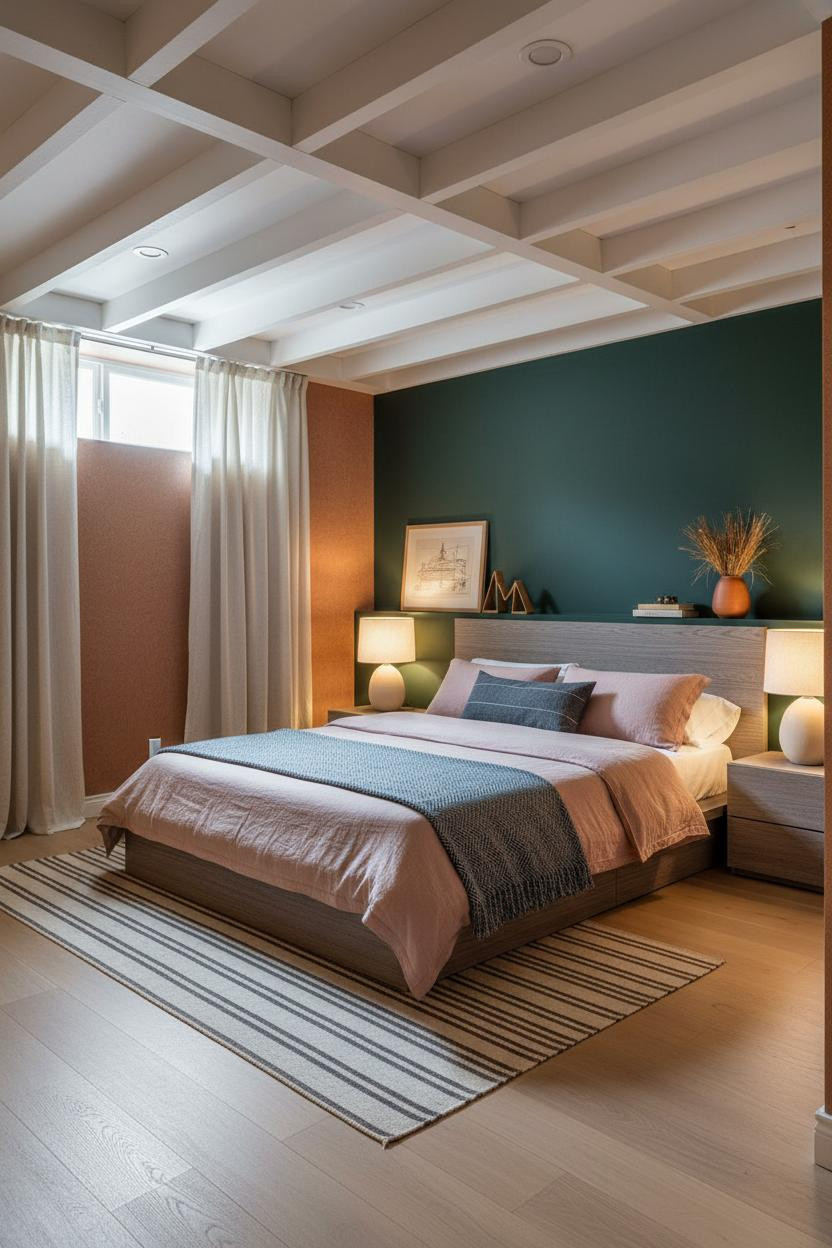

This combination shouldn’t feel this calm. But it does.
Why it feels balanced: The deep forest green feature wall behind the bed anchors the terracotta side walls without fighting them. It’s enough contrast to create a focal point, while the bleached oak flooring keeps the whole room from going too heavy.
The detail to keep: Floor-to-ceiling cream linen curtains at the window well. They soften the earth palette and add a vertical line that the low ceiling needs. Check out more finished basement bedroom ideas for inspiration on two-tone wall combinations.
A Charcoal Accent Wall That Makes the Budget Version Look Custom
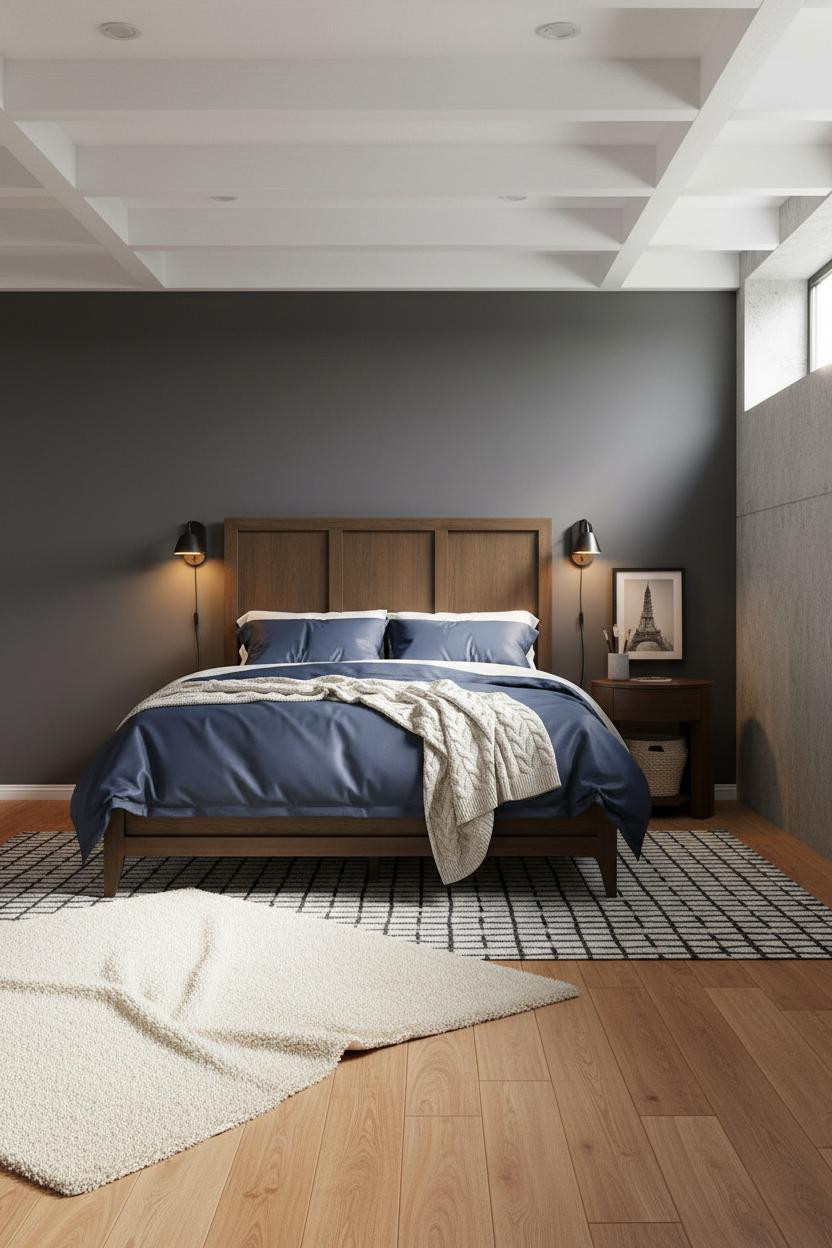

Fair warning. Charcoal underground sounds risky. It’s not, if the floor is warm.
Why it holds together: Honey-toned wide plank flooring absorbs the morning window-well light and throws it back at the dark wall, so the charcoal reads moody rather than cold. Paired sconces flanking the bed create warm pools at eye level that the room needs.
A chunky cream wool rug anchors the sleeping zone and softens the contrast. Where people go wrong is choosing a grey or white rug here. You need warmth at the floor to make the dark wall work. For more approaches to basement bedroom aesthetic pairings, the dark-wall ideas section covers this thoroughly.
Japandi-Inspired Sage and Concrete for a No-Window Basement
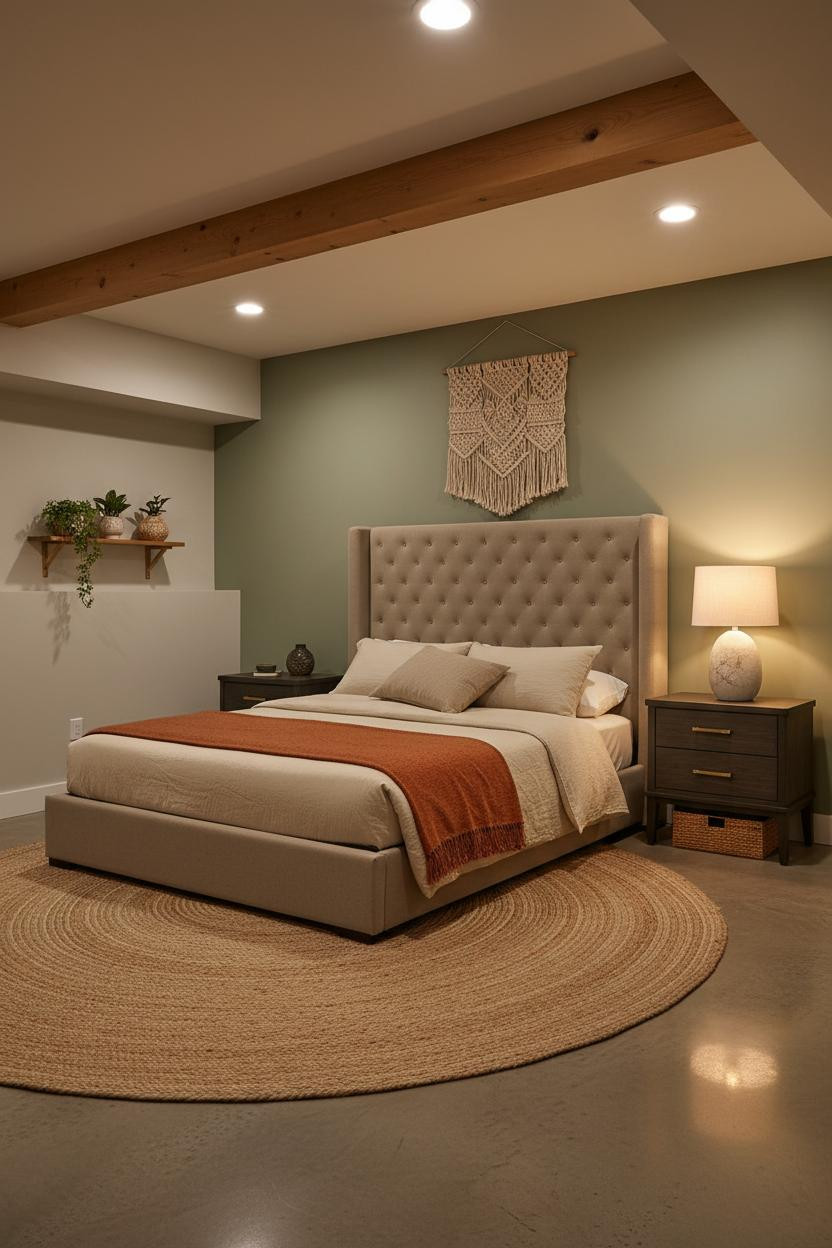
Japandi is one of the few styles that actually improves in a basement. The intentional quietness fits.
What creates the mood: A polished concrete floor under a large natural jute rug pulls the stone-grey walls and sage feature wall into a coherent material story, especially when the recessed light warms the jute texture at night.
A macramé wall hanging above the bed (the oversized kind) gives the windowless room a focal point that doesn’t depend on natural light at all. Ideal if you want a basement bedroom with no windows to feel genuinely designed rather than compensated. The burnt orange mohair throw at the foot is the one warm note that keeps the palette from going too minimal.

Our #1 Pick
Saatva Classic Mattress
America’s best-selling online luxury innerspring. 365-night trial, lifetime warranty, free white glove delivery.
Shop Saatva Classic
The Foundation Of Every Beautiful Bedroom
Every room here got the walls right, the lighting right, the layering right. But the bed is still where most of the hours go. And a basement bedroom done this well deserves a mattress that matches it.
The Saatva Classic is built on dual-coil support that holds its shape over years, not seasons. The cotton cover breathes instead of trapping heat, which matters more underground where air circulation is often limited. And the Euro pillow top is soft without losing structure, the kind that still feels right years after you stop noticing it.
Walls get repainted. Throws get swapped out. The mattress is the one thing that stays.

The rooms people save are the ones where nothing looks accidental. Start with the bed. The rest figures itself out.