
Wooden double front doors are having a moment. And honestly? Most of them actually deliver. The trick is finding one that doesn’t scream “trying too hard.”
The Hand-Carved Oak That Changed Everything
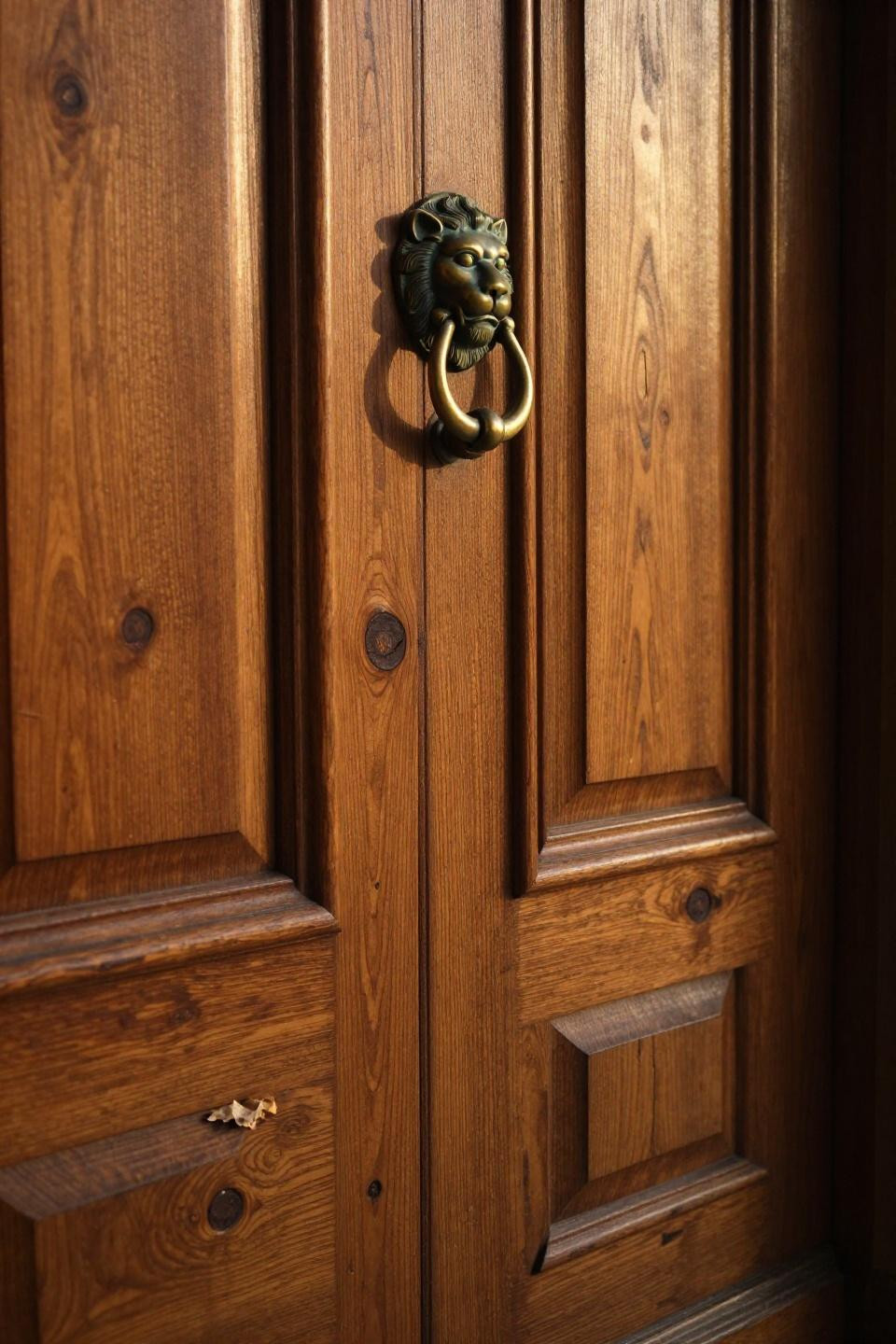
That honey-toned European oak with deep relief carving? It’s not subtle. The vertical grain flows like liquid under side-lighting, and the aged brass lion-head knocker sits just off-center—which somehow makes it better. You can see where hands have touched the push plate over decades. Those scuff marks near the base aren’t a flaw. They’re proof someone actually lives here.
When 12-Foot Doors Don’t Feel Ridiculous
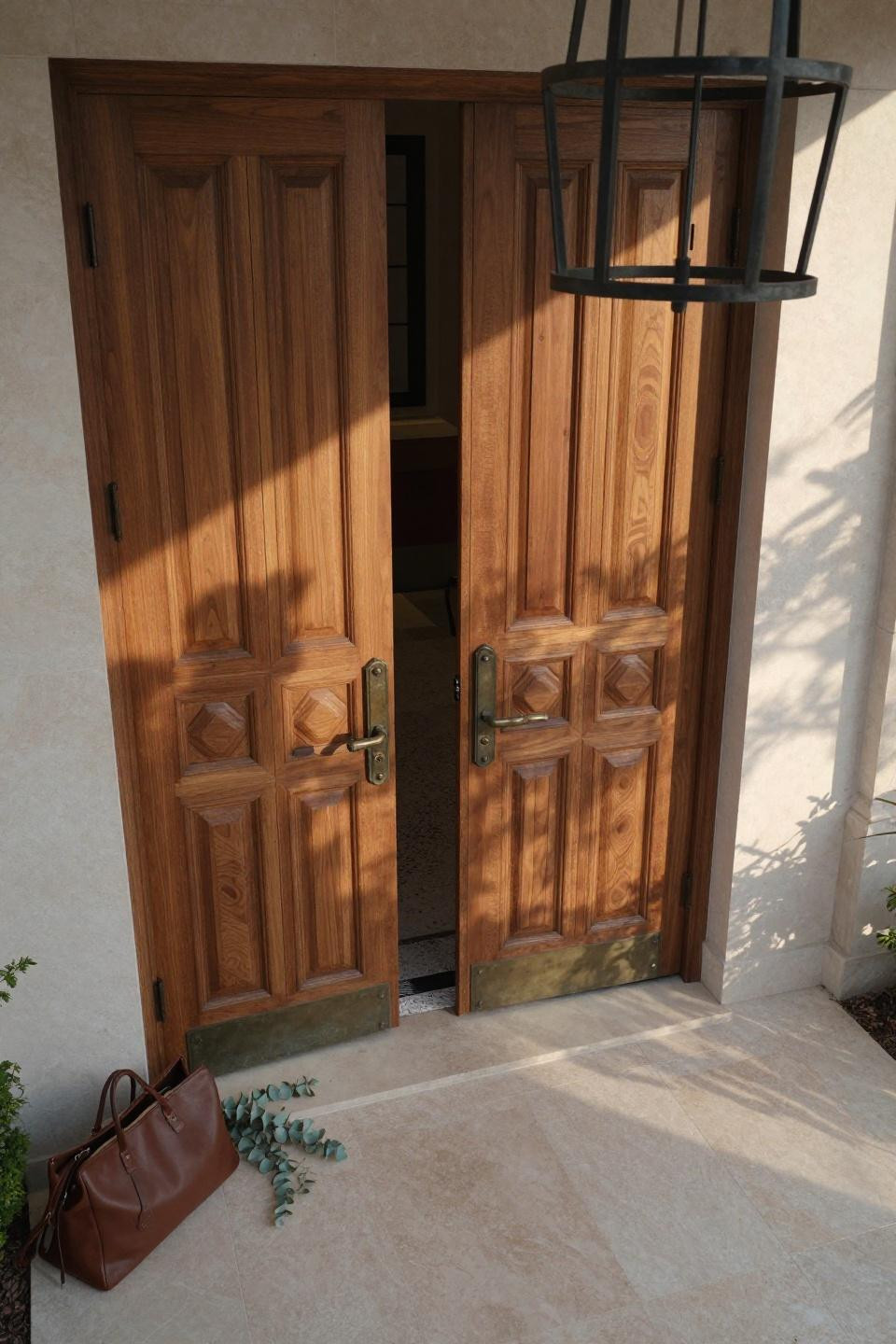
Towering walnut doors with hexagonal inlays and chevron grooves. The pivot hinges are completely exposed, which is a bold call. But it works because the blackened bronze hardware balances all that warm wood. One door cracked slightly open revealing terrazzo inside? That’s the shot. The leather weekend bag dropped by the frame makes it feel less “museum entrance” and more “I actually walked through this today.”
Reclaimed Oak That Doesn’t Announce Itself
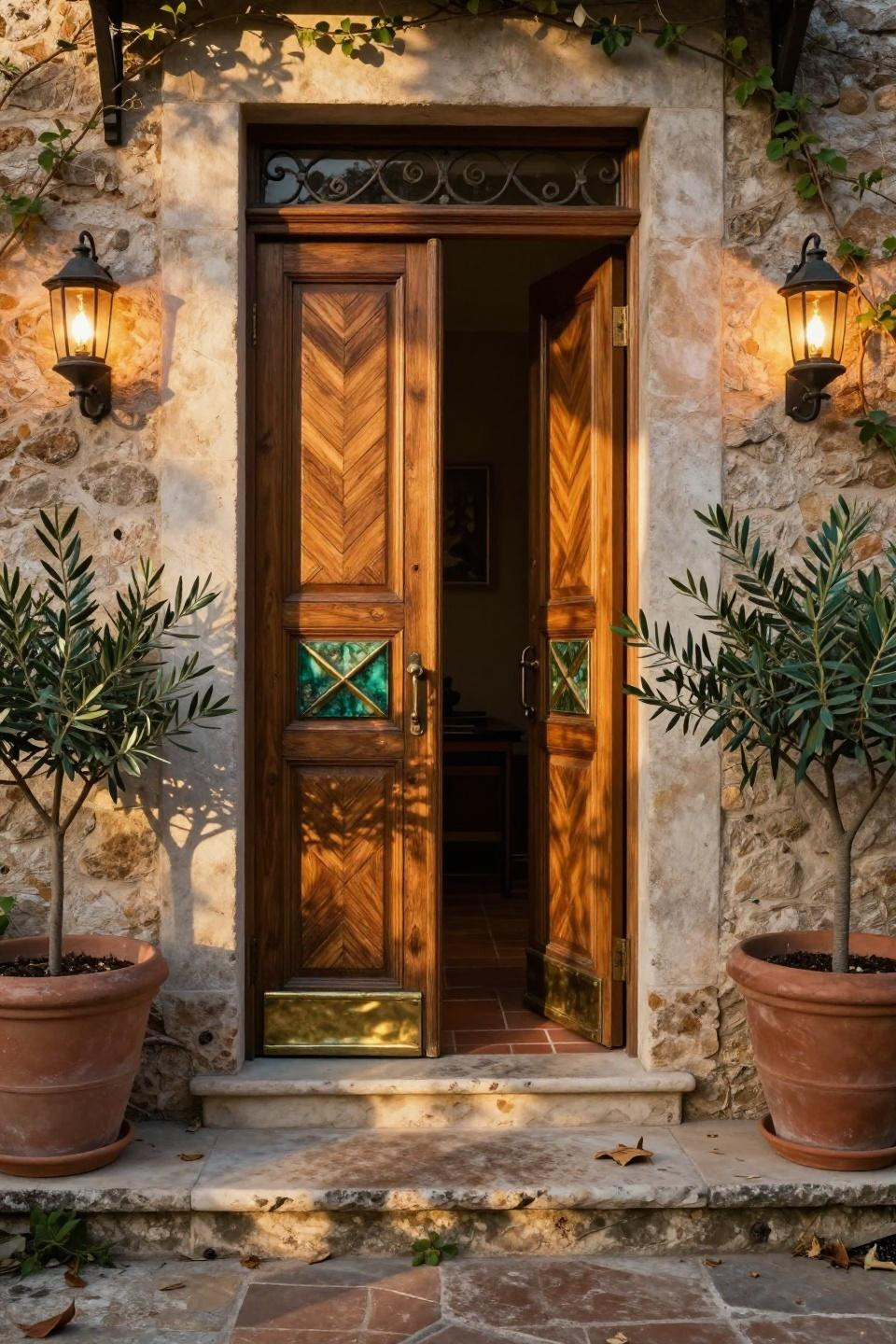
This works if you want something timeless without the “I renovated in 2019” vibe. Chevron brass inlay catches light without screaming for attention. The wrought iron transom above throws geometric shadows across the threshold—which sounds complicated but just reads as interesting. Best part? One fallen leaf on the limestone step. Nobody styled that.
The Ajar Door Move Nobody Talks About
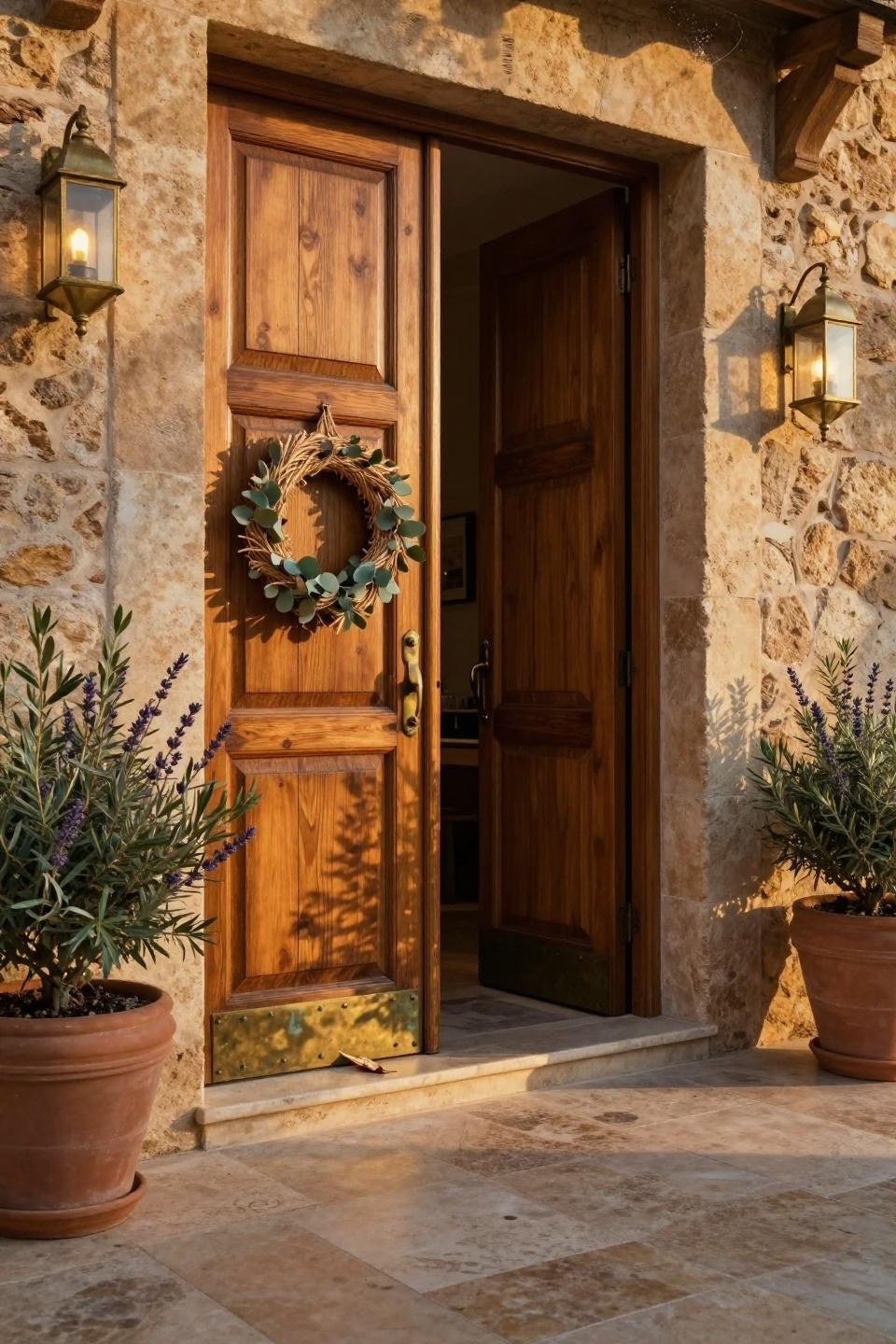
Leaving one door slightly open in photos changes everything. You get that sliver of warm interior glow, you get depth, you get curiosity. The reclaimed European oak here has that amber patina you can’t fake—and the unlacquered brass with verdigris accents looks better than new hardware ever could. The tilted rosemary pot by the entry? Accidental perfection.
Why This Copenhagen Entrance Actually Makes Sense
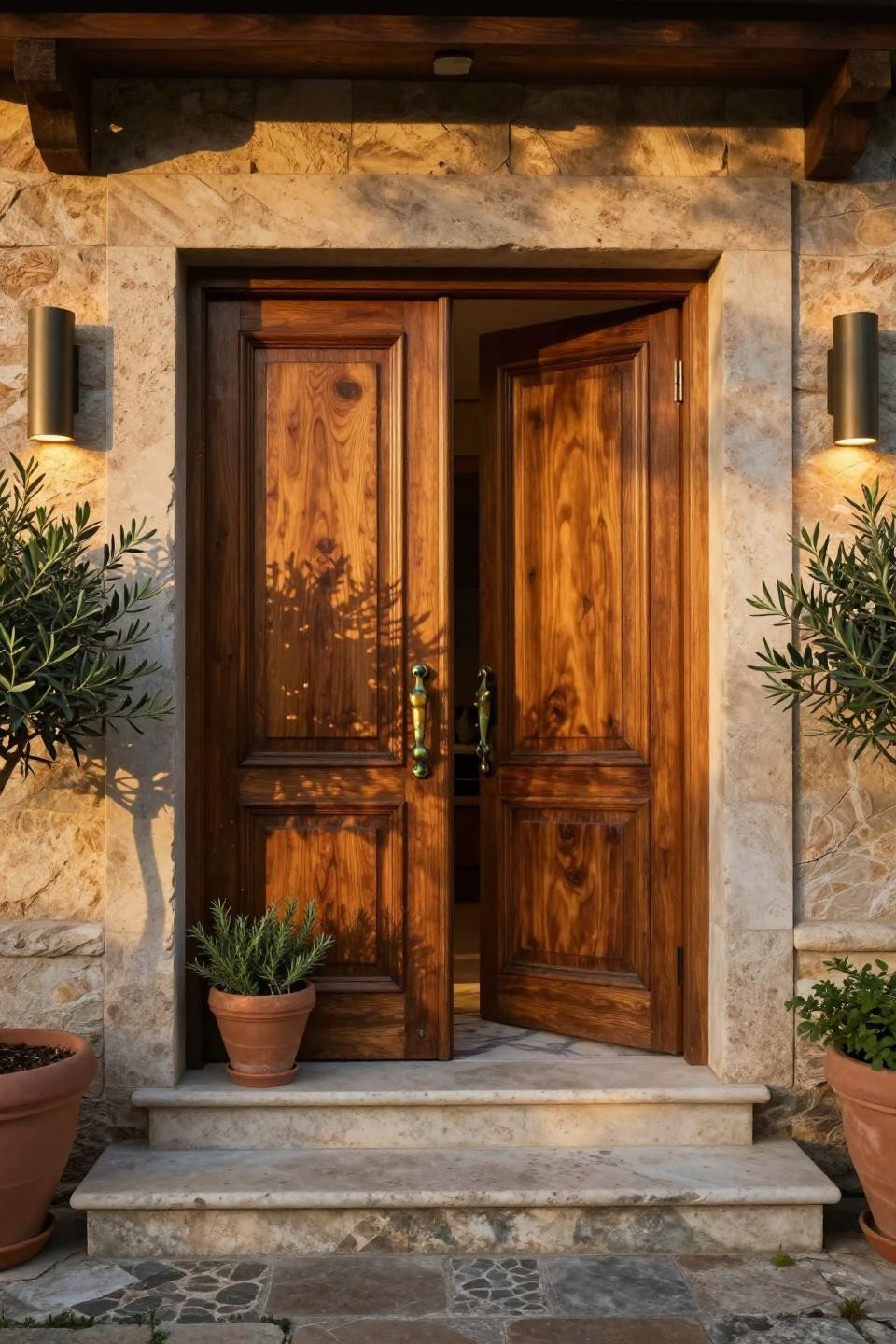
Mahogany with eight raised panels and cathedral grain. The cool grey limestone pilasters keep all that warm wood from feeling heavy. And those brass house numbers catching rim light? That’s the kind of detail that makes you slow down. The boot scuff marks on the stone threshold aren’t something to fix—they’re the whole point. Someone walks through here daily.
Hand-Forged Hardware That Actually Justifies the Price
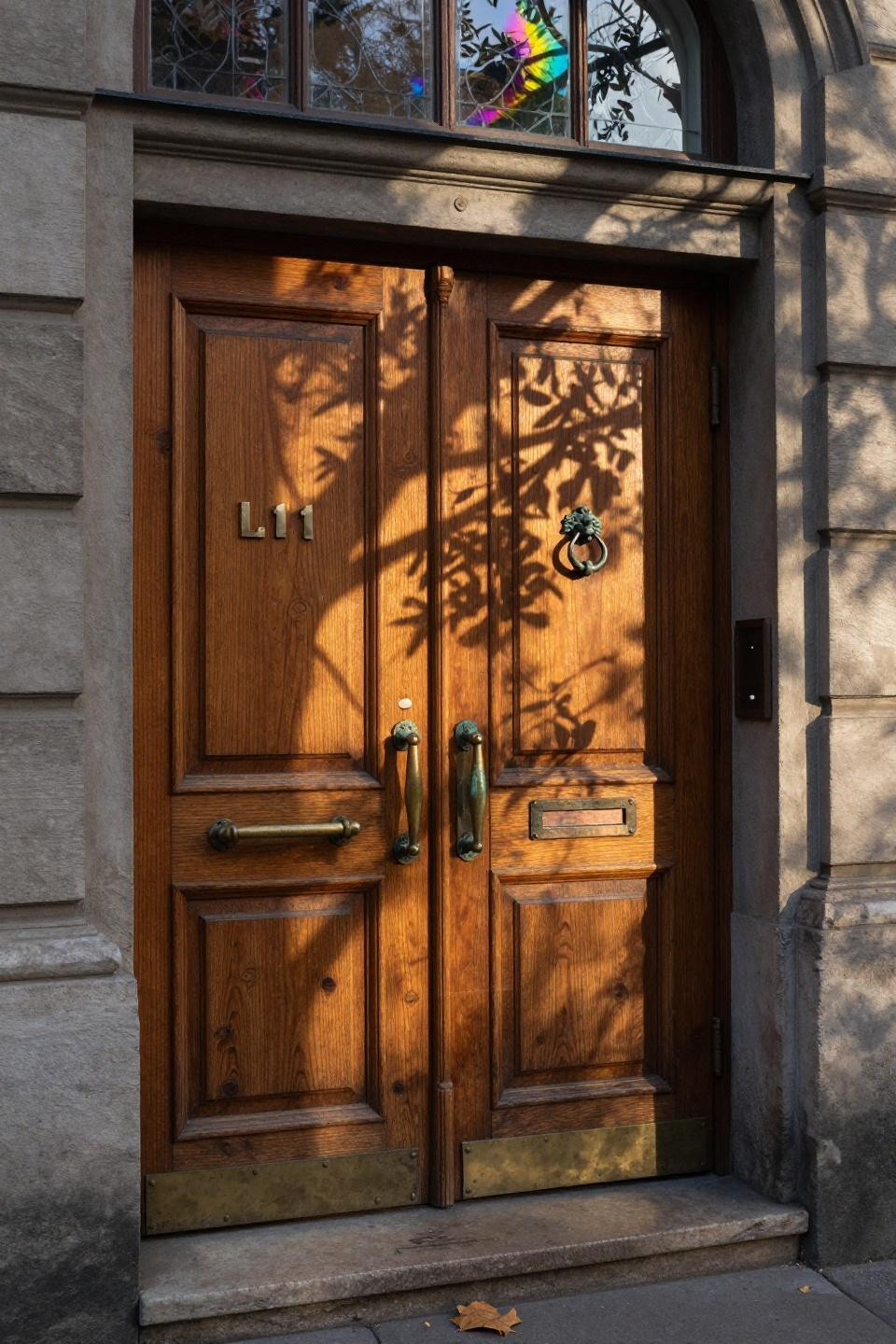
Reclaimed English oak with unlacquered brass that’s developed a warm patina over time. The finger smudges near the handle aren’t a styling mistake—they’re proof this entrance gets used. Those trailing jasmine planters flanking the doors? One petal’s fallen on the threshold. The vintage brass lantern casting rim light along the beveled edges is the kind of move CB2 wishes they could bottle.
The Macro Shot That Sells the Whole Thing
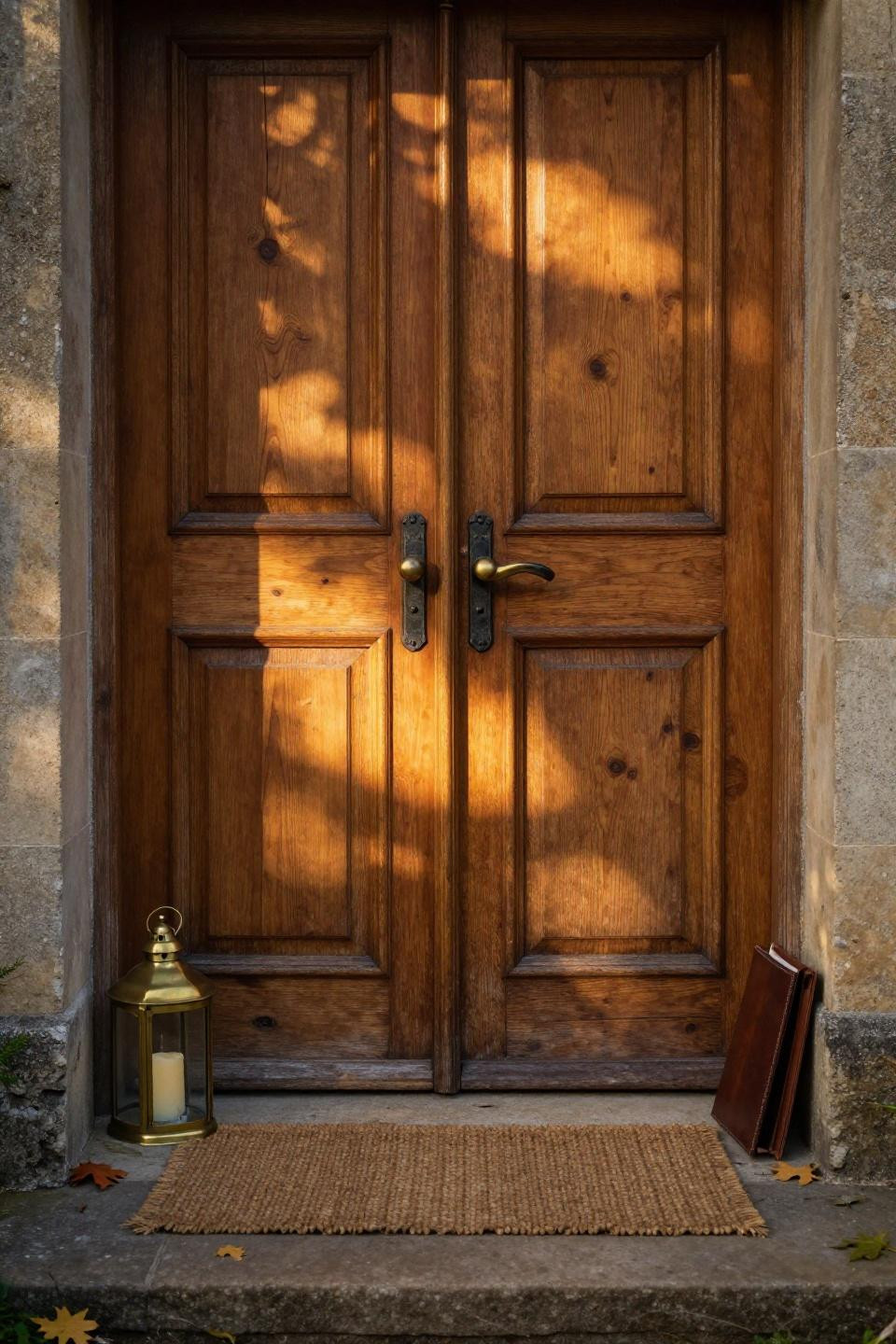
Sometimes you need to zoom way in. That silky weathered patina on amber oak, the verdigris on aged brass, the nubby jute doormat weave—those textures matter. The leather portfolio leaning against the doorframe and scattered oak leaves near the threshold make it feel lived-in instead of staged. Great for when you’re explaining to a contractor exactly what “tactile luxury” means.
Scandinavian Restraint Done Right
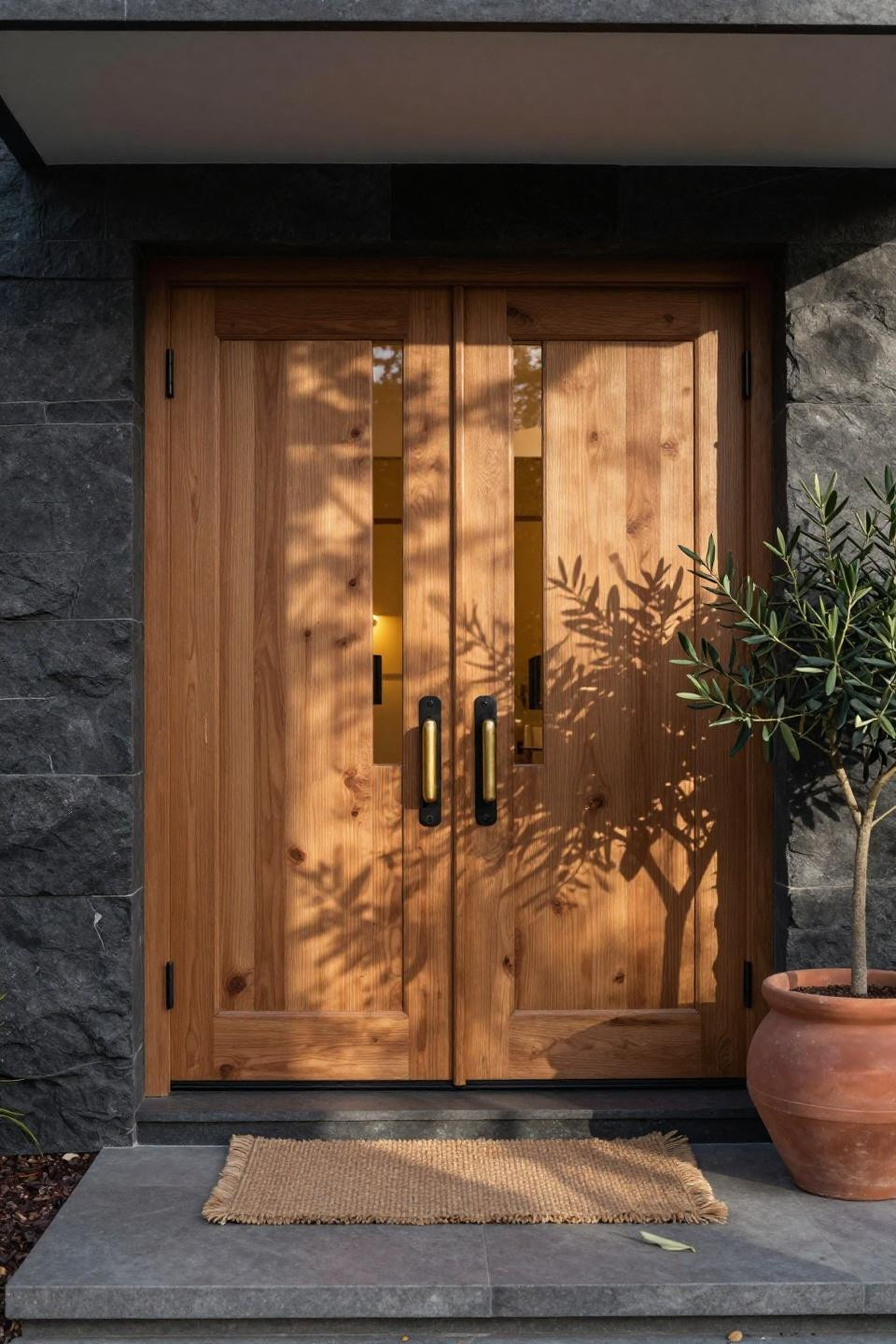
Vertical-grain white oak with blackened steel hardware and oversized brass levers. The rough-hewn charcoal limestone facade keeps it from feeling too warm, and that single sculptural olive tree in terracotta? Asymmetrically pruned, one leaf fallen. The jute doormat sitting slightly askew with a folded corner is the kind of imperfection that makes the whole scene believable.
When Glass Sidelights Don’t Ruin Everything
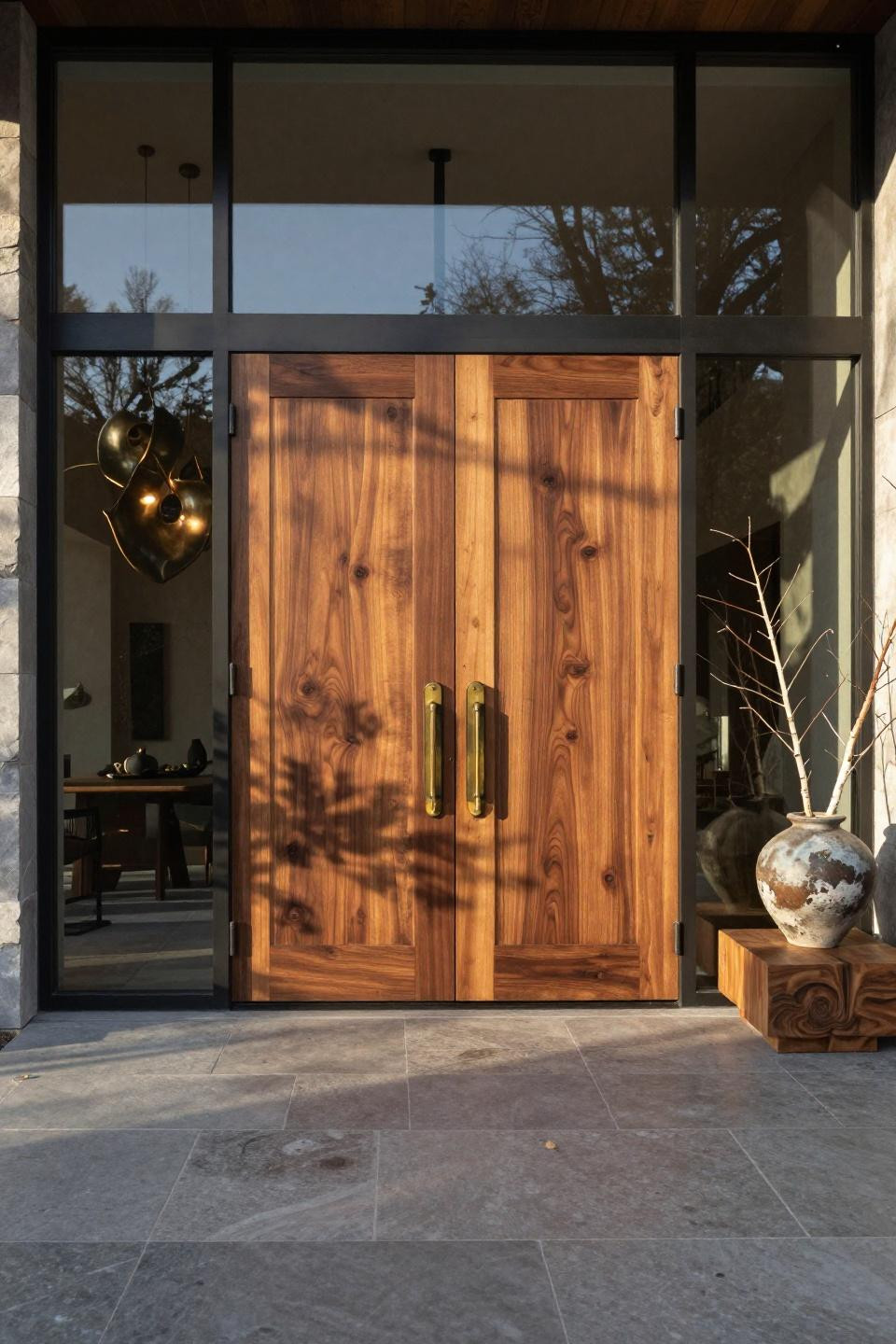
Reclaimed old-growth walnut with cathedral grain, 12 feet tall, flanked by floor-to-ceiling glass. The glass could’ve killed the warmth—but those unlacquered aged brass handles patinated to soft bronze save it. You get glimpses of that sculptural bronze pendant inside, which layers the shot. Best for modern builds where you need drama without feeling stuffy. The fallen leaf by the threshold is chef’s kiss.
European Oak That Ages Like Good Denim
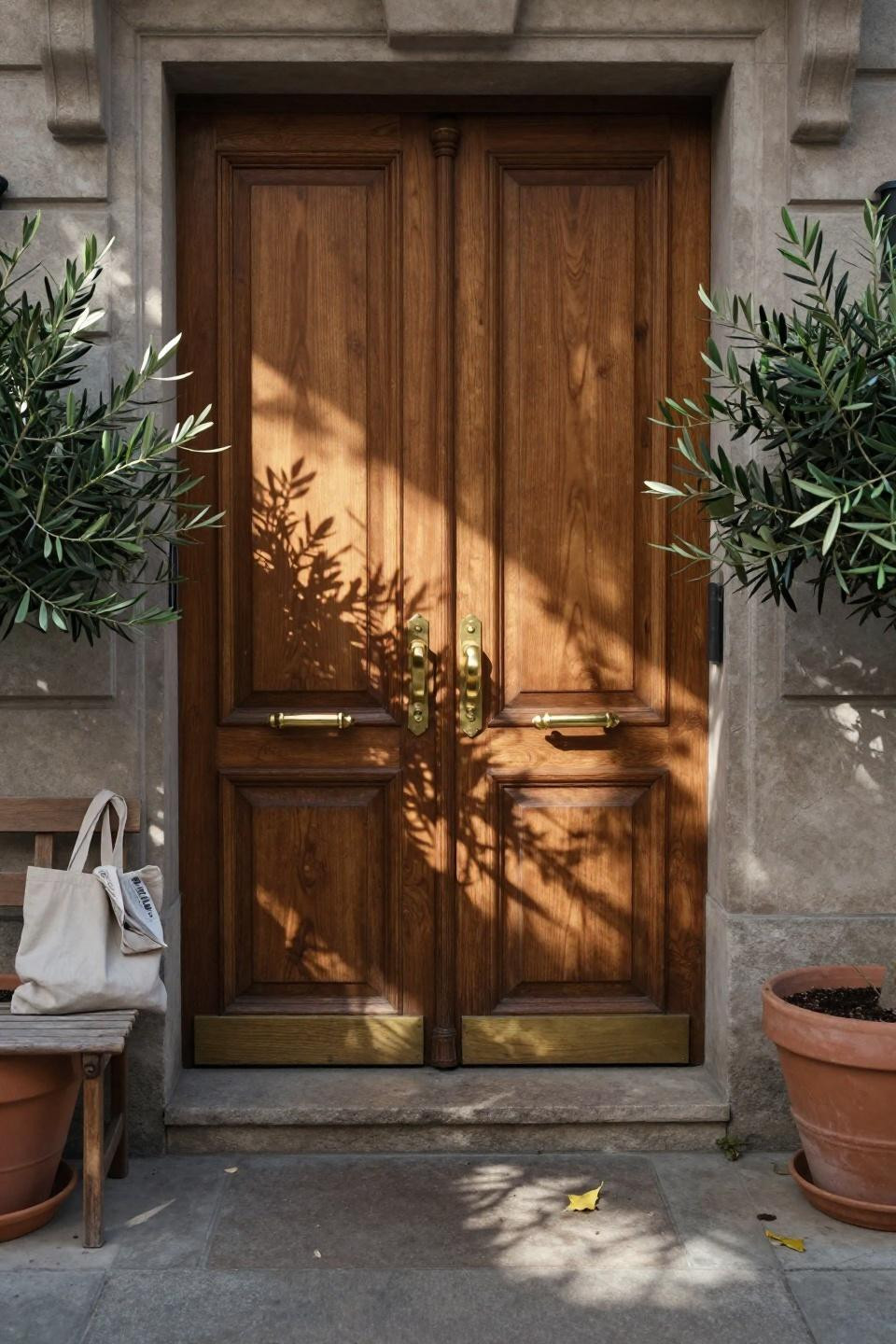
Honey-toned European oak with deep vertical grain and hand-planed texture. The oversized brass lever handles glow in side-lighting, and those terracotta pots with untamed olive trees casting dappled shadows? Perfection. The linen tote draped on the teak bench with a half-visible newspaper makes it feel like the owner just stepped inside. You’re not styling an entrance. You’re catching a moment.
Geometric Inlay Without the Fussiness
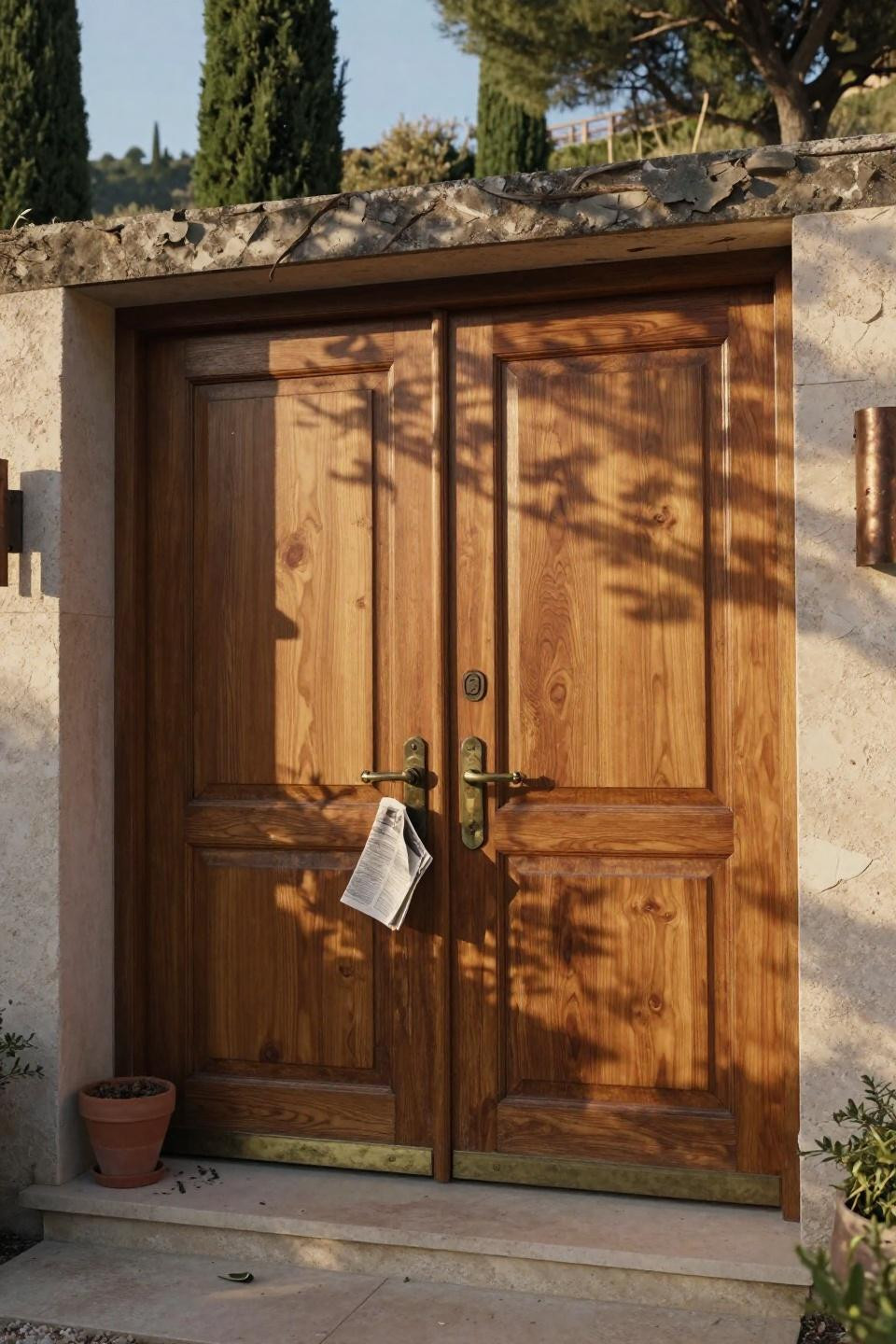
Honey-toned reclaimed oak with hand-forged brass hardware and natural patina. The 10-foot double doors have clean vertical grain with book-matched symmetry—fancy way of saying the wood pattern mirrors itself. That terracotta pot with spilled soil at the threshold and the morning newspaper tucked under the door handle? Those are the details that make the difference between “styled” and “someone lives here.”
Chevron Patterns That Don’t Read Trendy
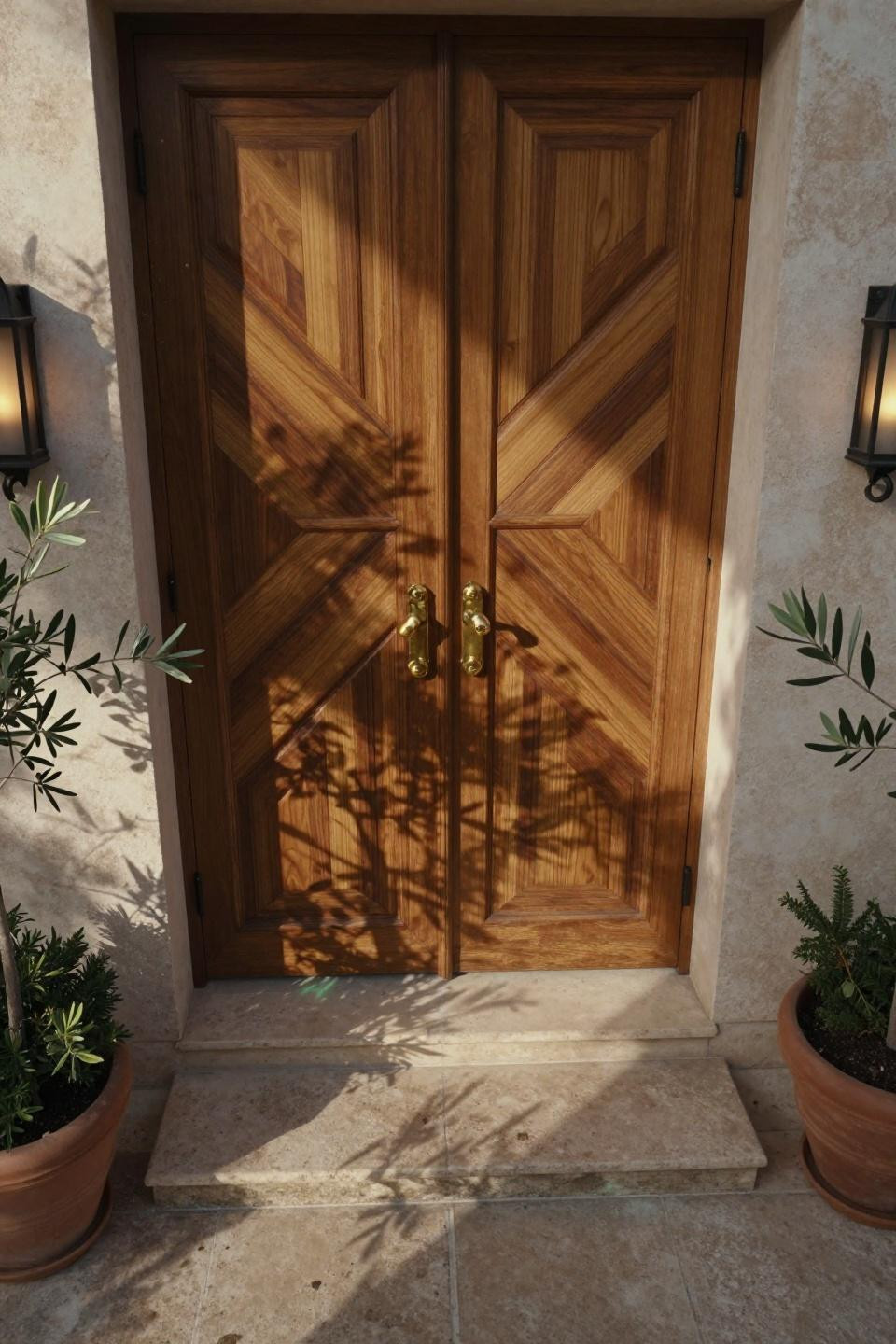
European oak with darker walnut chevron inlay creating geometric rhythm. The 12-foot height could feel overwhelming—but those rough-hewn limestone thresholds and wild olive branches in aged terracotta planters ground it. One door slightly ajar showing polished concrete inside is the move. The hand-forged iron wall sconces flickering? That’s the warmth you need to keep all that geometry from feeling cold.