
Think your bedroom is too small for a real gaming setup bedroom small spaces solution? These 13 rooms prove otherwise.
Each one fits a desk, a bed, and actual personality into a compact footprint. No gimmicks. Just smart choices.
The Fluted Wall That Makes This Corner Feel Designed
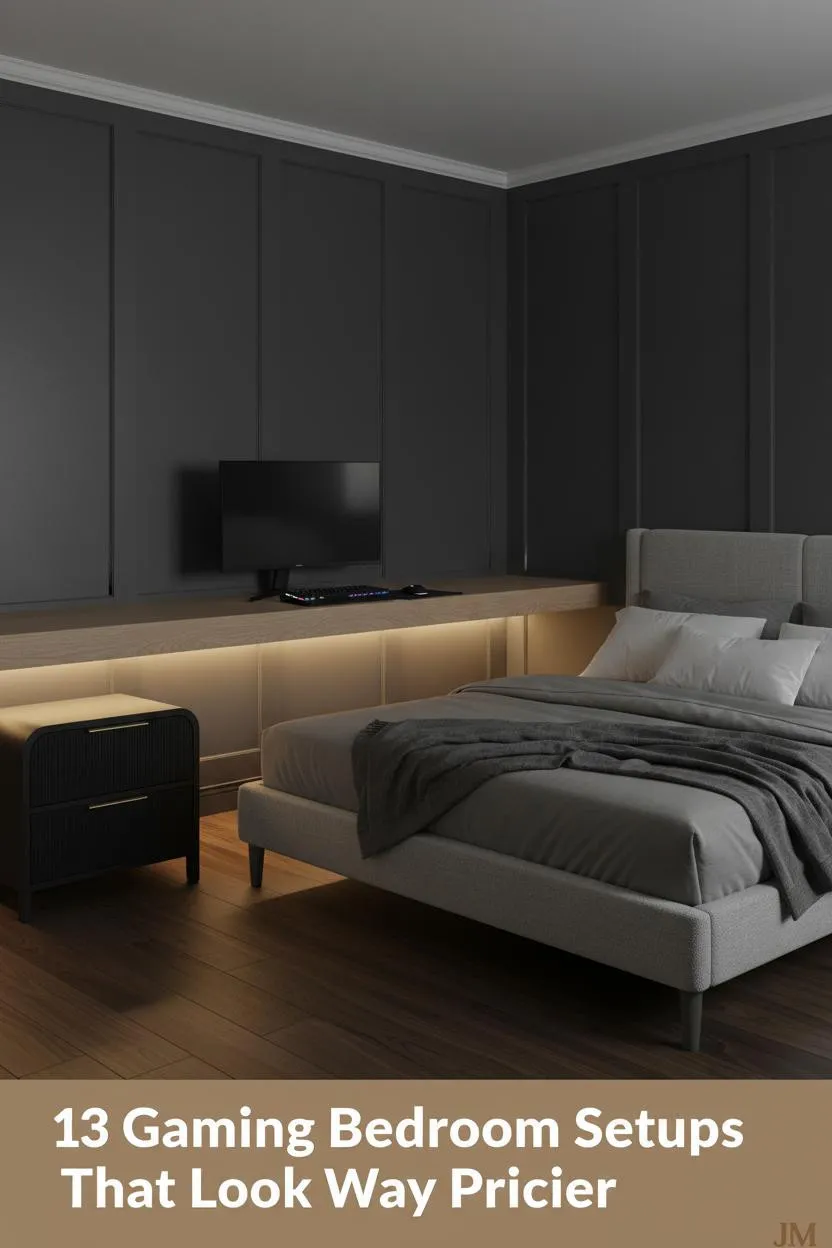
I keep coming back to this one. The combination of warm terracotta walls and pale oak textures makes a small desk corner feel intentional rather than improvised.
Why it looks custom: The fluted oak wall panel runs floor to ceiling, so the integrated desk shelf reads as part of the architecture rather than furniture pushed against a wall.
Steal this move: Mount your desk shelf into the panel itself instead of floating it on plain drywall. The cable channels disappear and the whole setup looks built-in.
Dark Walls Actually Work Here
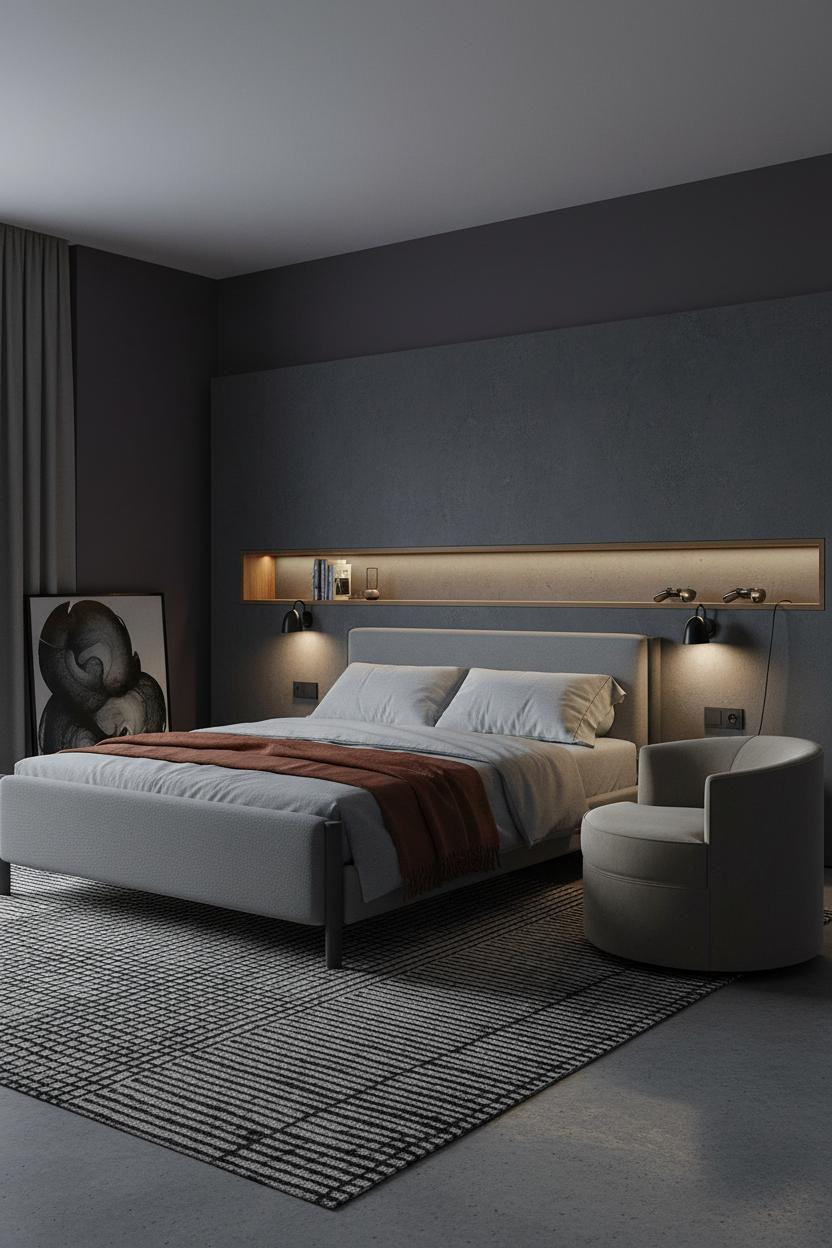

Divisive. Deep plum walls in a small bedroom sounds like a mistake.
But when the desk zone is anchored by a matte concrete-textured accent panel, the darkness actually makes the gaming corner feel more focused, not more cramped. The slate surface absorbs ambient light so the monitor glow pops without washing out the room.
Pair that level of wall saturation with a rust linen throw and stone-washed grey cotton. The warmth keeps it from reading too cold.
The Floating Shelf Setup That Saves Floor Space
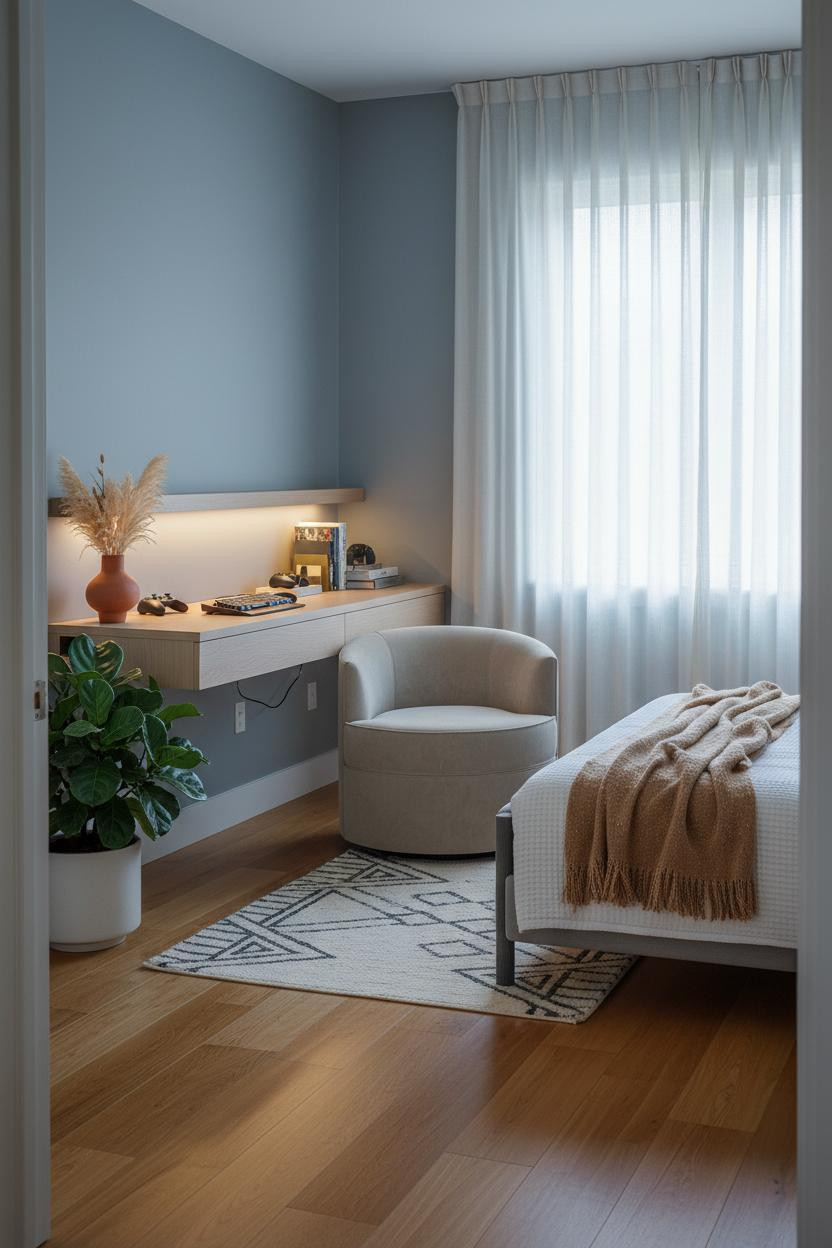
Having visible floor space under your desk changes how the whole room breathes.
What makes this work: A pale ash wall-mounted shelf at seated height keeps the floor clear, and the stone blue-grey wall behind it gives the monitor a calm, neutral backdrop that reduces eye strain during long sessions.
The smarter choice: Route your cables through the integrated channels built into the shelf lip before you mount it. Retrofitting is annoying.
Warm Wood and a Swivel Chair That Actually Fit
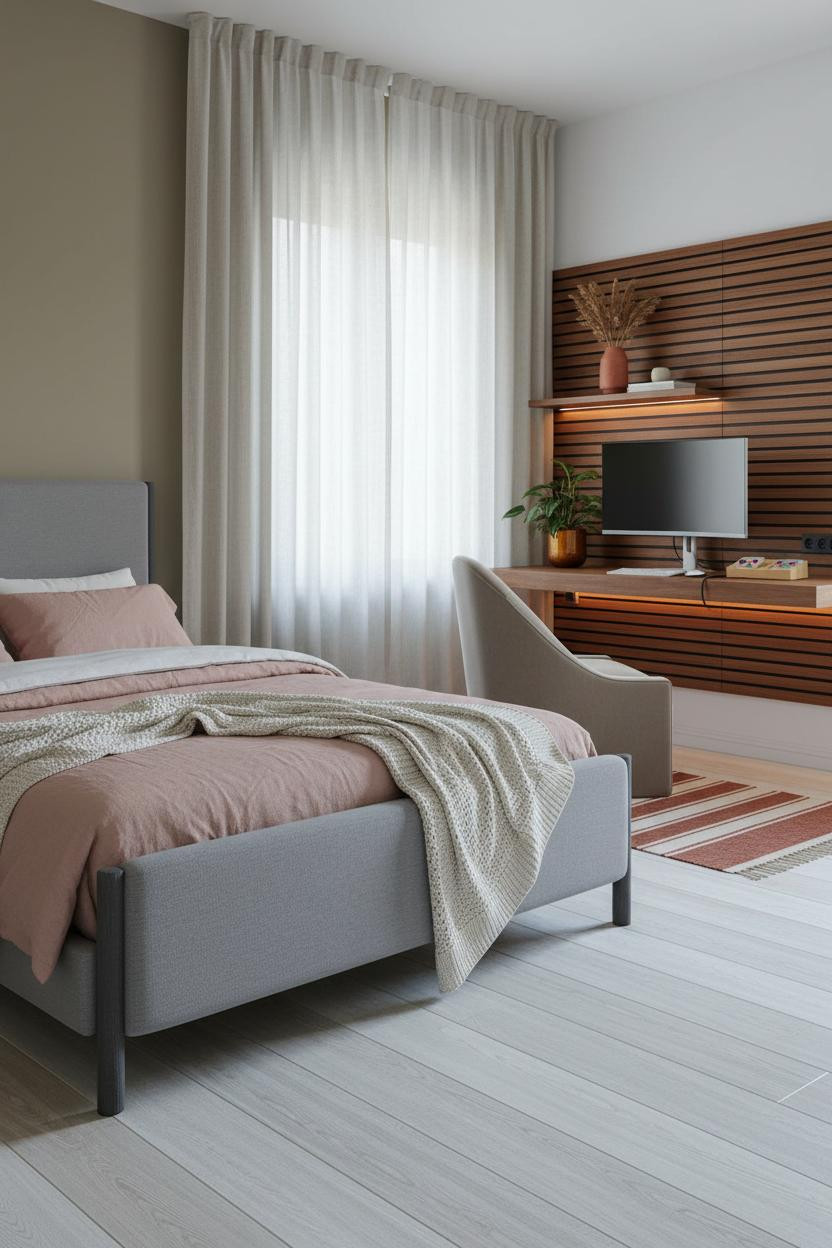
This one is proof that a gamer bedroom doesn’t have to feel like a gamer bedroom.
The horizontal walnut veneer slatted panel behind the desk brings warmth that muted khaki walls alone couldn’t deliver. It keeps the MCM vibe while the amber LED strip underneath makes the whole zone glow without any overhead glare.
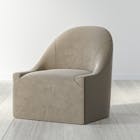
Worth copying: Swap a standard gaming chair for a compact swivel in a neutral fabric. Same rotation radius, but it disappears into the room instead of fighting it.
A Blue-Grey Accent Wall That Grounds the Desk Zone
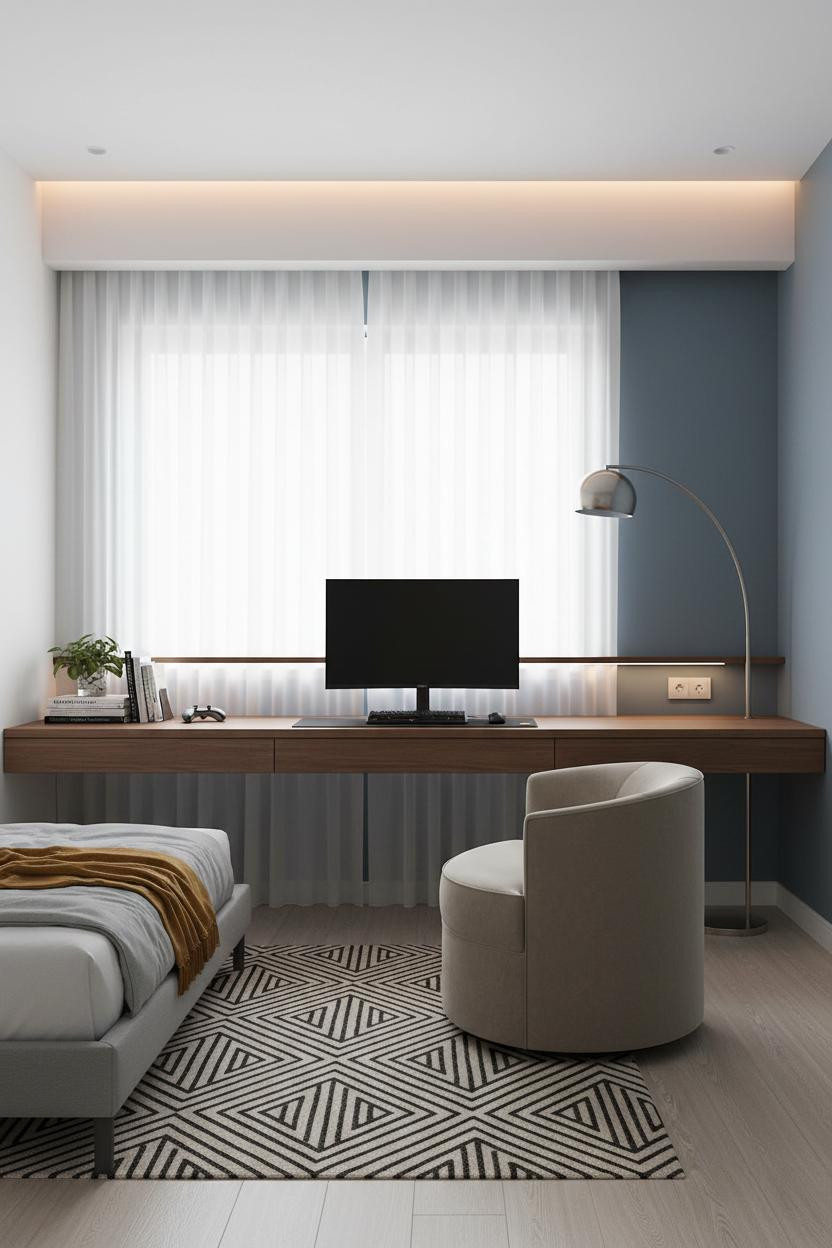
I honestly think the muted blue-grey accent wall does more work here than the furniture does.
Why the palette works: The cool wall color makes the walnut floating desk grain look richer by contrast, while the bleached oak floor keeps the whole thing from tipping too cool or too heavy.
The easy win: Add a sculptural arc lamp at desk corner instead of a task light. Same function, far better visual weight for a small gaming desk setup.
The Recessed Nook That Makes a Small Room Feel Bigger
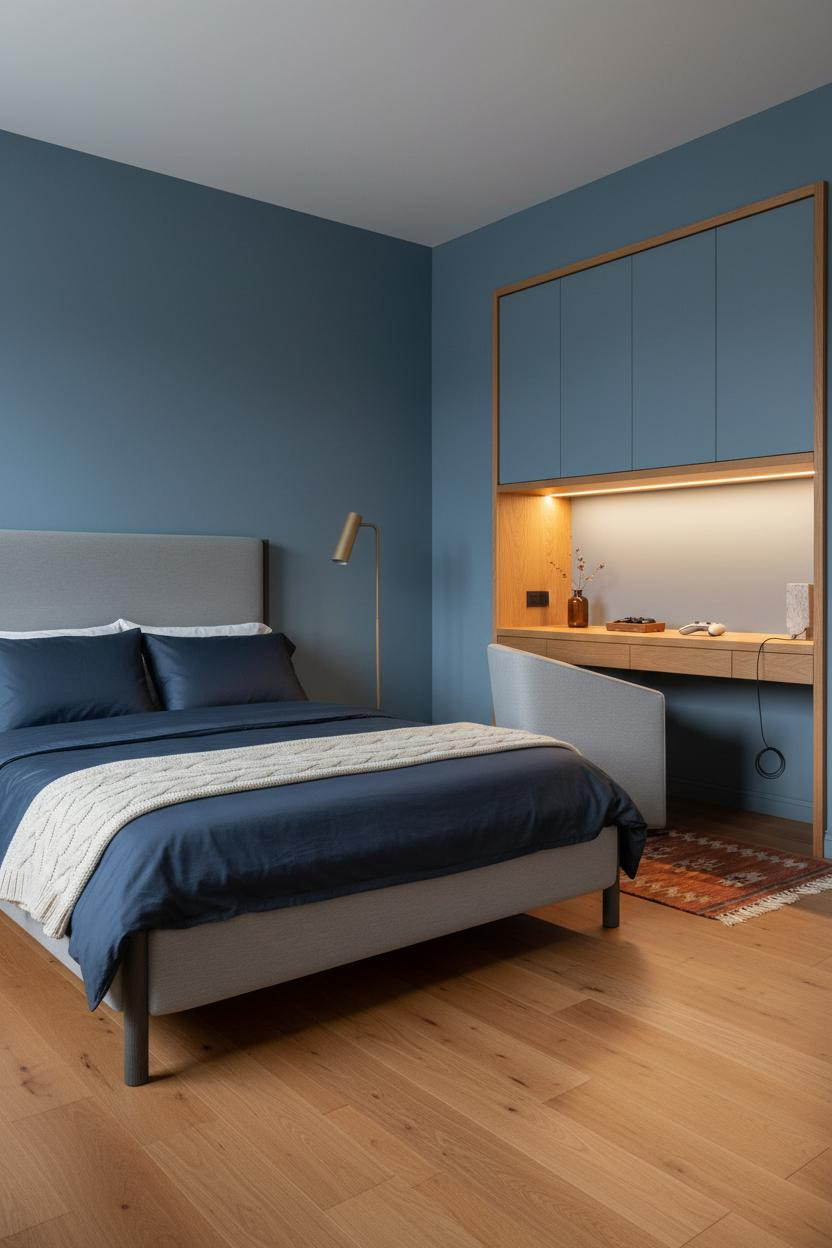

Recessing the desk into the wall is a small move with an outsized payoff. The room feels like it gained square footage it never had.
Design logic: The natural oak trim framing the nook gives it the visual weight of built-in cabinetry, which is why it feels expensive rather than like a DIY shelf bolted to drywall.
Avoid this mistake: Don’t skip the LED strip along the inner shelf edge. Without it, the nook looks like a shadow box and the monitor sits in murky half-light all session.
Why a Backlit Panel Changes the Whole Corner
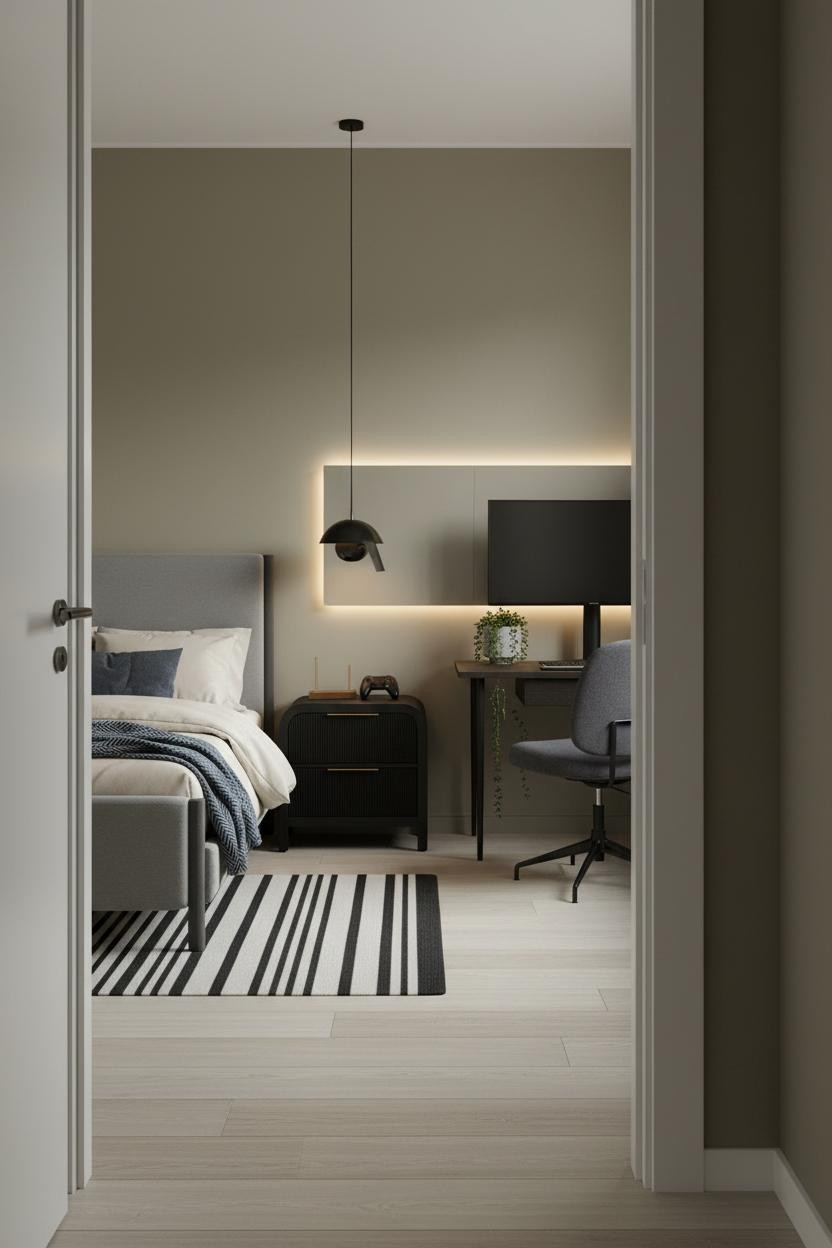
I almost scrolled past this. Glad I didn’t.
The frosted acrylic backlit panel above the desk creates a halo effect that makes the gaming corner feel like it was planned by someone who actually knows what they’re doing. And the matte olive walls around it absorb enough light to keep the glow readable without going full RGB.
Pro move: Hang a matte black pendant low over the desk rather than relying on overhead lighting. The layered sources make the pale birch flooring look warmer while giving your setup real depth at night.
Pegboard That Looks Good Enough to Keep
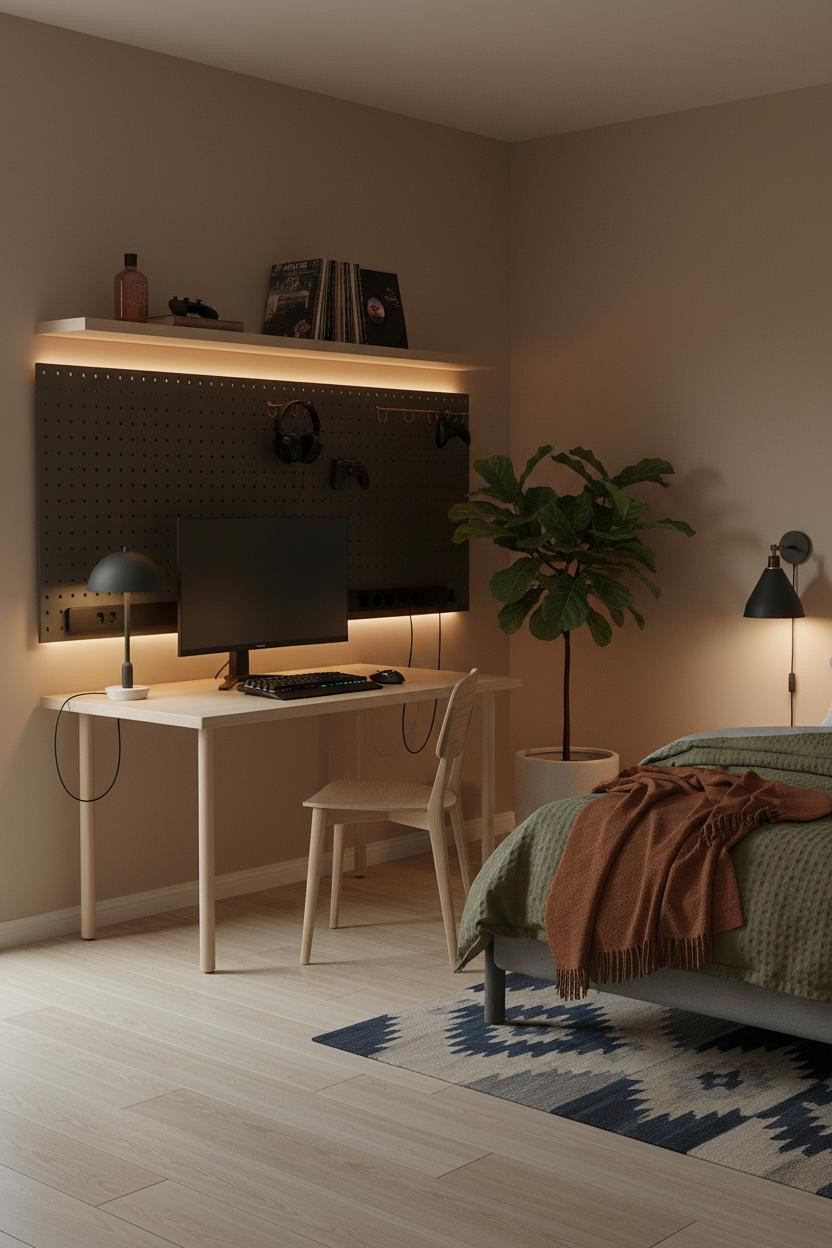
Pegboard has a reputation problem. But finished in matte charcoal with copper hooks, this one reads as a design choice rather than a dorm hack.
What gives it depth: The textured surface catches warm lamp light in a way that a flat shelf just can’t, and the copper hardware ties back to the amber glass on the shelf so nothing feels random.
Use the integrated power rail at the lower edge to keep every cable off the desk surface. The cleaner the desk, the bigger it looks.
Industrial Steel Frames That Do the Heavy Lifting
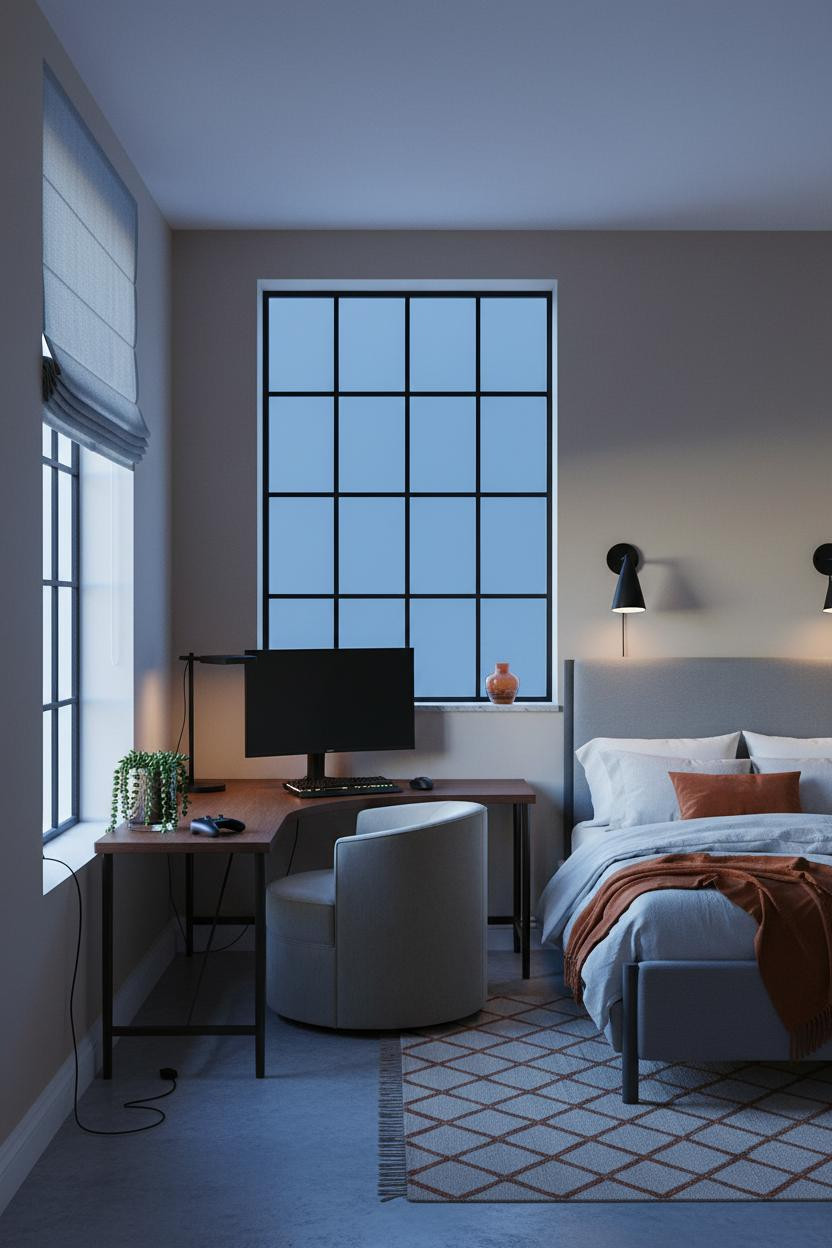
The Crittall-style steel window grid makes the desk zone feel like a shadowbox. Focused. Contained. Somehow very calm for a gamer room.
Why it holds together: The matte black steel grid gives strong graphic structure to a mushroom-walled room that would otherwise read as formless, while the polished concrete floor grounds everything without competing for attention.
What to borrow: Pair a rust or burnt orange textile with industrial bones. The warmth keeps the room from tipping too cold, while still feeling sharp.
The Japandi Alcove You Didn’t Know You Needed
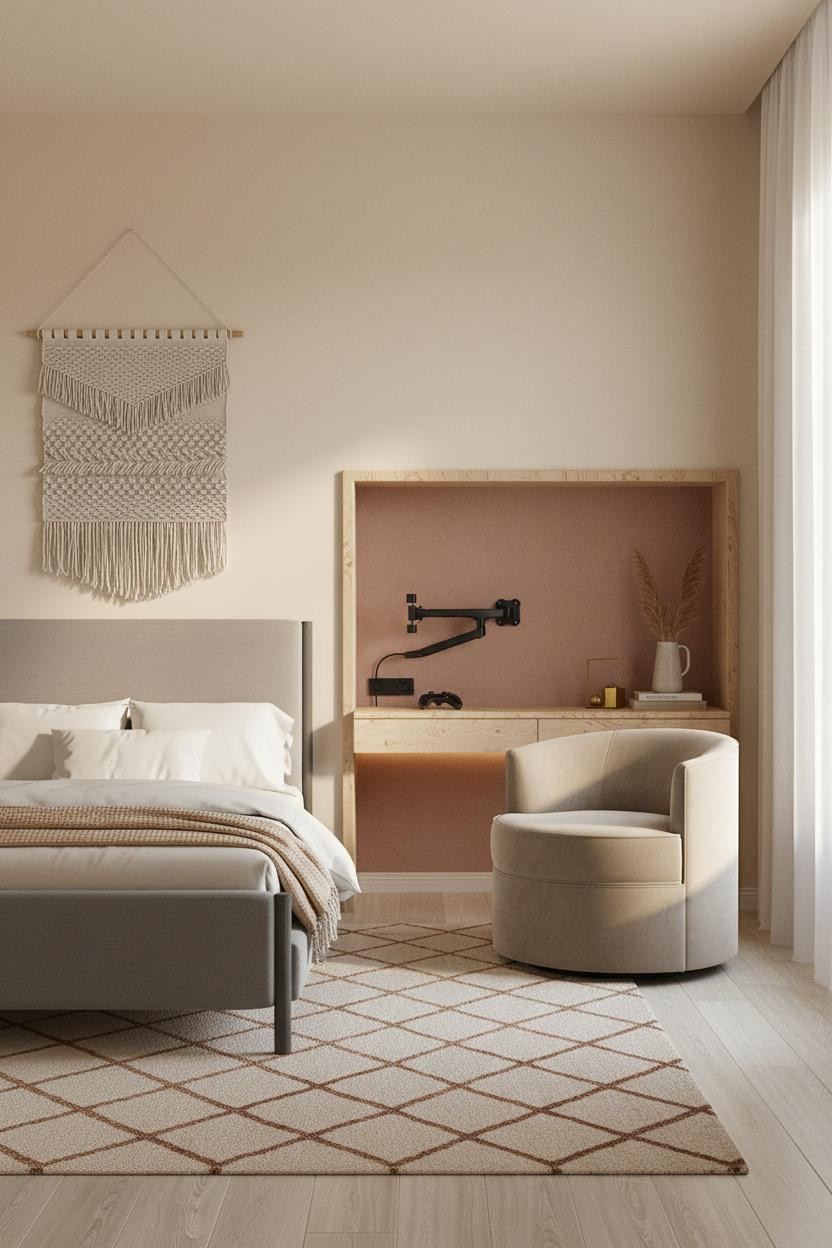
Admittedly, dusty rose and gaming don’t seem like obvious partners. But this alcove pulls it off because the material contrast does the heavy lifting.
What creates the mood: The raw birch panel trim against the matte dusty rose plaster backing gives the nook two distinct tones in one shallow footprint, in a way that feels deliberate rather than conflicted. The room feels collected rather than decorated.
One smart swap: Replace a standing monitor with a low-profile monitor arm to keep the alcove’s clean horizontal lines intact. The depth savings are real in a 42-inch nook.
Board-and-Batten in Charcoal Makes the Desk Zone Pop
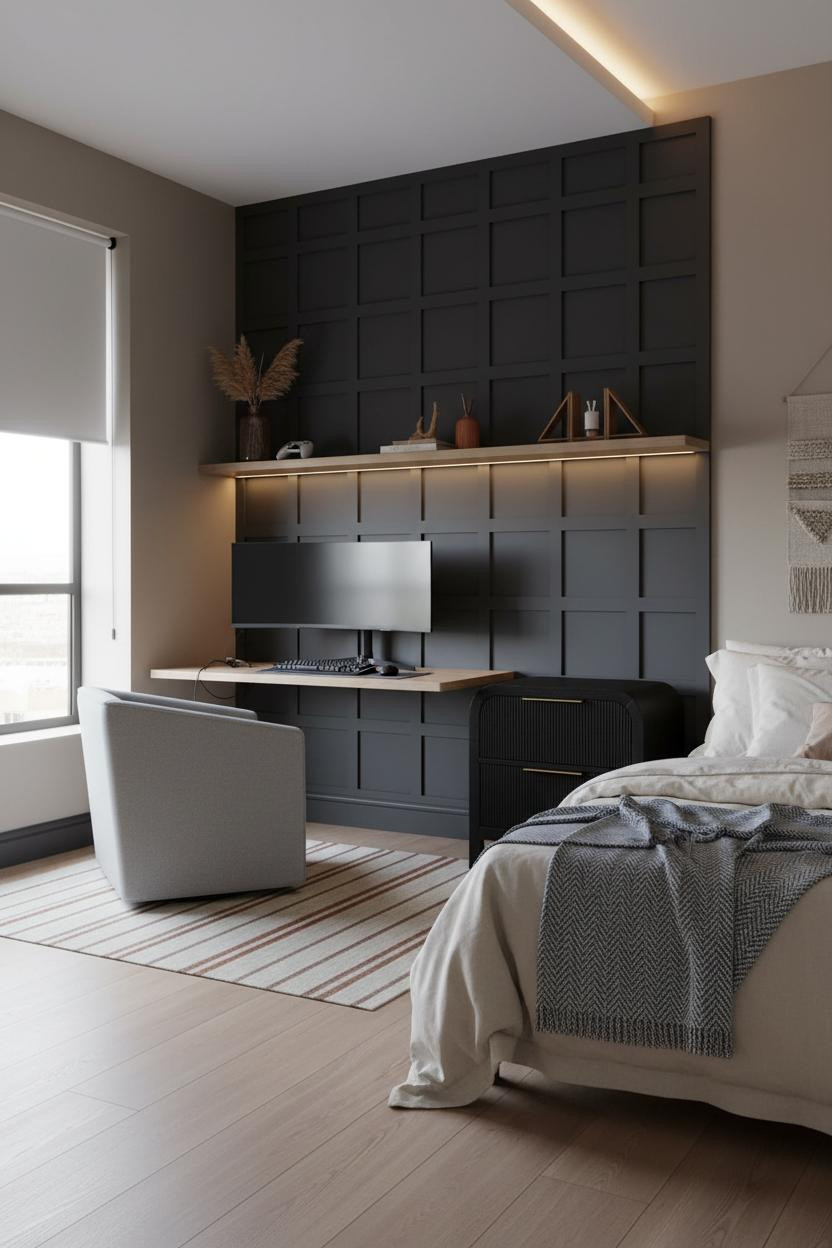
This is the kind of small gamer bedroom that makes you want to sit down and actually stay.
In a tight room, the smartest choice is a deep charcoal board-and-batten wall on just the desk side. It creates a defined gaming zone without any furniture rearrangement, and the grid texture gives the pale oak floating shelf something to contrast against.
What not to do: Don’t paint the entire room charcoal to match. The warm greige on the remaining walls is what keeps the room from feeling like a basement.
A Sage Wall That Makes Oak Glow
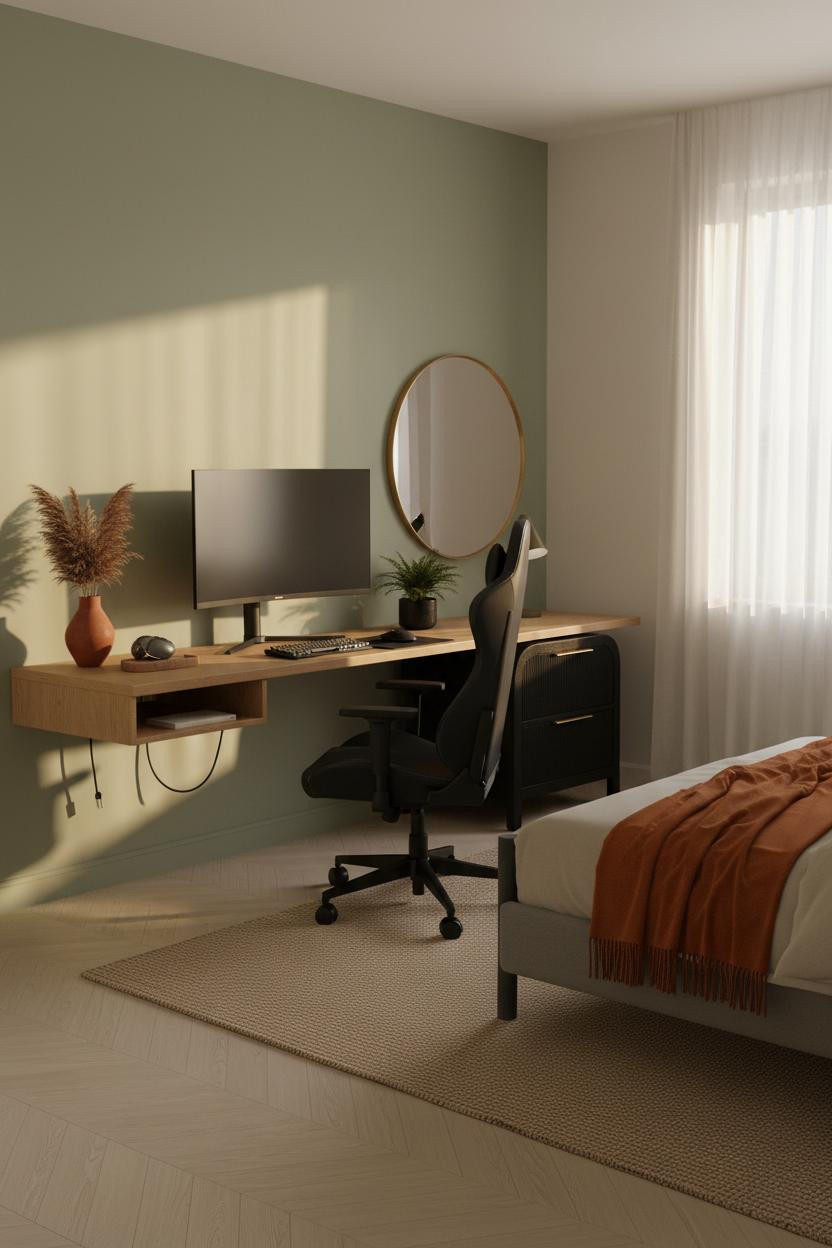
Soft sage behind a floating oak shelf is one of those combinations that just works. Every time.
Why it feels balanced: The cool green pulls the honey tone out of the blonde oak herringbone floor and makes the desk shelf look like it belongs rather than landed there by accident. Late afternoon light across that surface is pretty much perfect.
The finishing layer: A round mirror above the nightstand bounces light across the narrow room and adds a softness that rectangular frames alone can’t deliver.
When Minimal Isn’t Boring
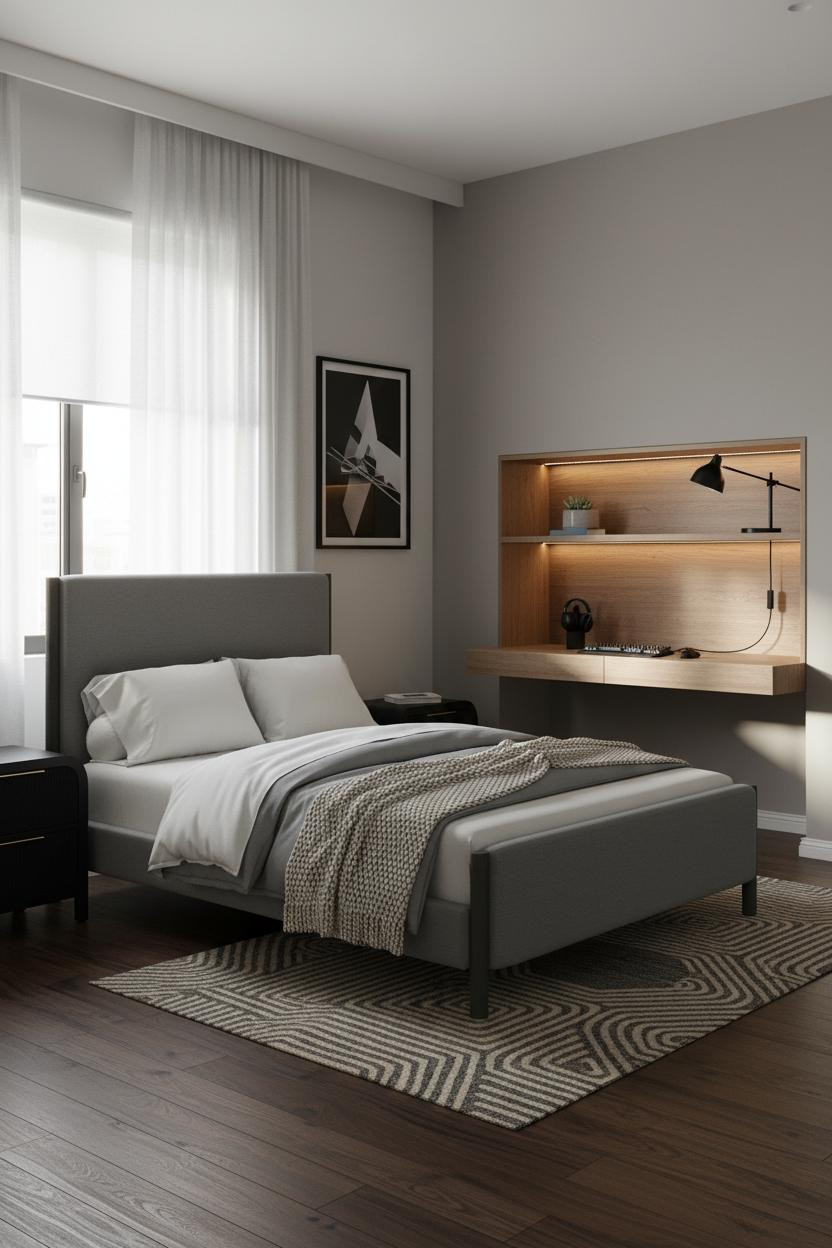
Nothing fancy. That’s the whole point.
What carries the look: A recessed shelving alcove in natural wood backing above the desk nook gives the monitor a warm surround while the warm grey walls keep everything else from competing. The room feels focused and lived-in without a single piece of RGB lighting in sight.
And the dark walnut hardwood floor grounds the pale tones above it, keeping the minimal palette from reading too cold or too empty. Just enough contrast to keep things interesting.

Our #1 Pick
Saatva Classic Mattress
America’s best-selling online luxury innerspring. 365-night trial, lifetime warranty, free white glove delivery.
Shop Saatva Classic
The Foundation Of Every Beautiful Bedroom
Walls get repainted. Desk setups get upgraded. But the mattress stays. And in a small gaming bedroom where you’re switching between sessions and sleep, what you land on at the end of the night matters more than people admit.
The Saatva Classic has dual-coil support that holds its shape long after the novelty of a new setup wears off. The breathable cotton cover doesn’t trap heat, which matters when your room runs warm from monitors and LEDs. And the Euro pillow top is soft without losing structure.
Good design ages well because it’s made well.

Every setup here proves the same thing: a small gaming bedroom works when every decision is made on purpose. The rooms people save are the ones where nothing looks accidental.