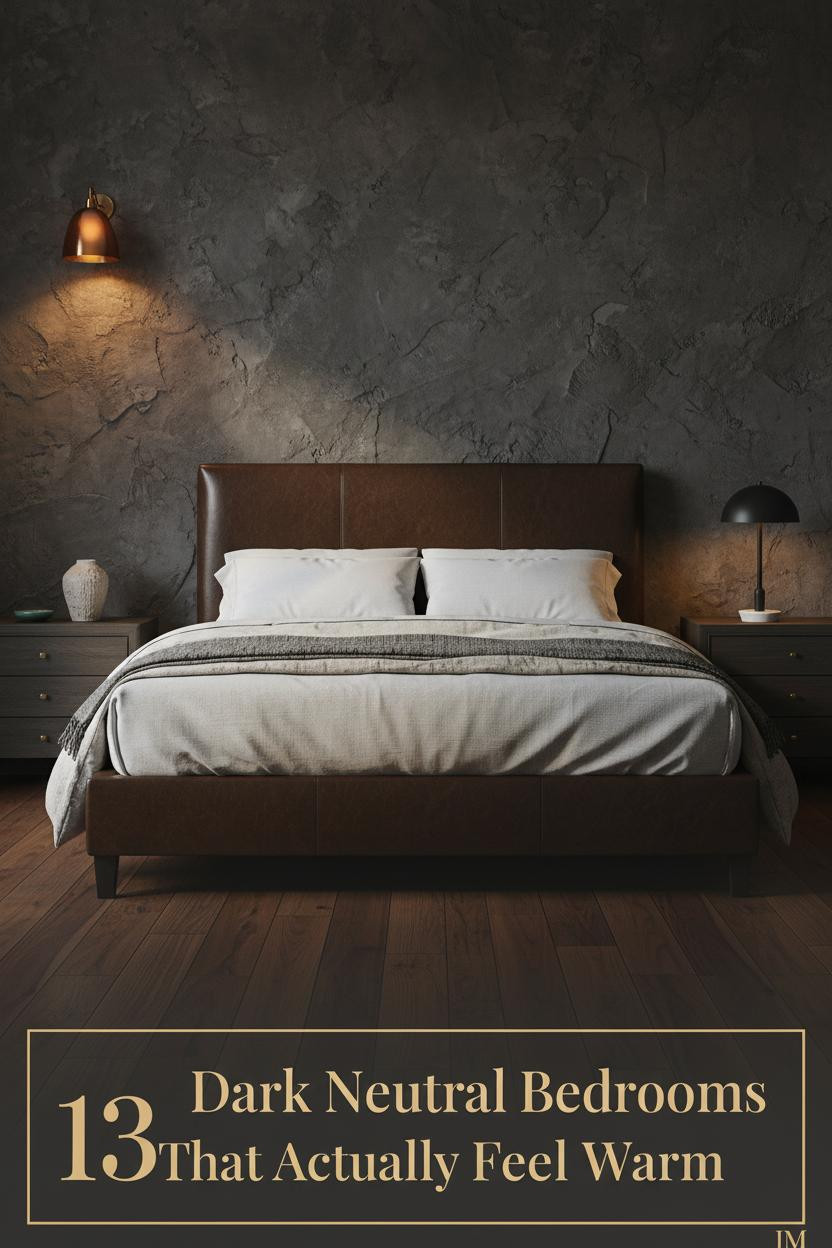
The first thing you notice in a great dark neutral bedroom isn’t the darkness. It’s how the room feels settled, like everything was chosen with some intention.
These 13 rooms lean into shadow and warmth at once. Moody but livable. Edited but not cold.
Charcoal Fluted Paneling That Earns Its Drama
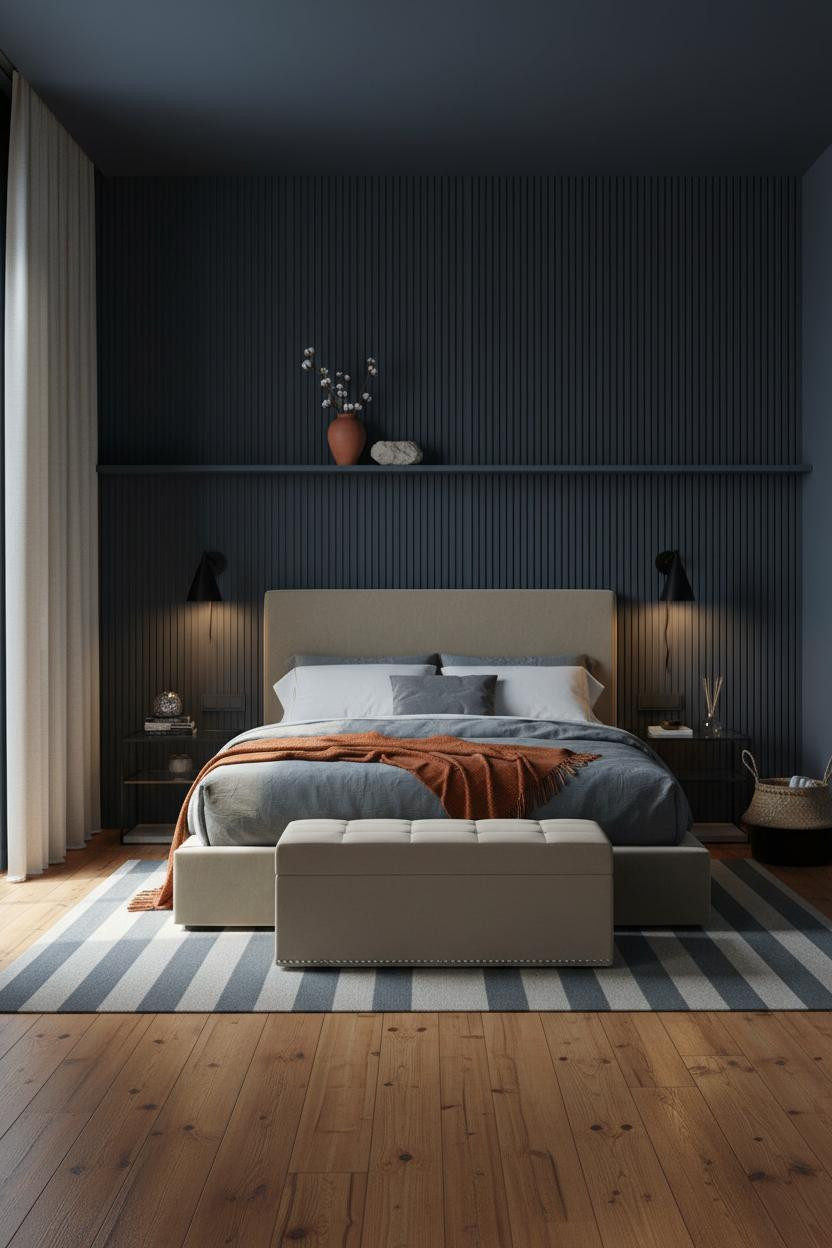

Bold choice. Not for everyone. But the rooms that commit to this never look back.
Full-height fluted charcoal-blue paneling catches cool light at such shallow angles that it shifts between near-black and dark steel depending on the hour. That shift is what gives it life.
The part to get right: Pair it with reclaimed honey-tone flooring so the base stays warm. Without that contrast, the room tips cold fast.
Exposed Brick That Makes Dark Feel Earthy
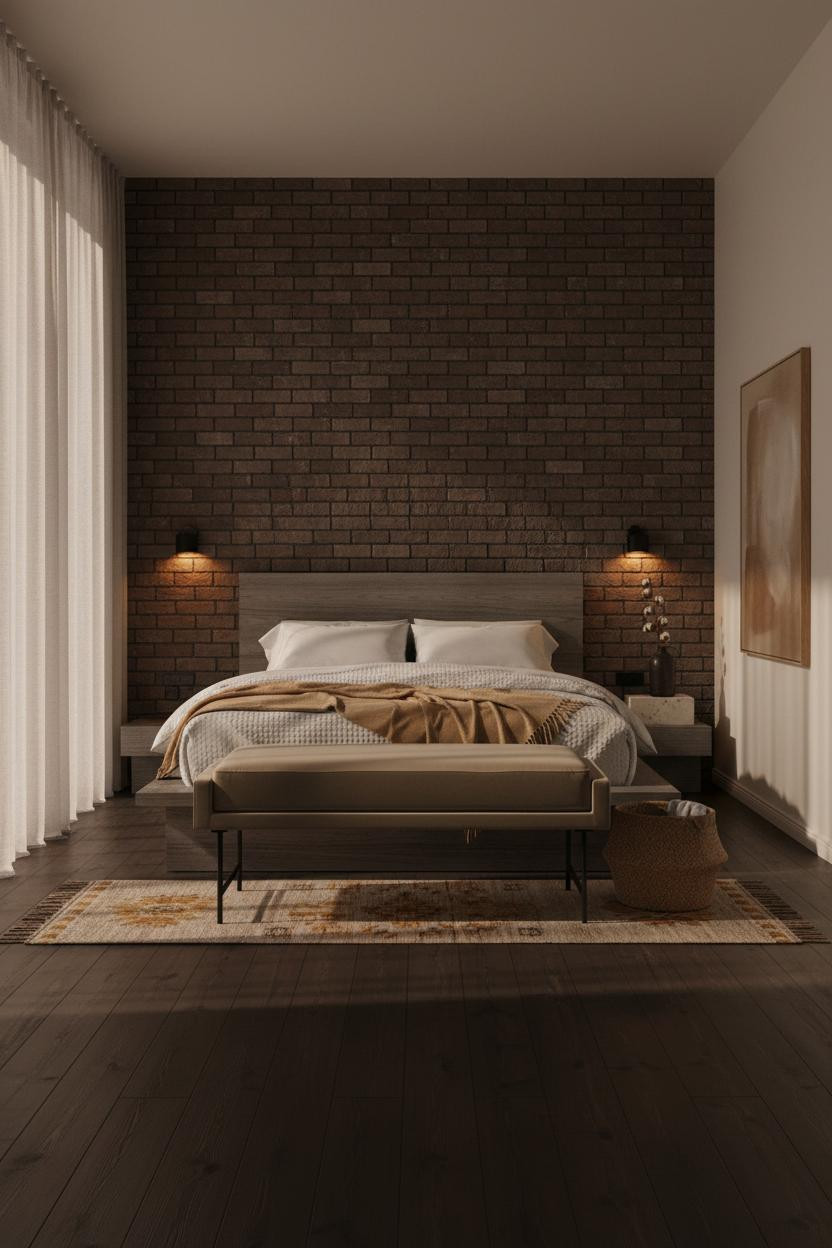

I keep coming back to this one. Something about warm brick in a dark bedroom just feels right.
Why the materials matter: Deep charcoal-brown brick reads as texture before it reads as color, so raking light along the mortar lines does the decorating work. The room feels collected rather than decorated.
Steal this move: Balance it with pale cream on the flanking walls. One bold surface. Everything else quiet.
Built-In Shelving That Earns More Than Storage
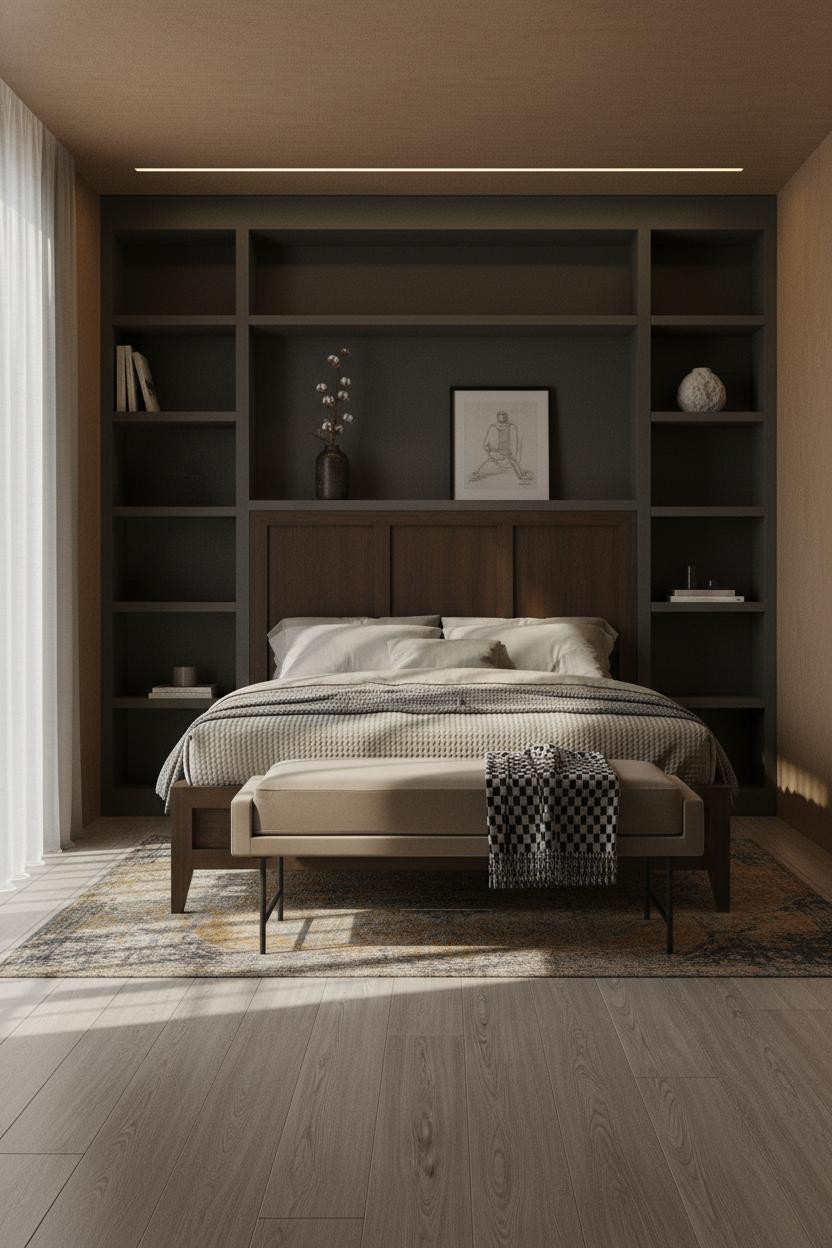
This one surprised me. A wall of dark shelving next to a warm camel wall shouldn’t feel calm, but it does.
What makes it work is scale. Full-height forest-charcoal built-ins next to warm raw plaster walls create contrast without splitting the room into competing halves.
Worth copying: Leave one shelf edge deliberately empty. A fully styled shelf in a dark room starts to feel busy fast.
Herringbone Paneling With Real Mediterranean Weight
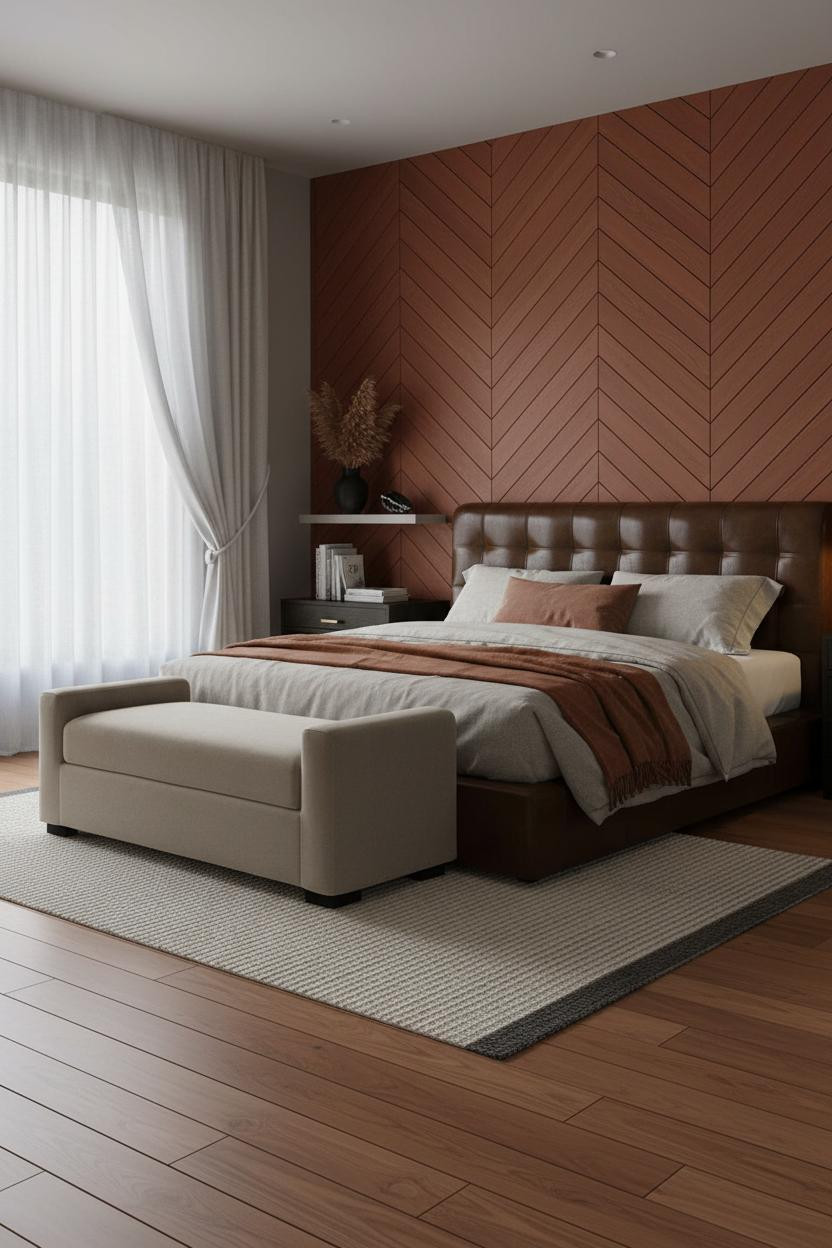

Fair warning. This kind of wall treatment is a commitment, and I think that’s exactly the point.
The reason it feels grounded instead of heavy is the geometry. Herringbone timber strips in deep terracotta-brown matte catch raking light at alternating depths, so the wall looks active without any actual decoration on it.
Avoid this mistake: Don’t soften it with too many pale accessories. The drama needs room to breathe.
The Forest Green and Walnut Shelf Combination I’d Copy Immediately
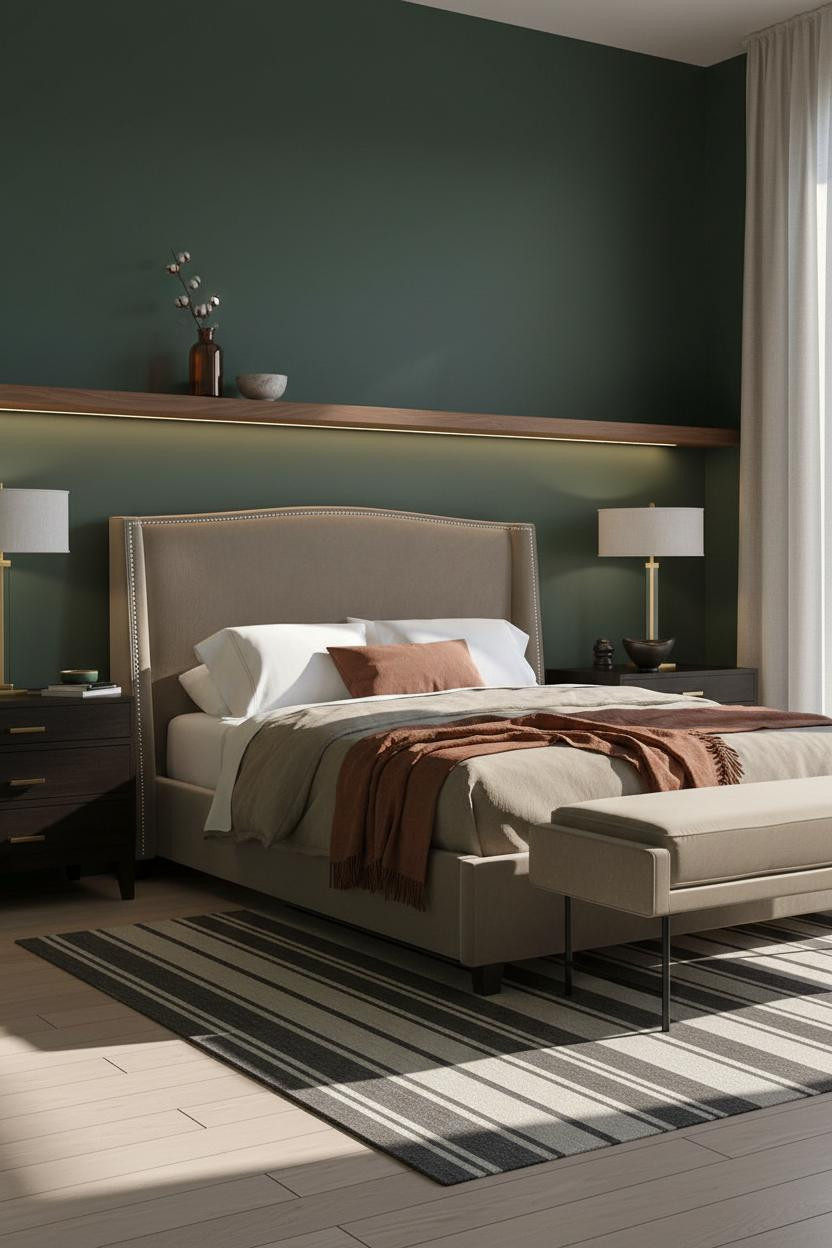

Honestly, this is the combination I’d go after first if I were starting from scratch in a dark room.
What gives it presence: A full-width natural walnut floating shelf at headboard height traces the warm wood grain against forest green walls in a precise horizontal band. Two materials. One decision. Huge payoff.
Keep objects on the shelf restrained: an amber glass bottle, a raw ceramic bowl. Nothing too precious.
A Clay Plaster Arch That Changes the Whole Energy
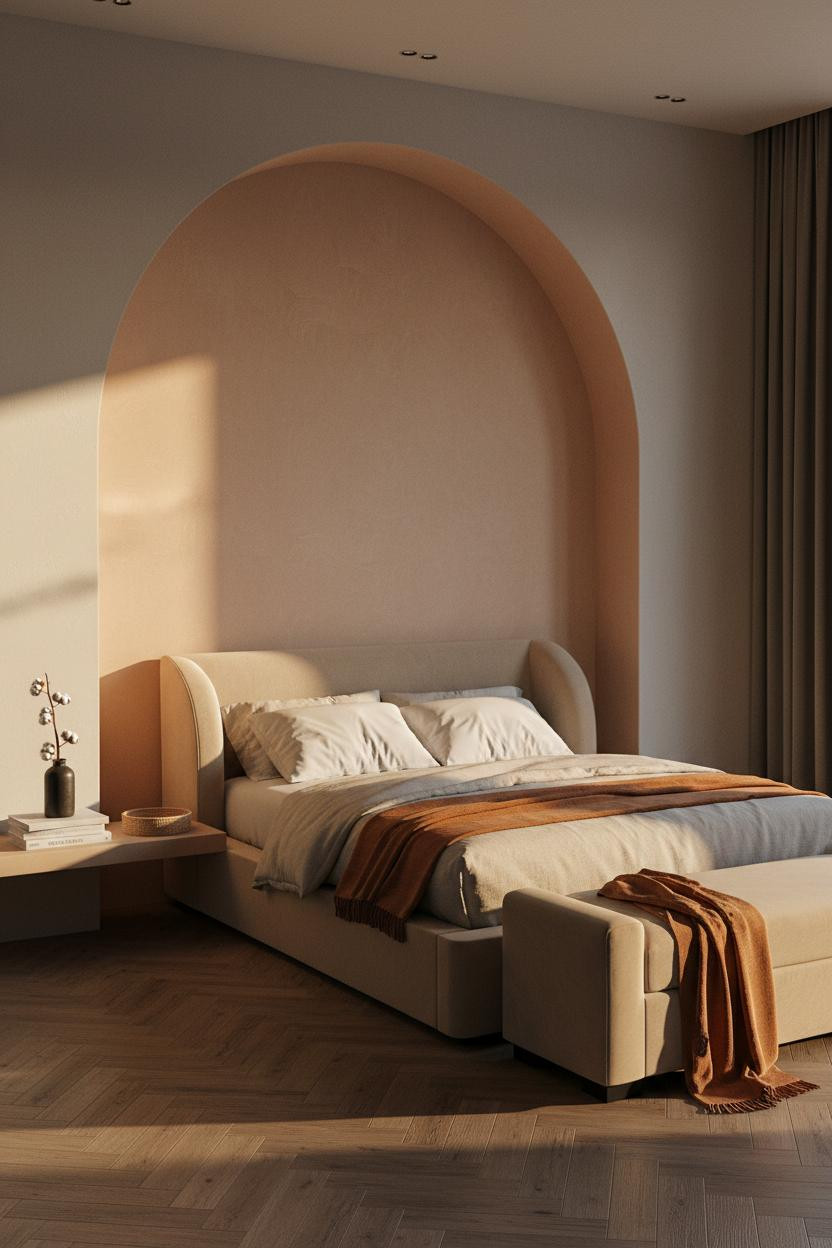

I almost scrolled past this. Glad I didn’t.
A full-width arched niche in warm clay plaster curves into the ceiling above the bed, and late afternoon light shades it from amber at the crown down to deep shadow at the base. That gradient does everything. No art needed.
The smarter choice: Pair it with aged walnut herringbone parquet underfoot. Stone walls and warm wood floors keep the arch from feeling like a showroom display.
Ebonized Slatted Timber That Turns a Wall Into Architecture
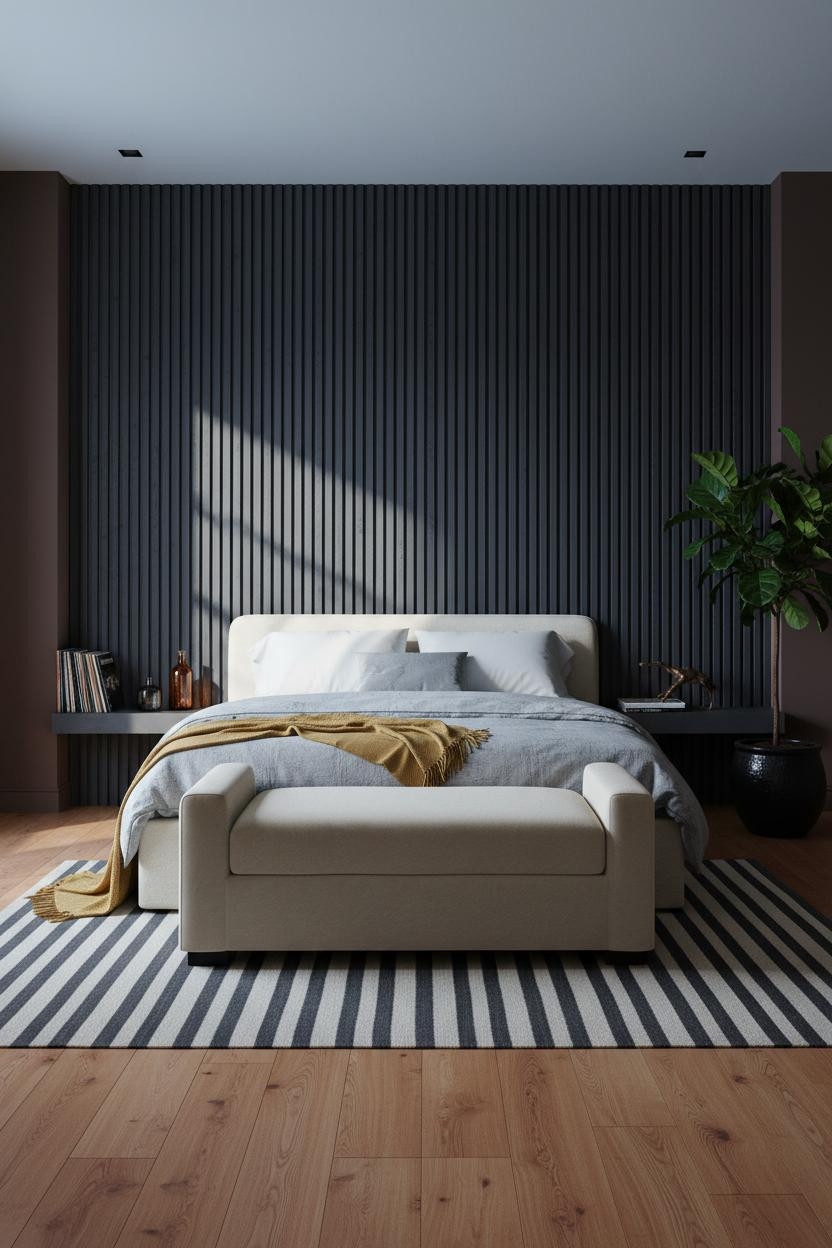

This is the kind of room that makes you want to just sit in it for a while.
Why it looks custom: Vertical ebonized oak slats multiply as raking light crosses them, building dense shadow rhythm across the full wall width. It reads as architecture, not decoration. And the burgundy-brown flanking walls deepen the effect without competing.
What to borrow: Add a single large potted plant in a raw black ceramic pot. One living element softens a room this dark without breaking the mood.
Indigo Shiplap That Somehow Feels Cozy
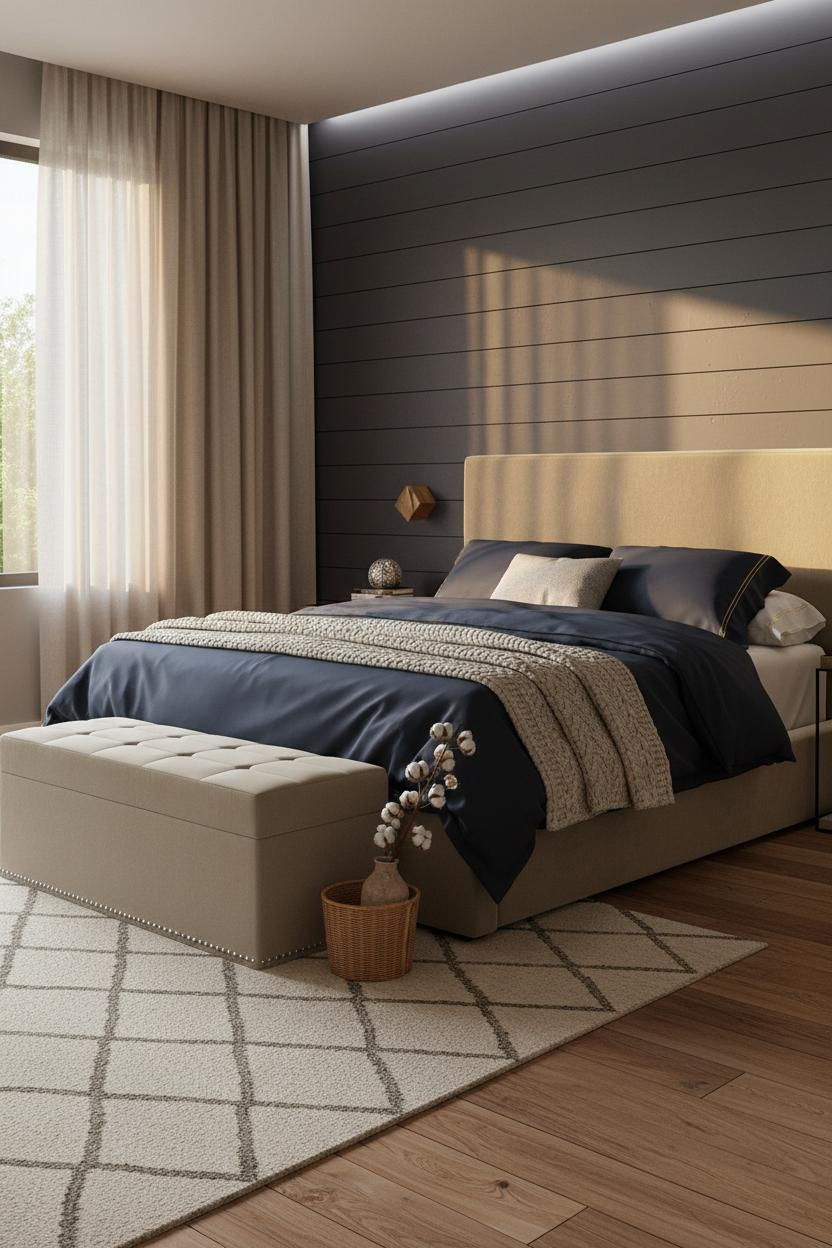
Shiplap reads coastal until you paint it warm indigo-charcoal. Then it just reads as good.
Why it holds together: The shallow horizontal grooves catch amber sidelight in layered shadow lines, which makes the wall feel warm and textured while still feeling dark. That balance is tricky to pull off. But here it works.
Pro move: Let the floor-to-ceiling linen curtains pool at the base. That extra inch of fabric keeps the room from feeling too dressed-down.
Taupe Wainscoting for a Dark Bedroom That Stays Livable
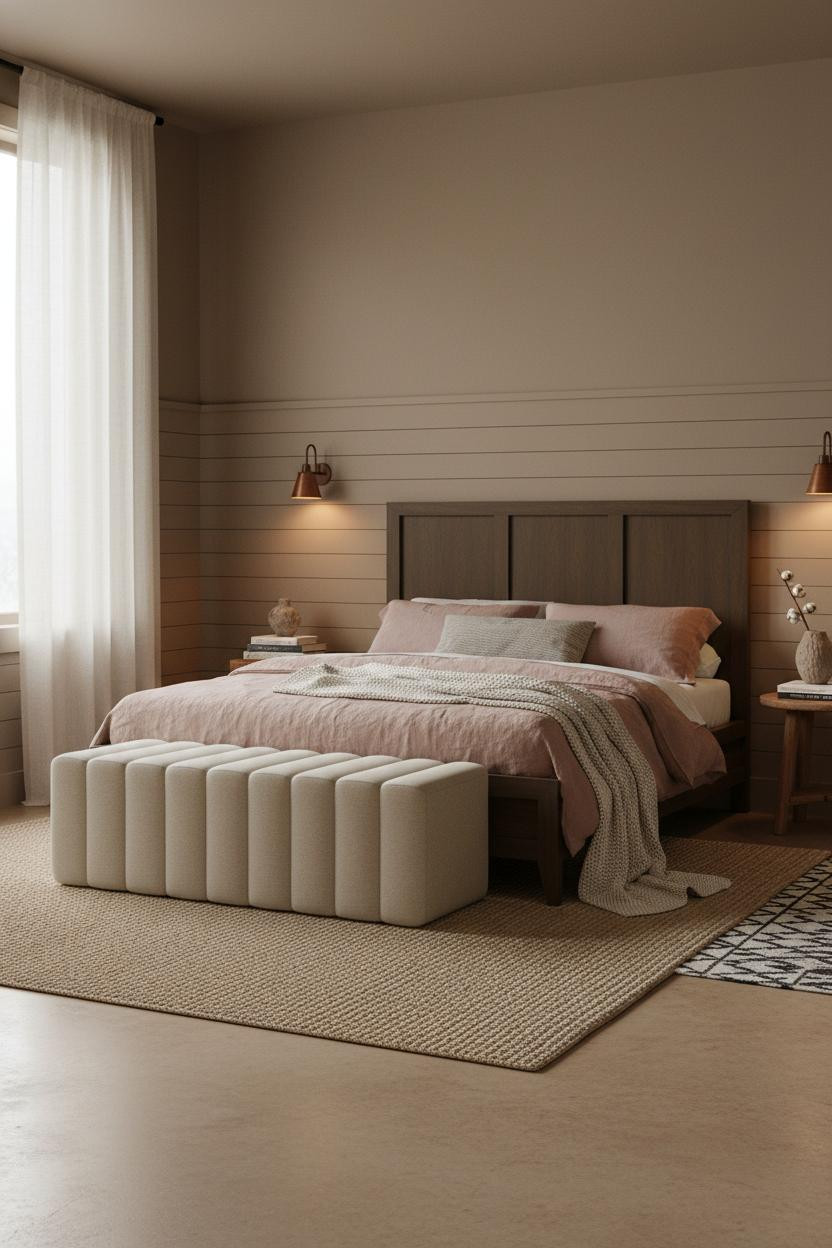
Not every dark room needs to go floor-to-ceiling with it. This approach is smarter.
What softens the room: Warm taupe wainscoting rising to mid-wall height anchors the lower half with grounded residential texture, while the wall above stays light. The room feels warm without being heavy, which is honestly the harder trick.
The easy win: Layer dusty pink linen bedding with a cream chunky knit throw. Two soft tones over a dark base land exactly right.
Deep Olive Walls Done the Japandi Way
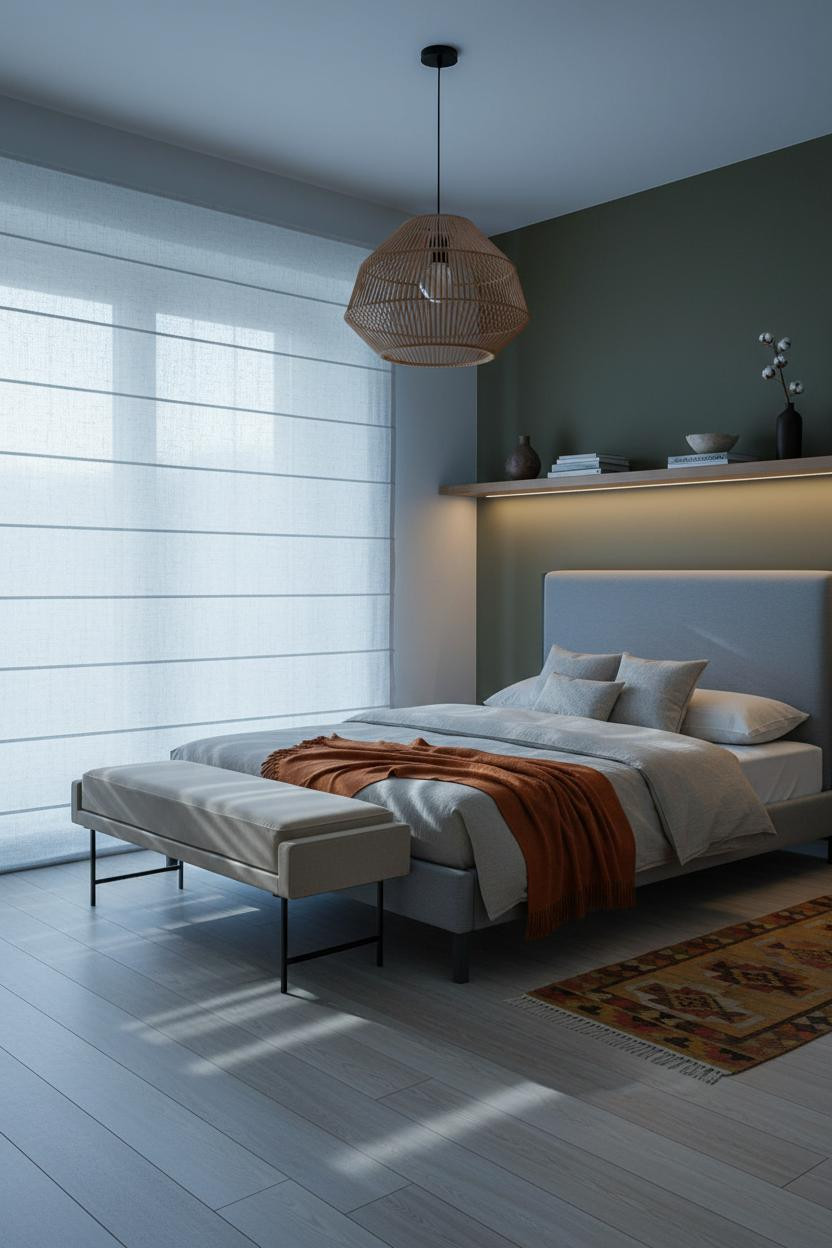

Deep olive with pale birch floors. It shouldn’t feel this calm. But somehow it does.
In a room this pared back, the smarter choice is pulling the eye upward with a sculptural rattan pendant overhead rather than adding more objects at eye level. The pendant draws contrast without adding visual noise at the lower half of the room.
One smart swap: Try a kilim runner in ochre and rust beside the bed instead of a large area rug. It grounds the zone without competing with the Japandi-minimal palette.
Stone-Grey Walls That Let the Flooring Do the Talking

Nothing fancy. That’s the point.
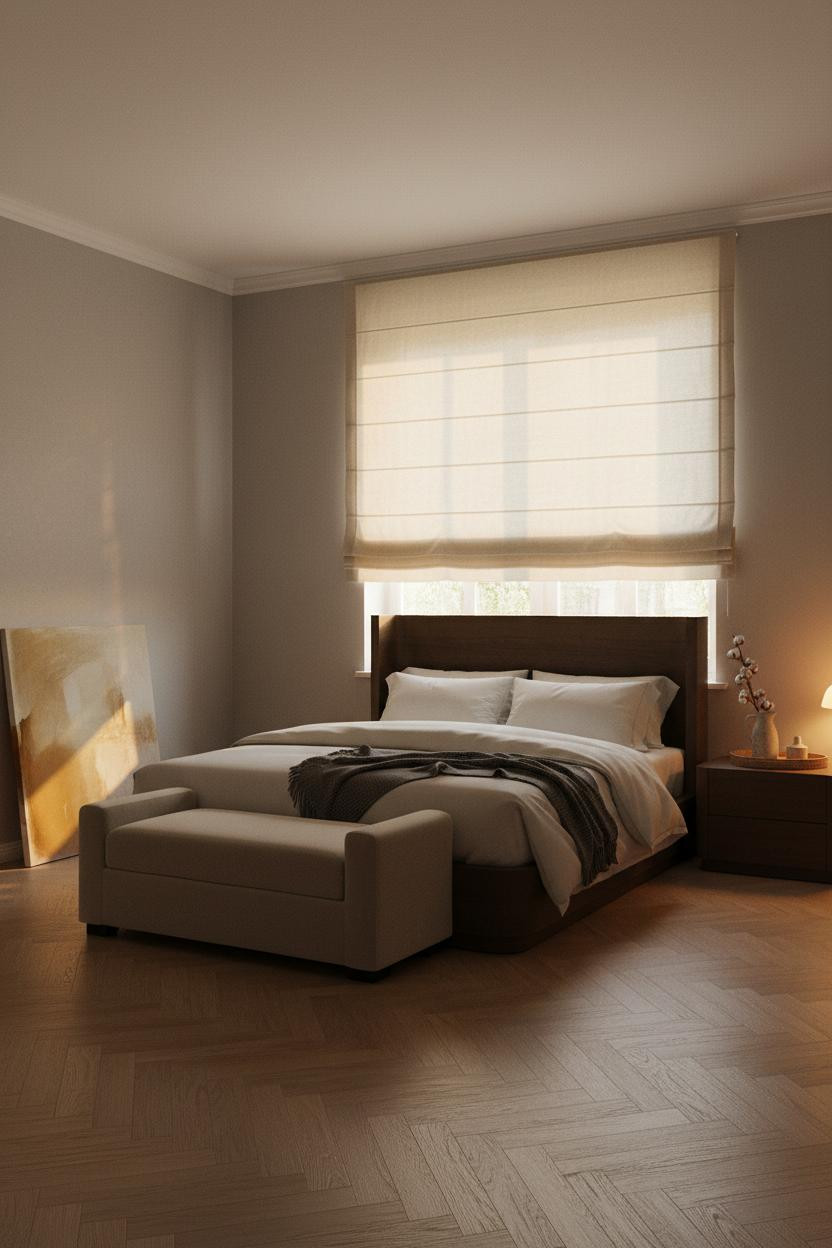
What carries the look: Warm stone-grey matte walls recede so completely that herringbone honey oak parquet becomes the room’s actual focal point. The geometric warmth underfoot does more decorating than anything on the walls. I think about this room a lot.
The finishing layer: An oversized abstract canvas in ochre and raw umber leaning against the wall (not hung) keeps things feeling lived-in and intimate rather than staged.
Graphite Board-and-Batten With Cream Linen Against It
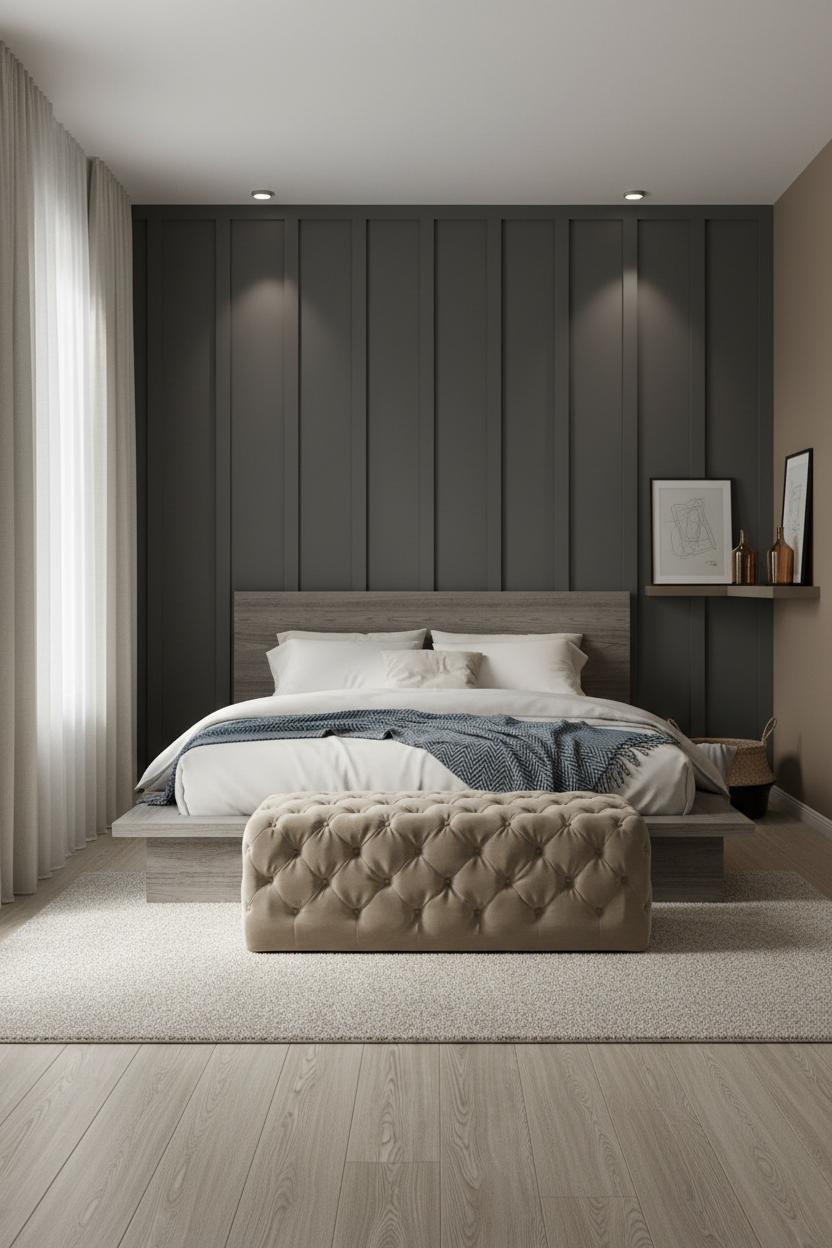
This is the combination that surprises me every time. Deep graphite board-and-batten against cream percale bedding looks like it should clash. It doesn’t.
The crisp vertical grooves of deep graphite mushroom board-and-batten catch cool overcast light at variable depths, creating subtle rhythm that reads as architectural weight without darkness. And the bleached oak flooring underneath keeps the whole room from sinking.
Don’t ruin it with: Warm-toned bedding. The steel blue herringbone throw against cream percale is the specific contrast that makes this version work.
Charcoal Plaster That Absorbs Light and Holds a Room Still

This is the darkest room in the collection. And honestly, it’s my favorite.
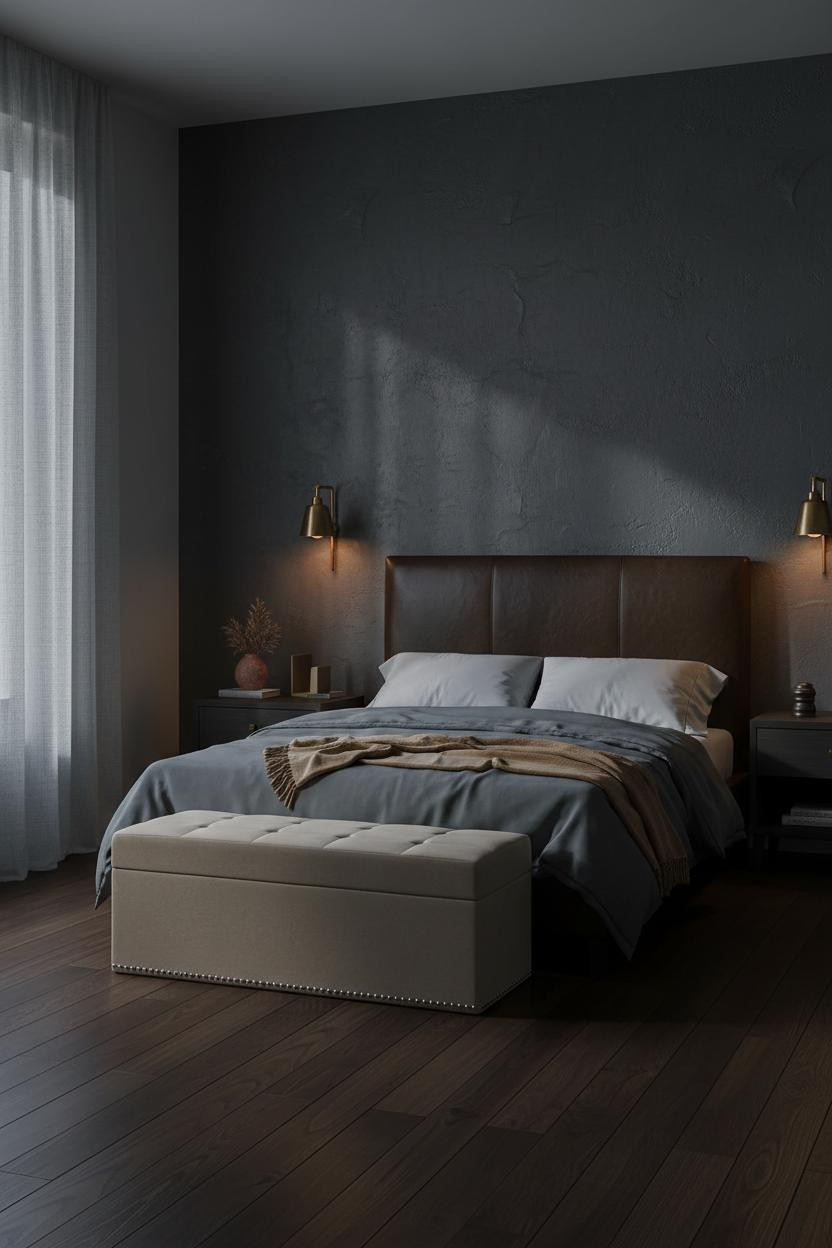
What creates the mood: A textured charcoal plaster wall absorbs light unevenly, deep shadow pooling at the corners while the surface stays raw and tactile. The room feels grounded in a way that flat dark paint never quite achieves.
Pair it with dark walnut wide-plank flooring and warm amber sconces. Dark bedroom walls this deep need warm light at low levels or the room just feels like a cave.

Our #1 Pick
Saatva Classic Mattress
America’s best-selling online luxury innerspring. 365-night trial, lifetime warranty, free white glove delivery.
Shop Saatva Classic
The Foundation Of Every Beautiful Bedroom
All thirteen of these rooms get the walls, the floors, and the lighting right. But the place you actually feel a bedroom is the bed itself. And a beautifully styled room with a bad mattress is still a room you dread going to sleep in.
The Saatva Classic is what I’d put underneath any of these setups. Dual-coil support that holds position all night, a breathable organic cotton cover that doesn’t trap heat, and a Euro pillow top that’s genuinely soft without losing structure after a year. It feels like the good hotel kind. Not the business hotel kind.

Walls get repainted. Throws get swapped out season to season. The mattress stays. Start with the bed. The rest figures itself out.