
Think your attic is the awkward room no one knows what to do with? The best sloped ceiling bedroom designs prove the angle is the whole point. Lean into the geometry and it becomes the most interesting room in the house.
These 12 rooms show exactly how to make a low roof feel intentional, warm, and worth saving to every board you own.
The Dormer Window Room That Actually Feels Like a Retreat



I keep coming back to this one. There’s something about the morning stillness in a dormer attic that no flat-ceiling room can replicate.
Why it feels sheltered: The hand-troweled blush plaster ceiling catches raking light along its diagonal, turning a structural limitation into the room’s most interesting surface.
Steal this move: Layer a kilim runner and dried botanicals at the foot. The warmth reads from across the room, even before you notice the slope.
Going Dark on the Ceiling Pays Off Here
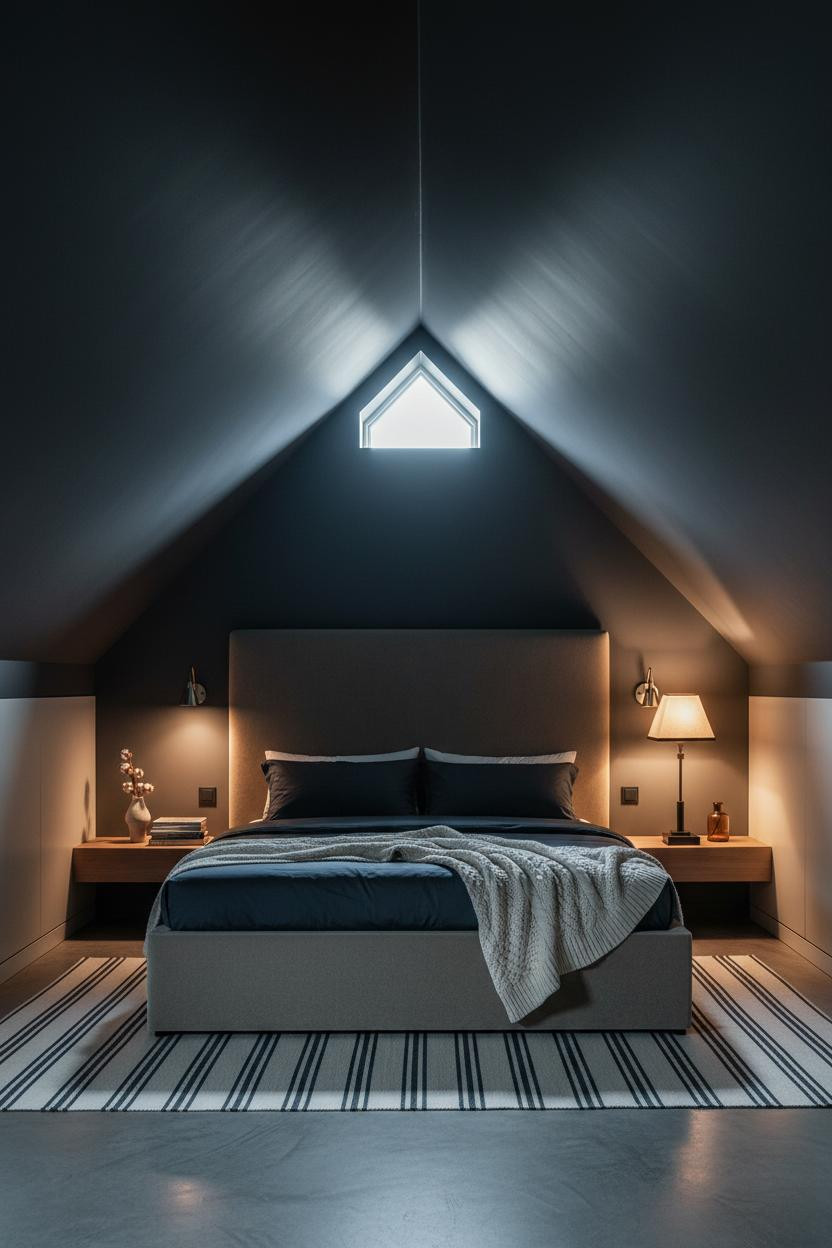


Bold choice. Not for everyone. But the people who commit to a charcoal attic ceiling never want to go back.
And honestly, the contrast is the reason it works. Matte charcoal plaster absorbs light along the diagonal plane while pale panels below create a tonal split that makes the angle feel intentional rather than accidental.
The smarter choice: Keep bedding in navy sateen, not white. White against charcoal reads stark; navy reads composed.
Why Herringbone Wood Belongs on an Angled Wall
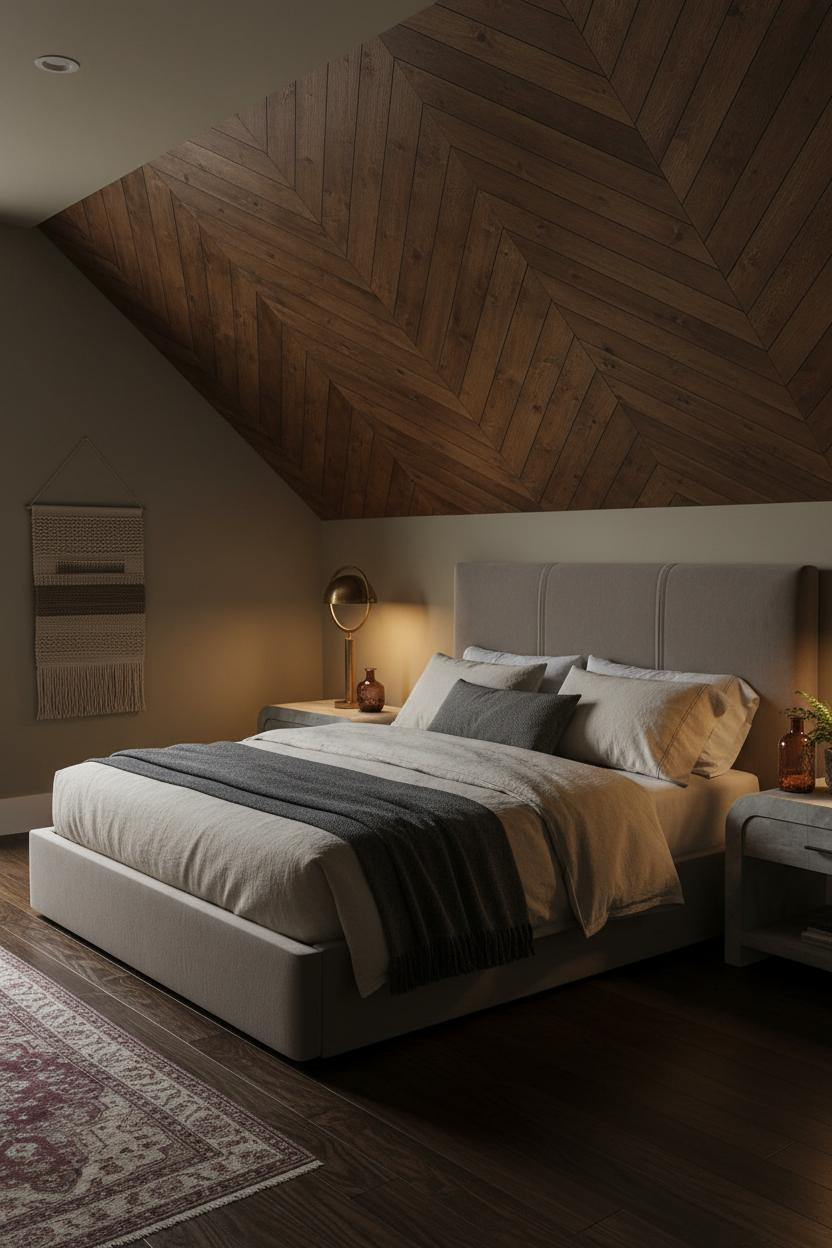


This is the kind of room that makes you want to cancel your plans and stay in.
What makes it work is scale. The aged walnut herringbone plank wall runs along the steepest slope face, and every ridge in that chevron pattern catches the lamp light differently, so the surface feels alive even in a compressed space.
Worth copying: Mount a woven wall hanging low on the knee wall beside the bed. It fills the awkward low zone in a way that furniture can’t.
Shiplap in a Deep Mushroom Brown Is Underrated
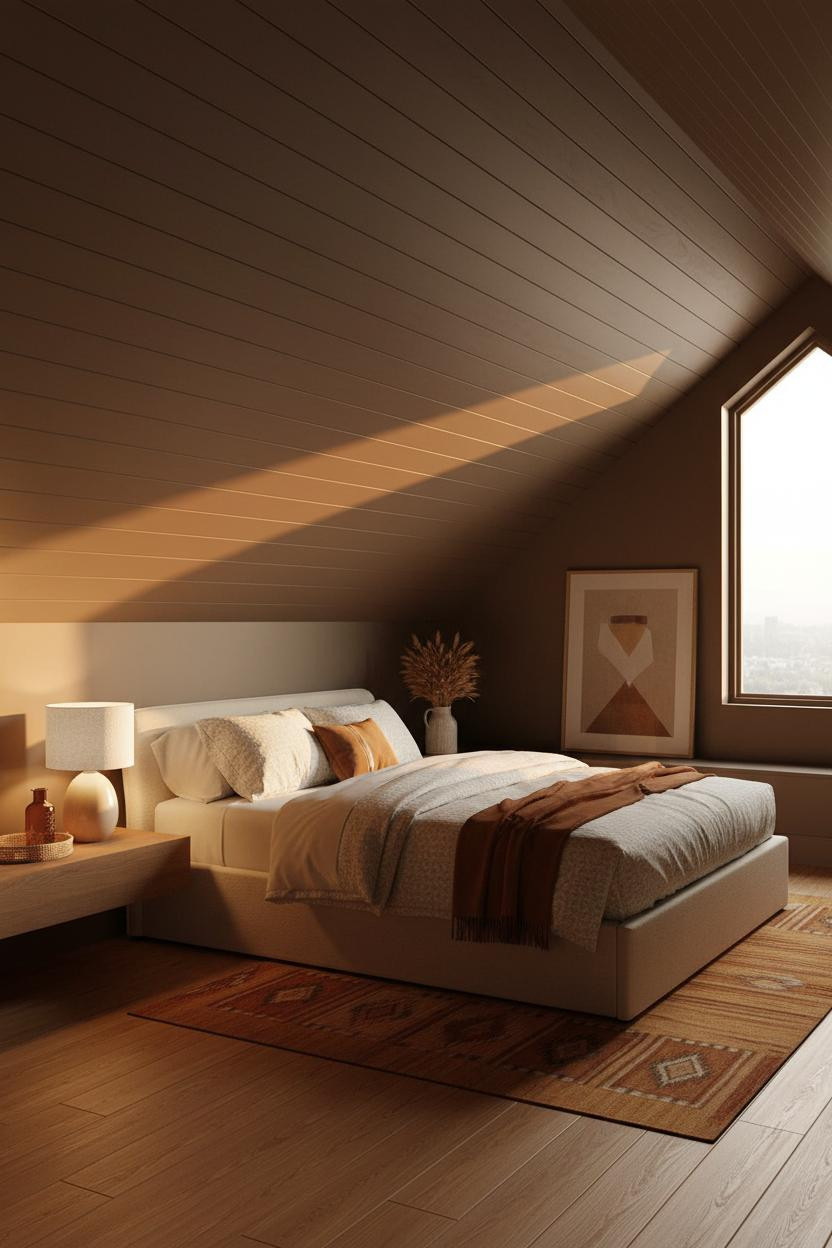

Everyone paints shiplap white. This room skips that entirely, and the result is genuinely warmer.
Design logic: Horizontal planks in deep mushroom brown amplify the diagonal geometry rather than flattening it, so the slope reads as a feature instead of a compromise.
The finishing layer: A rust linen throw and a dried wheat bundle on the shelf. Nothing too precious. Just enough texture to keep things interesting.
A Blush Plaster Slope and a Round Mirror Are a Pairing I Didn’t Expect to Love
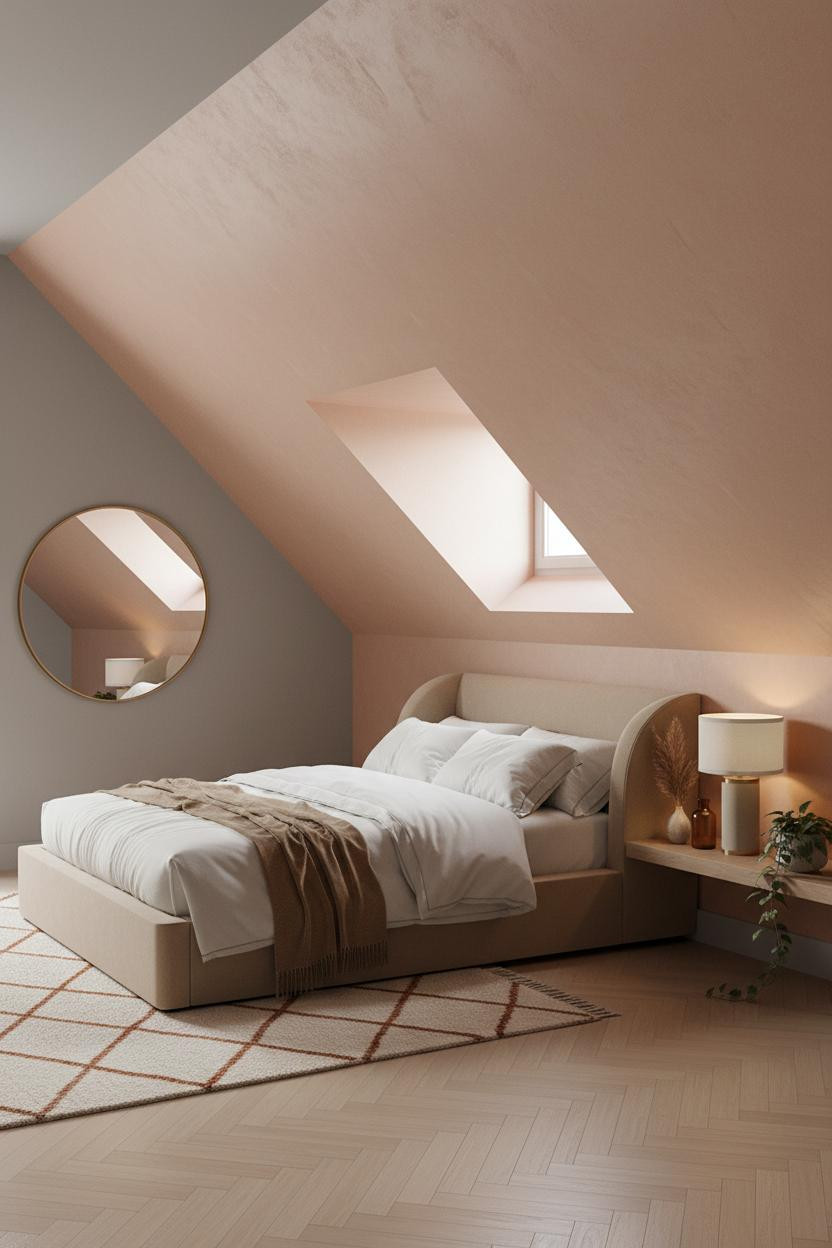


I almost scrolled past this. Glad I didn’t.
The proportions work because of the contrast: a curved mirror against a hand-troweled blush plaster ceiling that rakes from ridge to knee wall. The softness of the curve keeps the angular geometry from feeling too rigid, while still letting the slope do its thing.
One smart swap: Lean a round mirror against the low knee wall instead of hanging it. The lean is more casual, and it fills the awkward low corner in a way that a straight-edged piece never manages.
Board-and-Batten Works Harder Than You Think in a Low Attic
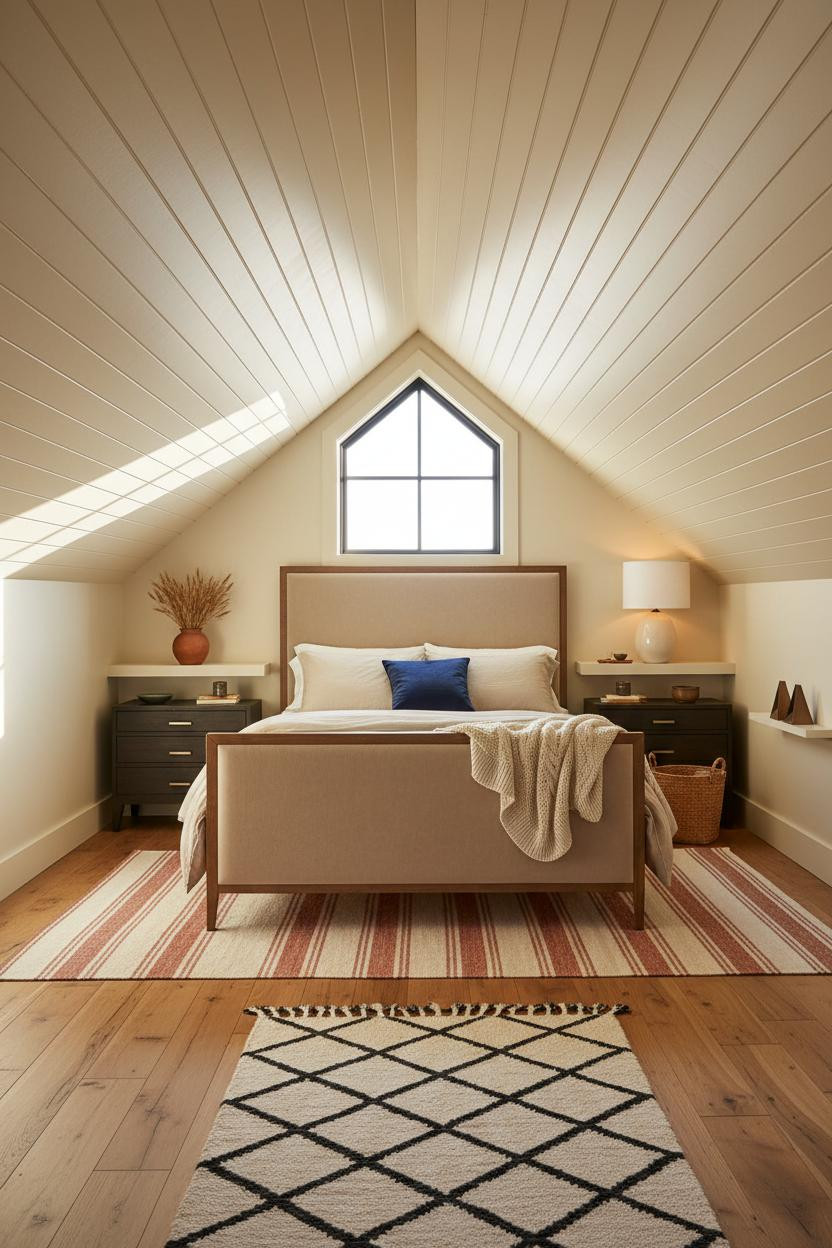

Nothing fancy. That’s the whole point.
Why it holds together: Running warm ivory board-and-batten continuously from ridge down to knee wall means each vertical seam catches raking morning light, which makes the slope feel like a design decision rather than an architectural constraint. The room feels calm and cohesive because there’s no visual break to interrupt the angle.
Avoid this mistake: Don’t switch to a different finish at the knee wall. One continuous surface reads as intentional. Two surfaces read as unfinished.
Dove Grey Plaster and a Burnt Orange Throw Are Quieter Than You’d Think
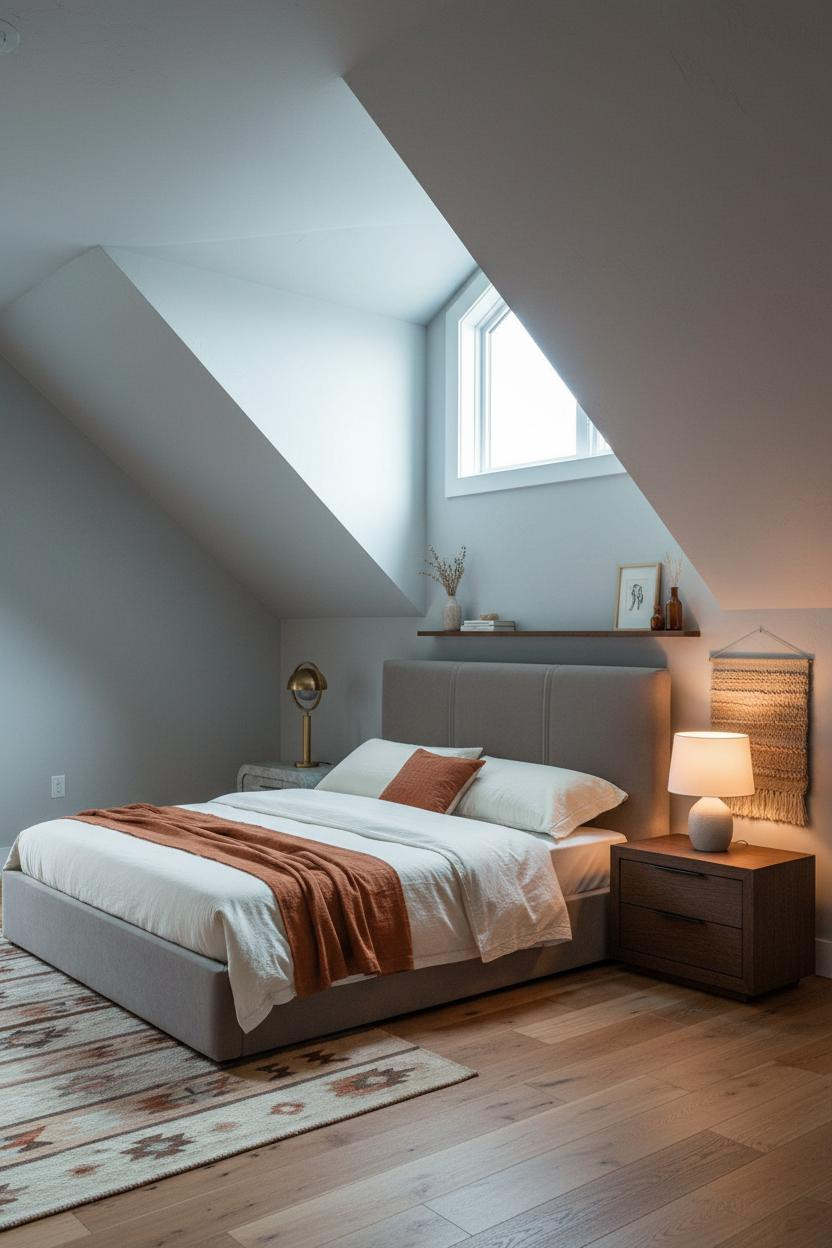
This one surprised me. The palette shouldn’t feel this grounded, but it does.
The reason it feels spare instead of cold is the dove grey smooth plaster paired with reclaimed honey-toned flooring. Cool ceiling, warm floor. The contrast handles all the heavy lifting, so the burnt orange throw on the footboard becomes a quiet nod to warmth rather than a statement.
For similar loft bedroom ideas with a Scandi lean, keep the decor to three objects on the nightstand. Stop there.
Terracotta Plaster in an Attic Is a Commitment That Pays Off
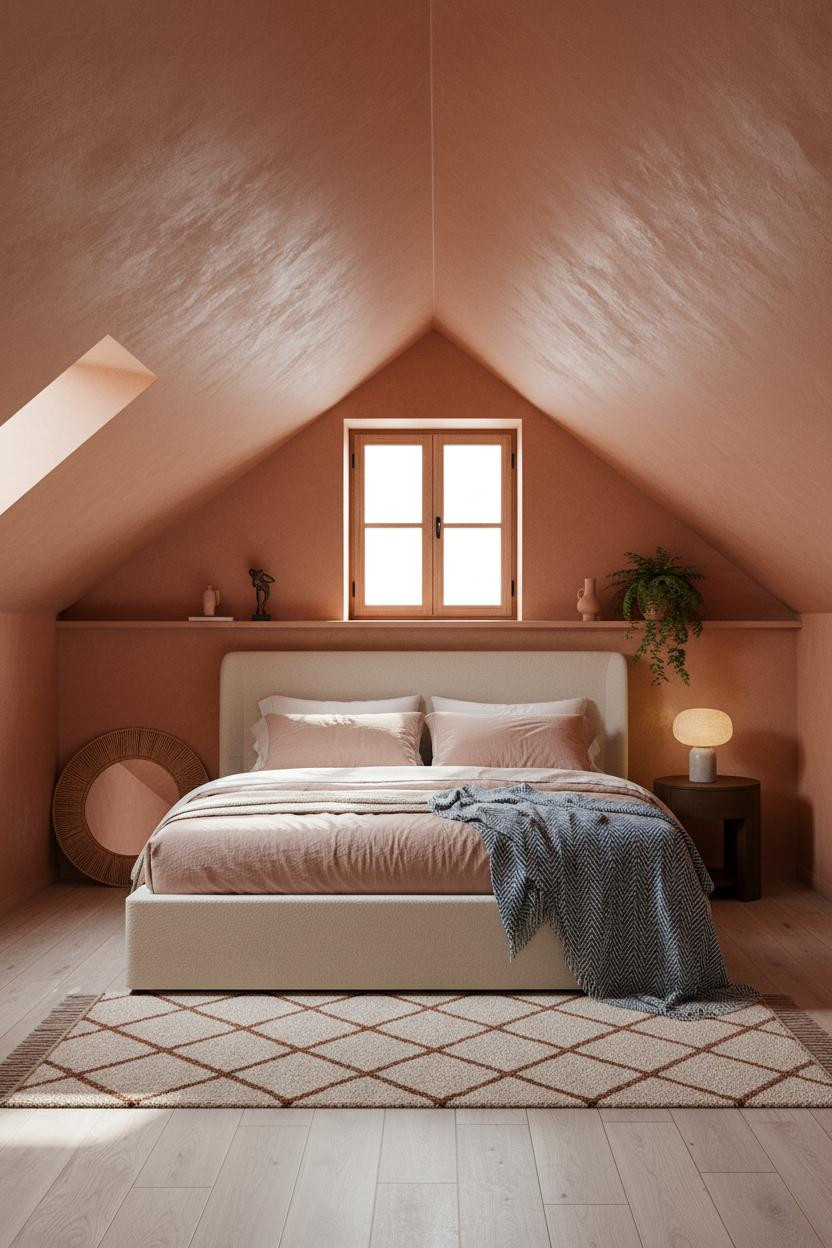

Fair warning. This look only works if you go all in on the plaster.
What creates the mood: Warm terracotta-clay plaster finished with a hand-troweled texture catches morning light across its diagonal plane in a way that flat paint simply can’t. The surface is doing active work, not just adding color.
For more attic bedroom ideas with a Mediterranean lean, keep the rug in cream and rust. A steel-blue throw on the footboard gives the palette somewhere cooler to breathe.
What Sage Walls Do to a Dormer Attic
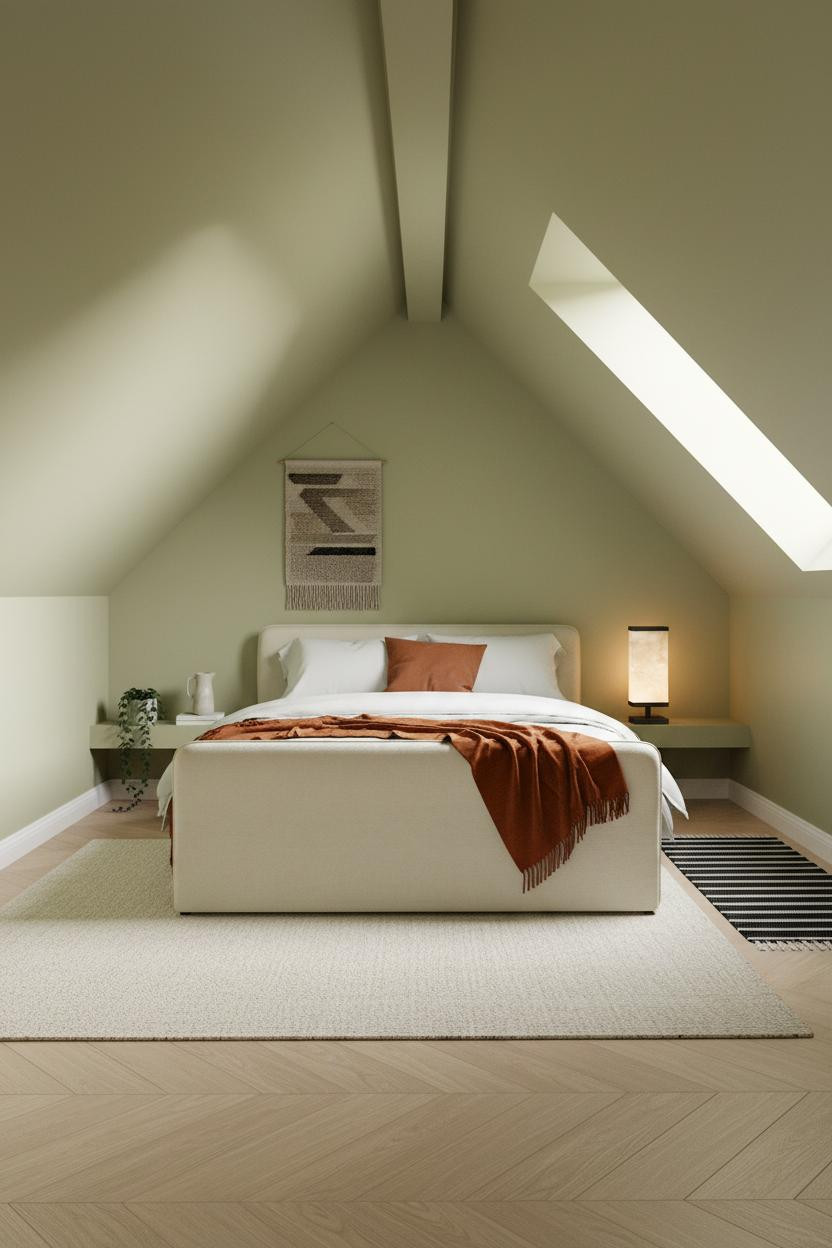
The room feels lived-in and intimate in a way that most all-white attics don’t.
In a space this compressed, the easy win is painting the slope and knee wall the same soft warm sage. One continuous surface keeps the eye moving along the angle rather than stopping at the color break you’d get with two tones.
Pro move: Add a chunky wool cream rug underfoot. The contrast between the cool sage overhead and the warm texture below keeps the room from feeling too flat.
Forest Green Board-and-Batten Changes How the Slope Reads
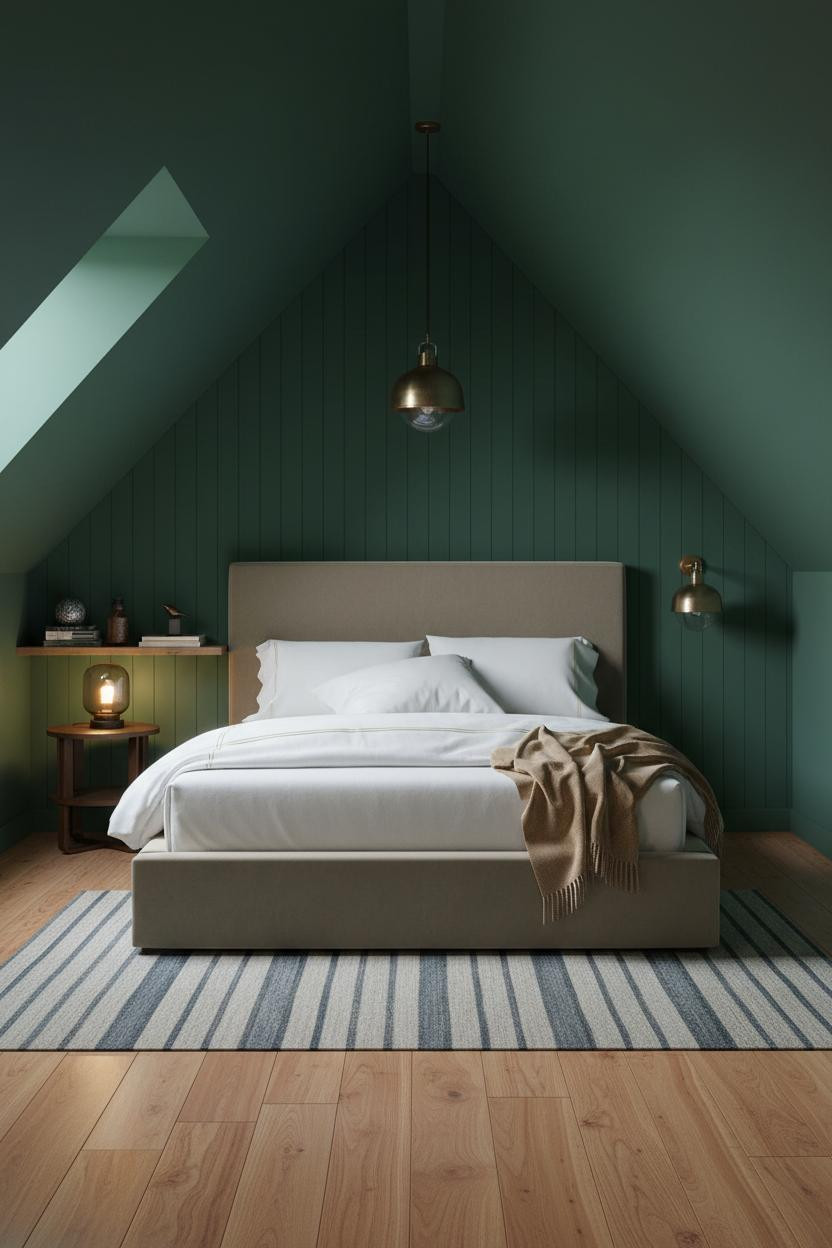

This is divisive. But the rooms-with-slanted-ceilings crowd that commits to this kind of depth tends to never look back.
What gives it presence: Each vertical ridge in the deep forest green board-and-batten catches raking light and throws a thin shadow line downward, so the slope draws the eye upward into the tightest corner rather than letting it drop to the floor.
Where to start: Warm maple flooring is non-negotiable here. The wood grain pulls warmth up through the cool green, while still letting the color read at full strength.
Whitewashed Plank Ceilings Keep a Low Attic From Feeling Oppressive
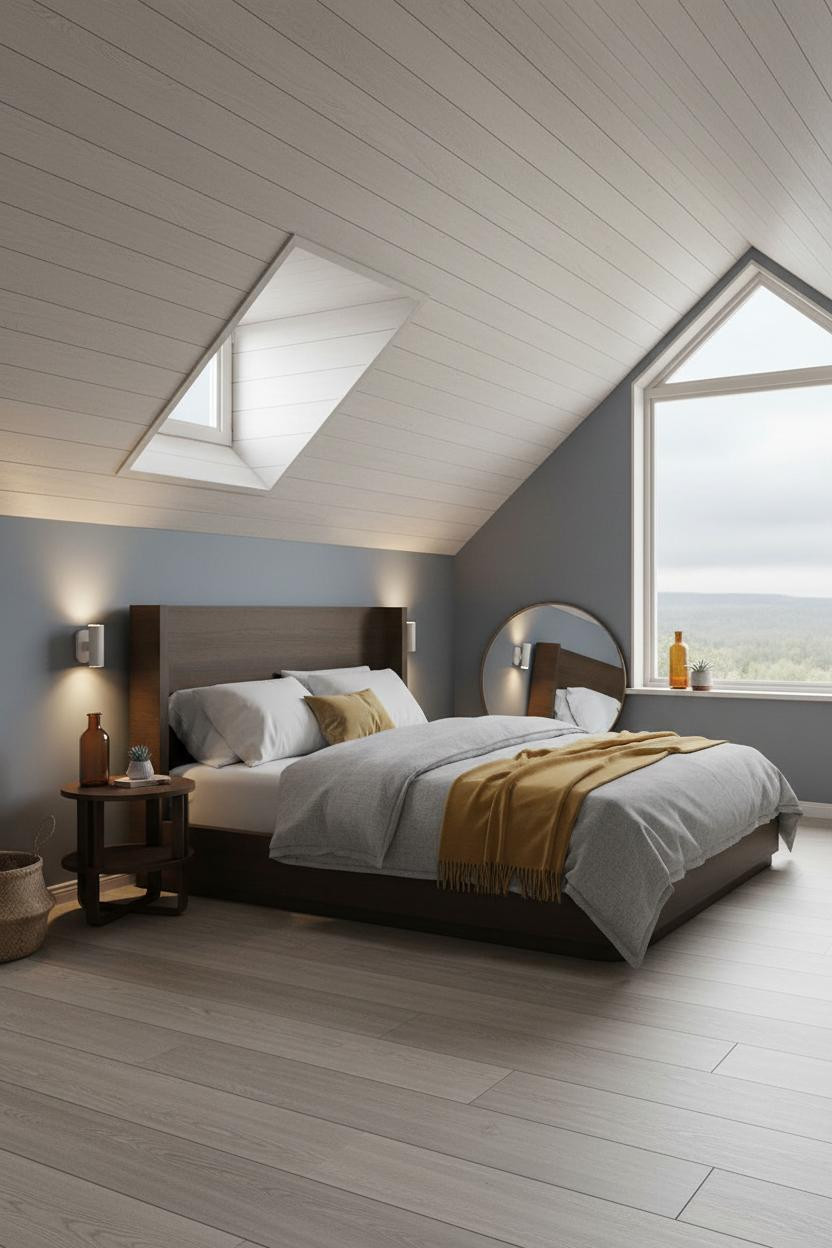

Admittedly, pale and muted can tip into forgettable fast. But this one avoids it.
What changes the room: The repeating rhythm of whitewashed tongue-and-groove planks pulls the eye diagonally across the entire ceiling plane, so the angle becomes a graphic detail rather than just the thing you bump your head on. Each hairline shadow between boards does real work in diffused light.
Don’t ruin it with: Bright white bedding. Stone-washed grey linen keeps the palette collected. A mustard wool blanket at the foot gives it just enough warmth to feel like someone chose everything intentionally.
A Thick Exposed Beam at the Ridge Anchors Everything Else
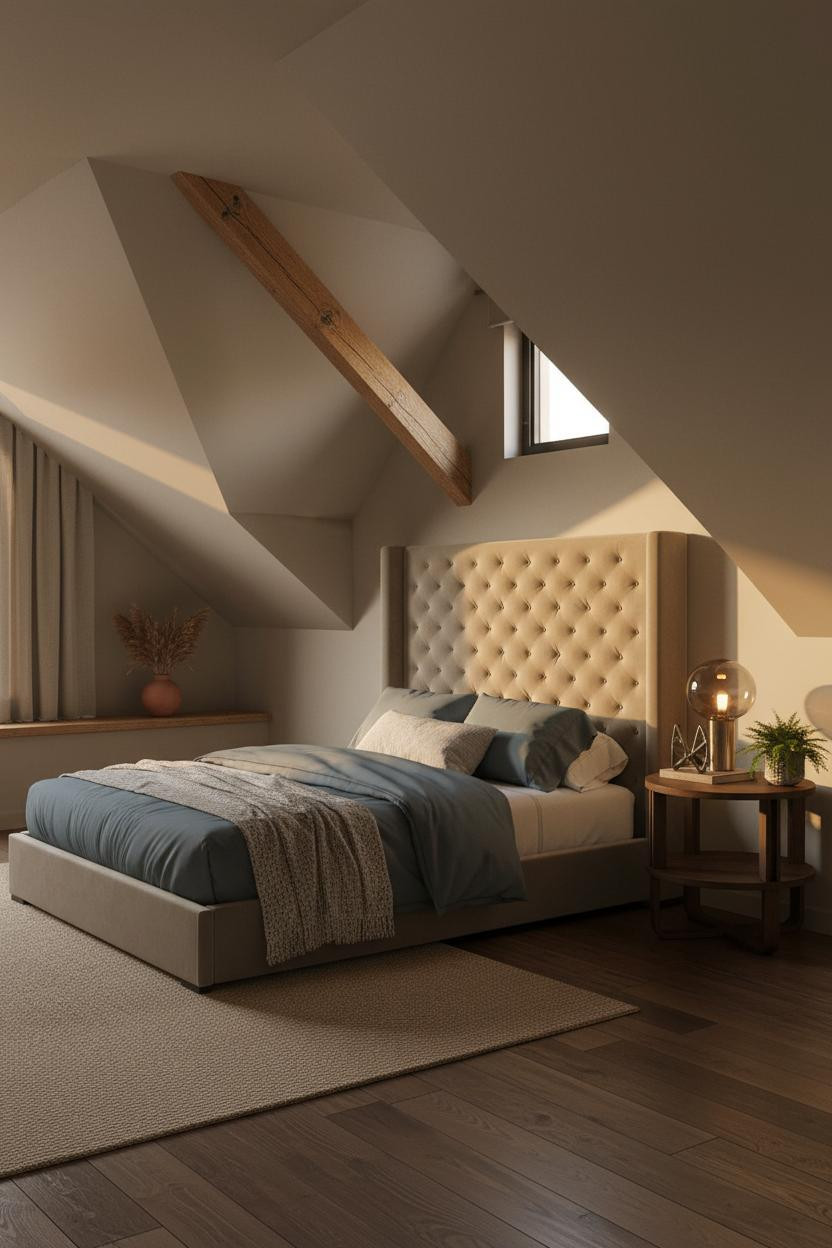

There’s a reason Japandi bedroom ideas keep landing in attic spaces. The restraint suits the geometry.
Why the materials matter: A honey-toned exposed ridge beam catches amber afternoon light on its rough grain, anchoring the room at its highest point. Without it, the greige plaster ceiling reads as just a slope. With it, the room feels deeply still.
A floor-to-ceiling linen curtain framing the dormer gives the small window a scale it doesn’t actually have. That’s the practical move for any small attic bedroom where the window feels lost in the angle.

Our #1 Pick
Saatva Classic Mattress
America’s best-selling online luxury innerspring. 365-night trial, lifetime warranty, free white glove delivery.
Shop Saatva Classic
The Foundation Of Every Beautiful Bedroom
Walls get repainted. Linen gets swapped out. The mattress stays. So the one thing worth getting right in a sloped ceiling bedroom is what you actually sleep on.
The Saatva Classic uses dual-coil support that holds up over years, not just months. The breathable organic cotton cover doesn’t trap heat, which matters more in a compact attic room than anywhere else. And the Euro pillow top is soft without losing structure. It still feels right years in.

Good design ages well because it’s made well. Start with the bed. The rest figures itself out.