
Think your attic is too awkward for a proper bedroom? The best boho bedroom design rooms I’ve ever saved all started with a sloped ceiling and someone willing to lean into the architecture instead of fighting it. Exposed rafters, raw plaster, a kilim on the floor. That’s the whole formula.
What follows are twelve attic bedrooms that feel genuinely collected. Nothing matchy. Nothing precious.
The Indigo Niche That Makes Everything Else Look Intentional
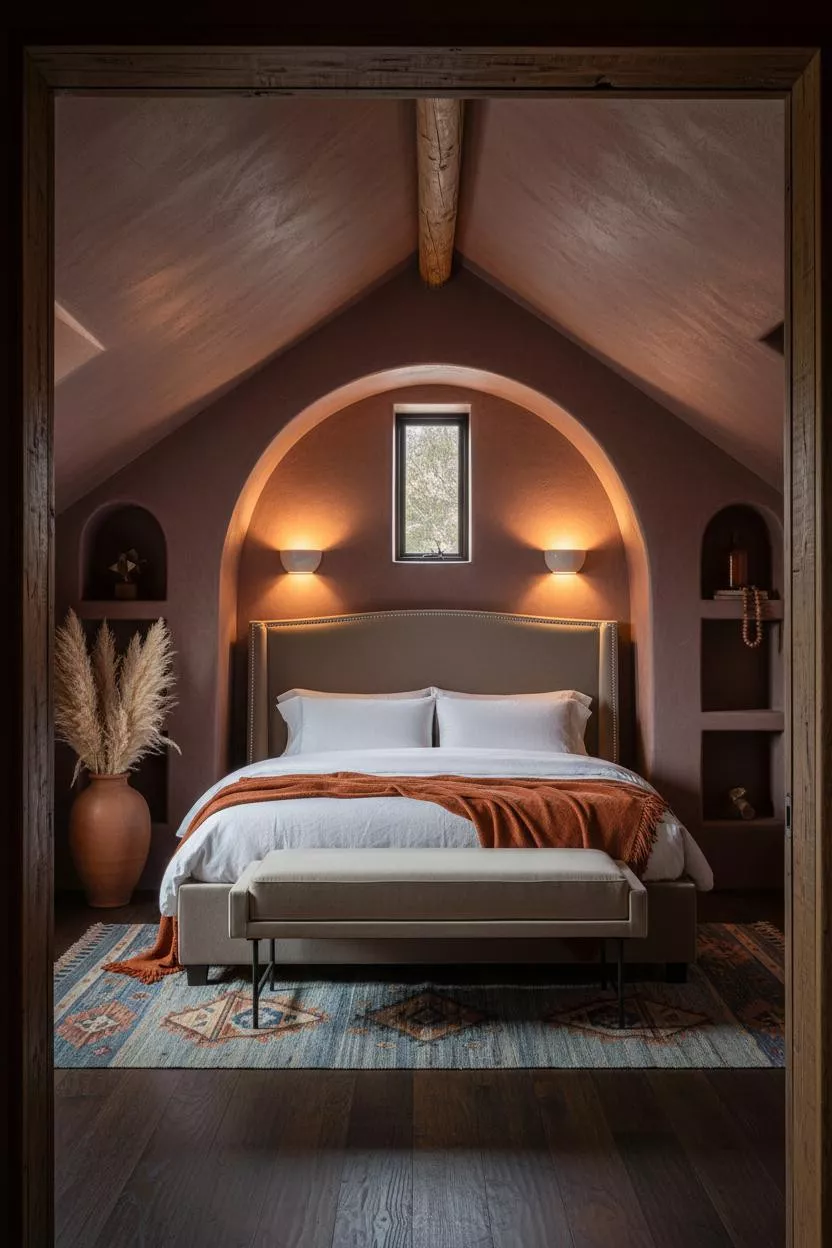

An arched niche hand-troweled from floor to roofline is exactly the kind of move that takes a boho attic bedroom from “pretty” to genuinely memorable.
Why it holds together: The deep indigo plaster inside the arch absorbs light in a way flat paint never could, which makes the whole wall feel three-dimensional rather than just dark.
Steal this move: Keep everything else in your palette warm and earthy. Burnt orange and oatmeal linen next to that indigo is what gives the depth without tipping into moody.
Sage Walls and Exposed Beams Always Win in an Attic
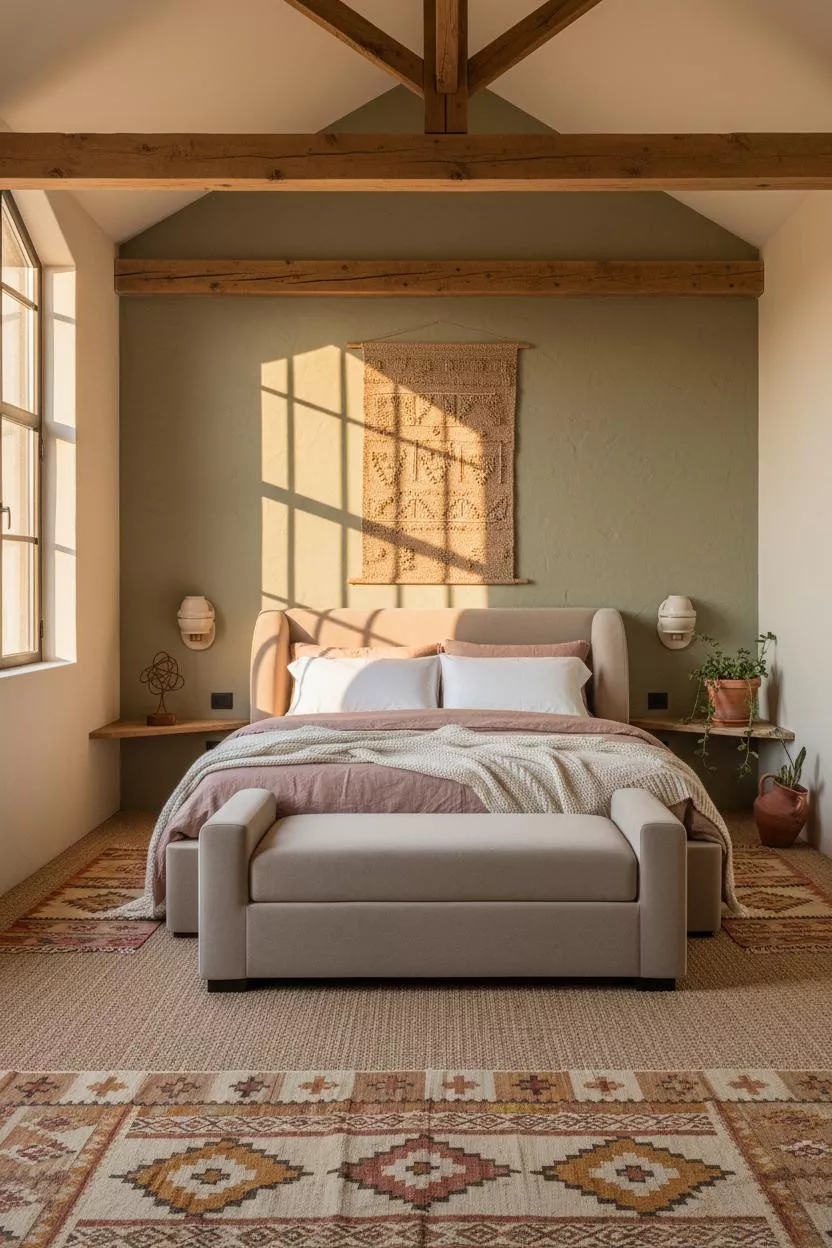


Honestly, this combination is hard to get wrong. Sage and rough-hewn collar ties were made for each other.
The room feels sun-warmed and lived-in in a way that perfectly matched rooms rarely do.
What makes this work: Weathered honey-grain beams throw shadow stripes across the sage wall below, giving the room structural rhythm that no wallpaper can replicate.
The finishing layer: A kilim in rust and mustard on sisal flooring. The pattern reads as globally gathered, not matchy.
This Provençal Attic Proves Warm Stone Grey Is Underrated
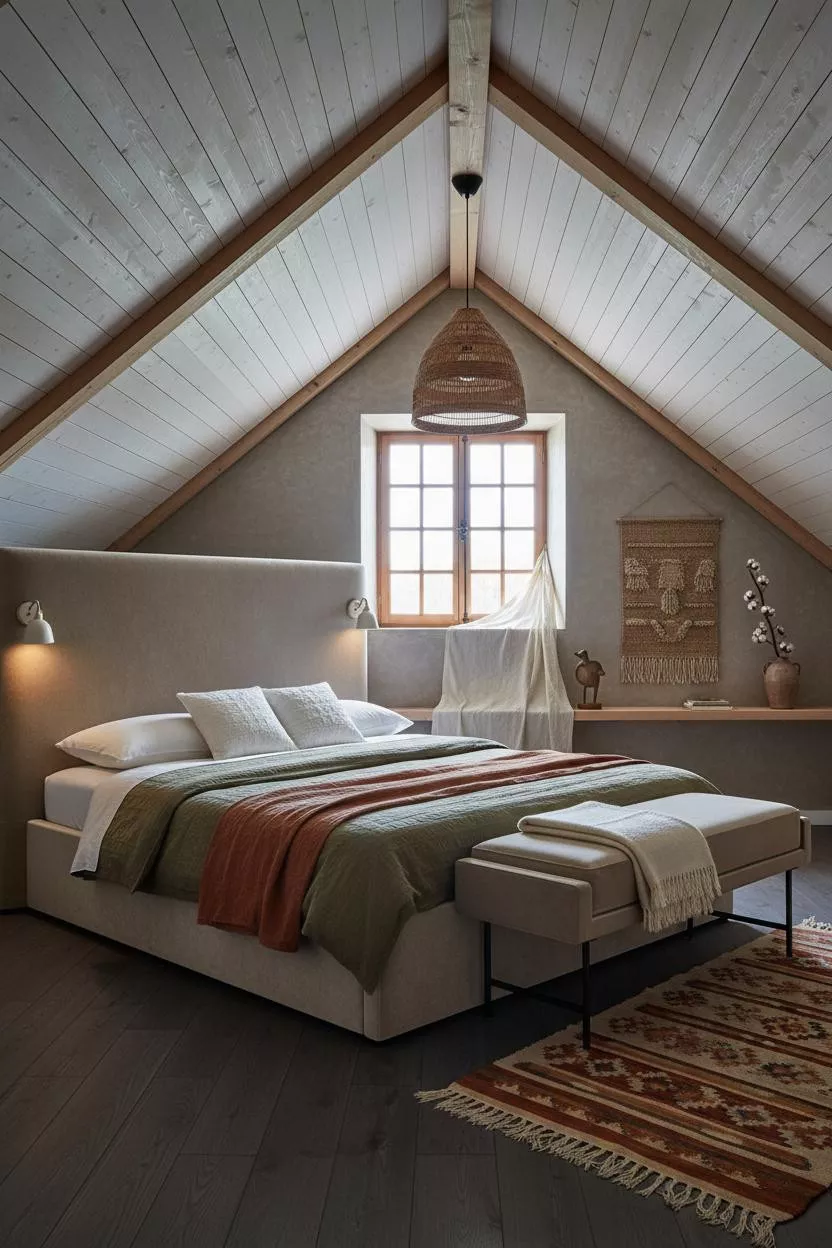

Nothing fancy. That’s the whole point of this palette.
Why it feels expensive: Pale honey-grain larch planks running the pitched ceiling length add texture that reads as handmade and intentional, while the matte stone-grey plaster walls keep everything from feeling too precious.
A woven jute wall hanging at the gable end does more visual work than any framed print. Lean into that.
Board-and-Batten in Indigo Is a Bigger Commitment Than You Think
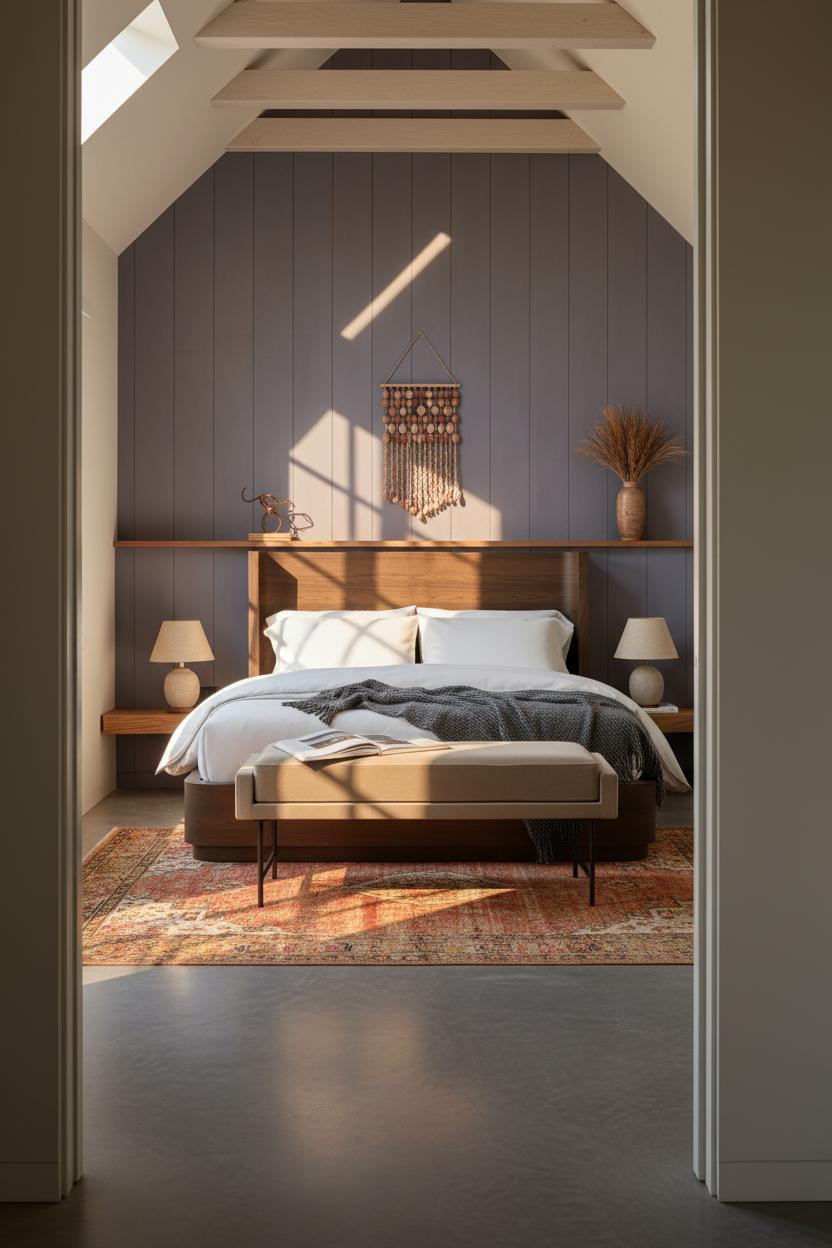

Fair warning. The people who do it never regret it, but it’s a commitment.
Why the vertical rhythm matters: Board-and-batten climbs toward the sloped ceiling and makes the whole wall feel architectural rather than painted, especially with indigo-washed plaster in the channels catching shadow.
Avoid this mistake: Don’t balance it with more pattern. Ivory bedding and a single Persian overdyed rug is enough. Let the wall do the work.
Walnut Rafters Change the Whole Mood of an Attic
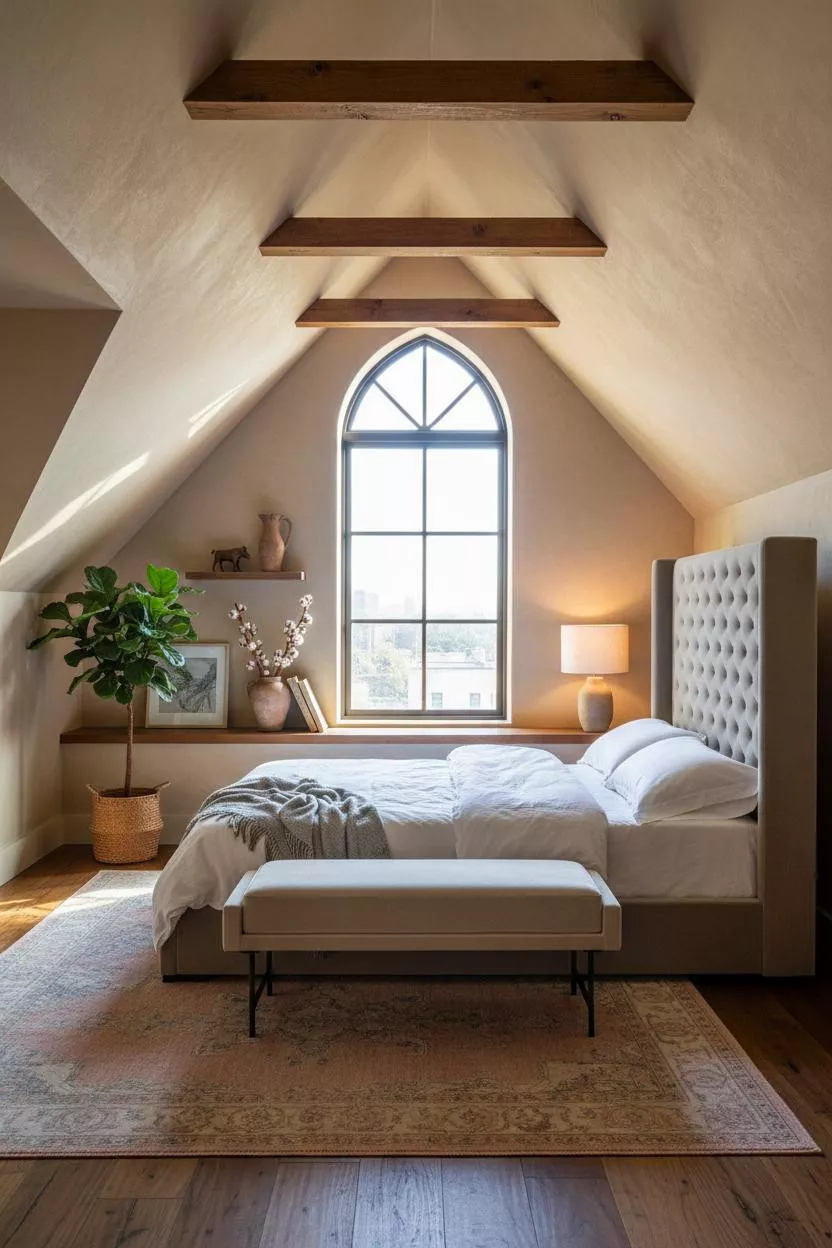

I keep coming back to this one. The dark grain against camel walls is somehow exactly right.
What creates the mood: Dark-stained A-frame rafters carve bold shadow bands across warm plaster, which gives the pitched ceiling visual weight instead of making it feel like an afterthought.
A tall potted fiddle-leaf fig in the corner nook pulls the scale down to human. Don’t skip the plant.
Herringbone Floors Earn Their Keep in a Boho Attic
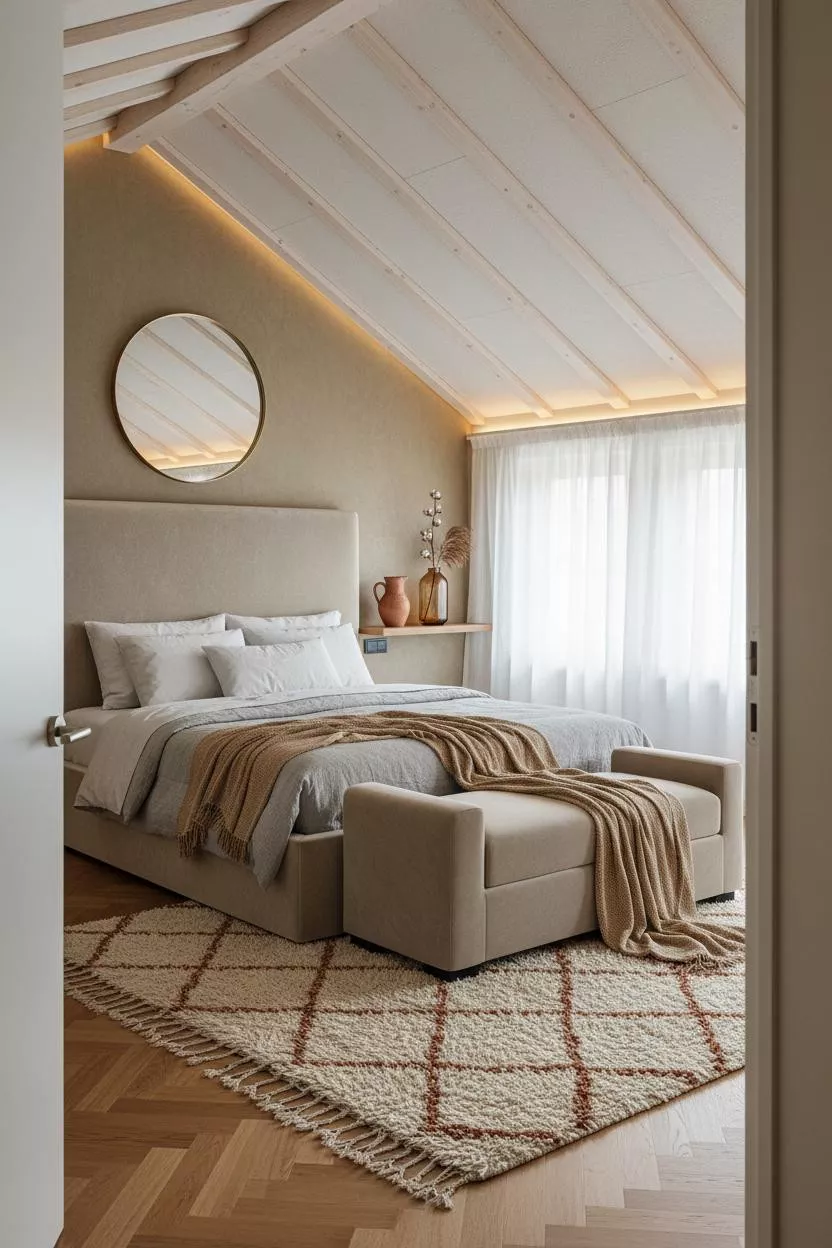
Most people put a rug down and call it done. But the floor underneath matters more than people admit.
In a room with sloped whitewashed plaster and pale cedar rafters, the easy win is laying warm honey herringbone parquet beneath a Moroccan wool rug. The geometry on the floor echoes the geometry overhead, in a way that feels intentional rather than matchy.
What cheapens the look: Overhead lighting. A hidden cove wash on the ceiling plane is worth every extra step.
A Denim Blue Accent Wall Reads Softer Than You Expect
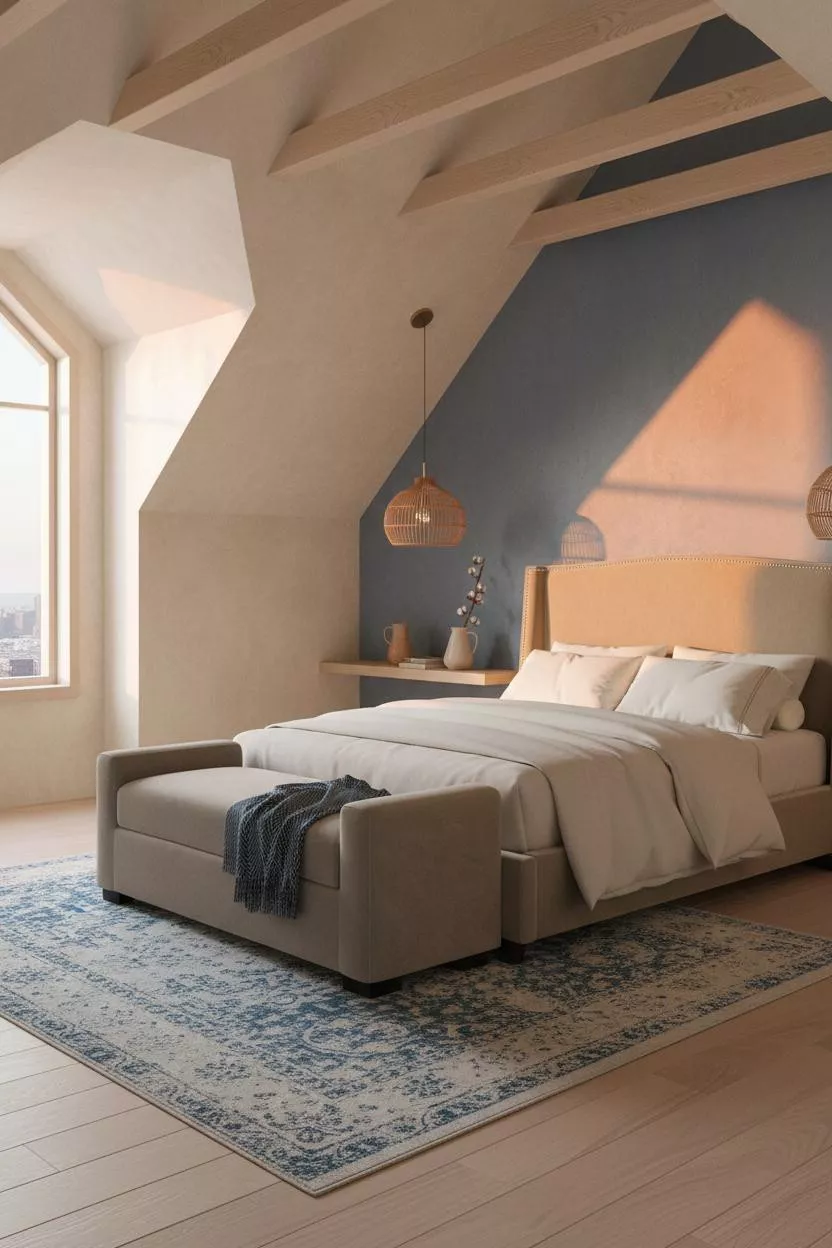
It might seem risky against pale oak rafters. But the matte finish makes all the difference.
Why it feels balanced: The faded denim blue plaster pulls cool against bleached oak flooring, while a sunset-raked woven rattan pendant at headboard height brings the warmth back in, keeping the room from tipping cold.
Pro move: Layer an overdyed vintage rug in muted indigo and cream at the bed zone. Same color family as the wall, different texture entirely.
Floor-to-Ceiling Linen Curtains Do More Than Cover Windows
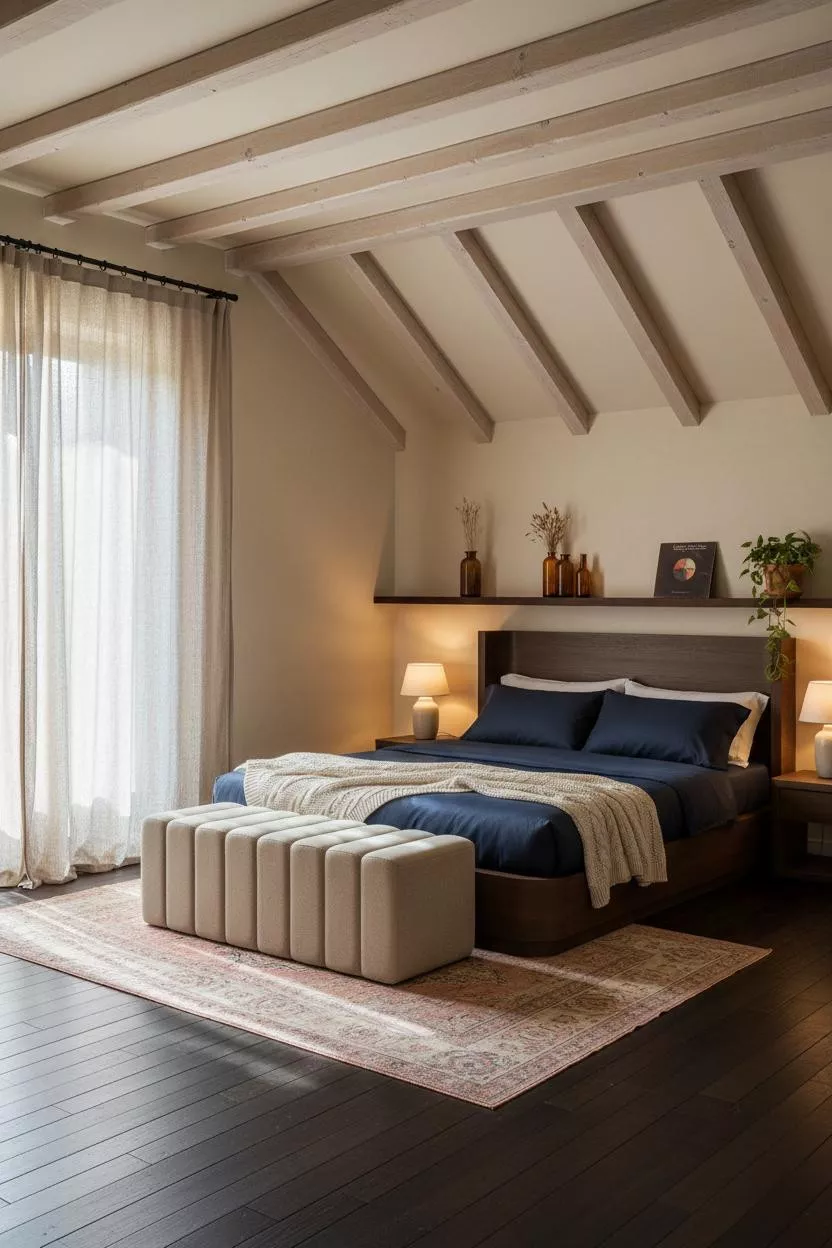
Having floor-to-ceiling curtains in a pitched attic changes how the entire room sits. The room feels taller and quieter at once (which, honestly, is harder to achieve than it sounds).
What gives it presence: Undyed natural linen at full height draws the eye up along the sloped walls, while pale ash rafters overhead create a rhythmic shadow pattern that morning light makes dramatic.
The detail to keep: Let one panel bunch slightly at the base. Perfectly hung curtains in a boho room always look like they’re trying too hard.
Japandi Meets Boho and the Result Is Surprisingly Calm
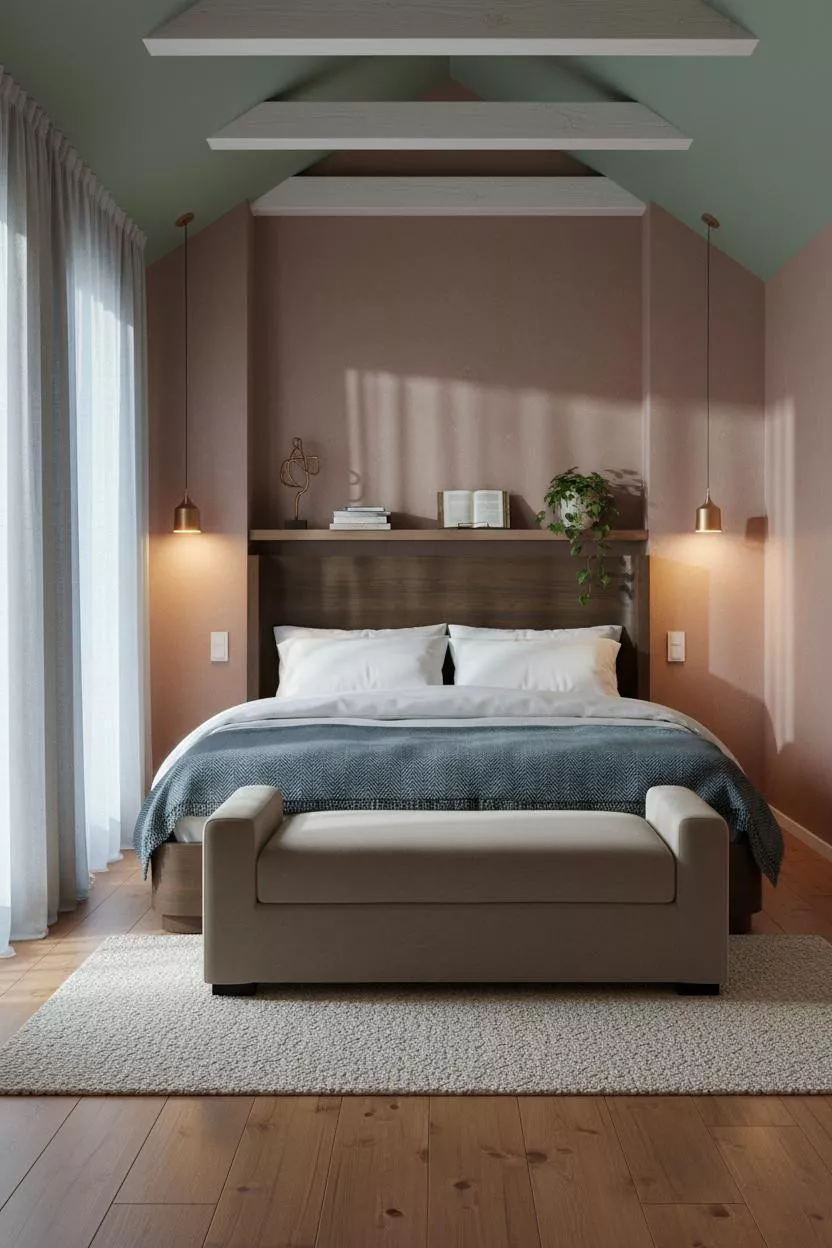
I almost scrolled past this one. Glad I didn’t.
Why the palette works: Dusty rose flanking walls against a sage-plastered sloped ceiling shouldn’t be this quiet. But the pale ash beams spaced at even intervals create such a graphic ladder of light and shadow that the color contrast reads as structured, not chaotic.
What to borrow: Raw hemp curtains at the window. They filter early morning light into something that feels like blue hour, and they cost almost nothing.
Olive Walls and Honey-Pine Rafters Feel Ancient in the Best Way
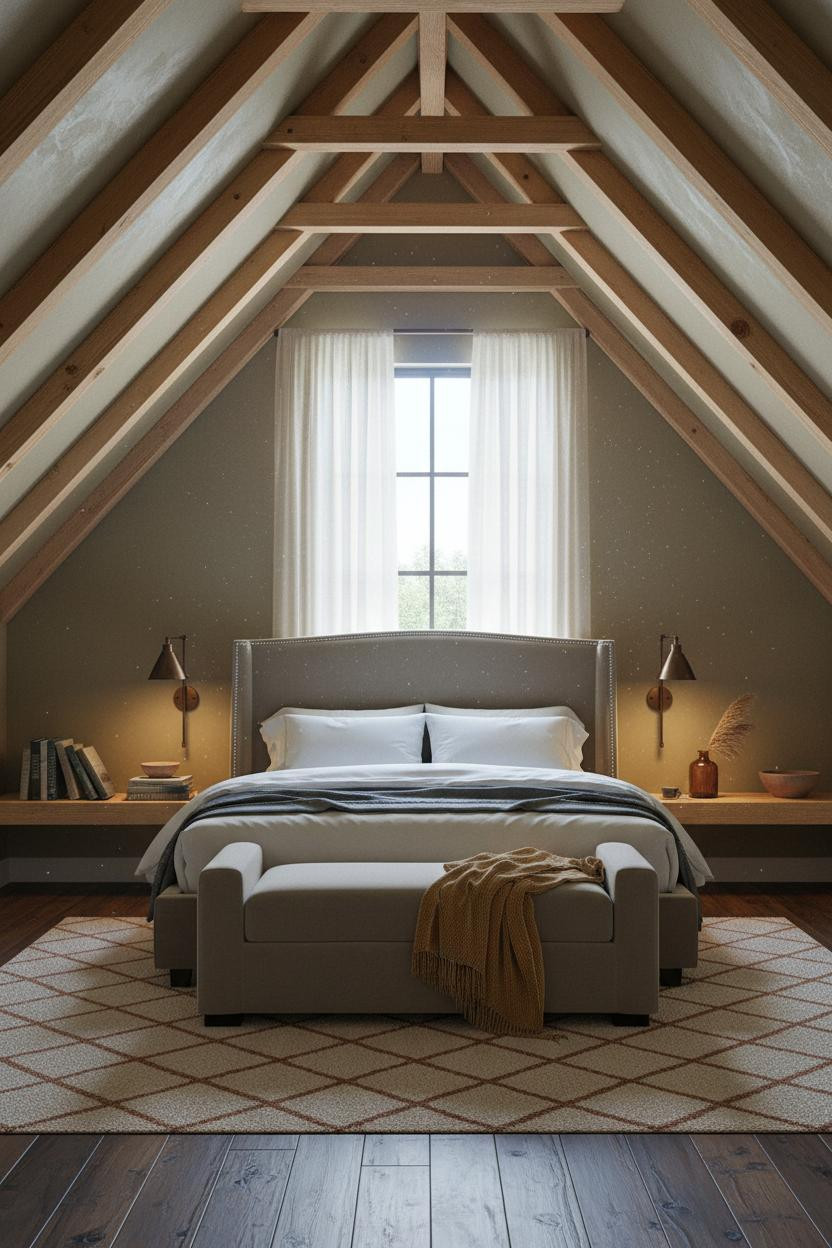
This is one of those rooms that makes you want to put your phone down.
Design logic: Honey-pine A-frame rafters rising sharply to a ridge beam map every knot and growth ring in raking morning light, which is what gives the room structural soul that no paint color could achieve on its own.
The smarter choice: Slate jersey bedding with a mustard wool throw at the foot. Warm and cool in the same gesture. Nothing too precious.
Moss Green Walls in an Attic Are a Slow Burn
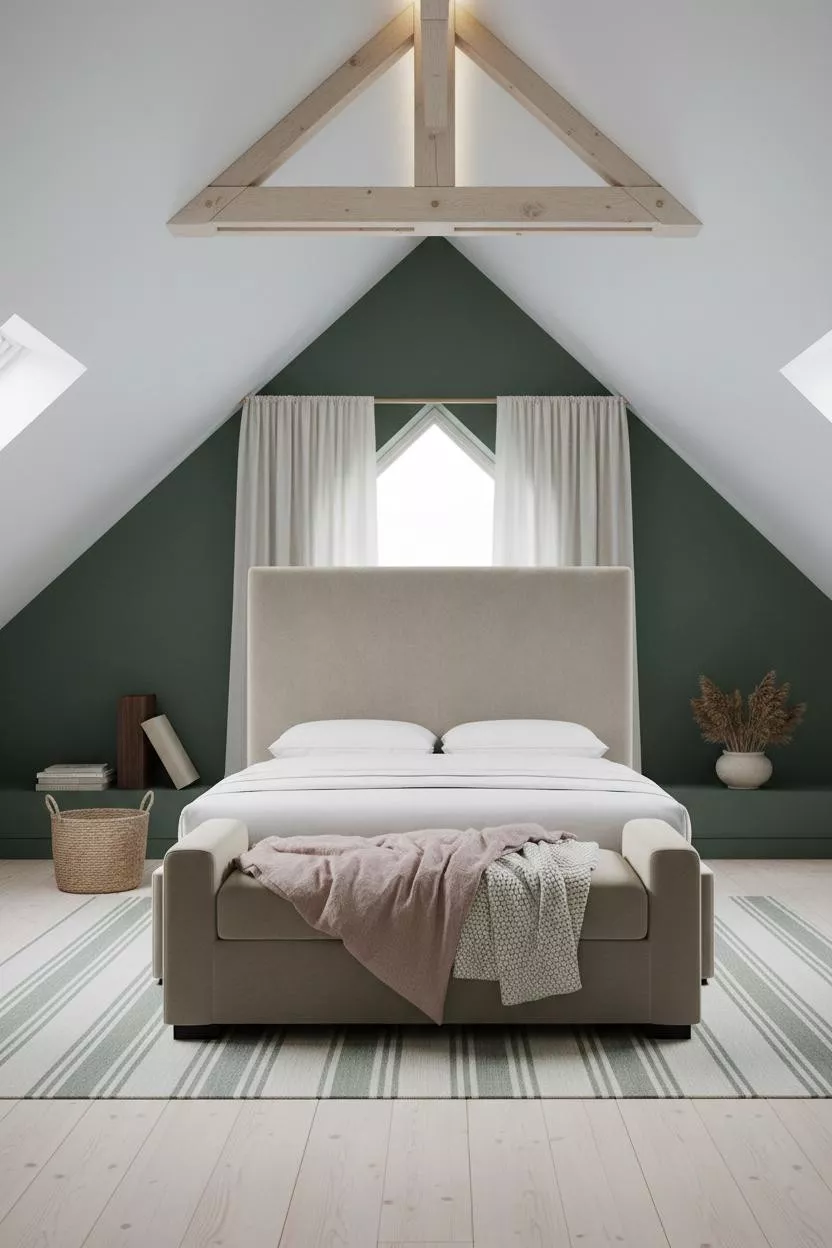
Divisive. But the people who choose moss green never change it back.
What carries the look: Under overcast daylight, matte moss plaster reads almost like a living surface. Pale birch rafters fanning outward keep it from feeling heavy, while a cream linen flat-weave stripe underfoot keeps the whole thing grounded rather than botanical.
Admittedly, dusty pink bedding against that green is a bolder choice than it sounds. It works because both tones are low-chroma and neither fights for the room.
Moroccan Macramé Makes Terracotta Walls Feel Less Obvious
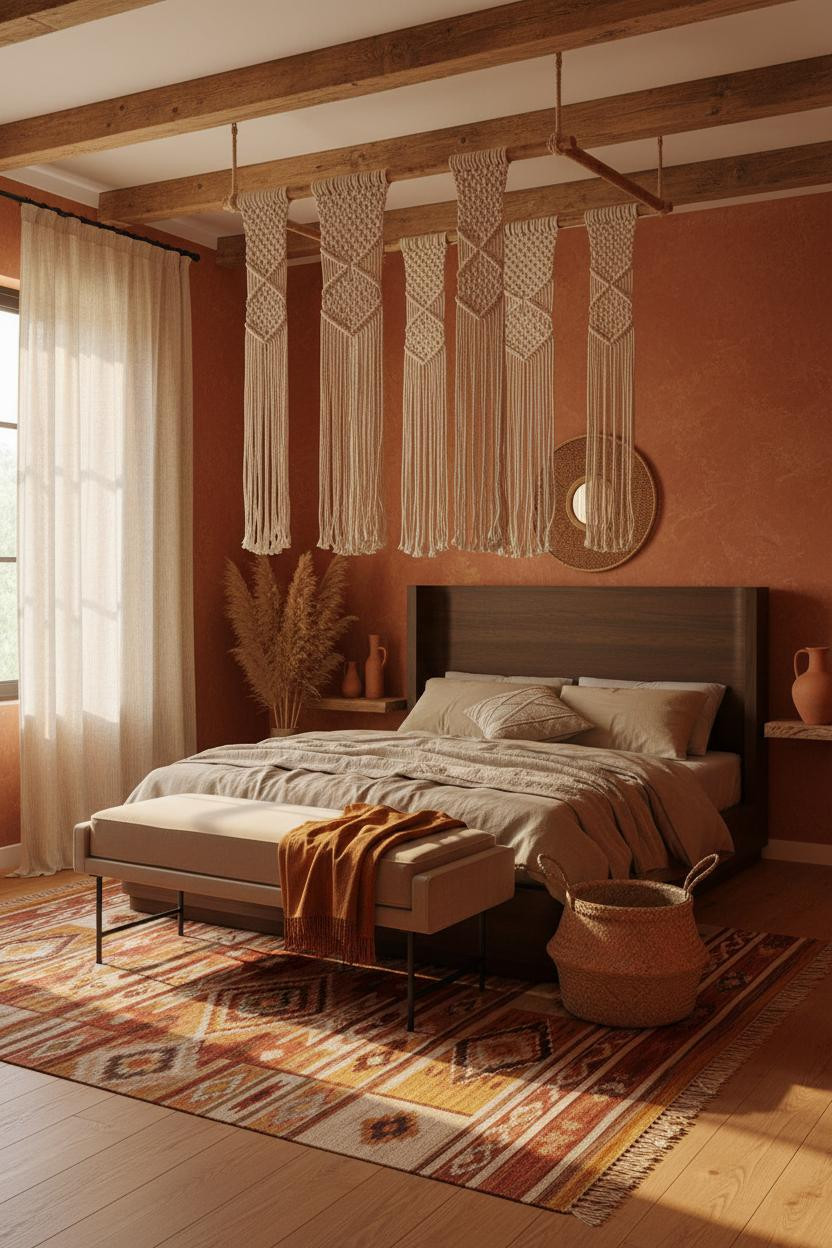
Terracotta can go very wrong very fast. The macramé is what saves it here.
What softens the room: Hanging cream linen macramé panels from natural-patina beams breaks up the terracotta expanse in a way that feels gathered over time, not installed on a Saturday. The knotted fringe catches afternoon light and makes the whole wall move slightly.
Where to start: A kilim rug in rust, mustard, and cream on honey-toned planks. Build every other layer from that. The walls will sort themselves out once the floor is right.

Our #1 Pick
Saatva Classic Mattress
America’s best-selling online luxury innerspring. 365-night trial, lifetime warranty, free white glove delivery.
Shop Saatva Classic
The Foundation Of Every Beautiful Bedroom
Walls get repainted. Kilims get swapped out. The macramé moves rooms. But the mattress stays, and it matters more than any of those decisions.
The Saatva Classic has dual-coil support that holds up over years, not just months. The organic cotton cover doesn’t trap heat, which matters more than people realize until they’ve slept on one. And the Euro pillow top is soft without losing structure underneath.
It’s the kind of thing you feel the moment you sit on the edge of the bed.

The rooms worth saving are the ones where nothing was rushed. Start with the bed. The rest figures itself out.