
The best moody maximalist bedroom photos stop you mid-scroll. Not because they’re loud, but because they feel like somewhere you’d actually want to sleep. Dark walls, layered rugs, objects that look collected rather than purchased.
These eleven rooms pull it off. And most of them come down to one or two decisions done right.
The Room That Proves Dark Walls Don’t Feel Heavy


Moss green walls could easily feel like a cave. They don’t, and the reason is the flooring.
Why it holds together: The pale birch wide-plank floor bounces enough light upward that the dark walls never press in. The vintage Oushak rug in rust and faded indigo bridges both tones without forcing them to match.
Steal this move: Keep the floor pale when you go dark on the walls. One light surface does the balancing work for the whole room.
Exposed Brick Wants to Be the Whole Personality. Let It.
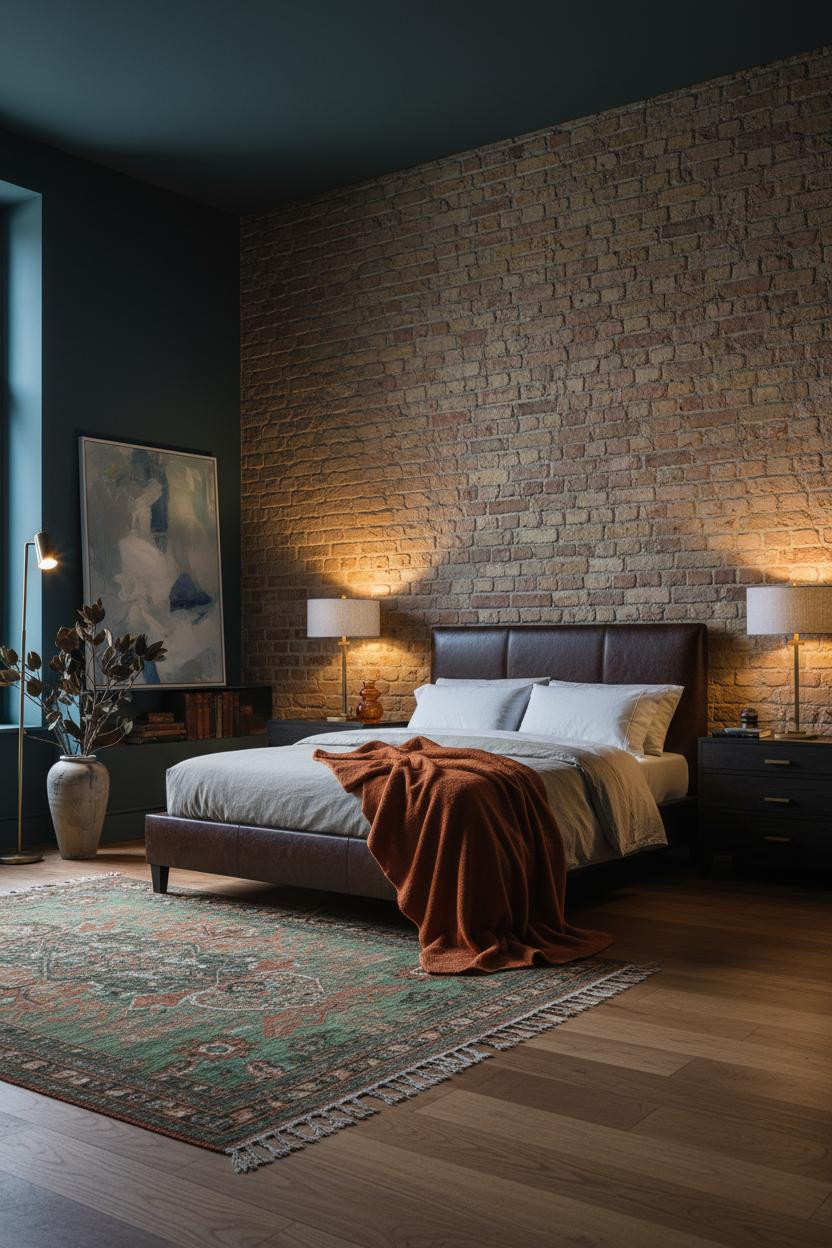
This one is divisive. Not everyone wants sixteen feet of raw brick behind their bed.
But I keep coming back to it. The aged London stock brick in warm caramel and ash pulls lamplight into the mortar joints, so the whole wall shifts from flat texture to something almost three-dimensional at night.
The smarter choice: Pair it with dark teal walls on the remaining sides. Same dark family, different material. That’s what keeps it from feeling industrial instead of moody.
When the Ceiling Becomes the Statement
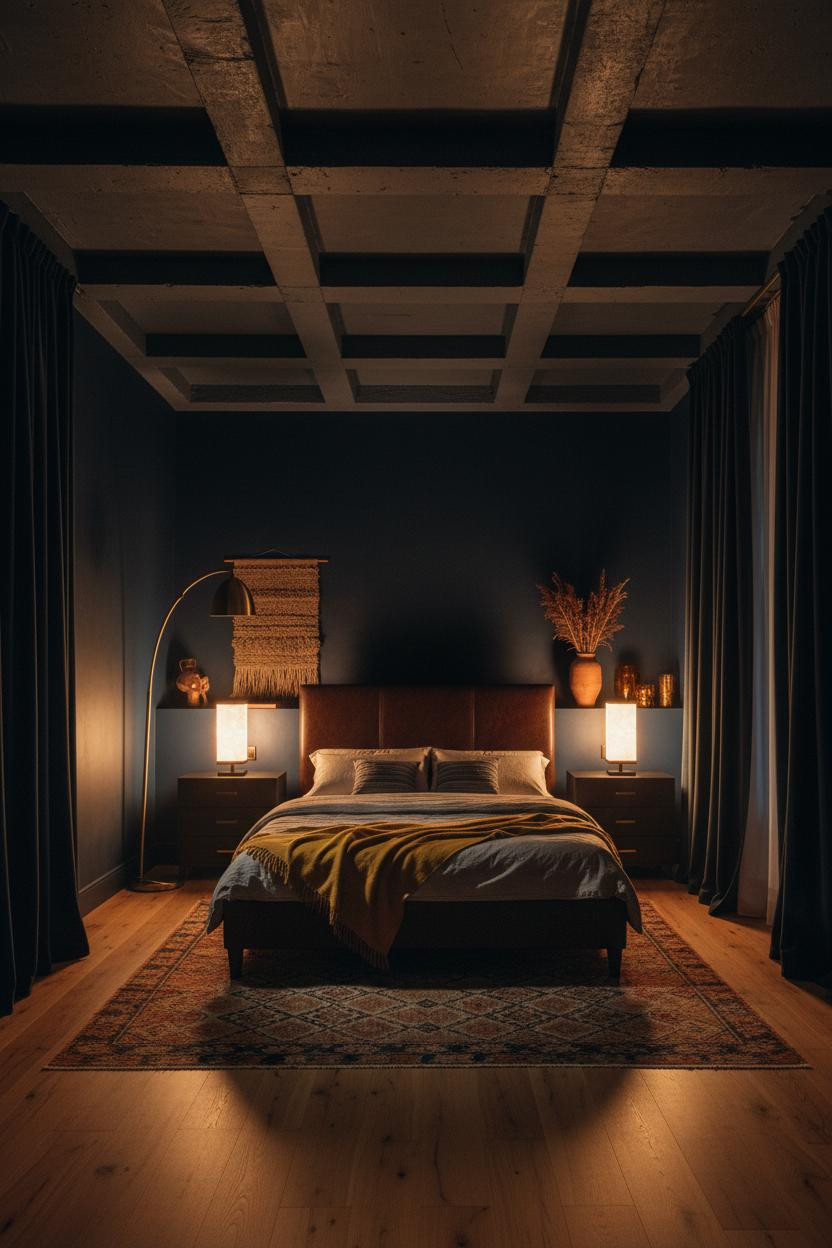
Most people forget the ceiling exists. This room is built around it.
What creates the mood: A raw aged plaster coffered ceiling throws its own shadow architecture downward, each recessed panel catching the brass lamp light differently. The cobalt walls stop at the cornice and the ceiling takes over from there.
Layer your lighting low and warm, then let the ceiling dissolve into shadow. The room feels taller because of what you can’t quite see.
I Didn’t Think Indigo Paneling Would Work. It Does.
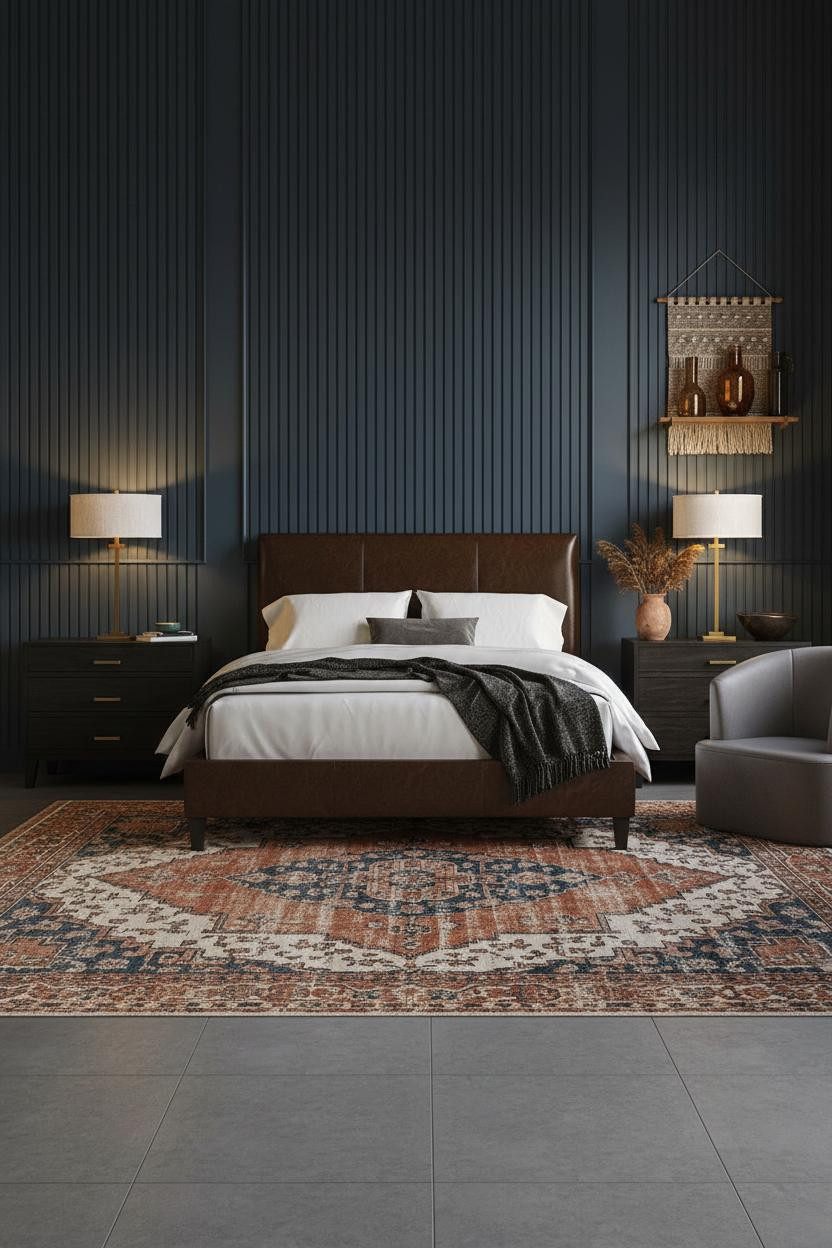
Full-width vertical slatted paneling in deep indigo is a commitment. And honestly, the mustard ochre on the remaining walls is what makes it land.
Why it feels intentional: The fluted indigo paneling casts rhythmic shadow lines under warm lamplight, giving the wall an almost woven quality. It’s depth without anything mounted on it.
The easy win: Ground it with an Oushak rug in rust and aged indigo. You’re borrowing the paneling’s color back into the floor, which ties the whole scheme together.
The Arched Niche That Makes Everything Feel Found
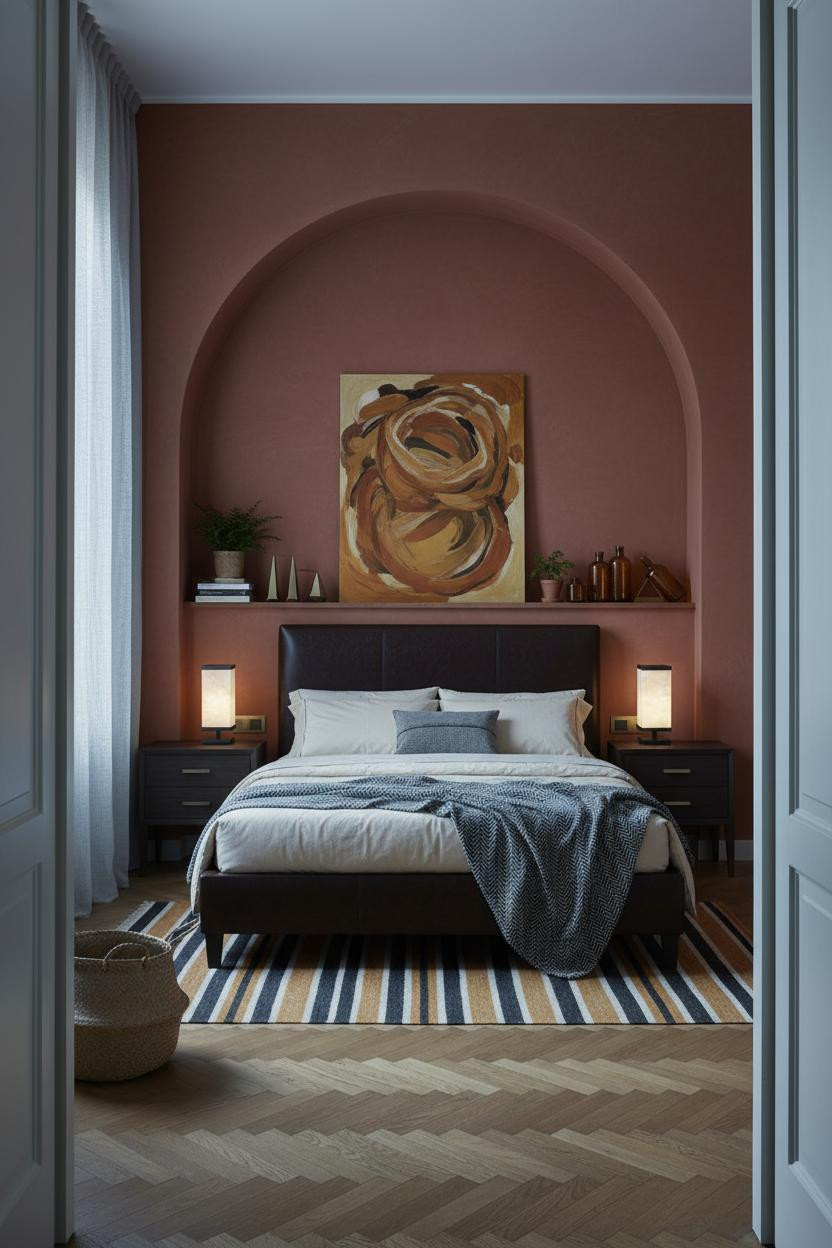
Nothing in this room looks purchased all at once. That’s the whole trick.
Why it looks custom: A rust-clay plaster arched niche carved into the headboard wall frames the bed without any furniture doing the work. The arch shadow is strong enough to read as a headboard on its own.
Avoid this mistake: Don’t fill the niche with art. Let the arch be the object. An abstract canvas leaning against the interior wall is plenty.
Burgundy Walls With a Pressed Tin Ceiling Nobody Expects
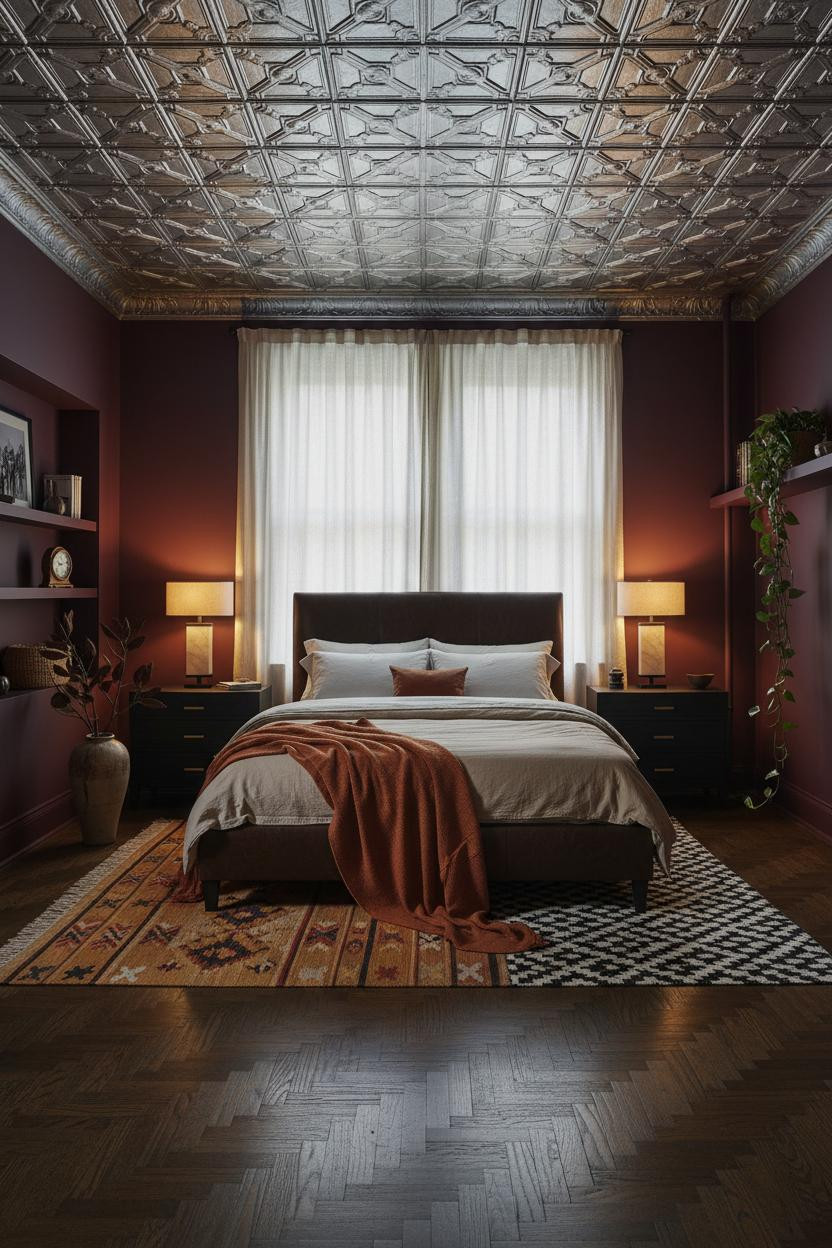
I almost scrolled past this. Glad I didn’t.
The deep burgundy walls are expected in a moody eclectic bedroom. The pressed Art Deco tin ceiling is not, and that’s exactly why it works. Warm lamplight catches the geometric relief tiles in shallow shadows that make the ceiling feel like a second room.
What not to do: Don’t paint the tin ceiling white. Keep it in the same warm family as the walls and let the relief do the work on its own.
Aubergine Linen Wallcovering Is Doing a Lot of Heavy Lifting Here
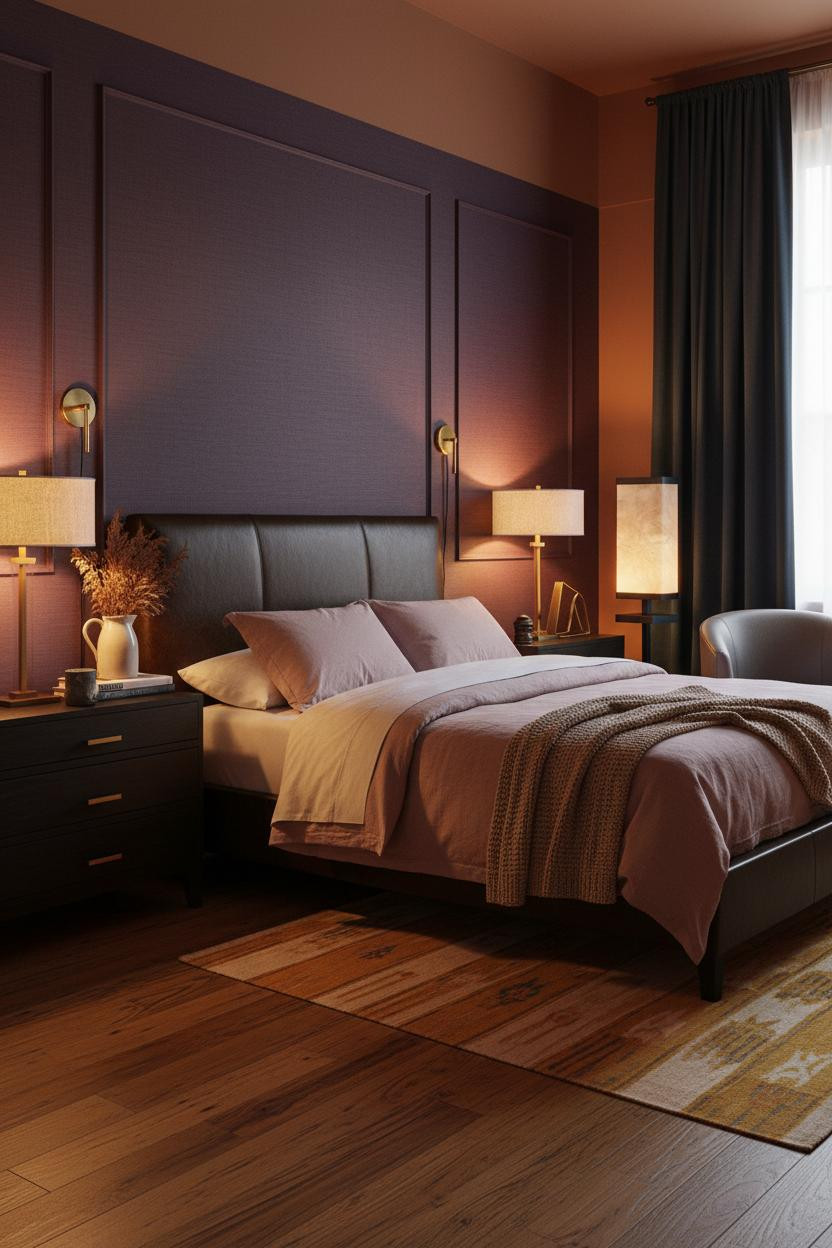
Textured linen wallcovering in aubergine sounds like a risk. It is. But the warm terracotta on the remaining walls saves it from reading as a single suffocating color.
In a room lit entirely by brass sconces and a floor lamp, the real strength is how the natural fiber weave catches light differently at every angle. The wall breathes in a way painted plaster doesn’t.
Pro move: Use paired brass sconces low on the wallcovering, not above it. The upward-raking light is what reveals the texture.
Thick Trowel-Mark Plaster on One Wall Changes the Whole Room
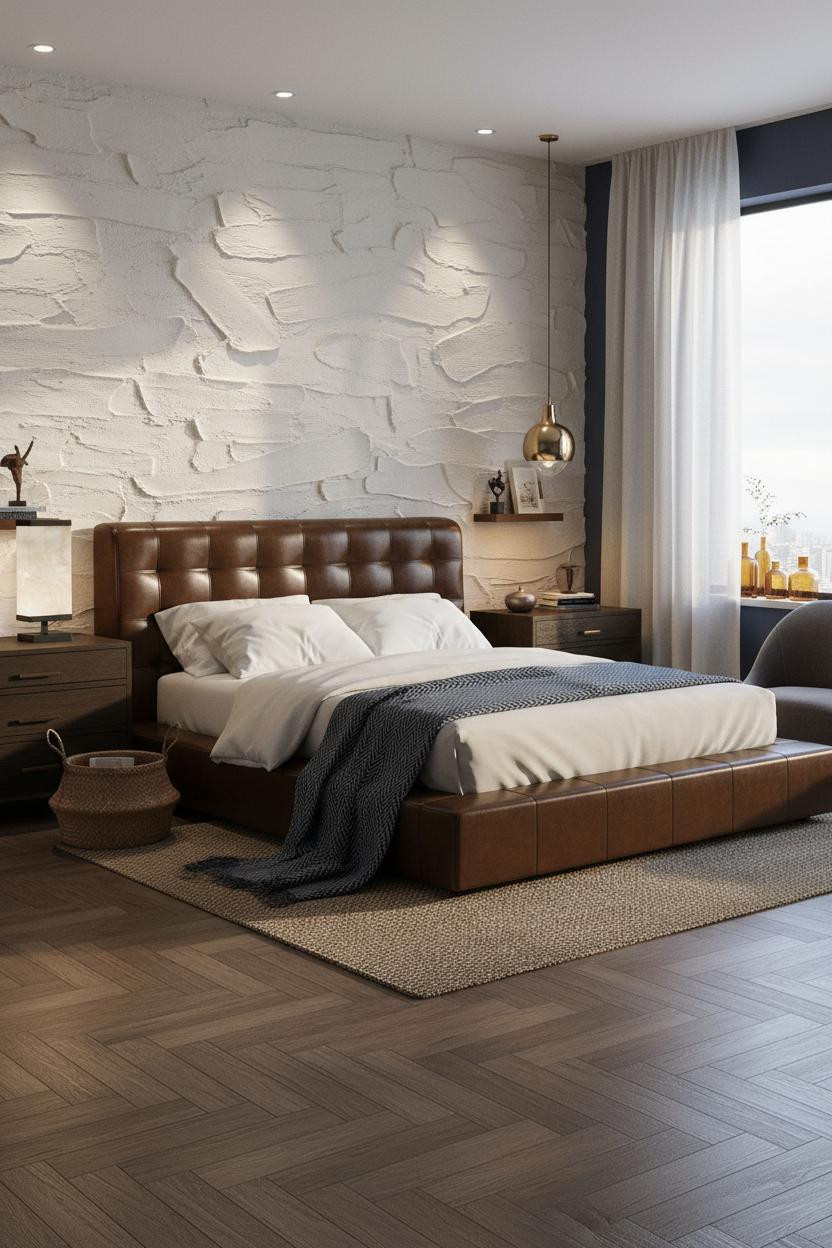

This is the counterintuitive one. An ivory textured plaster wall surrounded by warm indigo shouldn’t feel balanced. But it does, because the contrast is tonal, not chromatic.
What gives it depth: Ivory gesso applied in thick irregular sweeps catches raking light across every trowel ridge, making a single wall read as sculpture. The chunky jute rug underfoot keeps the whole thing grounded.
Where to start: Do the plaster wall first. Then build the indigo around it, not the other way around.
Charcoal Board-and-Batten With a Rust Clay Accent. This Is the Combination.
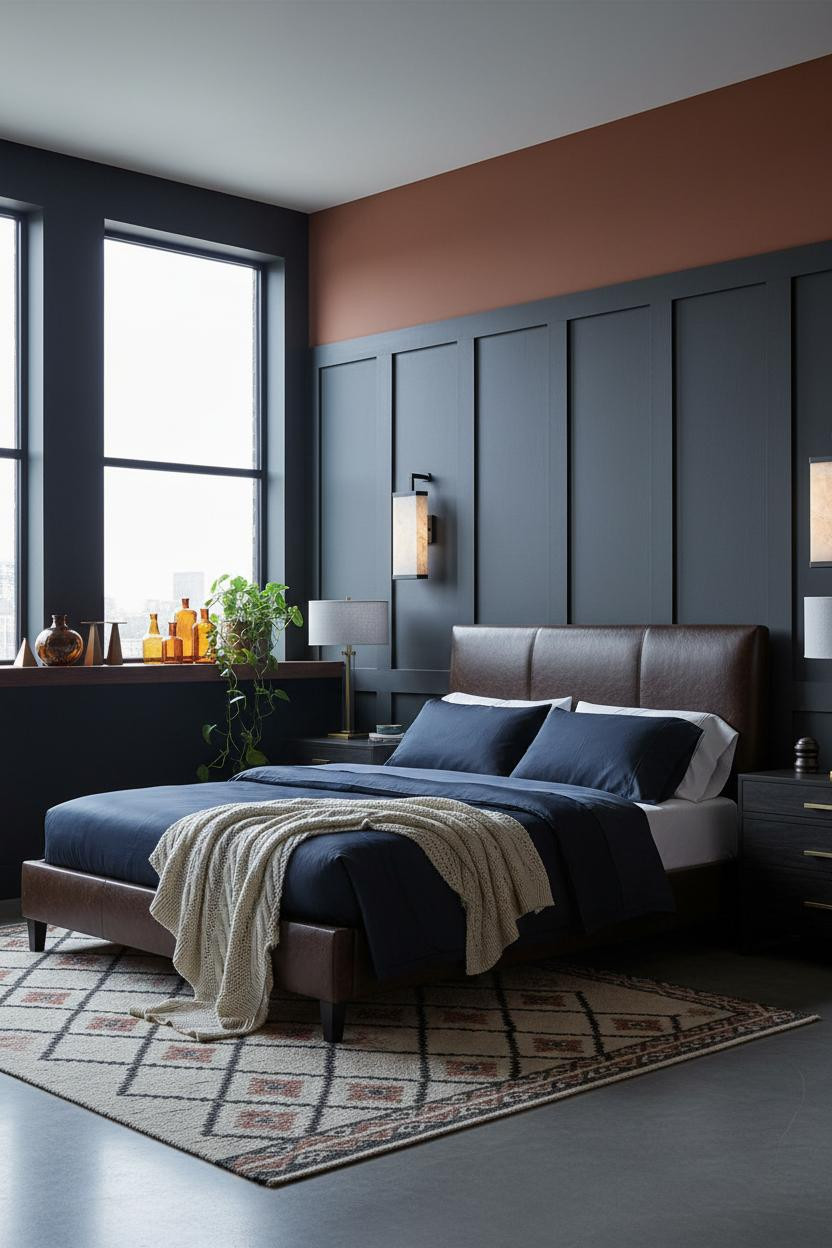
I keep coming back to the rust clay accent wall here. It shouldn’t hold its own against charcoal. But it does.
Why the palette works: The floor-to-ceiling board-and-batten in matte charcoal gives the room its architecture, and the rust clay introduces just enough warmth to keep the room from feeling cold. Navy sateen bedding pulls both tones into something cohesive.
A Moroccan diamond-patterned rug in ink and ivory is the detail that keeps it all from tipping into a single heavy mass. Pattern on the floor, solids on the walls. That’s the formula.
Forest Green Shiplap Is Not a Trend. It’s a Commitment.
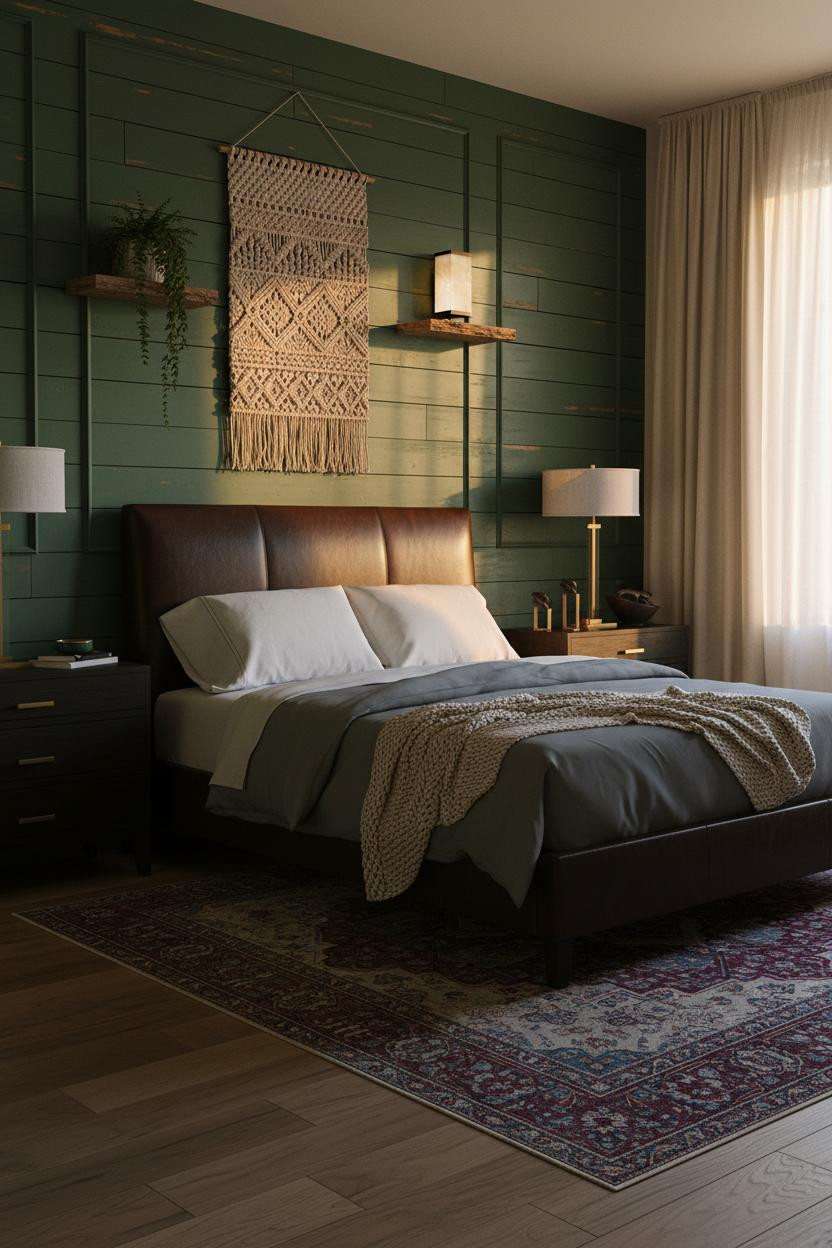
Fair warning. This is the kind of decision you make once and live with for a decade. Honestly, that’s fine.
What carries the look: Matte forest green shiplap behind the bed works because raw wood grain bleeds through the paint in weathered patches. It doesn’t read as a flat color. It reads as material.
The finishing layer: Warm cream walls on the remaining sides and a vintage Persian rug in burgundy and slate at the foot. The cream keeps the shiplap from closing in while still feeling cozy.
Plum-Painted Brick With a Gold Mirror. This One’s Earned.
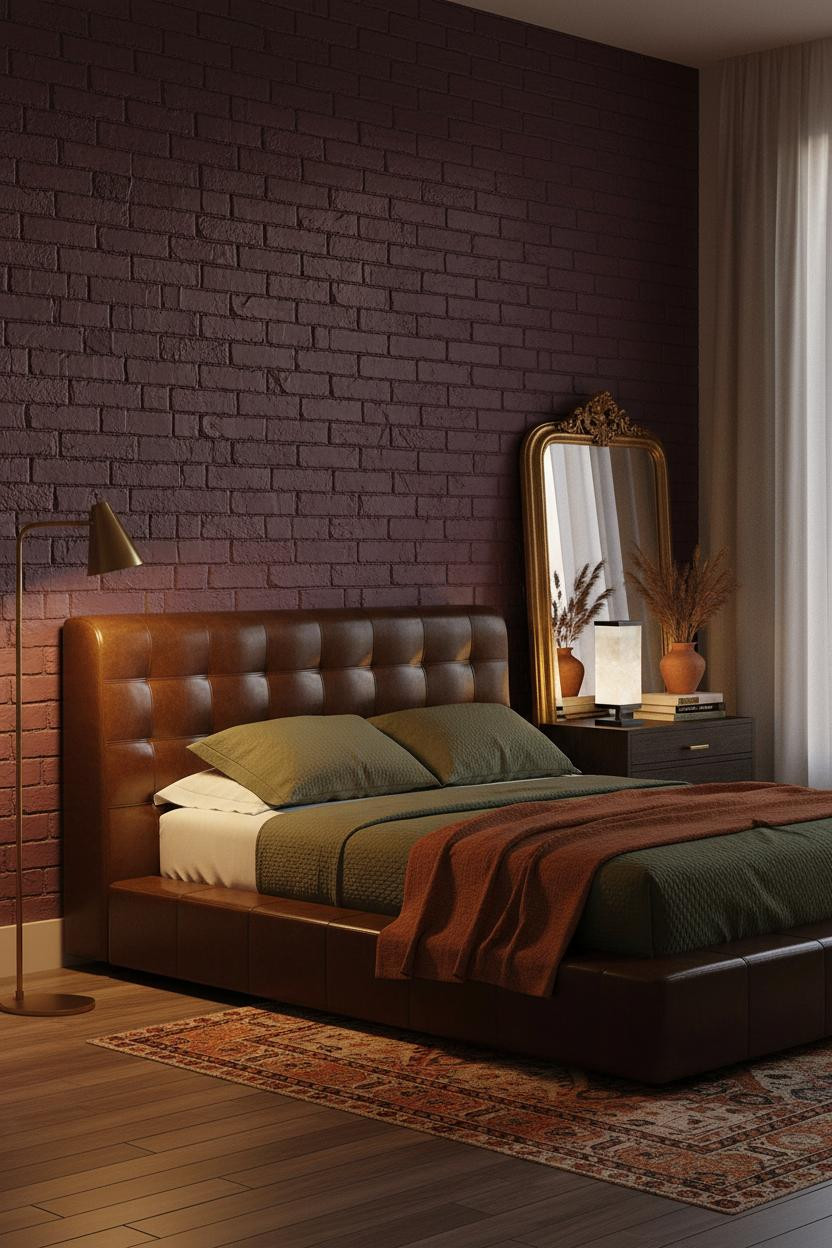
Painting exposed brick deep plum is the kind of move that sounds like a mistake until you see it.
Why it feels expensive: The uneven brick surface means the plum reads in at least three different tones depending on how lamplight hits each course. The ornate gold-framed antique mirror leaning against the far wall reflects that back, making the room feel twice as layered as it actually is.
The key piece: A vintage Turkish kilim in rust and ochre on the dark walnut floor keeps the jewel tones warm rather than cold.

Our #1 Pick
Saatva Classic Mattress
America’s best-selling online luxury innerspring. 365-night trial, lifetime warranty, free white glove delivery.
Shop Saatva Classic
The Foundation Of Every Beautiful Bedroom
A room this considered deserves a bed that holds up its end. Walls get repainted. Rugs get swapped. The mattress stays, and that’s why it matters.
The Saatva Classic has dual-coil support that doesn’t collapse over time, an organic cotton cover that doesn’t trap heat, and a Euro pillow top that’s soft enough to feel generous without losing its structure. It’s the kind of mattress that earns its place in a room you’ve thought this hard about.

The rooms that feel the most alive are collected over time, not assembled in a weekend. Pick the wall treatment first, the rug second, and get the bed right before anything else. Good design ages well because it’s made well.