
Think your basement is too dark, too low, too awkward to feel like a real home? The best basement studio apartment ideas prove otherwise. With the right layout and a few honest design moves, a below-grade studio can feel warmer than most above-ground apartments.
These eleven rooms do it without tricks. Just good bones, intentional furniture, and light that actually works.
The Shiplap Wall That Changes Everything
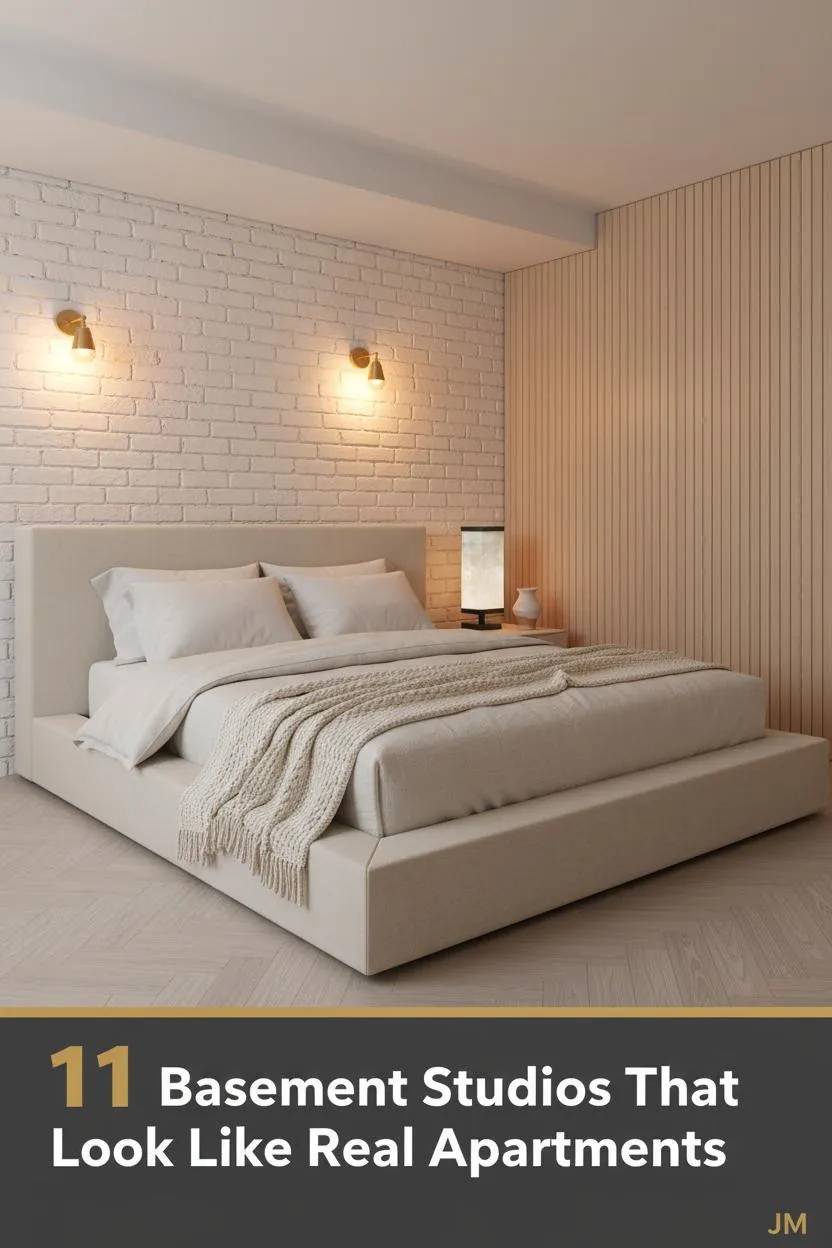

I keep coming back to this one. Something about the proportions just works.
But what actually makes it feel grounded is the shiplap accent wall behind the bed. Horizontal planks pull the eye wide across a narrow footprint, which helps a low basement ceiling feel less close.
Steal this move: Pair warm white shiplap with dark walnut flooring and a striped wool runner. The contrast does the heavy lifting so your bedding doesn’t have to.
How a Coastal Layout Handles No Natural Light
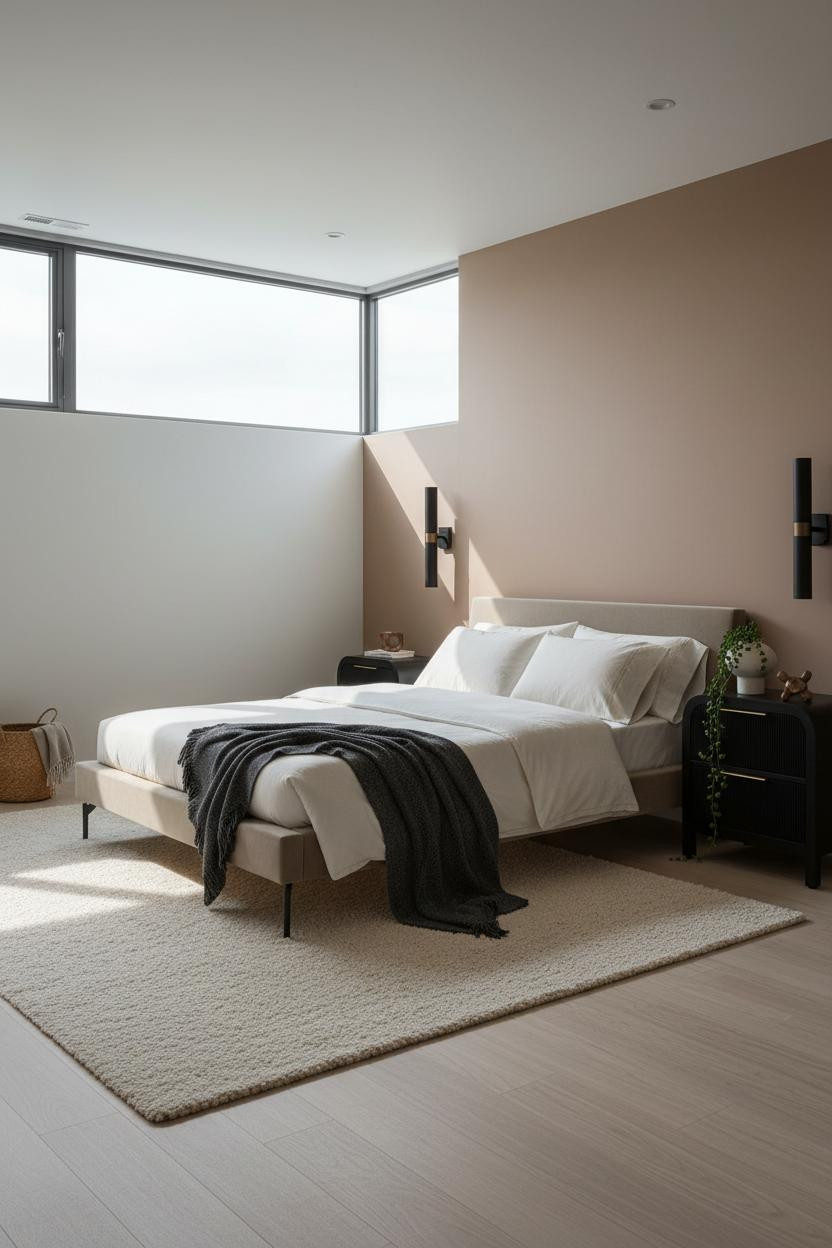


Fair warning. A coastal palette in a basement sounds risky. Honestly it works better down here than upstairs.
What makes it work: Pale birch flooring bounces whatever light comes through the egress window, so the room feels brighter than it has any right to be. Ivory cotton bedding keeps the whole thing from tipping into cold.
The easy win: Add a large round mirror directly across from your egress window. The reflected light doubles the perceived brightness of the entire zone.
Whitewashed Brick With Brass Sconces: A Classic That Still Lands
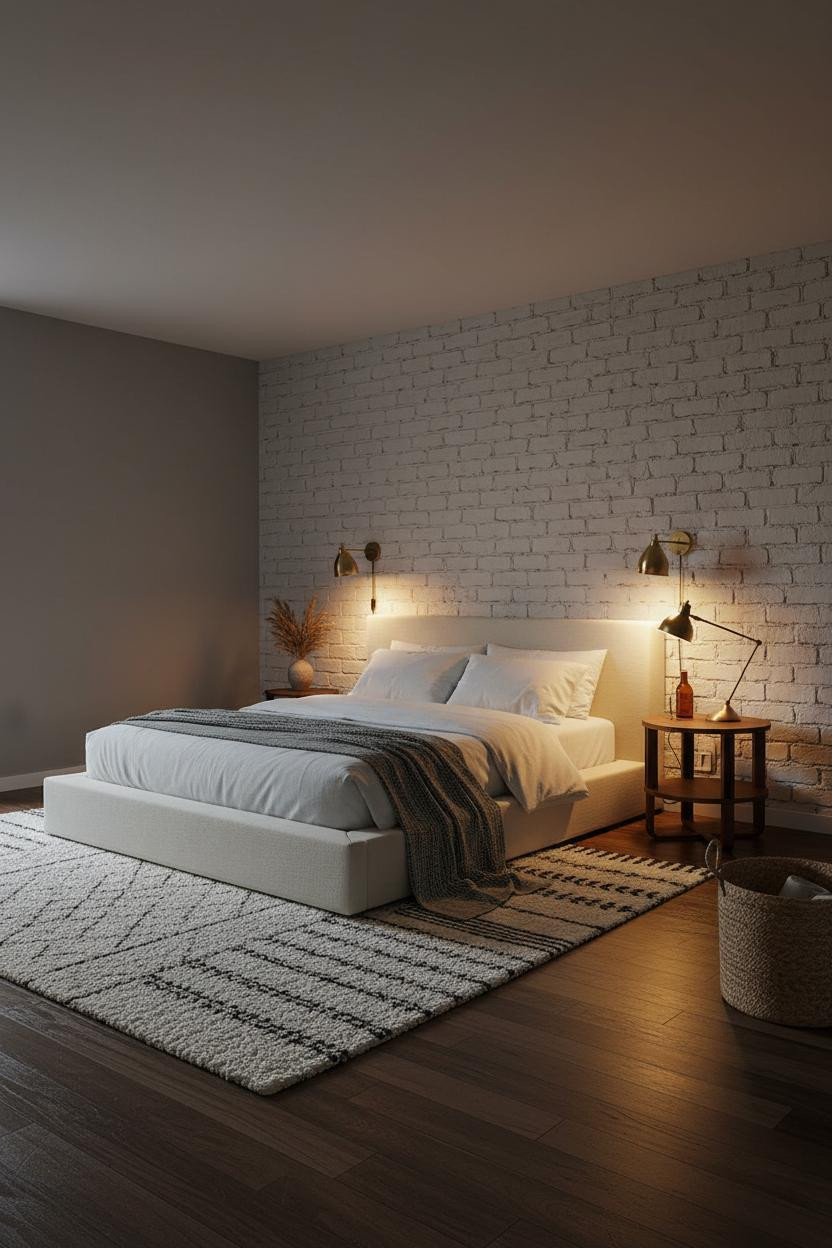

This one is divisive. But the people who commit to raw whitewashed brick in a basement almost never regret it.
Why it holds together: The rough mortar joints catch the amber glow from brass wall sconces in a way smooth walls simply can’t. The texture gives the light something to work with, so the room feels warm even at night.
Pro move: Use a graphic black-and-white flat-weave rug on dark floors. It keeps the palette from going too warm while still feeling cozy.
Floor-to-Ceiling Oak Shelving Pulls the Eye Up
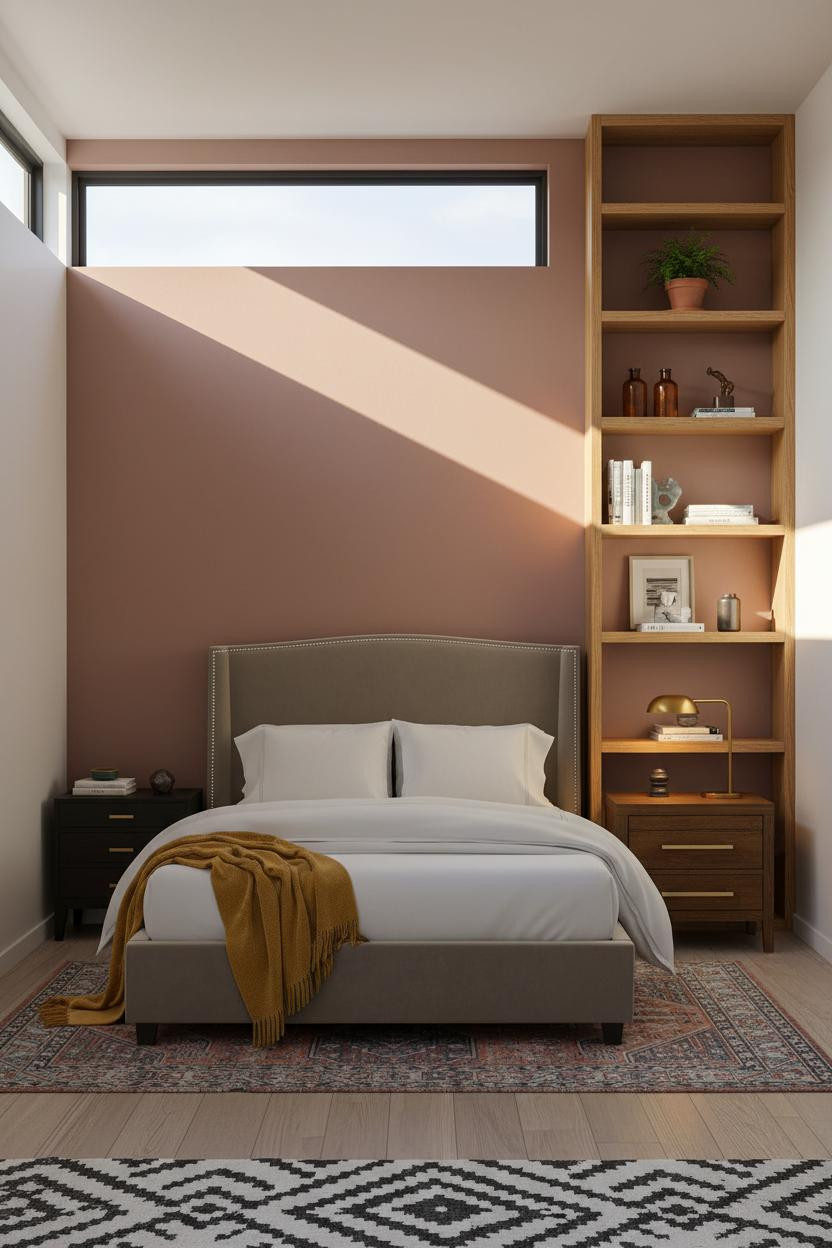


In a basement studio, vertical storage isn’t just practical. It’s the main event.
What gives it presence: Honey-stained oak shelving rising floor to ceiling creates a strong vertical line that fools your eye into reading the room as taller. The warm wood also softens the dusty rose accent wall behind the bed, in a way that feels intentional rather than accidental.
Worth copying: Style shelves loosely. A fern in terracotta, a few stacked books, one amber glass bottle. Nothing too matchy.
What Slatted Wood Walls Do for a Compact Footprint
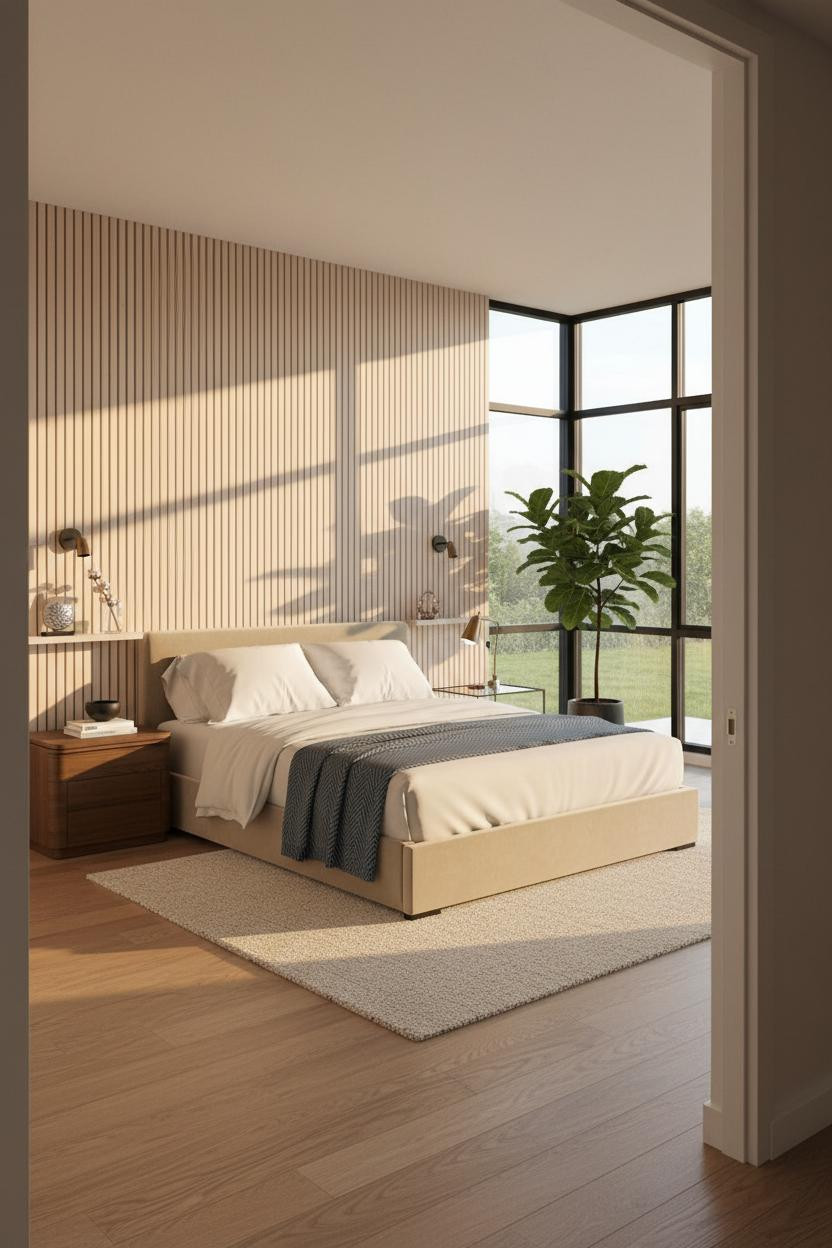


Nothing fancy. That’s the point.
A full-height pale birch slat wall flanking the sleeping zone does two things at once: it defines the bedroom area without a partition wall, and the repeating vertical shadow lines make the ceiling feel higher than it is. The room feels calm and cohesive in a way that’s hard to fake with paint alone.
The smarter choice: Go low with your bed frame here. A platform profile keeps the slat lines reading tall while still feeling grounded.
A Board-and-Batten Wall That Breathes
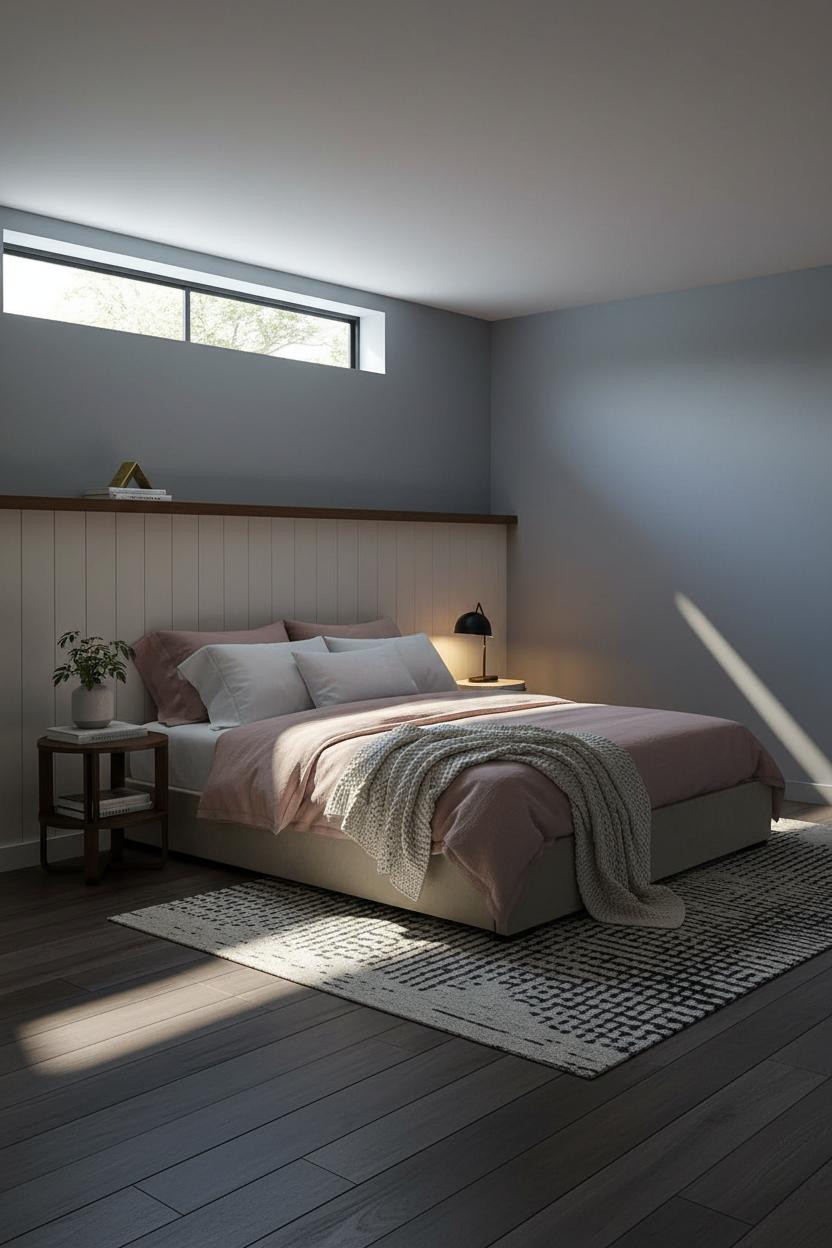
I almost scrolled past this. Glad I didn’t.
The reason it feels open instead of cramped is the warm white board-and-batten accent wall paired with muted blue-grey on the other three sides. That contrast gives the sleeping zone its own identity without carving the studio into smaller pieces.
What to borrow: A full-width floating oak shelf above the bed replaces a traditional headboard and adds storage simultaneously. One piece doing two jobs is how small rooms stay functional.
Avoid this mistake: Don’t mount the shelf too high. Keep it within arm’s reach or it stops feeling like part of the sleeping zone.
My Favorite Japandi Basement Layout So Far
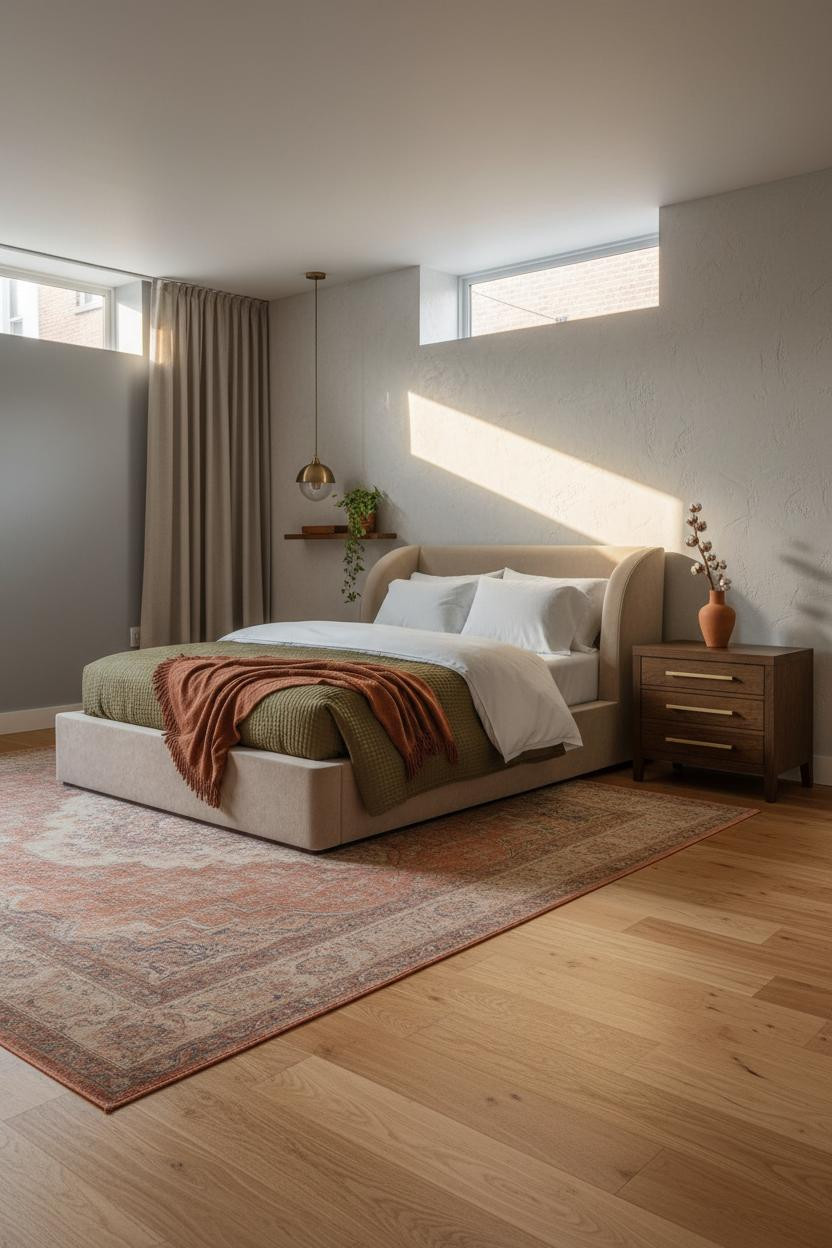

This is the kind of room that makes you want to slow down when you walk in.
Why it feels intentional: A hand-troweled putty-white plaster wall catches raking light from a high slot window, revealing subtle texture that plain paint can’t replicate. It’s a quiet background that somehow makes every other object in the room feel more considered.
The finishing layer: Floor-to-ceiling oatmeal linen curtains framing the slot window add softness the plaster alone can’t provide. Just enough warmth to keep things from feeling too spare.
Sage Green Board-and-Batten: Surprisingly Good Underground
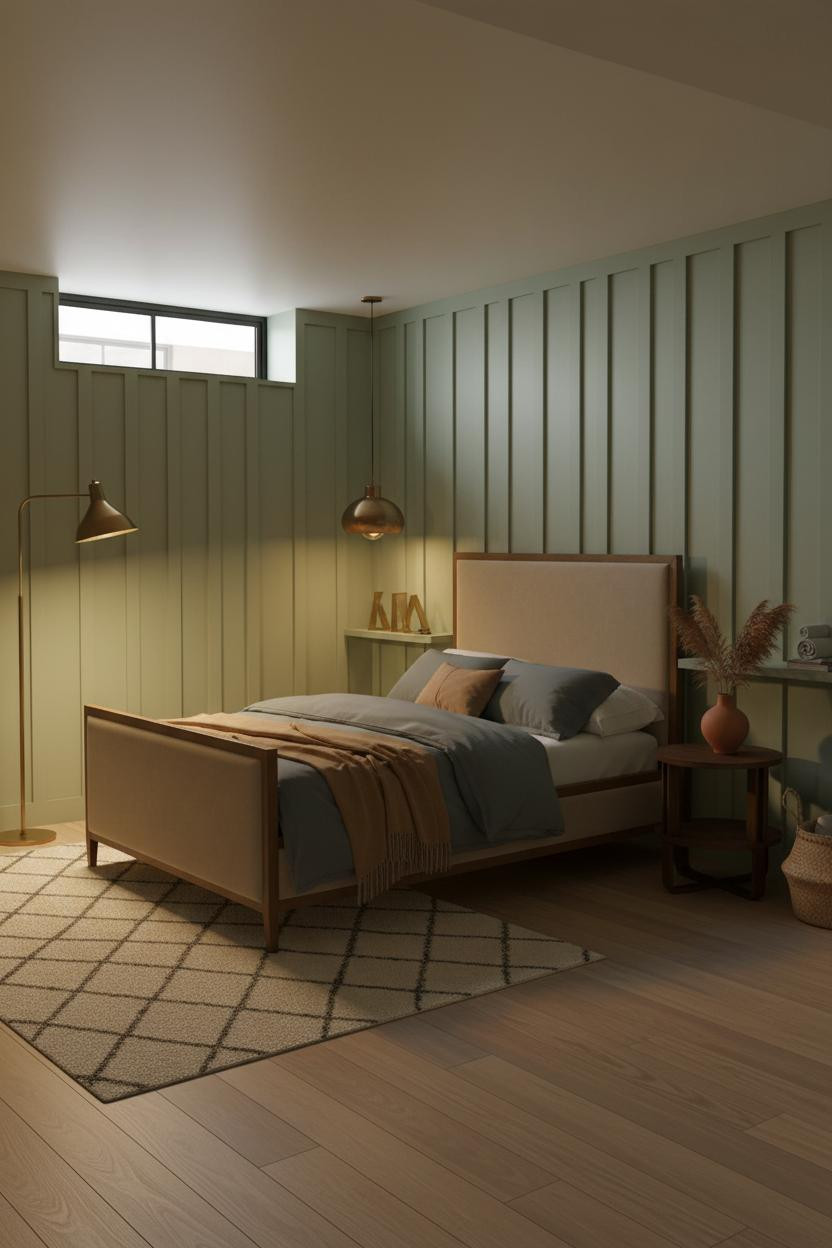

Dark color in a dark basement. It shouldn’t work. But it does.
Why the palette works: The crisp vertical ridges of sage green board-and-batten catch brass lamplight differently than a flat wall would. Each batten casts a thin shadow stripe that amplifies perceived height while the sage itself keeps the room feeling grounded rather than gloomy.
And the Moroccan wool rug underfoot gives the whole thing a collected rather than decorated feeling. Avoid this mistake: Don’t match brass fixtures too precisely. One aged, one polished. The slight variation reads as real.
The Exposed Beam Basement Studio That Earned Its Edge
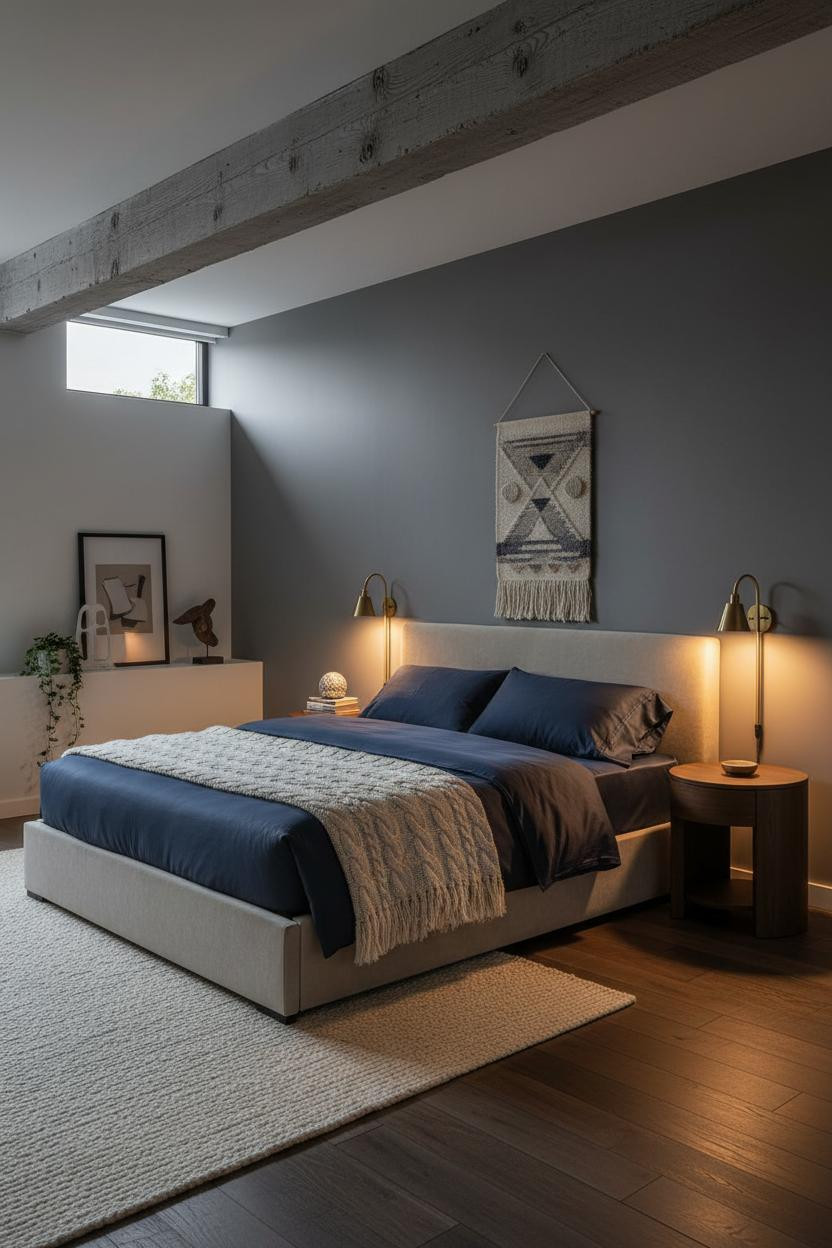
Having an exposed structural beam changes how you think about the whole ceiling.
Most people try to hide basement bones. This room leans into them. The weathered timber beam running the full ceiling length becomes the anchor the charcoal feature wall needs, grounding the sleeping zone with raw structural presence while the paired bedside sconces keep the mood warm rather than cold.
The part to get right: Layer a cable-knit cream throw over navy sateen bedding. The contrast between rough beam and soft textile is the whole point of the room.
How This Scandi Egress Layout Makes the Most of Every Window
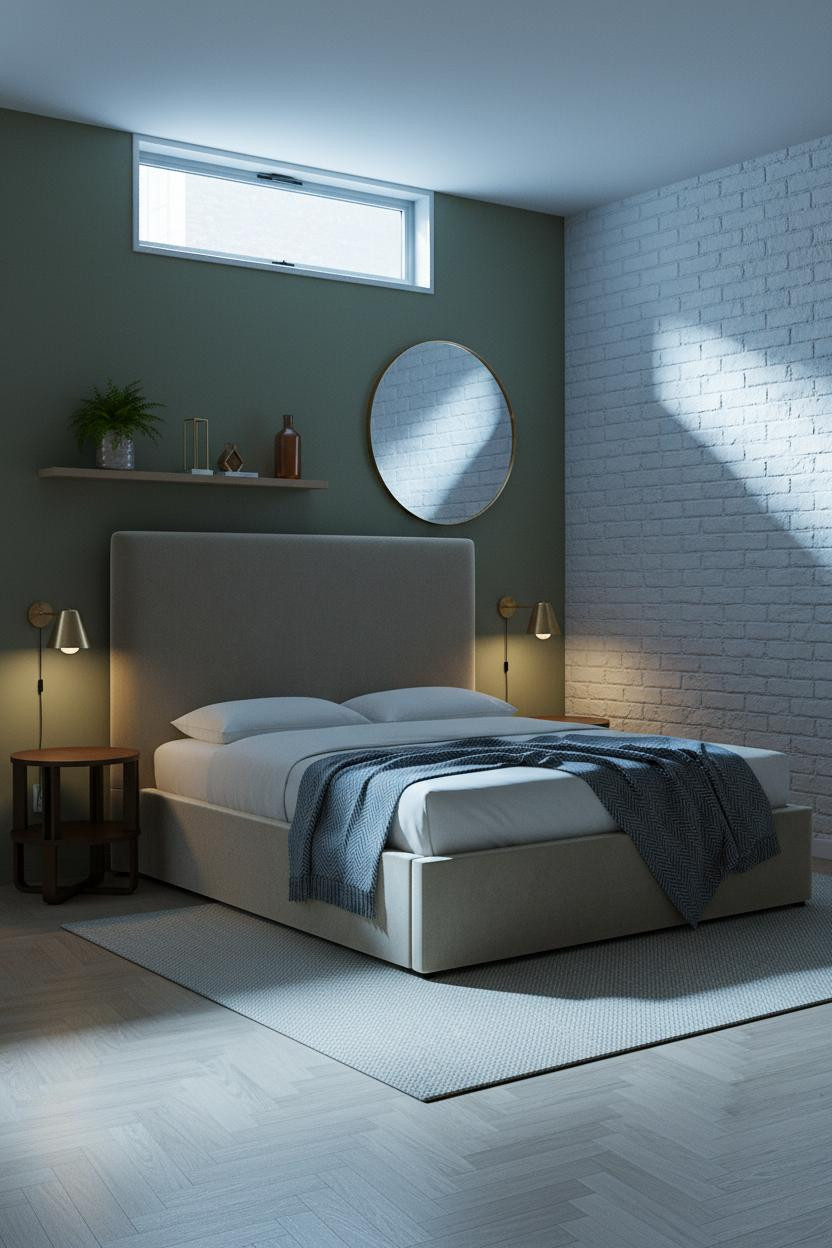

Egress windows are non-negotiable in most basement codes. Might as well make them the whole design.
In this layout, the steel-framed egress window casts sharp geometric shadow bars across pale ash herringbone parquet, and the pattern those shadows make across the floor anchors the sleeping zone more effectively than any area rug would on its own. The room feels purposeful and airy, which is genuinely hard to pull off underground.
One smart swap: An oversized round mirror leaned against the opposite wall reflects the egress light back into the room. The effect is immediate.
Whitewashed Concrete and Japandi Calm: A Basement That Owns Its Identity
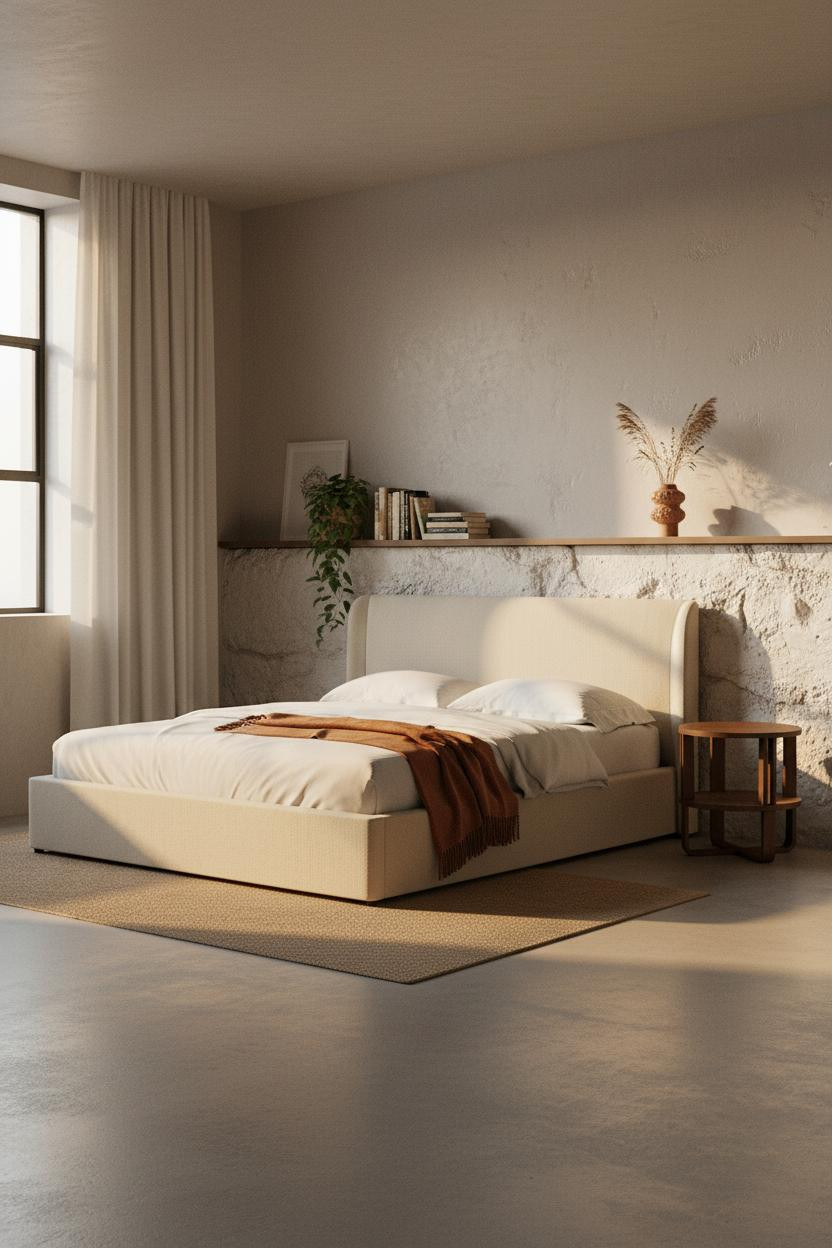

This room doesn’t apologize for being a basement. And that’s exactly why it works.
Where the luxury comes from: Softly whitewashed concrete with raw aggregate visible beneath the pale wash gives the studio an authenticity that faux finishes can’t replicate. The texture makes afternoon light look like it was designed for this exact wall.
And the burnt orange mohair throw against oatmeal linen bedding is the warmth that ties it all together. The practical move: Keep one cream floor-to-ceiling linen curtain as a statement. It softens the concrete without hiding it.

Our #1 Pick
Saatva Classic Mattress
America’s best-selling online luxury innerspring. 365-night trial, lifetime warranty, free white glove delivery.
Shop Saatva Classic
The Foundation Of Every Beautiful Bedroom
Walls get repainted. Floors get refinished. The mattress stays for years. So it matters more than most people give it credit for, especially in a studio where the bed is the room.
The Saatva Classic is the one I’d put in any of these layouts. Dual-coil support that holds its shape, a breathable organic cotton cover, and a Euro pillow top that’s soft without losing structure. It feels like the good hotel kind, not the business hotel kind.
Start with the bed. The rest figures itself out.

The rooms people actually save are the ones where nothing looks like it was trying too hard. Pick one strong material, one honest light source, and let the layout do the rest. Good design ages well because it was made with intention, not impulse.