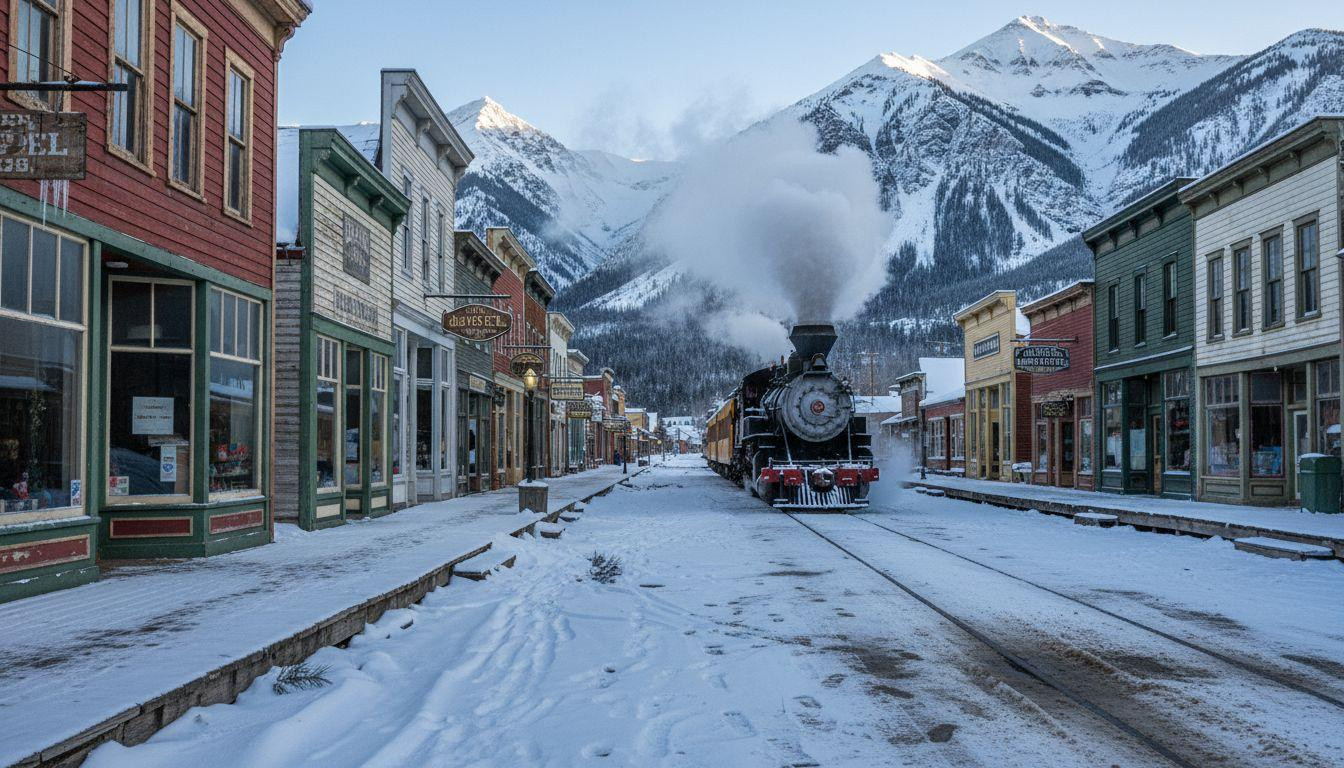
Blair Street empties by 8pm most winter nights. Victorian storefronts stand dark under fresh powder. The population drops to 500 when snow closes the Million Dollar Highway. This isolation creates what Silverton does best: winter experiences that exist only because crowds can’t reach them.
At 9,302 feet in Colorado’s San Juan Mountains, Silverton receives 175 inches of snow annually. The town sits 50 minutes from Durango when roads stay open. In February, 4WD becomes mandatory. Chains too. The reward: 10 winter activities that thrive on remoteness rather than fight it.
Skijoring turns Blair Street into a Nordic race course
February 14-15, 2026 brings Silverton’s largest winter event. Horses tow skiers through obstacles down the main street. Prize money hits $15,000. Spectators line wooden boardwalks for free. The “Fat Boy” race pairs slower horses with recreational skiers.
Crowds swell to thousands for two days. Book lodging three months ahead. The Grand Imperial charges $200-250 per night during the event. Regular winter rates run $150-200. Registration opens in January at silvertonskijoring.com.
Silverton Mountain offers backcountry without lift lines
One lift accesses 1,819 acres of ungroomed terrain. Guides lead every run for $199 per day. The mountain requires intermediate-advanced skills. Avalanche awareness matters at 13,487 feet. Most days see fewer than 100 skiers.
Compare that to Aspen’s 200-plus daily lift tickets. Or Telluride’s groomed resort crowds an hour away. Pagosa Springs sits 90 minutes south for post-ski hot springs at 104°F.
What the terrain actually offers
The single chairlift climbs 1,200 vertical feet. From there, guides choose routes based on conditions and group ability. Steep chutes. Open bowls. Tree runs through old-growth forest. Average snowfall reaches 400 inches by April.
Heli-skiing adds another option. Multi-day packages include lodging at base facilities. Rentals cost $40 for touring skis. The season runs December through April when avalanche risk allows.
Safety requirements stay strict
Every skier needs avalanche beacon, probe, and shovel. Guides carry radios and emergency gear. Groups max out at 12 people. The mountain closes during high-danger periods. No exceptions for ticket holders.
The narrow-gauge railroad runs winter photo specials
February 20-21 offers exclusive access for $475. The RGS 20 locomotive steams through Animas Canyon. Only 50 passengers ride. Photographers disembark at wilderness stops for tripod shots.
Regular winter trains cost $100-200 round-trip from Durango. The 3.5-hour journey follows the river through canyon walls exceeding 1,000 feet. Book 90 days ahead at durangotrain.com. Weather cancellations happen frequently.
Kendall Mountain creates a winter beach atmosphere
Locals call it that because families tailgate in the parking lot. Grills smoke while kids ski gentle runs. Lift tickets cost $40-60 depending on the day. The vertical drop measures 800 feet across beginner and intermediate terrain.
Rentals run $30-50 for skis, boards, and helmets. The mountain opens weekends and holidays December through March. Wind Cave’s snowshoe routes offer similar uncrowded winter access two states away.
Snowscape Festival fights winter blues
January 30 through February 1 brings tropical cocktails to Anesi Park. The cardboard derby runs despite low snow years. Live music plays outdoors. The Emberglow Feast on February 1 involves tending communal fires while eating.
Most events cost nothing. Drink tickets sell separately. The town created Snowscape in 2023 to celebrate winter rather than endure it. Attendance numbers stay modest compared to Skijoring.
Ice climbing forms along the Animas River
Frozen waterfalls appear roadside on Highway 550. January through February offers best conditions. Routes rate easier than Ouray Ice Park an hour north. San Juan Mountain Guides charge $350 per day for two climbers including gear.
Triangle Sports rents crampons and axes for $40 daily. Beginners can handle formations near town. Advanced climbers find steeper options in the canyon. Check avalanche.state.co.us before heading out.
Ghost towns wait 10 miles upriver
Eureka and Howardsville sit abandoned along the Animas. Snowshoe from town on a gradual trail. Ice sculptures form on collapsed mine structures. Ore carts rust in place. The round trip takes 4-6 hours.
Eureka peaked at 500 residents in the 1880s. Howardsville hit 1,000. Now both stand empty except for occasional snowshoers. Rent gear at Triangle for $20 per day. Bring layers because canyon shadows drop temperatures 10 degrees.
Your questions about Silverton answered
When does the Million Dollar Highway close?
Highway 550 shuts 5-10 days per winter during heavy storms. Call 511 for current conditions. 4WD vehicles need chains from November through April. The drive from Denver takes 6-7 hours in good weather. Durango airport sits one hour away with daily flights.
How does altitude affect visitors?
At 9,302 feet, mild altitude sickness hits some people. Symptoms include headache and fatigue. Drink extra water the first two days. Avoid alcohol initially. Most visitors adjust within 48 hours. The thin air makes exertion feel harder than at sea level.
What makes this different from Telluride?
Telluride charges $400-plus for hotels during peak season. Silverton runs $200-300. Telluride draws celebrity crowds to polished resorts. Silverton keeps unpaved streets and no chain hotels. Black Canyon offers similar uncrowded winter majesty 2.5 hours away.
Blair Street brewery crawl in Victorian buildings
San Juan Brewing and Avalanche taproom occupy 1880s storefronts. Green chile stew costs $15. Elk burgers run $20-25. Most kitchens close by 8pm. Silver jewelry shops sell pieces made from local mine ore. Handmade skis hang in craft stores.
The half-mile walking loop takes 20 minutes. Stop between outdoor activities to warm up. Foot traffic stays light compared to summer. Evening emptiness defines winter character here.
Dawn walks along frozen Animas River
The Cement Creek trailhead offers free parking. A 3-mile out-and-back follows ice dams. Train whistles echo through the valley around 7:15am. Woodsmoke mixes with pine scent in cold air. Golden light hits Victorian facades by 7:30am.
Bring microspikes for icy sections. The trail stays mostly flat at 9,302 feet. Wildlife includes deer and elk most mornings. Temperature hovers near 5°F in late January. The quiet lasts until town wakes around 8am.
Sunrise turns the San Juan peaks orange above Blair Street. Steam rises from a few chimneys. By noon the train whistle sounds again. Skiers head to Kendall Mountain. The cycle repeats daily through March when isolation starts to break.