
The first time I saw a well-done 60s bedroom, I thought it was a film set. That’s the thing about this era. Done right, it feels completely alive.
These ten rooms prove it. None of them look like a costume. They look like someone actually chose every piece.
The Room Divider That Changes Everything
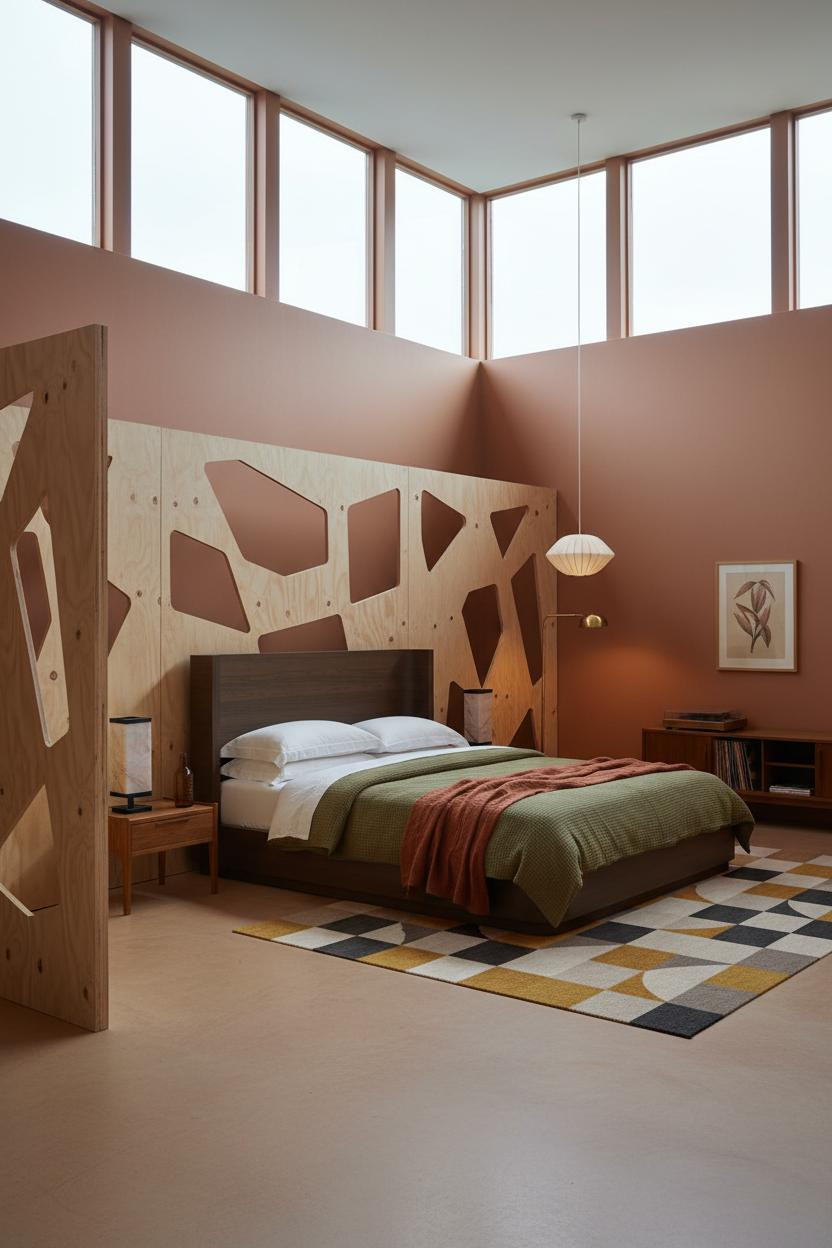
A curved birch room divider with geometric cutouts is the kind of thing you either fully commit to or skip entirely.
Why it holds together: The organic cutouts break the wall without breaking the room, especially when the terracotta matte walls keep everything warm behind it.
Worth copying: Pair the divider with a low brass lamp in the corner so the amber light catches those chamfered edges at night.
Honey Oak Slats Are Having a Moment
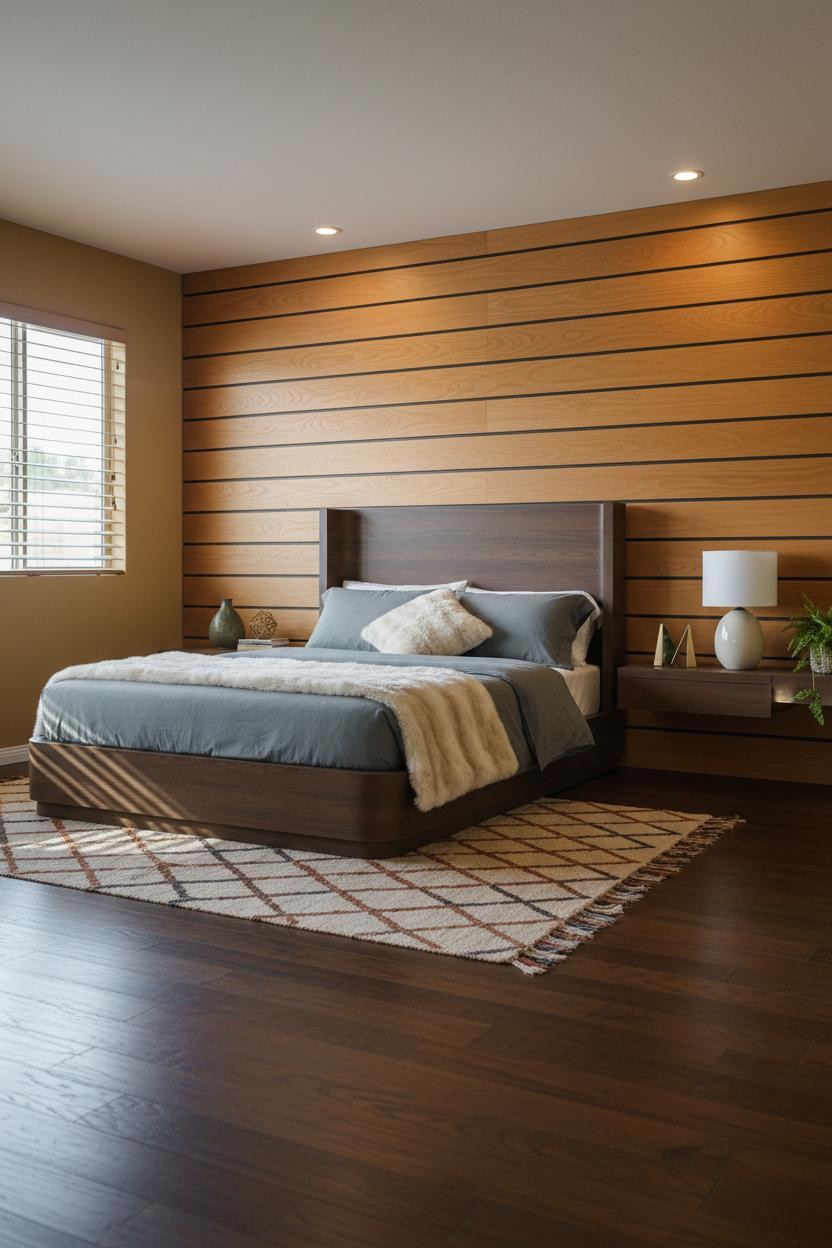

I honestly think horizontal slat paneling is the single most underrated mid-century bedroom move right now.
The honey oak planks create a shadow gap between each slat, and that narrow line of darkness is what gives the wall its rhythm. It’s a small detail that reads huge at the scale of a full wall.
The easy win: Anchor a Moroccan diamond-pattern rug in rust and ivory beneath the bed to echo the geometry above without matching it too precisely.
I Keep Coming Back to Desert Stone
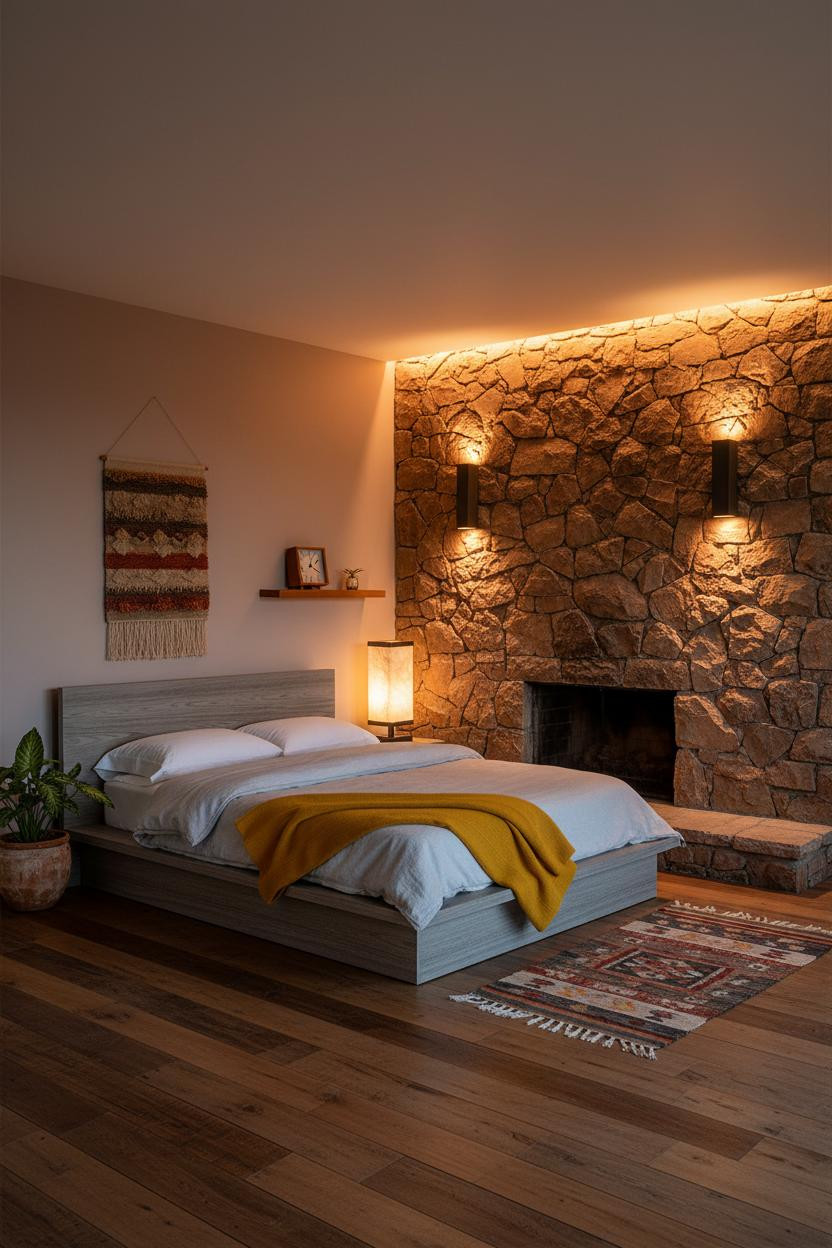
Tactile and a little moody. This is California desert modernism at its most honest.
But it shouldn’t work as a headboard wall, and yet it absolutely does.
What gives it presence: The stacked stone fireplace wall catches raking lamp light across every rough course, so the texture reads differently at noon versus midnight.
Avoid this mistake: Don’t pair this with pale or cool bedding. A mustard wool blanket and a kilim runner are what keep it from feeling like a cave.
Walnut Paneling Never Actually Left
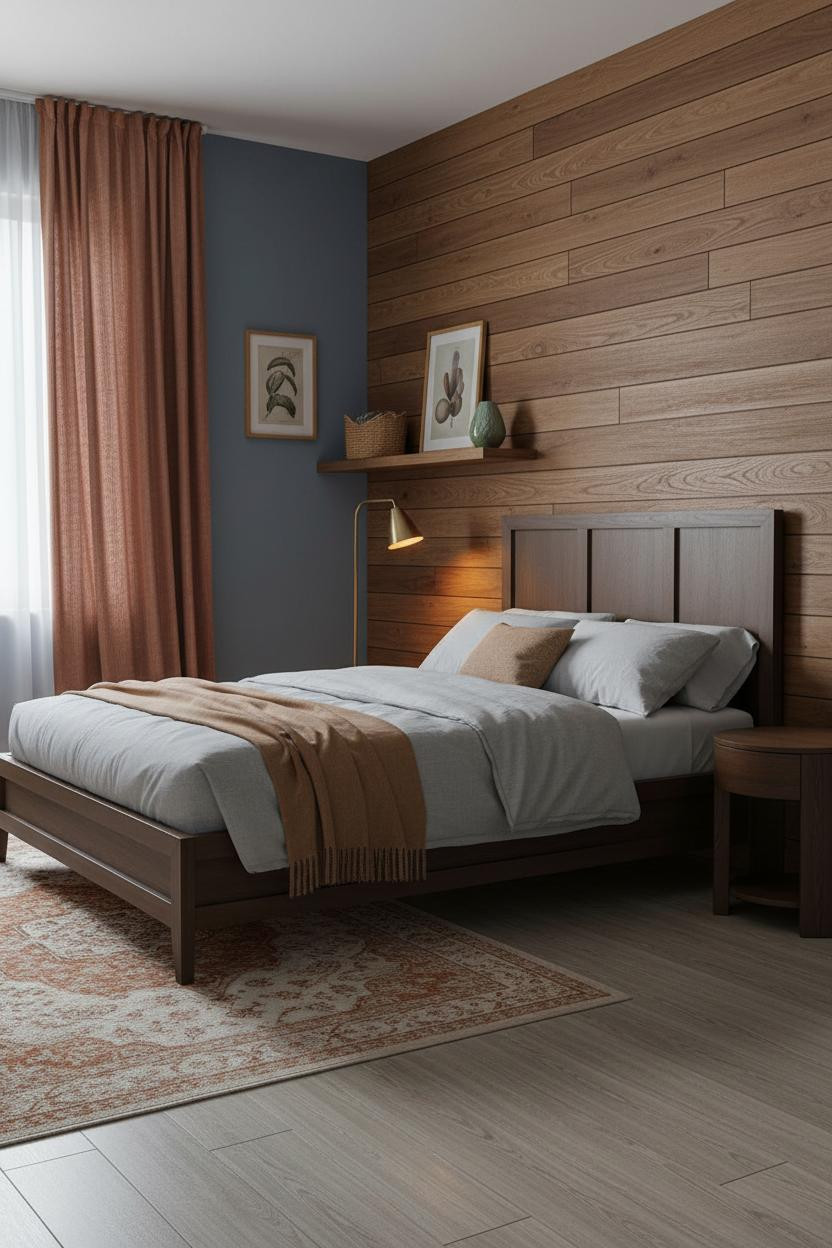
People act like slatted walnut wall paneling is retro-ironic. It’s not. It’s just good joinery that aged well.
What makes it work: The faded denim blue on the flanking walls is cooler than the walnut, and that contrast is what keeps the room from feeling like a sauna (warm wood needs a cool foil).
Hang floor-to-ceiling rust linen curtains. One bold vertical. It earns the horizontal rhythm of the slats.
The Teak Credenza You Actually Need
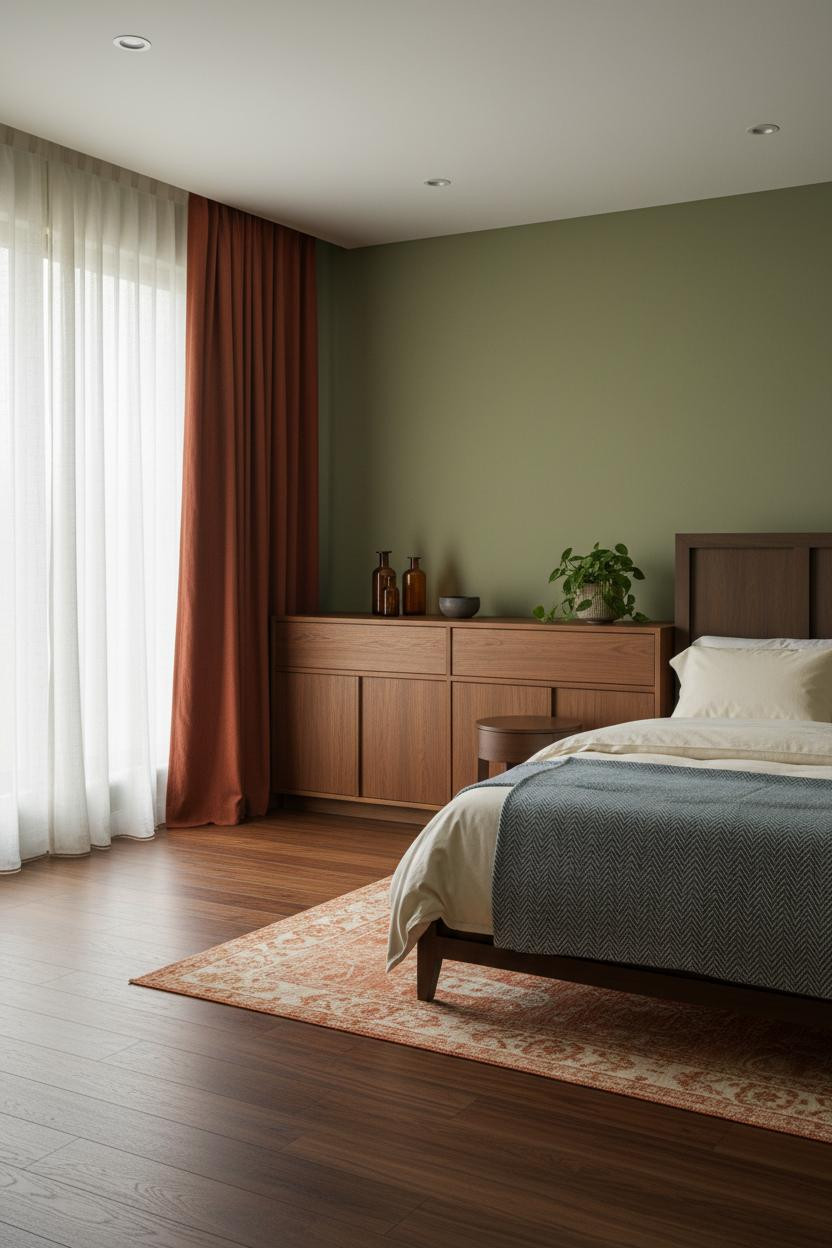
A full-width built-in teak credenza against moss green walls is the kind of move that makes a bedroom feel like it was designed, not assembled.
Why it feels intentional: The alternating open cubbies and flush cabinet doors break the horizontal plane in a way that a single dresser never could. It gives the wall a quiet rhythm.
Pro move: Style the open cubbies with amber glass bottles and a trailing plant. Nothing too precious or matchy.
Cobalt Walls Are Divisive. Do It Anyway.
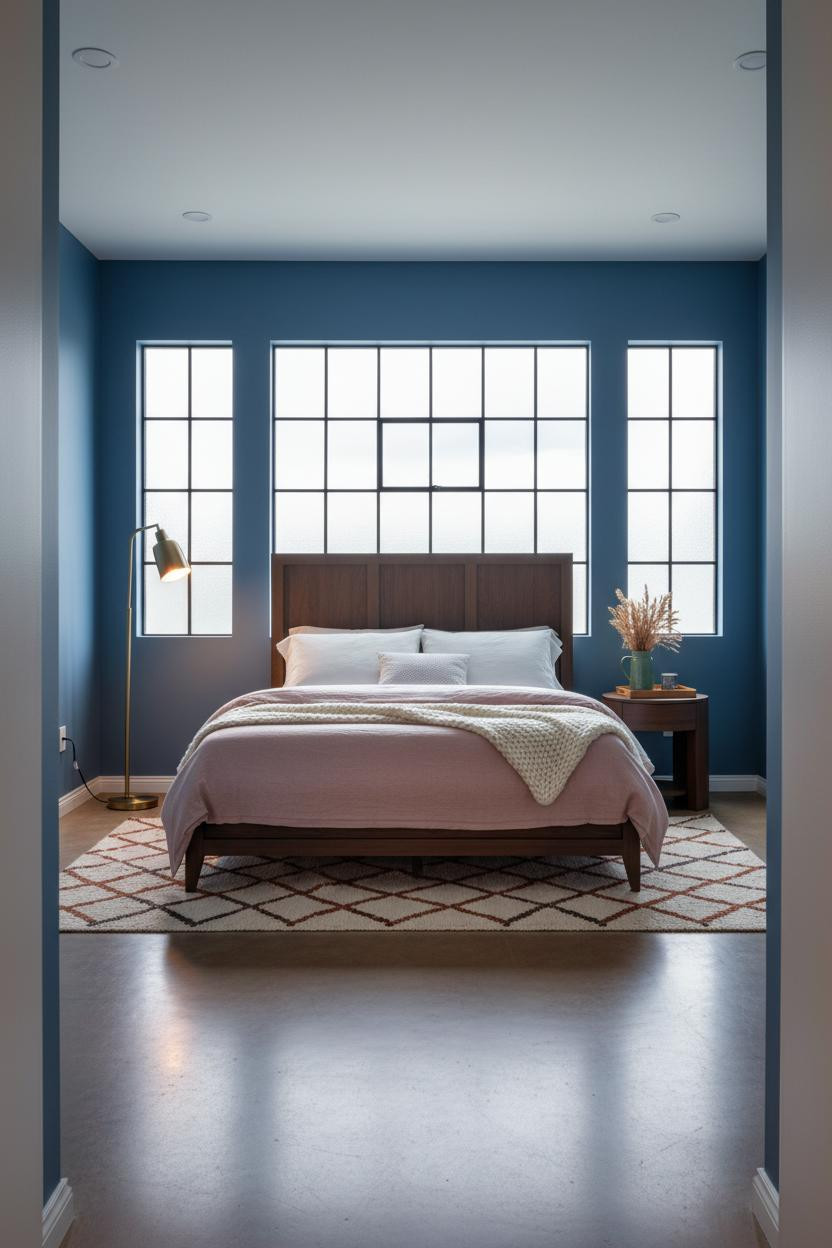
This is the room that makes people stop scrolling. It shouldn’t feel this calm, but it does.
The matte cobalt walls read almost navy in diffused daylight, which means they don’t compete with the warm brass floor lamp pooling in the corner. The contrast does all the work. And the black steel window grid locks the whole thing into an unmistakable retro-modern register that plain windows never could.
The part to get right: Keep bedding soft and pale (dusty pink linen is ideal) so the walls stay the statement.
What Terracotta Plaster Gets Right Every Time
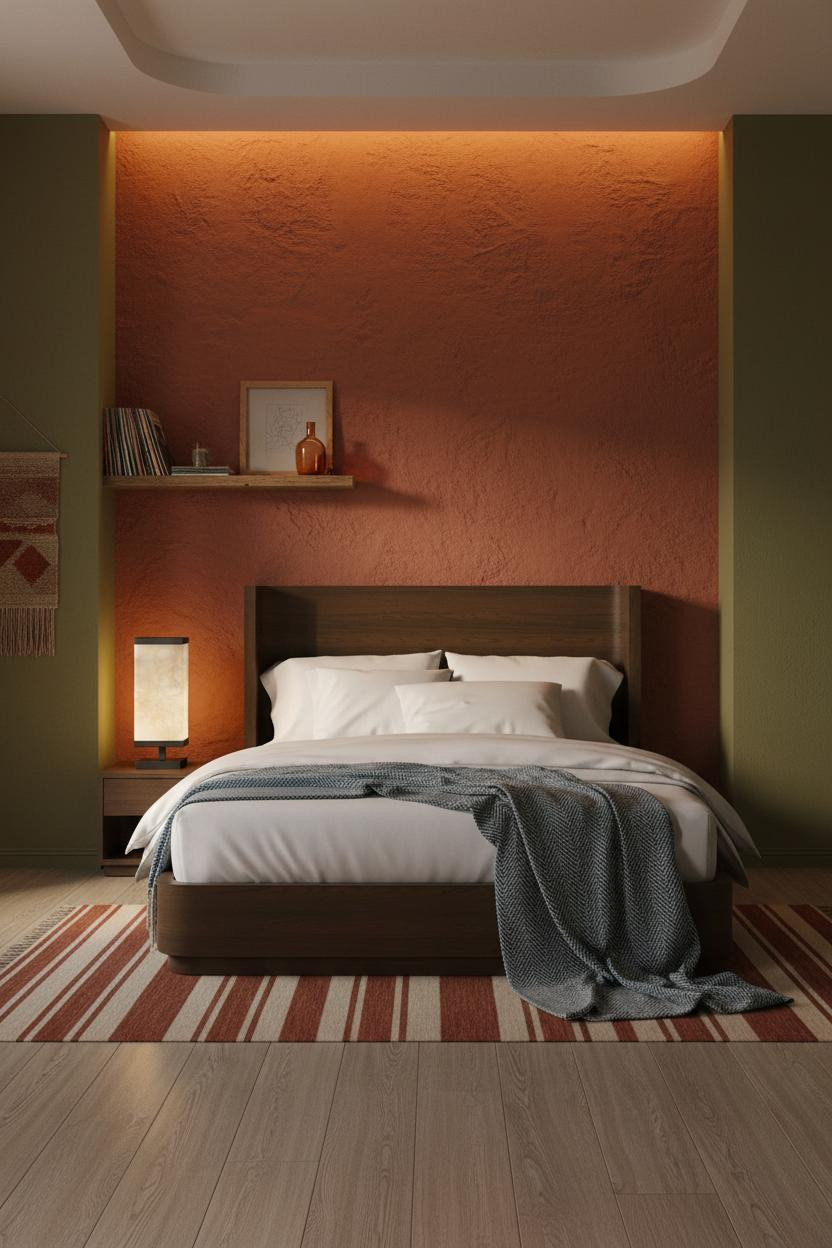
The room feels warm before you even register why. That’s what rough-textured terracotta clay plaster does at evening light.
Why it looks custom: A matte plaster surface catches lamp light differently across its grain, so the wall looks like it has depth instead of just color. Smooth paint can’t do that.
Layer ivory cotton percale with a steel blue herringbone throw. Cool against warm. That’s the whole formula.
The Case for Going Full Mustard
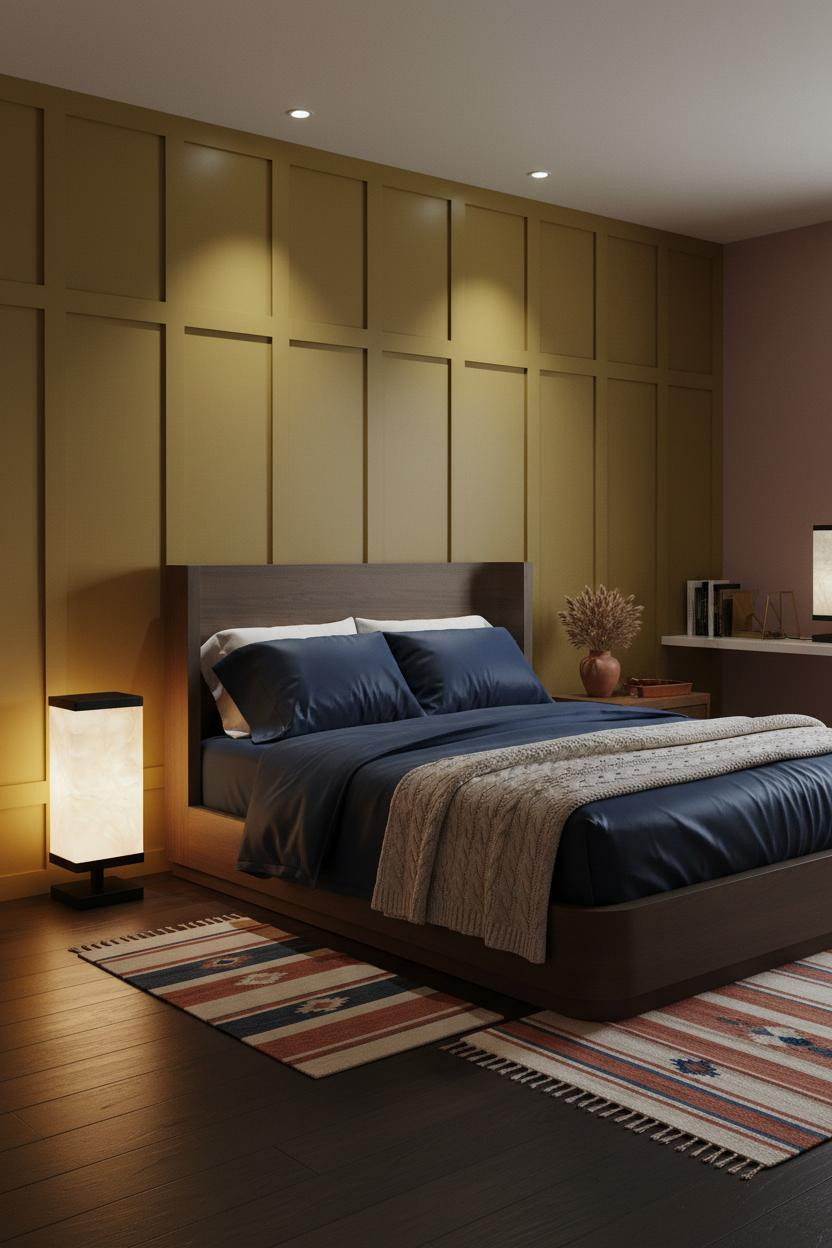
Fair warning. Not everyone survives a floor-to-ceiling mustard board-and-batten wall. But the ones who commit never repaint it.
Why it works: Vertical batten rhythm against the dusty rose flanking walls creates a contrast that reads as 70s room aesthetic without tipping into retro-kitsch, in a way that feels surprisingly current.
What not to do: Don’t pair this with cool-grey bedding. Navy sateen with a cable-knit cream throw is the move. Keep it warm or the mustard turns sour.
Sage Walls and Amber Light Are a Perfect Pairing
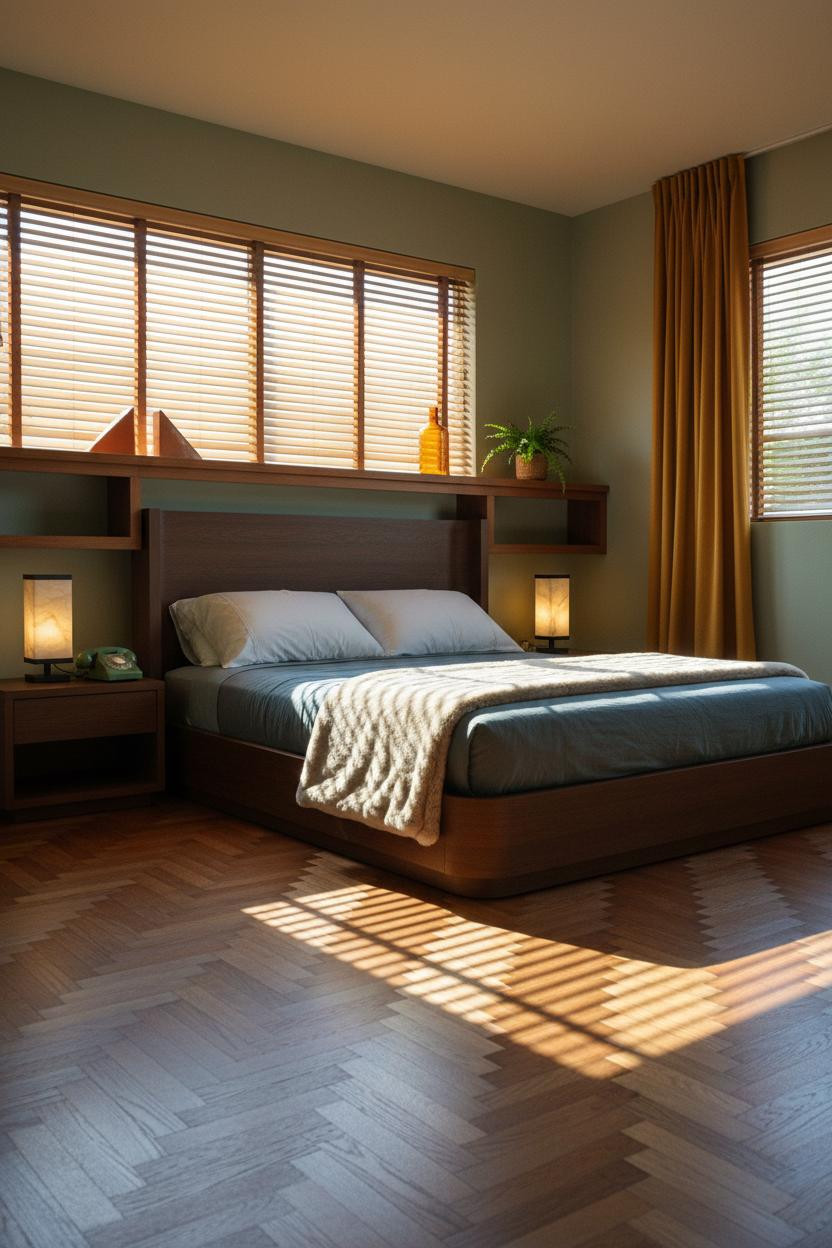
I think soft sage green walls are the most forgiving backdrop in a retro bedroom. They make warm wood look richer and cool tones look intentional.
What carries the look: The built-in teak shelving unit at counter height grounds the room without blocking light, while the herringbone parquet floor adds a second layer of geometry below. And afternoon sun cutting through slatted venetian blinds makes the whole thing glow.
The finishing layer: Hang mustard floor-to-ceiling curtains on the window wall. Just enough contrast to keep the sage from reading flat.
Exposed Beams Make or Break a Retro Room
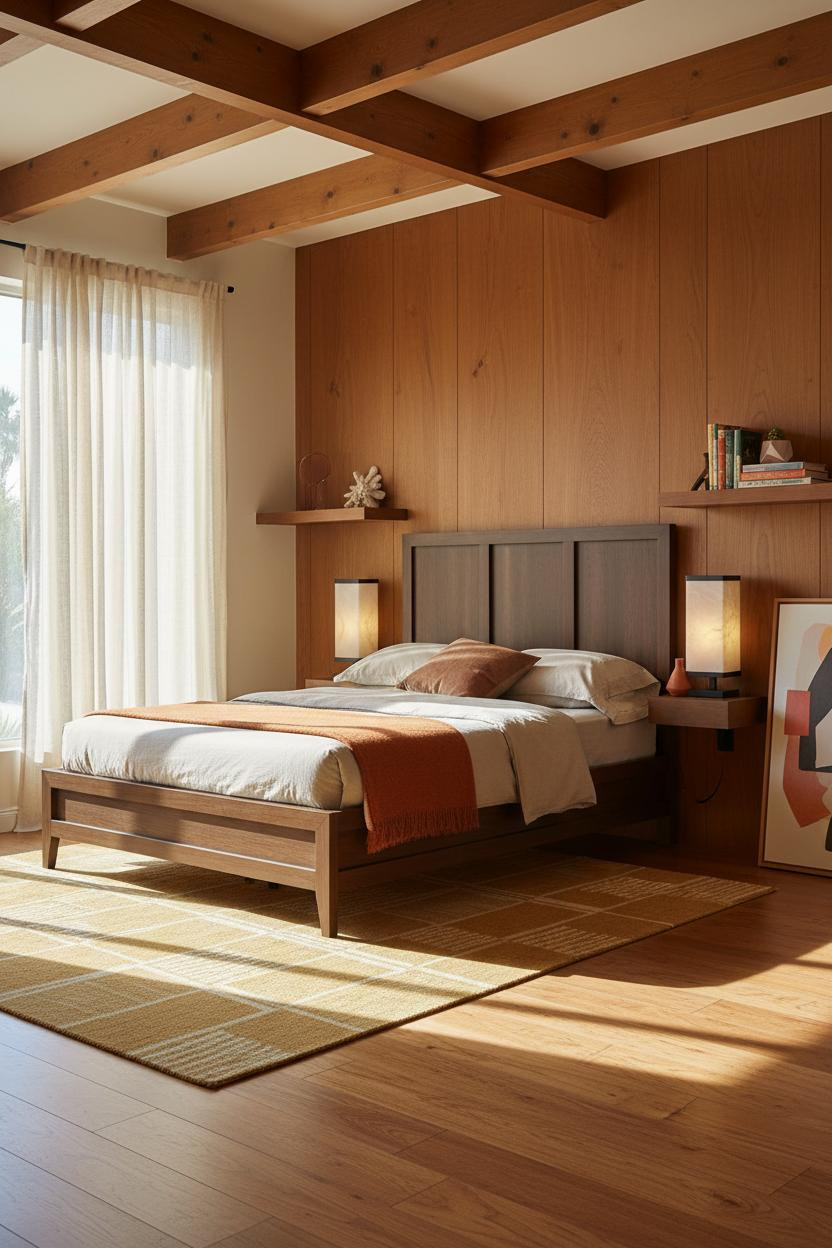
The room feels collected rather than decorated, and the exposed wooden ceiling beams are why. They do in one architectural detail what most furniture arrangements can’t.
Design logic: Structural beams with visible grain provide a strong horizontal rhythm overhead that makes 1960s bedroom furniture look placed rather than dropped in. The warm walnut accent wall behind the bed picks up the same tone so nothing floats.
One smart swap: Lean an oversized abstract canvas against the cream wall instead of hanging it. Effortless, and it keeps the beams as the main structure.

Our #1 Pick
Saatva Classic Mattress
America’s best-selling online luxury innerspring. 365-night trial, lifetime warranty, free white glove delivery.
Shop Saatva Classic
Why Luxury Bedrooms Always Feel Better
Walls get repainted. Rugs get rolled up. But the mattress stays, and it’s the one thing you actually feel every single night. So it matters more than most people admit.
The Saatva Classic is what I’d put in every room on this list. The dual-coil support system holds its shape in a way that standard foam doesn’t, and the breathable organic cotton cover means the bed doesn’t trap heat. Add a Euro pillow top that’s soft without losing structure and you have something that holds up for years, not just seasons.
Good design ages well because it’s made well.

The rooms people save are the ones where nothing looks accidental. These ten get close. Start with the walls, stay patient with the layers, and sort out the bed before anything else. That’s the actual order of operations.