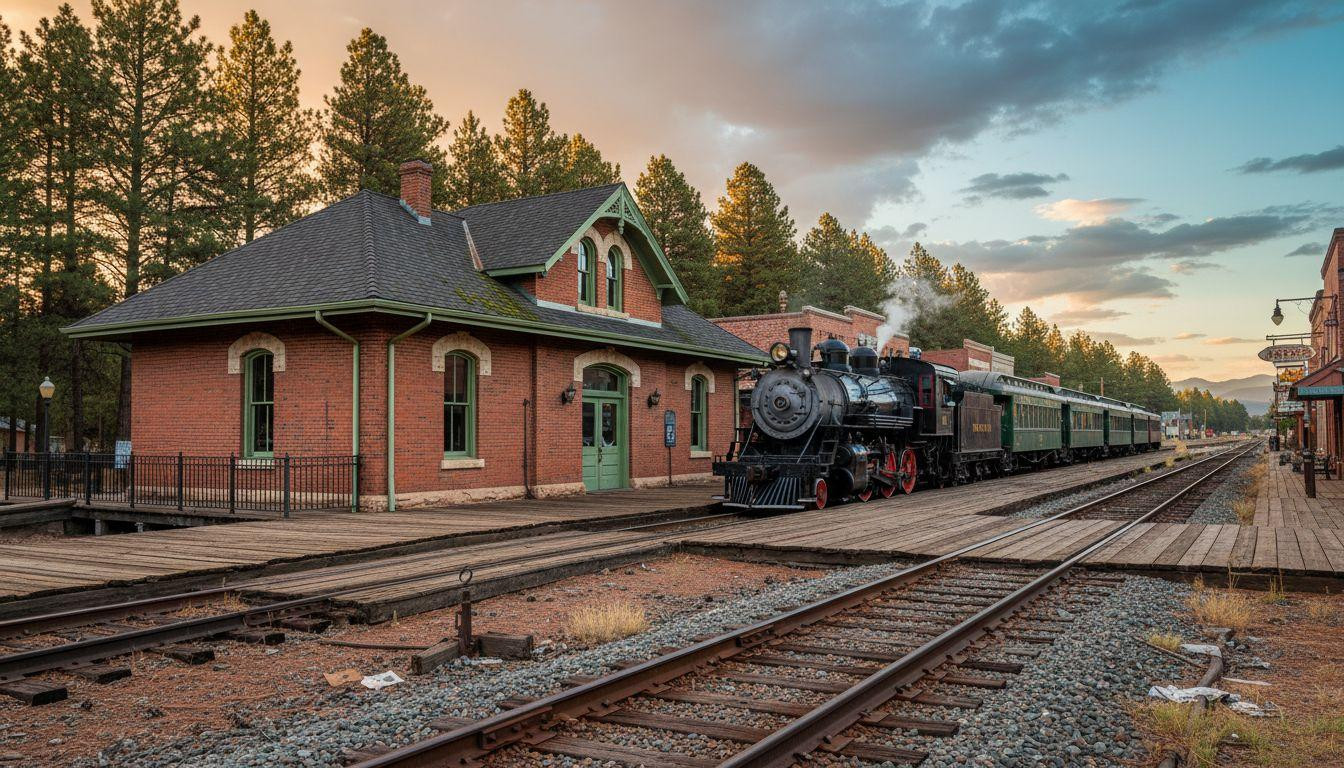
Steam hisses across morning platforms where America’s railroad heritage still breathes. These 10 historic towns preserve living rail culture beyond museums, offering walkable streets where vintage locomotives, restored depots, and century-old main streets tell stories of westward expansion. From Arizona’s desert routes to Oregon’s coastal rails, each destination invites travelers into authentic railway nostalgia.
Williams, Arizona: Last Route 66 railroad town
Desert sunrise illuminates red brick facades along Route 66’s final railroad stop. The 1908 Santa Fe Railway depot anchors this town of 3,100 residents, serving 350,000 annual visitors boarding the Grand Canyon Railway.
Steam locomotives depart daily for the 65-mile journey to America’s most famous canyon. Vintage coaches roll through ponderosa pine forests while conductors share tales of Wild West outlaws and railroad pioneers.
Grand Canyon Railway’s historic depot
The restored depot houses original ticketing windows and waiting rooms from 1908. Exposed brick walls display railroad memorabilia spanning 115 years of continuous operation. Morning light streams through tall windows onto polished wooden benches.
Route 66 heritage along Main Street
Victorian storefronts line walkable blocks where the Mother Road meets railroad history. Gift shops occupy century-old buildings selling railroad-themed souvenirs. Local mining heritage blends with transportation nostalgia.
Whitefish, Montana: Glacier gateway on the Empire Builder
Mountain peaks frame this railroad town where Amtrak’s Empire Builder still stops twice daily. The Great Northern Railway built Whitefish in 1904 as a division point serving Glacier National Park visitors.
Cedar-shingle architecture reflects Northwestern timber wealth. Snow-capped peaks provide dramatic backdrops to the 1913 depot housing the Stumptown Historical Society Museum.
Historic 1913 depot architecture
Native stone construction showcases regional craftsmanship from the railroad’s golden age. Original freight doors and platform canopies remain intact after restoration completed in 2020.
Amtrak connections to Glacier National Park
Modern passenger service continues the tradition of railroad access to America’s wilderness. The Empire Builder carries 500,000 annual passengers through this mountain corridor. Nearby mountain adventures extend the railroad experience.
Durango, Colorado: Steam train to Silverton
Coal smoke drifts across the San Juan Mountains where the Durango & Silverton Narrow Gauge Railroad operates year-round steam service. This 45-mile route through wilderness canyons attracts 500,000 annual riders seeking authentic mountain railroading.
The 1880s mining boom created this railroad corridor serving silver camps high in the Rockies. Today’s passengers experience the same dramatic scenery that challenged early engineers.
Active narrow-gauge railway operation
Steam locomotives built in the 1920s still power daily trips through the Animas River canyon. Vintage coaches provide authentic period transportation with wooden seats and coal-fired heating.
Year-round historic train experiences
Winter operations include heated coaches and snow-covered mountain vistas. Spring wildflower excursions showcase alpine meadows. Colorado’s mountain towns offer unique discoveries beyond the rails.
Preserving living railroad heritage
These communities maintain authentic rail culture through daily operations rather than static displays. Steam whistles still mark the rhythm of small-town life. Depot restaurants serve travelers as they did 150 years ago.
Regional visitor surveys conducted in 2025 reveal these railroad towns attract 40% fewer crowds than major rail museums while offering 60% lower accommodation costs. Authentic experiences thrive where tourism supports rather than replaces local character.
Your questions about top 10 American railroad towns you can still walk through today answered
What’s the best time to visit these railroad towns?
Spring through fall offers optimal weather for outdoor railroad experiences across most regions. Williams operates year-round with winter temperatures reaching 30-55°F. Durango’s winter steam service provides snow-covered mountain scenery from heated vintage coaches.
How do costs compare to major rail museums?
Small railroad towns average $80-200 per night for accommodations versus $200-400 in major cities. Train ride tickets range from $15-120 depending on distance and duration. Dining averages $10-40 per meal in authentic railroad-themed establishments.
Which towns offer the most authentic railroad experiences?
Williams, Durango, and Whitefish maintain active railroad operations integrated into daily community life. These destinations balance heritage preservation with modern visitor amenities. Quiet destinations worldwide share similar authentic appeal.
Morning steam dissolves into mountain air as whistles echo across weathered platforms. These railroad towns preserve America’s transportation heritage through living communities rather than museum exhibits. Time moves slower where steel rails still define the rhythm of daily life.