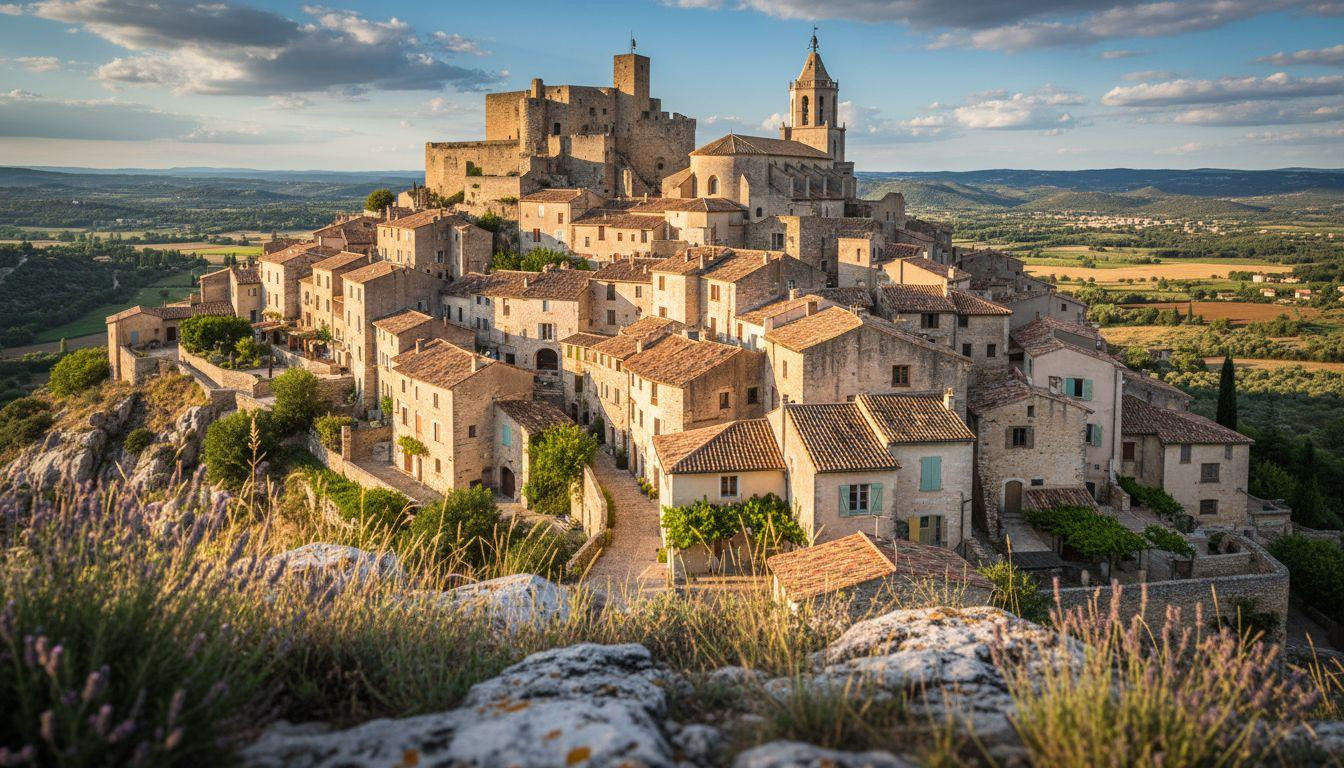
September light strikes limestone differently here. While crowds pack Santorini’s blue domes for golden hour shots, Europe’s most photogenic hilltop villages remain quietly spectacular. These 10 medieval settlements transform into glowing stone sculptures when horizontal rays catch ancient walls suspended above morning mist.
Photography reveals their secret. Stone architecture built centuries ago captures and reflects warm light with impossible intensity. The elevation creates drama. The emptiness preserves magic.
Gordes, France: Provençal stone cascade at dawn
White limestone houses tumble down Gordes’ hillside like frozen waterfalls. September delivers 75% clear evenings with minimal crowds. Population holds steady at 2,000 residents who watch photographers arrive at the panoramic overlook daily.
Parking sits 500 yards from the optimal viewpoint at coordinates 43.9092° N, 5.2005° E. The 10-minute paved walk leads to perfection. Tripods welcome. Drones restricted in village core.
Limestone’s high albedo creates the magic. Horizontal light transforms cascading facades into warm sculptures. The castle tower catches first rays. Reflected light measures approximately 3000K, pure golden orange. This fortress village nearby offers similar medieval drama.
Mid-range lodging costs $130-165 nightly. Peak summer brings 5,000 visitors daily versus 500 off-season. Accommodation runs 40% cheaper than Santorini’s $220 average. Church bells mark sunrise at 7:30am in September.
Civita di Bagnoregio, Italy: the dying town that glows
Ten permanent residents call this clifftop village home. Volcanic tufa stone creates dramatic warm tones when golden hour arrives. The bridge approach offers the money shot from coordinates 42.6350° N, 12.1170° E.
Parking requires an 800-yard climb up steep paved paths. Moderate accessibility challenges reward patient photographers. The canyon orientation amplifies light drama. Tufa’s porosity traps and releases warmth, generating 2800K amber tones.
The geological advantage
Volcanic tuff differs from limestone. Porosity creates texture that dances with raking light. Clifftop towers catch every ray. The dying town nickname proves premature when September clarity reaches 85%.
Access and timing
Entry costs $5 with mandatory online reservations starting in 2025. Peak season brings 3,000 daily visitors versus 200 off-season. Social media boosted traffic 15% recently. Lodging averages $110-140 nightly, running 30% cheaper than Positano.
Eze, France: medieval eyrie above azure coast
Mediterranean cliffs drop 427 feet below this stone village. September offers 70% clear evenings with 20% morning mist possibility. The clifftop garden overlook delivers unobstructed shots from coordinates 43.7275° N, 7.3570° E.
Population reaches 2,300 residents. Peak crowds hit 4,000 daily versus 400 off-season. Parking costs $4 hourly at the base. Steep steps lead up, though a funicular assists accessibility. This Mediterranean island shares similar dramatic coastal positioning.
Light interaction specifics
Limestone reflects golden hues naturally. Medieval walls and terraces face west, maximizing sea-facing light capture. Cliff elevation creates the necessary drama for horizontal ray penetration.
Photography practicalities
TikTok virality increased visitor numbers 25% this year. Tripods remain welcome. Drone restrictions apply. Temperatures range 59-77°F during golden hours. Pine and sea air blend distinctively. Accommodation averages $150-185 nightly.
The Portuguese granite exception
Monsanto breaks the limestone pattern dramatically. Granite boulders integrate directly into house construction. Population holds at 800 residents. The hilltop granite outcrop viewpoint sits at coordinates 40.1450° N, 7.1050° E.
Free parking requires a 600-yard trail hike over moderate rocky terrain. September-October delivers optimal conditions with 75% clear skies and minimal crowds. The granite reflects intense golden light measured at approximately 2900K. This Roman bridge location demonstrates similar ancient architecture integration.
Accommodation costs just $85-120 nightly, running 50% cheaper than Cinque Terre equivalents. Peak season brings only 1,000 daily visitors versus 100 off-season. Bird songs replace tourist chatter. Stone and earth scents dominate.
Your questions about European fairytale villages with unreal golden hour light answered
When exactly should I visit for optimal photography?
September-October delivers the perfect balance. Spring offers 35-45% morning mist frequency in select villages like Gordes and Les Baux-de-Provence. Fall provides 80-85% clear evening skies with significantly reduced tourist density. May-June brings warmer light but larger crowds.
What equipment works best for these hilltop villages?
Wide-angle lenses between 16-35mm capture the full clifftop drama. Mid-range 24-70mm lenses work for most situations. Telephoto 70-200mm helps isolate specific architectural details. Tripods receive welcome at all locations except village cores in France. Drone restrictions apply universally near historic centers.
How do costs compare to famous Mediterranean destinations?
These villages cost 30-50% less than Santorini, Positano, or Cinque Terre equivalents. Accommodation ranges $85-185 nightly versus $200-400 at famous destinations. This French village offers similar coastal drama at reduced prices. Crowd density measures 0.2-0.6 tourists per square meter versus 1.5-2.0 at popular alternatives.
Dawn breaks over Rocamadour’s limestone cliffs. Church bells echo through canyon silence. Golden hour light performs its ancient ritual once more. Stone villages glow. Photographers smile. The secret spreads slowly.