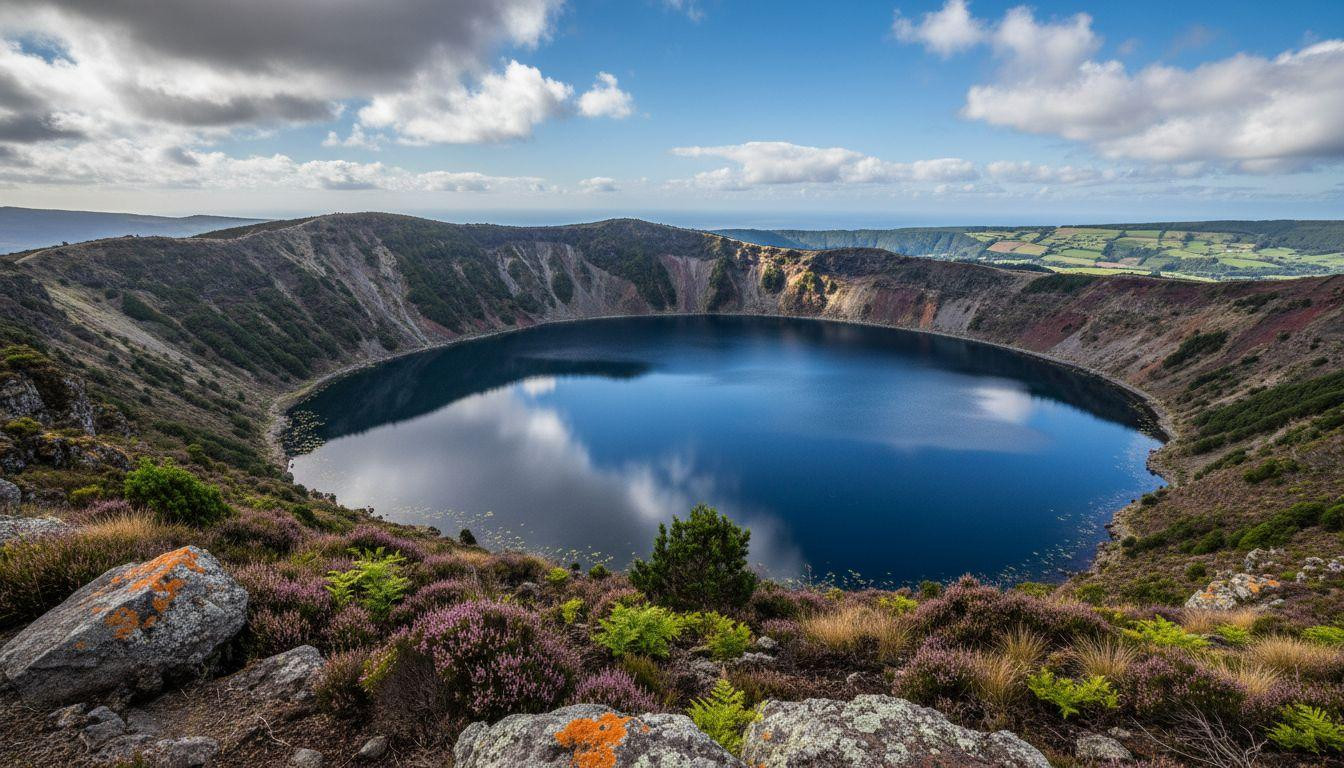
Flores Island emerges from Atlantic waters like a forgotten dream. Volcanic craters hold mirror-still lakes while waterfalls cascade 300 feet into turquoise pools. This Portuguese island sits 908 miles from mainland Europe, closer to North America than most realize.
Seven crater lakes dot the landscape. Each tells a different geological story spanning 23,000 years of volcanic history.
Where dark water reflects ancient fire
Lagoa Negra claims the title of deepest crater lake in the Azores at 368 feet. The water appears black despite crystal clarity extending 82 feet down. Volcanic minerals create this obsidian mirror effect that changes with weather patterns.
Morning light illuminates the western rim between 9-11 AM. December fog affects visibility 40% of days, but clear moments reveal dramatic contrasts. The 1.2-mile rim trail offers multiple viewpoints with parking for 15 vehicles.
The science behind the darkness
Light absorption occurs due to exceptional depth combined with dark volcanic rock. Scientific analysis confirms water clarity reaches 25 meters visibility. The mysterious appearance comes from depth rather than contamination.
Ancient eruption evidence
This maar volcano last erupted 3,660 years ago according to sediment analysis. Research from nearby Lagoa da Lomba provides the dating evidence. The caldera measures approximately 0.6 miles in diameter with steep volcanic slopes.
Twin lakes at different elevations
Lagoa Funda sits 558 feet lower than neighboring Lagoa Rasa. This creates striking elevation differences between paired volcanic formations. Lagoa Funda reaches depths of 328 feet with surface area of 0.25 square kilometers.
Deep blue intensifies after rainfall when mineral-rich runoff enters the basin. Endemic Azores heather and native juniper thrive on surrounding slopes. December brings 60% fog occurrence, but clear days offer perfect reflections of 2,999-foot Morro Alto.
Accessing the viewpoint
Miradouro Lagoas Rasa e Funda sits just 0.6 miles from the main road. Parking accommodates 20 vehicles with well-maintained facilities. The rim trail extends 2.5 miles round trip with moderate difficulty and 300 feet elevation gain.
Separate volcanic events
These lakes formed from different eruptions spanning thousands of years. Lagoa Funda’s activity occurred 3,660 years ago while Lagoa Rasa predates this timeline. Each represents distinct volcanic episodes in Flores’ geological record.
Where waterfalls meet Atlantic silence
Poço do Bacalhau plunges 295 feet directly from volcanic cliffs to ocean. The natural pool measures 65 by 49 feet with depths reaching 10 feet. Located 1.2 miles from Fajã Grande, the trail takes 25 minutes from parking.
December water temperatures average 59°F creating dramatic steam effects. The 0.8-mile trail has moderate difficulty with slippery sections when wet. Safety railings protect the viewpoint, though the pool remains dangerous for swimming due to strong currents.
The codfish hole legend
Local residents named this waterfall for the pool’s shape resembling a codfish from above. The formation belongs to Ribeira dos Bodes system including three additional cascades. This creates one of Flores’ most concentrated waterfall areas within 1.2 miles.
Winter power display
December storms feed the waterfall creating spectacles unseen in summer. According to regional tourism data, winter visitors witness maximum water volume. The sound echoes off cliff walls producing otherworldly acoustics that define the island experience.
Europe’s westernmost village charm
Fajã Grande (population 215) sits at coordinates making it among Europe’s westernmost settlements. Three major waterfalls cascade within 1.2 miles: Poço do Bacalhau (295 feet), Poço da Alagoinha (148 feet), and Poço da Ribeira (197 feet).
December sunsets occur around 5:15 PM creating dramatic waterfall photography light. The village’s natural pool maintains 61°F water temperatures year-round. Twelve active fishing boats support local economy alongside three cheese producers.
Authentic Azorean life
Restaurant A Tasca do Pescador offers fresh fish dishes from $19-27 featuring black scabbard fish and limpets. The village supports traditional “Queijo Fresco das Fajãs” cheese production. Local fishermen arrive at dawn with catches that supply island restaurants within hours.
Coastal lava platform microclimate
Fajã Grande’s location on coastal lava platform creates unique growing conditions. Subtropical plants thrive despite northerly latitude due to oceanic moderation. The formation allows year-round cultivation rare at this geographic position.
Scientific significance in crater research
Lagoa da Lomba measures 93,605 square feet in surface area with 716-meter perimeter. Volume reaches 143,000 cubic meters with average depth of 24 feet and maximum depth reaching 52 feet. Located at 2,132 feet elevation, it sits strategically between volcanic activity clusters.
Sediment cores provide comprehensive volcanic history dating back 23,520 years. Research identifies 12 distinct eruptive events with most recent activity 3,660 years ago. This represents the only crater lake on Flores with continuous Holocene period records.
Your questions about Flores Island volcanic experiences answered
What’s the best time to visit the crater lakes?
May through October offers optimal hiking weather and clearest visibility. December brings 55% fog occurrence but fewer crowds and dramatic lighting. Winter waterfalls reach maximum power while lakes maintain year-round accessibility.
How do Flores’ volcanic features compare to other Atlantic islands?
Flores contains 7 crater lakes compared to Iceland’s hundreds but maintains higher concentration per square mile. The island covers 55 square miles with population density of 61 people per square mile. Accommodation costs average $70-97 per night in December.
Are the volcanic sites safe for independent exploration?
All major crater lakes feature maintained trails with safety railings at viewpoints. Car rental costs $59-75 daily with distances between sites ranging 0.6-12 miles. Local tourism boards confirm trail conditions and provide current safety information for winter hiking.
Steam rises from Poço do Bacalhau as Atlantic waves crash below. Seven crater lakes reflect December clouds while waterfalls cascade into turquoise pools. This volcanic paradise rewards those who venture beyond Portugal’s mainland shores.